
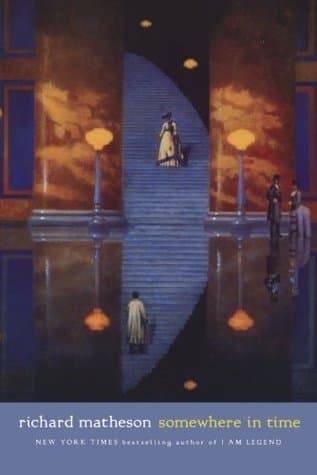
Synopsis
Covers the whole plot, including the ending.
- Difficulty
- Easy
- Pacing
- Moderate
- Mood
- Romantic, Melancholy, Dreamy, Obsessive
- Read it if
- You love deeply romantic stories with a unique speculative twist, enjoy historical settings, and are prepared for a bittersweet ending.
- Skip it if
- You prefer fast-paced action, strictly realistic fiction, or happy endings.
Somewhere In Time Plot Summary
Covers the whole plot, including the ending.
The Mysterious Encounter
In 1972, while working on a script in Chicago, Richard Collier, a successful but somewhat jaded playwright, is approached by a very old woman at the opening night of one of his plays. She hands him a gold pocket watch and, with an intense gaze, utters the words, "Come back to me." The encounter deeply disturbs and intrigues Richard, even though he dismisses it as an odd fan interaction. He keeps the watch but does not immediately understand its significance or the impact this brief meeting will have on his life.
A Life-Altering Discovery
Years later, in 1980, feeling burnt out and seeking inspiration, Richard checks into the Grand Hotel on Coronado Island, San Diego. While exploring the hotel's historical exhibit, he is captivated by a photograph of a beautiful woman from 1896. He learns her name is Elise McKenna, a celebrated stage actress of that era. An inexplicable, powerful connection forms instantly. He recognizes the pocket watch in her hand in the photograph as the same one given to him years ago. This realization, coupled with the woman's haunting beauty, sparks an intense obsession within him, convincing him that she is the woman who gave him the watch and that they are destined to be together.
Research and Revelation
Driven by his growing conviction, Richard researches Elise McKenna's life, finding old newspaper clippings and biographies. He discovers that she was a famous actress managed by William Fawcett Robinson, a strict and controlling figure. His research also leads him to a book by Dr. Gerard Finney titled 'Travel Through Time: A Scientific Possibility.' Finney's theory posits that intense self-hypnosis and a complete mental immersion in the past, free from modern distractions, could allow one to project consciousness back in time. Richard, now fully committed to the idea, begins to prepare himself for this extraordinary journey, believing it is the only way to meet Elise.
The Plan Takes Shape
Richard meticulously prepares for his time displacement. He moves out of his modern hotel room into an older, less renovated part of the Grand Hotel that would have existed in 1896. He removes all modern clothing, money, and personal items, replacing them with period-appropriate attire and currency. He studies historical etiquette and slang. He records himself repeating affirmations and historical facts of 1896 to imbue his mind with the past, following Dr. Finney's instructions precisely. His goal is to strip away every vestige of 1980 to ensure his mind is completely open and receptive to the past, hoping to avoid any anachronistic thoughts or objects that could break the spell.
The Leap Through Time
After days of intense self-hypnosis, deprivation, and mental conditioning, Richard lies down in his 1896-furnished room, fixating on Elise McKenna and the year 1896. He experiences a strange, disorienting sensation, a feeling of falling through time. When he awakens, the room is subtly different, the sounds outside are those of horse-drawn carriages and period chatter. He ventures out and confirms his success: the hotel lobby is bustling with people in Victorian dress, the newspaper headlines are from 1896, and the overall atmosphere is undeniably that of the past. He has made the impossible journey, driven solely by his love for Elise.
First Encounters
Richard's initial attempts to approach Elise McKenna are met with suspicion from her manager, William Fawcett Robinson, who is fiercely protective of her. However, Richard manages to get closer, eventually speaking with her. There is an undeniable, immediate spark between them, a sense of recognition that transcends their brief acquaintance. Elise, despite Robinson's warnings, is drawn to Richard's intensity and peculiar charm. They spend time together, talking and walking, and their connection deepens rapidly, confirming Richard's belief that they are soulmates destined to be together, despite the formidable presence of Robinson.
Growing Affection and Robinson's Vigilance
Over the next few days, Richard and Elise fall deeply in love. They share intimate conversations, revealing their hopes, dreams, and a profound sense of having known each other before. Elise confides in him about her feelings of being controlled by Robinson and her yearning for a life beyond the stage. Robinson grows increasingly hostile and suspicious of Richard, seeing him as a threat to Elise's career and his control over her. He constantly tries to keep them apart, making their stolen moments together all the more precious and intense, but also filled with a growing sense of urgency and impending doom.
The Fateful Question
During one of their intimate moments, Elise reveals a past encounter with a fortune teller who predicted that a man from the future would come for her, a man who would love her unconditionally. She looks at Richard, asking if he is that man. This moment confirms for Richard that their connection is indeed fated and that his journey was not in vain. He assures her that he is, indeed, the man she has been waiting for, solidifying their bond and deepening their commitment to a future together, despite the incredible circumstances and the watchful eye of Robinson.
The Anachronistic Coin and Tragic Return
As Richard and Elise are enjoying a moment together, dreaming of their future, Richard reaches into his pocket and pulls out a modern Lincoln penny, a relic from 1980 that he had inadvertently overlooked during his preparations. The sudden sight of the anachronistic object, a stark reminder of his own time, shatters his mental immersion in 1896. He feels an overwhelming pull, a crushing force that rips him away from Elise and the past. He awakens back in his hotel room in 1980, heartbroken and disoriented, the time displacement abruptly and tragically reversed, leaving him in utter despair.
Desperate Attempts and Lingering Hope
Devastated by his sudden return, Richard desperately tries to recreate the conditions for time travel, but all his efforts are in vain. He cannot return. The loss of Elise and the past consumes him. He becomes increasingly withdrawn, refusing food and drink, his health rapidly deteriorating. He clings to the memories of Elise, the love they shared, and the pocket watch as his only connection to her. He eventually succumbs to his grief and a broken heart, dying in his hotel room, his final thoughts filled with Elise and their timeless love, achieving a reunion in death that was denied in life.
Principal Figures
Richard Collier
Protagonist
A successful playwright who travels through time for love.
Richard Collier is a highly successful playwright in 1970s-80s Chicago, initially depicted as somewhat cynical and searching for deeper meaning. His life takes a drastic turn after an encounter with an old woman and his subsequent discovery of Elise McKenna's photograph. He becomes intensely obsessive, driven by an unshakeable belief that he is destined to be with Elise. His journey to 1896 showcases his immense willpower, romantic idealism, and ultimately, his profound capacity for love and despair. He is willing to sacrifice everything, even his life, for this transcendent connection.
Relationships: Elise McKenna (Soulmates, destined lovers across time); William Fawcett Robinson (Antagonist, barrier to his love for Elise)
Elise McKenna
Love Interest
A celebrated actress from 1896, destined to meet Richard.
Elise McKenna is a beautiful and renowned stage actress from 1896, managed by the controlling William Fawcett Robinson. Despite her fame, she yearns for a deeper, more authentic connection and a life free from Robinson's influence. She possesses an intuitive sense of destiny, having been told by a fortune teller that a man from the future would come for her. Her intelligence, grace, and immediate connection with Richard suggest a soul that recognizes its other half, making her a compelling figure who both inspires and reciprocates Richard's extraordinary love.
Relationships: Richard Collier (Soulmates, destined lovers across time); William Fawcett Robinson (Controlling manager, unrequited admirer)
William Fawcett Robinson
Antagonist
Elise McKenna's overprotective and controlling manager.
William Fawcett Robinson is Elise McKenna's manager in 1896, a stern, imposing, and highly controlling figure. He is fiercely protective of Elise's career and harbors unrequited feelings for her, viewing any male admirer, especially Richard, as a threat. His rigid and suspicious nature makes him the primary human obstacle to Richard and Elise's burgeoning romance, constantly attempting to separate them and undermine Richard's presence. He represents the societal and personal barriers that stand in the way of their extraordinary love.
Relationships: Elise McKenna (Manager, unrequited romantic interest); Richard Collier (Rival, antagonist)
The Old Woman
Supporting
The aged Elise McKenna, who initiates Richard's journey.
The old woman who approaches Richard Collier at his play's opening is, in fact, the aged Elise McKenna. Her brief but profound interaction with Richard, where she gives him the pocket watch and the cryptic command "Come back to me," serves as the catalyst for his entire journey. Her appearance is a full-circle moment, providing the initial impetus and the final confirmation of their shared destiny, even if Richard only realizes her identity years later. She represents the enduring power of their love across time.
Relationships: Richard Collier (Future self of his beloved, initiator of his quest)
Dr. Gerard Finney
Mentioned
Author of a book on theoretical time travel.
Dr. Gerard Finney is the author of 'Travel Through Time: A Scientific Possibility,' a theoretical work that provides Richard Collier with the supposed scientific framework and methodology for his time displacement. While not a physical character in the narrative, his book and theories are crucial to Richard's plan, offering the intellectual justification and practical steps for his seemingly impossible journey. He represents the scientific or pseudo-scientific basis for the story's fantastical element.
Arthur
Supporting
Richard's agent and friend.
Arthur is Richard Collier's agent and friend. He is a practical, grounded individual who cares for Richard but struggles to understand his increasingly erratic behavior and obsession with Elise McKenna. He tries to offer advice and help Richard cope with his perceived mental breakdown, representing the voice of reason and conventional reality against Richard's extraordinary pursuit. His concern highlights the isolating nature of Richard's journey.
Relationships: Richard Collier (Agent and friend)
Themes & Insights
Love Transcending Time and Space
The novel's central theme is that love, especially soulmate love, can defy the boundaries of time and physical reality. Richard's journey to 1896 is motivated by his connection to Elise McKenna, a woman he has never met in his own time. Their instant recognition and deep bond upon meeting shows that their love is fated, existing beyond conventional temporal constraints. Even after being ripped back to his own time, Richard's love for Elise remains so strong that he dies of a broken heart, illustrating its enduring, timeless nature.
“Come back to me.”
Obsession and Destiny
Richard's quest to reach Elise is fueled by an intense, almost fanatical obsession, yet it is also presented as a fulfillment of destiny. From the moment he sees Elise's photograph and recognizes the watch, he is convinced of their preordained connection. This obsession drives him to meticulously research and execute a seemingly impossible feat of time travel. The narrative suggests that this is not merely a delusion but a powerful drive towards a fated encounter, reinforced by Elise's own premonition of a man from the future. His entire being becomes singularly focused on this one purpose.
“He knew her. In some profound, inexplicable way, he knew her.”
The Power of the Mind and Belief
The novel explores the extraordinary capabilities of the human mind, particularly its power to manifest reality through intense belief and focus. Richard's method of time travel relies entirely on self-hypnosis, mental conditioning, and the complete eradication of modern thoughts and objects. Dr. Finney's theories, which Richard adopts, emphasize the mind's ability to project consciousness across time. Richard's success in reaching 1896, and his subsequent failure to return after a single anachronistic object breaks his mental state, highlights the fragility and immense power of his mental conviction.
“The mind, he read, was the key. Total immersion, total belief.”
Loss and Grief
The tragic climax of the story explores loss and grief. Richard's sudden, involuntary return to 1980, severing him from Elise, plunges him into an unbearable state of despair. His inability to return to her, despite desperate attempts, leads to his complete withdrawal from life. His subsequent death from a broken heart is a powerful example of the depth of his love and the devastating impact of its loss. The novel portrays grief not merely as an emotion but as a physical and existential force that can ultimately consume a person.
“He tried to return. He tried with all his being. But it was over.”
Plot Devices & Literary Techniques
The Pocket Watch
A physical link and symbol of timeless connection.
The gold pocket watch serves as a crucial plot device and a powerful symbol. It is initially given to Richard by the old Elise, acting as a catalyst for his journey. Later, he recognizes it in Elise's 1896 photograph, solidifying his conviction that she is the woman he is meant to find. The watch literally travels through time, connecting the past and future, and represents the enduring nature of their love and the circularity of their destiny. It is a tangible manifestation of their timeless bond.
Self-Hypnosis and Mental Projection
The method of time travel, emphasizing the mind's power.
The unique method of time travel in the story is not through a machine but through intense self-hypnosis and mental projection, as outlined by Dr. Finney. This device grounds the fantastical element in a quasi-scientific, psychological framework. It requires absolute mental discipline, the removal of all anachronistic thoughts and objects, and a complete immersion in the desired past. This device highlights the theme of the mind's extraordinary power and makes Richard's success, and his tragic failure, dependent entirely on his mental state and adherence to the rules.
The Anachronistic Object
The trigger for Richard's involuntary return to his own time.
The Lincoln penny from 1980, inadvertently left in Richard's pocket, functions as a devastating plot device. Its sudden appearance breaks the spell of his mental immersion in 1896, acting as a jarring reminder of his true time. This single, insignificant object causes his immediate and irreversible return to the future. It underscores the fragility of his time travel method and serves as the tragic catalyst that severs his connection with Elise, highlighting the strict rules governing his journey and the profound consequences of even a minor oversight.
The Grand Hotel
The central setting that exists across both time periods.
The Grand Hotel on Coronado Island is more than just a setting; it's a critical plot device. It exists in both 1980 and 1896, providing the physical anchor for Richard's time travel. Its historical continuity allows for the possibility of his journey and serves as the stage for both his discovery of Elise's photograph and their eventual meeting. The hotel's unchanging nature across the decades reinforces the idea of a stable point in time where such a transcendent encounter could occur, making it almost a character in itself.
Somewhere In Time Quotes
“Time is not a line, but a series of now-points.”
“Love is not bound by time or space.”
“I have crossed the centuries to find you.”
“The mind is the only time machine we truly possess.”
“Every moment is a prison for those who live in the past.”
“We are all ghosts of our own memories.”
“To love someone across time is to love a ghost.”
“The past is a foreign country; they do things differently there.”
“Fate is not a path, but a river that carries us where it will.”
“In the end, all we have are the moments we steal from time.”
“The heart knows no logic, only longing.”
“To live in two times is to be a stranger in both.”
“Somewhere in time, our souls have met before.”
“The greatest magic is not in moving through time, but in touching another's heart across it.”
Quiz
10 questions on the plot and the characters. Each answer comes with a short explanation.
Question 1
What is the name of the protagonist who travels back in time to 1896?
- Christopher Reeve
- Richard Collier
- William Robinson
- Thomas Edison
Show answer
B. Richard Collier The protagonist is Richard Collier, a playwright who becomes obsessed with a photograph of actress Elise McKenna and uses self-hypnosis to travel back to 1896 to meet her.
Question 2
Where does Richard Collier travel back in time to meet Elise McKenna?
- The Grand Hotel in San Diego
- The Hotel del Coronado
- The Plaza Hotel in New York
- The Ritz-Carlton in Chicago
Show answer
B. The Hotel del Coronado Richard travels back to the Hotel del Coronado in San Diego in 1896, where Elise McKenna is performing. The hotel is a key setting in both the novel and film adaptation.
Question 3
What object from the present does Richard accidentally bring with him to 1896, causing problems?
- A wristwatch
- A modern coin
- A photograph
- A cigarette lighter
Show answer
B. A modern coin Richard accidentally brings a 1971 coin with him to 1896. When he tries to use it, it raises suspicion because it bears a date from the future, threatening to break his connection to the past.
Question 4
Why is Richard initially drawn to Elise McKenna before traveling back in time?
- He sees her in a dream
- He reads about her in a history book
- He finds an old photograph of her
- He hears her voice on a recording
Show answer
C. He finds an old photograph of her Richard becomes obsessed after seeing a photograph of Elise McKenna in the Hotel del Coronado's history display. The photo captivates him and sparks his determination to travel back in time to meet her.
Question 5
What method does Richard use to travel back in time?
- A time machine invented by a scientist
- A magical artifact found at the hotel
- Self-hypnosis and mental concentration
- A drug that alters his perception of time
Show answer
C. Self-hypnosis and mental concentration Richard uses self-hypnosis and intense mental concentration to will himself back to 1896. This method reflects the novel's exploration of mind-over-matter themes and the power of love to transcend time.
Question 6
What is the role of Robinson, Elise's manager, in the story?
- He helps Richard travel back in time
- He tries to prevent Elise from seeing Richard
- He is Richard's friend from the present
- He reveals that Elise is actually a time traveler too
Show answer
B. He tries to prevent Elise from seeing Richard Robinson is Elise's protective manager who is suspicious of Richard and tries to keep them apart, fearing that the relationship will damage Elise's career and reputation.
Question 7
What ultimately causes Richard to be pulled back to his own time?
- Elise asks him to leave
- He consciously decides to return
- He finds a modern object in his pocket
- Robinson forces him out of the hotel
Show answer
C. He finds a modern object in his pocket Richard is abruptly pulled back to 1971 when he discovers a modern object (specifically, a 1971 coin) in his pocket. This breaks his mental concentration and connection to 1896, demonstrating the fragility of his time travel.
Question 8
Which of these themes is MOST central to 'Somewhere in Time'?
- The dangers of scientific progress
- The power of love to transcend time
- The importance of historical accuracy
- The conflict between fate and free will
Show answer
B. The power of love to transcend time The novel's central theme is the transcendent power of love, which drives Richard to overcome the boundaries of time itself to be with Elise. This romantic element is emphasized in both the book's description and its reception.
Question 9
What does Elise give Richard before he returns to his own time, which becomes a crucial link between them?
- Her diary
- A locket with her picture
- A watch
- A letter
Show answer
C. A watch Elise gives Richard her watch as a keepsake. This watch later serves as physical evidence of their connection across time and plays a significant role in the story's emotional resolution.
Question 10
How does the novel suggest Richard's journey might not be entirely one-way?
- Elise secretly follows him to the future
- Richard finds evidence that Elise tried to reach him in the present
- Robinson reveals he is also a time traveler
- Richard discovers he can travel to multiple time periods
Show answer
B. Richard finds evidence that Elise tried to reach him in the present After returning to 1971, Richard discovers that Elise tried to contact him through time, leaving messages and attempting to reach forward to him. This suggests their connection works both ways and adds depth to the theme of timeless love.
Somewhere In Time FAQ
What is 'Somewhere In Time' about?
The novel follows Richard Collier, a modern playwright who becomes obsessed with a 1912 photograph of actress Elise McKenna. Using self-hypnosis and period clothing, he wills himself back to 1896 at the Hotel del Coronado in San Diego, where he meets and falls in love with Elise, creating a romance that defies the boundaries of time.
Why should I read 'Somewhere In Time'?
It's a beautifully crafted blend of romance, fantasy, and historical fiction that explores profound themes of love, destiny, and the nature of time. Matheson's meticulous research and emotional depth create a haunting, immersive experience that has captivated readers for decades and inspired a devoted fan community.
What is the background/setting of 'Somewhere In Time'?
The story alternates between 1970s Los Angeles and 1896 San Diego, primarily at the real-life Hotel del Coronado. The hotel's Victorian grandeur and coastal setting provide a romantic, atmospheric backdrop for the time-travel romance, with Matheson incorporating actual historical details about the location.
What are the most memorable quotes?
Key quotes include Richard's realization 'I have found you' upon seeing Elise, and the poignant 'Come back to me' that echoes through time. The novel's opening line, 'The man who is not affected by the sight of a beautiful woman is either dead or a statue,' sets its romantic tone.
What writing style does Richard Matheson use?
Matheson employs a straightforward, emotionally resonant prose style that blends detailed historical description with intimate first-person narration. His approach makes the fantastical time-travel concept feel psychologically plausible and deeply personal.
What minor details add significant meaning?
The 1912 photograph of Elise that Richard discovers contains a watch he later gives her in 1896, creating a temporal paradox. Richard's heart condition in the present subtly parallels the emotional 'heartache' of being separated from Elise across time.
What are some subtle foreshadowing moments?
Early mentions of Richard's susceptibility to suggestion hint at his ability to achieve time travel through self-hypnosis. Elise's initial wariness of Richard mirrors her manager Robinson's warnings about 'a man from another time,' though neither understands the literal truth initially.
What unexpected character connections exist?
The elderly woman who gives Richard the watch in 1971 is revealed to be Elise herself, having lived her life after their separation. Robinson, Elise's protective manager, unknowingly facilitates their meeting by keeping her at the hotel where Richard will appear.
What are unspoken character motivations?
Richard's time travel stems not just from romantic obsession but from a deeper existential need to find meaning beyond his successful but unfulfilling modern life. Elise's initial resistance comes from intuitive recognition that their love threatens the temporal order, not mere suspicion of a stranger.
What psychological complexities do characters exhibit?
Richard demonstrates remarkable willpower and focus in achieving time travel, yet shows vulnerability in his desperation to stay with Elise. Elise balances her celebrated actress persona with private loneliness, making her simultaneously strong and emotionally accessible.
What are the major emotional turning points?
The climax occurs when Richard accidentally sees a 1970s coin, breaking his psychological connection to 1896 and wrenching him back to his own time. Earlier, Elise's complete acceptance of his incredible story marks the moment their bond becomes unbreakable despite temporal consequences.
How do relationship dynamics evolve?
Their relationship progresses from Elise's initial guardedness (influenced by Robinson's warnings) to cautious friendship, then to passionate romance once she accepts Richard's truth. The power dynamic shifts as Elise ultimately becomes the active force trying to reach across time to him.
Which parts remain ambiguous or open-ended?
The exact mechanics of time travel are left mysterious—whether it's purely psychological, involves actual temporal displacement, or exists in a dream-like state. The novel also doesn't fully explain why Richard and Elise are uniquely able to connect across time when others cannot.
What are controversial scenes or decisions?
Some readers debate whether Richard essentially manipulates Elise by entering her life from another time, despite his good intentions. His decision to abandon his modern life completely for a past he can't permanently inhabit raises ethical questions about temporal interference.
'Somewhere In Time' ending explained: how it ends & what it means
After being pulled back to 1971, Richard dies of heartbreak but his spirit reunites with Elise's in death, suggesting love transcends even mortality. The ending implies their souls are eternally connected, with the elderly Elise having waited her whole life for this reunion.
What is the significance of the watch?
The watch serves as both a physical connection between timelines (given by Elise to Richard in 1896, then returned by her to him in 1971) and a symbol of time's fluidity. Its inscription 'Come back to me' becomes the story's emotional through-line.
How does the Hotel del Coronado function symbolically?
The hotel represents a timeless space where past and present intersect, its preserved Victorian architecture making it a plausible portal between eras. It symbolizes romantic idealism and the possibility of escaping modern disillusionment through love.
What role does Robinson play beyond being a manager?
Robinson acts as both antagonist and unwitting facilitator—his protectiveness of Elise initially creates obstacles, but his insistence she remain at the hotel ensures she's there when Richard arrives. He represents the practical world that cannot comprehend their transcendent love.
About the author
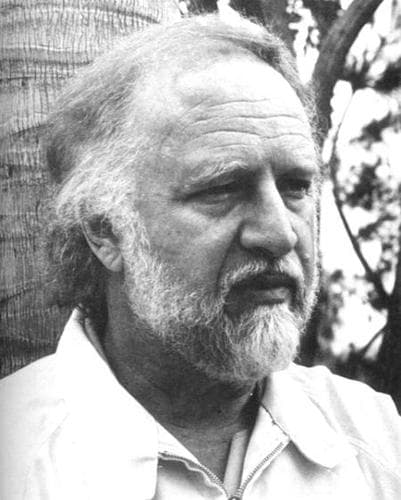
Richard Matheson was an American author known for his contributions to the science fiction and horror genres. His notable works include "I Am Legend," a seminal vampire novel, "Hell House," a classic haunted house story, and "Somewhere In Time," which explores themes of time travel and love. His writing often blends speculative elements with psychological depth.
Similar books
- The Time Traveler's Wife
Audrey Niffenegger
4.0 (1.6M) average on GoodreadsFantasyExplores a poignant love story across time with a focus on character and emotion over hard science.
- Outlander
Diana Gabaldon
4.2 (824k) average on GoodreadsFantasyFeatures a strong historical setting and a central romance driven by a character traveling through time.
- Harry Potter and the Sorcerer's Stone
J.K. Rowling
4.5 (7M) average on GoodreadsFantasyRescued from a miserable life under the stairs, an orphaned boy discovers he's a wizard destined for a magical school, where he uncovers a dangerous secret tied to the dark wizard who murdered his parents.
- The Hunger Games
Suzanne Collins
4.3 (6.4M) average on GoodreadsFantasyIn a future where children fight to the death on live television, Katniss Everdeen volunteers for the arena, turning a death sentence into a fight for survival and a spark of rebellion.
- 1984
George Orwell
4.2 (3.1M) average on GoodreadsPoliticsIn a future where surveillance and thought control are absolute, a man's search for truth clashes with the Party, showing that hope can be a form of rebellion.
- Divergent
Veronica Roth
4.2 (2.9M) average on GoodreadsFantasyIn a society divided by virtues, a sixteen-year-old's difference from the norm starts a rebellion that threatens her world.






Enjoyed the summary?
A summary gives you the shape of the book. The book itself has the detail, the examples and the voice.
Find Somewhere In Time on AmazonAs an Amazon Associate, BookBrief earns from qualifying purchases. How we're funded