
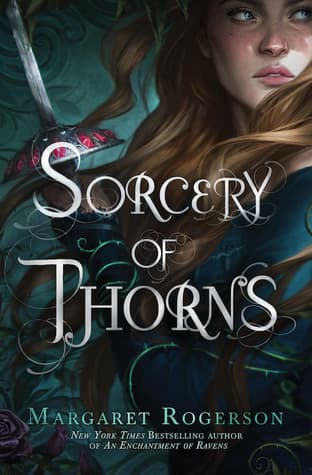
Synopsis
Covers the whole plot, including the ending.
- Difficulty
- Medium
- Pacing
- Moderate
- Mood
- Enchanting, Adventurous, Romantic, Suspenseful
- Read it if
- You love magical libraries, reluctant alliances, and enemies-to-lovers romance with a dash of demonic charm.
- Skip it if
- You prefer hard magic systems with strict rules, or find morally gray characters frustrating.
Sorcery of Thorns Plot Summary
Covers the whole plot, including the ending.
A Grimoire Unleashed
Elisabeth Scrivener, an orphan raised at the Great Library of Summershall, wants to be a Warden. She believes magical grimoires are dangerous. One night, a powerful grimoire, the 'Manuscript of Sorrow,' is released from its vault. Elisabeth tries to contain the demon it unleashes, using an unknown ability to destroy it. Her actions are seen as complicity in the sabotage. Silas, a demonic servant, takes her into custody and delivers her to the sorcerer Nathaniel Thorn in Austermeer.
An Unlikely Alliance
Elisabeth is brought before Nathaniel Thorn, a sorcerer from a prominent magical family, and his demonic servant, Silas. Initially hostile, Elisabeth maintains her innocence. Nathaniel, though skeptical, is intrigued by her unusual power. He offers her a temporary reprieve from execution, believing she might help uncover the true saboteur. Elisabeth, taught that all sorcerers are evil, struggles with Nathaniel's complex demeanor and Silas's human-like loyalty. This alliance makes her question everything she thought she knew.
Investigating the Sabotage
As Elisabeth and Nathaniel begin their investigation, they find that the attack on Summershall was not isolated. Other Great Libraries across Austermeer have suffered similar sabotages. Their investigation points to a larger conspiracy, possibly orchestrated by a powerful figure within the sorcerous community or the Wardens themselves. During this time, Elisabeth learns more about Nathaniel's family history, particularly his parents' tragic deaths, which are shrouded in mystery. This further complicates her understanding of sorcerers and their world.
A Visit to the Archives
Nathaniel takes Elisabeth to the Great Library of Austermeer's archives, a vast repository of knowledge, to research the history of grimoires and past attacks. Here, Elisabeth meets the Archon, the head of the Library. While researching, Elisabeth finds old texts and forgotten lore that hint at a deeper connection between grimoires and the human world than she imagined. She also starts to piece together clues about her own origins, suggesting she might possess a unique heritage tied to the libraries themselves, a power that allowed her to destroy the demon at Summershall.
The Threat of Lorelei
Through their research, Elisabeth and Nathaniel identify the antagonist: Lorelei, a disgraced and seemingly deceased sorceress who was once a protégé of Nathaniel's father. Lorelei is manipulating powerful grimoires and demons, seeking to unleash a devastating magical cataclysm. Her motives stem from a desire to avenge perceived injustices against sorcerers and to reshape the balance of power between magic and humanity. Her plan involves using a legendary and destructive grimoire, the 'Grimoire of Chaos,' threatening not just the libraries but all of Austermeer.
Silas's Sacrifice
As Lorelei's plans escalate, Elisabeth and Nathaniel face increasing danger. During a confrontation with Lorelei and her summoned demons, Silas, Nathaniel's demonic servant, makes a sacrifice. He uses his essence to create a powerful ward, protecting Elisabeth and Nathaniel from a deadly magical attack, but at the cost of his own existence. Silas's death impacts Elisabeth, who had grown to care for him, and Nathaniel, who loses his oldest companion. This fuels Nathaniel's determination to stop Lorelei.
Elisabeth's True Nature
Following Silas's sacrifice, Elisabeth experiences a surge in her dormant abilities. She learns that she is a 'child of the library,' a rare individual born from the magic of the Great Libraries themselves. This heritage gives her an innate connection to grimoires, allowing her to understand and influence them in ways no one else can. This revelation explains her power to destroy the demon at Summershall and her empathy for the books. It makes her a crucial player in the fight against Lorelei, as she possesses the only power that might counter the Grimoire of Chaos.
Confrontation at the Capital
Lorelei launches her final assault, targeting the heart of Austermeer and its Great Library, intending to unleash the full power of the Grimoire of Chaos. Elisabeth, Nathaniel, and a contingent of Wardens and sorcerers rally to defend the city. The confrontation is fierce, with powerful magic clashing and grimoires transforming into monstrous entities. Elisabeth uses her abilities, guided by her connection to the libraries, to contain the chaos. Nathaniel battles Lorelei directly, seeking to avenge Silas and protect the world from her ambition.
The Grimoire of Chaos
In the battle, Elisabeth confronts the Grimoire of Chaos itself, a sentient and powerful artifact that Lorelei has awakened. The grimoire tries to overwhelm her with its magic and ancient knowledge. Elisabeth, drawing upon her heritage as a child of the library, does not try to destroy the grimoire. Instead, she reasons with it, soothing its rage and restoring its balance. She uses her empathy and understanding of grimoires to connect with its core, ultimately bringing it back under control and preventing its catastrophic release. This shows a power beyond mere destruction.
Aftermath and New Beginnings
With the Grimoire of Chaos contained and Lorelei defeated, the immediate threat is averted. The Great Libraries, though damaged, begin recovery. Elisabeth is hailed as a hero, her true identity and power revealed. She chooses to remain at the Great Library of Austermeer, embracing her role as a child of the library and a protector of grimoires. Her relationship with Nathaniel Thorn deepens, evolving from an alliance into a loving partnership. The world, once divided by fear, begins to heal, with Elisabeth and Nathaniel leading a new era of understanding between sorcerers and the libraries.
Sorcery of Thorns Characters
Elisabeth Scrivener
Protagonist
A foundling raised in a Great Library, destined to protect the world from magical threats.
Elisabeth is a fiercely loyal, brave, and initially prejudiced young woman. Raised in the Great Library of Summershall, she believes all sorcerers are inherently evil and grimoires are dangerous. Her deep love for the libraries and her unwavering sense of duty drive her actions. She is compassionate and possesses a unique empathy for grimoires, often hearing their whispers and sensing their moods. Despite her rigid upbringing, she is open to challenging her beliefs when confronted with new evidence.
Relationships: Nathaniel Thorn (Initially adversarial, evolves into a deep romantic and intellectual partnership.); Silas (Initially distrustful, develops into a profound bond of friendship and respect.); Archon (A respected authority figure, later a mentor.); Lorelei (Mortal enemy, foil to her protective nature.)
Nathaniel Thorn
Protagonist
A notorious sorcerer with a haunted past, who becomes Elisabeth's unlikely ally and love interest.
Nathaniel Thorn is a charming, witty, and powerful sorcerer from a disgraced noble family. Beneath his sarcastic exterior lies a deep well of grief and loneliness, stemming from the mysterious deaths of his parents. He is intelligent, resourceful, and possesses a strong moral compass despite his reputation. He struggles with his own identity and the legacy of his family, particularly his pact with the demon Silas. He initially views Elisabeth as a means to an end but quickly comes to respect and care for her.
Relationships: Elisabeth Scrivener (Initially adversarial, evolves into a deep romantic and intellectual partnership.); Silas (Lifelong demonic servant and loyal companion, a surrogate family member.); Lorelei (Former protégé of his father, now a dangerous enemy.)
Silas
Supporting
Nathaniel Thorn's loyal and enigmatic demonic servant.
Silas is a powerful demon bound to Nathaniel Thorn through a centuries-old pact. He is quiet, observant, and fiercely loyal to Nathaniel, acting as his protector, butler, and confidant. Despite being a demon, he exhibits surprising kindness and a dry wit. He has a unique perspective on humanity and magic, often offering cryptic but insightful advice. His past is shrouded in mystery, but his devotion to Nathaniel is absolute, and he forms an unexpected bond with Elisabeth.
Relationships: Nathaniel Thorn (Master and devoted servant, a deep and complex bond akin to family.); Elisabeth Scrivener (Initially protective of Nathaniel from her, then becomes a trusted friend and ally.)
Lorelei
Antagonist
A powerful and vengeful sorceress seeking to reshape the world through destruction.
Lorelei is the main antagonist, a brilliant but twisted sorceress with a tragic past. She was once a promising protégé of Nathaniel's father but became consumed by a desire for power and vengeance after being disgraced. She believes that sorcerers have been unjustly oppressed and seeks to unleash a magical cataclysm to reset the balance of power. She is manipulative, ruthless, and highly skilled in dark magic, particularly in controlling grimoires and summoning demons. Her motivations, while extreme, stem from a perceived injustice.
Relationships: Nathaniel Thorn (Former acquaintance, now bitter enemy.); Elisabeth Scrivener (Opponent, as Elisabeth stands for everything Lorelei seeks to destroy.)
Archon
Supporting
The stern and wise head of the Great Library of Austermeer.
The Archon is a highly respected and authoritative figure within the library system. She is a powerful and knowledgeable Warden, responsible for overseeing the vast collection of grimoires in the capital. Initially skeptical of Elisabeth, she eventually recognizes her unique abilities and potential. She is dedicated to protecting the libraries and their knowledge, acting as a beacon of order and tradition. Her guidance proves crucial in Elisabeth's journey.
Relationships: Elisabeth Scrivener (Initially an accuser, later becomes a mentor and ally.); Nathaniel Thorn (A respected, if sometimes exasperating, sorcerer.)
Katrina
Mentioned
Nathaniel Thorn's deceased mother, a powerful sorceress.
Katrina was Nathaniel's mother, a formidable sorceress whose death, along with her husband's, is shrouded in mystery. She was known for her exceptional magical prowess and for making the pact with Silas. Her legacy heavily influences Nathaniel, and the truth about her death is a central mystery in the story. Her journals and research provide critical clues for Elisabeth and Nathaniel.
Relationships: Nathaniel Thorn (Mother, her death deeply impacts him.); Silas (The one who made the pact with him.)
Master Finch
Supporting
A senior Warden at Summershall and Elisabeth's adoptive father figure.
Master Finch is a kind and dedicated Warden at the Great Library of Summershall, who served as a father figure to Elisabeth. He instilled in her a deep respect for the libraries and their rules. His initial disappearance and later reappearance are key plot points, and he represents the traditional, protective aspect of the Wardens. He is a good man, though sometimes bound by institutional thinking.
Relationships: Elisabeth Scrivener (Adoptive father figure and mentor.)
Sorcery of Thorns Themes
Prejudice and Acceptance
The novel explores prejudice, especially the animosity between Wardens (who view all sorcerers as evil) and sorcerers. Elisabeth's journey challenges her ingrained beliefs as she learns to see individuals like Nathaniel and Silas beyond their labels. This is clear when Elisabeth, raised to fear sorcerers, forms a deep bond with Nathaniel and Silas, realizing that 'evil' is not inherent but a choice. The climax shows different factions working together, highlighting the power of acceptance over bias.
“All sorcerers are evil. Elisabeth had known that as long as she had known anything.”
The Nature of Power and Knowledge
Sorcery of Thorns explores the dual nature of power and knowledge, as seen in the grimoires. These magical books are sources of knowledge and power, but they are also dangerous. The story questions whether power itself is good or evil, or if it is the wielder's intent that defines it. Elisabeth's ability to 'calm' grimoires, rather than destroy them, reflects a nuanced understanding of power — one that values empathy and connection over brute force. This is evident in her interaction with the Grimoire of Chaos.
“Books were not dangerous. The humans who wrote them were the ones to fear.”
Found Family and Belonging
Elisabeth, an orphan, struggles with belonging throughout the story. Raised in a library, she initially finds her identity as a future Warden. However, when she is cast out, she discovers a 'found family' in Nathaniel and Silas, who offer her acceptance and loyalty. This theme is shown through Silas's devotion to Nathaniel, and later, to Elisabeth. The revelation of Elisabeth's heritage as a 'child of the library' gives her a true sense of belonging, not just to a place, but to a magical lineage, reinforcing that family can be chosen or discovered in unexpected ways.
“Libraries were not just buildings; they were living things, and they chose their people.”
Sacrifice and Redemption
Sacrifice is important in the narrative, particularly through Silas's actions. His selfless act of using his essence to save Elisabeth and Nathaniel shows that true love and loyalty can lead to self-sacrifice. Nathaniel's journey, burdened by guilt over his parents' deaths and his reliance on Silas, is also a quest for redemption as he strives to protect others and correct past wrongs. Lorelei's actions, while destructive, are also driven by a twisted sense of redeeming sorcerers from perceived oppression, highlighting the complex motivations behind such acts.
“Some sacrifices were not just for others, but for the world.”
Plot Devices & Literary Techniques
Sentient Grimoires
Magical books that possess consciousness and can transform into monstrous entities.
Grimoires are central to the world-building and plot. They are not merely books but living beings with their own consciousness, capable of whispering, reacting to emotions, and, if provoked or corrupted, transforming into terrifying demons made of ink and leather. This device establishes the inherent danger and power of magic within the libraries, providing the initial conflict and the constant threat. Elisabeth's unique connection to them allows for a more empathetic understanding of these 'monsters,' ultimately proving crucial in containing the Grimoire of Chaos.
The Demonic Pact
A magical contract binding a human and a demon, granting power in exchange for service.
The demonic pact, specifically the one between Nathaniel Thorn and Silas, is a key plot device. It provides Nathaniel with a powerful, loyal, and morally ambiguous ally, but also serves as a source of emotional burden and mystery. The nature of the pact, its origins (made by Nathaniel's mother), and its consequences are gradually revealed, adding depth to Nathaniel's character and contributing to the central conflict. Silas's ultimate sacrifice, stemming from the pact's underlying loyalty, is a pivotal moment in the story.
The 'Child of the Library' Revelation
Elisabeth's discovery of her unique, innate magical connection to the Great Libraries.
This plot device is a classic 'chosen one' trope, but with a unique twist. Elisabeth's true heritage as a 'child of the library' explains her unusual power to destroy the demon at Summershall and her profound empathy for grimoires. This revelation elevates her from a mere Warden-in-training to a central figure in the fight against Lorelei, providing her with the unique ability to counter the ultimate magical threat. It also solidifies her sense of belonging and empowers her to embrace her destiny.
The Great Libraries
Vast, magical repositories of knowledge and the primary setting of the story.
The Great Libraries function as more than just settings; they are characters in themselves. They are living, breathing entities, housing immense power and ancient knowledge. Their vulnerability to sabotage drives the plot, and their protection is the central motivation for many characters. They represent tradition, order, and the preservation of knowledge, contrasting with the chaotic forces unleashed by Lorelei. The libraries are where Elisabeth finds her purpose and ultimately her true identity.
Sorcery of Thorns Quotes
“All at once, Elisabeth felt an overwhelming urge to laugh. What a ridiculous, wonderful, terrifying world this was.”
“Books, she had always been taught, were dangerous. They could be cursed or demon-possessed, but even the ordinary ones were a hazard. They contained ideas, and ideas were like a plague.”
“She had always believed that books were meant to be handled with reverence, to be protected. But she was beginning to understand that some books were meant to be broken.”
“Every grimoire was once a tree. Every demon, once a star. And every human, once a story waiting to be told.”
“I’m not a hero. I’m just a girl who loves books, and I’m tired of seeing them hurt.”
“The greatest sorcerers, it was said, did not command demons; they befriended them.”
“There was no such thing as a perfect choice, only a necessary one.”
“Silence was a powerful thing, a weapon and a shield. It could conceal, or it could reveal.”
“She was not a monster. She was a library assistant. And she was going to save the world.”
“Some stories, once started, refused to end. They simply kept going, weaving themselves into the fabric of the world.”
“Love was a dangerous thing, a weapon that could be wielded for good or ill. But it was also the most powerful magic of all.”
“The world was full of monsters, but it was also full of heroes. And sometimes, the line between them was very thin indeed.”
“A good librarian was a guardian of knowledge, not a censor.”
“It was one thing to read about magic, and quite another to feel it hum beneath your skin.”
Quiz
10 questions on the plot and the characters. Each answer comes with a short explanation.
Question 1
What is Elisabeth's primary ambition at the beginning of the story, as a foundling raised in one of Austermeer's Great Libraries?
- To become a powerful sorceress herself
- To discover the true nature of demons
- To become a warden, protecting the kingdom from magical grimoires
- To marry a wealthy noble and leave the library
Show answer
C. To become a warden, protecting the kingdom from magical grimoires Elisabeth's upbringing in the library instilled in her the desire to protect others from the dangerous grimoires, leading her to aspire to be a warden.
Question 2
What specific event leads to Elisabeth being implicated in a crime and taken to the capital?
- She secretly studied forbidden sorcery
- She accidentally released a minor demon
- An act of sabotage releases the library's most dangerous grimoire, and her intervention implicates her
- She was caught trying to steal a rare book
Show answer
C. An act of sabotage releases the library's most dangerous grimoire, and her intervention implicates her The central conflict begins when a dangerous grimoire is released, and Elisabeth's attempt to stop it inadvertently makes her appear guilty.
Question 3
Who is Nathaniel Thorn to Elisabeth at the beginning of her journey to the capital?
- Her childhood friend and fellow warden-in-training
- Her sworn enemy, a sorcerer
- A high-ranking library official
- A demon she accidentally summoned
Show answer
B. Her sworn enemy, a sorcerer Elisabeth has been taught that all sorcerers are evil, so Nathaniel Thorn, a sorcerer, is initially considered her enemy.
Question 4
What is the primary characteristic of magical grimoires in Austermeer's Great Libraries?
- They grant wishes to their owners
- They whisper on shelves and can transform into grotesque monsters if provoked
- They are inert unless read by a sorcerer
- They are sentient beings capable of speech and movement at all times
Show answer
B. They whisper on shelves and can transform into grotesque monsters if provoked The grimoires are described as having a life of their own, whispering and transforming into monsters, making them dangerous entities.
Question 5
What major societal belief does Elisabeth begin to question as her alliance with Nathaniel strengthens?
- That the Great Libraries are truly safe places
- That all sorcerers are inherently evil
- That wardens are always incorruptible
- That magic is a myth
Show answer
B. That all sorcerers are inherently evil Her interactions with Nathaniel challenge her deeply ingrained belief that all sorcerers are evil, a core theme of the story.
Question 6
Who is Silas in relation to Nathaniel Thorn?
- Nathaniel's brother, also a sorcerer
- Nathaniel's mysterious demonic servant
- A rival sorcerer attempting to steal Nathaniel's grimoires
- A librarian who secretly works for Nathaniel
Show answer
B. Nathaniel's mysterious demonic servant Silas is introduced as Nathaniel's 'mysterious demonic servant,' playing a significant role in their dynamic.
Question 7
What is the ultimate danger that the conspiracy Elisabeth gets entangled in poses?
- The destruction of all magical artifacts
- The enslavement of all demons
- Not only could the Great Libraries go up in flames, but the world along with them
- The banishment of all sorcerers from Austermeer
Show answer
C. Not only could the Great Libraries go up in flames, but the world along with them The stakes are explicitly stated to be global, threatening both the libraries and the entire world.
Question 8
What significant personal discovery does Elisabeth make about herself over the course of the story?
- She is secretly a descendant of a royal family
- She has a power she has never guessed
- She is destined to become the head librarian
- She is immune to all forms of magic
Show answer
B. She has a power she has never guessed The synopsis highlights that Elisabeth discovers a previously unknown power within herself, which is a key element of her character development.
Question 9
The setting of Austermeer's Great Libraries implies what about the society's relationship with magic?
- Magic is openly practiced and celebrated by everyone
- Magic is strictly forbidden and eradicated wherever found
- Magic, specifically grimoires, is contained and controlled, suggesting a fear and respect for its power
- Magic is a newly discovered phenomenon that society is still learning about
Show answer
C. Magic, specifically grimoires, is contained and controlled, suggesting a fear and respect for its power The existence of libraries dedicated to containing dangerous magical grimoires, along with the role of wardens, indicates a society that manages and fears magic rather than openly embracing or completely rejecting it.
Question 10
What is the primary force that Elisabeth and Nathaniel's alliance must contend with, beyond the initial act of sabotage?
- A civil war between different library factions
- An invasion from a neighboring kingdom
- A centuries-old conspiracy that threatens the libraries and the world
- A plague that is turning people into monsters
Show answer
C. A centuries-old conspiracy that threatens the libraries and the world The synopsis explicitly states they become 'entangled in a centuries-old conspiracy,' indicating a deeper, more pervasive threat than just the initial incident.
Sorcery of Thorns FAQ
What is the central conflict Elisabeth faces at the beginning of 'Sorcery of Thorns'?
Elisabeth, a foundling raised in a Great Library, believes all sorcerers are evil. Her world is upended when she is framed for releasing a dangerous grimoire, forcing her to confront her preconceived notions and ally with the very sorcerer she's been taught to despise, Nathaniel Thorn, to uncover the true culprit.
Who is Nathaniel Thorn and what is his initial relationship with Elisabeth?
Nathaniel Thorn is a powerful, aristocratic sorcerer from a notorious magical lineage, accompanied by his demonic servant, Silas. Initially, he is Elisabeth's sworn enemy due to her library upbringing and his sorcerous nature, but circumstances force them into a reluctant alliance to clear her name.
What are grimoires in this world, and how do they function?
Grimoires are living, sentient magical books, tools of sorcery that whisper and rattle on shelves. If provoked or damaged, they can transform into grotesque ink-and-leather monsters. Elisabeth, as a warden-in-training, is tasked with understanding and containing their dangerous power.
What is the role of Silas in the story, and what is his true nature?
Silas is Nathaniel Thorn's mysterious, seemingly human servant, but he is actually a Greater Demon bound to the Thorn family. He serves as Nathaniel's protector, confidant, and often a moral compass, exhibiting surprising compassion and wisdom despite his demonic origins.
What is Elisabeth's unique power, and how does she discover it?
Elisabeth discovers she is a 'warden of the wards,' possessing the innate ability to destroy demons and corrupt magical entities with a touch, a power she initially mistakes for a monstrous curse. This ability manifests fully during critical confrontations, revealing her true heritage and purpose.
What is the significance of the 'Grand Grimoire' and its role in the conspiracy?
The Grand Grimoire is a legendary, immensely powerful grimoire that is central to the antagonist's plan to unleash chaos and destroy the world. It is not just a book but a key to unlocking ancient, destructive magic, sought after by those who wish to remake the world through fire.
Who is the primary antagonist, and what is their motivation?
The primary antagonist is Archon Malachi, a high-ranking official within the Libraries, who secretly seeks to destroy the existing world through a cataclysmic magical event. His motivation stems from a twisted belief that humanity is corrupt and that a complete reset is necessary, using the Grand Grimoire as his tool.
How does Elisabeth's upbringing in the Great Library shape her initial worldview and biases?
Her library upbringing instills a deep reverence for books and a profound distrust of sorcerers, whom she's taught are inherently evil and dangerous. This rigid worldview creates significant internal conflict when she is forced to rely on Nathaniel, challenging her foundational beliefs about good and evil.
Discuss Nathaniel Thorn's internal struggles regarding his family legacy and the perception of sorcerers.
Nathaniel carries the heavy burden of his family's dark magical legacy and the public's fear and hatred of sorcerers, leading to a sense of isolation and self-loathing. He grapples with the inherent dangers of his magic and his desire to prove that not all sorcerers are malevolent, often acting with a cynical facade to mask his true intentions.
How does the relationship between Elisabeth and Nathaniel evolve, and what psychological impact does it have on both characters?
Their relationship evolves from mutual distrust to a deep, affectionate partnership built on shared danger and respect. For Elisabeth, it shatters her black-and-white view of the world, fostering empathy. For Nathaniel, it provides acceptance and challenges his self-imposed isolation, allowing him to embrace his true self and capabilities.
What psychological complexities are explored through Silas's character as a demon?
Silas challenges the traditional perception of demons as purely evil, displaying remarkable loyalty, wisdom, and even a capacity for self-sacrifice and love. His existence highlights themes of identity beyond origin and the possibility of choosing one's own path, even when bound by ancient magical contracts.
What is the deeper meaning behind the statement 'all sorcerers are evil' in the context of the book's themes?
This statement represents the pervasive prejudice and fear that dictate society's understanding of magic and power. The book deconstructs this by showing that evil is not inherent to sorcery itself, but rather lies in the choices individuals make, challenging readers to question ingrained biases and look beyond simplistic labels.
How does the novel use the Great Libraries as a metaphor for knowledge and its potential dangers?
The Libraries are depicted as repositories of immense knowledge and power, capable of both enlightenment and destruction, much like the grimoires themselves. They symbolize the dual nature of information: a source of growth and protection, but also a potential weapon if misused or misunderstood, reflecting the responsibility that comes with knowledge.
Discuss the significance of Elisabeth being a 'foundling' and how it relates to her ultimate destiny.
Elisabeth's status as a foundling initially makes her feel like an outsider, but it ultimately underscores her unique nature and destiny. Her lack of a known lineage allows her to forge her own identity, unburdened by expectations, and reveals her inherent power as a warden of the wards, a role far grander than she could have imagined.
What ethical questions does the existence of sentient grimoires raise within the narrative?
The sentient nature of grimoires raises questions about their rights, whether they are merely tools or beings deserving of respect, and the morality of chaining and provoking them. It prompts reflection on human responsibility towards non-human intelligence and the potential for cruelty when power dynamics are skewed.
How does the book challenge the idea of 'good versus evil' through its characters and plot?
The book challenges simplistic good vs. evil by portraying sorcerers like Nathaniel with complex motivations and showing that characters from 'good' institutions, like Archon Malachi, can harbor immense darkness. It argues that intentions and actions, rather than inherent labels or affiliations, define a character's morality.
What role does the concept of 'sacrifice' play in the motivations and actions of the main characters?
Sacrifice is a recurring theme, exemplified by Silas's willingness to sacrifice himself for Nathaniel, and Nathaniel's constant battle with his family's legacy. Elisabeth also makes numerous personal sacrifices, including leaving her home and risking her life, all driven by a desire to protect others and do what is right, highlighting the depth of their commitment and love.
What is the implied future for Elisabeth and Nathaniel at the end of the book?
At the book's conclusion, Elisabeth and Nathaniel have cemented their romantic relationship and partnership, facing the future together. It implies a joint path where Elisabeth, now fully aware of her powers, will likely continue to protect the world, with Nathaniel supporting her and working to redefine the perception of sorcerers, possibly rebuilding the libraries in a new, more inclusive way.
Similar books
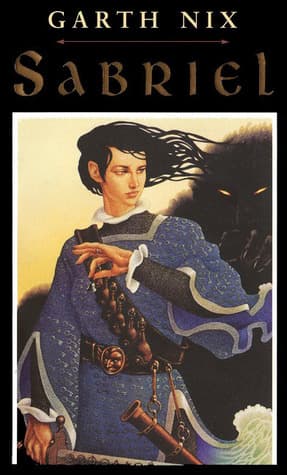
- Sabriel
Garth Nix
4.2 (185k) average on GoodreadsFantasySorcery of Thorns shares with Sabriel the trope of a young, sheltered protagonist inheriting a dangerous role and being thrust into a world beyond their understanding, featuring unique magical systems and a journey of self-discovery. Both protagonists must confront ancient evils and navigate magical realms where life and death are intertwined with arcane knowledge.
- A Court of Thorns and Roses
Sarah J. Maas
4.2 (476k) average on GoodreadsFantasyBoth novels feature a strong female lead navigating a magical world and developing a slow-burn romance with a powerful, mysterious male figure. While Sorcery of Thorns leans more into classic fantasy and less explicit romance, it shares the character-driven focus and the gradual building of trust and affection between protagonists that is a hallmark of Maas's popular series. The witty banter and initial antagonism turning into deep affection are also common threads.
- Harry Potter and the Sorcerer's Stone
J.K. Rowling
4.5 (7M) average on GoodreadsFantasyRescued from a miserable life under the stairs, an orphaned boy discovers he's a wizard destined for a magical school, where he uncovers a dangerous secret tied to the dark wizard who murdered his parents.
- The Hunger Games
Suzanne Collins
4.3 (6.4M) average on GoodreadsFantasyIn a future where children fight to the death on live television, Katniss Everdeen volunteers for the arena, turning a death sentence into a fight for survival and a spark of rebellion.
- 1984
George Orwell
4.2 (3.1M) average on GoodreadsPoliticsIn a future where surveillance and thought control are absolute, a man's search for truth clashes with the Party, showing that hope can be a form of rebellion.
- Divergent
Veronica Roth
4.2 (2.9M) average on GoodreadsFantasyIn a society divided by virtues, a sixteen-year-old's difference from the norm starts a rebellion that threatens her world.





Enjoyed the summary?
A summary gives you the shape of the book. The book itself has the detail, the examples and the voice.
Find Sorcery of Thorns on AmazonAs an Amazon Associate, BookBrief earns from qualifying purchases. How we're funded