
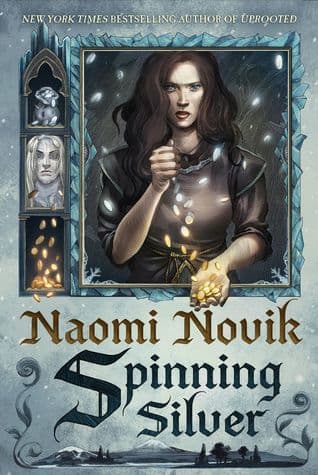
Synopsis
Covers the whole plot, including the ending.
- Difficulty
- Medium
- Pacing
- Moderate
- Mood
- Atmospheric, Magical, Empowering, Romantic, Dark
- Read it if
- You love intricate, character-driven fairy tale retellings with strong female protagonists and a touch of dark romance.
- Skip it if
- You prefer fast-paced action over rich world-building and character development, or dislike multiple POVs.
Spinning Silver Plot Summary
Covers the whole plot, including the ending.
The Moneylender's Daughter
Miryem, the daughter of a Jewish moneylender in Vissarion, grows up poor because her father is too soft to collect debts. Ashamed of their poverty, Miryem decides to change their family's situation. She becomes tough, takes over the business, and strictly collects debts, often asking for interest and collateral. Her success quickly makes her known, and she restores her family's finances, earning enough for new clothes and food. However, her new wealth and her family's look make them stand out in the small, often prejudiced village.
The King of the Staryk's Challenge
One winter, Miryem tells her mother she can turn silver into gold, meaning her skill at moneylending. The Staryk King, a powerful, ancient fey creature of ice and winter, overhears this. He appears before Miryem, taking her words literally, and demands she prove her claim by turning a large chest of silver into gold. Terrified but unable to refuse, Miryem is taken to the Staryk realm. She quickly realizes the King means actual magic and that her life depends on doing the impossible. She gets three days for each chest.
Wanda's Debt and Service
Wanda, a poor peasant girl from a nearby village, faces extreme hardship when her mother dies and her abusive father struggles to support her and her two younger brothers, Stepon and Sergey. Desperate, her father borrows silver from Miryem but cannot repay it. To settle the debt, Wanda is sent to work as a servant in Miryem's home. Initially resentful, Wanda comes to appreciate Miryem's fairness and the safety and warmth of her home. She is a hard worker, quiet, and forms a protective bond with Miryem, noticing the strange things happening around her.
The Staryk Realm and the First Transformation
The Staryk King brings Miryem to his icy, otherworldly realm. He gives her silver and a spinning wheel, expecting her to turn it into gold. Unable to do real magic, Miryem is lost. However, she realizes the Staryk King and his people want human gold, which they cannot create. She uses her intelligence and the King's own magic, his icy touch, to transform the silver. By wearing the King's cold jewelry and enduring his presence, she turns the silver into gold, though the process is painful and partly changes her with Staryk magic. Wanda, sensing Miryem's trouble, secretly brings Miryem food and warmth.
Irina's Betrothal and the Tsar's Secret
Irina, the plain, overlooked daughter of Duke Seryogin, marries Tsar Mirnatius. Her father hopes to gain influence and power through this marriage. Irina discovers the Tsar is not entirely human; he is possessed by a fire demon, a lyeshy, which slowly consumes him and his kingdom. The lyeshy appears as a demonic presence within him, causing madness, destructive fires, and a growing hunger for gold and human souls. Irina, at first terrified, realizes she must find a way to save her husband and her people from this evil, despite having no magic or political power.
Miryem's Three Tasks and Staryk Marriage
Miryem successfully spins three chests of silver into gold for the Staryk King. With each task, she becomes more filled with Staryk magic, her skin paler and her heart colder. After the third task, the Staryk King declares she is worthy of him and demands her hand in marriage, claiming her as his Queen. Miryem, realizing she has been tricked into a binding magical contract, must accept. She becomes the Staryk Queen, living in the cold, beautiful, and dangerous Staryk realm, but secretly planning her escape and to save her human self.
Wanda and Stepon's Plight
Wanda's abusive father becomes more violent and murders her brother, Sergey, in a drunken rage. Wanda and Stepon, her remaining brother, flee their home, seeking refuge with Miryem's family. Miryem's parents, now aware of their daughter's magical marriage, give them shelter. However, when Miryem, now the Staryk Queen, needs help in the Staryk realm, she subtly draws Wanda and Stepon there. Wanda, loyal and clever, helps Miryem navigate the dangerous Staryk world, caring for Stepon while also observing the Staryk's ways and Miryem's change.
Irina's Investigation and Alliance
Irina, now Tsarina, secretly investigates the cause of her husband's illness. She finds old texts and learns about the lyeshy, a fire demon that possesses the Tsar, feeding on his life and the kingdom's wealth. She realizes the demon is growing stronger and plans to consume Mirnatius entirely. Looking for a way to fight it, she hears rumors of Miryem, the woman who turned silver into gold, and thinks she might have the magic needed. Irina bravely travels to Miryem's village, eventually making her way to the Staryk realm to find the Staryk Queen for help.
The Tsar's Lyeshy and the Staryk War
The lyeshy possessing Tsar Mirnatius grows more powerful, causing devastating fires and desolation across the human lands. The Staryk King, whose realm is connected to the human world, sees this as a threat to his own domain. This growing danger, combined with the Staryk King's hold over Miryem, leads to open conflict between the Staryk and human forces. The Staryk, being creatures of winter, wage a magical war of ice and snow against the destructive fire of the lyeshy, threatening to engulf both realms in chaos.
The Three Women's Alliance
Miryem, now Queen of the Staryk, feels caught between her human past and her icy present. Wanda, having followed Miryem into the Staryk realm, provides important emotional support and practical help. Irina, the Tsarina, arrives seeking Miryem's help against the lyeshy. The three women, from different backgrounds, form an alliance. They realize the lyeshy is connected to the Staryk King's trauma and the old pact between the realms. They plan to defeat the lyeshy and free Mirnatius, a plan that requires great sacrifice and a deep understanding of both human and fey magic.
Confronting the Lyeshy
The alliance confronts the lyeshy within Tsar Mirnatius. Miryem, having embraced her Staryk Queen identity while keeping her human heart, uses her unique position and the combined power of Staryk magic and human will. Wanda, with her practicality and loyalty, helps in important ways, often bridging the different magical forces. Irina, despite her lack of magic, provides the necessary human insight and determination, understanding the Tsar's weaknesses. The battle is fierce, requiring Miryem to use the deepest parts of her Staryk power to counter the lyeshy's destructive fire.
Sacrifice and Resolution
The climax involves Miryem's sacrifice, using her unique connection with the Staryk King and her changed nature. She separates the lyeshy from Mirnatius, trapping it in a magical object, freeing the Tsar and healing the land. The lyeshy's defeat also brings a new understanding between the human and Staryk realms. Miryem, having finished her role, chooses her path, finding a balance between her human identity and her Staryk magic. Wanda and Irina also find their places in this new, more peaceful world, forever connected by their shared experience.
Principal Figures
Miryem
Protagonist
A pragmatic Jewish moneylender's daughter who becomes Queen of the Staryk.
Miryem begins as a practical, hardened young woman determined to save her family from poverty. She is intelligent, resourceful, and possesses a sharp wit, though initially she lacks warmth. Her journey forces her to confront the supernatural, pushing her beyond her material concerns. She develops a profound understanding of sacrifice, power, and the complex nature of identity, learning to blend her human compassion with her acquired fey nature.
Relationships: Staryk King (forced marriage, magical bond, eventual deep understanding); Wanda (employer-servant, evolving into deep friendship and loyalty); Irina (unlikely ally in a common cause); Miryem's Father (loving but exasperating, source of initial hardship); Miryem's Mother (supportive, sometimes overwhelmed, source of practical wisdom)
Wanda
Supporting
A resilient peasant girl who becomes Miryem's loyal companion and confidante.
Wanda is a quiet, observant, and deeply loyal young woman from a peasant family. She endures immense hardship and abuse but retains a strong sense of duty and compassion. Her practicality and grounded nature provide a crucial anchor for Miryem in the magical chaos. She is intelligent in her own way, noticing details others miss and demonstrating a quiet strength that allows her to survive and protect her loved ones.
Relationships: Miryem (servant-employer, evolving into deep friendship and loyalty); Stepon (protective older sister); Sergey (loving older sister, mourns his death); Wanda's Father (abusive, source of trauma)
Irina
Supporting
A plain and overlooked noblewoman who becomes Tsarina and fights a demon.
Irina is initially presented as a meek, underestimated daughter of a duke, married off for political gain. Despite her lack of beauty or social grace, she possesses keen intelligence, an iron will, and a deep sense of responsibility towards her husband and her people. She is courageous and determined, willing to face terrifying supernatural threats to protect her kingdom and the man she comes to care for, even when she feels utterly out of her depth.
Relationships: Tsar Mirnatius (arranged marriage, evolving into love and mutual protection); Miryem (unlikely ally in a common cause); Duke Seryogin (Irina's Father) (distant, manipulative, source of initial arranged marriage)
The Staryk King
Antagonist/Love Interest
The ancient, icy, and powerful ruler of the Staryk, who marries Miryem.
The Staryk King is a mysterious and ancient fey being, embodying winter and ice. He is immensely powerful, possessive, and initially appears cruel and uncaring, viewing humans as lesser beings. He is bound by ancient laws and traditions, yet also carries a deep, hidden grief and a sense of responsibility for his people. His actions, though often terrifying, are driven by a desire to protect his realm and his own unique understanding of balance.
Relationships: Miryem (forced marriage, magical bond, eventual deep understanding); Tsar Mirnatius (ancient rivalry, conflict over the lyeshy)
Tsar Mirnatius
Supporting
The young Tsar possessed by a fire demon, the lyeshy.
Tsar Mirnatius is a young, initially charming ruler who is secretly tormented by a fire demon, a lyeshy, that has possessed his family line. He struggles to maintain control as the demon slowly consumes him, causing periods of destructive madness and a growing threat to his kingdom. He is a victim of an ancient curse, but he also tries to fight back against the demon, showing a flicker of inherent goodness and a desire to protect his people.
Relationships: Irina (arranged marriage, evolving into love and mutual protection); The Lyeshy (possessor and possessed, internal struggle); The Staryk King (ancient rivalry, conflict over the lyeshy)
The Lyeshy
Antagonist
A destructive fire demon possessing Tsar Mirnatius.
The Lyeshy is an ancient, parasitic fire demon that has possessed the lineage of the Tsars for generations. It feeds on life, prosperity, and the Tsar's own essence, manifesting as destructive fires, madness, and a creeping desolation across the land. It represents uncontrolled, consuming power and the antithesis to the Staryk's cold, preserving magic. Its ultimate goal is to completely consume the Tsar and expand its fiery domain.
Relationships: Tsar Mirnatius (possessor and possessed, internal struggle); Irina (threatened by the lyeshy); The Staryk King (antagonistic force, source of conflict)
Stepon
Supporting
Wanda's younger brother, who finds refuge with Miryem.
Stepon is Wanda's younger brother, a quiet and perceptive child. He is deeply traumatized by the poverty and violence of his early life, especially the murder of his brother Sergey. He relies heavily on Wanda for protection and comfort. His presence highlights Wanda's nurturing side and serves as a symbol of innocence and the future that the characters are fighting to protect.
Relationships: Wanda (dependent younger brother, protected by her); Miryem (protected by her, lives in her household)
Miryem's Father
Supporting
A kind but ineffectual moneylender.
Miryem's father is a gentle, compassionate man who is ill-suited to the harsh realities of moneylending. His inability to collect debts plunges his family into poverty, prompting Miryem to take over. He is loving but passive, representing the traditional, less pragmatic approach that Miryem rebels against. He later provides a safe haven for Wanda and Stepon, demonstrating his enduring kindness.
Relationships: Miryem (loving father, initially disappointed by his ineffectiveness); Miryem's Mother (loving husband); Wanda (kind benefactor)
Miryem's Mother
Supporting
A practical and supportive woman.
Miryem's mother is a more practical and grounded figure than her husband. She supports Miryem's efforts to stabilize their family financially, though she sometimes worries about the changes in her daughter. She is a source of comfort and traditional wisdom, and her quick wit and strong will are evident in Miryem. She provides a stable home base for the family and, later, for Wanda and Stepon.
Relationships: Miryem (loving mother, supportive and concerned); Miryem's Father (loving wife); Wanda (kind benefactor)
Themes & Insights
The Power of Words and Promises
The novel shows how words, especially boasts and promises, can have real, magical effects. Miryem's casual boast about turning silver into gold directly calls the Staryk King and ties her to an impossible task. Similarly, old promises and bargains, like the one that cursed Tsar Mirnatius with the lyeshy, continue to shape the present. The Staryk are deeply tied to the literal meaning of language, showing the magic in spoken vows and agreements, and the responsibility that comes with speaking words into existence.
“Words have power. The words of a tsar, the words of a king, the words of a moneylender. They can make or break a man. They can turn silver into gold.”
Identity and Transformation
A main theme is the characters' transformation, both physically and emotionally, and the struggle to keep one's identity during big changes. Miryem undergoes a literal magical transformation, becoming part-Staryk, with pale skin and a cold heart. She struggles to balance her human self with her new fey nature. Wanda changes from a quiet servant to a confident and important ally. Irina goes from a powerless pawn to a brave Tsarina. These transformations show that identity is flexible and can be formed through hardship and choice, rather than being fixed by birth, ultimately embracing a mixed self.
“I was a girl who turned silver into gold, and then I was a queen who sat on an ice throne, and then I was a woman who knew what she wanted.”
Feminine Agency and Sisterhood
The story champions the power of its female characters in a world run by men. Miryem takes control of her family's money when her father fails; Wanda escapes an abusive home and finds her own way; Irina bravely confronts a demon to save her husband and kingdom. Their individual strengths combine as they form an alliance. The bond between Miryem, Wanda, and Irina, born of need, becomes a powerful sisterhood, showing that women can find strength and do seemingly impossible things by supporting each other.
“It was a small thing, for a woman to be a queen. But it was everything, for a woman to be herself.”
The Duality of Nature and Balance
The novel explores the constant interaction and necessary balance between opposite forces: ice and fire, human and fey, life and death, warmth and cold. The Staryk represent winter and preservation, while the lyeshy embodies destructive fire. Miryem's journey is about combining these dualities within herself and between the realms. The conflict's resolution involves not destroying one force, but creating a new, more balanced harmony, suggesting that extremes are destructive, but their integration creates a richer, more sustainable world. This theme appears in the landscapes, the characters' internal struggles, and the magical systems.
“The world needed both fire and ice, but they must not devour each other.”
Prejudice and Acceptance
Miryem and her family face prejudice in their village because of their Jewish heritage and their role as moneylenders, showing historical biases. This theme is subtly woven throughout, showing how fear of the 'other' can appear. However, the story ultimately promotes acceptance and understanding across different cultures and species (human and Staryk). The characters learn to see past surface differences and embrace the unique strengths each person brings, building empathy and breaking down barriers of misunderstanding, especially between the human and fey worlds.
“We are not like them, not quite, but we are not so different either. We are all of us trying to make our way in the world.”
Plot Devices & Literary Techniques
The Impossible Task
A magical challenge that drives the protagonist's journey.
Miryem's boast to turn silver into gold leads to the Staryk King's demand for her to perform this impossible task three times. This device is a classic fairy tale trope, forcing the protagonist into an extraordinary situation where her ingenuity and resilience are tested to their limits. It serves as the primary catalyst for Miryem's transformation and her entry into the magical world, establishing the high stakes and the fantastical nature of the narrative.
The Magical Bargain/Contract
Binding agreements with supernatural entities.
The Staryk King's demands on Miryem, and later her marriage to him, are framed as magical bargains that carry literal and binding consequences. These contracts are often deceptive, with hidden clauses or interpretations, reflecting the dangerous nature of dealing with fey. This device underscores the theme of words having power and creates inescapable dilemmas for the characters, forcing them to find clever ways to fulfill or circumvent the terms without breaking them entirely.
The Enchanted Object (Spinning Wheel)
A mundane object imbued with magical significance.
The spinning wheel given to Miryem by the Staryk King is more than just a tool; it becomes a symbol of her impossible task and her eventual transformation. While Miryem doesn't use it to literally spin gold through magic initially, it represents the act of creation, and later, the blending of her human and Staryk natures. It is a focal point for her magical work and a tangible link between the human world of craft and the fey world of magic.
The Doppelgänger/Possession
A character's identity being usurped or shared by another entity.
Tsar Mirnatius's possession by the lyeshy is a key plot device. It creates an internal conflict within the Tsar and an external threat to the kingdom, as the demon slowly consumes his identity and power. This device allows for the exploration of duality and the struggle for self-control, as Irina fights to save the 'true' Tsar from the demonic entity, highlighting the vulnerability of even powerful rulers to ancient curses and external forces.
Spinning Silver Quotes
“I am not a princess. I am a merchant's daughter, and I will not be bought.”
“Gold for gold, silver for silver, and iron for iron. That is the way of things.”
“There are some things that cannot be paid for with coin, or even with magic.”
“Fear is a cold companion, but it is a useful one. It reminds you to be careful.”
“Power is not in what you have, but in what you can do.”
“Sometimes the only way to get what you want is to make it yourself.”
“Love is not a thing to be given lightly, nor to be taken for granted.”
“A bargain is a bargain, even when it costs you more than you intended.”
“The world is not always fair, but it is always what you make of it.”
“Sometimes the best magic is simply hard work and a clear head.”
“You do not need to be strong to fight, only to endure.”
“It is a dangerous thing to owe a debt to someone who can never truly be paid.”
“There are many kinds of riches, and not all of them shine.”
“The greatest power is to choose your own path, even when others try to choose it for you.”
Quiz
10 questions on the plot and the characters. Each answer comes with a short explanation.
Question 1
What is Miryem's initial reputation that catches the attention of the Staryk king?
- A skilled healer
- A formidable warrior
- Someone who can turn silver into gold
- A talented seamstress
Show answer
C. Someone who can turn silver into gold Miryem's ability to collect debts and make her family prosper leads to the boast that she can turn silver into gold, which is what first attracts the Staryk king's notice.
Question 2
What is the impossible challenge the Staryk king sets for Miryem?
- To defeat him in a duel
- To turn all his silver into gold
- To bring him a living sunbeam
- To build a castle of ice
Show answer
B. To turn all his silver into gold The Staryk king, hearing of her reputation, challenges Miryem to actually turn his vast stores of silver into gold, three times over.
Question 3
Who is the peasant girl drawn into Miryem's web and later becomes her servant?
- Irina
- Magreta
- Wanda
- Katya
Show answer
C. Wanda Wanda is the peasant girl who comes to work for Miryem's family, fleeing an abusive father, and becomes an essential ally.
Question 4
What secret does Tsar Mirnatius hide?
- He is secretly a Staryk.
- He is possessed by a fire demon.
- He is a shapeshifter who turns into a bear.
- He is a long-lost son of the Staryk king.
Show answer
B. He is possessed by a fire demon. Tsar Mirnatius is afflicted by a fire demon that periodically takes control of him, turning him into a monstrous, destructive entity.
Question 5
What does Miryem gain in exchange for turning the Staryk king's silver into gold?
- Immense wealth and power in the human world.
- A necklace of pure gold and the king's respect.
- Jewels that burn like ice and the title of Queen of the Staryk.
- Her freedom and a magical cloak.
Show answer
C. Jewels that burn like ice and the title of Queen of the Staryk. Each time she turns the silver to gold, the Staryk king gives her a piece of jewelry that burns with cold, eventually crowning her as his queen.
Question 6
How does Wanda's family situation improve after she begins working for Miryem?
- Her father finds a new, lucrative job.
- Her brothers gain education and skills through Miryem's family.
- They receive a large inheritance from a distant relative.
- Miryem magically turns their crops into gold.
Show answer
B. Her brothers gain education and skills through Miryem's family. Wanda's brothers, especially Stepon, learn to read and manage accounts, ultimately improving their family's economic standing and giving them a path out of poverty.
Question 7
What is the primary thematic significance of the 'cold' associated with the Staryk and Miryem's time among them?
- It represents the harshness of winter in the land.
- It symbolizes emotional detachment and the hardening of one's heart for survival.
- It is a literal magical defense against the fire demon.
- It signifies the lack of warmth and love in the Staryk kingdom.
Show answer
B. It symbolizes emotional detachment and the hardening of one's heart for survival. The cold Miryem experiences and embodies during her time with the Staryk reflects her initial choice to harden her heart to survive and prosper, a central theme of her character development.
Question 8
How does Irina, the daughter of the local lord, become entangled in the magical conflict?
- She is accidentally cursed by Miryem.
- Her father attempts to marry her to Tsar Mirnatius, placing her in danger from his secret.
- She attempts to steal the Staryk king's gold.
- She forms a magical pact with the Staryk.
Show answer
B. Her father attempts to marry her to Tsar Mirnatius, placing her in danger from his secret. Irina's father pushes her into a marriage with Tsar Mirnatius, making her the first to discover his demonic possession and forcing her to seek help.
Question 9
What is the true nature of the 'gold' Miryem makes for the Staryk king?
- It is actual gold, magically transmuted.
- It is the Staryk king's own silver, transformed by the warmth of Miryem's human magic.
- It is an illusion, a trick to appease the king.
- It is gold stolen from the human world.
Show answer
B. It is the Staryk king's own silver, transformed by the warmth of Miryem's human magic. The 'gold' Miryem produces is not actual gold from the human world, but the Staryk king's own silver transmuted by her human magic, which carries the warmth and vitality of the human world, something the Staryk lack.
Question 10
What ultimately happens to the fire demon possessing Tsar Mirnatius?
- It is banished back to its own realm by Miryem's magic.
- It is absorbed by the Staryk king, creating a new balance.
- It is drawn out and consumed by the Staryk king, who needs warmth.
- It is killed by Wanda using a special silver weapon.
Show answer
C. It is drawn out and consumed by the Staryk king, who needs warmth. The Staryk king, who desires warmth and life to balance his cold existence, ultimately consumes the fire demon, integrating it into himself and restoring Mirnatius.
Spinning Silver FAQ
What initial event forces Miryem to take over her family's moneylending business?
Miryem's father is a kind but ineffective moneylender, unable to collect debts. His leniency leads their family to the brink of poverty and starvation, prompting Miryem to harden her heart and proactively collect what is owed to them, transforming her family's fortunes.
How does Miryem first attract the attention of the Staryk King?
Miryem, having successfully collected her family's debts and grown wealthy, makes an ill-advised boast that she can 'turn silver into gold.' This boast, overheard by the fey, directly challenges the Staryk King, a creature of ice and silver, leading him to demand she perform this feat for him.
Who is Wanda, and how does she become entangled in Miryem's story?
Wanda is a poor peasant girl from a brutalized family, whose father owes money to Miryem's family. To repay the debt and escape her abusive home, Wanda comes to work for Miryem, initially as a servant, and later becomes a trusted confidante and a crucial ally against the Staryk King.
What is the true nature of Tsar Mirnatius, and how does it impact the human kingdom?
Tsar Mirnatius is possessed by a fire demon, a Lyeshy, which slowly consumes him and his kingdom. This demon causes the harsh, unnatural winters, draining the land of warmth and life, making him a dangerous and unpredictable ruler who poses a threat to both human and Staryk realms.
How does Irina, the daughter of a local lord, become involved in the magical conflict?
Irina is the ambitious daughter of a lord who plots to marry her to Tsar Mirnatius. She becomes entangled when she discovers the Tsar's demonic possession and, seeking to protect herself and gain power, uses a magic mirror and eventually aligns with Miryem and Wanda to combat the Lyeshy.
What is the significance of Miryem's mother's locket, and how does it connect to the Staryk world?
Miryem's mother's locket contains a piece of Staryk silver, a gift from Miryem's grandmother. It acts as a protective charm, making Miryem invisible to the Staryk King at crucial moments and hinting at her family's deeper, forgotten connection to the fey realm and its magic.
How does the 'silver into gold' boast relate to the Staryk King's true nature and his realm?
The Staryk King's realm is intrinsically tied to silver, ice, and cold; gold, representing warmth and human life, is anathema to him. Miryem's ability to 'turn silver into gold' is not literal alchemy, but her capacity to transform Staryk silver into something life-giving and warm, a challenge to his very essence.
What is the historical or folkloric inspiration for the Lyeshy demon possessing Tsar Mirnatius?
The Lyeshy is inspired by Slavic folklore, specifically a forest spirit or demon. In 'Spinning Silver,' it is depicted as a fiery, consuming entity that brings unnatural winter and drains life, a stark contrast to the ice-cold Staryk, but equally destructive.
How do the three female protagonists—Miryem, Wanda, and Irina—represent different facets of female agency?
Miryem embodies resilience and self-reliance, taking control of her family's finances. Wanda represents quiet strength and loyalty, finding her voice and purpose through service and compassion. Irina demonstrates ambition and strategic intelligence, navigating court politics and seizing opportunities for power and survival.
Discuss the psychological impact of Miryem's 'hardened heart' on her character development.
Miryem's initial hardening of her heart allows her to survive and thrive as a moneylender, but it also isolates her. Her journey with the Staryk King gradually softens her, forcing her to embrace vulnerability and love, ultimately leading to a more balanced and powerful self.
How does Wanda's experience with her abusive family shape her later choices and relationships?
Wanda's brutal upbringing instills in her a deep desire for safety, kindness, and self-worth. It makes her fiercely loyal to Miryem, who offers her a haven, and it fuels her courage to protect her younger brothers and eventually stand up to both human and magical threats, finding her own strength.
What psychological barriers does Irina overcome to fully claim her power and agency?
Irina initially struggles with her father's manipulation and her prescribed role as a wife. She overcomes her fear of the Lyeshy and her own self-doubt to embrace her magical abilities and strategic intellect, ultimately choosing her own path and asserting her will against powerful entities.
Is the Staryk King a villain or a misunderstood force of nature? Discuss his complex morality.
The Staryk King is complex; he is initially antagonist, cruel, and alien, embodying cold and death. However, he is also a product of his nature, bound by his own rules and a victim of the Lyeshy's encroachment. His love for Miryem and his ultimate sacrifice suggest a deeper, more nuanced morality than pure villainy.
How does the book explore the themes of sacrifice and love in its resolution?
The book illustrates sacrifice through Miryem's willingness to live in the Staryk realm, Wanda's bravery in facing the Lyeshy, and the Staryk King's ultimate self-destruction to save Miryem and his world. These acts are deeply intertwined with different forms of love—familial, platonic, and romantic—driving the characters' most profound choices.
What is the significance of the dual settings—the human world and the Staryk realm—in the narrative?
The human world represents warmth, life, and the struggles of poverty and ambition, while the Staryk realm embodies cold, death, and ancient magic. The interaction between these worlds highlights themes of balance, the clash of cultures, and the idea that true power lies in bridging seemingly opposing forces.
How does the ending reinterpret traditional fairy tale tropes, particularly the 'happily ever after'?
The ending deviates from a simplistic 'happily ever after' by showing a complex, earned peace. Miryem accepts a life intertwined with the Staryk King, a choice of love and duty rather than escape. Wanda finds her own quiet contentment and agency, and Irina embraces a powerful, independent role, suggesting that happiness is multifaceted and often unconventional.
In what ways does Miryem's Jewish heritage influence her character and the story's themes?
Miryem's Jewish heritage informs her family's role as moneylenders, a common historical position for Jewish people. It also shapes her strong sense of family, community, and resilience, and subtly weaves in themes of otherness and survival in a prejudiced world, adding depth to her character and motivations.
What role does the magic mirror play in Irina's arc and the overall plot?
The magic mirror acts as a catalyst for Irina's self-discovery and a vital tool in confronting the Lyeshy. It allows her to observe the Tsar's true nature, communicate with the Staryk King, and eventually trap the demon, making her an active participant in the magical conflict rather than a passive observer.
About the author
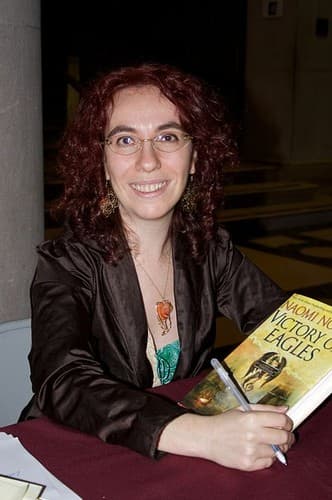
Naomi Novik is an author known for her works of fiction, particularly in the fantasy genre. Her notable books include "Uprooted," which draws on Eastern European folklore, and "Spinning Silver," a retelling of the Rumpelstiltskin tale. Both novels have received significant attention and praise for their imaginative storytelling and rich character development.
Similar books
- Uprooted
Naomi Novik
4.1 (167k) average on GoodreadsFantasyShares a similar Eastern European fairy tale aesthetic, strong female lead, and magical challenges.
- A Court of Thorns and Roses
Sarah J. Maas
4.2 (476k) average on GoodreadsFantasyMaas's 'A Court of Thorns and Roses' (ACOTAR) is a popular, high-fantasy retelling of 'Beauty and the Beast' known for its strong romantic focus, action sequences, and expansive fae world. While both feature powerful magical beings and strong female protagonists, 'Spinning Silver' offers a more grounded, nuanced exploration of economic and social power dynamics, and its romantic elements are less central and more gradually developed. ACOTAR prioritizes high-stakes romance and fast-paced action, while Novik delves deeper into the practicalities of survival, the complexities of debt, and the subtle magic of negotiation and wit.
- Harry Potter and the Sorcerer's Stone
J.K. Rowling
4.5 (7M) average on GoodreadsFantasyRescued from a miserable life under the stairs, an orphaned boy discovers he's a wizard destined for a magical school, where he uncovers a dangerous secret tied to the dark wizard who murdered his parents.
- The Hunger Games
Suzanne Collins
4.3 (6.4M) average on GoodreadsFantasyIn a future where children fight to the death on live television, Katniss Everdeen volunteers for the arena, turning a death sentence into a fight for survival and a spark of rebellion.
- 1984
George Orwell
4.2 (3.1M) average on GoodreadsPoliticsIn a future where surveillance and thought control are absolute, a man's search for truth clashes with the Party, showing that hope can be a form of rebellion.
- Divergent
Veronica Roth
4.2 (2.9M) average on GoodreadsFantasyIn a society divided by virtues, a sixteen-year-old's difference from the norm starts a rebellion that threatens her world.






Enjoyed the summary?
A summary gives you the shape of the book. The book itself has the detail, the examples and the voice.
Find Spinning Silver on AmazonAs an Amazon Associate, BookBrief earns from qualifying purchases. How we're funded