
Synopsis
Covers the whole plot, including the ending.
- Difficulty
- Medium
- Pacing
- Moderate
- Mood
- Intense, Reflective, Hopeful, Suspenseful
- Read it if
- You want an intense, character-driven story about overcoming domestic abuse, family secrets, and finding the courage to heal.
- Skip it if
- You prefer lighthearted stories or are sensitive to themes of domestic violence and trauma.
Split Plot Summary
Covers the whole plot, including the ending.
A Bruised Beginning
Sixteen-year-old Jace Witherspoon arrives at Christian's door, his face bruised from his father's latest violent outburst. He has only $3.84 and a secret he is trying to escape. Christian, Jace's older brother, had left home years ago to escape their abusive father, and their relationship is tense. Despite the tension, Christian reluctantly takes Jace in, giving him a temporary safe place from the violence and a chance to start fresh in a new city. Jace is overwhelmed by the change and the weight of his past, struggling to adjust to a life without constant fear, but also without his mother.
New School, New Faces
Jace enrolls in Westview High, a new high school, where he tries to blend in and not attract attention. He meets other students, including Miriam, who is kind and artistic and seems like a friend, and the more outgoing Brooke. Jace hesitates to open up to anyone, always on guard and afraid his past will catch up to him. He struggles with schoolwork, but the routine offers a small sense of normalcy he desperately wants, even as he deals with flashbacks and anxiety.
A Job and a Glimmer of Hope
To help Christian and gain some independence, Jace gets a job washing dishes at a local diner, 'The Daily Grind.' The work is hard, but it distracts him from his thoughts and provides a small income. His co-workers, especially the firm but supportive manager, offer him a different kind of community. This job gives Jace a sense of responsibility and a small taste of what a normal life might feel like, allowing him to save money and feel less like a burden to Christian, even if his brother remains emotionally distant.
The Weight of the Secret
Jace often thinks about his ex-girlfriend, Hannah, and the secret they share from his previous life. He constantly worries about her and whether their secret will be revealed, bringing his abusive father's anger down on them both. He feels immense guilt for leaving Hannah, believing he is responsible for her safety. This emotional burden keeps him from fully engaging in his new life, as he always looks over his shoulder, fearing the results of his past actions and the possibility of his father finding them.
Christian's Past Revealed
Through subtle interactions and Jace's observations, Christian's own traumatic past with their father slowly comes out. Jace learns that Christian also suffered severe physical abuse and had to leave home in similar circumstances, which explains his brother's guarded nature and reluctance to talk about their family. This shared history begins to close the gap between them, as Jace starts to understand Christian's emotional distance not as indifference, but as a way to cope with his own pain and survival. It is a difficult bond, formed in shared trauma.
A Budding Romance
Jace is drawn to Miriam, his classmate, who is artistic, thoughtful, and kind. They spend time together, and Jace feels a connection he has not felt in a long time. However, his fear of his father, the secret with Hannah, and his own emotional scars make him hesitant to start a relationship. He worries about exposing Miriam to his dangerous past and fears he is not worthy of her affection, constantly fighting an internal conflict between his desire for closeness and his protective instincts.
The Threat of Exposure
Jace receives a phone call that breaks his fragile peace: a message from his old town, hinting that his secret might be coming out and that Hannah could be in danger. This call brings back his deepest fears, confirming his constant anxiety that his past is inescapable. He immediately fears for Hannah's safety and the possibility of his father tracking him down. This event forces Jace to face the reality that he cannot simply run from his problems; he must address them if he wants to protect those he cares about.
A Confrontation with Christian
The threat leads to a heated and emotional confrontation between Jace and Christian. Jace expresses his desperate need to go back for Hannah and his mother, while Christian, having been through similar trauma, initially tries to stop him, fearing for Jace's safety. Their discussion reveals their different ways of coping with their father's abuse – Christian's escape versus Jace's desire to confront. This argument, though painful, forces both brothers to express their fears and their love for their mother, strengthening their bond.
The Return Home
Despite immense fear and Christian's initial resistance, Jace decides he must return to his hometown. He cannot live with the guilt of leaving his mother and Hannah in a dangerous situation. Christian, after much struggle, decides to support Jace, understanding that his brother needs to face his past to truly heal. This decision marks a significant change for Jace, as he moves from being a victim to someone taking action, ready to confront the source of his trauma.
Facing the Past
Jace returns to his old home, ready to confront his abusive father. This act is not only about protecting his mother but also about regaining his own control. He also seeks to reconcile with Hannah, to understand the effects of his departure, and to ensure her safety. The confrontation is terrifying and emotional, but Jace stands firm, no longer willing to be silenced or intimidated. This final act of courage is important in his journey toward healing and breaking the cycle of abuse.
Split Characters
Jace Witherspoon
Protagonist
A sixteen-year-old boy escaping an abusive father, burdened by guilt and a secret.
Jace is a sensitive and introverted sixteen-year-old, deeply scarred by years of physical and emotional abuse from his father. He carries immense guilt for leaving his mother and ex-girlfriend, Hannah, behind, believing he should have protected them. He is initially fearful, withdrawn, and struggles with anxiety and flashbacks. Despite his trauma, he possesses a strong moral compass and a deep capacity for love and loyalty, which eventually compel him to confront his past. He is trying to find his own identity outside of his father's shadow.
Relationships: Christian Witherspoon (Estranged older brother, later becomes a reluctant supporter and confidant.); Hannah (Ex-girlfriend, shares a significant secret and is a source of Jace's guilt and concern.); Miriam (New friend and potential love interest, represents hope and normalcy.); Mother (Victim of abuse, Jace feels immense responsibility and love for her.); Father (Abusive parent, the source of Jace's trauma and fear.)
Christian Witherspoon
Supporting
Jace's older brother, who escaped their abusive father years ago and is emotionally guarded.
Christian is Jace's older brother, who left home years prior to escape their father's abuse. He is initially distant, cynical, and emotionally guarded, having built walls to protect himself from his own trauma. He reluctantly takes Jace in but struggles to offer emotional support, often pushing Jace away. Beneath his tough exterior, he cares deeply for Jace and their mother. His experiences make him wary of confronting the past, but he eventually comes to understand Jace's need to do so, offering his support.
Relationships: Jace Witherspoon (Estranged younger brother, later becomes a confidant and source of mutual healing.); Mother (Victim of abuse, Christian also carries guilt and concern for her.); Father (Abusive parent, the reason for Christian's flight from home.)
Hannah
Supporting
Jace's ex-girlfriend, who holds a secret from their past and remains in danger.
Hannah is Jace's ex-girlfriend from his hometown. She is intertwined with Jace's secret and remains in a precarious situation, potentially still under the threat of Jace's father. While not physically present for much of the story, her well-being and the secret she holds weigh heavily on Jace. She represents the unresolved past and Jace's lingering guilt and responsibility. Her character serves as a catalyst for Jace's eventual decision to return home and confront his past.
Relationships: Jace Witherspoon (Ex-girlfriend, shares a significant secret and is a source of Jace's guilt and concern.)
Miriam
Supporting
Jace's kind and artistic classmate, who offers him a glimpse of normalcy and potential romance.
Miriam is a kind, empathetic, and artistic girl whom Jace meets at his new school. She is observant and understanding, recognizing Jace's pain without prying. She represents a potential for a normal, healthy relationship and a future free from his past. Her gentle nature and genuine interest in Jace help him to slowly open up and experience moments of peace and connection. She is a beacon of hope and a contrast to the darkness of his past, making Jace question his ability to have a future.
Relationships: Jace Witherspoon (New friend and potential love interest, represents hope and normalcy.)
Jace's Mother
Mentioned
A victim of domestic abuse, trapped by Jace's father.
Jace's mother is a victim of his father's prolonged abuse, remaining in the dangerous household after Jace leaves. She is largely an off-page character but her presence and suffering are a constant source of Jace's guilt, worry, and motivation. She represents the cycle of abuse and the difficulty of escaping it, and her safety is paramount in Jace's decision to return home. Her love for her sons is implied, but her inability to leave her husband is a source of torment for Jace.
Relationships: Jace Witherspoon (Son, Jace feels immense responsibility and love for her.); Christian Witherspoon (Son, Christian also carries guilt and concern for her.); Father (Abusive husband.)
Jace's Father
Antagonist
The physically and emotionally abusive patriarch of the Witherspoon family.
Jace's father is the primary antagonist, a violent and controlling man responsible for the physical and emotional abuse Jace and Christian endured, and who continues to abuse their mother. He is a terrifying presence, even when off-page, his shadow looming over Jace's every decision. He represents the cycle of violence and the fear that traps victims. His presence is defined by his brutality and his absolute power over his family, which Jace must eventually overcome to find freedom.
Relationships: Jace Witherspoon (Son, victim of his abuse.); Christian Witherspoon (Son, victim of his abuse.); Mother (Wife, victim of his abuse.)
Split Themes
The Cycle of Abuse and Healing
The novel explores the impact of domestic abuse on individuals and families, and the difficult path toward freedom and healing. Jace's physical and emotional scars, his anxiety, and his guilt are direct results of his father's violence. Christian's emotional distance and his initial reluctance to engage with Jace's pain also come from his own history of abuse. The story shows how victims often feel trapped, but also the courage it takes to confront the abuser and seek recovery, as Jace does by returning home. It emphasizes that healing is not just about escaping, but about facing the trauma.
“You can't just run away from everything, Jace. Sometimes you have to go back to fix it.”
Guilt and Responsibility
A main theme is the overwhelming guilt Jace carries for leaving his mother and Hannah. He feels responsible for their safety and believes his departure worsened their situations. This guilt is a constant burden that keeps him from fully embracing his new life and relationships. It appears in his flashbacks, his worry, and his inability to move forward without addressing the past. The novel examines the complex emotions of survivors, who often feel responsible for situations beyond their control, and how confronting that guilt is essential for freedom.
“I was supposed to protect them. That's what a man does.”
The Nature of Family
The book looks at the complex and often broken nature of family, especially with abuse. The Witherspoon family is defined by violence, but also by the lasting, if complicated, love between the brothers and for their mother. Christian and Jace's relationship, initially strained by years of separation and unspoken trauma, slowly improves as they acknowledge their shared pain. The story questions what it means to be a family when one member is an abuser, and how loyalty, love, and protection appear in such situations. It suggests that true family support can be a strong force for healing.
“He was my brother. And even if we didn't talk much, even if he was a jerk, he was still family.”
Finding a Voice and Agency
Jace starts the story as a silenced and controlled person, unable to speak out against his father or express his own needs. His journey is about slowly finding his voice and regaining control. From running away, to making new friends, to getting a job, he gradually asserts himself. The final example of this theme is his decision to return home and confront his father, a terrifying but empowering act. This shows his shift from a passive victim to an active participant in shaping his own future, and protecting those he cares about.
“I wasn't a kid anymore. I wasn't just going to stand there and take it.”
Plot Devices & Literary Techniques
Flashbacks and Internal Monologue
Brief, vivid recollections of past abuse and Jace's constant internal struggle.
Flashbacks and Jace's internal monologue are crucial in conveying the depth of his trauma without explicitly detailing every violent act. These fragmented memories, often triggered by everyday events, illustrate Jace's PTSD and the pervasive fear that lingers. His internal thoughts provide direct access to his guilt, anxiety, and his struggle to reconcile his past with his present, allowing readers to deeply empathize with his emotional state and understand the constant battle he faces just to function.
The Secret with Hannah
A mysterious past event involving Jace and his ex-girlfriend, serving as a driving force for his anxiety.
The secret Jace shares with Hannah is a significant plot device, acting as a constant source of tension and motivation. Its ambiguous nature keeps the reader guessing and adds to Jace's emotional burden. This secret, gradually hinted at, serves as a powerful link to his past and a catalyst for his eventual decision to return home. It highlights the lasting repercussions of abuse, not just on the direct victims, but on those who try to protect them, and the moral dilemmas they face.
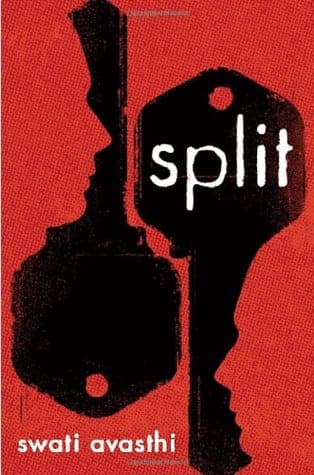
The 'Split' Metaphor
The title itself, representing the physical and emotional break from an abusive past.
The 'split' refers not only to Jace's physical separation from his abusive father but also to the emotional and psychological fracturing he experiences. It signifies the decision to break away from a toxic environment, but also the internal division he feels between his past trauma and his desire for a new future. The metaphor extends to the fractured relationships within his family, and the internal conflict he faces in trying to heal and become whole again after such a profound break.
Christian's Parallel Experience
Christian's past abuse and escape mirror Jace's, providing context and a path for their relationship.
Christian's own history of abuse and his earlier escape from their father serves as a powerful parallel to Jace's current situation. This device provides a deeper understanding of Christian's guarded personality and initially strained relationship with Jace. It establishes a shared trauma that ultimately allows the brothers to connect, as Christian's experiences validate Jace's feelings and help guide his decisions. It shows how different people cope with the same trauma, and how shared understanding can lead to healing.
Split Quotes
“Sometimes the hardest part about being broken isn't the breaking, it's putting yourself back together.”
“Love isn't about finding someone to complete you. It's about finding someone who accepts your broken pieces and helps you see the beauty in them.”
“The past isn't a cage, it's a foundation. You can build something new on it, or you can let it crumble beneath you.”
“Silence can be louder than any scream when you're trying to ignore the truth.”
“We all have scars, some visible, some hidden deep inside. They tell our story, if we're brave enough to read them.”
“Hope is a fragile thing, but it's also the most persistent. It finds a way to bloom even in the harshest ground.”
“Trust isn't given, it's earned. And once broken, it's a long, uphill climb to get it back.”
“Sometimes the person you need to forgive the most is yourself.”
“It's easy to pretend everything is fine, but it takes courage to admit when it's not.”
“The heart has a way of remembering what the mind tries to forget.”
“You can't choose what happens to you, but you can choose how you react to it.”
“Home isn't always a place; sometimes it's a feeling, or a person.”
“True strength isn't about never falling, it's about getting back up every time you do.”
“Every ending is just a new beginning, disguised as something sad.”
Quiz
10 questions on the plot and the characters. Each answer comes with a short explanation.
Question 1
Why does Jace Witherspoon arrive at his estranged brother Christian's doorstep?
- He ran away after a fight with his brother.
- His father physically abused him, leaving him with a re-landscaped face.
- He was expelled from his old school and needed a new place to live.
- He was looking for a job opportunity near his brother's home.
Show answer
B. His father physically abused him, leaving him with a re-landscaped face. Jace's arrival is prompted by his father's violence, which is why his face is described as 're-landscaped' and he has very little money.
Question 2
What two significant things does Jace leave behind when he runs away?
- His pet dog and his favorite guitar.
- His mother, who is still with his dad, and his ex-girlfriend, who holds his secret.
- His school transcript and his savings account.
- His old friends and his car.
Show answer
B. His mother, who is still with his dad, and his ex-girlfriend, who holds his secret. The synopsis explicitly states he leaves behind his mother, 'who is still trapped with his dad,' and his ex-girlfriend, 'who is keeping his secret.'
Question 3
What is the primary internal conflict Jace faces regarding moving forward?
- He struggles to find a good job and make new friends.
- He fears he may have to confront his past and 'go back' to truly live again.
- He is worried about his brother Christian's reaction to his secret.
- He misses his old school and wants to return to it.
Show answer
B. He fears he may have to confront his past and 'go back' to truly live again. The synopsis highlights Jace's realization that 'if he really wants to move forward, he may first have to do what scares him most: He may have to go back.'
Question 4
What is the significance of Jace having only '$3.84' upon his arrival at Christian's house?
- It shows he was saving money for a specific purchase.
- It emphasizes his sudden, desperate flight and lack of resources.
- It's a clue to a hidden message or code.
- It represents the exact amount he needed for bus fare.
Show answer
B. It emphasizes his sudden, desperate flight and lack of resources. The small amount of money underscores the abruptness and desperation of Jace's escape, leaving him with almost nothing.
Question 5
How does Jace initially attempt to cope with his past after arriving at Christian's?
- He immediately seeks professional counseling.
- He tries to create a new life with new friends, a new school, and a new job.
- He spends all his time hiding indoors and avoiding contact.
- He confronts his father directly on the phone.
Show answer
B. He tries to create a new life with new friends, a new school, and a new job. The synopsis states, 'He tries to move on, going for new friends, a new school, and a new job,' indicating his initial coping strategy.
Question 6
What is the central theme explored by the novel, as suggested by the author's description?
- The challenges of sibling rivalry.
- The process of healing and rebuilding life after escaping a traumatic situation.
- The difficulties of starting a new school in a new town.
- The importance of keeping secrets from family members.
Show answer
B. The process of healing and rebuilding life after escaping a traumatic situation. The author's note asks, 'how do you begin to live again?,' directly pointing to the theme of recovery and rebuilding after a 'split' from trauma.
Question 7
Who is Jace's estranged brother?
- Michael
- Christian
- David
- Robert
Show answer
B. Christian The synopsis clearly states Jace arrives 'at the doorstep of his estranged brother Christian.'
Question 8
What is the 'secret' Jace's ex-girlfriend is keeping, and why is it a source of anxiety for Jace?
- It's a secret about a prank they pulled, and Jace is worried about getting in trouble.
- It's likely related to the domestic abuse he endured, and its revelation could complicate his new life or put others at risk.
- It's about his feelings for another girl, and he's afraid she'll tell his new girlfriend.
- It's his new address, and he fears his father will find him.
Show answer
B. It's likely related to the domestic abuse he endured, and its revelation could complicate his new life or put others at risk. Given the context of his escape from an abusive father, the 'secret' is almost certainly tied to the abuse. Its potential revelation adds to his anxiety about his past catching up to him.
Question 9
The phrase 're-landscaped face' is a euphemism for what specific event?
- Jace undergoing plastic surgery for cosmetic reasons.
- Jace sustaining injuries to his face due to his father's physical abuse.
- Jace getting a new haircut and styling.
- Jace having a severe allergic reaction that altered his facial features.
Show answer
B. Jace sustaining injuries to his face due to his father's physical abuse. The description 'courtesy of his father’s fist' directly links the 're-landscaped face' to physical violence and abuse, making it a euphemism for his injuries.
Question 10
What does the title 'Split' most likely refer to in the context of Jace's story?
- The splitting of a tree log.
- The emotional and physical break Jace makes from his abusive home and past.
- A difficult decision Jace has to make between two friends.
- The division of property in a divorce.
Show answer
B. The emotional and physical break Jace makes from his abusive home and past. The author's note uses the phrase 'after you’ve made the split,' clearly indicating the title refers to Jace's act of leaving his traumatic past and family situation.
Split FAQ
What is the central conflict Jace faces at the beginning of the story?
Jace arrives at his estranged brother Christian's house with a physically altered face due to his father's violence, only $3.84, and a significant secret. His primary conflict is dealing with the immediate aftermath of escaping an abusive home while trying to build a new life.
What is the 'secret' Jace carries, and how does it impact him?
Jace's secret is that his ex-girlfriend is aware of the abuse he suffered at his father's hands, and potentially other related events. This secret weighs heavily on him, creating anxiety about exposure and complicating his attempts to form new relationships and move past his trauma.
Who is Christian, and what is his relationship with Jace like when the story begins?
Christian is Jace's estranged older brother. Their relationship is strained and distant at the start, as Jace seeks refuge with him after escaping their abusive father. Christian represents a potential haven but also a reminder of the family's past and unresolved issues.
What motivates Jace's initial attempts to 'move on' in his new environment?
Jace is driven by a strong desire to escape his past and the trauma associated with his father's abuse. He seeks new friends, a new school, and a new job as a way to create a fresh identity and distance himself from the pain and fear he experienced.
What significant realization does Jace come to about truly moving forward?
Jace realizes that simply running away isn't enough to heal. He understands that to genuinely move forward and live again, he must confront his past, which includes the terrifying prospect of 'going back' to address the unresolved issues and protect those he left behind.
How does Jace's 're-landscaped face' serve as a constant reminder of his past?
Jace's facial injuries are a physical manifestation of his father's violence, making it impossible for him to forget the abuse. It acts as a visible scar that others notice, forcing him to either explain or hide, thus continually linking him to his trauma.
What role does Jace's ex-girlfriend play in the narrative, even if she's not physically present?
Jace's ex-girlfriend is a crucial figure because she holds his secret, creating a lingering threat of exposure and adding to his emotional burden. Her knowledge of his past prevents him from fully detaching and moving on, forcing him to consider the implications of her actions.
How does the author use the motif of 'running' versus 'going back' to highlight Jace's internal struggle?
The book explores the contrast between Jace's initial instinct to 'run' from his problems and his eventual realization that 'going back' is necessary for true healing. This motif illustrates his journey from avoidance to confrontation, emphasizing that escaping physical danger doesn't resolve emotional wounds.
How does Jace's trauma manifest psychologically in his new life?
Jace's trauma manifests through anxiety, a need for secrecy, and difficulty trusting others. He struggles with forming genuine connections, constantly fearing that his past will be revealed and that he might be judged or hurt again, impacting his self-perception and interactions.
What coping mechanisms does Jace employ to deal with his past, and are they effective?
Jace initially copes by trying to erase his past through new routines, friends, and jobs, and by keeping his secrets. While these provide temporary distractions, they are ultimately ineffective because they don't address the root of his trauma, leading to his eventual realization that he must confront it.
How does Jace's relationship with Christian evolve, and what psychological impact does this have on Jace?
Their relationship likely starts with tension and distance but evolves as they are forced to confront their shared past and family trauma. This evolution helps Jace process his own experiences, as Christian might offer support, understanding, or even represent another perspective on their father's abuse.
In what ways does Jace's journey reflect the psychological process of healing from abuse?
Jace's journey mirrors the healing process by moving from denial and avoidance to eventual confrontation and acceptance. He faces the difficult task of acknowledging his past, understanding its impact, and taking active steps to break free from its hold, which often involves painful 'going back' to achieve closure.
What is the significance of the title 'Split' in relation to Jace's experiences?
The title 'Split' can refer to Jace's physical separation from his abusive father, the emotional 'split' within himself as he tries to reconcile his past and present, and the potential 'split' in his family. It signifies a profound break and the struggle to integrate fragmented parts of his life.
How does the book challenge typical narratives of escaping abuse by focusing on 'what happens after'?
Instead of ending with the escape, the book delves into the complex and often overlooked aftermath of abuse. It highlights that freedom from a physical threat doesn't instantly resolve emotional and psychological wounds, emphasizing the ongoing struggle to rebuild one's life and identity.
What message does the author convey about the nature of family loyalty and self-preservation?
The book explores the difficult balance between loyalty to family, particularly Jace's mother still trapped, and the imperative of self-preservation. It suggests that while escaping is vital for survival, true recovery often necessitates confronting the past and potentially breaking cycles of abuse, even if it means challenging family ties.
How does Jace's decision to 'go back' signify a shift in his character from victim to agent?
Jace's decision to 'go back' marks a profound shift from being a reactive victim fleeing his circumstances to an active agent taking control. This choice demonstrates his courage, resilience, and a determination to confront his past on his own terms, rather than letting it dictate his future.
What is the potential impact of Jace's secret being revealed, and how does this create tension?
The potential revelation of Jace's secret, held by his ex-girlfriend, creates intense tension because it threatens to expose his vulnerable past to his new life and friends. This fear of exposure could lead to judgment, loss of new relationships, or even further danger, forcing Jace to consider preventative action.
How does the concept of 'home' evolve for Jace throughout the story?
Initially, 'home' is a place of terror with his father. With Christian, it becomes a temporary refuge. As Jace rebuilds, 'home' likely transforms from a physical location to a state of emotional security and belonging, which he actively seeks to create for himself, possibly involving confronting the past to truly feel safe.
Similar books
- The Perks of Being a Wallflower
Stephen Chbosky
4.2 (1.3M) average on GoodreadsPsychologyExplores a young protagonist dealing with trauma, new beginnings, and complex relationships.
- Speak
Laurie Halse Anderson
4.0 (485k) average on GoodreadsPsychologyFeatures a protagonist grappling with a traumatic past and finding their voice.
- The Fault in Our Stars
John Green
4.2 (3.6M) average on GoodreadsYoung AdultBoth Split and The Fault in Our Stars feature a central romance. However, Green's novel primarily deals with illness and mortality, whereas Split centers its romance within the context of a protagonist actively trying to outrun and then confront a specific form of interpersonal trauma (domestic violence), making the stakes and emotional landscape distinct.
- Harry Potter and the Sorcerer's Stone
J.K. Rowling
4.5 (7M) average on GoodreadsFantasyRescued from a miserable life under the stairs, an orphaned boy discovers he's a wizard destined for a magical school, where he uncovers a dangerous secret tied to the dark wizard who murdered his parents.
- The Hunger Games
Suzanne Collins
4.3 (6.4M) average on GoodreadsFantasyIn a future where children fight to the death on live television, Katniss Everdeen volunteers for the arena, turning a death sentence into a fight for survival and a spark of rebellion.
- To Kill a Mockingbird
Harper Lee
4.3 (4.5M) average on GoodreadsHistorical FictionIn the 1930s Jim Crow South, Harper Lee writes about racial injustice, moral growth, and the quiet courage of a lawyer father, Atticus Finch, as seen through his young daughter's eyes.






Enjoyed the summary?
A summary gives you the shape of the book. The book itself has the detail, the examples and the voice.
Find Split on AmazonAs an Amazon Associate, BookBrief earns from qualifying purchases. How we're funded