

Synopsis
Covers the whole plot, including the ending.
- Difficulty
- Easy
- Pacing
- Moderate
- Mood
- Quirky, Suspenseful, Resourceful, Classic
- Read it if
- You enjoy classic children's mysteries with a focus on character ingenuity and a touch of humor amidst serious situations.
- Skip it if
- You prefer fast-paced, action-driven plots over character-focused stories with a slower build-up.
Sport Plot Summary
Covers the whole plot, including the ending.
A Life of Careful Management
Sport Rocque, an eleven-year-old boy, lives with his absentminded father, Mr. Rocque, a struggling writer. Sport has taken on the responsibility of managing their modest finances, budgeting their limited funds and ensuring his father remembers basic tasks like eating and paying bills. He keeps detailed ledgers and often reminds his father about financial limits, even hiding his father's watch to prevent him from pawning it for impulsive purchases. Despite the unusual circumstances, Sport finds comfort and purpose in his role as the family's anchor, navigating daily life with a maturity beyond his years, though sometimes wishing for a more typical childhood.
A Welcome Addition: Kate
Life improves for Sport when his father falls in love with and marries Kate, a kind and practical woman. Kate quickly integrates into their lives, bringing much-needed order and affection. She appreciates Sport's intelligence and responsibility, often consulting him on household matters. Sport genuinely likes Kate, finding her presence comforting and stabilizing, a contrast to his often chaotic existence with just his father. Their home, though still modest, becomes a happier and more secure place. Sport begins to experience a sense of normalcy, enjoying Kate's cooking and her calm demeanor.
The Unexpected Inheritance
One day, a lawyer named Mr. Murchison arrives with shocking news: Sport's estranged grandfather, a wealthy industrialist, has passed away. To everyone's astonishment, Sport is named the sole heir to his immense fortune, totaling several million dollars. The news throws Sport, his father, and Kate into disbelief and excitement. Sport, who had no relationship with his grandfather, struggles to process the sudden change. His father, true to form, is initially more excited about buying a new watch, while Kate tries to keep everyone grounded amidst the life-altering announcement. This inheritance marks a turning point, promising both luxury and unforeseen complications.
The Return of Mrs. Rocque
The news of Sport's inheritance quickly reaches his estranged mother, Mrs. Rocque, who had abandoned the family years ago. She makes a dramatic reappearance, feigning renewed maternal affection and expressing a desire to reconnect with Sport. Her true motive, however, is clear: she wants a significant portion of Sport's newfound wealth. She attempts to charm Sport and his father, but Sport, astute as he is, sees through her manipulative facade. Despite his wariness, the law dictates that as his mother, she has certain rights, and she begins to assert her claim, creating tension and unease within Sport's now-stable home, threatening to disrupt his peaceful life with Kate and his father.
A Taste of Wealth, and Its Problems
With the inheritance confirmed, Sport and his family begin to experience initial changes. They move into a new, more luxurious apartment, and Sport is enrolled in a private school. While the material comforts are undeniable, Sport discovers that wealth brings its own problems. He becomes an object of curiosity and envy among his new peers, and the constant attention from his mother and her lawyers begins to weigh heavily on him. He misses the simplicity of his old life and the genuine interactions he had. The money, rather than solving all his problems, seems to have introduced new complexity and anxiety, making him question the true value of his inheritance.
The Kidnapping
In a bold move, Mrs. Rocque, frustrated by the legal constraints on accessing Sport's money directly, kidnaps him. She takes him to a suite at the luxurious Plaza Hotel, presenting the situation as a 'vacation' or 'reunion' but making it clear Sport is not free to leave. Her intention is to isolate Sport from his father and Kate, and to pressure him into signing documents that would grant her control over a larger portion of his inheritance. Sport, though outwardly calm, is terrified and feels trapped. He understands he is a pawn in his mother's scheme, and the opulence of the hotel only highlights his captivity, making him feel more alone than ever.
Life as a Prisoner at the Plaza
Confined to the Plaza Hotel suite, Sport's life becomes a gilded cage. Mrs. Rocque attempts to lavish him with gifts and attention, hoping to win him over and persuade him to cooperate with her financial demands. She constantly talks about the money, her 'rights,' and how much she deserves. Sport, however, remains resolute, refusing to be swayed by her superficial gestures. He finds subtle ways to resist, often feigning ignorance or simply not engaging with her manipulative tactics. He spends his days strategizing how to escape or communicate with his father and Kate, all while enduring his mother's incessant demands and self-pitying monologues, making the luxurious suite feel like a prison.
A Desperate Plan for Escape
Realizing his mother has no intention of letting him go, Sport decides he must act. He carefully observes his surroundings and his mother's routines. He notices that she leaves the room for short periods and that the hotel staff are often present. Sport's plan involves writing a desperate note detailing his kidnapping and attempting to discreetly pass it to a bellhop or maid. He carefully crafts his message, ensuring it is clear and concise, and waits for the right moment, knowing that one misstep could jeopardize his entire effort. The tension is palpable as he prepares to execute his risky endeavor, his freedom hanging in the balance.
The Note and the Rescue
Sport seizes a brief window of opportunity when a bellhop enters the suite. With quick thinking, he manages to slip his handwritten note, containing a plea for help and details of his kidnapping, into the bellhop's hand without his mother noticing. The bellhop, understanding the gravity of the situation, immediately alerts the authorities and Sport's father. Soon after, the police, accompanied by his anxious father and Kate, arrive at the Plaza Hotel. There is a tense confrontation with Mrs. Rocque, who attempts to deny the kidnapping, but Sport's testimony and the evidence are undeniable. He is finally freed from his mother's grasp.
The Legal Battle and Resolution
Following Sport's rescue, a complex legal battle ensues. His father, with the help of his lawyers and Kate, works to ensure Sport's safety and to protect his inheritance from Mrs. Rocque's claims. Mrs. Rocque attempts various legal maneuvers to gain custody or a larger share of the money, but her past neglect and the recent kidnapping incident work against her. The court ultimately rules in Sport's favor, securing his inheritance and ensuring he remains in the care of his father and Kate. The legal proceedings are stressful, but Sport feels supported and loved, finding solace in the unwavering presence of his true family.
A New Normal
After the legal dust settles, Sport, his father, and Kate work to establish a new normal. Sport decides to put most of his inheritance into a trust, ensuring it is managed responsibly while allowing him to live a comfortable but not overly extravagant life. He returns to a more grounded existence, though the shadow of his past ordeal and the responsibilities of his wealth remain. He learns to navigate the complexities of his new situation, appreciating the financial security but also valuing the simple joys and the love of his family above all else. Sport, ever the pragmatist, finds a way to integrate his extraordinary circumstances into a life that feels as close to normal as possible.
Sport Characters
Sport Rocque
Protagonist
An intelligent and responsible eleven-year-old boy who unexpectedly inherits a fortune.
Sport is an exceptionally mature and self-reliant eleven-year-old. Before his inheritance, he was the primary caretaker and financial manager for his absentminded father. He is practical, observant, and possesses a sharp wit, often seeing through adult deceptions. Despite his responsibilities, he harbors a desire for a normal childhood. He values stability and genuine affection over material wealth, demonstrating remarkable resilience and clear-headedness in the face of immense pressure and a kidnapping.
Relationships: Mr. Rocque (Son, caretaker, and emotional anchor for his eccentric father.); Kate (Stepson, finds her to be a loving, stable, and supportive maternal figure.); Mrs. Rocque (Son, but views her as manipulative, selfish, and a threat to his peace and fortune.)
Mr. Rocque
Supporting
Sport's absentminded and eccentric writer father.
Mr. Rocque is an aspiring writer, charming but hopelessly impractical and often lost in his own thoughts. He relies heavily on Sport to manage their daily lives and finances. While he deeply loves Sport, his absentmindedness often puts them in precarious situations. He is easily swayed by new ideas or impulses, but his heart is in the right place. He genuinely cares for Sport's well-being and finds stability and happiness with Kate, who helps him become a more present father.
Relationships: Sport Rocque (Father, deeply loves Sport but often relies on him for practical matters.); Kate (Husband, finds her to be a loving, stabilizing, and supportive partner.); Mrs. Rocque (Ex-husband, views her as a source of past pain and current trouble.)
Kate
Supporting
Sport's kind, practical, and supportive stepmother.
Kate is a warm, intelligent, and down-to-earth woman who marries Sport's father. She brings much-needed order, stability, and affection into Sport's life. She quickly recognizes and appreciates Sport's maturity and intelligence, treating him with respect and love. Kate acts as a grounding force for both Sport and his father, navigating the challenges of their eccentric household and later, the complexities of the inheritance and Mrs. Rocque's reappearance. She is a true maternal figure for Sport.
Relationships: Sport Rocque (Stepmother, provides him with a stable and loving maternal presence.); Mr. Rocque (Wife, provides him with stability, love, and practical support.); Mrs. Rocque (Rival for Sport's well-being, views her as a threat.)
Mrs. Rocque
Antagonist
Sport's manipulative and selfish biological mother.
Mrs. Rocque is Sport's estranged biological mother who reappears only after learning of his inheritance. She is characterized by her extreme selfishness, greed, and manipulative tendencies. She feigns maternal affection but is solely motivated by money, attempting to exploit Sport's newfound wealth for her own benefit. She sees Sport not as a son but as a means to an end, ultimately resorting to kidnapping to achieve her financial goals. She is oblivious to the emotional harm she inflicts, believing she is entitled to the money.
Relationships: Sport Rocque (Mother, but views him as a financial asset rather than a son.); Mr. Rocque (Ex-wife, attempts to manipulate him for access to Sport's money.); Kate (Rival, resents her influence and role in Sport's life.)
Mr. Murchison
Supporting
The lawyer who handles Sport's inheritance.
Mr. Murchison is the diligent and professional lawyer responsible for informing Sport of his inheritance and managing the legal aspects of his grandfather's estate. He is a calm and composed figure who tries to navigate the complex legal landscape while looking out for Sport's best interests. He plays a crucial role in the legal battles against Mrs. Rocque, providing guidance and support to Sport and his father. He represents the formal, legal world that suddenly intrudes upon Sport's life.
Relationships: Sport Rocque (Legal counsel and protector of Sport's inheritance.); Mr. Rocque (Legal counsel, advises him on Sport's inheritance and the legal battle.); Mrs. Rocque (Opposing legal force, defends Sport's rights against her claims.)
Sport's Grandfather
Mentioned
The wealthy, deceased patriarch whose will sets the plot in motion.
Sport's grandfather is a wealthy industrialist who is only known through his will and his past estrangement from his son. He is a mysterious figure, having had no direct contact with Sport during his lifetime. His decision to leave his entire fortune to Sport, bypassing his own son, suggests a complex family history and perhaps a subtle act of defiance or a desire for a fresh start for his grandson. His will is the catalyst for all the events in the story.
Relationships: Sport Rocque (Grandfather, posthumously provides him with an immense inheritance.); Mr. Rocque (Father, had an estranged relationship with him.)
Sport Themes
The True Meaning of Family
The novel explores how family is defined not by blood ties but by love, care, and responsibility. Sport's biological mother, Mrs. Rocque, is absent and selfish, only reappearing for his money. In contrast, Kate, his stepmother, provides genuine affection, stability, and protection. Sport's relationship with his eccentric father, though unconventional, is built on deep love and mutual care. The kidnapping highlights the difference between Mrs. Rocque's transactional view of family and the unconditional love offered by his father and Kate, ultimately affirming that true family is forged through presence and support.
“Sport often thought that his father, for all his absentmindedness, was more of a father than his mother had ever been, and Kate, in her short time, was more a mother than anyone.”
Wealth and Its Complications
The sudden inheritance transforms Sport's life, but not always for the better. Initially, the money offers comfort and security, moving him into a better home and school. However, it quickly becomes a magnet for trouble, attracting his manipulative mother and leading to his kidnapping. Sport realizes that wealth brings unwanted attention, legal battles, and a loss of privacy and freedom. The story shows that while money can solve some problems, it often creates new, more complex ones, forcing Sport to grapple with the ethical and personal implications of his fortune, and ultimately seeking a balance between security and normalcy.
“He'd always thought money would make everything easier, but it seemed to make everything much, much harder.”
Childhood Responsibility and Maturity
Sport is an eleven-year-old who has always shouldered adult responsibilities, managing his father's finances and their household. This early maturity makes him resourceful and discerning, allowing him to see through his mother's manipulations and devise a plan to escape. His experiences highlight the burden and resilience of children forced to grow up too fast. Despite his maturity, the narrative occasionally reminds us of his underlying desire for a normal childhood, emphasizing the contrast between his outward capabilities and his inner child. His journey is one of maintaining his integrity and self-reliance amidst extraordinary circumstances.
“Sport had been managing their finances for so long, it felt more natural than playing games with other kids.”
The Nature of Entitlement and Greed
Mrs. Rocque embodies the theme of entitlement and greed. She believes she is deserving of Sport's inheritance, despite her years of absence and neglect. Her actions, from feigned affection to outright kidnapping, are driven solely by her desire for money, without regard for Sport's well-being or happiness. This theme is contrasted with Sport's pragmatic approach to his wealth and his father's more innocent, though sometimes irresponsible, impulses. The story critiques the destructive power of unchecked greed and illustrates how it can corrupt relationships and lead to morally reprehensible actions.
“It was her money, she insisted, always 'her' money, even though she hadn't earned a penny of it.”
Plot Devices & Literary Techniques
The Unexpected Inheritance
A sudden, large inheritance that acts as the primary catalyst for the entire plot.
Sport's grandfather's will, leaving his entire fortune to Sport, is the central inciting incident. This device immediately upends Sport's stable but modest life, introducing both the promise of a better future and the unforeseen dangers that come with immense wealth. It serves to draw out characters like Mrs. Rocque, who would otherwise remain absent, and creates the core conflict surrounding the money. Without this inheritance, Sport's story would remain one of a responsible child managing an eccentric parent, rather than a thrilling mystery and family drama.
The Kidnapping
A high-stakes abduction that creates immediate danger and forces the protagonist to act decisively.
The kidnapping of Sport by his mother is the major turning point and primary source of suspense in the novel. It elevates the conflict from a legal dispute to a personal crisis, placing Sport in direct physical danger and isolating him from his support system. This device forces Sport to rely entirely on his own intelligence and resourcefulness to escape, showcasing his exceptional maturity under du duress. It also clearly establishes Mrs. Rocque as a dangerous antagonist, solidifying the stakes of the narrative.
The Absentminded Parent
A parental figure who is loving but lacks practical skills, forcing the child to take on adult responsibilities.
Mr. Rocque's absentmindedness is a foundational plot device, establishing Sport's precocious maturity and sense of responsibility from the outset. It explains why Sport is so adept at managing finances and observing adult behavior, skills that become crucial when he faces his manipulative mother and the complexities of his inheritance. This device also provides a strong emotional contrast when Kate enters their lives, highlighting the stability and conventional care Sport has been missing, and underscoring his deep bond with his father despite the father's eccentricities.
The Hidden Note
A classic device where a secret message is used to communicate a desperate situation.
Sport's decision to write and discreetly pass a note to a bellhop is a critical plot device for his escape. This moment of ingenuity and bravery demonstrates Sport's resourcefulness and quick thinking under pressure. It provides a tangible means for him to break free from his captivity, relying on a small act of communication that carries immense significance. The success of this device is pivotal, allowing the external world (his father, Kate, and the authorities) to intervene and rescue him, resolving the immediate crisis of the kidnapping.
Sport Quotes
“Harriet M. Welsch, Private Investigator, was bored.”
“I am Harriet M. Welsch. I am a spy. I am going to write down everything I see.”
“I have to know everything. I have to know all the answers.”
“Sometimes you have to lie. But you don't have to lie all the time.”
“Ole Golly always said that if you want to know what people are really like, you have to watch them when they don't know they're being watched.”
“Sport, I'm going to tell you something important. It's about life.”
“He didn't want to be called 'Sport.' He wanted to be called 'Sport.'”
“The world was full of interesting things. All you had to do was look.”
“Sometimes being a spy meant you saw things you didn't want to see.”
“Sport had a habit of putting things in his pockets, just in case.”
“It was a good thing to be alone sometimes. It was a very good thing.”
“People were funny. They said one thing and did another.”
“If you don't write it down, it never happened.”
“Being a spy was hard work. But it was worth it.”
Quiz
10 questions on the plot and the characters. Each answer comes with a short explanation.
Question 1
What is Sport Rocque's primary responsibility in his household before his grandfather's death?
- Taking care of his younger siblings.
- Managing the family budget and his father's absentmindedness.
- Cooking all the meals for his father.
- Helping his father with his work projects.
Show answer
B. Managing the family budget and his father's absentmindedness. Before his grandfather's death, Sport is depicted as being responsible for keeping his father's absentmindedness under control and managing the family budget.
Question 2
Who is Kate in relation to Sport Rocque?
- His biological mother.
- His new stepmother.
- His older sister.
- His wealthy aunt.
Show answer
B. His new stepmother. The synopsis states that Kate is Sport's 'new and nice stepmother'.
Question 3
What significant event triggers the central conflict in Sport's life?
- His father losing his job.
- His grandfather's death and Sport inheriting millions.
- Kate moving out of their house.
- He discovers a hidden treasure map.
Show answer
B. His grandfather's death and Sport inheriting millions. The news of his wealthy grandfather's death and Sport becoming a multimillionaire is the catalyst for the subsequent problems, including his kidnapping.
Question 4
Why does Sport's biological mother return after his grandfather's death?
- To reconcile with Sport and his father.
- To kidnap Sport and double her share of the inheritance.
- To offer Sport legal advice about his inheritance.
- To help Sport manage his new wealth responsibly.
Show answer
B. To kidnap Sport and double her share of the inheritance. The synopsis explicitly states, 'his mother returns and kidnaps him to double her share of the inheritance!'
Question 5
Where is Sport held captive by his mother?
- A remote cabin in the woods.
- Her new apartment in a different city.
- The Plaza Hotel.
- His grandfather's mansion.
Show answer
C. The Plaza Hotel. The text mentions, 'Life at the Plaza Hotel is no fun when you're a prisoner.'
Question 6
What is the primary theme explored through Sport's inheritance and subsequent kidnapping?
- The importance of family loyalty above all else.
- That wealth can bring significant problems and complicate life.
- The joy of unexpected windfalls and luxuries.
- The legal complexities of inheritance disputes.
Show answer
B. That wealth can bring significant problems and complicate life. The synopsis highlights this theme with the line: 'But millions of dollars equals millions of problems, as Sport soon discovers'.
Question 7
How old is Sport Rocque at the beginning of the story?
- Eight years old.
- Ten years old.
- Eleven years old.
- Thirteen years old.
Show answer
C. Eleven years old. The description explicitly states, 'Eleven-year-old Sport Rocque is living a happy life...'
Question 8
What is implied about Sport's life before his grandfather's death, despite his responsibilities?
- It was chaotic and unmanageable.
- It was stable and happy.
- It was lonely and isolated.
- It was filled with constant conflict with his father.
Show answer
B. It was stable and happy. The synopsis begins by stating, 'Eleven-year-old Sport Rocque is living a happy life, keeping his father's absentmindedness under control and managing the family budget.' This suggests a stable and content existence.
Question 9
What specific characteristic of Sport's father does Sport manage?
- His temper.
- His absentmindedness.
- His spending habits.
- His shyness.
Show answer
B. His absentmindedness. The text states Sport is 'keeping his father's absentmindedness under control'.
Question 10
The final question in the synopsis, 'Will Sport manage to return his life to normal?', primarily suggests which genre element?
- A romance subplot.
- A comedic resolution.
- A sense of suspense and a journey to overcome adversity.
- A tragic ending.
Show answer
C. A sense of suspense and a journey to overcome adversity. The question 'Will Sport manage to return his life to normal?' implies an ongoing struggle and an uncertain outcome, characteristic of suspense and a journey to overcome adversity, which aligns with the 'Mystery' and 'Young Adult' genres mentioned.
Sport FAQ
What is the central conflict Sport Rocque faces at the beginning of the story?
Sport, an eleven-year-old, initially manages his father's absentmindedness and the family finances, taking on a significant adult role. His primary conflict is the responsibility of keeping their household stable and functional, a burden he carries with maturity beyond his years.
How does Kate's arrival impact Sport's life before the inheritance news?
Kate's arrival brings positive change, providing Sport with a stable and caring stepmother figure. She alleviates some of the pressure Sport feels from managing his father, creating a more balanced and happier home environment for him.
What event fundamentally shifts Sport's circumstances and introduces major problems?
The death of Sport's wealthy grandfather is the pivotal event, making Sport a multimillionaire. This sudden inheritance, while seemingly positive, immediately ushers in a cascade of complex problems and threats to his previously stable life.
Who is Sport's biological mother, and what is her motivation upon returning?
Sport's biological mother is his estranged parent who returns solely due to the inheritance. Her motivation is purely financial; she kidnaps Sport to leverage his inheritance and secure a larger share of the money for herself.
Where is Sport held captive, and what is the nature of his confinement?
Sport is held captive by his mother at the Plaza Hotel, which becomes a gilded cage. Despite the luxurious setting, he is a prisoner, deprived of his freedom and his normal life, experiencing the hotel as a place of confinement rather than comfort.
How does Sport's previous role as a 'manager' prepare him for his predicament at the Plaza?
Sport's prior experience managing his father's finances and household instills in him a sense of resourcefulness and problem-solving. This background helps him strategize and maintain composure even while held captive, as he's accustomed to taking initiative and thinking critically about difficult situations.
Are there any subtle clues about Sport's grandfather's character or relationship with Sport before his death?
The narrative implies a distant but significant relationship, as the grandfather chose to leave his fortune directly to Sport. This suggests either a recognition of Sport's character, an awareness of his mother's intentions, or a desire to ensure the money went to a specific heir, hinting at underlying family dynamics.
Does the book suggest any underlying reasons for Sport's father's 'absentmindedness' beyond simple forgetfulness?
While presented as absentminded, his father's reliance on Sport might subtly indicate a deeper emotional or practical incapacity, or perhaps a lingering disengagement from responsibilities that Sport has unconsciously filled. This could stem from past family issues or a deliberate avoidance.
How does the contrast between Sport's home life and his captivity at the Plaza highlight his emotional state?
The stark contrast emphasizes Sport's yearning for normalcy and genuine affection over material wealth. His happy home with Kate and his father, however modest, is emotionally fulfilling, while the luxurious Plaza, under his mother's control, represents emotional deprivation and fear, highlighting his preference for love over riches.
What psychological impact does his mother's return and kidnapping have on Sport?
His mother's actions likely cause a profound betrayal, shattering any lingering hope for a maternal bond and forcing him to confront her purely mercenary nature. This experience could foster a deep distrust of others' motives, especially regarding wealth, and accelerate his emotional maturity.
How does Sport's role reversal, from adult-like caretaker to helpless captive, affect his sense of identity?
This reversal is psychologically jarring, stripping him of his autonomy and forcing him into a vulnerable position. It challenges his self-perception as a capable manager, potentially causing feelings of powerlessness, yet it also strengthens his resolve to regain control and reassert his independence.
In what ways does Sport display resilience and resourcefulness while being held captive?
Sport displays resilience by not succumbing to despair, and resourcefulness by actively seeking ways to escape or communicate for help. He likely observes his surroundings, plans, and perhaps subtly manipulates situations, drawing on his inherent intelligence and problem-solving skills to navigate his confinement.
Is Sport's mother portrayed as purely evil, or is there any nuance to her character or motivations?
While her actions are undeniably selfish and harmful, the narrative might offer subtle nuances. She could be driven by desperation, a sense of entitlement, or a deep-seated bitterness. However, her willingness to kidnap her own child for money strongly suggests a severe lack of maternal affection and moral compass.
What message does the book convey about the true value of wealth versus family and happiness?
The book strongly argues that genuine happiness and loving family connections far outweigh material wealth. Sport's misery as a rich captive starkly contrasts with his contentment in a less affluent but loving home, illustrating that money often brings problems rather than true joy.
How does Kate's character serve as a foil to Sport's biological mother?
Kate serves as a direct foil, embodying unconditional love, stability, and genuine care for Sport, in stark contrast to his biological mother's selfishness and manipulative nature. Kate represents the positive, nurturing aspect of family, highlighting the mother's deficiencies.
Could Sport's father be considered negligent for allowing Sport to manage the family finances, even before the inheritance?
One could interpret his father's 'absentmindedness' as a form of negligence, as it placed undue adult responsibility on an eleven-year-old. While Sport handled it capably, it suggests a lack of proper parental oversight and a reliance on his child for essential household functioning.
Does the ending suggest a complete resolution for Sport, or are there lingering implications from his traumatic experience?
While Sport likely returns to his normal life, the traumatic experience of kidnapping and betrayal by his mother would undoubtedly leave lasting psychological implications. He might struggle with trust, develop a more cynical view of money, and carry the emotional scars of his ordeal, suggesting a complex, rather than simple, resolution.
About the author

Louise Fitzhugh was an American author known for her contributions to children's literature. She is best known for her novel "Harriet the Spy," which explores themes of observation and friendship, as well as "Sport," a story about a young boy navigating his identity. Fitzhugh's works often feature complex characters and address social issues relevant to children.
Similar books
- Harriet the Spy
Louise Fitzhugh
4.0 (95k) average on GoodreadsChildren'sShares the same author's distinctive voice and features a resourceful, independent young protagonist.
- From the Mixed-Up Files of Mrs. Basil E. Frankweiler
E.L. Konigsburg
4.2 (189k) average on GoodreadsChildren'sFeatures children running away and living in a famous New York City landmark, with a focus on mystery and self-discovery.
- The Westing Game
Ellen Raskin
4.0 (165k) average on GoodreadsChildren'sInvolves an unexpected inheritance and a complex mystery that children must solve.
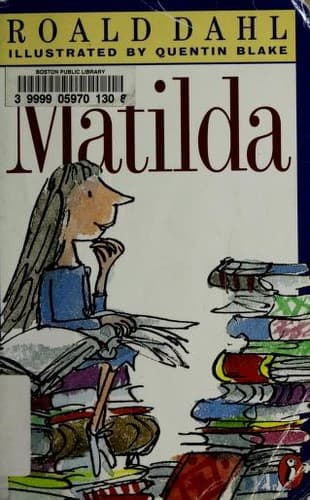
- Matilda
Roald Dahl
4.3 (648k) average on GoodreadsFantasyBoth portray exceptionally intelligent children facing adverse circumstances. However, 'Matilda' features more fantastical elements and a clearly defined, exaggerated villain (Miss Trunchbull). 'Sport' offers a more grounded, realistic portrayal of danger and the complexities of human motivation, with the 'villainy' often being systemic or circumstantial rather than purely individual malice, making its narrative more subtly nuanced.
- Harry Potter and the Sorcerer's Stone
J.K. Rowling
4.5 (7M) average on GoodreadsFantasyRescued from a miserable life under the stairs, an orphaned boy discovers he's a wizard destined for a magical school, where he uncovers a dangerous secret tied to the dark wizard who murdered his parents.
- The Hobbit, or There and Back Again
J.R.R. Tolkien
4.3 (2.9M) average on GoodreadsFantasyA comfort-loving hobbit named Bilbo Baggins is whisked away by a mischievous wizard and a band of dwarves on an unexpected journey to reclaim stolen treasure from a fearsome dragon, discovering courage and a magical ring along the way.




Enjoyed the summary?
A summary gives you the shape of the book. The book itself has the detail, the examples and the voice.
Find Sport on AmazonAs an Amazon Associate, BookBrief earns from qualifying purchases. How we're funded