
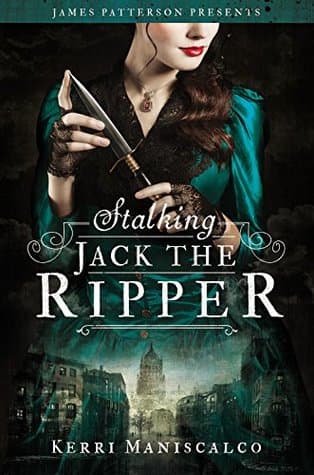
Synopsis
Covers the whole plot, including the ending.
- Difficulty
- Medium
- Pacing
- Moderate
- Mood
- Dark, Suspenseful, Atmospheric, Mysterious, Romantic
- Read it if
- You enjoy historical mysteries with a dark, gothic atmosphere, forensic science, and a dash of romance.
- Skip it if
- You are squeamish about detailed descriptions of corpses and autopsies, or prefer less historical detail.
Stalking Jack the Ripper Plot Summary
Covers the whole plot, including the ending.
A Secret Life in the Morgue
Audrey Rose Wadsworth, a seventeen-year-old noblewoman in Victorian London, secretly studies forensic medicine under her uncle, Dr. Jonathan Wadsworth, a renowned pathologist. She defies social expectations and her father's disapproval, assisting in autopsies and dissecting cadavers. This secret pursuit is her escape from etiquette and marriage proposals. She focuses on a series of brutally murdered women, a case that has gripped London. She examines the victims, hoping to find clues Scotland Yard missed, driven by scientific curiosity and a desire for justice. Her cousin, Nathaniel, also shares an interest in the macabre, though his approach is more artistic.
The First Ripper Victim
Audrey Rose is called to her uncle's lab to examine the body of Mary Ann Nichols, the first victim linked to Jack the Ripper. She meets Thomas Cresswell, a brilliant and arrogant medical student under her uncle's guidance. His sharp mind challenges her immediately. Together, they document the horrific injuries, noting the killer's precise surgical cuts. Audrey Rose is disturbed by the removal of an organ, suggesting the killer has anatomical knowledge. Their initial interactions are tense, but a mutual respect for each other's minds forms as they investigate the murder.
A Familiar Face and Growing Suspicions
The second victim, Annie Chapman, is found, with even more disturbing injuries. During the autopsy, Audrey Rose finds a locket on Chapman's body—her deceased mother's locket. This personal connection makes her suspect her own family, especially her father, Lord Edmund Wadsworth, who had known Chapman. The discovery strengthens her resolve to find the truth. Thomas Cresswell helps her through the emotional turmoil, offering support and analytical skills to connect clues, though he also has his own suspicions.
The Whitechapel Murders Escalate
As the Whitechapel murders continue, with Elizabeth Stride and Catherine Eddowes falling victim, Audrey Rose and Thomas intensify their investigation. They visit crime scenes, interview witnesses, and analyze the killer's patterns to understand the motive and method. They often disagree with the official police investigation, which seems more concerned with public order than finding the culprit. Audrey Rose's courage and scientific rigor are tested as she faces the grim reality of the murders. Thomas's deductive reasoning helps piece together the evidence.
A Visit to Bedlam and a New Suspect
A clue on one of the victims leads Audrey Rose and Thomas to Bedlam, the London asylum, to investigate a former patient who showed similar surgical precision. Their visit to the asylum is chilling, exposing them to inhumane conditions. They interview Dr. Bell, a doctor at Bedlam, who gives insights into the former patient's disturbed mind. While the suspect seems promising, Audrey Rose's instincts tell her something is wrong. They gather more information, but the Ripper's identity remains elusive, and the pressure to find him grows.
The Anatomy Theater and a Dangerous Revelation
Audrey Rose and Thomas focus on the medical community, believing the killer's anatomical knowledge points to someone within their ranks. They attend lectures, observe dissections, and discreetly investigate professors and students. Their inquiries lead them to the anatomy theater, where they find a secret society and a hidden compartment with disturbing artifacts and documents. Among these, Audrey Rose finds evidence implicating her cousin, Nathaniel, and his morbid interest in death. This revelation throws her into disbelief, as she faces the possibility that someone she loves could be the killer.
The Chase and a Near Miss
Faced with the evidence, Audrey Rose confronts Nathaniel, who reveals a darker, more disturbed side. The confrontation escalates into a dangerous chase through London's streets. Nathaniel, driven by a twisted sense of justice and a desire for fame, taunts Audrey Rose with murder details. Thomas arrives to help Audrey Rose, and they narrowly escape Nathaniel. The encounter leaves Audrey Rose shaken but more determined to bring the Ripper to justice, even if it means exposing her family's secrets. The chase confirms Nathaniel's involvement, but he remains at large.
The Final Victim and a Trap
The murder of Mary Jane Kelly, the most brutal victim yet, pushes Audrey Rose and Thomas. They realize the killer is escalating, and they deduce the Ripper is trying to trap them. Audrey Rose, using her knowledge of the killer's patterns and Nathaniel's personality, plans to bait him. They set a trap, preparing for a dangerous confrontation. Tension fills the air as they await the Ripper's move, knowing their lives are at risk. The stage is set for a showdown in London.
The Unmasking of Jack the Ripper
Following their trap, Audrey Rose and Thomas corner Nathaniel in a dilapidated building. A tense and violent struggle begins. Nathaniel, unhinged, reveals his full motive: a twisted desire to 'cleanse' London of its moral decay, targeting women he deemed impure. He boasts of his surgical skill and planning. During the struggle, Audrey Rose uses her forensic knowledge and quick thinking to disarm him, while Thomas helps. The confrontation is brutal, but they subdue Nathaniel, ending his terror. Jack the Ripper's identity is unmasked, shocking Audrey Rose.
Aftermath and a New Path
After Nathaniel's capture, London breathes a sigh of relief, though the Ripper murders leave scars. Audrey Rose deals with the emotional fallout of her cousin's acts and public scrutiny. She and Thomas continue their studies, their bond strengthened. The experience solidifies Audrey Rose's commitment to forensic medicine, despite social pressures. They acknowledge the dangers and darkness they faced, but also the importance of their work in seeking justice. Their partnership, professional and personal, deepens as they consider their future.
Principal Figures
Audrey Rose Wadsworth
Protagonist
A rebellious noblewoman secretly studying forensic medicine.
Audrey Rose is a determined and intelligent seventeen-year-old who defies Victorian societal norms by pursuing the gruesome study of forensic medicine. She possesses a keen scientific mind, an unwavering sense of justice, and remarkable courage. Though she initially struggles with self-doubt and the emotional toll of the murders, her logical approach and compassion drive her investigation. She is fiercely independent but also values the support and intellectual partnership of Thomas Cresswell.
Relationships: Thomas Cresswell (Intellectual rival turned partner and romantic interest); Dr. Jonathan Wadsworth (Mentor and supportive uncle); Lord Edmund Wadsworth (Strict but loving father); Nathaniel Wadsworth (Cousin and eventual antagonist)
Thomas Cresswell
Supporting/Love Interest
A brilliant and sarcastic medical student with exceptional deductive skills.
Thomas Cresswell is an intelligent, observant, and often sarcastic medical student who works alongside Audrey Rose. He possesses a sharp wit, a dry sense of humor, and an uncanny ability to deduce facts from minute details. While he often teases Audrey Rose, he respects her intellect and provides crucial support, both emotionally and scientifically. Beneath his charming arrogance, he is deeply committed to justice and cares for Audrey Rose, often putting himself in danger for her.
Relationships: Audrey Rose Wadsworth (Intellectual rival turned partner and romantic interest); Dr. Jonathan Wadsworth (Mentor)
Dr. Jonathan Wadsworth
Supporting
Audrey Rose's uncle and a pioneering forensic pathologist.
Dr. Wadsworth is Audrey Rose's progressive and supportive uncle, a renowned forensic pathologist who secretly mentors her. He is a man of science and integrity, often clashing with the more traditional views of society and the police. He provides a safe space for Audrey Rose to pursue her forbidden interests and teaches her the intricacies of forensic medicine, demonstrating deep trust and respect for her abilities. He acts as a moral compass and a protector for Audrey Rose throughout the investigation.
Relationships: Audrey Rose Wadsworth (Mentor and uncle); Lord Edmund Wadsworth (Brother)
Lord Edmund Wadsworth
Supporting
Audrey Rose's stern but loving father, a nobleman resistant to her unconventional pursuits.
Lord Edmund Wadsworth is Audrey Rose's father, a nobleman who adheres strictly to Victorian social conventions. He disapproves of Audrey Rose's morbid interests and wishes for her to marry and live a respectable life. Despite his stern demeanor, he deeply loves his daughter and tries to protect her, though his methods often clash with her independent spirit. His past connection to Annie Chapman initially makes him a suspect, adding a personal layer of tension to the investigation.
Relationships: Audrey Rose Wadsworth (Father); Dr. Jonathan Wadsworth (Brother)
Nathaniel Wadsworth
Antagonist
Audrey Rose's cousin with a morbid fascination, secretly the serial killer Jack the Ripper.
Nathaniel is Audrey Rose's cousin, initially appearing as a eccentric character with a morbid artistic streak. He shares Audrey Rose's unconventional interests but lacks her empathy and scientific rigor. Beneath his charming facade lies a deeply disturbed and delusional mind. He is revealed to be Jack the Ripper, driven by a twisted sense of moral superiority and a desire to 'cleanse' society. He is intelligent and manipulative, using his knowledge of anatomy to commit gruesome murders.
Relationships: Audrey Rose Wadsworth (Cousin and primary target of his twisted games); Lord Edmund Wadsworth (Uncle)
Mary Ann Nichols
Mentioned
The first victim attributed to Jack the Ripper.
Mary Ann Nichols is the first of the canonical Ripper victims, whose brutal murder initiates Audrey Rose and Thomas's investigation. Her death, and the precise, surgical nature of her wounds, immediately establishes the unique horror of the killer and sets the tone for the subsequent murders. While not a character in the traditional sense, her post-mortem examination provides crucial early clues about the Ripper's methods and anatomical knowledge.
Annie Chapman
Mentioned
The second Ripper victim, whose locket connects her to Audrey Rose's family.
Annie Chapman is the second victim of Jack the Ripper. Her murder is particularly significant because a locket found on her body directly links her to Audrey Rose's deceased mother and, by extension, to Lord Edmund Wadsworth. This personal connection injects a powerful emotional and familial dimension into the investigation, forcing Audrey Rose to confront the possibility that the killer could be someone close to her.
Relationships: Lord Edmund Wadsworth (Past acquaintance)
Mary Jane Kelly
Mentioned
The final and most brutally disfigured victim of Jack the Ripper.
Mary Jane Kelly is the last and most savagely murdered of the canonical Ripper victims. The extreme mutilation of her body signifies the killer's escalating depravity and provides the final, desperate clues that allow Audrey Rose and Thomas to set their trap. Her death marks the climax of the Ripper's reign of terror and prompts the final confrontation with the killer.
Themes & Insights
Defying Societal Expectations
Audrey Rose's life challenges Victorian society's rigid norms. As a noblewoman, she is expected to marry and pursue domestic life, yet she secretly studies forensic medicine. This theme appears in her secret visits to the morgue, her arguments with her father about her future, and her determination to prove her intelligence in a male-dominated field. Her defiance is not just rebellion; it is a pursuit of her true self and a desire for justice, as seen when she insists on performing autopsies despite the horror.
“I was not a lady, not in the traditional sense. A lady was meant to be delicate and frail, to swoon at the sight of blood and gore. I, on the other hand, found beauty in the macabre.”
The Duality of Humanity
The novel explores the capacity for good and evil within people, and the line between sanity and madness. This is clearest through Nathaniel, who seems charming but hides a monstrous, murderous side. The theme also appears in Audrey Rose's struggle as she deals with her work's gruesome nature and emotional toll, questioning if she is becoming desensitized. The contrast between London's elegant parlors and Whitechapel's squalid streets highlights this duality.
“Monsters were not born, they were created. And the city of London, with its shadows and secrets, was a breeding ground for them.”
The Pursuit of Truth and Justice
At its core, the novel is a quest for truth and justice against darkness and societal indifference. Audrey Rose and Thomas want to understand the killer's motives and bring him to justice for the victims. This theme shows in their forensic work, their investigation of clues, and their willingness to challenge authorities and risk their lives to find the truth, even when it leads to personal revelations about Nathaniel.
“The dead whispered secrets to those who knew how to listen. And I was determined to hear every single one.”
Science vs. Superstition
The story shows the clash between emerging forensic science and traditional beliefs in Victorian England. While Scotland Yard often uses outdated methods, Audrey Rose and Thomas champion a scientific, evidence-based approach to crime-solving. This theme appears through their use of anatomical examination, chemical analysis, and logical deduction, contrasting with public fear of the supernatural or police quickness to blame marginalized groups. Their work represents a move towards modern investigative techniques.
“Logic and reason were my weapons. Superstition and fear were the enemy.”
Plot Devices & Literary Techniques
Forensic Investigation
The use of scientific methods to solve crimes, driven by Audrey Rose's expertise.
Forensic investigation is central to the plot, allowing Audrey Rose to uncover clues missed by conventional police methods. Her detailed autopsies, examination of wounds, and understanding of human anatomy provide critical insights into the killer's methods and identity. This device not only advances the plot by revealing new information but also serves to highlight the intelligence and unconventional skills of the protagonist, establishing her as a unique and capable detective in a time when such practices were nascent.
Red Herrings
Misleading clues and suspects designed to divert the protagonists and the reader.
The novel employs several red herrings to build suspense and complicate the investigation. Initial suspects, such as the former Bedlam patient or even Lord Edmund Wadsworth due to the locket, are introduced with plausible connections to the murders. These diversions force Audrey Rose and Thomas to constantly re-evaluate their theories and deepen the mystery, ultimately making the true killer's reveal more shocking and unexpected, keeping the reader guessing until the climax.
Gothic Atmosphere
The use of dark, eerie settings and a sense of impending doom to create suspense.
The novel masterfully utilizes a gothic atmosphere, creating a pervasive sense of dread and mystery. The dimly lit morgue, the fog-shrouded streets of Victorian London, the chilling asylum of Bedlam, and the gruesome descriptions of the murders all contribute to this oppressive mood. This atmosphere not only enhances the thriller aspect of the story but also reflects the internal struggles of the characters, particularly Audrey Rose's grapple with the macabre and the darkness lurking within humanity.
Intellectual Sparring/Banter
Sharp, witty dialogue between Audrey Rose and Thomas Cresswell.
The witty and often sarcastic banter between Audrey Rose and Thomas Cresswell serves multiple functions. It provides moments of levity amidst the grim subject matter, showcases their intelligence and quick thinking, and subtly develops their romantic tension. Their intellectual sparring also allows for the exchange of ideas and theories about the case, acting as a dynamic way to explore different investigative avenues and challenge each other's perspectives, making their partnership feel authentic and engaging.
Stalking Jack the Ripper Quotes
“From the moment I was able to distinguish one object from another, I knew that the world was a complex and beautiful machine, and that I wanted nothing more than to take it apart and see how it worked.”
“I wasn't a lady, I was a scientist. And I had the scars to prove it.”
“Sometimes the best way to uncover a lie is to examine the truth it's trying to hide.”
“My father always said there were two types of people in the world: those who looked at the stars and wished, and those who looked at them and wondered.”
“The dead, in their own way, spoke to me. They whispered secrets of their final moments, of their lives, and of the person who put them there.”
“It was one thing to read about death in a textbook, quite another to feel its cold breath on your neck.”
“We are all merely collections of cells, a complex chemical reaction waiting to cease. And yet, we imbue ourselves with such importance.”
“He might have been a devil in disguise, but he was a beautiful one.”
“Fear was a powerful motivator, but so was justice.”
“There are no monsters hiding in the dark, only men.”
“I was not a flower, to be admired and plucked. I was a weed, resilient and determined to grow wherever I pleased.”
“The greatest truths are often found in the most disturbing places.”
“Sometimes, the only way to find answers is to ask the questions no one else dares to.”
“Logic and reason were my shields, but even they couldn't always protect me from the horrors of the human heart.”
Quiz
10 questions on the plot and the characters. Each answer comes with a short explanation.
Question 1
What is Audrey Rose Wadsworth's forbidden secret passion that she pursues in her uncle's laboratory?
- Painting portraits of the deceased
- Studying forensic medicine and autopsies
- Writing anonymous crime novels
- Practicing illegal medical surgeries on the living
Show answer
B. Studying forensic medicine and autopsies Audrey Rose defies societal expectations and her father's wishes to study forensic medicine and assist her uncle in his laboratory, a practice considered gruesome and unsuitable for a lady.
Question 2
Who is Audrey Rose's uncle, under whom she studies forensic medicine?
- Lord Edmund Wadsworth
- Dr. Jonathan Wadsworth
- Thomas Cresswell
- Professor Jonathan Wadsworth
Show answer
D. Professor Jonathan Wadsworth Audrey Rose's uncle is Professor Jonathan Wadsworth, a renowned forensic pathologist who allows her to assist him in his laboratory.
Question 3
What is the primary historical crime spree that inspires the storyline of 'Stalking Jack the Ripper'?
- The murders of Burke and Hare
- The Bloody Benders murders
- The Jack the Ripper murders
- The Zodiac Killer crimes
Show answer
C. The Jack the Ripper murders The book's title directly references 'Jack the Ripper,' and the plot is centered around a series of brutal murders in Victorian London inspired by the historical Ripper cases.
Question 4
What is the relationship between Audrey Rose Wadsworth and Thomas Cresswell?
- They are estranged siblings.
- They are rival students in forensic medicine.
- They are fellow apprentices and develop a complex romantic interest.
- Thomas is Audrey Rose's personal bodyguard.
Show answer
C. They are fellow apprentices and develop a complex romantic interest. Thomas Cresswell is a brilliant, albeit arrogant, fellow student of forensic medicine who works alongside Audrey Rose. Their professional rivalry soon evolves into a strong, complex romantic attraction.
Question 5
What significant personal tragedy has Audrey Rose experienced prior to the events of the book, which influences her interest in death?
- Her family lost all their wealth in a financial scandal.
- Her mother died mysteriously, and she believes it was murder.
- She was involved in a carriage accident that left her scarred.
- Her father disowned her for her unconventional studies.
Show answer
B. Her mother died mysteriously, and she believes it was murder. Audrey Rose's mother died under mysterious circumstances, which she suspects was not a natural death, fueling her morbid curiosity and dedication to understanding the causes of death.
Question 6
What is one of the primary societal expectations Audrey Rose rebels against?
- That women should pursue higher education in the arts.
- That ladies of her standing should avoid careers and focus on marriage and domestic life.
- That she should marry a man of lower social standing.
- That she should not speak her mind in public.
Show answer
B. That ladies of her standing should avoid careers and focus on marriage and domestic life. Audrey Rose's pursuit of forensic medicine is a direct defiance of Victorian societal norms that dictated women of her class should focus on finding a husband and managing a household, not engage in 'unladylike' scientific pursuits involving death.
Question 7
What distinctive physical characteristic does the killer leave on the victims, which becomes a key piece of evidence?
- A specific type of surgical incision
- Missing internal organs, specifically the uterus
- A note or symbol carved into the skin
- A unique ligature mark around the neck
Show answer
B. Missing internal organs, specifically the uterus The killer, 'Jack the Ripper,' is known for the brutal mutilation of his victims, specifically the removal of internal organs, most notably the uterus, reflecting a twisted surgical precision.
Question 8
Who is ultimately revealed to be Jack the Ripper in the novel's shocking conclusion?
- Lord Edmund Wadsworth, Audrey Rose's father
- Nathaniel Wadsworth, Audrey Rose's brother
- Thomas Cresswell, her partner in investigation
- Professor Jonathan Wadsworth, her uncle
Show answer
B. Nathaniel Wadsworth, Audrey Rose's brother In a major twist, Audrey Rose discovers that her own brother, Nathaniel Wadsworth, is the serial killer, Jack the Ripper, driven by a desire for revenge and a twisted sense of justice.
Question 9
What is the true motive behind the Ripper's murders as revealed in the book?
- A desire for fame and notoriety through gruesome crimes.
- To expose the corruption within Scotland Yard and its inability to solve crimes.
- Revenge against women associated with his mother's death and perceived societal injustices.
- A scientific experiment to understand the limits of human anatomy.
Show answer
C. Revenge against women associated with his mother's death and perceived societal injustices. The killer's motive stems from a deeply personal place: revenge for his mother's death, which he attributes to negligence and the societal double standards faced by women, leading him to target women he believes are 'fallen.'
Question 10
How does the book challenge the traditional role of women in Victorian society?
- By portraying a woman who successfully runs a large business empire.
- By having Audrey Rose pursue a scientific, traditionally male-dominated and 'unladylike' career in forensic pathology.
- By showing women leading political movements for suffrage.
- By depicting women as the primary breadwinners in their families.
Show answer
B. By having Audrey Rose pursue a scientific, traditionally male-dominated and 'unladylike' career in forensic pathology. Audrey Rose's entire character arc is a rebellion against Victorian gender roles. Her passion for forensic medicine, a field considered gruesome and exclusively for men, directly challenges the expectations for women of her social standing.
Stalking Jack the Ripper FAQ
What is the central premise of 'Stalking Jack the Ripper'?
The novel follows seventeen-year-old Audrey Rose Wadsworth, a Victorian noblewoman who secretly apprentices with her uncle, a forensic pathologist. She becomes embroiled in the hunt for Jack the Ripper when the brutal murders begin in London, using her burgeoning scientific skills to aid the investigation despite societal expectations and her father's disapproval.
Who are the main characters in the story?
Audrey Rose Wadsworth is the determined protagonist, a budding forensic scientist. Thomas Cresswell is her intelligent, often sarcastic, fellow apprentice and romantic interest. Her uncle, Jonathan Wadsworth, is a respected anatomist, and her father, Lord Wadsworth, is a stern figure who disapproves of her macabre interests.
What historical period and setting does the book take place in?
The story is set in Victorian London in 1888, specifically during the period of the Jack the Ripper murders. The grim, fog-laden streets of Whitechapel and the opulent drawing-rooms of the upper class provide a stark contrast, highlighting the social stratification of the era.
How does Audrey Rose defy societal expectations for women of her time?
Audrey Rose actively pursues an education in forensic medicine, a field considered highly inappropriate and gruesome for women, especially those of her social standing. She dissects corpses, studies anatomy, and participates in investigations, directly challenging the expectation that she should focus solely on marriage and domestic duties.
What role does Thomas Cresswell play in Audrey Rose's journey?
Thomas Cresswell is Audrey's intellectual equal and rival, offering a sharp wit and keen observational skills that complement her own. He becomes her partner in the investigation, providing support, challenging her deductions, and eventually developing a romantic relationship with her, often pushing her to embrace her unconventional talents.
What specific clues or details does Audrey Rose uncover that are crucial to the Ripper investigation?
Audrey Rose identifies specific anatomical cuts and surgical precision in the Ripper's victims, indicating medical knowledge. She also notes the removal of organs, the specific type of blade used, and eventually links the pattern of murders to a ritualistic element, moving beyond the initial assumptions of random savagery.
Are there any subtle foreshadowing elements regarding the killer's identity?
Yes, there are subtle hints, such as the killer's intimate knowledge of the victims' lives and the internal workings of the Wadsworth household. The killer's ability to move undetected within certain circles, and the specific motivations for the murders, are hinted at through the victims' connections and the killer's apparent need for vengeance.
How does the book incorporate real historical details about the Ripper murders?
The book meticulously integrates details about the actual Ripper victims, their injuries, and the known circumstances of their deaths. It also includes references to real historical figures, investigative methods of the time, and the general public's fear and fascination with the murders, grounding the fictional narrative in historical fact.
What is the significance of the anatomical theater in the story?
The anatomical theater serves as both Audrey Rose's sanctuary and her classroom, a place where she can freely pursue her forbidden passion for forensic science. It represents the clash between scientific pursuit and societal taboos, and it is where many key discoveries are made about the victims' bodies.
How does Audrey Rose's initial trauma of her mother's death influence her character development?
Audrey Rose's mother's death, which she suspects was not natural, fuels her determination to understand the human body and the causes of death. This unresolved grief and suspicion drive her to seek truth through forensic science, making her resilient and uniquely empathetic to the victims, even when others are repulsed.
What psychological impact do the gruesome murders have on Audrey Rose?
The constant exposure to the brutalized bodies of the victims takes a toll on Audrey Rose, leading to nightmares, anxiety, and a sense of urgency to stop the killer. Despite her scientific detachment, she grapples with the horror and injustice, often questioning her own sanity and the darkness within humanity.
How does the author explore themes of grief and loss through the characters?
Grief and loss are central, particularly through Audrey Rose's unresolved feelings about her mother's death and the communal sorrow for the Ripper's victims. The novel explores how different characters cope with loss – some seeking justice, others succumbing to despair, and some using it as a catalyst for darker actions.
What does the dynamic between Audrey Rose and Thomas Cresswell reveal about their individual psychologies?
Their dynamic reveals Audrey Rose's need for intellectual partnership and emotional support, while Thomas's wit and occasional aloofness mask a deep protectiveness and admiration for her. Their banter and shared morbid interests allow them to process the horrors they witness, creating a unique bond based on mutual respect and understanding.
What is the ultimate message about justice and vengeance conveyed by the story?
The story suggests that true justice is complex and often elusive, especially when driven by personal vengeance. While the killer believes they are enacting justice, their methods are barbaric, highlighting the fine line between seeking retribution and succumbing to the very violence one condemns.
How does the ending challenge or confirm traditional mystery tropes?
The ending both confirms and challenges tropes. It provides a definitive killer, satisfying the mystery aspect, but the killer's identity and motivations are deeply personal and tied to Audrey Rose's own history, subverting the typical 'stranger-killer' trope and making the resolution far more intimate and shocking.
To what extent does the book romanticize or glamorize the macabre?
While the book features a romantic element and a compelling protagonist, it largely avoids glamorizing the macabre. It portrays the gruesome realities of forensic work and the brutality of the murders with unflinching detail, using the 'creepy' elements to underscore the horror and the stakes of the investigation rather than for superficial shock value.
What is the broader commentary on Victorian society presented in the novel?
The novel critiques Victorian society's hypocrisy, particularly its rigid gender roles, class divides, and the stark contrast between its outward morality and underlying corruption. It exposes the vulnerability of marginalized women and the limitations placed on intellectually curious individuals, especially women like Audrey Rose.
How does Audrey Rose's personal connection to the killer impact her final decision or understanding?
Audrey Rose's personal connection to the killer profoundly complicates her understanding, forcing her to confront betrayal and the dark secrets within her own family. It transforms the hunt from a purely intellectual pursuit into a deeply emotional and personal quest, making the final confrontation and resolution far more agonizing and impactful.
Similar books
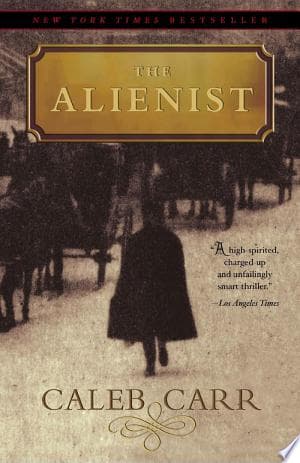
- The Alienist
Caleb Carr
4.1 (182k) average on GoodreadsFictionFeatures historical detective work and forensic science in a dark, period setting.
- A Study in Scarlet
Arthur Conan Doyle
4.2 (324k) average on GoodreadsHistorical FictionClassic Victorian mystery with a focus on deductive reasoning and gruesome crimes.
- Angels & Demons
Dan Brown
3.9 (2.7M) average on GoodreadsThrillerA Harvard symbologist races through Rome's ancient sites, deciphering cryptic clues to unmask the Illuminati and stop a vengeful plot to destroy the Vatican with a stolen antimatter weapon.
- Gone Girl
Gillian Flynn
4.1 (2.3M) average on GoodreadsThrillerA wife's sudden disappearance on her fifth anniversary reveals a web of lies and psychological warfare, exposing the secrets within a seemingly perfect marriage.
- The Girl on the Train
Paula Hawkins
3.9 (2.1M) average on GoodreadsThrillerA woman’s fascination with a seemingly perfect couple she watches from her daily train commute leads her into a dark investigation when she witnesses something that shatters their idyllic image.
- The Da Vinci Code
Dan Brown
3.9 (1.9M) average on GoodreadsThrillerA symbologist and a cryptologist race through European landmarks, deciphering ancient codes and uncovering a conspiracy that could rewrite the foundations of Christianity.





Enjoyed the summary?
A summary gives you the shape of the book. The book itself has the detail, the examples and the voice.
Find Stalking Jack the Ripper on AmazonAs an Amazon Associate, BookBrief earns from qualifying purchases. How we're funded