
Synopsis
Covers the whole plot, including the ending.
- Difficulty
- Hard
- Pacing
- Variable
- Mood
- Dystopian, Prescient, Experimental, Intellectual, Cynical
- Read it if
- You want to experience a groundbreaking, experimental, and incredibly prescient work of science fiction that uses unique narrative techniques to build a complex future world.
- Skip it if
- You prefer linear narratives, dislike non-traditional prose (like news feeds, headlines, and character snippets), or are put off by a cynical, sometimes bleak view of humanity's future.
Stand on Zanzibar Plot Summary
Covers the whole plot, including the ending.
The Muckraker and the Executive
In a crowded 2010, Norman Niblock House, a young Afro-American executive at General Technics, is quickly moving up the corporate ladder. He is involved in 'Yatakang,' a project to lease the African nation of Beninia, making it a corporate protectorate. Norman lives in a cramped apartment in New York with his roommate, Donald Hogan. Donald appears to be a quiet, intellectual type, seemingly engrossed in his studies. However, unknown to most, Donald is a 'shiggy' – a highly trained government assassin and spy. He is preparing for a dangerous assignment that will take him into a genetic engineering crisis, while Norman deals with the politics of General Technics and its global expansion.
The Beninia Project and the Shiggies
General Technics' 'Yatakang' project, led by Norman, moves forward with its plans to develop Beninia, an African nation facing overpopulation and underdevelopment. The project aims to implement advanced technology and social engineering, for Beninia's benefit, but with clear corporate advantages. Meanwhile, Donald Hogan receives his briefing for a sensitive mission. He is tasked with investigating a genetic breakthrough in Finland, specifically relating to 'synthetics' – designer humans. This technology, if uncontrolled, could alter human evolution and society, leading to unforeseen consequences. His superiors emphasize the secrecy and danger involved, hinting at global destabilization.
Finland's Genetic Secrets
Donald Hogan travels to Finland under deep cover to investigate the genetic breakthroughs. He infiltrates a research facility where Dr. Andrei Forester is working on a genetic modification. Hogan discovers that Forester has developed a method to create 'shinka' – humans who are genetically predisposed to be either 'virile' (super-fertile) or 'sterile' (incapable of reproduction). This discovery has massive implications for population control and societal structure in a world already struggling with billions of inhabitants. Hogan realizes the power and danger this technology represents, especially if it falls into the wrong hands or is misused for eugenics.
Corporate Power Plays
Back in New York, Norman Niblock House continues to navigate the corporate landscape of General Technics. He finds himself in power struggles and rivalries, particularly with other ambitious executives who see his success with the Yatakang project as a threat. Norman also grapples with the ethical implications of General Technics' increasing influence, recognizing that while the Beninia project promises development, it also represents a form of corporate colonialism. He witnesses the efficiency and pragmatism with which the corporation operates, often at the expense of individual liberties or local cultures. His personal life is also complicated by his relationship with his girlfriend, Olivia.
The Shinka Threat Goes Global
Donald Hogan's investigation reveals that the 'shinka' technology is not isolated but is already being considered by various global powers and shadowy organizations. He uncovers evidence that the technology could be weaponized or used for coercive population control, leading to a global crisis. Hogan realizes that his mission is no longer just about information gathering but about preventing a catastrophic misuse of genetic engineering. He experiences increasing paranoia and danger, aware that his cover could be blown and his life is at risk, as powerful entities begin to notice his activities.
The Beninian Experiment
The Yatakang project in Beninia begins its implementation phase. General Technics introduces advanced agricultural techniques, urban planning, and social programs aimed at modernizing the nation and managing its population. However, the project faces resistance and challenges from local populations, cultural clashes, and bureaucratic hurdles. Norman, despite his initial enthusiasm, begins to see the complexities and pitfalls of imposing a Western corporate model on a sovereign nation. He witnesses the human cost of rapid development and the difficulties in achieving progress without understanding the nuances of local customs and desires.
Confronting the Creator
Donald Hogan confronts Dr. Andrei Forester, the creator of the 'shinka' technology. He attempts to understand Forester's motivations and the extent of his knowledge regarding the potential misuse of his discovery. Forester, initially defensive, reveals his anxieties about the implications of his work and the moral dilemmas it presents. He explains that his intentions were scientific advancement, but he acknowledges the terrifying potential for abuse. Hogan tries to persuade Forester to cooperate in controlling the spread of the technology, emphasizing the global catastrophe it could unleash if it falls into the wrong hands or is used to manipulate human reproduction.
The Crisis Point
Despite Hogan's efforts, the 'shinka' technology leaks into the public domain and becomes a subject of global debate and panic. The implications of engineered fertility and sterility send shockwaves through an already overpopulated world. Governments, religious organizations, and activist groups clash over the ethics and practicalities of such technology. The news fuels existing anxieties about genetic manipulation and control, leading to protests, riots, and increased political instability across various nations. The world faces an unprecedented crisis, with the definition of humanity and reproduction at stake, as the 'shinka' concept becomes a reality.
Norman's Reckoning
The global 'shinka' crisis and other geopolitical factors begin to impact General Technics' operations, including the Yatakang project in Beninia. The project, already facing internal and external pressures, starts to unravel. Norman Niblock House witnesses the collapse of his ambitious plans and the failure of corporate hubris to truly address complex societal problems. He reflects on the limitations of technological solutions without genuine human understanding and empathy. The experience forces him to re-evaluate his career path and his personal values, questioning the goals and methods of the corporation he serves.
Hogan's Sacrifice
Realizing the extent of the 'shinka' threat and the inability of conventional means to contain it, Donald Hogan makes a decision. He takes drastic, self-sacrificing action to prevent the widespread misuse of the genetic technology, knowing it will likely cost him his life. His actions, while effective in temporarily mitigating the immediate danger, show his dedication as a 'shiggy' and his understanding of the stakes involved. Hogan's sacrifice highlights the novel's themes of individual responsibility in the face of global crises and the moral compromises sometimes necessary to protect humanity.
Aftermath and Reflection
After the 'shinka' crisis and Hogan's sacrifice, the world grapples with the implications of genetic engineering and overpopulation. While the immediate threat is contained, the knowledge of 'shinka' cannot be unlearned. Societies must confront difficult questions about ethics, control, and the future of human evolution. The novel concludes with a sense of lingering uncertainty, emphasizing that while one crisis may pass, the fundamental challenges of an overpopulated, technologically advanced world remain. Characters like Norman reflect on their roles and the struggle for meaning and morality in a chaotic world.
Principal Figures
Norman Niblock House
Protagonist
Ambitious General Technics executive.
Norman is a young, intelligent, and ambitious Afro-American executive at General Technics. He is driven by a desire for success and to make a significant impact, initially believing in the benevolent power of corporate solutions to global problems. He is a pragmatic and adaptable individual, capable of navigating complex corporate politics. His involvement in the 'Yatakang' project in Beninia highlights his belief in technology and organized systems to uplift developing nations, though he later grapples with the ethical ambiguities of such endeavors. He represents the corporate, 'orderly' side of the future.
Relationships: Donald Hogan (Roommate, unaware of Hogan's true profession); Olivia Frink (Girlfriend, a complex and often distant relationship); General Technics (Employer, a powerful entity he serves and eventually questions)
Donald Hogan
Protagonist/Anti-hero
Covert government agent and 'shiggy' assassin.
Donald Hogan is Norman's seemingly unassuming roommate, a quiet bookworm who is secretly a 'shiggy' – a highly trained government operative specializing in assassination and intelligence. He is intensely intelligent, disciplined, and morally complex, operating in the shadows to maintain global stability. His mission to investigate the 'shinka' genetic breakthrough is central to the plot. Hogan embodies the 'chaos' and covert action necessary to counter the threats arising from unchecked technological advancement and overpopulation. He is driven by a strong sense of duty, even if it requires extreme measures and personal sacrifice.
Relationships: Norman Niblock House (Roommate, with Norman unaware of his true identity); Dr. Andrei Forester (Target of investigation, creator of 'shinka'); Federal Government/Intelligence Agencies (Employer, providing his missions and training)
Dr. Andrei Forester
Supporting
Brilliant but morally conflicted geneticist.
Dr. Andrei Forester is the brilliant Finnish geneticist responsible for discovering and developing the 'shinka' technology, which allows for engineered fertility or sterility. He is a man of science, driven by intellectual curiosity and the pursuit of knowledge, but also burdened by the profound ethical implications of his creation. He represents the scientific community's capacity for both groundbreaking discovery and inadvertent danger. Forester is not malicious but perhaps naive about the real-world consequences of his work, struggling with the moral responsibility that comes with such a powerful discovery. He becomes a key figure in Hogan's investigation.
Relationships: Donald Hogan (Investigator and eventual confidante)
Chad C. Mulligan
Supporting
Eccentric and prescient sociologist and statistician.
Chad C. Mulligan is a reclusive and highly intelligent sociologist and statistician whose 'Mulligan's Laws' are frequently quoted throughout the novel. His insights often appear as interjections, providing commentary and context on the social and demographic trends of the overpopulated world. Mulligan is a cynical yet profoundly insightful observer of human behavior, capable of predicting societal shifts with unnerving accuracy. He represents the voice of critical analysis and philosophical reflection, often highlighting the absurdity and inevitability of humanity's self-made predicaments. He serves as a kind of Greek chorus, offering a detached, academic perspective.
Olivia Frink
Supporting
Norman's complex and independent girlfriend.
Olivia Frink is Norman Niblock House's girlfriend, a strong-willed and independent woman. She often serves as a sounding board for Norman, though their relationship is marked by periods of distance and misunderstanding, reflecting the fragmented nature of relationships in the novel's crowded world. Olivia challenges Norman's corporate worldview at times and represents a more humanistic, less pragmatic perspective. Her presence highlights the personal struggles and emotional complexities that persist even amidst global crises and technological advancements. She is a reminder of the individual's search for connection in an alienating environment.
Relationships: Norman Niblock House (Girlfriend, a sometimes strained but significant relationship)
Slydell
Supporting
High-ranking intelligence operative and Hogan's handler.
Slydell is a senior figure within the intelligence agency that employs Donald Hogan. He serves as Hogan's primary handler, providing him with mission briefings, resources, and strategic guidance. Slydell is a pragmatic and experienced operative, deeply invested in maintaining global stability through covert means. He embodies the bureaucratic and often ruthless machinery of government intelligence, making difficult decisions for the perceived greater good. His interactions with Hogan highlight the moral ambiguities inherent in their work and the heavy burden of responsibility placed on those who operate in the shadows. He represents the institutional response to threats.
Relationships: Donald Hogan (Handler and superior officer)
General Technics
Antagonist/Setting Element
Omnipresent mega-corporation influencing global politics.
General Technics is not a single character but a monolithic, all-powerful mega-corporation that serves as a primary antagonist and a dominant force in the novel's world. It embodies unchecked corporate power, technological prowess, and a drive for global domination, exemplified by projects like 'Yatakang' in Beninia. General Technics represents the potential for corporate entities to supersede national governments and exert control over vast populations and resources. Its influence permeates every aspect of society, from consumer goods to geopolitical strategy, highlighting the novel's critique of corporate capitalism and its impact on humanity.
Relationships: Norman Niblock House (Employee, instrument of its will)
The President of Beninia
Mentioned
Leader of the African nation leased by General Technics.
The President of Beninia is a figure who, though not deeply explored as a character, represents the leadership of a developing nation caught in the web of global corporate power. He enters into an agreement with General Technics for the 'Yatakang' project, ostensibly for the benefit of his people. His decisions highlight the difficult choices faced by nations struggling with overpopulation, poverty, and the allure of advanced technology offered by powerful external entities. He symbolizes the vulnerability of sovereign nations to corporate influence and the complexities of post-colonial relationships.
Relationships: General Technics (Partner in the Yatakang project)
Themes & Insights
Overpopulation and its Consequences
The novel's central theme is the overwhelming impact of global overpopulation. Brunner portrays a world where billions of people are crammed into 'hive' cities, leading to societal fragmentation, resource scarcity, and a sense of alienation. This theme appears in the constant background noise of 'mucker' riots, the cramped living conditions of characters like Norman and Hogan, and the desperate search for solutions like the 'Yatakang' project or the 'shinka' technology. The scale of humanity is depicted as both a burden and a force driving technological and social evolution, often towards dystopian ends.
“There are 7,500,000,000 people in the world. Stand them all up on Zanzibar, and you'd have a column 281 miles high.”
The Ethics of Genetic Engineering
Brunner explores the ethical dilemmas posed by advanced genetic engineering, primarily through the discovery of 'shinka' technology. The ability to engineer human fertility or sterility raises questions about free will, human dignity, and the potential for eugenics. The novel forces characters, and the reader, to confront the moral implications of 'playing God' with human biology. It highlights the tension between scientific progress and ethical responsibility, showing how a breakthrough intended for population control could easily be twisted into a tool for oppression or social engineering, leading to global panic and instability.
“The greatest good for the greatest number is a fine slogan, but it can lead to terrible places if you forget what 'good' means.”
Corporate Power and Globalism
The novel examines the rise of mega-corporations like General Technics, which effectively replace national governments in influence and control. This theme is central to Norman Niblock House's storyline, as he navigates the world of corporate politics and leads the 'Yatakang' project, a corporate takeover of a sovereign nation. Brunner shows how these entities operate with a detached, profit-driven logic, often blurring the lines between corporate interest and humanitarian aid. The theme questions the nature of power in a globalized world and the potential for corporations to control economies, societies, and individual lives.
“The corporation is the ultimate expression of human will, stripped of all sentimentality.”
Social Fragmentation and Alienation
In a world of billions, Brunner depicts a sense of social fragmentation and individual alienation. Characters often feel disconnected despite living in close proximity, and meaningful relationships are difficult to sustain amidst the chaos and constant sensory overload. The 'mucker' riots, the casual acceptance of violence, and the reliance on mass-marketed psychedelic drugs (like 'pep pills') all contribute to this theme. The novel suggests that extreme overpopulation erodes traditional community structures and leaves individuals isolated, struggling to find meaning and connection in an impersonal society. This is evident in Norman's often distant relationship with Olivia.
“In a world of seven billion, anonymity is not a privilege; it is a curse.”
The Role of Media and Information Overload
Brunner integrates various forms of media – 'telly,' 'shiggy' news, and 'Mulligan's Laws' – to reflect the constant bombardment of information in the future. This theme highlights how media shapes public perception, contributes to anxiety, and often distorts reality. The fragmented narrative structure itself mirrors the information overload experienced by the characters and the reader. The novel suggests that in an age of ubiquitous communication, discerning truth from propaganda becomes difficult, and the volume of data can be overwhelming, leading to a kind of desensitization and an inability to process critical events effectively.
“The news never stops. It just changes its flavor of despair.”
Plot Devices & Literary Techniques
The 'Tally' Chapters
Interspersed sections of facts, statistics, and news snippets.
These chapters are short, often disconnected segments presenting data, quotes, news headlines, and statistical information about the future world. They serve to immerse the reader in the novel's setting, providing context for the overpopulation, technological advancements, and social issues. The 'Tally' chapters also reinforce the theme of information overload and societal fragmentation, mimicking the constant barrage of media in the characters' lives. They function as a form of world-building, grounding the fictional narrative in a meticulously constructed, data-rich reality that feels disturbingly plausible.
Mulligan's Laws
Sociological and demographic maxims attributed to Chad C. Mulligan.
Chad C. Mulligan's observations and 'laws' are frequently quoted throughout the novel, offering a cynical yet insightful commentary on human behavior, population dynamics, and societal trends. These act as a form of philosophical interjection, providing a detached, academic perspective on the issues explored in the main narrative. 'Mulligan's Laws' serve to underscore the novel's central themes, particularly overpopulation and social psychology, and provide a framework for understanding the chaotic and often absurd events unfolding. They often highlight the inevitability of certain human tendencies despite technological progress.
The 'Continuity' Chapters
Traditional narrative sections focusing on the main characters' storylines.
These chapters are the primary narrative threads, following the lives of Norman Niblock House and Donald Hogan. They provide the conventional plot progression, character development, and dramatic tension. By contrasting with the experimental 'Tally' and 'Context' chapters, the 'Continuity' sections anchor the reader in a more familiar storytelling style while still being influenced by the fragmented nature of the surrounding content. They allow for an intimate exploration of the protagonists' experiences and decisions amidst the vast, complex backdrop of the future world, driving the core plot forward.
The 'Context' Chapters
Short, fragmented vignettes or stream-of-consciousness passages.
These chapters are experimental, often surreal, and provide glimpses into various minor characters' lives, philosophical musings, or abstract observations. They contribute to the novel's mosaic-like structure, offering diverse perspectives and reinforcing the sense of an overwhelming, interconnected world. The 'Context' chapters often lack direct plot relevance but deepen the thematic impact, illustrating the psychological and social effects of overpopulation and technological advancement on ordinary individuals. They create a sense of immersion by presenting the 'texture' of life in the year 2010, amplifying the novel's social commentary.
'Shiggy' Technology/Profession
Covert government assassins and spies using advanced methods.
The 'shiggy' is a class of highly trained government operatives, exemplified by Donald Hogan, who specialize in espionage, sabotage, and assassination. This device introduces a layer of covert action and moral ambiguity, highlighting the extreme measures governments resort to in order to maintain control in a chaotic world. The 'shiggy' profession underscores the novel's exploration of individual responsibility versus institutional imperatives, and the personal cost of operating in the moral grey areas of national security. It serves as a counterpoint to the corporate power of General Technics, representing a different form of global influence.
Stand on Zanzibar Quotes
“There are nine hundred million of us on this continent alone: nine hundred million different ways of being human. And you think you can encompass them all with a few slogans and a couple of bombs?”
“The price of sanity, in an insane society, is a certain amount of insanity.”
“You are not a human being. You are a human becoming.”
“The only way to be safe is to be unsafe.”
“Everything is connected. Nothing is accidental.”
“The function of wisdom is to discriminate between good and evil. The function of intelligence is to implement that discrimination.”
“Ignorance is not bliss. Ignorance is a disease.”
“The trouble with the future is that it's always arriving.”
“If you don't know where you're going, any road will take you there.”
“The only true security is insecurity.”
“The past is a foreign country; they do things differently there.”
“To be truly free, you must be free from your own desires.”
“The most dangerous animal on Earth is a human being with a grievance.”
“There are no solutions, only trade-offs.”
Quiz
10 questions on the plot and the characters. Each answer comes with a short explanation.
Question 1
What is the primary industry of Norman Niblock House's employer, General Technics?
- Food production and distribution
- Global technology and corporate domination
- Entertainment and media
- Automotive manufacturing
Show answer
B. Global technology and corporate domination Norman Niblock House is a rising executive at General Technics, described as one of a few all-powerful corporations leading in global domination both in the marketplace and politically.
Question 2
What is Donald Hogan's secret profession, despite his seemingly sheepish bookworm persona?
- University professor
- Genetic engineer
- Corporate lawyer
- Spy
Show answer
D. Spy The description explicitly states that Donald Hogan is Norman Niblock House's roommate and 'a spy'.
Question 3
What breakthrough is Donald Hogan expected to discover, which will have world-changing and life-threatening implications for him?
- A new form of interstellar travel
- A breakthrough in genetic engineering
- A method for unlimited energy production
- A cure for all known diseases
Show answer
B. A breakthrough in genetic engineering The synopsis states that Hogan 'is about to discover a breakthrough in genetic engineering that will change the world ... and kill him.'
Question 4
Which real-world author's literary style is 'Stand on Zanzibar' said to echo, particularly his 'U.S.A. Trilogy'?
- Ernest Hemingway
- F. Scott Fitzgerald
- John Dos Passos
- William Faulkner
Show answer
C. John Dos Passos The text mentions the novel is 'Written in a way that echoes John Dos Passos' U.S.A. Trilogy'.
Question 5
What is a central societal issue highlighted in the world of 'Stand on Zanzibar', described as leading to 'hive-living madness'?
- Extreme climate change
- Global economic depression
- Overpopulation by billions
- Interstellar warfare
Show answer
C. Overpopulation by billions 'Stand on Zanzibar is a cross-section of a world overpopulated by the billions. Where society is squeezed into hive-living madness...' clearly identifies overpopulation as a key issue.
Question 6
General Technics is on the verge of taking over what type of entity in Africa, indicating its political power?
- A major corporation
- A country
- A military base
- A research facility
Show answer
B. A country General Technics 'is about to take over a country in Africa,' demonstrating its political influence.
Question 7
Despite being written in 1968, what specific year does 'Stand on Zanzibar' speak of, making it 'frighteningly prescient'?
- 1984
- 2001
- 2010
- 2020
Show answer
C. 2010 The description explicitly states, 'Though written in 1968, it speaks of 2010, and is frighteningly prescient and intensely powerful.'
Question 8
Which of the following elements is NOT listed as contributing to the 'hive-living madness' of the overpopulated world in 'Stand on Zanzibar'?
- God-like mega computers
- Mass-marketed psychedelic drugs
- Frequent alien invasions
- Mundane uses of genetic engineering
Show answer
C. Frequent alien invasions The text lists 'god-like mega computers, mass-marketed psychedelic drugs, and mundane uses of genetic engineering' as factors, but does not mention alien invasions.
Question 9
What is the primary characteristic that defines the corporate power of General Technics in the novel's setting?
- It is a monopoly in space travel.
- It is one of a few 'all-powerful' corporations with global market and political dominance.
- It specializes exclusively in military technology.
- It controls all global food resources.
Show answer
B. It is one of a few 'all-powerful' corporations with global market and political dominance. General Technics is described as 'one of a few all-powerful corporations' leading in 'global domination, both in the marketplace and politically'.
Question 10
What is the implied consequence for Donald Hogan after discovering the genetic engineering breakthrough?
- He will receive a promotion and accolades.
- He will be forced into early retirement.
- He will be killed.
- He will become the head of General Technics.
Show answer
C. He will be killed. The text states that the genetic engineering breakthrough 'will change the world ... and kill him,' directly implying his death.
Stand on Zanzibar FAQ
What is the central premise of 'Stand on Zanzibar'?
'Stand on Zanzibar' is set in a hyper-overpopulated world of 2010, where society grapples with billions of people, advanced technology, and corporate dominance. The narrative follows two roommates, Norman Niblock House, a rising executive at General Technics, and Donald Hogan, a seemingly mild-mannered spy, as their lives intertwine amidst global political and technological shifts, particularly concerning a breakthrough in genetic engineering and General Technics' expansion into Africa.
Who are Norman Niblock House and Donald Hogan, and what are their primary roles?
Norman Niblock House is a 'shiggy' (corporate executive) at General Technics, driving their global expansion and political influence, notably their impending takeover of the African nation of Yatakang. Donald Hogan is his roommate, secretly an 'extrapolator' (spy) for the government, tasked with uncovering information about technological advancements and corporate activities, which eventually leads him to a dangerous genetic engineering discovery.
How does the novel's structure contribute to its themes?
The novel employs a fragmented, multi-perspective structure inspired by John Dos Passos' U.S.A. Trilogy, featuring distinct sections like 'Context,' 'Continuity,' 'Tracking With Closeups,' and 'The Happening World.' This allows Brunner to present a sprawling, chaotic vision of an overpopulated future by interweaving main plotlines with news headlines, advertisements, character vignettes, and sociological observations, immersing the reader in the sensory overload of the world.
What is 'General Technics' and what is its significance?
General Technics is one of the dominant, all-powerful mega-corporations in the novel's 2010 setting, wielding immense economic and political power. It is spearheading a controversial project to take over and 'develop' the African nation of Yatakang, signifying the ultimate reach of corporate control and neo-colonialism in a globalized future.
What is the 'yaws' and how does it impact the plot?
The 'yaws' refers to the genetic engineering breakthrough discovered by Dr. Sugaï, which is a method to selectively sterilize populations. This technology is incredibly powerful and dangerous, forming the core of Donald Hogan's investigation and ultimately leading to his demise as he tries to prevent its misuse, highlighting the ethical dilemmas of advanced biotechnology.
How do the 'muckraking' interludes contribute to the narrative?
The 'muckraking' sections, presented as snippets of news, advertisements, and social commentary, provide crucial background and atmosphere, enriching the world-building. They illustrate the societal pressures of overpopulation, the prevalence of mass-marketed drugs like 'stardraft,' and the pervasive influence of technology and media, often foreshadowing or commenting on the main plot events without directly advancing them.
What is the significance of the 'synergetic' concept and its relation to the 'yaws'?
The 'synergetic' concept relates to the idea of controlled, beneficial genetic manipulation for societal good, often discussed in the context of improving humanity. However, the discovery of the 'yaws' by Dr. Sugaï represents a perversion of this ideal, as it offers the power to control or eliminate populations, turning a potentially utopian technology into a tool of eugenics and oppression.
How does the novel explore the psychological impact of overpopulation on its characters?
The novel vividly portrays the psychological toll of living in a world crammed with billions, leading to widespread anxiety, apathy, and a sense of alienation. Characters like Norman and Donald navigate crowded cities and rely on drugs like 'stardraft' to cope, illustrating how constant sensory input and lack of personal space contribute to a fragmented, often desensitized, psyche.
What role do psychedelic drugs like 'stardraft' play in the characters' lives and the society at large?
Psychedelic drugs, particularly 'stardraft,' are widely consumed in the novel's society as a means of coping with the overwhelming pressures of overpopulation and societal chaos. They offer temporary escape and altered perceptions, highlighting a collective psychological need for transcendence or oblivion in a world that often feels suffocating and meaningless, influencing character motivations and interactions.
How do Norman Niblock House's ambitions reflect the corporate psychology of the future?
Norman's relentless ambition and his drive to see General Technics dominate reflect a corporate psychology where growth and control supersede ethical considerations. His focus on the Yatakang project, despite its human implications, showcases a detached, almost clinical approach to global power, where nations become mere assets for corporate expansion and profit, mirroring a potential future of unchecked capitalism.
What ethical dilemmas does the novel raise regarding genetic engineering?
The novel directly confronts the profound ethical dilemmas of genetic engineering through the discovery of the 'yaws,' a selective sterilization method. It forces readers to consider the dangers of scientific advancement without moral oversight, the potential for eugenics, and the grave responsibility that comes with the power to manipulate life itself, especially when wielded by powerful corporations or governments.
Is 'Stand on Zanzibar' a dystopian or a cautionary tale, and why?
While possessing strong dystopian elements with its depiction of an overpopulated, corporatized, and dehumanizing future, 'Stand on Zanzibar' is primarily a cautionary tale. It warns against the dangers of unchecked population growth, corporate power, technological hubris, and social fragmentation, urging readers to consider the potential consequences of current trends if left unaddressed, rather than simply presenting a bleak, unchangeable future.
How does the novel's 1968 publication date influence its portrayal of 2010?
Written in 1968, the novel's 2010 setting is a product of extrapolating mid-20th-century anxieties about population explosion, Cold War tensions, and nascent technological advancements like computing and genetic engineering. Its prescience lies in anticipating globalization, corporate dominance, and the ubiquitous nature of media, though some technological predictions are distinctly rooted in its era, like the specific forms of computing and communication.
What is the significance of the title 'Stand on Zanzibar'?
The title refers to a famous statistic: if all the people in the world were to stand shoulder to shoulder, they would fit on the Isle of Wight (or, in some versions, Zanzibar). This metaphor encapsulates the novel's central theme of global overpopulation, highlighting the sheer density of humanity and the resulting societal pressures, even though the actual island itself is not a central plot location.
How does the Yatakang storyline reflect real-world political anxieties of the time?
The Yatakang storyline, where General Technics attempts to take over an African nation for 'development,' reflects real-world anxieties of the 1960s concerning neo-colonialism, corporate exploitation of developing nations, and the political machinations of powerful global entities. It serves as a critique of Western intervention and the perpetuation of power imbalances under the guise of progress.
About the author
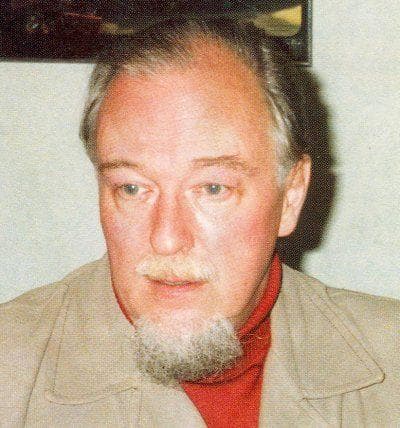
John Brunner was a British author known for his contributions to science fiction. His notable work, "Stand on Zanzibar," explores themes of overpopulation and societal issues in a dystopian future. Brunner's writing often reflects his concerns about contemporary social and political challenges.
Similar books
- Neuromancer
William Gibson
3.9 (262k) average on GoodreadsFantasyExplores themes of corporate power, technological saturation, and a gritty, complex future world, though less overtly experimental in prose.
- Dune
Frank Herbert
4.2 (766k) average on GoodreadsFantasyFeatures intricate world-building, political intrigue on a grand scale, and explores the impact of powerful individuals and organizations on society.
- Brave New World
Aldous Huxley
4.0 (1.4M) average on GoodreadsFantasyBoth novels present dystopian futures, but Huxley's Brave New World (1932) depicts a centrally controlled society maintained through conditioning, eugenics, and soma. Brunner's world is more chaotic, less overtly controlled, and driven by the sheer scale of humanity and corporate competition. Stand on Zanzibar uses a highly experimental narrative to reflect its fragmented, information-saturated future, whereas Huxley's narrative is more linear and allegorical.
- Harry Potter and the Sorcerer's Stone
J.K. Rowling
4.5 (7M) average on GoodreadsFantasyRescued from a miserable life under the stairs, an orphaned boy discovers he's a wizard destined for a magical school, where he uncovers a dangerous secret tied to the dark wizard who murdered his parents.
- The Hunger Games
Suzanne Collins
4.3 (6.4M) average on GoodreadsFantasyIn a future where children fight to the death on live television, Katniss Everdeen volunteers for the arena, turning a death sentence into a fight for survival and a spark of rebellion.
- 1984
George Orwell
4.2 (3.1M) average on GoodreadsPoliticsIn a future where surveillance and thought control are absolute, a man's search for truth clashes with the Party, showing that hope can be a form of rebellion.





Enjoyed the summary?
A summary gives you the shape of the book. The book itself has the detail, the examples and the voice.
Find Stand on Zanzibar on AmazonAs an Amazon Associate, BookBrief earns from qualifying purchases. How we're funded