
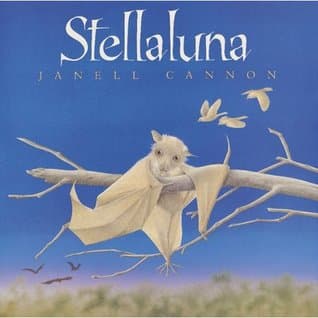
Synopsis
Covers the whole plot, including the ending.
- Difficulty
- Easy
- Pacing
- Moderate
- Mood
- Heartwarming, Gentle, Curious, Sweet
- Read it if
- You love heartwarming stories about belonging, finding your identity, and appreciating differences, especially if you're a young reader or reading to one.
- Skip it if
- You prefer complex plots, adult themes, or don't enjoy children's picture books.
Stellaluna Plot Summary
Covers the whole plot, including the ending.
A Mother Bat's Flight and a Frightening Attack
The story begins with a mother fruit bat flying through the twilight jungle with her baby, Stellaluna, clinging to her. The mother bat is searching for ripe fruit to eat. As they fly, a large owl suddenly swoops down and attacks them. In the chaos, the mother bat lets go of Stellaluna, who tumbles through the air, her tiny wings too weak to fly. She falls through the dense leaves and branches of the forest, separated from her mother and her familiar bat world. Her mother mourns her lost baby, believing Stellaluna to be gone forever.
Stellaluna Lands in a Bird's Nest
Stellaluna's long fall ends when she lands with a soft thud in a cozy, warm nest. Inside the nest, three tiny bird hatchlings are huddled together. Soon, their mother, a small gray bird, returns to the nest. She is surprised to find the strange, furry creature with leathery wings among her own babies. Despite her initial apprehension, the mother bird decides to take Stellaluna in, treating her like one of her own. She tells Stellaluna to eat bugs and sleep like a bird, behaviors very different from a bat's.
Learning to Live Like a Bird
Under the care of the mother bird, Stellaluna tries to adapt to her new bird family. She learns the names of her bird siblings: Pip, Flap, and Flutter. She tries to eat the worms and insects the mother bird brings, even though they taste terrible. She struggles with sleeping upright on a branch, often falling headfirst when she tries to hang by her feet like a bat. She also tries to fly in the daytime with her bird siblings, but her large, dark wings are not suited for their quick movements, and the bright sun hurts her eyes. Stellaluna feels different and often clumsy, longing for her true home and her mother.
First Flight and a Shared Discovery
As Stellaluna and the bird siblings grow, it is time for them to learn to fly. The mother bird encourages them, and soon, Pip, Flap, and Flutter are soaring through the trees. Stellaluna, despite her initial difficulties, also manages to fly, though her style is different. One day, while flying with her bird siblings, Stellaluna notices ripe, purple figs hanging from a tree. Her instincts kick in, and she recognizes them as delicious food. She excitedly calls her bird siblings over, and they tentatively try the fruit. To their surprise, they find it quite tasty, a welcome change from their usual insect diet.
Nighttime Exploration and Separation
Despite her fondness for her bird family, Stellaluna still feels a strong pull towards her natural bat instincts. One evening, as the sun sets, Stellaluna feels an urge to fly. She slips away from her sleeping bird siblings and soars into the twilight sky. She finds the experience exhilarating, feeling truly free and graceful for the first time. However, she flies so far and for so long that she loses track of her bird family's nest. When the sun begins to rise, she realizes she is lost once again, alone in the jungle, far from both her bird family and her original home.
A Fortuitous Encounter with Other Bats
As Stellaluna hangs upside down from a branch, tired and sad after her night flight, she sees a strange sight. Other creatures are flying in the night sky, just like her. They are dark, winged, and gracefully move through the moonlit jungle. Curious and hopeful, Stellaluna approaches them. To her astonishment and joy, she realizes they are bats! They are hanging upside down, eating fruit, and flying at night, just as she instinctively knew she should. She feels an immediate sense of belonging and kinship with these new friends, a feeling she hadn't fully experienced with her bird family.
Reunion with Mother Bat
Stellaluna introduces herself to the group of fruit bats and shares her story of falling from her mother, being raised by birds, and learning their ways. As she describes her mother's appearance, one of the older bats listens. Suddenly, the older bat cries out, recognizing the description. It is Stellaluna's own mother, who had been mourning her lost baby for weeks! The reunion is emotional and joyous. Stellaluna and her mother embrace, their hearts filled with relief and happiness at finding each other. Stellaluna is finally home with her true family.
Sharing Worlds and Understanding Differences
Filled with happiness, Stellaluna wants to introduce her bat family to her bird siblings. She flies back to the bird's nest with her mother and the other bats. Pip, Flap, and Flutter are initially frightened by the strange, large creatures, but Stellaluna reassures them. Stellaluna shows how bats hang upside down to sleep and eat fruit at night, while her bird siblings show the bats how they perch and eat insects during the day. The two families observe each other's very different lifestyles, marveling at the unique ways each species lives. They try to understand each other's perspectives, seeing the differences and similarities.
Embracing Both Identities
Stellaluna now fully embraces her identity as a bat, flying with her mother and the other fruit bats at night, eating delicious fruit, and hanging upside down to sleep. However, she does not forget her bird siblings. She continues to visit Pip, Flap, and Flutter during the day, sharing stories and experiences. While they still find each other's habits peculiar — the birds cannot imagine flying at night, and the bats cannot imagine eating bugs — they have learned to appreciate and respect their differences. Stellaluna, in particular, carries the lessons of both worlds, understanding that even though they are different, they are all friends.
Stellaluna Characters
Stellaluna
Protagonist
A lost baby fruit bat who learns to live among birds before reuniting with her own kind.
Stellaluna is a curious and adaptable baby fruit bat who experiences a dramatic separation from her mother. Despite her innate bat instincts, she tries her best to conform to the ways of her adopted bird family, eating insects and sleeping upright. She yearns for her true home and identity, which leads her to explore the night and eventually find other bats. Stellaluna embodies the themes of identity, belonging, and adaptation, ultimately learning to appreciate both her bat nature and the lessons learned from her time with the birds.
Relationships: Mother Bat (Biological mother, deeply loving and protective); Mother Bird (Adoptive mother, kind and nurturing); Pip, Flap, Flutter (Adoptive bird siblings, friends who teach her bird ways)
Mother Bat
Supporting
Stellaluna's biological mother, who tirelessly searches for her lost baby.
Stellaluna's mother is a loving and protective fruit bat who is devastated when her baby is snatched from her during an owl attack. She spends weeks mourning and searching, never giving up hope entirely. Her joy upon reuniting with Stellaluna is immense, and she guides her daughter back to the ways of their kind. She represents unconditional maternal love and the strong bonds of family, providing a safe and familiar home for Stellaluna.
Relationships: Stellaluna (Biological daughter, deeply loved and missed); Other Bats (Her community/family)
Mother Bird
Supporting
A kind bird who adopts Stellaluna and raises her alongside her own hatchlings.
The Mother Bird is a compassionate and nurturing character who, despite her initial surprise at Stellaluna's appearance, takes the lost bat into her nest. She diligently cares for Stellaluna as if she were her own, teaching her how to eat insects and sleep like a bird. She exemplifies acceptance and kindness, providing a safe haven and a new family for Stellaluna during her time of need, even though their species are vastly different.
Relationships: Stellaluna (Adoptive daughter, cared for deeply); Pip, Flap, Flutter (Biological children); Father Bird (Mate/partner (implied))
Pip
Supporting
One of Stellaluna's bird siblings, who teaches her the ways of birds.
Pip is one of the three bird hatchlings who become Stellaluna's adoptive siblings. He, along with Flap and Flutter, helps teach Stellaluna how to live as a bird, from eating bugs to perching. Pip represents the initial, sometimes challenging, interactions Stellaluna has with her new family, as they try to understand each other's differences. He is curious and, at times, confused by Stellaluna's bat-like behaviors, but ultimately accepts her as a sibling.
Relationships: Stellaluna (Adoptive sister, friend); Flap, Flutter (Siblings); Mother Bird (Mother)
Flap
Supporting
One of Stellaluna's bird siblings, who shares in her adventures.
Flap is another of Stellaluna's bird siblings, and together with Pip and Flutter, he forms Stellaluna's adoptive family. Flap participates in teaching Stellaluna to fly and eat insects, often finding Stellaluna's bat habits strange but also intriguing. He is a companion to Stellaluna, sharing the experience of growing up and exploring the world, including the discovery of fruit. Flap helps illustrate the contrast between bird and bat behaviors.
Relationships: Stellaluna (Adoptive sister, friend); Pip, Flutter (Siblings); Mother Bird (Mother)
Flutter
Supporting
One of Stellaluna's bird siblings, who accepts her despite their differences.
Flutter is the third of Stellaluna's bird siblings. Like Pip and Flap, Flutter is initially puzzled by Stellaluna's bat characteristics but quickly accepts her as part of the family. Flutter's interactions with Stellaluna highlight the themes of acceptance and friendship across different species. Flutter, along with her siblings, represents the 'normal' world that Stellaluna tries to emulate, and through their friendship, they both learn about different ways of living.
Relationships: Stellaluna (Adoptive sister, friend); Pip, Flap (Siblings); Mother Bird (Mother)
Owl
Antagonist/Mentioned
The predator who attacks Stellaluna's mother, causing Stellaluna to fall.
The owl is the catalyst for Stellaluna's journey. It is depicted as a fierce and dangerous predator of the night, whose attack on Stellaluna's mother leads to the baby bat's accidental separation and subsequent adoption by the birds. While not a recurring character, the owl's brief but impactful appearance sets the entire plot in motion, representing the dangers of the natural world and the sudden disruptions that can change a life's course.
Relationships: Stellaluna (Threat/cause of separation); Mother Bat (Prey/adversary)
Other Bats
Supporting
The community of fruit bats Stellaluna encounters, leading to her reunion.
The 'other bats' represent Stellaluna's true community and family. They are the first creatures she encounters who share her natural habits – flying at night, eating fruit, and hanging upside down. Their presence immediately gives Stellaluna a sense of belonging and familiarity. One of these bats, an older one, plays a crucial role in recognizing Stellaluna's description of her mother, directly facilitating the mother-daughter reunion. They symbolize the comfort and understanding found within one's own kind.
Relationships: Stellaluna (Newfound community/family); Mother Bat (Her community/family)
Stellaluna Themes
Identity and Belonging
Stellaluna's central struggle is her search for identity and a place where she truly belongs. Separated from her bat family, she tries to fit in with the birds, but her bat nature clashes with their ways. She feels 'different' and 'clumsy' when trying to act like a bird. Her discovery of other bats and reunion with her mother allows her to fully embrace her bat identity, finding comfort and belonging among her own kind. The story explores the idea that true belonging comes from accepting one's innate self.
“How can we be so different and feel so much alike?”
Adaptation and Resilience
Stellaluna shows adaptability and resilience throughout her ordeal. After falling into the bird's nest, she quickly learns to mimic bird behaviors, despite them being unnatural and uncomfortable for her. She tries to eat insects, sleep upright, and fly during the day. This ability to adapt to a foreign environment, along with her spirit to survive and eventually find her true home, shows her inner strength and capacity to overcome problems. Her journey shows how she navigates changes and eventually thrives.
“Stellaluna was a good bat, and she tried very hard to be a good bird.”
Family and Unconditional Love
The story shows different forms of family and the strength of unconditional love. Stellaluna's Mother Bat shows deep, enduring maternal love, tirelessly mourning and searching for her lost baby. The Mother Bird, despite Stellaluna's unusual appearance, gives unconditional love and care, raising her as one of her own. Stellaluna herself forms strong bonds with her bird siblings, showing that family can be found in unexpected places. The reunion between Stellaluna and her birth mother is the emotional climax, reinforcing the strong connection of biological family.
“Oh, how my heart aches for Stellaluna," sighed the Mother Bat. "Will I ever see my baby again?”
Acceptance of Differences
A main theme is accepting and appreciating differences. The birds and bats have fundamentally different ways of life — eating, sleeping, flying patterns. Initially, these differences cause confusion and some mild frustration. As the story goes on, both Stellaluna and her bird siblings learn to respect and marvel at each other's unique qualities. The ending message states that despite their differences, they can still be friends and love each other, promoting tolerance and understanding in a diverse world.
“"You sleep all day!" cried Stellaluna. "You fly all night!" said Pip. "How can we be so different and feel so much alike?" whispered Stellaluna. "How can we be so alike and be so different?" wondered Pip.”
Plot Devices & Literary Techniques
Parallel Lives
Stellaluna lives a 'bird life' and a 'bat life' simultaneously, highlighting contrasts.
The narrative effectively uses parallel lives by having Stellaluna experience life first as a 'bird' and then as a 'bat.' Her time in the bird's nest forces her to adopt bird behaviors, which are in stark contrast to her natural bat instincts. This device allows the author to explicitly compare and contrast the two species' habits, emphasizing their differences (eating bugs vs. fruit, sleeping upright vs. upside down, flying by day vs. night). It also underscores Stellaluna's internal conflict and her journey of self-discovery as she navigates these two distinct worlds, ultimately embracing her true nature while retaining lessons from her adoptive family.
Anthropomorphism
Animals are given human-like emotions and the ability to communicate.
Anthropomorphism is central to making the story relatable and emotionally resonant. Stellaluna, her mother, the mother bird, and the bird siblings all exhibit human-like emotions such as fear, sadness, joy, curiosity, and love. They communicate with each other in language, express longing, and engage in thoughtful reflection about their differences. This device allows young readers to connect with the characters' experiences of being lost, adapting, and finding belonging, making complex themes accessible and engaging through the animals' relatable feelings and interactions.
Symbolism of Night and Day
The contrast between night and day represents different ways of living and identity.
The contrast between night and day is a strong symbolic element in Stellaluna. Day represents the world of the birds – bright, active, and focused on insects. Night represents the world of the bats – dark, mysterious, and centered around fruit. Stellaluna's struggle to adapt to the day (sun hurting her eyes) and her instinctive pull towards the night symbolize her innate bat identity trying to emerge. Her nighttime flight, where she feels truly free, signifies her embracing her true self. The eventual understanding between the birds and bats, despite their day/night differences, symbolizes the acceptance of diverse lifestyles and identities.
The Fall and Reunion Arc
A classic narrative structure of separation, ordeal, and joyful return.
The story follows a classic 'fall and reunion' or 'hero's journey' arc, particularly common in children's literature. Stellaluna is abruptly separated from her mother (the 'fall' or 'departure'), experiences a period of trial and adaptation in an unfamiliar world (her time with the birds, the 'ordeal'), and then, through her own actions and a stroke of luck, is reunited with her original family (the 'reunion' or 'return'). This structure provides a clear, satisfying emotional journey for the protagonist, emphasizing themes of loss, resilience, and the ultimate triumph of family bonds. The journey reinforces the idea that true home and identity can be found even after great challenges.
Stellaluna Quotes
“How can we be so different and feel so much alike?”
“I'm a bat, not a bird!”
“We are friends. And that is a fact.”
“Hanging by my feet felt so strange, but I soon got used to it.”
“Mother Bat will find me. I know she will.”
“Bats don't hang by their thumbs, and birds don't hang at all!”
“I was so happy to be with my own kind again.”
“We can do things differently and still be friends.”
“The night is beautiful when you have wings to fly.”
“I may eat fruit, but I'm still a bat.”
“Friends are friends, no matter how different they are.”
“She taught me to fly, and I taught her to hang.”
Quiz
10 questions on the plot and the characters. Each answer comes with a short explanation.
Question 1
What happens to Stellaluna that causes her to become separated from her mother?
- She gets lost while exploring a cave
- An owl attacks her mother, and Stellaluna falls
- She is captured by humans
- She flies away during a storm
Show answer
B. An owl attacks her mother, and Stellaluna falls In the book, an owl attacks Stellaluna's mother while they are flying at night, causing Stellaluna to fall and become separated, which sets the main plot in motion.
Question 2
What type of animals does Stellaluna live with after she falls?
- Owls
- Birds
- Squirrels
- Frogs
Show answer
B. Birds After falling, Stellaluna lands in a bird's nest and is adopted by a mother bird and her three baby birds: Pip, Flitter, and Flap.
Question 3
Why does Stellaluna have to eat bugs instead of fruit while living with the birds?
- The birds force her to eat bugs
- Bugs are the only food available in the nest
- Mother Bird insists she follow bird rules, which include eating bugs
- Stellaluna prefers bugs over fruit
Show answer
C. Mother Bird insists she follow bird rules, which include eating bugs Mother Bird enforces bird behaviors in the nest, so Stellaluna must adapt by eating bugs, sleeping at night, and landing on branches, even though these are unnatural for a bat.
Question 4
What do the baby birds learn from Stellaluna that surprises them?
- How to fly upside down
- How to hang by their feet
- How to hunt at night
- How to eat fruit
Show answer
B. How to hang by their feet Stellaluna teaches Pip, Flitter, and Flap to hang by their feet from the nest, which amazes them because it's a bat trait, not a bird one.
Question 5
How does Stellaluna finally reunite with her mother?
- She hears her mother's voice while flying with the birds
- The birds help her search and find her mother
- She follows a trail of fruit back to her home
- A friendly owl guides her to the bat colony
Show answer
A. She hears her mother's voice while flying with the birds While flying at night with the birds, Stellaluna hears her mother's distinctive voice calling out, leading to their emotional reunion.
Question 6
What is a key theme illustrated by Stellaluna's experiences with the birds?
- The importance of following rules strictly
- Accepting differences and finding common ground
- The dangers of exploring at night
- The superiority of bats over birds
Show answer
B. Accepting differences and finding common ground The book emphasizes themes of friendship and acceptance, as Stellaluna and the birds learn to appreciate their differences while discovering similarities, like both being 'fliers'.
Question 7
Which of these is NOT a rule that Mother Bird imposes on Stellaluna in the nest?
- Sleep at night
- Eat bugs
- Fly only during the day
- Land on branches, not hang upside down
Show answer
C. Fly only during the day Mother Bird insists Stellaluna sleep at night, eat bugs, and land on branches, but flying is done with the birds during the day as part of their activities, not as a strict rule against night flying.
Question 8
What do Stellaluna and the birds realize about themselves after their adventures?
- They are all mammals
- They are all adopted
- They are all fliers, but very different
- They prefer living apart from their families
Show answer
C. They are all fliers, but very different At the end, Stellaluna and the birds acknowledge that they are 'fliers' who have learned from each other, highlighting their shared ability to fly despite their species differences.
Question 9
How does Stellaluna's behavior change after she is reunited with other bats?
- She forgets how to hang upside down
- She starts eating bugs again to fit in
- She reverts to natural bat behaviors like eating fruit and sleeping upside down
- She teaches the bats to act like birds
Show answer
C. She reverts to natural bat behaviors like eating fruit and sleeping upside down Once back with her bat mother and colony, Stellaluna happily returns to her innate bat ways, such as consuming fruit and roosting upside down, showing her true identity.
Question 10
What practical lesson about bats does the book convey through Stellaluna's story?
- Bats are dangerous and should be avoided
- Bats are nocturnal fruit-eaters that hang upside down
- Bats can live comfortably with birds long-term
- Bats are unable to form friendships with other species
Show answer
B. Bats are nocturnal fruit-eaters that hang upside down The book educates children about real bat characteristics: they are nocturnal, eat fruit, and sleep hanging upside down, as depicted in Stellaluna's natural behaviors.
Stellaluna FAQ
What is 'Stellaluna' about?
Stellaluna is a baby fruit bat who gets separated from her mother after an owl attack and lands in a bird's nest. She is raised by a mother bird and her three chicks, learning to adapt to their diurnal, insect-eating ways, but eventually reunites with her bat family and discovers her true identity as a nocturnal, fruit-eating bat.
Why should I read 'Stellaluna'?
It's a heartwarming tale of identity, acceptance, and friendship that teaches children about differences and belonging. The beautiful illustrations and engaging story have made it a beloved classic, with themes of resilience and finding one's place in the world.
What is the background/setting of 'Stellaluna'?
The story is set in a lush, tropical forest environment, moving between the treetops where Stellaluna's bat family lives and the bird's nest where she is raised. The setting highlights the natural habitats of bats and birds, emphasizing their different lifestyles.
What are the most memorable quotes?
Key quotes include 'How can we be so different and feel so much alike?' and 'I'm so happy to be home.' These lines capture the book's themes of unity despite differences and the joy of belonging, often cited for their emotional impact.
What writing style does the author use?
Janell Cannon uses simple, lyrical prose suitable for young readers, with a gentle, narrative tone that blends fantasy and realism. The text is complemented by detailed, vibrant illustrations that enhance the storytelling and character emotions.
What minor details add significant meaning?
Stellaluna hanging upside-down by her thumbs in the bird's nest, despite the birds' confusion, subtly reinforces her innate bat nature. The mother bird's initial reluctance but eventual care shows themes of nurturing beyond species.
What are some subtle foreshadowing moments?
Early scenes of Stellaluna struggling to eat bugs and sleep at night foreshadow her eventual discovery that she is a fruit bat. The owl's attack at the beginning hints at the dangers of the forest and the separation that drives the plot.
What unexpected character connections exist?
Stellaluna forms a bond with the bird chicks—Pip, Flitter, and Flap—who become her friends despite their differences. This connection bridges bat and bird worlds, showing that friendship can transcend natural instincts and habitats.
What are unspoken character motivations?
The mother bird cares for Stellaluna out of a maternal instinct, even though she is different, driven by compassion rather than logic. Stellaluna's desire to fit in with the birds stems from loneliness and a need for safety, not just survival.
What psychological complexities do characters exhibit?
Stellaluna experiences identity confusion, feeling torn between her bat nature and bird upbringing, which mirrors real-life struggles with self-discovery. The bird chicks show curiosity and adaptability, learning from Stellaluna's differences rather than fearing them.
What are the major emotional turning points?
Key moments include Stellaluna's separation from her mother, her failed attempt to fly like a bird, the reunion with her bat family, and the final scene where she and the birds realize their similarities despite differences, evoking relief and joy.
How do relationship dynamics evolve?
Initially, Stellaluna and the birds are wary of each other due to their differences, but they grow into a supportive family unit. After reuniting with her bat mother, Stellaluna maintains her friendship with the birds, showing that relationships can adapt and endure.
Which parts remain ambiguous or open-ended?
The story doesn't specify if Stellaluna will continue visiting the birds or how often, leaving her future interactions open to interpretation. It also doesn't delve deeply into the mother bat's experience during the separation, focusing more on Stellaluna's journey.
What are controversial scenes or decisions?
Some readers debate the mother bird's decision to raise a bat, questioning if it's realistic or sends a mixed message about cross-species adoption. The owl attack scene, while mild, might be intense for very young children, though it's handled gently.
'Stellaluna' ending explained: how it ends & what it means
The story ends with Stellaluna reunited with her bat mother and introducing her bird friends to her bat family, highlighting acceptance and friendship. It symbolizes that differences don't preclude connection, and finding one's true identity can coexist with diverse relationships.
Similar books
- Owl Moon
Jane Yolen
4.2 (41k) average on GoodreadsChildren'sShares a gentle, atmospheric tone and focuses on nature and family bonds.
- The Gruffalo
Julia Donaldson
4.5 (31k) average on GoodreadsFantasyFeatures an animal protagonist navigating a forest, with themes of cleverness and self-discovery.
- Are You My Mother?
P.D. Eastman
4.2 (213k) average on GoodreadsChildren'sBoth books feature a young creature searching for its mother. However, Are You My Mother? is a more direct, episodic quest for a parent, while Stellaluna explores the deeper psychological and identity-based journey of a creature raised by another species, offering a more nuanced narrative about self-discovery and belonging.
- Harry Potter and the Sorcerer's Stone
J.K. Rowling
4.5 (7M) average on GoodreadsFantasyRescued from a miserable life under the stairs, an orphaned boy discovers he's a wizard destined for a magical school, where he uncovers a dangerous secret tied to the dark wizard who murdered his parents.
- The Hunger Games
Suzanne Collins
4.3 (6.4M) average on GoodreadsFantasyIn a future where children fight to the death on live television, Katniss Everdeen volunteers for the arena, turning a death sentence into a fight for survival and a spark of rebellion.
- 1984
George Orwell
4.2 (3.1M) average on GoodreadsPoliticsIn a future where surveillance and thought control are absolute, a man's search for truth clashes with the Party, showing that hope can be a form of rebellion.



Enjoyed the summary?
A summary gives you the shape of the book. The book itself has the detail, the examples and the voice.
Find Stellaluna on AmazonAs an Amazon Associate, BookBrief earns from qualifying purchases. How we're funded