
Synopsis
Covers the whole plot, including the ending.
- Difficulty
- Easy
- Pacing
- Fast
- Mood
- Heartwarming, Simple, Curious, Joyful
- Read it if
- You're a young child just beginning to read, or a parent looking for a classic, simple story about belonging and discovery for a preschooler.
- Skip it if
- You prefer complex plots, sophisticated vocabulary, or stories with deep moral dilemmas.
Are You My Mother? Plot Summary
Covers the whole plot, including the ending.
A Mother Bird's Departure and a Baby Bird's Birth
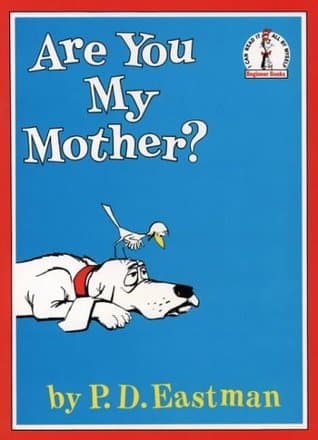
The story begins with a mother bird sitting on her egg in a nest high up in a tree. She realizes she needs to find food for her baby, as it will soon hatch. With a determined 'Pop!', the baby bird breaks out of its shell just moments after its mother flies away. The newly hatched bird looks around the empty nest, confused and alone. It has never seen its mother and does not know what she looks like. Wanting to find her, the baby bird decides to leave the nest, believing its mother must be somewhere nearby.
First Encounters: The Kitten
The baby bird tumbles out of the nest and begins its search on the ground. Its first meeting is with a small kitten. Eagerly, the baby bird asks, 'Are you my mother?' The kitten, however, simply looks at the bird and meows, not understanding. Disappointed but still going, the baby bird realizes the kitten is not its mother and continues its search, still wanting to find the one who will care for it.
Meeting the Hen
Continuing its journey, the baby bird soon comes across a large hen. With new hope, it asks the same question: 'Are you my mother?' The hen clucks and stares, clearly not the baby bird's parent. The baby bird, though small, keeps searching, learning through each meeting what its mother is not. It moves on, leaving the hen behind, still wondering where its true mother could be.
An Unlikely Candidate: The Dog
The baby bird's path then leads it to a large, sleeping dog. Not stopped by the dog's size or its sleep, the baby bird chirps, 'Are you my mother?' The dog wakes up with a yawn and a bark, clearly not understanding the baby bird's question. This meeting shows the baby bird's innocence and its strong focus on finding its mother, despite the clear differences in species.
The Car's Response
As the baby bird continues its search, it sees a large, metal object with wheels: a car. Thinking it might be its mother, the baby bird flies up to it and asks, 'Are you my mother?' The car responds not with a comforting embrace, but with a loud 'HONK!' The baby bird is surprised and quickly realizes that this noisy, unmoving object is not its mother. Its journey is proving to be full of unexpected and sometimes frightening meetings.
The Boat and the Plane
Not stopped by earlier failures, the baby bird's journey takes it past a boat on the water and then a plane flying overhead. To each, it asks its hopeful question: 'Are you my mother?' The boat stays silent, floating on the water, and the plane flies by high above, completely unaware of the small bird's search. These meetings show how big the world is and how hard its simple quest is.
The Snort and the Snort
The baby bird then meets a large, loud, and dangerous piece of machinery, which it calls a 'Snort'. This 'Snort' is an excavator with a large shovel. The baby bird, still thinking it might be its mother, flies directly into the path of the moving shovel. With a swift movement, the 'Snort' scoops up the baby bird. This is the most dangerous moment of the bird's journey, as it is accidentally lifted high into the air, far from the ground.
High Above and Down Below
The 'Snort' carries the baby bird high above the ground, swinging it through the air. The baby bird is scared but still calls out, 'Are you my mother?' The 'Snort' moves its arm and, by accident, places the baby bird directly back into its original nest. The baby bird finds itself safely back where it started, confused by the sudden return and the strange journey it just had, still without its mother.
Mother's Return and Reunion
Just as the baby bird settles back into the nest, its mother returns, flying down with a worm in her beak. The baby bird, seeing her, knows her instantly and exclaims, 'Yes! You ARE my mother!' The mother bird is happy to see her baby safe in the nest and quickly feeds it the worm. The long search is over, and the baby bird is finally reunited with the parent it has been seeking.
Are You My Mother? Characters
Baby Bird
Protagonist
A newly hatched bird searching for its mother.
The Baby Bird is the central character, an innocent and determined newborn. It hatches alone in the nest and, driven by instinct and a desire for parental care, embarks on a perilous journey to find its mother. It is characterized by its repetitive question, 'Are you my mother?', which it poses to every creature and object it encounters, regardless of species or nature. Despite its small size and vulnerability, it shows remarkable persistence and courage in its quest, demonstrating a child-like curiosity about the world.
Relationships: Mother Bird (Child, seeking parent); Kitten (Brief encounter, mistaken identity); Hen (Brief encounter, mistaken identity); Dog (Brief encounter, mistaken identity); Car (Brief encounter, mistaken identity); Boat (Brief encounter, mistaken identity); Plane (Brief encounter, mistaken identity); Snort (Brief, dangerous encounter, mistaken identity)
Mother Bird
Supporting
The baby bird's biological mother, who leaves to find food.
The Mother Bird is the catalyst for the Baby Bird's journey, as she leaves the nest to find food just before her egg hatches. She represents the nurturing parental figure, even though her absence initially causes the Baby Bird's distress. Her return at the end of the story brings resolution and reinforces the theme of a child finding its rightful place and parent. She is a responsible and caring mother, ensuring her baby has sustenance.
Relationships: Baby Bird (Parent, providing care)
Kitten
Mentioned
One of the creatures the baby bird mistakes for its mother.
The Kitten is one of the first creatures the Baby Bird encounters. It is small and furry, but its meow and appearance quickly establish that it is not the Baby Bird's mother. It serves as an early example of the Baby Bird's mistaken identity, highlighting the bird's innocence and lack of knowledge about other species. The kitten simply observes the bird without understanding its plight.
Relationships: Baby Bird (Brief encounter, object of inquiry)
Hen
Mentioned
A farm animal the baby bird asks, 'Are you my mother?'
The Hen is a larger bird that the Baby Bird approaches. Despite being a bird, its size, appearance, and clucking make it clear it is not the Baby Bird's mother. This encounter further emphasizes the Baby Bird's struggle to identify its parent among various creatures. The hen, like the kitten, cannot communicate with or understand the baby bird's desperate question.
Relationships: Baby Bird (Brief encounter, object of inquiry)
Dog
Mentioned
A large, sleeping animal that is mistakenly asked for motherhood.
The Dog is a large, initially sleeping animal that the Baby Bird encounters. Its bark and non-avian appearance confirm it is not the mother. This encounter adds to the series of mistaken identities, showing the Baby Bird's indiscriminate search. The dog's reaction is one of mild disturbance rather than comprehension, reinforcing the bird's isolation in its quest.
Relationships: Baby Bird (Brief encounter, object of inquiry)
Snort (Excavator)
Supporting
A large, dangerous machine that accidentally returns the baby bird to its nest.
The 'Snort' is a large, noisy construction excavator, personified by the Baby Bird as a potential mother. It represents the greatest danger the Baby Bird faces, as it is accidentally scooped up by the machine's shovel. Paradoxically, this dangerous encounter leads to the Baby Bird's safe return to its nest, making the 'Snort' an unwitting agent of the plot's resolution. It is a non-living object that provides a pivotal moment in the narrative.
Relationships: Baby Bird (Brief, dangerous, and pivotal encounter)
Are You My Mother? Themes
Identity and Belonging
The main theme is the Baby Bird's quest to understand its own identity by finding its mother. The repeated question, 'Are you my mother?', shows the basic need to belong and to know one's origins. Each mistaken meeting, from the kitten to the 'Snort', shows the Baby Bird's lack of a clear identity until it is reunited with its true parent, finding its place. The story suggests that knowing one's parent helps one understand oneself.
“Are you my mother?”
The Search for Nurturing and Care
The Baby Bird's journey is a search for a caregiver. Having hatched alone, it naturally seeks the warmth, protection, and food a mother provides. Its strong desire to find 'its mother' comes from this need for care. The mother bird's return with a worm at the end of the story shows this search being fulfilled, demonstrating a parent's role in providing for and protecting its offspring.
“I will get something for my baby to eat.”
Perseverance and Determination
Despite many rejections and dangerous meetings, the Baby Bird never stops looking. It asks every creature and object it meets, always repeating its question. This strong will is a key part of its character, showing resilience when things are hard. Even when scooped up by the 'Snort', its main concern is finding its mother, showing a natural drive to reach its goal.
“I will look for her. I will go right now.”
Mistaken Identity and Learning
Much of the plot involves the Baby Bird's repeated errors in finding its mother. It mistakes various animals (kitten, hen, dog) and even objects (car, boat, plane, 'Snort') for its parent. Through these mistakes, the Baby Bird learns what its mother is *not*, slowly narrowing its search. This process of elimination and the final recognition of its true mother shows a simple way of learning through experience, a common stage for young children.
“No. You are not my mother. You are a Snort!”
Plot Devices & Literary Techniques
Repetition
The recurring phrase 'Are you my mother?' drives the narrative.
The phrase 'Are you my mother?' is repeated throughout the book as the Baby Bird encounters different characters and objects. This repetition serves multiple purposes: it reinforces the Baby Bird's central quest, helps young readers with word recognition and comprehension, and creates a rhythmic, predictable structure that is engaging for early learners. Each repetition builds anticipation for the eventual reunion.
Personification
Inanimate objects are treated as potential mothers.
The Baby Bird personifies various inanimate objects, such as a car, a boat, a plane, and especially the 'Snort' (excavator), by asking them if they are its mother. This device highlights the Baby Bird's innocence and lack of understanding of the world, as it attributes human-like (or mother-like) qualities to non-living things. It adds a touch of whimsical absurdity to the bird's desperate search.
Quest Narrative
The story follows a classic journey to achieve a specific goal.
The entire book is structured as a quest narrative, with the Baby Bird embarking on a journey to find its mother. It leaves its home, encounters various obstacles and characters, and ultimately achieves its goal of reunion. This structure provides a clear, easy-to-follow plot for young readers and imbues the story with a sense of purpose and adventure, despite its simplicity.
Dramatic Irony (for adult readers)
The reader knows the mother's identity, but the protagonist does not.
For adult readers (and even slightly older children), there's a subtle layer of dramatic irony. We know from the beginning what the Mother Bird looks like and that she will eventually return. The humor and pathos of the Baby Bird's mistaken encounters are heightened by the reader's foreknowledge, creating a gentle tension as we watch the bird search for something we already know is waiting for it.
Are You My Mother? Quotes
“Are you my mother?”
“I will go and look for her.”
“You are not my mother. You are a Snort.”
“I want my mother!”
“You are not my mother. You are a dog.”
“I did have a mother. I know I did. I have to find her.”
“You are not my mother. You are a cow.”
“I am a baby bird. I have to find my mother.”
“You are not my mother. You are a boat.”
“And then he saw her. He knew her at once.”
“You are my mother!”
“He was home.”
“You are not my mother. You are a plane.”
“I have to find out who I am.”
Quiz
10 questions on the plot and the characters. Each answer comes with a short explanation.
Question 1
What is the main character in 'Are You My Mother?' searching for?
- His lost toy
- His mother
- A place to build a nest
- Something to eat
Show answer
B. His mother The baby bird hatches while his mother is away and immediately sets out to find her, repeatedly asking 'Are you my mother?' to various creatures and objects.
Question 2
What happens right after the baby bird hatches in the story?
- He falls out of the nest
- His mother feeds him
- He meets other birds
- He goes to sleep
Show answer
A. He falls out of the nest The baby bird hatches and immediately falls from the nest to the ground, which starts his journey to find his mother.
Question 3
Which of these does the baby bird NOT ask 'Are you my mother?' to?
- A kitten
- A dog
- A cow
- A hen
Show answer
C. A cow The baby bird asks a kitten, a hen, a dog, and even inanimate objects like a boat and a plane, but never encounters a cow in the story.
Question 4
What finally helps the baby bird get back to his nest?
- A friendly squirrel
- A large machine called a 'Snort'
- He finds a ladder
- He learns to fly
Show answer
B. A large machine called a 'Snort' The 'Snort' (a large construction vehicle) picks up the baby bird and places him back in his nest, where he is finally reunited with his mother.
Question 5
Why does the baby bird ask so many different creatures and objects if they are his mother?
- He is playing a game
- He doesn't know what his mother looks like
- He wants to make new friends
- His mother told him to ask everyone
Show answer
B. He doesn't know what his mother looks like Since the baby bird hatched while his mother was away, he has never seen her and doesn't know what she looks like, leading him to ask everyone he meets.
Question 6
Which publisher's series is 'Are You My Mother?' part of?
- Dr. Seuss Books
- Beginner Books
- Life Magazine Readers
- Easy Readers Club
Show answer
B. Beginner Books The book is part of the Beginner Books series founded by Dr. Seuss (Theodor Geisel) and his wife after the success of 'The Cat in the Hat.'
Question 7
What is a key characteristic of Beginner Books like 'Are You My Mother?'?
- They use complex vocabulary
- They have no illustrations
- They combine easy vocabulary with bright illustrations
- They are only available in paperback
Show answer
C. They combine easy vocabulary with bright illustrations Beginner Books feature large print, easy vocabulary, and large, bright illustrations to help children learning to read, as described in the book's background.
Question 8
What was Theodor Geisel's (Dr. Seuss) motivation for creating the Beginner Books series?
- To make more money from children's books
- To replace boring reading primers in schools
- To compete with other publishers
- To write books for his own children
Show answer
B. To replace boring reading primers in schools Geisel responded to a 1957 Life magazine article lamenting dull school primers by creating 'The Cat in the Hat,' which led to the Beginner Books series.
Question 9
In what way does 'Are You My Mother?' reflect the educational goals of Beginner Books?
- It teaches children about different animal species
- It uses repetition and simple language to build reading confidence
- It includes math problems for practice
- It has chapters for advanced readers
Show answer
B. It uses repetition and simple language to build reading confidence The book's repetitive question 'Are you my mother?' and simple vocabulary align with the Beginner Books' aim to create engaging, easy-to-read stories for new readers.
Question 10
Which of these is NOT a title mentioned as part of the Beginner Books series in the description?
- Hop on Pop
- The Very Hungry Caterpillar
- Go, Dog, Go!
- A Fly Went By
Show answer
B. The Very Hungry Caterpillar 'The Very Hungry Caterpillar' by Eric Carle is not mentioned; the listed titles are 'Hop on Pop,' 'Fox in Socks,' 'Green Eggs and Ham,' 'Go, Dog, Go!,' 'Are You My Mother?,' 'A Fly Went By,' and 'Put Me in the Zoo.'
Are You My Mother? FAQ
What is 'Are You My Mother?' about?
The book follows a baby bird who hatches while his mother is away from the nest searching for food. The confused baby bird sets out to find her, asking various animals and objects—including a kitten, hen, dog, cow, car, boat, plane, and steam shovel—the question 'Are you my mother?' before finally being reunited with his actual mother bird.
Why should I read 'Are You My Mother?'?
This classic Beginner Book is perfect for early readers with its simple, repetitive text that builds confidence. The humorous misunderstandings (like asking a steam shovel if it's his mother) and satisfying reunion create an engaging story that teaches about family bonds and persistence in a way young children love.
What is the background/setting of 'Are You My Mother?'?
Published in 1960 as part of the Beginner Books series founded by Dr. Seuss, the book was created specifically for children learning to read. The setting moves from the nest to various rural and mechanical environments as the baby bird searches, with P.D. Eastman's distinctive illustrations showing simple landscapes and exaggerated, expressive characters.
What are the most memorable quotes?
The most famous line is the baby bird's repeated question 'Are you my mother?' Other memorable moments include the steam shovel's response 'Snort!' and the final reunion where the mother bird says 'Yes, I am your mother' and the baby bird exclaims 'You are a bird, and you are my mother.'
What writing style does the author use?
P.D. Eastman uses extremely simple, repetitive language with short sentences and basic vocabulary perfect for beginning readers. The text follows a predictable pattern with slight variations ('Are you my mother?' 'I am not your mother. I am a [animal/object].'), creating rhythm and reinforcement for new readers.
What minor details add significant meaning?
The baby bird's immediate assumption that he must find his mother—rather than waiting in the nest—shows childhood independence and curiosity. Also, the inclusion of non-living objects like the 'Snort' steam shovel adds absurd humor that delights children while expanding their understanding of what constitutes a 'mother.'
What are some subtle foreshadowing moments?
Early illustrations show the mother bird flying away with a worm, establishing she'll return with food. The baby bird's growing desperation ('I did have a mother. I know I did. I have to find her.') foreshadows the emotional payoff of their reunion. The progression from animals to machines suggests the search is becoming increasingly hopeless.
What unexpected character connections exist?
While the animals the baby bird encounters are unrelated, they collectively represent a child's expanding world—from familiar farm animals to intimidating machinery. The steam shovel ('Snort') becomes an unexpected helper by lifting the baby bird back to his nest, creating a connection between nature and technology that resolves the plot.
What are unspoken character motivations?
The baby bird is driven by instinctual need for security and nourishment, though he expresses it as simple curiosity. The mother bird's absence suggests she's prioritizing finding food over immediate protection, showing parental responsibility. The other animals' brief interactions imply they recognize the baby bird's vulnerability but can't help beyond stating their identity.
What psychological complexities do characters exhibit?
The baby bird demonstrates cognitive development through categorization—he knows what a mother should be but applies the concept too broadly. His persistence despite repeated disappointment shows emerging resilience. The mother bird exhibits trust that her offspring will be safe alone, balancing care with practical necessity.
What are the major emotional turning points?
Key moments include the baby bird's initial confusion upon hatching alone, his growing anxiety as he encounters wrong answers, the frightening encounter with the loud steam shovel, the relief when 'Snort' helps him, and the joyful climax when his mother returns and identifies herself, providing security and closure.
How do relationship dynamics evolve?
The baby bird begins completely dependent but gains agency through his search. His relationship with the world evolves from fearful questioning to receiving help (from the steam shovel). The mother-child bond is absent then restored stronger, as both have actively participated in the reunion—she by returning, he by seeking.
Which parts remain ambiguous or open-ended?
The story doesn't explain why the mother bird left the egg unattended or how long she was gone. The steam shovel's sentience is ambiguous—is it a machine operated by someone, or does it have consciousness? The ending doesn't show what happens next, leaving the reader to imagine the mother feeding and caring for her chick.
What are controversial scenes or decisions?
Some modern readers question the mother bird leaving her vulnerable newborn alone, though this reflects real bird behavior. The baby bird's interactions with potentially dangerous animals (dog, cow) and machinery could be seen as modeling unsafe behavior, though the story presents them as humorous misunderstandings with no actual harm.
'Are You My Mother?' ending explained: how it ends & what it means
The story ends when the steam shovel lifts the baby bird back to his nest just as his mother returns. She identifies herself, and the baby bird joyfully recognizes her. This reinforces that mothers are recognizable through biological connection and care, and that persistence leads to happy resolutions. The circular return to the nest symbolizes security and home.
About the author

P.D. Eastman was an American author and illustrator known for his children's books. He is best known for "Are You My Mother?", a classic story that explores themes of identity and belonging through simple yet engaging illustrations and text. Eastman's works often feature animals and are aimed at early readers, making them popular in children's literature.
Similar books
- The Cat in the Hat
Dr. Seuss
4.2 (428k) average on GoodreadsFantasyA foundational Beginner Book known for its rhythmic text, engaging story, and limited vocabulary, designed to make reading fun for young children.
- The Very Hungry Caterpillar
Eric Carle
4.3 (396k) average on GoodreadsChildren'sCarle's book, like Eastman's, uses repetition and a clear quest (for food) to engage young readers. However, Carle integrates educational elements about counting, days of the week, different types of food, and the life cycle of a butterfly, offering a richer informational layer. While Eastman focuses purely on identification and belonging, Carle combines this with early learning concepts, making it a more multi-faceted educational tool.
- Harry Potter and the Sorcerer's Stone
J.K. Rowling
4.5 (7M) average on GoodreadsFantasyRescued from a miserable life under the stairs, an orphaned boy discovers he's a wizard destined for a magical school, where he uncovers a dangerous secret tied to the dark wizard who murdered his parents.
- The Hobbit, or There and Back Again
J.R.R. Tolkien
4.3 (2.9M) average on GoodreadsFantasyA comfort-loving hobbit named Bilbo Baggins is whisked away by a mischievous wizard and a band of dwarves on an unexpected journey to reclaim stolen treasure from a fearsome dragon, discovering courage and a magical ring along the way.
- Harry Potter and the Goblet of Fire
J.K. Rowling
4.6 (2.6M) average on GoodreadsFantasyA bewildered Harry Potter, underage and thrust into a deadly Triwizard Tournament, must brave dragons, mermaids, and a resurgent dark magic to survive a year that will forever alter the wizarding world.
- Harry Potter and the Order of the Phoenix
J.K. Rowling
4.5 (2.5M) average on GoodreadsFantasyIn a year of oppressive secrets and the threat of Voldemort, Harry Potter and Dumbledore's Army secretly train for war, shown through Jim Kay and Neil Packer's dark illustrations.





Enjoyed the summary?
A summary gives you the shape of the book. The book itself has the detail, the examples and the voice.
Find Are You My Mother? on AmazonAs an Amazon Associate, BookBrief earns from qualifying purchases. How we're funded