
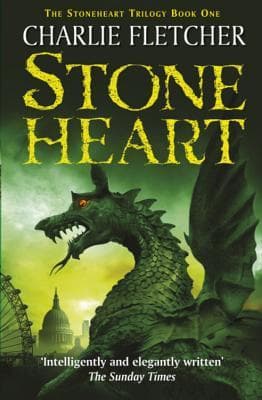
Synopsis
Covers the whole plot, including the ending.
- Difficulty
- Medium
- Pacing
- Moderate
- Mood
- Mysterious, Adventurous, Urban Fantasy, Slightly Dark
- Read it if
- You enjoy urban fantasy where a hidden magical world exists within a familiar city, and you like stories about inanimate objects coming to life.
- Skip it if
- You prefer high fantasy worlds completely separate from our own, or dislike stories with younger protagonists.
Stoneheart Plot Summary
Covers the whole plot, including the ending.
The Awakening of Stone
Twelve-year-old George Chapman, feeling invisible and neglected, acts out by breaking off the head of a small stone dragon outside the Natural History Museum. This minor act unleashes an ancient, dormant power. Immediately, a massive stone Pterodactyl detaches itself from the museum wall and begins to pursue George. Terrified, George flees, but to his horror, no one else in the bustling London streets seems to notice the colossal stone creature. He realizes he has crossed into a different reality. During his frantic escape, he encounters Edie, a girl who can also see the animated statues and appears to be living in this hidden London.
Introduction to the 'Unlondon'
Edie, a streetwise and experienced inhabitant of this 'Unlondon', explains the situation to a bewildered George. She reveals that London's statues are alive, divided into two main groups: the 'Spits' and the 'Gargoyles'. The Spits are benevolent, often human-like statues that protect the city, while the Gargoyles are malevolent, monstrous figures. Edie tells George that he is now 'unlondoned' — invisible to ordinary people and trapped in this world. She also explains that the statues are bound by strict rules, unable to leave their designated areas unless provoked, and their existence is linked to the city's history and memory.
The Quest for the Stoneheart
Edie informs George that the only way he can return to his own world is by finding the 'Stoneheart', an ancient artifact of immense power. The Stoneheart is said to be the essence of London, a mystical object that can control the living statues and potentially reverse George's 'unlondoning'. Their quest is dangerous, as both Spits and Gargoyles are interested in the Stoneheart, each for their own purposes. George, initially overwhelmed, starts to understand the gravity of his situation and the need to trust Edie, despite her evasive nature and mysterious past.
Encounters with the Spits
As they navigate the perilous streets of Unlondon, George and Edie encounter several Spits. They meet the brave and wise General Higgins, a statue from the Crimean War memorial, who becomes a key ally. Higgins, along with other Spits like the lions of Trafalgar Square, provide the children with vital information, temporary refuge, and protection from the predatory Gargoyles. George begins to see these statues not just as stone figures, but as beings with personalities, memories, and a deep connection to the city they embody. These encounters help George understand the history and politics of Unlondon.
The Threat of the Gargoyles
The children face constant danger from the Gargoyles, who are relentless in their pursuit. The most formidable of these is the 'Black Dog' of Newgate Prison, a monstrous, shadowy figure that instills fear even among the other statues. The Gargoyles, often taking the form of grotesque creatures or historical villains, see George as a disruption and are determined to prevent him from reaching the Stoneheart. Their attacks are brutal and frequent, forcing George and Edie to develop cunning strategies and rely on their wits and the occasional intervention of the Spits to survive.
Edie's Past Revealed
During their journey, George slowly uncovers details about Edie's past. She reveals that she was also 'unlondoned' years ago, after a traumatic event involving her family and a statue. She has been trapped in Unlondon ever since, living a solitary and dangerous existence. This revelation deepens George's empathy for her and strengthens their bond. Edie's long isolation has made her fiercely independent and cynical, but George's presence begins to soften her, as she finds a sense of purpose and companionship in their shared quest. Her knowledge of Unlondon's secrets proves invaluable.
The Betrayal and the Underground
George and Edie discover that not all Spits are benevolent. They face a devastating betrayal by a statue they had come to trust, which forces them to flee into the dangerous labyrinth of the London Underground. This subterranean world is another layer of Unlondon, filled with its own unique and often terrifying animated figures, including the spectral 'Ghost Trains' and ancient, forgotten statues. The Underground presents new challenges and threats, testing their resilience and forcing them to navigate unfamiliar and claustrophobic environments while still evading the relentless Gargoyles.
The Heart of London
After numerous trials and narrow escapes, George and Edie finally pinpoint the location of the Stoneheart. It is hidden deep within the heart of London, in a place steeped in history and magic. However, the Stoneheart is not unguarded. They must confront a powerful, ancient guardian, a statue of immense age and strength, tasked with protecting the artifact from both groups. This confrontation tests their courage, their combined knowledge of Unlondon, and their burgeoning friendship, as they must outwit or overcome this formidable obstacle to reach their goal.
The Confrontation and Sacrifice
Having reached the Stoneheart, George and Edie are immediately confronted by the Black Dog and a host of Gargoyles, who have tracked them. A desperate battle ensues, with the fate of both George's return and the balance of power in Unlondon hanging in the balance. A Spit makes a significant sacrifice to protect George, allowing him a chance to interact with the Stoneheart. The emotional weight of this sacrifice impacts George deeply, forcing him to confront the true cost of their quest.
George's Choice and Return
With the Stoneheart within his grasp, George faces a dilemma. He has the power to return to his own world, but he also understands the immense power the Stoneheart holds and the implications for Unlondon. He realizes that simply leaving might not be the right choice, especially considering Edie's continued plight. George makes a decision that reflects his growth and newfound understanding of responsibility. The Stoneheart responds to his intentions, and he is given a chance to return, but not without leaving a lasting impact on Unlondon and forging a strong bond with Edie.
Stoneheart Characters
George Chapman
Protagonist
A neglected twelve-year-old boy who accidentally awakens London's statues.
George is initially a lonely and emotionally neglected boy, feeling invisible to his busy parents. His act of breaking the dragon's head is a small rebellion against his perceived insignificance. He is initially overwhelmed and terrified by Unlondon, but his journey forces him to confront his fears and develop courage, resourcefulness, and empathy. He possesses an innate goodness and a strong sense of justice, which guides his decisions. His capacity for connection and loyalty grows significantly through his relationship with Edie and the Spits.
Relationships: Edie (Initially a reluctant alliance, evolving into a deep and trusting friendship.); General Higgins (Mentor and protector, a source of guidance and wisdom.); His Parents (Distant and neglectful, driving his initial act of defiance.)
Edie
Supporting
A streetwise girl, also trapped in Unlondon, who guides George.
Edie is a cynical, independent, and resourceful girl who has been 'unlondoned' for years. She is fiercely protective of herself and initially wary of George, but her tough exterior hides a deep loneliness and a tragic past. Her extensive knowledge of Unlondon's rules, factions, and hidden paths makes her an invaluable guide. She is practical, quick-thinking, and often uses humor as a defense mechanism. Her experiences have made her resilient but also somewhat jaded, a contrast to George's initial innocence.
Relationships: George Chapman (A reluctant guide turned loyal friend and confidante.); The Statues (both Spits and Gargoyles) (Long-standing, often adversarial or cautious, relationships born of survival.)
General Higgins
Supporting
A wise and brave Spit statue, George and Edie's primary ally.
General Higgins is a statue from a Crimean War memorial, embodying honor, duty, and strategic thinking. He is a 'Spit', meaning he is one of the benevolent statues dedicated to protecting London. He acts as a mentor and protector to George and Edie, offering them invaluable advice, historical context, and safe haven. Higgins is calm under pressure and possesses a deep understanding of Unlondon's ancient rules and the conflict between the factions. He represents the nobility and enduring spirit of London's past.
Relationships: George Chapman (Mentor and protector.); Edie (Trusted ally and source of information on Unlondon.)
The Black Dog
Antagonist
A terrifying and relentless Gargoyle, leader of the malevolent statues.
The Black Dog is a monstrous and ancient Gargoyle, the embodiment of fear and malevolence. It originates from Newgate Prison and represents the darker, more predatory aspects of London's history. It is relentless in its pursuit of George and Edie, driven by a desire to control the Stoneheart and maintain the Gargoyles' dominance. Its presence is terrifying, and it commands the other Gargoyles with an iron fist. The Black Dog symbolizes the destructive forces that George must overcome to restore balance.
Relationships: George Chapman (Arch-nemesis, predator to George's prey.); Edie (Long-standing enemy, a source of terror.)
The Pterodactyl
Antagonist/Mentioned
The first statue to awaken and pursue George, initiating his 'unlondoning'.
The Pterodactyl is a stone creature from the Natural History Museum that comes to life after George breaks the dragon's head. It is the immediate catalyst for George's entry into Unlondon, representing the initial terrifying and inexplicable nature of his new reality. While not a central character throughout, its relentless pursuit in the opening scenes establishes the high stakes and immediate danger George faces. It is a primal force, acting on instinct rather than complex motivation.
Relationships: George Chapman (Initial pursuer and threat.)
The Lions of Trafalgar Square
Supporting
Ancient and powerful Spit statues that offer counsel and protection.
The four bronze lions guarding Nelson's Column are ancient and immensely powerful Spits. They are wise and stoic, representing the enduring strength and spirit of London. While not as mobile as other statues, their presence is formidable, and they can offer powerful protection and cryptic advice. They are a symbol of the city's heart and its ancient defenses, providing a sense of gravitas and historical depth to Unlondon.
Relationships: George Chapman (Sources of protection and guidance.); Edie (Respected figures in Unlondon.)
The Stoneheart
Mentioned
The mystical artifact that can control the statues and return George home.
The Stoneheart is a legendary, powerful artifact, the core of Unlondon's magic and the ultimate goal of George and Edie's quest. It is said to be the literal heart of London, imbued with its history, memories, and power over the living statues. Its existence is known to both Spits and Gargoyles, who each seek to control it for their own ends. The Stoneheart represents the ultimate solution to George's predicament and the key to restoring balance in Unlondon.
Relationships: George Chapman (His ultimate goal for returning home.); Edie (Her hope for a changed future.)
Stoneheart Themes
The Hidden Life of Cities
The novel explores the idea that cities, especially historic ones like London, possess a hidden, living essence beyond their visible structures. The statues coming to life symbolize the layers of history, memory, and forgotten stories that exist beneath the surface of everyday life. George's 'unlondoning' allows him to perceive this secret world, revealing that the inanimate objects around us hold untold narratives and a powerful, often dangerous, existence. This theme is evident from the moment the Pterodactyl peels from the museum, showing George a London entirely unseen by others.
“London has many lives and layers. Not all the layers are underground, and not all the lives belong to the living.”
Finding Belonging and Identity
George begins the story feeling invisible and unloved, struggling with his identity within his own family. His journey into Unlondon, while terrifying, forces him to confront his fears and discover inner strengths he never knew he possessed. Through his friendship with Edie and his interactions with the Spits, George finds a sense of purpose and belonging that was absent in his ordinary life. He is no longer invisible; in Unlondon, he is a visible player. Edie, too, finds a renewed sense of connection after years of isolation, highlighting how shared struggle can forge deep bonds and a sense of self.
“He wasn't invisible here. He wasn't just a boy in the background. He mattered.”
The Power of Memory and History
The living statues are linked to London's history and collective memory. Each statue embodies a piece of the city's past, whether it's a war hero like General Higgins or a monstrous figure from an ancient prison like the Black Dog. The conflict between the Spits and the Gargoyles can be seen as a struggle between the benevolent and malevolent aspects of history, or the stories we choose to remember and those we try to forget. The Stoneheart itself is described as the essence of London's memory, showing how vital the past is to the present and future of the city and its inhabitants.
“Every stone has a story, and London is built of stories.”
Good vs. Evil and Moral Choice
The clear division between the Spits (benevolent, protective) and the Gargoyles (malevolent, destructive) establishes a classic battle of good versus evil. George is forced to navigate this moral place, learning to distinguish true allies from deceptive foes. His initial act of defiance, though minor, sets in motion a conflict that requires him to make difficult moral choices, ultimately culminating in his decision regarding the Stoneheart. The sacrifices made by some characters further emphasize the moral stakes and the importance of choosing the right path.
“There are those who guard, and those who consume. You must learn the difference, boy.”
Plot Devices & Literary Techniques
The 'Unlondoning'
The magical process by which George becomes invisible to ordinary people and perceives the living statues.
The 'Unlondoning' serves as the inciting incident and a key magical conceit. It's the mechanism that transports George from his mundane reality into the hidden world of living statues. It creates immediate isolation for George, heightening his vulnerability and dependence on Edie, while also establishing the rules of this new reality. This device allows the fantastical elements to coexist with the real London without disrupting the everyday world, making the hidden city feel both mysterious and plausible within the story's context.
The Stoneheart
The MacGuffin of the story, a powerful artifact that is the goal of all factions.
The Stoneheart is the central object of desire, driving the entire plot. Its existence provides George with a clear objective – to return home – and creates a convergence point for all the conflicting forces in Unlondon. As a MacGuffin, its specific powers are revealed gradually, but its importance is established early on. It serves not only as a means to an end for George but also as a symbol of London's essence and the ultimate prize in the ongoing conflict between the Spits and Gargoyles, giving weight to their ancient war.
Anthropomorphic Statues
The personification of London's statues, giving them sentience, personality, and history.
This device is fundamental to the fantasy element of the novel. By giving statues human-like (or monstrous) sentience, emotions, and motivations, the author transforms inanimate objects into dynamic characters. This allows for the exploration of themes like history, memory, and identity through the physical embodiment of the city's past. The statues' personalities, loyalties, and unique abilities (e.g., the General's strategic mind, the Lions' strength) drive much of the interaction and conflict, making the city itself a living, breathing entity.
The London Underground as a Labyrinth
The subterranean railway system functions as a dangerous, multi-layered environment within Unlondon.
The London Underground is used as a literal and metaphorical labyrinth. It represents a deeper, more perilous layer of Unlondon, filled with unique threats and ancient secrets. Its winding tunnels and hidden stations create a sense of claustrophobia and disorientation, amplifying the danger for George and Edie. This device allows for new challenges and provides opportunities for narrow escapes, while also symbolically representing the unseen depths and complexities of the city's hidden world, distinct from the surface-level Unlondon.
Stoneheart Quotes
“London was like a great beast, a sleeping dragon, and when it stirred, you felt its breath.”
“The city has a memory, and it remembers everything. Not in books, but in the stones themselves.”
“There are two Londons, you see. The one most people know, and the one that walks after dark.”
“Being seen is a kind of power. Being unseen is another.”
“Every statue, every carving, every gargoyle has a story. And some of them are still listening.”
“You can't fight what you can't see, and you can't run from what's inside you.”
“The past isn't dead. It's just waiting for someone to wake it up.”
“Sometimes the best way to hide is in plain sight.”
“Fear makes you do stupid things, but it also makes you brave things you never thought you could.”
“The city gives you what you need, if you know how to ask.”
“You don't choose the fight; the fight chooses you.”
“Every crack, every chip, every stain tells a tale. You just need to learn how to read them.”
“London breathes. If you listen closely enough, you can hear its heartbeat.”
Quiz
10 questions on the plot and the characters. Each answer comes with a short explanation.
Question 1
What specific act of rebellion does George commit that awakens the ancient power?
- He defaces a statue of Queen Victoria in Hyde Park.
- He breaks the head from a stone dragon outside the Natural History Museum.
- He carves his initials into the base of Nelson's Column.
- He throws a rock at a gargoyle on Westminster Abbey.
Show answer
B. He breaks the head from a stone dragon outside the Natural History Museum. George's initial act of rebellion, which sets the entire plot in motion, is breaking the head off a stone dragon outside the Natural History Museum.
Question 2
What is the first animated statue that chases George?
- A stone lion from Trafalgar Square
- A bronze knight on horseback
- A stone Pterodactyl that unpeels from a wall
- A marble angel from a churchyard
Show answer
C. A stone Pterodactyl that unpeels from a wall Immediately after George breaks the dragon's head, a stone Pterodactyl unpeels from the wall and begins to pursue him, initiating his flight.
Question 3
Who is the first person to see what George is running from and is also trapped in this 'strange world'?
- His younger sister, Lucy
- An old man named Mr. Henderson
- Edie
- A police officer
Show answer
C. Edie Edie is introduced as the first character who can also perceive the animated statues and is similarly caught in this new reality with George.
Question 4
The conflict in the story is primarily described as a struggle between which two groups?
- Humans and animals
- The living and the dead
- Those with souls and those without
- Good and evil sorcerers
Show answer
C. Those with souls and those without The book description explicitly states the conflict is 'of a struggle between those with souls and those without,' referring to the animate statues.
Question 5
What is a significant emotional challenge George faces at the beginning of the story, as mentioned in the description?
- He is struggling with academic pressure at school.
- He is dealing with the recent loss of a pet.
- He has been emotionally abandoned.
- He is often bullied by older children.
Show answer
C. He has been emotionally abandoned. The book description highlights that George is 'one boy who has been emotionally abandoned,' setting up his personal journey for finding hope.
Question 6
The statues coming to life are referred to as having been 'dormant for centuries.' What does this imply about their nature?
- They were recently created by a powerful wizard.
- They are a new phenomenon caused by modern pollution.
- They represent an ancient, pre-existing magic or state of being within London.
- They are alien entities that have just arrived on Earth.
Show answer
C. They represent an ancient, pre-existing magic or state of being within London. The phrase 'dormant for centuries' suggests that the power and the animated statues are not new creations but rather an ancient element of London that has been reawakened.
Question 7
What broader theme is George's journey meant to explore, given his initial emotional state?
- The importance of historical preservation.
- The struggle to find hope despite emotional abandonment.
- The dangers of disrespecting public art.
- The power of childhood imagination.
Show answer
B. The struggle to find hope despite emotional abandonment. The description explicitly states the story is 'of how one boy who has been emotionally abandoned manages to find hope,' highlighting this as a central theme.
Question 8
The description mentions 'London has more [lives and layers] than most.' What does this suggest about the city's role in the story?
- London is merely a backdrop for the action.
- The city itself is a character, possessing unique magical properties and a hidden history.
- The story could easily take place in any other major city.
- The 'layers' refer strictly to geological strata under the city.
Show answer
B. The city itself is a character, possessing unique magical properties and a hidden history. The statement about London having 'more lives and layers' implies that the city is not just a setting but an integral, living entity with hidden depths and magical significance, making it almost a character in itself.
Question 9
The fact that 'no one can see what he's running from' except Edie, implies what about George's initial experience?
- He is hallucinating the events due to stress.
- He has entered a separate, hidden reality or layer of London.
- The Pterodactyl is invisible to adult eyes only.
- He is intentionally being ignored by passersby.
Show answer
B. He has entered a separate, hidden reality or layer of London. The inability of ordinary people to see the animated statues, contrasted with Edie's perception, strongly suggests that George has stumbled into a hidden, parallel reality or dimension of London, rather than just imagining things.
Question 10
What does the phrase 'Not all the layers are underground, and not all the lives belong to the living' foreshadow about the nature of London's hidden aspects?
- London has a complex subway system and a large homeless population.
- The city contains ancient, magical elements and entities, including animated statues, that exist openly but unseen.
- The story will primarily involve ghosts haunting historical buildings.
- George will discover secret societies operating within the city's sewers.
Show answer
B. The city contains ancient, magical elements and entities, including animated statues, that exist openly but unseen. This phrase directly foreshadows the central premise: that London holds hidden magical realities, including inanimate objects (like statues) that possess 'lives' and exist on 'layers' not necessarily hidden underground, but rather in plain sight yet unseen by most.
Stoneheart FAQ
What is the central premise of 'Stoneheart' and how does George become involved?
The central premise of 'Stoneheart' involves the statues of London coming to life and revealing a hidden world. George Chapman, a twelve-year-old, accidentally triggers this by breaking the head off a stone dragon outside the Natural History Museum, which causes a Pterodactyl statue to unpeel from the wall and chase him, pulling him into this unseen reality.
Who are the 'un-Londoners' and what is their primary goal?
The 'un-Londoners' are sentient statues, gargoyles, and other inanimate objects brought to life. They are divided into two main factions: the 'Spits' and the 'Taints.' Their primary goal is to control the 'Fissure,' a powerful source of life energy, and ultimately dominate or protect London, depending on their allegiance.
Who is Edie and what role does she play in George's journey?
Edie is a girl who has been trapped in the 'un-London' world for some time, having been pulled in after her own encounter with the living statues. She becomes George's initial guide and protector, teaching him the rules of this hidden reality and helping him navigate the dangers posed by the warring statue factions.
What are the 'Spits' and the 'Taints,' and how do they differ?
The 'Spits' are generally benevolent, representing the protective and traditional aspects of London's statues, often associated with civic pride and guardianship. The 'Taints' are malevolent and destructive, embodying the darker, more grotesque elements of the city's statuary, seeking to exploit or corrupt the Fissure's power.
What is the significance of the 'Fissure' in the story?
The 'Fissure' is a powerful, mystical source of life energy that runs beneath London, giving the statues their sentience and power. Both the Spits and the Taints seek to control it, as mastery over the Fissure would grant ultimate power over the city and its hidden inhabitants.
How does the broken dragon head connect to the larger conflict?
The broken dragon head, specifically the 'Wyrm,' is a crucial element. It is not just a random act of vandalism; it is a piece of a powerful, ancient entity that, when broken, disrupts the delicate balance of the 'un-London' world, effectively waking dormant powers and escalating the conflict between the Spits and Taints.
Are there any clues early on that hint at George's unique ability to perceive the un-London?
While not explicitly stated as an 'ability' initially, George's emotional abandonment and feeling invisible in the real world might subtly hint at his susceptibility or openness to perceiving the 'un-London.' His initial act of rebellion, though small, suggests a deeper dissatisfaction that makes him ripe for this awakening.
What is the true nature of the Pterodactyl that chases George?
The Pterodactyl is a 'Spit,' a guardian statue from the Natural History Museum. Its initial pursuit of George, though terrifying, is not purely malicious; it is a reaction to the awakening of the Wyrm and an attempt to bring George into the hidden world, recognizing his accidental role in the disturbance.
How do the 'un-Londoners' interact with the 'real' London, and why can't ordinary people see them?
The 'un-Londoners' exist on a different plane of perception, often described as a 'flicker' or a 'blur' to ordinary human eyes. They can manipulate their visibility, and the 'real' Londoners are generally oblivious due to a form of collective unconscious blindness, allowing the statue world to operate unseen.
How does George's feeling of being 'emotionally abandoned' influence his actions and growth throughout the story?
George's emotional abandonment makes him feel invisible and unheard in his regular life, which fuels his initial rebellious act. In the 'un-London,' this background allows him to more readily accept the strange reality and form deep bonds with Edie and the Spits, finding a sense of belonging and purpose he lacked previously.
What psychological impact does being thrust into the 'un-London' have on George?
Being thrust into 'un-London' initially causes immense fear and confusion for George, but it also provides an outlet for his suppressed emotions. He gains courage, learns to trust others, and develops a strong sense of responsibility, transforming him from a passive, ignored boy into an active participant in a vital struggle.
How does Edie's past experience in the 'un-London' shape her personality and interactions with George?
Edie's prior time in 'un-London' has made her resilient, street-smart, and somewhat cynical, but also fiercely loyal. She acts as a mentor and protector for George, her pragmatism balancing his initial naivety, and her own loneliness makes her receptive to their burgeoning friendship.
In what ways do the 'Spits' and 'Taints' reflect different aspects of London's collective unconscious or historical identity?
The 'Spits' can be seen as representing London's enduring spirit of resilience, history, and civic pride, embodying the city's protective and noble qualities. The 'Taints,' conversely, symbolize the city's darker underbelly, its forgotten histories, urban decay, and the potential for malevolence lurking beneath its grandeur.
What is the symbolic meaning behind the statues coming to life in a modern city?
The statues coming to life can symbolize the enduring power of history, art, and memory within a modern, fast-paced city. It suggests that the past is never truly dead but merely dormant, and that the narratives embedded in urban landscapes hold a potent, living force that can intrude upon the present.
How does the book explore themes of visibility and invisibility, both literally and metaphorically?
The book explores visibility literally through the statues being unseen by most and metaphorically through George's feeling of being invisible to his family. His journey in 'un-London' forces him to become visible and take action, contrasting with his former life where he was overlooked, highlighting the theme of finding one's place and voice.
Is the conflict between the 'Spits' and 'Taints' a purely good vs. evil struggle, or are there shades of grey?
While broadly presented as good vs. evil, there are shades of grey. The 'Spits' can be rigid in their traditions, and the 'Taints' often represent neglected or forgotten aspects of the city. The conflict can also be interpreted as a struggle between preservation and change, or between different interpretations of London's identity.
What message does the book convey about the power of individual actions, even small ones?
The book powerfully conveys that even a small, seemingly insignificant act of rebellion, like George breaking the dragon's head, can have profound and far-reaching consequences. It emphasizes that individual actions can awaken dormant forces and trigger monumental changes, highlighting personal responsibility and agency.
How does 'Stoneheart' use the setting of London to enhance its fantasy elements?
'Stoneheart' masterfully uses London's rich history, iconic landmarks, and diverse architecture to ground its fantasy elements. The city itself becomes a character, with its statues, gargoyles, and hidden corners providing a believable and atmospheric backdrop for the 'un-London' world, making the fantastic feel intimately connected to the real.
Similar books
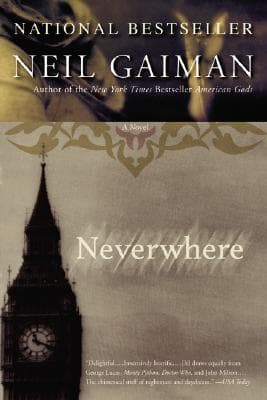
- Neverwhere
Neil Gaiman
4.2 (430k) average on GoodreadsFantasyExplores a hidden, magical version of London coexisting with the mundane city, featuring forgotten places and living statues.
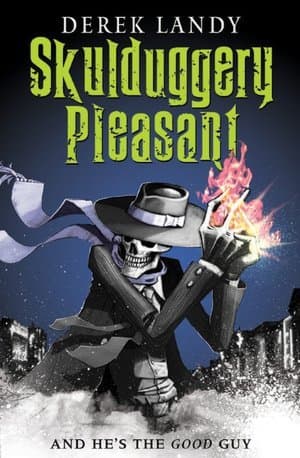
- Skulduggery Pleasant
Derek Landy
4.1 (55k) average on GoodreadsFantasyFeatures a hidden magical world, a young protagonist thrust into danger, and a blend of action and mystery with a unique urban setting.
- Harry Potter and the Sorcerer's Stone
J.K. Rowling
4.5 (7M) average on GoodreadsFantasyRescued from a miserable life under the stairs, an orphaned boy discovers he's a wizard destined for a magical school, where he uncovers a dangerous secret tied to the dark wizard who murdered his parents.
- The Hunger Games
Suzanne Collins
4.3 (6.4M) average on GoodreadsFantasyIn a future where children fight to the death on live television, Katniss Everdeen volunteers for the arena, turning a death sentence into a fight for survival and a spark of rebellion.
- 1984
George Orwell
4.2 (3.1M) average on GoodreadsPoliticsIn a future where surveillance and thought control are absolute, a man's search for truth clashes with the Party, showing that hope can be a form of rebellion.
- Divergent
Veronica Roth
4.2 (2.9M) average on GoodreadsFantasyIn a society divided by virtues, a sixteen-year-old's difference from the norm starts a rebellion that threatens her world.




Enjoyed the summary?
A summary gives you the shape of the book. The book itself has the detail, the examples and the voice.
Find Stoneheart on AmazonAs an Amazon Associate, BookBrief earns from qualifying purchases. How we're funded