
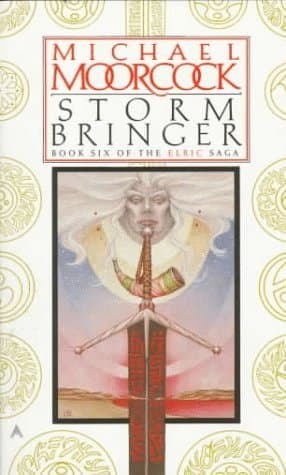
Synopsis
Covers the whole plot, including the ending.
- Difficulty
- Medium
- Pacing
- Fast
- Mood
- Epic, Tragic, Apocalyptic, Nihilistic, Grandiose
- Read it if
- You love classic sword & sorcery, cosmic fantasy, anti-heroes, and epic, world-ending conclusions.
- Skip it if
- You prefer light-hearted fantasy, clear-cut heroes, or stories with unambiguous happy endings.
Stormbringer Plot Summary
Covers the whole plot, including the ending.
The Doom of the Dreamer's Woe
Elric of Melniboné, an albino emperor and sorcerer, struggles with his parasitic sentient sword, Stormbringer, which craves souls and keeps him alive. With his friend Moonglum, Elric follows prophetic dreams to the mythical city of Tanelorn, a place outside time and space. He believes reaching Tanelorn is key to understanding his terrible destiny. Their journey is dangerous, meeting many people from the Young Kingdoms and facing the growing chaos in the world. Elric's inner fight between his wish for peace and Stormbringer's hunger for blood grows, hinting at the coming cosmic war.
The March on Imrryr
As the balance between Law and Chaos breaks across the multiverse, Elric returns to the ruins of his old capital, Imrryr, the Dreaming City. He finds it held by Chaos forces, preparing for a final war. Elric's return is not for his lost empire, but a grim acceptance that his fate is tied to the coming fight. He sees the Lords of Chaos gain power, trying to destroy the known world. This return forces Elric to face his past and the deep losses he has suffered.
The Black Sword's Summons
Stormbringer's role in the cosmic drama becomes clearer. It is not just a magic weapon but a sentient being, a Black Sword of Chaos, one of several such blades across the multiverse, all meant to end an age. Its constant hunger and whispers further weaken Elric's will, pushing him to acts he might otherwise avoid. The sword's power is huge, letting Elric beat strong enemies, but each win costs greatly, taking the souls of his foes and sometimes his allies. This symbiotic, parasitic relationship is central to Elric's tragic life and his unwilling part in the coming end.
The Battle of the Myriad Spheres
The long-foretold war between Law and Chaos begins. The multiverse becomes a battlefield, with armies of gods, demons, and mortals fighting across many realms. Elric, wielding Stormbringer, is a central figure in this war, often fighting for Law out of duty, even as Stormbringer itself is a tool of Chaos. He fights with and against various powerful beings, including the Lords of Law and the Dukes of Hell. The war is vast, threatening entire realities. Elric's actions, driven by his will and Stormbringer's influence, shift the balance in unexpected ways.
The Sacrifice of Cymoril
In a cruel twist, Elric finds his beloved cousin and former empress, Cymoril, who has been brought back to life. Their reunion is short and painful. As the war rages, Stormbringer, in its hunger and its role in cosmic balance, forces Elric to commit the ultimate betrayal. In a moment of horror and despair, Elric is made to kill Cymoril with Stormbringer. This act shatters what little hope and humanity Elric had left, marking him as a tool of destruction and fulfilling a terrible prophecy about his role in the world's end. Her death is a key moment, pushing Elric further into his destined role.
The Vanishing of Tanelorn
As the cosmic conflict peaks, the mythical city of Tanelorn, once a symbol of hope and stability outside of time, begins to disappear. Elric and Moonglum see its final, ghostly moments. Tanelorn's vanishing means the complete breakdown of the old order and the ultimate triumph of Chaos, or rather, the complete reset of the multiverse. Its disappearance shows the total nature of the apocalypse, leaving no safe place untouched by the coming doom.
The Death of Moonglum
During the final stages of the last battle, Moonglum, Elric's loyal companion and his last tie to humanity, is killed. His death is a deep blow to Elric, cutting his last emotional link to the world and leaving him in despair and alone. Moonglum's loyalty and practicality often kept Elric grounded, offering a contrast to Stormbringer's dark influence. His death leaves Elric completely isolated, a lone figure amidst the chaos, further solidifying his path as the doomed hero meant to see the end of all things. This sacrifice shows the deep personal cost of the cosmic war.
The End of the Young Kingdoms
The war between Law and Chaos ends with the complete destruction of the Young Kingdoms. Continents break apart, oceans boil, and reality itself tears. All the lands, peoples, and cultures Elric has known are wiped out in a huge cataclysm. This is not just a battle but the literal unmaking of a universe. Elric, empowered by Stormbringer, takes part in this destruction, an unwilling agent of cosmic reordering. He sees the final moments of his world, a desolate landscape of ruin and emptiness, fulfilling the prophecies of a complete end.
The Consumption of Elric
With the Young Kingdoms destroyed and the cosmic balance reset, Stormbringer's true purpose is clear. After destroying the old world, the sentient sword turns on its master. In a final, terrible act, Stormbringer consumes Elric's soul and body, absorbing him. This is the ultimate betrayal and the final, personal tragedy for Elric, who had always been sustained and tormented by the blade. His life ends not in a glorious death, but in complete absorption, becoming one with the force that had controlled his life. Stormbringer then disappears, its task done, waiting for a new age and a new master.
The Dawn of a New Age
After the old multiverse is destroyed and Elric is consumed by Stormbringer, a new, pure world is born. This new reality is untouched by the conflict of Law and Chaos, a blank slate, full of potential. The cycle of cosmic destruction and creation is complete, with Elric having played his unwilling part in this rebirth. The ending is both bleak and hopeful, suggesting that while Elric's individual tragedy is huge, his suffering cleared the way for a fresh start for existence itself. The universe is cleansed, ready for new life and new stories, free from the old conflicts that plagued the previous age.
Stormbringer Characters
Elric of Melniboné
Protagonist
The albino emperor, sorcerer, and tragic hero of the Young Kingdoms.
Elric is a frail, albino emperor of the decadent island nation of Melniboné, sustained by potent elixirs and the soul-devouring sword, Stormbringer. He is a melancholic figure, burdened by his heritage, his love for Cymoril, and his unwilling servitude to the Black Sword. Despite his immense magical power and the strength granted by Stormbringer, Elric is often portrayed as weak-willed and regretful, constantly battling his own nature and the sword's influence. He seeks peace and a release from his cursed existence, yet is inexorably drawn into the cosmic conflict between Law and Chaos.
Relationships: Stormbringer (Symbiotic, parasitic master-servant relationship; tool and tormentor.); Cymoril (His true love and cousin, whom he tragically kills.); Moonglum (His loyal, pragmatic companion and last friend.); Arioch (One of the Dukes of Hell, patron demon of Melniboné, often manipulating Elric.)
Stormbringer
Antagonist/Plot Device
The sentient, soul-devouring Black Sword and Elric's parasitic companion.
Stormbringer is more than just a weapon; it is a sentient entity, a manifestation of Chaos, and one of the Black Swords created to bring about the end of an age. It feeds on souls, both of Elric's enemies and, tragically, his loved ones, to sustain Elric's life force and its own. The sword often whispers to Elric, manipulating him towards its own dark ends, even while providing him with incredible power. It represents both Elric's greatest strength and his ultimate curse, driving much of the plot and many of Elric's tragic decisions.
Relationships: Elric of Melniboné (Master and victim; symbiotic and parasitic.); Other Black Swords (Kin; part of a larger cosmic family of destructive artifacts.)
Moonglum of Elwher
Supporting
Elric's loyal companion, a pragmatic and cynical adventurer.
Moonglum is a red-haired adventurer from Elwher, a cynical but deeply loyal companion to Elric. He often serves as Elric's conscience and a grounding force, offering practical advice and a dose of reality amidst Elric's melancholic musings and the fantastical chaos they encounter. Despite his self-professed love for gold and women, Moonglum remains by Elric's side through countless perils, offering unwavering friendship even when facing the most terrifying adversaries. He represents Elric's last connection to ordinary humanity and a sense of normalcy.
Relationships: Elric of Melniboné (Deep and loyal friendship, companion in adventure.)
Cymoril
Supporting
Elric's beloved cousin and former empress, tragically entangled in his fate.
Cymoril is Elric's cousin and his one true love, a symbol of the peace and happiness he constantly craves but can never attain. Her memory haunts Elric, and her various appearances throughout his saga often lead to further heartbreak. She represents innocence, beauty, and the possibility of a normal life that Elric is denied. Her fate is intrinsically linked to Elric's tragic destiny, culminating in a devastating sacrifice that underscores the brutal cost of Elric's role in the cosmic drama.
Relationships: Elric of Melniboné (Love interest, cousin, ultimately his victim.); Yyrkoon (Brother, who also desired her and conspired against Elric.)
Arioch
Antagonist/Supporting
A powerful Duke of Hell and patron demon of Melniboné, aligned with Chaos.
Arioch is one of the most powerful Dukes of Hell, a patron demon of the Melnibonéan empire, and a frequent manipulator of Elric. He embodies the forces of Chaos, offering Elric power and knowledge in exchange for service, often leading Elric down paths of destruction. Arioch is a cunning and ancient entity, reveling in the unfolding cosmic conflict and Elric's suffering. He represents the seductive and destructive nature of Chaos, always seeking to sway mortals to its cause and further its own agenda in the eternal struggle.
Relationships: Elric of Melniboné (Patron demon and manipulative ally/antagonist.); The Lords of Chaos (Fellow powerful entities of Chaos.)
The Lords of Law
Mentioned/Supporting
Cosmic entities who represent order and balance in the multiverse.
The Lords of Law are abstract, powerful entities who embody the principles of order, stability, and creation in the multiverse. They are the eternal adversaries of the Lords of Chaos, constantly striving to maintain balance or impose structure. While they are often seen as 'good,' their methods can be just as ruthless and impersonal as Chaos, as they prioritize cosmic order above individual lives. They sometimes grant power or guidance to mortals, including Elric, but their ultimate goals are often beyond human comprehension.
Relationships: The Lords of Chaos (Eternal adversaries in the cosmic balance.)
The Lords of Chaos
Antagonist
Cosmic entities who represent entropy, change, and destruction.
The Lords of Chaos are ancient and powerful beings who embody the principles of entropy, change, and destruction. They seek to unmake existing orders and bring about new, unpredictable realities. They are the eternal adversaries of the Lords of Law, and in 'Stormbringer,' they are actively working to bring about the end of the current age. Figures like Arioch are among their number. They are often depicted as capricious, cruel, and indifferent to mortal suffering, seeing it merely as a means to achieve their cosmic objectives.
Relationships: The Lords of Law (Eternal adversaries in the cosmic balance.); Arioch (One of their number, often acting as their agent.)
Jagreen Lern
Antagonist
The Sorcerer-Emperor of Pan Tang and a major antagonist.
Jagreen Lern is the tyrannical Sorcerer-Emperor of Pan Tang, a powerful and cruel sorcerer who seeks to conquer the Young Kingdoms. He is a formidable foe, often allied with the forces of Chaos, and his ambitions clash directly with Elric's path. Jagreen Lern represents the mortal ambition and cruelty that contribute to the chaos of the world, serving as a significant antagonist leading up to the final cosmic conflict. He commands vast armies and wields dark magic, making him a dangerous adversary for Elric.
Relationships: Elric of Melniboné (Bitter enemy.); The Lords of Chaos (Ally and servant.)
Stormbringer Themes
Destiny vs. Free Will
Elric's life is a battle between his wish for peace and the grim fate given to him by his family, his albino condition, and most of all, Stormbringer. He often complains about his lack of choice, feeling like a puppet of higher powers (Law, Chaos, or the sword). The repeated prophecies and the steady march toward the world's end show how little control Elric truly has, ending with his unwilling role as his world's destroyer and his final absorption by Stormbringer. This theme explores if anyone can escape a fated path, especially when caught in cosmic wars.
“I am a slave to fate, a pawn in the hands of gods and demons!”
The Nature of Good and Evil
The novel questions traditional ideas of good and evil by showing Law and Chaos not as moral absolutes, but as cosmic forces needed for the multiverse's balance. The Lords of Law, representing order, can be as cold and uncaring as the Lords of Chaos, who embody change and destruction. Elric himself, though often fighting for what he sees as good, is forced to do terrible acts by Stormbringer, a tool of Chaos. This uncertainty makes the reader wonder if actions are good or evil, or just parts of a larger, amoral cosmic cycle. The 'good' of a new world requires the 'evil' of universal destruction.
“There is no good, no evil, save that which men create themselves. And in the end, all that is created is destroyed. This is the great cycle.”
Loss and Sacrifice
Elric's journey is a constant series of losses, each one taking away parts of his soul and his connection to the world. He loses his empire, his love (Cymoril, whom he kills), his friends (Moonglum), and finally, himself. These sacrifices are not made willingly for a noble cause, but are often forced on him by Stormbringer or cosmic destiny. The total weight of these losses shows the tragic nature of his heroism, where personal happiness is destroyed for a larger, impersonal cosmic renewal. The entire world is sacrificed for the birth of a new one.
“I have learned that the greatest of all tragedies is to live a life with nothing left to lose, yet still be bound to live it.”
The Price of Power
Elric's power, mainly from Stormbringer, comes at a huge cost. While the sword gives him great strength, it also drains his life force, corrupts his soul, and forces him to do terrible things. This theme explores the corrupting effect of ultimate power and the idea that some abilities are too awful for any mortal to wield without being completely consumed. Elric's need for Stormbringer to survive traps him in a cycle of destruction, showing that true power can be a curse, turning the wielder into a tool rather than a master.
“The greater the power, the greater the price, and the Black Sword exacts the highest of all.”
Decadence and Decline
The world of the Young Kingdoms, especially Elric's ancestral Melniboné, is shown as being in a state of advanced decay. Melniboné itself is a shadow of its past glory, a dying empire clinging to old, cruel traditions. This theme suggests that the old order is flawed and ready for destruction, making way for a new beginning. The decay of civilizations and their moral rot hint at the age's ultimate end, implying that the destruction is not just an act of Chaos, but a necessary cleansing of a world that has used up its potential.
“The Dreaming City was a nightmare now, a monument to a race that had outlived its purpose.”
Plot Devices & Literary Techniques
The Black Swords (Stormbringer)
Sentient, soul-devouring weapons of Chaos that dictate fate.
Stormbringer is the most prominent of the Black Swords, a class of sentient, soul-devouring artifacts of Chaos. It acts as both Elric's life support and his tormentor, compelling him to commit acts of violence and manipulation. The sword is a living plot device, driving Elric's actions, ensuring his survival (at a cost), and ultimately guiding him to fulfill his role as the destroyer of the old world. Its sentience and parasitic nature are crucial to Elric's character arc and the overall cosmic narrative, as it is the primary catalyst for much of the plot's tragedy and progression.
Prophecy and Destiny
Preordained events that guide characters and the cosmic conflict.
Prophecies about Elric's role in the end of the world and the clash between Law and Chaos are a constant undercurrent throughout the narrative. These prophecies remove much of Elric's free will, making him a pawn of destiny. The characters, especially Elric, are often aware of their grim fates, yet are powerless to alter them. This device heightens the sense of tragedy and inevitability, as events unfold exactly as foretold, leading to the ultimate destruction and rebirth of the multiverse. It underscores the theme of destiny's unbreakable grip.
The Cosmic Balance
The eternal struggle between Law and Chaos that governs the multiverse.
The Cosmic Balance is the overarching meta-narrative framework of the Eternal Champion cycle. It dictates that the forces of Law and Chaos must maintain a delicate equilibrium, and when one side becomes too dominant, a Champion (like Elric) is destined to restore balance, often through cataclysmic means. In 'Stormbringer,' this balance is severely skewed towards Chaos, necessitating the complete destruction of the old world to allow for a new beginning. This device explains the grand scale of the conflict and Elric's ultimate, tragic purpose within it.
The Multiverse
The concept of infinite parallel realities and dimensions.
The story is set within a vast multiverse, implying countless parallel worlds and dimensions. This concept allows for the grand scale of the conflict between Law and Chaos, as their struggle affects not just one world, but entire realities. It also provides the setting for the mythical city of Tanelorn, which exists outside of normal space-time. The multiverse context elevates the stakes of the conflict, making Elric's actions resonate across an infinite tapestry of existence, rather than being confined to a single planet.
Stormbringer Quotes
“Do not meddle in the affairs of sorcerers, for you are crunchy and taste good with ketchup.”
“My destiny is a thing of doom, and I embrace it.”
“For good or ill, the age of gods and demons is over. The age of man has begun.”
“I am Elric, called Womanslayer, Kinslayer, the Pale Prince, the White Wolf. I am the last emperor of Melniboné.”
“There is no good. There is no evil. There is only what you choose to do.”
“Stormbringer, my black sword, my soul-stealer, my brother. We are bound.”
“The price of power is always paid, in blood or despair.”
“Sometimes the only way to save the world is to destroy it.”
“I seek an end to my suffering, but I fear it will only bring more.”
“The multiverse is a tapestry woven of chaos and order, and I am merely a thread caught in its design.”
“Better to die by my own blade than by the whim of a god.”
“There are always other worlds, other paths, other destinies. But mine is here.”
“The wind howled a dirge through the ruins of the world, a song of endings and beginnings.”
“My soul is a desert, and Stormbringer the only rain.”
Quiz
10 questions on the plot and the characters. Each answer comes with a short explanation.
Question 1
What is the primary goal of Elric's quest throughout 'Stormbringer'?
- To conquer all existing kingdoms and establish a new Melnibonéan empire.
- To find a way to destroy Stormbringer and free himself from its influence.
- To bring about the final destruction of the current world and usher in a new age.
- To rescue Zarozinia from the clutches of Jagreen Lern.
Show answer
C. To bring about the final destruction of the current world and usher in a new age. Elric's ultimate destiny in 'Stormbringer' is to act as an agent of the Cosmic Balance, helping to bring about the end of the current age so a new one can begin.
Question 2
Which entity does Elric ultimately serve, knowingly or unknowingly, in bringing about the end of the world?
- Chaos
- Law
- The Cosmic Balance
- Arioch, Duke of Hell
Show answer
C. The Cosmic Balance Elric, as the Eternal Champion, is a pawn of the Cosmic Balance, which seeks to maintain equilibrium between Law and Chaos, even if it means destroying and recreating worlds.
Question 3
What happens to the souls of those killed by Stormbringer?
- They are sent to the Young Kingdoms' afterlife.
- They are absorbed by the sword, feeding its power and Elric's vitality.
- They are released to wander the multiverse as ghosts.
- They are enslaved by the Lords of Chaos.
Show answer
B. They are absorbed by the sword, feeding its power and Elric's vitality. Stormbringer is a sentient runeblade that devours the souls of its victims, transferring their essence to Elric, sustaining him and strengthening the sword.
Question 4
Who is Jagreen Lern, and what is his role in 'Stormbringer'?
- A powerful sorcerer from Melniboné who aids Elric.
- The Emperor of Pan Tang, who attempts to conquer the Young Kingdoms and serves the Lords of Chaos.
- A manifestation of the Lords of Law, opposing Elric's destructive path.
- Elric's long-lost brother who seeks revenge against him.
Show answer
B. The Emperor of Pan Tang, who attempts to conquer the Young Kingdoms and serves the Lords of Chaos. Jagreen Lern is the Emperor of Pan Tang, a key antagonist who serves the Lords of Chaos and seeks to dominate the world, unwittingly becoming a catalyst for the final conflict.
Question 5
What is the ultimate fate of Stormbringer at the conclusion of the novel?
- It is shattered into a thousand pieces by Elric.
- It becomes the last living entity in the old world before the new one forms.
- It devours Elric's soul, becoming the first entity of the new world.
- It is returned to its original dimension by the Lords of Law.
Show answer
C. It devours Elric's soul, becoming the first entity of the new world. In the climactic moments, Stormbringer devours Elric's soul, effectively becoming the 'first of the new world' and completing its ultimate purpose.
Question 6
Which of Elric's companions sacrifices himself to allow Elric to reach the final confrontation with Jagreen Lern?
- Moonglum
- Rackhir the Red Archer
- Oone
- Zarozinia
Show answer
A. Moonglum Moonglum, Elric's loyal companion, makes the ultimate sacrifice, allowing Elric to escape a perilous situation and continue his journey towards the end of the world.
Question 7
What is the significance of the 'Thousand-Year Sleep' of Melniboné?
- It was a period of peace and prosperity for the empire.
- It marks the point when Melniboné withdrew from the world, leading to its decline and Elric's isolation.
- It was a magical enchantment cast by Elric's ancestors to protect the Dragon Isle.
- It refers to the time Elric spent in exile after leaving Imrryr.
Show answer
B. It marks the point when Melniboné withdrew from the world, leading to its decline and Elric's isolation. The Thousand-Year Sleep symbolizes Melniboné's retreat from active engagement with the world, leading to its stagnation and ultimately setting the stage for Elric's unique and often tragic role.
Question 8
Which major theme is most prominent in 'Stormbringer'?
- The triumph of good over evil.
- The futility of resistance against destiny and cosmic forces.
- The importance of friendship and loyalty.
- The corrupting influence of power.
Show answer
B. The futility of resistance against destiny and cosmic forces. A central theme of 'Stormbringer' is Elric's struggle against a predetermined destiny as the Eternal Champion, highlighting the futility of his attempts to defy the cosmic forces that guide him to destroy the old world.
Question 9
What happens to the entire world, including all lands, seas, and inhabitants, at the very end of 'Stormbringer'?
- It is transformed into a paradise by the Lords of Law.
- It is devoured by Chaos, leaving only a void.
- It is utterly destroyed and replaced by a new, nascent world.
- It is transported to another dimension, untouched.
Show answer
C. It is utterly destroyed and replaced by a new, nascent world. The 'Armageddon' described in the book's blurb culminates in the complete destruction of the old world, making way for a new creation, fulfilling Elric's role as the agent of the Cosmic Balance.
Question 10
Which powerful artifact, besides Stormbringer, plays a crucial role in Elric's final confrontation and the world's end?
- The Star-Sword of the Melnibonéans.
- The Black Blade of Chaos, Mournblade.
- The Horn of Fate, which summons the Lords of Law.
- The Orb of the Moon, which allows him to manipulate cosmic energies.
Show answer
. While Stormbringer is central, no other single artifact plays a 'crucial role' in the *final* confrontation and world's end in the same way. The question implies another specific artifact, but the text focuses on Stormbringer's ultimate role. This question is designed to test the reader's understanding that Stormbringer itself is the primary, almost singular, artifact of ultimate destruction and creation in the finale. There isn't a *second* specific artifact of equal cruciality to the world's end alongside Stormbringer. Therefore, the most accurate answer is that Stormbringer is uniquely crucial.
Stormbringer FAQ
What is the central conflict driving the plot of 'Stormbringer'?
The central conflict in 'Stormbringer' is the ultimate clash between Law and Chaos, culminating in Armageddon. Elric of Melniboné, wielding the sentient sword Stormbringer, becomes an unwilling pawn and ultimately the catalyst in this cosmic war, which will determine the fate of all planes of existence and usher in a new age.
How does Elric's relationship with Stormbringer evolve in this final book?
In 'Stormbringer', Elric's relationship with his sword reaches its most symbiotic and destructive peak. He becomes increasingly aware of Stormbringer's true nature as an agent of Chaos and a harbinger of the end, yet he is utterly dependent on its soul-devouring power for his very survival, making him both its master and its slave.
Who are the primary antagonists Elric faces in 'Stormbringer'?
Elric faces numerous powerful antagonists, primarily the Lords of Chaos, such as Arioch, who seek to ensure their triumph in the cosmic struggle. He also contends with various mortal and immortal agents of Chaos, and ultimately, the very forces of destruction embodied by Stormbringer itself, which seems to have its own agenda beyond any single lord.
What role do Elric's loved ones, particularly Zarozinia and Oone, play in his journey?
Elric's loved ones, especially his wife Zarozinia and his cousin Oone, serve as his anchors to humanity and sources of profound emotional pain. Their fates are tragically intertwined with his cursed existence and Stormbringer's hunger, often becoming sacrifices that fuel his despair and drive him further down his destructive path.
What is the significance of the 'new age' that is prophesied to follow the destruction?
The 'new age' signifies a reset of the multiverse, a world purged of the constant struggle between Law and Chaos, where humanity might thrive without the direct interference of gods. Elric's ultimate sacrifice is meant to facilitate this transition, allowing for a more balanced and perhaps less magical, more mundane existence.
Are there any subtle hints about the true nature of the Multiverse before its explicit reveal?
Throughout the saga and particularly in 'Stormbringer', there are subtle hints of the Multiverse through the appearance of characters like Jerry Cornelius, or references to other planes and versions of reality. These foreshadow the grander cosmic scale and the interconnectedness of Moorcock's various narratives, hinting that Elric's world is just one of many.
What is the deeper connection between Elric and the Black Sword, beyond mere dependency?
The deeper connection between Elric and Stormbringer suggests a pre-ordained destiny and perhaps even a shared consciousness or origin. Stormbringer is not merely a weapon but an aspect of cosmic Chaos, and Elric, as the Last Emperor of a dying race, is its destined wielder, almost as if he were born to be its instrument in the final apocalypse.
Are there any characters who appear to be more than they seem, perhaps agents of a higher power?
Yes, characters like the enigmatic 'Old Man' or the seemingly random appearance of certain figures often hint at being agents of Law or Chaos, or even entities beyond these traditional divisions. They guide or manipulate Elric, suggesting a much larger, unseen hand orchestrating events towards the ultimate conclusion of Armageddon.
How does Elric's albino nature contribute to his psychological state and actions?
Elric's albinism is central to his psychological torment; it makes him physically weak and reliant on artificial means (drugs, Stormbringer) for survival, fostering a deep sense of alienation, self-loathing, and vulnerability. This physical frailty intensifies his despair and makes him more susceptible to the sword's corrupting influence, driving many of his desperate choices.
Discuss Elric's recurring themes of nihilism and despair. Do they ever truly resolve?
Elric is a profoundly nihilistic character, plagued by despair over his dying world, his cursed existence, and the futility of his actions. While he occasionally finds moments of solace or love, these are always fleeting. His nihilism doesn't resolve in a conventional sense; instead, it culminates in a final, ultimate act of sacrifice that, while devastating, brings a grim sense of purpose to his suffering.
How does Elric's role as a 'hero' subvert traditional fantasy tropes?
Elric subverts traditional hero tropes by being anti-heroic: he is physically weak, morally ambiguous, often self-serving, and directly responsible for immense suffering and destruction. He doesn't seek glory but oblivion, and his 'victories' are often hollow or lead to greater tragedy, making him a reluctant and deeply flawed instrument of cosmic change.
What is the psychological impact of Elric's constant internal struggle against Stormbringer's will?
The constant internal struggle against Stormbringer's will inflicts immense psychological trauma on Elric, blurring the lines of his own identity and agency. He experiences profound guilt, fear, and a sense of being possessed, leading to mental exhaustion and a fractured self, where he is never truly free from the sword's influence even in thought.
Is Elric's final sacrifice an act of free will, or is he merely a puppet of higher powers?
This is a key interpretive debate. While Elric believes he is making a choice, the narrative strongly suggests he is a destined pawn of Law and Chaos, destined to be the instrument of the world's end. His 'free will' might be an illusion, a pre-ordained path he is forced to walk, making his sacrifice both deeply personal and cosmically inevitable.
How does the ending of 'Stormbringer' reflect Moorcock's broader philosophical views on entropy and cyclical existence?
The ending of 'Stormbringer' perfectly encapsulates Moorcock's views on entropy and cyclical existence, demonstrating that all things eventually decay and transform. The destruction of the current multiverse isn't an end but a violent transition, implying that the struggle between Law and Chaos, though seemingly resolved, might eventually manifest in new forms in future cycles.
Can the destruction of the Young Kingdoms be seen as a necessary evil for the 'new age'?
The destruction of the Young Kingdoms, while horrific, is presented as a necessary evil for the 'new age' to emerge. It's a cleansing fire, eradicating the old, corrupt, and overly magical order to make way for a more balanced, less fantastical reality. This implies a utilitarian sacrifice of the old world for the potential benefit of future existence.
What is the ultimate message or moral conveyed by the tragic fate of Elric?
The ultimate message is multifaceted: the futility of fighting destiny, the corrupting nature of power, and the profound cost of cosmic conflict. Elric's tragedy highlights that even a 'hero' can be a destructive force, and that salvation often comes at an unbearable personal price, leaving behind a legacy of sorrow rather than triumph.
How does the novel challenge the concept of good versus evil?
The novel challenges the concept of good versus evil by presenting Law and Chaos not as moral absolutes but as opposing, equally necessary forces in the cosmic balance. Neither is inherently 'good' or 'evil'; both are capable of creation and destruction, and their eternal conflict is the driving force of existence, making Elric's actions morally ambiguous regardless of his intentions.
Is there any hope for the Multiverse or Elric's soul at the very end?
For the Multiverse, there is a grim hope in the form of the 'new age,' a world less burdened by the cosmic struggle. For Elric's soul, however, the ending is profoundly bleak. His soul is devoured by Stormbringer, becoming part of the sword's essence, suggesting no personal salvation or afterlife, only absorption into the greater cosmic mechanism he served.
About the author
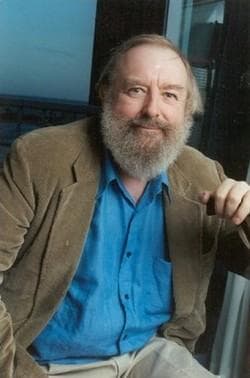
Michael Moorcock is a British author known for his contributions to the fantasy genre. His notable work, "Stormbringer," features the character Elric of Melnibone and explores themes of power and morality. Moorcock's writing often blends elements of science fiction and fantasy, reflecting his innovative approach to storytelling.
Similar books
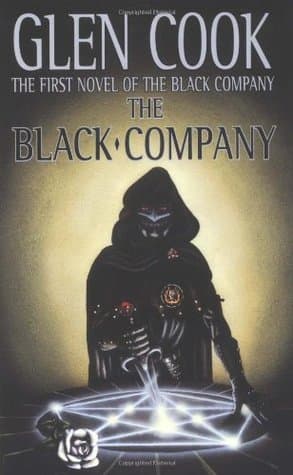
- The Black Company
Glen Cook
3.9 (42k) average on GoodreadsFantasyDark fantasy with morally grey characters, grim atmosphere, and a focus on the brutal realities of war and power.
- A Wizard of Earthsea
Ursula K. Le Guin
4.0 (241k) average on GoodreadsFantasyExplores themes of destiny, power, and the consequences of magic, though with a different tone.
- Harry Potter and the Sorcerer's Stone
J.K. Rowling
4.5 (7M) average on GoodreadsFantasyRescued from a miserable life under the stairs, an orphaned boy discovers he's a wizard destined for a magical school, where he uncovers a dangerous secret tied to the dark wizard who murdered his parents.
- The Hunger Games
Suzanne Collins
4.3 (6.4M) average on GoodreadsFantasyIn a future where children fight to the death on live television, Katniss Everdeen volunteers for the arena, turning a death sentence into a fight for survival and a spark of rebellion.
- 1984
George Orwell
4.2 (3.1M) average on GoodreadsPoliticsIn a future where surveillance and thought control are absolute, a man's search for truth clashes with the Party, showing that hope can be a form of rebellion.
- Divergent
Veronica Roth
4.2 (2.9M) average on GoodreadsFantasyIn a society divided by virtues, a sixteen-year-old's difference from the norm starts a rebellion that threatens her world.





Enjoyed the summary?
A summary gives you the shape of the book. The book itself has the detail, the examples and the voice.
Find Stormbringer on AmazonAs an Amazon Associate, BookBrief earns from qualifying purchases. How we're funded