
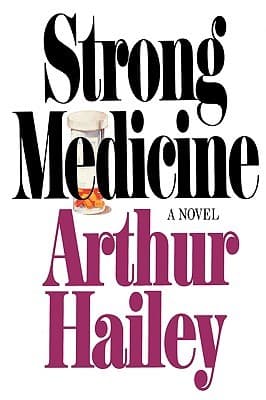
Synopsis
Covers the whole plot, including the ending.
- Difficulty
- Medium
- Pacing
- Moderate
- Mood
- Suspenseful, Intriguing, Exposing, Corporate
- Read it if
- You enjoy corporate thrillers with a strong female protagonist, ethical dilemmas in the pharmaceutical industry, and a detailed look into the mechanics of big business.
- Skip it if
- You prefer fantasy or romance, or find detailed business and scientific processes tedious.
Strong Medicine Plot Summary
Covers the whole plot, including the ending.
A New Beginning at Fairley & Sons
Celia Jordan, a bright young woman, joins Fairley & Sons, a pharmaceutical company, as a medical sales representative in New York. Her first excitement is soon lessened by aggressive sales tactics and the pressure to push specific drugs, regardless of their suitability for every patient. She meets Dr. Andrew Jordan, a respected doctor and her future husband, who is doubtful of pharmaceutical representatives. Celia quickly learns how the industry works, dealing with doctor-patient relationships and company demands, while seeing the ethical challenges many in the industry face. Her early experiences set the stage for her growing understanding of the company's operations and potential conflicts.
Rising Through the Ranks
Celia's natural talent for sales, hard work, and intelligence quickly move her up at Fairley. She goes from sales to product management, learning more about drug development, marketing, and the huge financial risks involved. During this time, she marries Dr. Andrew Jordan, further connecting her personal life with the medical world. Her promotions show her the internal politics and power struggles within Fairley, as well as the strong personalities of its top executives, including the ambitious President, Dr. Paul Fairley. Celia starts to see problems in the company's seemingly perfect image.
The Emergence of a Blockbuster Drug: Vasorin
Fairley & Sons begins developing 'Vasorin,' a promising drug for a serious heart condition. The potential market for Vasorin is huge, and the company invests vast resources in its research and clinical trials, expecting it to be a massive success. Celia, now in a senior role, becomes deeply involved in the project, seeing the intense pressure on research teams to deliver results quickly. The scientific community, including Dr. Andrew Jordan, watches with interest, hoping for a real breakthrough that could save lives, while the company focuses on the large profits.
Early Warning Signs and Ethical Dilemmas
As Vasorin moves through its clinical trials, subtle but worrying problems appear. Some trial participants have unexpected side effects, which are at first dismissed as isolated events or blamed on other things. Dr. Andrew Jordan, through his medical practice, also hears reports that raise concerns. Within Fairley & Sons, a few researchers and medical staff express their worries, but management often downplays or suppresses their concerns, eager to get the drug to market. Celia, now with more internal information, starts to feel a growing unease about the trial data's integrity and the company's priorities.
The Pressure to Expedite Approval
With billions of dollars at stake, Fairley & Sons' executive leadership, especially Dr. Paul Fairley, pushes hard to fast-track Vasorin's approval through regulatory bodies like the FDA. This involves presenting the best data while possibly downplaying or leaving out less favorable results. Celia sees firsthand how information is manipulated and how they try to influence regulators. She struggles with her conscience, torn between loyalty to the company that has given her so much and her growing belief that something is wrong with the drug's safety. The ethical stakes rise dramatically.
Celia's Investigation and Growing Doubts
Driven by her increasing suspicion and a commitment to patient safety, Celia starts her own quiet investigation into Vasorin's clinical trial data. Using her access and understanding of the company's systems, she finds alarming discrepancies, inconsistencies, and evidence of data manipulation. She realizes that the potential side effects are far more serious and widespread than officially stated. Her findings confirm her worst fears: the company is knowingly, or negligently, pushing a potentially dangerous drug to market. This discovery puts her in a difficult position, as she now has information that could ruin Fairley & Sons and expose widespread corporate misconduct.
Confrontation and Betrayal
With her evidence, Celia confronts key executives at Fairley & Sons, including Dr. Paul Fairley, hoping to stop Vasorin's launch. She presents her findings, expecting a responsible reaction. Instead, she is met with dismissal, denial, and veiled threats to her career and reputation. She realizes how committed the company is to protecting its investment, even if it means risking patient lives. Her husband, Andrew, also faces professional problems for his concerns about the drug. This period is a turning point, as Celia understands she cannot fight the system from inside and must look for outside help.
The Whistleblower's Dilemma
After trying internal channels and facing strong corporate pressure, Celia makes the difficult choice to become a whistleblower. She understands the huge personal and professional risks, including possible legal battles, public scrutiny, and the end of her career. She carefully gathers and confirms all her evidence, preparing to go public with the truth about Vasorin's dangers. This decision is not easy, as it puts her directly against one of the most powerful pharmaceutical companies in the world, a company she once believed in. Her resolve is strengthened by her ethical values and concern for public health.
Public Revelation and Fallout
Celia Jordan's actions lead to the public revelation of the hidden data and dangers of Vasorin. News reports, regulatory investigations, and public outcry follow. The scandal shakes Fairley & Sons, causing its stock price to drop, key executives to resign, and investigations into its practices. The public is shocked by the greed and negligence exposed within the pharmaceutical industry. Celia, while praised by some as a hero, also faces strong criticism from those loyal to the company and a relentless legal and PR campaign to discredit her. Her life is permanently changed by her decision.
The Aftermath and Redefinition
After the Vasorin scandal, Fairley & Sons undergoes major changes and faces large lawsuits. Celia Jordan, despite the personal cost, keeps her integrity. Her husband, Andrew, supports her, and their relationship grows stronger. The novel ends with Celia finding a new purpose, perhaps working in ethical oversight or advocacy, using her knowledge of the pharmaceutical industry to promote more transparency and patient safety. The event is a warning, showing the ongoing conflict between profit and ethics in developing life-saving drugs. Celia's journey shows the power of individual conscience against corporate power.
Strong Medicine Characters
Celia Jordan
Protagonist
Ambitious and principled pharmaceutical executive turned whistleblower.
Celia Jordan begins her career as a bright, driven sales representative for Fairley & Sons, quickly rising through the corporate ranks due to her intelligence and dedication. Initially enthusiastic about the potential of medicine, she gradually becomes disillusioned by the ethical compromises and aggressive profit-driven strategies within the company. She is characterized by her strong moral compass, her keen observational skills, and her unwavering commitment to patient safety, even when it means risking her entire career and personal life. Her love for her husband, Andrew, and her belief in true medical progress are central to her motivations.
Relationships: Dr. Andrew Jordan (Husband, fellow ethical advocate, and supportive partner.); Dr. Paul Fairley (Antagonist, company president, and symbol of corporate greed, initially a mentor figure.); Various Fairley & Sons executives (Colleagues and superiors, some supportive, most complicit or indifferent.)
Dr. Andrew Jordan
Supporting
Respected physician and Celia's husband, who shares her ethical concerns.
Dr. Andrew Jordan is a dedicated and ethical physician who initially views pharmaceutical representatives with skepticism. He marries Celia and becomes a crucial figure in her journey, providing medical insight and moral support. He represents the medical profession's ideal: patient-focused and skeptical of unchecked corporate influence. His own experiences with patients and his scientific integrity lead him to question the efficacy and safety of new drugs, particularly Vasorin, often clashing with the pharmaceutical industry's agenda. He stands by Celia even when it jeopardizes his own professional standing.
Relationships: Celia Jordan (Wife, intellectual partner, and emotional support.); Fairley & Sons (Professional adversary due to ethical clashes over drug safety.)
Dr. Paul Fairley
Antagonist
President of Fairley & Sons, driven by ambition and profit.
Dr. Paul Fairley is the shrewd and ambitious president of Fairley & Sons. He embodies the corporate drive for profit and market dominance, often at the expense of ethical considerations. While he possesses a keen business mind and a charismatic presence, his relentless pursuit of success leads him to overlook or suppress critical information regarding drug safety. He sees Vasorin as his legacy and a financial triumph, making him resistant to any challenges to its integrity. He represents the darker side of corporate power, where financial gain overshadows human well-being.
Relationships: Celia Jordan (Subordinate and eventual adversary, whom he initially mentors but later views as a threat.); Fairley & Sons (His family legacy and the primary focus of his ambition.)
Dr. Benita Sanchez
Supporting
Dedicated researcher at Fairley & Sons who voices early concerns.
Dr. Benita Sanchez is a brilliant and ethical researcher within Fairley & Sons' R&D department. She is one of the first to notice anomalies and potential dangers during Vasorin's clinical trials. Despite pressure from her superiors, she attempts to raise concerns internally, representing the scientific conscience within the corporate structure. Her integrity and commitment to scientific truth make her a valuable, though often unheard, voice of caution. She indirectly aids Celia by providing early warnings and confirming some of her suspicions, even if she cannot openly challenge the corporate machine.
Relationships: Celia Jordan (Colleague with shared ethical concerns, though their interactions are often indirect.); Fairley & Sons Management (Superiors who dismiss or suppress her findings.)
Bernard 'Bernie' O'Donnell
Supporting
Experienced sales manager who initially mentors Celia.
Bernie O'Donnell is Celia's first sales manager at Fairley & Sons. He is a seasoned veteran of the pharmaceutical sales world, pragmatic and often cynical but with an underlying sense of loyalty to his team. He teaches Celia the practical realities of the job, including its aggressive tactics, but also how to navigate the system. While not always ethically perfect, he represents a more grounded, less overtly malicious aspect of the company, often acting as a sounding board for Celia's early observations. He is a product of the system, but not entirely without conscience.
Relationships: Celia Jordan (Mentor and supervisor in her early career.)
Arthur 'Art' Seagrave
Supporting
Fairley & Sons' legal counsel, focused on protecting the company.
Art Seagrave is Fairley & Sons' chief legal counsel, a sharp and formidable lawyer whose primary loyalty is to protect the company's financial interests and reputation. He is skilled in navigating regulatory landscapes and defending against lawsuits. Seagrave is instrumental in crafting the company's responses to ethical challenges and in attempting to discredit whistleblowers. He represents the legal arm of corporate power, capable of wielding significant influence and pressure to ensure the company's survival, regardless of moral implications.
Relationships: Dr. Paul Fairley (Close professional ally, enacting the company's defensive strategies.); Celia Jordan (Legal adversary during the whistleblower crisis.)
Dr. Philip Thornton
Supporting
Head of Research and Development at Fairley & Sons, under immense pressure.
Dr. Philip Thornton is the head of Fairley & Sons' Research and Development department. He is a scientist by training, but his position places him under immense corporate pressure to deliver profitable drugs on schedule. He finds himself caught between scientific integrity and the demands of the business side of the company. While he may harbor personal doubts about Vasorin, his career and loyalty to Dr. Paul Fairley often lead him to compromise, downplaying negative findings or pushing for expedited trials. He represents the scientific community's vulnerability to corporate influence.
Relationships: Dr. Paul Fairley (His boss, exerting significant pressure.); Dr. Benita Sanchez (Subordinate whose warnings he often dismisses.)
Strong Medicine Themes
The Conflict Between Ethics and Profit
This is the main theme of 'Strong Medicine.' The novel clearly shows how big financial incentives in the pharmaceutical industry can corrupt scientific integrity and ethical choices. Characters like Celia Jordan and Dr. Andrew Jordan represent the ethical side, putting patient well-being first, while Dr. Paul Fairley and other executives represent the constant pursuit of profit, even at the cost of human lives. The development and attempted launch of Vasorin, despite clear warnings of its danger, clearly illustrate this conflict, forcing characters to choose between personal gain and moral responsibility.
“Billions of dollars in profits will make men and women do many things--lie, cheat, even kill.”
Corporate Power and Accountability
The novel explores the great power of multinational pharmaceutical companies and how hard it is to hold them accountable. Fairley & Sons, with its vast resources, legal teams, and influence, can suppress opposing views, manipulate data, and pressure regulatory bodies. Celia Jordan's journey highlights the difficulty and personal sacrifice involved in challenging such a powerful entity. The theme emphasizes how company structures can allow unethical behavior and how important individual courage and outside oversight are for ensuring justice and public safety.
“The company's powerful new drug promises a breakthrough in treating a deadly disease. But Celia Jordan knows it may deliver a nightmare.”
Individual Conscience vs. Corporate Loyalty
Celia Jordan's story is defined by her struggle between loyalty to Fairley & Sons, the company that gave her a career, and her growing moral objections to its practices. This theme is clear as she uncovers the truth about Vasorin and faces the difficult decision of becoming a whistleblower. Other characters also deal with this tension, with different outcomes. The novel examines the personal cost of upholding one's conscience in an environment that demands complete company loyalty, showing the psychological and professional pressures involved.
“She had to choose between the company that had given her everything and the truth that could cost her everything.”
The Nature of Truth and Deception
'Strong Medicine' looks at how truth can be hidden, manipulated, and suppressed within a company driven by financial motives. The novel details how clinical trial data is selectively presented, side effects are downplayed, and internal concerns are silenced to ensure a drug's market success. Celia's investigation involves sifting through layers of deception to uncover the real dangers of Vasorin. This theme highlights the importance of transparency, independent verification, and the relentless search for objective truth, especially in industries that affect public health.
“Now one beautiful woman will be caught in the cross fire between ethics and profits.”
Plot Devices & Literary Techniques
Whistleblower Narrative
A central character uncovers and exposes corporate wrongdoing.
The entire plot revolves around Celia Jordan's transformation from a rising corporate star to a whistleblower. This device allows the author to gradually reveal the hidden corruption within Fairley & Sons through Celia's perspective as she gains access to more information. It builds tension as Celia grapples with her conscience and the immense risks involved in exposing a powerful entity. The whistleblower narrative provides a strong moral core to the story, highlighting individual courage against systemic unethical practices and driving the main conflict.
Ethical Dilemma
Characters face difficult choices between moral principles and personal/professional gain.
Ethical dilemmas are pervasive throughout the novel, particularly for Celia Jordan. She constantly faces choices that pit her integrity against her career advancement, company loyalty, and even personal safety. Other characters, like Dr. Benita Sanchez and Dr. Philip Thornton, also encounter ethical crossroads where they must decide whether to speak out or conform. This device creates internal and external conflict, making the characters more complex and human, and underscores the central theme of the battle between ethics and profit in the pharmaceutical industry.
Corporate Espionage/Investigation
A character covertly gathers evidence of wrongdoing within their own organization.
As Celia Jordan grows suspicious of Vasorin's safety, she undertakes a discreet, almost espionage-like investigation within Fairley & Sons. She uses her access and knowledge of company systems to uncover hidden data and confirm her fears. This device adds elements of suspense and mystery, as Celia must navigate corporate politics and potential surveillance to gather the evidence needed to expose the truth. It amplifies the sense of danger she faces and demonstrates the lengths to which corporations might go to protect their secrets.
Medical Thriller Elements
Focus on the dangers of medical malpractice and pharmaceutical corruption.
The novel uses elements common to medical thrillers, centering on a dangerous drug and the ethical breaches in its development and marketing. The suspense arises from the potential harm to countless patients if Vasorin is released, and the race against time to expose the truth before disaster strikes. The detailed descriptions of drug trials, regulatory processes, and the devastating side effects of the drug contribute to the genre's characteristic tension, grounding the corporate drama in life-or-death consequences for ordinary people.
Strong Medicine Quotes
“The patient is not a disease, but a person.”
“Behind every great fortune is a crime.”
“The greatest danger in medicine is not ignorance, but the illusion of knowledge.”
“Power, like a drug, can corrupt even the best of intentions.”
“In the pursuit of profit, some companies will cross any line.”
“Science without conscience is the ruin of the soul.”
“The truth has a way of surfacing, no matter how deeply it's buried.”
“Fear is a powerful motivator, often more so than hope.”
“Every drug has side effects; the trick is to make sure the cure isn't worse than the disease.”
“Sometimes, the most important battles are fought not in the operating room, but in the boardroom.”
“The human body is a marvel, but also incredibly fragile.”
“To save one life is to save the world entire.”
“A secret shared is a secret no longer.”
“The greatest breakthroughs often come from challenging the established order.”
Quiz
10 questions on the plot and the characters. Each answer comes with a short explanation.
Question 1
What is the primary motivation for the pharmaceutical companies in 'Strong Medicine' as described in the synopsis?
- To develop the most effective new drugs for the public good.
- To achieve maximum profits from their miracle drugs.
- To outcompete rival companies in scientific research.
- To ensure ethical practices in drug development.
Show answer
B. To achieve maximum profits from their miracle drugs. The synopsis explicitly states, 'for profit-motivated companies, the miracle is the money they generate...at any cost,' highlighting profit as the primary driver.
Question 2
Who is the main protagonist whose career takes her into the highest circles of the international drug company?
- Dr. Evelyn Reed
- Sarah Jenkins
- Celia Jordan
- Monica Davis
Show answer
C. Celia Jordan The synopsis clearly identifies 'Celia Jordan' as the main character whose fast-track career is central to the story.
Question 3
What is Celia Jordan's initial role or career trajectory within the drug company?
- She starts as a research scientist in the lab.
- She is a whistleblower from an external regulatory body.
- Her fast-track career sweeps her into the highest circles.
- She begins as a marketing intern.
Show answer
C. Her fast-track career sweeps her into the highest circles. The synopsis states, 'As Celia Jordan's fast-track career sweeps her into the highest circles of an international drug company,' indicating her rapid ascent.
Question 4
What specific type of secrets does Celia Jordan begin to uncover within the company?
- Secrets related to corporate espionage from rival companies.
- Sins and secrets hidden in the research lab and in the marketplace.
- Personal scandals of the company's executives.
- New drug formulas being developed in secret.
Show answer
B. Sins and secrets hidden in the research lab and in the marketplace. The synopsis states she 'begins to discover the sins and secrets hidden in the research lab...and in the marketplace,' indicating a broad range of unethical practices.
Question 5
What is the central conflict Celia Jordan finds herself caught in?
- A conflict between her personal life and her demanding career.
- A crossfire between ethics and profits.
- A struggle for power among company executives.
- A legal battle with a competing pharmaceutical firm.
Show answer
B. A crossfire between ethics and profits. The synopsis explicitly states, 'one beautiful woman will be caught in the cross fire between ethics and profits,' defining the core conflict.
Question 6
What is the potential issue with the company's powerful new drug, despite its promise?
- It is not as effective as advertised.
- It may deliver a nightmare instead of a breakthrough.
- It is too expensive for most patients.
- It has been illegally copied from another company.
Show answer
B. It may deliver a nightmare instead of a breakthrough. The synopsis concludes with, 'But Celia Jordan knows it may deliver a nightmare,' indicating a significant hidden danger with the new drug.
Question 7
The synopsis mentions that 'Billions of dollars in profits will make men and women do many things.' Which of the following is NOT listed as a potential action people might take for profit?
- Lie
- Cheat
- Steal
- Kill
Show answer
C. Steal The synopsis lists 'lie, cheat, even kill' as actions people might take for profit, but 'steal' is not specifically mentioned.
Question 8
What kind of disease is the company's powerful new drug intended to treat?
- A common cold.
- A chronic pain condition.
- A deadly disease.
- A rare genetic disorder.
Show answer
C. A deadly disease. The synopsis states, 'the company's powerful new drug promises a breakthrough in treating a deadly disease,' emphasizing the severity of the illness.
Question 9
Considering the themes presented, what is a likely implication of the phrase 'at any cost' regarding the companies' pursuit of profit?
- They are willing to invest heavily in research and development.
- They are prepared to compromise ethical standards and potentially endanger lives for financial gain.
- They are focused on aggressive marketing strategies.
- They will undercut competitors' prices to gain market share.
Show answer
B. They are prepared to compromise ethical standards and potentially endanger lives for financial gain. The phrase 'at any cost,' coupled with the mention of 'lie, cheat, even kill' and 'sins and secrets,' strongly implies a willingness to disregard ethics and safety for profit.
Question 10
The book is described as a 'Thriller, Historical Fiction, Mystery.' Which element from the synopsis most strongly supports its classification as a 'Mystery'?
- The fast-track career of Celia Jordan.
- The billions of dollars in profits.
- The discovery of 'sins and secrets hidden in the research lab...and in the marketplace.'
- The conflict between ethics and profits.
Show answer
C. The discovery of 'sins and secrets hidden in the research lab...and in the marketplace.' The uncovering of 'sins and secrets' and the revelation that a promising drug 'may deliver a nightmare' are classic elements of a mystery, as the protagonist must investigate and expose hidden truths.
Strong Medicine FAQ
What is the central conflict Celia Jordan faces in 'Strong Medicine'?
Celia Jordan, a rising executive at the giant pharmaceutical company Felding-Roth, discovers that the company's new blockbuster drug, Reserpine, has potentially dangerous side effects that are being suppressed for profit. She is torn between her loyalty to the company and her ethical obligation to public safety, placing her in direct opposition to powerful corporate interests.
Who are the key antagonists Celia must contend with at Felding-Roth?
Celia primarily clashes with Andrew Jordan, her ex-husband and a ruthless executive, and particularly with Dr. Conrad De Jong, the head of research who is deeply complicit in hiding Reserpine's risks. Dr. De Jong manipulates data and exerts significant influence to protect the drug's profitability, often at the expense of scientific integrity.
What role does the drug Reserpine play in the plot?
Reserpine is Felding-Roth's new wonder drug, initially hailed as a breakthrough for treating a deadly disease. However, it becomes the focal point of the ethical dilemma when Celia uncovers evidence of severe, potentially fatal side effects that the company is actively concealing to ensure its market success and immense profits.
How does Celia Jordan's career trajectory contribute to her discovery of the company's secrets?
Celia's rapid ascent through various departments, including marketing and eventually into a high-level executive position, gives her unique access to different facets of the company's operations and data. This broad exposure allows her to piece together disparate clues and eventually uncover the hidden truths about Reserpine's clinical trials and suppressed information.
What is the primary setting for the novel 'Strong Medicine'?
The novel is primarily set within the corporate world of Felding-Roth Pharmaceutical in the United States, with significant scenes in their research labs, executive offices, and marketing departments. There are also international elements, reflecting the global reach of the pharmaceutical industry and the drug's market.
Are there any subtle foreshadowing elements regarding Reserpine's dangers early in the novel?
Yes, early in the novel, there are subtle hints through character interactions and scientific discussions about unusual results or patient complaints that are quickly dismissed or rationalized by Dr. De Jong and his team. These early anomalies, while not explicitly damning, serve as precursors to the larger cover-up Celia later uncovers.
What is the significance of Celia's past relationship with Andrew Jordan to the unfolding events?
Celia's past marriage to Andrew Jordan adds a layer of personal conflict and complexity to her professional battle. Andrew's ruthless ambition and his position within Felding-Roth mean that Celia is not just fighting a corporation, but also confronting a deeply personal connection that makes exposing the truth even more emotionally fraught and dangerous.
Does the novel feature any real-world pharmaceutical industry practices or controversies from the era it depicts?
While 'Strong Medicine' is fictional, it draws heavily on real-world controversies and practices prevalent in the pharmaceutical industry, particularly concerning drug testing, regulatory loopholes, and the immense pressure to prioritize profits over patient safety. Hailey meticulously researched these aspects, making the fictional narrative feel highly authentic to historical issues.
How does the author use the character of Dr. Conrad De Jong to explore the corruption of scientific integrity?
Dr. De Jong embodies the corruption of scientific integrity by prioritizing corporate directives and personal gain over ethical research. He manipulates clinical trial data, suppresses adverse findings, and uses his authority to silence dissenting voices, illustrating how scientific principles can be subverted within a profit-driven corporate environment.
What psychological toll does Celia's quest for truth take on her?
Celia experiences immense psychological pressure, including isolation, paranoia, and a constant fear for her career and even her safety. The ethical burden of knowing the truth about Reserpine, coupled with the formidable power of the corporation she's challenging, causes significant stress and forces her to question her trust in colleagues and the system.
How does the novel explore the psychology of corporate loyalty versus personal ethics?
The novel deeply explores this tension through Celia's internal struggle and the actions of other characters. It shows how corporate loyalty can be fostered through promises of power and wealth, leading individuals like Dr. De Jong and Andrew Jordan to compromise their ethics. Celia's journey highlights the immense courage required to prioritize personal ethics over entrenched corporate interests.
In what ways do power dynamics within the pharmaceutical company influence character decisions?
Power dynamics are central, dictating who can speak out and who must remain silent. Executives wield immense influence over researchers, marketing, and even regulatory compliance, often using their power to suppress information or accelerate drug approval. This hierarchy creates an environment where challenging the status quo, as Celia does, is extremely risky and met with significant resistance.
Is Celia Jordan a truly heroic figure, or is her motivation more complex?
While Celia acts heroically in exposing the truth, her motivations are complex. Initially driven by career ambition, her journey forces her to confront deeply personal ethical questions. Her heroism emerges from her decision to prioritize public safety over her own advancement and security, even when facing formidable opposition and personal risk.
Does 'Strong Medicine' offer a clear resolution, or does it leave the reader with lingering questions about corporate accountability?
While the immediate conflict around Reserpine sees some resolution, the novel leaves lingering questions about the systemic nature of corporate accountability in the pharmaceutical industry. It suggests that while individual battles can be won, the underlying pressures for profit and potential for ethical compromise remain a constant challenge.
How does the novel critique the regulatory bodies meant to oversee drug safety?
The novel subtly critiques regulatory bodies by illustrating how they can be influenced, overwhelmed, or even circumvented by powerful pharmaceutical companies. It shows instances where regulatory processes are slow, under-resourced, or susceptible to corporate lobbying, allowing dangerous drugs to reach the market or remain there longer than they should.
What is the author's broader message about the pharmaceutical industry in 'Strong Medicine'?
Arthur Hailey's broader message is a cautionary one: while the pharmaceutical industry has the potential to do immense good, its profit-driven nature creates a constant tension with ethical responsibilities and public safety. He highlights the dangers of unchecked corporate power and the critical need for vigilance from individuals and regulatory bodies.
Could the events depicted in 'Strong Medicine' realistically occur in today's pharmaceutical landscape?
While regulations have evolved, the core ethical dilemmas and pressures for profit depicted in 'Strong Medicine' remain highly relevant. The novel serves as a timeless warning about the potential for corporate malfeasance, illustrating that the drive for billions in profits can still tempt individuals and companies to cut corners or suppress uncomfortable truths.
About the author
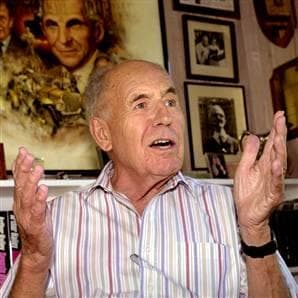
Arthur Hailey was a British-Canadian novelist renowned for his meticulously researched, fast-paced thrillers often set in specific industries. His major works, including 'Airport,' 'Hotel,' and 'Strong Medicine,' became international bestsellers, captivating readers with their detailed portrayals of complex professional environments and gripping narratives.
Similar books
- The Constant Gardener
John le Carré
3.8 (21k) average on GoodreadsThrillerExplores pharmaceutical corruption and a protagonist uncovering a conspiracy.
- The Andromeda Strain
Michael Crichton
3.9 (223k) average on GoodreadsThrillerWhile both "Strong Medicine" and Crichton's "The Andromeda Strain" delve into scientific and medical thrillers, their focus differs significantly. Hailey's novel is an 'industrial thriller,' meticulously dissecting the human and corporate dynamics within a known industry (pharmaceuticals) and its ethical failings, grounded in realistic corporate pressures. Crichton, by contrast, explores a 'techno-thriller' scenario involving an unknown extraterrestrial pathogen, focusing more on the scientific problem-solving, the breakdown of systems under extreme duress, and the immediate, catastrophic threat. Hailey's tension builds from human decisions and corporate greed, whereas Crichton's stems from an external, biological threat and the race against time. Both highlight human fallibility but in different contexts: Hailey on corporate ethics, Crichton on scientific containment and systemic failure. As researchers like T.M. Luhrmann might note in studies of professional cultures, Hailey is examining the 'culture of pharma,' while Crichton is exploring the 'culture of crisis response' in science.
- Angels & Demons
Dan Brown
3.9 (2.7M) average on GoodreadsThrillerA Harvard symbologist races through Rome's ancient sites, deciphering cryptic clues to unmask the Illuminati and stop a vengeful plot to destroy the Vatican with a stolen antimatter weapon.
- Gone Girl
Gillian Flynn
4.1 (2.3M) average on GoodreadsThrillerA wife's sudden disappearance on her fifth anniversary reveals a web of lies and psychological warfare, exposing the secrets within a seemingly perfect marriage.
- The Girl on the Train
Paula Hawkins
3.9 (2.1M) average on GoodreadsThrillerA woman’s fascination with a seemingly perfect couple she watches from her daily train commute leads her into a dark investigation when she witnesses something that shatters their idyllic image.
- The Da Vinci Code
Dan Brown
3.9 (1.9M) average on GoodreadsThrillerA symbologist and a cryptologist race through European landmarks, deciphering ancient codes and uncovering a conspiracy that could rewrite the foundations of Christianity.






Enjoyed the summary?
A summary gives you the shape of the book. The book itself has the detail, the examples and the voice.
Find Strong Medicine on AmazonAs an Amazon Associate, BookBrief earns from qualifying purchases. How we're funded