
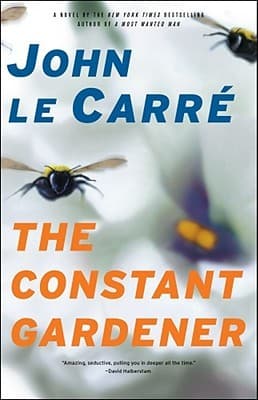
Synopsis
Covers the whole plot, including the ending.
- Difficulty
- Medium
- Pacing
- Moderate
- Mood
- Suspenseful, Thought-provoking, Melancholy, Enraging
- Read it if
- You enjoy complex, character-driven thrillers with a strong moral core, set against a backdrop of international intrigue and corporate corruption. Perfect for fans of intelligent espionage and social commentary.
- Skip it if
- You prefer fast-paced, action-heavy thrillers without much political or ethical depth, or if you're uncomfortable with themes of corporate malfeasance and exploitation.
The Constant Gardener Plot Summary
Covers the whole plot, including the ending.
Tessa's Brutal Murder in Northern Kenya
The novel begins with Justin Quayle, a British diplomat in Nairobi, hearing that his wife, Tessa, has been murdered near Lake Turkana in northern Kenya. She was with a local doctor, Arnold Bluhm, who is also dead. Initial reports suggest a crime of passion or a bandit attack. Justin, despite his grief and his colleagues' attempts to control the story, senses something far worse. Tessa had investigated the unethical practices of a pharmaceutical company, KDH (Karel du Plessis Holdings). Her death happens as she gets close to uncovering a scandal involving illegal drug trials on Kenyans. Justin's colleagues, Sir Bernard Pellegrin and Sandy Woodrow, care more about damage control and protecting diplomatic relations than finding the truth.
Justin's Initial Grief and Disbelief
Justin is consumed by grief and bewilderment. He had always seen Tessa as an impulsive but well-meaning idealist, often separate from the details of her activism. Now, he starts to learn the true depth and danger of her work. His colleagues, especially Sandy Woodrow, suggest that Tessa's promiscuity and reckless behavior may have caused her death, or that her investigations were misguided. This story is pushed to avoid diplomatic embarrassment or confrontation with powerful corporate interests. Justin, however, finds himself unable to accept this easy explanation. He starts to piece together information — Tessa's secret meetings, her focus on KDH, and the desperate tone of her last communications — suggesting she was about to expose something big.
A Glimpse into Tessa's Past and Justin's Transformation
Through flashbacks, the story shows Justin and Tessa's relationship, from their first meeting in London, where Tessa, a human rights lawyer, confronted Justin during a lecture. Their marriage, while loving, often had Justin's quiet, almost detached nature and Tessa's passionate activism. After her death, Justin starts to change from his 'constant gardener' persona — the meticulous diplomat who cultivated orchids and avoided confrontation. He actively seeks out Tessa's contacts and retraces her steps, driven by a desire for justice and to understand the woman he married. This change marks his shift from a passive observer to an active investigator, challenging the complacency of the British Foreign Office.
Uncovering the KDH Conspiracy
Justin’s investigation leads him deeper into Tessa’s world. He discovers that KDH, a Swiss-German pharmaceutical company, tested a new tuberculosis drug, Dypraxa, on unsuspecting Kenyan villagers. The drug had severe, sometimes fatal, side effects, which KDH concealed to rush it to market in Western countries. Tessa and Dr. Arnold Bluhm had gathered evidence, including patient records and testimonies, proving KDH's fault and the involvement of some Kenyan officials and British diplomats who benefited from the company's influence. Justin realizes that Tessa's murder was not random but a professional assassination to silence her and hide the evidence against KDH.
The Web of Complicity: London and Nairobi
As Justin investigates further, he finds that the conspiracy reaches beyond Kenya. He learns that Sir Bernard Pellegrin, head of the Africa Department in the Foreign Office, and Sandy Woodrow, his colleague and friend, knew of KDH's activities and helped cover them up. They benefited financially and politically from KDH's operations, putting corporate interests and diplomatic convenience over human lives. Justin also uncovers Tessa's past affair with Sandy, which, while painful, also shows Sandy's deeper involvement and his attempts to manipulate Tessa and discredit her findings. Justin realizes he faces not just a powerful corporation, but a corrupt system within his own government.
The Threat Intensifies
Justin's inquiries make him a risk to those involved in the cover-up. He is watched, his apartment is searched, and he receives threats. His diplomatic career, once a source of quiet pride, becomes a burden. Despite the danger, Justin continues, fueled by his love for Tessa and a new moral clarity. He travels to European cities, following Tessa's paper trail, interviewing her contacts, and gathering pieces of the puzzle. He learns that Tessa had given important documents to various people, hoping to expose KDH even if something happened to her.
The Confrontation in Berlin
Justin travels to Berlin, where Tessa had made significant progress. He confronts a former KDH employee, Dr. Lorbeer, who, feeling guilty, confesses to Tessa's murder and gives Justin important information about the company's illegal activities and the involvement of high-ranking officials. Lorbeer says he was forced to help with the cover-up and that Tessa's death was planned by KDH's security to prevent her from exposing the truth. This confrontation confirms Justin's understanding of the conspiracy's size and his adversaries' ruthlessness. He now has concrete evidence, but also knows he is in grave danger.
The Return to Kenya and the Reckoning
With the full truth, Justin returns to Kenya, to the remote location near Lake Turkana where Tessa was murdered. He understands his life is now forfeit, but he is determined to complete Tessa's mission. He arranges a meeting with the people responsible for her death and the cover-up, planning to expose them with the evidence he has. He is no longer the mild-mannered diplomat but a man changed by love and a strong desire for justice. His colleagues in the Foreign Office, especially Sandy Woodrow, know his intentions and are desperate to prevent him from revealing their full involvement.
Justin's Final Act and Sacrifice
In a desolate hut in the Kenyan desert, Justin sets up a final confrontation. He meets with the assassins who killed Tessa, knowing he will likely share her fate. He makes sure Sandy Woodrow, who has tracked him, is present to witness the situation and, importantly, to find the evidence Justin has prepared. Justin allows himself to be killed by the same men who murdered Tessa, completing her work by ensuring that the truth of KDH's crimes and the involvement of the British establishment will come to light through his death and the evidence he leaves. His sacrifice forces the issue, making it impossible for the cover-up to continue.
Aftermath and Partial Justice
Following Justin's death, the evidence he left, especially the materials found by Sandy Woodrow, becomes undeniable. The scandal breaks, leading to public outrage and investigations into KDH and the British Foreign Office. While KDH faces legal and reputational damage, and some individuals are held accountable, the full extent of the corruption and the involvement of the highest levels of power remains somewhat unclear. Sandy Woodrow, affected by Justin's sacrifice and his own involvement, tries to make amends by ensuring the truth gets out. The novel ends with a bittersweet justice, acknowledging the personal cost of fighting powerful, corrupt institutions, but affirming the power of truth and love.
Principal Figures
Justin Quayle
Protagonist
A mild-mannered British diplomat who transforms into a determined investigator after his wife's murder.
Justin begins the novel as an unassuming, almost passive career diplomat, known for his meticulous gardening and quiet demeanor. He is often seen as a 'constant gardener' – content to cultivate his patch of life without challenging the larger world. His marriage to Tessa, while loving, is marked by his quiet acceptance of her fiery activism. Her brutal murder shatters his complacency, forcing him to shed his detached persona and embark on a dangerous quest for truth and justice. This journey reveals an inner strength and moral conviction previously hidden, transforming him into a man capable of immense courage and self-sacrifice.
Relationships: Tessa Quayle (Wife, muse, inspiration for his quest); Sandy Woodrow (Colleague, friend, rival, co-conspirator in cover-up); Sir Bernard Pellegrin (Superior, co-conspirator in cover-up)
Tessa Quayle
Central Figure (posthumous)
A passionate, idealistic human rights activist whose murder ignites the plot.
Tessa is the catalyst for the entire narrative, even though she is murdered in the opening pages. She is portrayed through Justin's memories and the accounts of others as a brilliant, fiercely independent, and morally uncompromising human rights lawyer. Her idealism borders on recklessness, driving her to expose the unethical practices of KDH, a pharmaceutical giant. She is charismatic, passionate, and deeply committed to justice for the marginalized, but also complex, with a past affair that complicates her image. Her unwavering dedication to the truth, even in the face of extreme danger, ultimately costs her life but serves as Justin's guiding light.
Relationships: Justin Quayle (Husband, her ultimate avenger); Sandy Woodrow (Lover, colleague, complicit in the cover-up); Arnold Bluhm (Colleague, fellow activist, murdered alongside her)
Sandy Woodrow
Supporting/Antagonist
Justin's colleague and friend, secretly complicit in the cover-up and Tessa's former lover.
Sandy is a smooth, ambitious, and outwardly charming British diplomat, ostensibly Justin's friend and colleague. However, he is deeply entangled in the KDH conspiracy, benefiting from the company's influence and actively participating in the cover-up of Tessa's murder and the drug trials. He also had a secret affair with Tessa, adding a layer of personal betrayal to his professional complicity. Sandy is torn between his loyalty to the system and a lingering affection for Tessa, eventually showing signs of guilt and a desire for redemption, particularly after witnessing Justin's sacrifice.
Relationships: Justin Quayle (Colleague, friend, rival); Tessa Quayle (Lover, object of his conflicting affections); Sir Bernard Pellegrin (Superior, co-conspirator)
Sir Bernard Pellegrin
Antagonist
Head of the Africa Department in the Foreign Office, orchestrating the cover-up.
Sir Bernard is the quintessential establishment figure – powerful, urbane, and utterly ruthless in protecting the interests of the British government and its corporate allies. He is the mastermind behind the cover-up of KDH's illegal drug trials and Tessa's murder, prioritizing diplomatic relations, corporate profits, and the Foreign Office's reputation above all else. He views Tessa as a dangerous nuisance and Justin as a naive idealist. He represents the systemic corruption and moral decay within the corridors of power, believing that the 'greater good' justifies any atrocity.
Relationships: Justin Quayle (Subordinate, later adversary); Sandy Woodrow (Subordinate, accomplice)
Arnold Bluhm
Supporting (posthumous)
A Kenyan doctor and activist, murdered alongside Tessa, who was a key figure in her investigation.
Arnold Bluhm is a dedicated Kenyan doctor and human rights activist who worked closely with Tessa on exposing KDH's illicit drug trials. He is portrayed as equally passionate and brave as Tessa, providing her with crucial medical evidence and local contacts. His murder alongside Tessa underscores the extreme danger of their investigation and the ruthless lengths KDH would go to protect its secrets. His character serves to highlight the local impact of the pharmaceutical company's exploitation and to validate Tessa's findings.
Relationships: Tessa Quayle (Colleague, fellow activist); Justin Quayle (Indirect ally through Tessa's work)
Dr. Lorbeer
Supporting
A former KDH employee who confesses to Tessa's murder and provides crucial information.
Dr. Lorbeer is a minor but pivotal character, a former KDH security operative or employee who was directly involved in Tessa's murder. Wracked by guilt and fear, he is eventually confronted by Justin in Berlin. His confession provides Justin with irrefutable proof of KDH's culpability and the professional nature of Tessa's assassination. He represents the 'small fish' caught in the machinery of a large corporation, forced to commit heinous acts, and serves as a crucial plot device to deliver key exposition and advance Justin's investigation.
Relationships: Justin Quayle (Confessor to); Tessa Quayle (Her killer)
Ghita Pearson
Supporting
A British High Commission employee who assists Justin with information and support.
Ghita is an administrative assistant at the British High Commission in Nairobi, and later in London, who develops a quiet affection for Justin. She is intelligent, observant, and initially skeptical of Tessa's more radical tendencies, but becomes increasingly sympathetic to Justin's quest. She provides him with practical assistance, information, and emotional support, acting as a crucial, if understated, ally in his lonely pursuit of the truth. Her common-sense approach often grounds Justin in the bureaucratic realities he is fighting against.
Relationships: Justin Quayle (Colleague, confidante, unrequited admirer); Tessa Quayle (Acquaintance)
Arthur Hammond
Supporting
A former MI6 operative who helps Justin navigate the shadowy world of intelligence.
Arthur Hammond is a retired or semi-retired MI6 operative, a veteran of the intelligence world. He is a shadowy figure who provides Justin with cryptic advice, contacts, and warnings, helping him understand the dangers of his investigation and the methods of the powerful forces he is up against. Hammond represents a more cynical, pragmatic side of the British establishment, but one that still operates with a certain moral compass, albeit a detached one. He helps Justin connect the dots in the complex web of corporate and government corruption.
Relationships: Justin Quayle (Informant, mentor); Tessa Quayle (Knew of her activities)
Themes & Insights
Corruption and Corporate Greed
The central theme is the widespread corruption within multinational pharmaceutical companies and the involvement of government bodies. KDH's unethical drug trials in Africa, putting profit over human lives, show the dark side of globalization and unchecked capitalism. The British Foreign Office's cover-up, led by Sir Bernard Pellegrin, shows how political and economic interests often outweigh moral obligations and human rights. Tessa's murder is a direct result of this corruption, and Justin's investigation reveals the web of payoffs, influence peddling, and moral compromise that allows such actions.
“If they can get away with it in Africa, they can get away with it anywhere.”
Idealism vs. Pragmatism (or Cynicism)
The novel contrasts Tessa's fierce idealism with the pragmatism of the British establishment and, initially, Justin's detached view. Tessa believes in fighting for justice regardless of personal cost, showing pure moral conviction. In contrast, diplomats and corporate executives act under a facade of 'realpolitik,' where maintaining order, protecting national interests, and ensuring corporate profits justify ignoring or suppressing truths. Justin's journey is a change from a quietly pragmatic man to one who embraces Tessa's idealism, showing that moral courage can challenge even the most ingrained cynicism.
“I’m a diplomat, Tessa. My job is to make things smooth, not to stir them up.”
Identity and Self-Discovery
Justin's character arc is a journey of self-discovery. Initially defined by his diplomatic role and his quiet passion for gardening, he lives a life of careful detachment. Tessa's death forces him to confront who she was and who he could be. He sheds his 'constant gardener' persona, showing a depth of courage, determination, and moral conviction that surprises even himself. His investigation becomes a process of understanding his wife's true nature and, in doing so, forming a new, more authentic identity for himself, one willing to fight for what is right, even at the cost of his own life.
“He had been a gardener, tending his patch. Now he was a hunter, seeking the truth.”
Love and Sacrifice
At its heart, the novel is about the power of love and sacrifice. Tessa's love for humanity drives her activism and ultimately her death. Justin's love for Tessa, initially quiet and perhaps taken for granted, becomes the driving force behind his relentless pursuit of justice. His journey is fueled by a desire to honor her memory and complete her mission, ending in his own sacrifice. Both characters show that true love can inspire courage and lead to acts of martyrdom for a greater good, leaving a lasting impact beyond their individual lives.
“I love her, I love her, I love her. I didn’t know how much until she was gone.”
The Power of the Individual Against the System
A recurring theme is the struggle of individuals against large, corrupt systems. Tessa, an activist, takes on a multinational corporation and a complicit government. Justin, a diplomat, continues her fight against overwhelming odds. Their story shows the difficulty, and often the tragic personal cost, of challenging entrenched power structures. While they both pay the ultimate price, their actions ultimately expose the truth and force some accountability, suggesting that even seemingly insignificant individuals can, through their courage and conviction, start significant change.
“One man, one woman, against the world, eh?”
Plot Devices & Literary Techniques
The Unreliable Narrator (Initially)
Justin's initial ignorance and assumptions about Tessa shape the early narrative.
Initially, Justin serves as a somewhat unreliable lens through which we view Tessa. His understanding of her activism and her character is incomplete, colored by his own detachment and the diplomatic world's tendency to dismiss her as merely 'idealistic' or 'reckless.' This device allows le Carré to gradually reveal the true depth of Tessa's commitment and the danger of her work as Justin uncovers the truth, aligning the reader's understanding with Justin's evolving perspective. This initial 'unreliability' heightens the mystery and the emotional impact of Justin's discoveries.
Flashbacks and Non-Linear Narrative
Memories and past events are woven into the present investigation, revealing Tessa's story.
The novel frequently employs flashbacks to Justin's past with Tessa, their courtship, and glimpses of her activism. These non-linear elements are not mere exposition but are strategically placed to deepen the reader's understanding of Tessa's character, her motivations, and the nature of her and Justin's relationship. As Justin investigates, his memories fill in the gaps, creating a mosaic of Tessa's life and work. This device builds suspense, provides emotional depth, and gradually reveals the full extent of the conspiracy that led to her death.
The 'Constant Gardener' Metaphor
Justin's passion for gardening symbolizes his initial detachment and later his meticulous pursuit of truth.
Justin's hobby of gardening, particularly cultivating orchids, serves as a powerful metaphor throughout the novel. Initially, it symbolizes his quiet, controlled, and somewhat detached existence, tending his small patch while the larger world remains at bay. After Tessa's death, this meticulousness is redirected. He applies the same patience, attention to detail, and dedication to 'cultivating' the truth about her murder and the KDH conspiracy. The metaphor evolves to represent his transformation from passive observer to active participant, meticulously uncovering and nurturing the fragile seeds of truth.
The MacGuffin (Dypraxa)
The fictional tuberculosis drug driving the central conspiracy.
The drug Dypraxa acts as a MacGuffin – a plot device that drives the story forward, though its specific details are less important than its function in motivating the characters and the conflict. While the unethical trials of Dypraxa are the core of Tessa's investigation and the reason for her murder, the novel focuses more on the human consequences, the corporate greed, and the political cover-up surrounding it, rather than the scientific specifics of the drug itself. It serves as the tangible manifestation of the larger theme of corporate corruption.
The Constant Gardener Quotes
“The only thing more dangerous than a man with a gun is a man with a pen.”
“He loved her not for her beauty, which was considerable, but for her goodness, which was remarkable.”
“The English are not a people who readily forgive the truth.”
“Africa is not for the faint-hearted. It takes a certain kind of madness to love it, and a certain kind of courage to stay.”
“Corruption is a human enterprise, not a national one.”
“He had learned that the most dangerous lies were the ones you told yourself.”
“Sometimes the best way to find the truth is to look in the places no one else dares to.”
“The world is full of good people doing bad things for what they believe are good reasons.”
“What is the life of one African compared to the profit of a multinational?”
“He was a gardener, and the world was his garden, full of weeds and flowers, and he had to tend to it as best he could.”
“To be innocent in this world is to be a fool.”
“The greatest danger is not to act.”
“They killed her because she knew too much, and she knew too much because she cared too much.”
“He had never felt so alive as when he was closest to death.”
Quiz
10 questions on the plot and the characters. Each answer comes with a short explanation.
Question 1
Where does the novel 'The Constant Gardener' open with the gruesome murder of Tessa Quayle?
- Southern Nigeria
- Northern Kenya
- Western Sudan
- Eastern Ethiopia
Show answer
B. Northern Kenya The novel explicitly states that it 'opens in northern Kenya with the gruesome murder of Tessa Quayle.'
Question 2
What is Justin Quayle's primary hobby, which also gives the book its title?
- Stamp collecting
- Bird watching
- Gardening
- Painting
Show answer
C. Gardening Justin Quayle is described as an 'amateur gardener,' and his dedication to this hobby is a significant character detail and the source of the book's title.
Question 3
What is Tessa Quayle's relationship to Justin Quayle at the beginning of the story?
- His sister
- His colleague
- His wife
- His daughter
Show answer
C. His wife The synopsis states Tessa Quayle was 'dearly beloved to husband Justin,' clearly indicating she was his wife.
Question 4
What major theme does 'The Constant Gardener' explore, according to the description?
- The challenges of space exploration
- The dark side of unbridled capitalism
- The history of ancient civilizations
- The ethics of artificial intelligence
Show answer
B. The dark side of unbridled capitalism The description explicitly states that John le Carré 'portrays the dark side of unbridled capitalism' in this novel.
Question 5
How does Justin Quayle initially react to his wife's death, as described in the summary?
- He immediately suspects his own government.
- He sets out on a personal odyssey to uncover the mystery.
- He retreats completely from public life.
- He seeks revenge on random individuals.
Show answer
B. He sets out on a personal odyssey to uncover the mystery. The synopsis states, 'When Justin sets out on a personal odyssey to uncover the mystery of her death, what he finds could make him not only a suspect among his own colleagues, but a target for Tessa's killers as well.'
Question 6
What is Justin Quayle's profession or status before he embarks on his investigation?
- A high-ranking military general
- A celebrated investigative journalist
- An ineffectual bureaucrat
- A successful business magnate
Show answer
C. An ineffectual bureaucrat Justin Quayle is characterized as an 'ineffectual bureaucrat' before his wife's death transforms him.
Question 7
What is the potential consequence for Justin as he investigates Tessa's death?
- He might receive a promotion within his department.
- He could become a suspect among his colleagues and a target for Tessa's killers.
- He might discover his wife faked her death.
- He risks losing his gardening tools.
Show answer
B. He could become a suspect among his colleagues and a target for Tessa's killers. The summary warns that Justin's findings 'could make him not only a suspect among his own colleagues, but a target for Tessa's killers as well.'
Question 8
How does Justin Quayle transform through the course of the novel, following the tragedy?
- He becomes more reclusive and bitter.
- He discovers his own natural resources and courage.
- He abandons his quest for answers.
- He joins a monastic order.
Show answer
B. He discovers his own natural resources and courage. The description highlights that Justin Quayle 'discovers his own natural resources, and the extraordinary courage of the woman he barely had time to love' after the tragedy.
Question 9
What kind of 'new world order' does the book implicitly criticize or explore through its narrative?
- A world order dominated by environmental protection agencies.
- A global political structure focused on peacekeeping.
- A system where unbridled capitalism and corporate power have significant, often negative, influence.
- An international alliance promoting cultural exchange.
Show answer
C. A system where unbridled capitalism and corporate power have significant, often negative, influence. The book is described as 'a magnificent exploration of the new world order' and specifically states le Carré 'portrays the dark side of unbridled capitalism,' linking the 'new world order' to the negative impacts of unchecked corporate influence.
Question 10
What is John le Carré known for chronicling, as mentioned in the book's description?
- The triumphs of military heroes.
- The betrayals of ordinary people caught in political conflict.
- The rise of technological empires.
Show answer
B. The betrayals of ordinary people caught in political conflict. John le Carré is described as 'A master chronicler of the betrayals of ordinary people caught in political conflict,' which is central to his storytelling style and the themes in this book.
The Constant Gardener FAQ
What is The Constant Gardener about?
The Constant Gardener is about Justin Quayle, a mild-mannered British diplomat, who embarks on a dangerous personal quest to uncover the truth behind the brutal murder of his activist wife, Tessa, in rural Kenya. His investigation gradually exposes a vast conspiracy involving a powerful pharmaceutical company, KDH, and corrupt government officials exploiting the African poor for illegal drug trials.
Why should I read The Constant Gardener?
You should read The Constant Gardener for its gripping blend of political thriller and poignant love story, set against the stark backdrop of corporate greed and exploitation in Africa. Le Carré masterfully crafts a narrative that is both an intricate mystery and a powerful social commentary, showcasing the transformation of an 'ineffectual bureaucrat' into a man of courage.
What is the background/setting of The Constant Gardener?
The story is primarily set in the diplomatic circles of Nairobi, Kenya, and various remote, impoverished regions of the country, where pharmaceutical companies conduct their trials. It also features brief settings in London and other European cities, providing a stark contrast between the opulence of the powerful and the suffering of the exploited.
What are the most memorable quotes?
One memorable quote is Tessa's declaration, 'If I don't go, who will?' which encapsulates her unwavering commitment to justice. Another is Justin's realization, 'I am learning to love the dead more than the living,' reflecting his deep regret and growing understanding of Tessa's true character after her death.
What writing style does the author use?
John le Carré employs a meticulous and nuanced writing style, characterized by detailed descriptions, intricate plotting, and a keen eye for bureaucratic jargon and the subtle betrayals within the intelligence community. He uses a somewhat detached, observational tone that gradually draws the reader into the moral complexities and emotional depths of the characters.
What minor details add significant meaning?
Justin's 'constant gardening' hobby, initially a symbol of his quiet, ordered life and detachment, later becomes a metaphor for his painstaking, methodical search for truth, nurturing the memory of Tessa and her cause. The recurrent motif of the 'Lagos fly' is a subtle reminder of the lurking dangers and the vulnerability of life in the regions Tessa fought to protect.
What are some subtle foreshadowing moments?
Tessa's increasingly agitated and secretive behavior before her death, along with her cryptic warnings to Justin about the dangers she faces, subtly foreshadow the grave nature of her discoveries. The initial dismissiveness of Justin's colleagues regarding Tessa's 'activism' hints at the institutional complicity and resistance he will face in his investigation.
What unexpected character connections exist?
A significant unexpected connection is the link between Sandy Woodrow, Justin's colleague and friend, and the conspiracy. Though seemingly helpful, Sandy is deeply entangled, revealing the pervasive corruption within the British High Commission and the personal betrayals that Justin must confront.
What are unspoken character motivations?
Tessa's unspoken motivation is a profound guilt and a desperate need for atonement for past perceived failings, driving her relentless pursuit of justice for the exploited. Justin's initial unspoken motivation is to preserve his comfortable diplomatic life, but after Tessa's death, it shifts to a profound need for understanding and redemption for having underestimated her.
What psychological complexities do characters exhibit?
Justin exhibits a profound transformation from a passive, emotionally reserved diplomat to a man driven by fierce love and moral outrage, grappling with grief, guilt, and a newfound purpose. Tessa, though only seen in flashbacks and through others' memories, is portrayed as a complex idealist, fiercely passionate yet also reckless and perhaps self-destructive in her pursuit of justice.
What are the major emotional turning points?
The most significant emotional turning point is Tessa's brutal murder, which shatters Justin's complacent world and propels him into his investigation. Another is Justin's discovery of Tessa's secret files and the true extent of her activism, which transforms his perception of her and ignites his own resolve.
How do relationship dynamics evolve?
The relationship between Justin and Tessa evolves dramatically after her death; from a somewhat distant, polite marriage where Justin admired but didn't fully understand Tessa, it transforms into a profound, almost spiritual bond as he reconstructs her life and mission. His relationships with his colleagues also shift from cordiality to suspicion and outright hostility as he uncovers their complicity.
Which parts remain ambiguous or open-ended?
While the main conspiracy is largely exposed, the ultimate fate of all the corrupt individuals within the pharmaceutical company and government remains somewhat ambiguous, hinting at the enduring power of such institutions. The full extent of Tessa's personal sacrifices and the toll her activism took on her inner life are also left to the reader's interpretation.
What are controversial scenes or decisions?
A controversial decision is Justin's choice to confront the conspirators directly in the novel's climax, knowing it will likely lead to his death, rather than pursuing legal avenues. This act, while heroic, can be seen as a personal, rather than systemic, form of justice, sparking debate about its effectiveness.
The Constant Gardener ending explained: how it ends & what it means
The novel ends with Justin Quayle confronting the key conspirators, including Sandy Woodrow and others from KDH, at the very location of Tessa's murder. He takes his own life there, an act of final solidarity with Tessa and a powerful indictment of the system that killed her. His death ensures that the evidence he gathered is released, ultimately exposing the truth about KDH's illegal drug trials and forcing public accountability, meaning his sacrifice was not in vain.
About the author
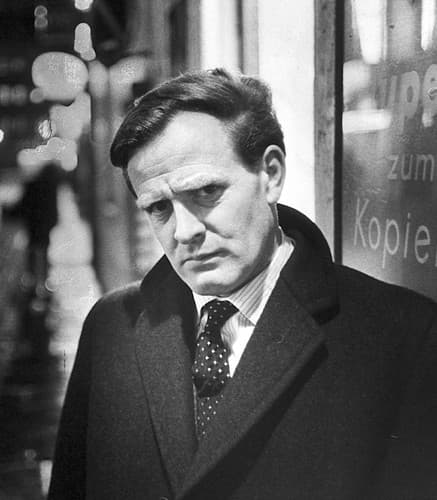
David John Moore Cornwell, better known by his pen name John le Carré, was a British and Irish author, best known for his espionage novels, many of which were successfully adapted for film or television. "A sophisticated, morally ambiguous writer", he is considered one of the greatest novelists of the postwar era. During the 1950s and 1960s he worked for both the Security Service (MI5) and the Secret Intelligence Service (MI6).
Similar books
- Angels & Demons
Dan Brown
3.9 (2.7M) average on GoodreadsThrillerA Harvard symbologist races through Rome's ancient sites, deciphering cryptic clues to unmask the Illuminati and stop a vengeful plot to destroy the Vatican with a stolen antimatter weapon.
- Gone Girl
Gillian Flynn
4.1 (2.3M) average on GoodreadsThrillerA wife's sudden disappearance on her fifth anniversary reveals a web of lies and psychological warfare, exposing the secrets within a seemingly perfect marriage.
- The Girl on the Train
Paula Hawkins
3.9 (2.1M) average on GoodreadsThrillerA woman’s fascination with a seemingly perfect couple she watches from her daily train commute leads her into a dark investigation when she witnesses something that shatters their idyllic image.
- The Da Vinci Code
Dan Brown
3.9 (1.9M) average on GoodreadsThrillerA symbologist and a cryptologist race through European landmarks, deciphering ancient codes and uncovering a conspiracy that could rewrite the foundations of Christianity.
- The Guest List
Lucy Foley
3.8 (1.3M) average on GoodreadsThrillerOn a remote Irish island, a glamorous wedding descends into a deadly whodunnit when a guest is found murdered, trapping everyone with their secrets as a storm rages.
- The Shining
Stephen King
4.2 (1.1M) average on GoodreadsThrillerA recovering alcoholic accepts a caretaking job at a snow-bound, haunted hotel, where his son's psychic abilities reveal the sinister forces that drive him to madness and terrorize his family.



Enjoyed the summary?
A summary gives you the shape of the book. The book itself has the detail, the examples and the voice.
Find The Constant Gardener on AmazonAs an Amazon Associate, BookBrief earns from qualifying purchases. How we're funded