
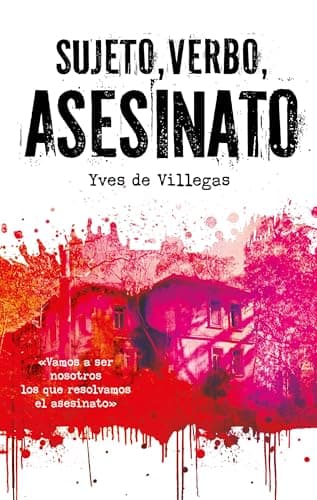
Synopsis
Covers the whole plot, including the ending.
- Difficulty
- Medium
- Pacing
- Moderate
- Mood
- Intriguing, intellectual, atmospheric, suspenseful
- Read it if
- you enjoy classic whodunits with a unique intellectual twist, appreciate historical settings (especially 1920s Paris), and love a detective who uses unconventional methods to solve crimes.
- Skip it if
- you prefer fast-paced thrillers over methodical investigations, dislike historical fiction, or are not interested in mysteries with a strong linguistic element.
Sujeto, verbo, asesinato Plot Summary
Covers the whole plot, including the ending.
The Grammar of a Crime
The story begins with Detective Antoine LeGrand, known for his careful work and a slight dislike for poor grammar, called to a disturbing crime scene. Dr. Alistair Finch, a famous linguist, is dead in his study, an old quill in his heart. The room is messy, but LeGrand immediately notices odd messages written on the walls and furniture. These are made of seemingly random words and grammar symbols. Police first think it was a robbery, but LeGrand suspects a deeper, intellectual reason, one connected to Finch's job. His partner, Sergeant Dubois, is practical and doubts LeGrand's focus on the language clues, urging him to look for more common evidence.
A Web of Words and Rivalries
LeGrand starts by talking to Dr. Finch's colleagues and students at the university. He learns Finch was a brilliant but often arrogant academic, known for his language theories and his sharp criticisms of other linguists. Possible suspects include Dr. Elena Petrova, a former student who had a bad public argument with Finch over a theory, and Professor Julian Thorne, a long-time rival whose work Finch often overshadowed. LeGrand finds out Finch was recently working on a new paper, rumored to show basic flaws in accepted language theories, which added to the competition in the department. The language clues at the crime scene start to point to these academic fights.
The First Anomaly: The Missing Subject
As LeGrand carefully studies the fragmented messages at the crime scene, he notices a strange and consistent grammar pattern: every sentence, phrase, or word group lacks a clear subject. 'Verbo, asesinato' (Verb, murder), 'Predicado, oscuro' (Predicate, dark), 'Objeto, roto' (Object, broken) are examples. This missing subject is the first big clue, suggesting a killer who understands grammar well, perhaps even a linguist, who is deliberately using language to communicate or hide something. LeGrand thinks the killer is either trying to hide their identity by removing 'I' or 'he/she,' or is making a profound, dark statement about existence or responsibility, linking back to Dr. Finch's own philosophical views in linguistics.
Petrova's Predicament
Dr. Elena Petrova, a brilliant but emotional linguist, is questioned. LeGrand learns that Petrova's career suffered after Finch publicly said her doctoral thesis was plagiarized and flawed. Their last meeting was a heated argument at a university event just days before Finch died. Petrova admits to the bad feelings but strongly denies killing him. She has a believable alibi, but her deep knowledge of language theory and her history of strong emotions make her a strong suspect. LeGrand watches her carefully, noting her precise speech and her reactions to the grammar clues he mentions, wondering if her academic anger could have led to violence.
Thorne's Theory and a Secret Project
Professor Julian Thorne, Finch's old rival, first seems sad but is subtly competitive. During his interview, Thorne shares an important detail: Finch had been working on a very secret and controversial project, a universal grammar theory he believed could 'rewrite how humans communicate.' Thorne says Finch asked him to work together, but Thorne refused because Finch's ideas were too radical, almost mystical. Thorne also admits Finch was getting threats, not just from academic rivals, but from an anonymous source telling him to stop his research. This makes the case more than just an academic rivalry, suggesting a larger, more dangerous side to Finch's language work.
The Syntax of a Second Crime
Just as LeGrand feels he is close to Petrova or Thorne, another attack happens. Dr. Arthur Hayes, a junior linguist known for his work on syntax and a former student of Finch's, is found unconscious in his office after being hit in the head. He lives, but the room has the killer's mark: a new, slightly more complex grammar message on the wall, still missing the subject, but now with a transitive verb and an indirect object. 'Acción, recibir, daño' (Action, receive, harm). This new clue confirms LeGrand's idea of a killer skilled in language and suggests a changing pattern. The killer is not just leaving messages but talking, or perhaps playing a game, with LeGrand, challenging him through the very language they both study.
The Semiotic Society's Secrets
LeGrand finds out that Finch, Thorne, Petrova, and Hayes were all part of a very private and secret university group, 'The Semiotic Society.' This group, supposedly for advanced language research, held extreme views of Finch's universal grammar theory, believing it held the key to changing reality through language. LeGrand learns that Finch's 'revolutionary paper' was not just academic; it proposed a way to use his theory that could change collective human consciousness. The society had split into groups: one wanted to use this power, another feared its destructive potential. The killer's messages, LeGrand realizes, are not just grammar puzzles but possibly coded messages or warnings related to this society's dangerous plan.
The Object of the Obsession
By further studying the cryptic messages, LeGrand makes a key connection. The missing subject is not just a style choice; it is a deliberate attempt to focus on the 'object' of the sentence, the thing being acted upon. He realizes the killer is obsessed with a specific language concept—the 'object'—in Finch's work. Finch's last unpublished manuscript, found hidden in his study, details a controversial theory about the 'primordial object' of language, a concept he believed was the basic building block of all communication and, possibly, reality itself. The killer is not just using grammar; they are commenting on, and perhaps fighting over, this 'object' and its meanings, turning the murder into a philosophical statement.
The Unmasking of the 'Predicate'
LeGrand, using his language insights and the connection to The Semiotic Society, confronts Professor Julian Thorne. He reveals that Thorne, fearing the terrible results of Finch's final theory on the 'primordial object' and its possible misuse by other society members, decided to stop Finch. Thorne confesses, saying he saw himself as the 'predicate'—the one doing the action—in a sentence without a subject, a necessary force acting to prevent greater harm. He believed Finch's work was too dangerous, and that by killing Finch and leaving the grammatically broken messages, he was trying to break down the very language that could cause such a disaster. His reason was not personal rivalry but a strong, almost messianic, belief.
The Silent Subject and the Unspoken Word
With Thorne's confession, the case of Dr. Alistair Finch's murder closes, but its philosophical questions remain. Thorne is arrested, his intellectual brilliance warped by his extreme beliefs. LeGrand thinks about the power of language, not just as a way to communicate, but as a potential weapon, able to shape reality and push people to extreme acts. He understands that the 'missing subject' in the killer's messages showed Thorne's attempt to erase his own identity from the crime, but also, more deeply, his belief that humanity's 'subject' itself was at risk from Finch's theories. The case leaves LeGrand with a deeper, more troubling understanding of the silent, unspoken reasons behind human actions and the profound weight of every word, or lack of it.
Principal Figures
Detective Antoine LeGrand
Protagonist
A meticulous detective with a passion for grammar and linguistic precision.
LeGrand is a seasoned police detective, renowned for his sharp intellect and an almost obsessive attention to detail, particularly concerning language. He possesses a dry wit and a quiet intensity, often finding deeper meaning in seemingly trivial clues. His colleagues find his grammatical corrections endearing yet exasperating. He is more comfortable with logic and syntax than with overt emotional displays, making him uniquely suited to solve a crime steeped in linguistic puzzles. He approaches cases like complex sentences, seeking the underlying structure and meaning.
Relationships: Sergeant Dubois (Partner and foil); Dr. Alistair Finch (Victim, intellectual adversary); Professor Julian Thorne (Antagonist, intellectual counterpart)
Dr. Alistair Finch
Victim
A brilliant but arrogant linguist whose radical theories lead to his demise.
Dr. Finch was a towering figure in the field of linguistics, known for his groundbreaking, often controversial, theories on universal grammar and the inherent structure of language. He was intellectually brilliant but possessed a sharp tongue and a tendency to publicly discredit rivals and former protégés. His ambition knew no bounds, leading him to explore radical ideas about language's power to shape reality, which ultimately made him a target. He was deeply engrossed in his work, often to the exclusion of personal relationships, and his legacy is defined by both his genius and his hubris.
Relationships: Detective Antoine LeGrand (Indirect connection through investigation); Dr. Elena Petrova (Former protégé, bitter rival); Professor Julian Thorne (Long-standing rival, intellectual collaborator/opponent)
Professor Julian Thorne
Antagonist
Finch's academic rival and the murderer, driven by ideological conviction.
Professor Julian Thorne is a respected linguist and a long-time colleague and rival of Dr. Finch. While less flamboyant than Finch, Thorne is equally brilliant, though more reserved and contemplative. He initially appears as a grieving colleague, but his subtle intellectual pride and deep philosophical convictions slowly emerge. He harbors a profound fear of the potential misuse of Finch's most radical theories, believing they could destabilize human consciousness itself. This fear, coupled with his own intellectual framework, leads him to commit murder, seeing himself as a necessary 'predicate' acting to prevent a greater catastrophe.
Relationships: Detective Antoine LeGrand (Adversary); Dr. Alistair Finch (Rival and victim); Dr. Elena Petrova (Colleague, fellow society member)
Dr. Elena Petrova
Supporting
A brilliant but volatile linguist, a former protégé of Finch, and a prime suspect.
Dr. Elena Petrova is a highly intelligent and ambitious linguist whose career was significantly impacted by Dr. Finch's public criticisms. She is passionate about her work and possesses a fiery temperament, making her prone to intense emotional reactions, especially when her intellect is challenged. Her history with Finch, marked by both admiration and bitter rivalry, makes her an obvious initial suspect. Despite her emotionality, she is deeply principled and loyal to her own linguistic theories, even when they put her at odds with powerful figures like Finch. She represents the intense competitive pressures within academia.
Relationships: Detective Antoine LeGrand (Interrogated suspect); Dr. Alistair Finch (Mentor, then rival); Professor Julian Thorne (Colleague, fellow society member)
Sergeant Dubois
Supporting
LeGrand's pragmatic and down-to-earth police partner.
Sergeant Dubois serves as LeGrand's loyal but often exasperated partner. He is a practical, no-nonsense police officer who prioritizes tangible evidence and conventional investigative methods. While he respects LeGrand's intellect, he frequently finds his partner's linguistic obsessions to be an unnecessary distraction from the 'real' work of crime-solving. Dubois provides a grounding influence, often bringing LeGrand back to reality when he gets lost in the abstract world of grammar and semiotics. His pragmatic approach offers a necessary counterpoint to LeGrand's more cerebral methods, making their partnership effective.
Relationships: Detective Antoine LeGrand (Partner)
Dr. Arthur Hayes
Supporting
A junior linguist and former student of Finch, attacked during the investigation.
Dr. Arthur Hayes is a younger, less prominent linguist specializing in syntax, and a former student of Dr. Finch. He is intelligent and earnest but lacks the aggressive ambition of his senior colleagues. His attack highlights the escalating danger of the killer's motives and provides a crucial piece of the puzzle regarding the killer's evolving grammatical signature. Hayes represents the collateral damage of the intense academic and ideological conflicts surrounding Finch's work, a victim caught in the crossfire of a linguistic war he barely understood.
Relationships: Detective Antoine LeGrand (Source of information, victim); Dr. Alistair Finch (Former mentor)
The Semiotic Society
Supporting
A clandestine academic society with extreme interpretations of linguistic theory.
The Semiotic Society is a secret organization within the university, comprised of elite linguists including Finch, Thorne, and Petrova. Ostensibly dedicated to advanced linguistic research, the society becomes a breeding ground for radical interpretations of Finch's universal grammar theory. Its members hold extreme views on the power of language, believing it could be used to manipulate reality or human consciousness. The society's internal conflicts and the dangerous potential of Finch's theories form the hidden backdrop to the murder, revealing a deeper conspiracy beyond simple academic rivalry.
Relationships: Dr. Alistair Finch (Founder/Key member); Professor Julian Thorne (Member, eventual antagonist within); Dr. Elena Petrova (Member)
Themes & Insights
The Power and Peril of Language
The novel shows language as more than a communication tool; it is a basic force that can shape thoughts, reality, and even lead people to extreme acts. Finch's theories on universal grammar and the 'primordial object' of language suggest a power beyond words, hinting at the ability to change consciousness. The killer's use of grammatically broken messages highlights this, showing how language can hide, provoke, or make deep philosophical points, demonstrating its potential for both good and harm.
“Words are not just symbols, Detective. They are the very architects of our perception, capable of building worlds or tearing them down.”
Intellectual Hubris and Rivalry
The academic world in the novel is full of intense intellectual competition, where egos clash and careers depend on new theories. Dr. Finch shows this pride, his brilliance matched by his arrogance and his readiness to discredit rivals. The rivalries between Finch, Petrova, and Thorne are not just personal but philosophical, reflecting deep disagreements about language research. This theme suggests that too much intellectual ambition, combined with a desire for fame and a belief in one's own absolute truth, can lead to destructive outcomes, including violence.
“In our world, a groundbreaking theory can be more dangerous than a loaded gun. It can destroy reputations, or worse, minds.”
The Search for Meaning and Order
Detective LeGrand's careful attention to grammar and syntax reflects the human need to find order and meaning in a chaotic world. The killer's deliberate manipulation of grammar, especially the constant absence of a subject, forces LeGrand to look beyond the surface, seeking the deeper, often disturbing, meaning within the chaos. This theme explores how people build stories and frameworks (like grammar) to understand their experiences, and what happens when those frameworks are broken or challenged, revealing how fragile perceived order is and how elusive true meaning can be.
“Every sentence has a subject, Detective. Someone or something acts. The absence of it... that's where the real story begins.”
Responsibility and Consequence
The novel deals with the ethical duties that come with major intellectual discoveries. Finch's radical theories, while brilliant, had dangerous implications he may not have fully considered. Thorne's choice to murder Finch comes from his belief that he was stopping a bigger disaster, highlighting the heavy burden of consequences. The theme questions the line between intellectual pursuit and moral duty, and whether the potential for misuse outweighs the right to knowledge. It asks if people are responsible for the unexpected results of their ideas, and how far one might go to prevent perceived harm.
“Some truths are too dangerous to be spoken. Some discoveries, too potent to be unleashed upon an unprepared world.”
Plot Devices & Literary Techniques
The Linguistic Puzzle
Cryptic, grammatically flawed messages as the central clue.
The killer's deliberate use of fragmented, grammatically anomalous messages (specifically, sentences missing a subject) serves as the primary plot device. This device not only provides the central mystery for Detective LeGrand to unravel but also directly connects the crime to the victim's profession, linguistics. It forces LeGrand to think beyond conventional forensic evidence and engage with the crime on an intellectual, semiotic level, making the investigation a battle of wits and grammatical understanding. The evolving nature of these messages further drives the plot, signaling the killer's progression and challenging LeGrand's interpretive skills.
Academic Ivory Tower Setting
A prestigious university as a hotbed of intellectual and personal conflict.
The university setting, with its highly specialized academic departments and intense intellectual rivalries, acts as a crucial plot device. It provides a confined world where brilliant minds clash, leading to heightened tensions and unique motives for murder. The insular nature of this environment allows for the development of secret societies and radical theories, which might seem absurd outside its walls but hold immense power within. This setting emphasizes that even in the pursuit of knowledge, human flaws like ego, ambition, and fear can lead to devastating consequences, creating a sophisticated backdrop for the crime.
The Unseen Manuscript
Finch's final, radical, and dangerous unpublished work.
Dr. Finch's hidden, unpublished manuscript detailing his most radical theories on the 'primordial object' of language serves as a powerful plot device. It is the MacGuffin that drives much of the conflict and provides the ultimate motive for the murder. The manuscript's contents, slowly revealed throughout the investigation, elevate the crime from a simple academic rivalry to a profound ideological struggle with potentially world-altering implications. Its existence justifies the killer's extreme actions and underscores the novel's themes about the perilous power of language and ideas, creating a sense of urgency and high stakes.
The Semantic Shift
The changing meaning of the killer's grammatical clues.
Initially, the killer's messages appear to be random grammatical fragments. However, as LeGrand delves deeper, he realizes that the meaning of these clues 'shifts' or deepens. The missing subject, for instance, evolves from being a simple grammatical error to a deliberate philosophical statement about the 'object' of language, and finally to the killer's self-perception as a 'predicate' without a clear 'I.' This semantic shift is a key device that allows for progressive revelations, adding layers of complexity to the killer's motive and intellectual framework, and continually challenging LeGrand's understanding of the crime.
Sujeto, verbo, asesinato Quotes
“La vida, como un texto, tiene sus propios errores de puntuación.”
“El silencio de un sospechoso dice más que mil confesiones.”
“Cada verdad es solo una mentira esperando ser descubierta.”
“El asesino no es quien aprieta el gatillo, sino quien crea la necesidad.”
“Las palabras son armas, y algunas cortan más profundo que cualquier cuchillo.”
“La justicia es ciega, pero el rencor tiene una vista de águila.”
“En la narrativa de un crimen, el lector es tan culpable como el autor.”
“El pasado es una habitación oscura donde los fantasmas de nuestras acciones nos esperan.”
“La inocencia es un traje que se desgasta con el tiempo y la experiencia.”
“Un buen misterio no se resuelve, se desvela capa a capa, como una cebolla de secretos.”
“El cuerpo guarda memorias que la mente olvida.”
“La verdad es un espejo roto; cada fragmento muestra una parte, pero nunca el todo.”
“El amor puede ser el móvil más peligroso de todos.”
“Las huellas dactilares son solo el principio; las huellas del alma son las que delatan.”
Quiz
10 questions on the plot and the characters. Each answer comes with a short explanation.
Question 1
¿Cuál es el nombre del autor del libro "Sujeto, verbo, asesinato"?
- Jean Dupont
- Yves de Villegas
- Pierre Dubois
- Michel Martin
Show answer
B. Yves de Villegas El autor del libro es Yves de Villegas, como se indica en el título.
Question 2
¿Cuál es el género principal del libro "Sujeto, verbo, asesinato"?
- Ciencia Ficción
- Novela Histórica
- Novela Negra / Misterio
- Fantasía
Show answer
C. Novela Negra / Misterio El título "Sujeto, verbo, asesinato" sugiere fuertemente un género criminal o de misterio.
Question 3
¿Qué elemento gramatical es central en el título del libro, además del sustantivo y el verbo?
- Adjetivo
- Adverbio
- Asesinato
- Puntuación
Show answer
C. Asesinato El título forma una frase gramatical básica: Sujeto (sustantivo), Verbo, Asesinato (el objeto o la acción del verbo, que en este contexto es un sustantivo que denota el crimen).
Question 4
Considerando el título, ¿qué tipo de trama se esperaría encontrar en "Sujeto, verbo, asesinato"?
- Una historia de amor épica
- Un misterio de asesinato con un enfoque en la estructura narrativa
- Un documental sobre lingüística forense
- Una comedia romántica
Show answer
B. Un misterio de asesinato con un enfoque en la estructura narrativa El título combina elementos de gramática ('Sujeto, verbo') con un crimen ('asesinato'), sugiriendo una trama de misterio donde la estructura o el lenguaje podrían ser clave.
Question 5
Si el libro explora la relación entre el lenguaje y el crimen, ¿qué podría representar el 'sujeto' en la narrativa?
- El arma del crimen
- El lugar donde ocurrió el crimen
- La víctima o el perpetrador
- El detective que investiga
Show answer
C. La víctima o el perpetrador En una oración, el 'sujeto' es típicamente quien realiza la acción. En el contexto de un asesinato, esto se referiría a la persona involucrada en el crimen, ya sea la víctima o el asesino.
Question 6
¿Qué podría implicar el 'verbo' en el título?
- La descripción del escenario
- La acción del crimen o la investigación
- El motivo del asesino
- El diálogo entre personajes
Show answer
B. La acción del crimen o la investigación El verbo representa la acción. En este contexto, podría ser la acción de matar, o las acciones relacionadas con la investigación del crimen.
Question 7
Dado el título, ¿cuál de los siguientes enfoques narrativos sería más probable que utilizara el autor?
- Un monólogo interior extenso del asesino
- Una estructura de novela experimental que juega con la sintaxis y la perspectiva
- Una narración lineal y cronológica de los eventos
- Un relato periodístico detallado del caso
Show answer
B. Una estructura de novela experimental que juega con la sintaxis y la perspectiva La combinación de elementos gramaticales ('Sujeto, verbo') con un crimen sugiere un enfoque en la estructura y la forma de contar la historia, posiblemente de manera no convencional.
Question 8
¿Qué tipo de simbolismo podría emplear el autor al titular su obra "Sujeto, verbo, asesinato"?
- Simbolismo religioso
- Simbolismo de la naturaleza
- Simbolismo del lenguaje y la estructura narrativa como reflejo de la realidad o el crimen
- Simbolismo de la mitología griega
Show answer
C. Simbolismo del lenguaje y la estructura narrativa como reflejo de la realidad o el crimen El título utiliza términos gramaticales para referirse a un crimen, lo que sugiere que el autor podría estar usando el lenguaje y su estructura como metáfora o medio para explorar el tema del asesinato.
Question 9
Si el libro se centra en la 'estructura' de un asesinato a través de su título, ¿qué aspecto podría ser menos relevante en la trama?
- El desarrollo psicológico del asesino
- La descripción detallada del escenario del crimen
- La intrincada trama de un rompecabezas a resolver
- Las reflexiones filosóficas sobre la condición humana sin conexión directa con la trama principal
Show answer
D. Las reflexiones filosóficas sobre la condición humana sin conexión directa con la trama principal Un enfoque en 'sujeto, verbo, asesinato' sugiere una atención a los componentes esenciales de la acción criminal y su representación. Las reflexiones filosóficas desconectadas podrían desviar el foco de esta estructura.
Question 10
¿Qué tipo de 'giro' argumental podría ser particularmente apropiado para un libro titulado "Sujeto, verbo, asesinato"?
- Un giro donde el detective resulta ser el asesino
- Un giro donde la víctima no está realmente muerta
- Un giro que subvierte las convenciones narrativas o gramaticales presentadas, revelando una interpretación inesperada de los 'elementos' del título
- Un giro donde el asesino confiesa de inmediato
Show answer
C. Un giro que subvierte las convenciones narrativas o gramaticales presentadas, revelando una interpretación inesperada de los 'elementos' del título Dado el título que juega con la estructura gramatical, un giro argumental que juegue con las expectativas narrativas y la forma en que se presentan los 'sujetos', 'verbos' y el 'asesinato' sería muy coherente.
Sujeto, verbo, asesinato FAQ
¿De qué trata el libro 'Sujeto, verbo, asesinato'?
El libro 'Sujeto, verbo, asesinato' de Yves de Villegas es una novela de misterio y suspense. La trama gira en torno a un intrigante asesinato que un detective debe resolver, desentrañando una compleja red de sospechosos y motivos ocultos.
¿Quién es el autor de 'Sujeto, verbo, asesinato'?
El autor de 'Sujeto, verbo, asesinato' es Yves de Villegas. Es conocido por su habilidad para crear tramas absorbentes y personajes memorables en el género del thriller y el misterio.
¿Cuál es el género de 'Sujeto, verbo, asesinato'?
El género principal de 'Sujeto, verbo, asesinato' es el misterio y el suspense. La novela combina elementos de novela negra con una trama detectivesca que mantiene al lector en vilo.
¿Es 'Sujeto, verbo, asesinato' una novela autoconclusiva o parte de una serie?
Actualmente, 'Sujeto, verbo, asesinato' se presenta como una novela autoconclusiva. No se ha anunciado como parte de una serie, permitiendo al lector disfrutar de una historia completa en un solo volumen.
¿Qué tipo de personajes se encuentran en 'Sujeto, verbo, asesinato'?
La novela presenta una variedad de personajes, desde el perspicaz detective encargado del caso hasta un elenco de sospechosos con secretos y motivaciones diversas. Cada personaje está diseñado para añadir complejidad a la trama.
¿Es 'Sujeto, verbo, asesinato' un libro fácil de leer?
Si bien la trama es intrigante, la lectura de 'Sujeto, verbo, asesinato' puede requerir atención para seguir todos los giros y pistas. El estilo del autor es envolvente, pero la complejidad del misterio hace que sea una lectura gratificante para quienes disfrutan de un buen desafío.
¿Recomendarías 'Sujeto, verbo, asesinato' a los amantes del misterio?
Definitivamente. Si disfrutas de las novelas de detectives, los enigmas bien construidos y los giros inesperados, 'Sujeto, verbo, asesinato' es una lectura muy recomendable que te mantendrá enganchado hasta la última página.
¿Hay alguna temática recurrente en la obra de Yves de Villegas que se refleje en este libro?
La obra de Yves de Villegas a menudo explora la naturaleza humana, los secretos ocultos y las consecuencias de las acciones. En 'Sujeto, verbo, asesinato', estas temáticas se manifiestan a través de las motivaciones de los personajes y la resolución del crimen.
Similar books
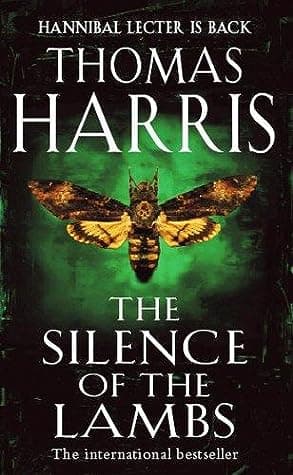
- The Silence of the Lambs
Thomas Harris
4.2 (464k) average on GoodreadsThrillerWhile both "Sujeto, verbo, asesinato" and "The Silence of the Lambs" delve into the minds of serial killers, De Villegas's approach is less focused on the cat-and-mouse game between detective and killer. Harris's novel is a masterclass in suspense and psychological profiling, with a clear narrative drive. De Villegas, however, sacrifices some of that direct tension for a more introspective and philosophical examination of the why behind the crime, often from the killer's perspective, making his work feel more like a character study than a pure thriller. The horror in De Villegas's work is often internal and existential, whereas Harris's horror is more visceral and immediate.
- Harry Potter and the Sorcerer's Stone
J.K. Rowling
4.5 (7M) average on GoodreadsFantasyRescued from a miserable life under the stairs, an orphaned boy discovers he's a wizard destined for a magical school, where he uncovers a dangerous secret tied to the dark wizard who murdered his parents.
- The Hunger Games
Suzanne Collins
4.3 (6.4M) average on GoodreadsFantasyIn a future where children fight to the death on live television, Katniss Everdeen volunteers for the arena, turning a death sentence into a fight for survival and a spark of rebellion.
- Nineteen Eighty-Four
George Orwell
4.2 (5.5M) average on GoodreadsFictionWinston Smith dreams of truth and rebellion in a world where Big Brother watches all, but he confronts the terrifying power of a regime that controls not just actions, but thoughts.
- Pride & Prejudice
Jane Austen
4.3 (4.9M) average on GoodreadsElizabeth Bennet and Mr. Darcy navigate love and misunderstanding, learning that first impressions can be wrong.
- To Kill a Mockingbird
Harper Lee
4.3 (4.5M) average on GoodreadsHistorical FictionIn the 1930s Jim Crow South, Harper Lee writes about racial injustice, moral growth, and the quiet courage of a lawyer father, Atticus Finch, as seen through his young daughter's eyes.




Enjoyed the summary?
A summary gives you the shape of the book. The book itself has the detail, the examples and the voice.
Find Sujeto, verbo, asesinato on AmazonAs an Amazon Associate, BookBrief earns from qualifying purchases. How we're funded