
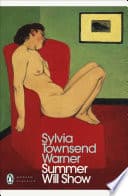
Synopsis
Covers the whole plot, including the ending.
- Difficulty
- Medium
- Pacing
- Moderate
- Mood
- Atmospheric, Revolutionary, Romantic, Transformative, Thought-provoking
- Read it if
- You enjoy historical fiction set during periods of social upheaval, particularly stories with strong female characters and an exploration of unconventional relationships and identities.
- Skip it if
- You prefer fast-paced thrillers or are uncomfortable with historical depictions of revolution and societal change.
Summer Will Show Plot Summary
Covers the whole plot, including the ending.
Blandamer House and the News from Paris
Sophia Willoughby, mistress of Blandamer House in Dorset, is a woman of strict principles and a meticulously ordered life. She is married to Frederick, a man she views with a mixture of duty and mild disdain. The novel opens with Sophia receiving news that Frederick has left for Paris, not alone, but with a Jewish mistress named Minna Lemuel. Sophia, though initially shocked, processes this information with a surprising degree of detachment, viewing it as an inconvenience rather than a personal tragedy. Her primary concern is maintaining the decorum and reputation of Blandamer House, and she resolves to handle the situation with a calm, rational approach, characteristic of her formidable will and self-possession. She even contemplates the practicalities of a separation, weighing the social implications.
A Mother's Grief and a Journey to Paris
Sophia's carefully constructed world shatters with the sudden death of her two young children, Fanny and Edward, from smallpox. This devastating loss leaves her reeling, stripping away the very foundation of her existence and her purpose as a mother. The children's deaths plunge her into a deep grief that transcends her usual stoicism. In her overwhelming sorrow, Sophia feels an urgent need to find Frederick, believing his presence might offer some solace or at least a shared burden in her unbearable pain. She packs her bags and, against her usual cautious nature, sets off for Paris, a city she has always viewed with suspicion, driven by a raw, emotional imperative.
Arrival in a Tumultuous City
Sophia arrives in Paris in the spring of 1848, a city on the brink of revolution. The streets are alive with political fervor, barricades, and the tension of social upheaval, a stark contrast to the quiet order of Blandamer House. She finds the city disorienting and somewhat alarming, her English sensibilities clashing with the chaotic French atmosphere. Her initial attempts to locate Frederick prove fruitless, as he seems to have vanished into the city's labyrinthine streets. Sophia, despite her discomfort, is forced to navigate this unfamiliar environment, her mission to find Frederick becoming increasingly complicated by the volatile political landscape and the anonymity of the bustling metropolis.
Encountering Minna Lemuel
During her search, Sophia discovers a letter from Frederick, which leads her to a Jewish quarter of Paris. There, she unexpectedly encounters Minna Lemuel, not with Frederick, but alone and deeply involved in radical political activities. Minna is an unconventional woman, a stark contrast to Sophia's reserved demeanor. She is passionate, intellectual, and unconcerned with social niceties, actively participating in revolutionary circles. Sophia, initially intending to confront Minna about Frederick, finds herself drawn to the younger woman's charisma and intensity. The meeting is not the dramatic confrontation Sophia might have anticipated, but rather an intriguing, almost magnetic, introduction to a world entirely alien to her.
Drawn into Minna's World
Minna, after the initial surprise, takes Sophia under her wing, inviting her into her bohemian flat and introducing her to her circle of radical thinkers, poets, and revolutionaries. Sophia, still grieving and somewhat adrift, finds herself an unlikely observer, and then participant, in their fervent discussions and clandestine activities. She is exposed to new ideas of communism, social justice, and artistic freedom, all of which challenge her deeply ingrained Victorian values. Despite her initial reservations, Sophia finds herself increasingly captivated by Minna's intellect and the energy of her community, a world that offers a stark contrast to the rigid constraints of her former life. She begins to see Minna not just as 'the other woman,' but as a fascinating individual.
Frederick's Reappearance and Departure
Frederick eventually reappears, looking haggard and somewhat disillusioned by his Parisian escapades. He is surprised to find Sophia living with Minna and her radical friends. His return is brief and anticlimactic. He confesses his weariness with Minna's intensity and the revolutionary fervor, expressing a desire for a more conventional life. He offers to return to Blandamer House with Sophia, but she, having experienced a shift in her perspective, declines. Frederick, sensing her detachment and perhaps relieved by it, eventually departs again, leaving Sophia free to continue her unconventional life with Minna. His exit marks a definitive break from Sophia's past, and a deeper commitment to her new, radical present.
The June Days Uprising
The political tensions in Paris erupt into the violent June Days Uprising. Sophia and Minna are thrust into the heart of the conflict, witnessing firsthand the brutal reality of revolution. Minna, with her fiery passion, actively participates, tending to the wounded and advocating for the cause. Sophia, initially a reluctant observer, finds herself drawn into the struggle, assisting Minna and observing the suffering of the common people. This experience impacts her, stripping away her class prejudices and exposing her to the human cost of social inequality. The violence and chaos solidify her bond with Minna, as they face danger and hardship together, forging a powerful emotional connection amidst the turmoil.
A Developing Love
As they navigate the dangers of the revolution and the complexities of their shared life, Sophia and Minna's relationship evolves beyond friendship and shared political ideals. Sophia, who had always lived a life devoid of passionate love, finds herself intensely attracted to Minna's intellect, spirit, and unconventional beauty. Minna, in turn, is drawn to Sophia's strength, integrity, and the unexpected depth of her character. Their bond blossoms into a deep, tender, and intensely physical love affair, defying the social conventions of their time. This forbidden romance becomes the central emotional core of Sophia's transformation, challenging all her previously held notions of love, duty, and identity.
The Aftermath and Disillusionment
The June Days Uprising is brutally suppressed by the government, resulting in widespread arrests, executions, and a sense of disillusionment among the revolutionaries. Minna, once so full of fervent hope, becomes withdrawn and despondent, her spirit dampened by the failure of their cause and the suffering she has witnessed. Sophia, though equally affected by the tragedy, retains her practical resilience. The failure of the revolution strains their relationship, as Minna grapples with her ideological defeat and Sophia struggles to understand Minna's resulting apathy. The initial revolutionary fervor that brought them together begins to wane, replaced by the harsh realities of defeat and the complexities of their personal bond.
Minna's Departure and Sophia's Choice
As the political climate in Paris becomes increasingly oppressive and dangerous for former revolutionaries, Minna decides to leave the city, seeking a new path and perhaps a new cause elsewhere. Her departure is not an abandonment of Sophia, but a reflection of her restless spirit and her inability to remain in a place of defeat. Sophia is left to confront her future alone. She considers returning to Blandamer House and her former life, but realizes that she has been irrevocably changed by her experiences and her love for Minna. The novel ends with Sophia making a decisive choice to forge a new, independent life for herself, embracing the freedom and unconventionality she has discovered in Paris, even without Minna by her side.
Summer Will Show Characters
Sophia Willoughby
Protagonist
A formidable Victorian matriarch whose life is upended by grief and revolution.
Sophia is initially presented as a woman of severe rectitude, deeply entrenched in the conventions of Victorian society. She values order, duty, and propriety above all else, seeing emotion as a weakness. Her intelligence is sharp, and her will unyielding. Her grief for her children is a catalyst that shatters her rigid self-control, opening her to new experiences and emotions. She possesses a latent capacity for passion and independence that is unleashed by her time in Paris and her relationship with Minna.
Relationships: Frederick Willoughby (Husband; initially a dutiful but emotionally distant marriage, later a separation based on mutual indifference.); Minna Lemuel (Husband's mistress turned passionate lover; a complex relationship of intellectual stimulation, emotional dependency, and profound love.); Fanny and Edward (Children; their death is the catalyst for Sophia's journey and emotional awakening.)
Minna Lemuel
Supporting/Love Interest
A charismatic, radical Jewish intellectual and revolutionary.
Minna is a vibrant, unconventional, and highly intelligent woman. She is a passionate advocate for socialist and communist ideals, actively participating in the Parisian revolutionary movement. Her Jewish heritage is a significant aspect of her identity, often marking her as an outsider. She is free-spirited, bohemian, and intensely charismatic, drawing others into her orbit. Minna's emotional depth is expressed through her political fervor and her capacity for profound connection, though she can also be volatile and prone to disillusionment.
Relationships: Sophia Willoughby (Lover; a deep, transformative, and passionate romantic relationship.); Frederick Willoughby (Former lover; a relationship based on intellectual and physical attraction, but lacking the depth she finds with Sophia.)
Frederick Willoughby
Supporting
Sophia's unfaithful and somewhat feckless husband.
Frederick is presented as a somewhat weak and indecisive character. He is attracted to beauty and passion but lacks the conviction to sustain either. His affair with Minna is born more of a desire for excitement and escape from his staid life with Sophia than from genuine love. He is easily swayed by circumstances and ultimately seeks comfort and convention over radical ideals or passionate relationships. He serves primarily as a catalyst for Sophia's journey, rather than a developed character in his own right.
Relationships: Sophia Willoughby (Wife; a marriage of convenience and duty that eventually dissolves.); Minna Lemuel (Mistress; a passionate but ultimately unsustainable affair.)
Madame de Valois
Supporting
A former revolutionary and Minna's landlady.
Madame de Valois is an older woman with a revolutionary past, now somewhat cynical but still possessing a keen intellect and a sharp wit. She provides a stable, if unconventional, home for Minna and later Sophia. She offers a grounded perspective on the revolutionary fervor, having seen its cycles before. Her experiences give her a pragmatic view of politics and human nature, often acting as a foil to Minna's idealism.
Relationships: Minna Lemuel (Landlady and mentor; a relationship of mutual respect and affection.)
Anselme
Supporting
A young, idealistic revolutionary in Minna's circle.
Anselme is a passionate and somewhat naive young man, deeply committed to the revolutionary cause. He represents the fervent, hopeful spirit of the Parisian working class during the uprising. He is fiercely loyal to his comrades and believes wholeheartedly in the promise of a new, just society. His idealism is both inspiring and, ultimately, tragic in the face of the revolution's failure.
Relationships: Minna Lemuel (Comrade in revolution; a relationship of shared ideals and mutual respect.)
Summer Will Show Themes
The Nature of Love and Desire
The novel explores the multifaceted nature of love, moving beyond conventional marital affection to embrace passionate, unconventional, and queer desire. Sophia's journey from a duty-bound wife to a woman deeply in love with Minna challenges Victorian norms of romance and sexuality. Her love for Minna is intellectual, emotional, and physical, demonstrating that love can arise in unexpected places and defy societal expectations. The contrast between her cold marriage to Frederick and her fervent passion for Minna highlights the transformative power of genuine desire, showing that love can be a radical act in itself, as seen in the intimacy they share amidst the chaos of the revolution.
“She was my husband's mistress - and here am I, taking her out to dinner.”
Social and Political Revolution
The 1848 Parisian Revolution serves as a dramatic backdrop and a metaphor for personal transformation. The external chaos and upheaval mirror Sophia's internal revolution against her own rigid upbringing and societal expectations. The novel examines the ideals and brutal realities of revolutionary movements, exploring themes of class struggle, social justice, and the disillusionment that follows failed uprisings. Minna's fervent commitment to communism and Sophia's gradual awakening to the plight of the working class illustrate how political events can shape individual consciousness and force a re-evaluation of one's place in the world, as Sophia witnesses the barricades and the suffering in the streets.
“The people were on the march, and not only the people of Paris, but the people of all the world.”
Identity and Self-Discovery
Sophia's journey is one of self-discovery. Stripped of her children and her conventional life, she is forced to confront who she is outside of her prescribed roles as wife and mother. Her immersion in Minna's bohemian and radical world challenges every aspect of her identity, from her class prejudices to her sexual orientation. Through her grief, her exposure to new ideas, and her love for Minna, Sophia sheds her 'Victorian matriarch' persona and uncovers a more authentic, independent, and passionate self. This process of shedding old identities and forging new ones is central to her character arc, culminating in her decision to forge a new path for herself.
“It was as though she had been living in a house of glass, and suddenly it had shattered.”
Feminist Rebellion Against Patriarchy
The novel critiques patriarchal structures and expectations placed upon women in the Victorian era. Sophia's initial life is one of confinement within a male-dominated society, where her agency is limited to managing a household. Her rebellion against her husband, her embrace of Minna, and her eventual decision to live independently are powerful acts of feminist defiance. Minna, as a self-sufficient, intellectual woman engaged in politics, represents an alternative to traditional female roles. Their relationship itself, a lesbian love affair, is a rejection of the patriarchal imperative for women to marry and reproduce, asserting female autonomy and desire.
“She had always been a woman of her own mind, but now that mind was free to range.”
Grief and Resilience
The sudden death of Sophia's children is the initial catalyst for her journey, and the novel explores the impact of grief. Sophia's reaction to this loss is not one of conventional mourning, but a shattering experience that paradoxically liberates her from her rigid self. Her ability to survive such immense sorrow and, in its wake, embrace an entirely new life, speaks to the resilience of the human spirit. Grief, in this context, is not merely a period of suffering but a transformative force that opens Sophia to deeper emotional truths and enables her to forge a new existence, highlighting how trauma can sometimes lead to personal growth.
“The children were dead. And with them, all that had been Sophia Willoughby.”
Plot Devices & Literary Techniques
The Parisian Revolution of 1848
Historical setting serving as a backdrop and metaphor for personal upheaval.
The historical context of the June Days Uprising in Paris is not merely a setting but a crucial plot device. It provides the chaotic, volatile environment that allows Sophia to shed her Victorian inhibitions and embrace a radical new life. The external revolution mirrors her internal transformation, creating a sense of urgency and danger that pushes her to make unconventional choices. It also introduces her to Minna's world of radical politics and provides the circumstances for their bond to deepen amidst shared danger and idealism.
The Death of Sophia's Children
A tragic event serving as the primary catalyst for Sophia's journey and transformation.
The sudden and devastating death of Fanny and Edward is the inciting incident that propels Sophia from her ordered life at Blandamer House to the chaos of Paris. This profound grief shatters her emotional defenses and detaches her from her previous existence, making her receptive to new experiences and relationships. Without this tragic loss, Sophia would likely never have left England or encountered Minna, thus making it the essential emotional and narrative trigger for the entire plot.
The Character of Minna Lemuel
A foil and catalyst for Sophia's awakening.
Minna functions as a powerful catalyst for Sophia's transformation. As Frederick's mistress, she initially represents everything Sophia disdains, but through their interactions, Minna's charisma, intellect, and radical spirit challenge Sophia's prejudices and draw her into a new world. Minna acts as a foil to Sophia's conservative nature, embodying freedom, passion, and unconventionality, thereby enabling Sophia to discover these qualities within herself. Their relationship is the central driver of Sophia's emotional and sexual awakening.
Blandamer House
A symbolic representation of Sophia's former life and Victorian constraints.
Blandamer House is more than just a home; it is a symbol of Sophia's rigid, ordered, and emotionally repressed Victorian life. Its meticulously managed gardens and strict routines reflect her internal world and the societal expectations she embodies. Leaving Blandamer House signifies her deliberate break from this past, while the possibility of returning to it represents the constant pull of convention and the choice she must make about her future. It serves as a stark contrast to the chaotic freedom of Paris.
Summer Will Show Quotes
“Freedom, like a mushroom, may spring up overnight in the most unexpected places.”
“One does not choose one's passions; they choose one.”
“The past is a foreign country; they do things differently there.”
“To be truly alive, one must be willing to risk everything.”
“There are some truths that only silence can speak.”
“Love is not a gentle thing, but a consuming fire.”
“The world is always ending, and always beginning again.”
“It is not what we endure, but how we endure, that defines us.”
“One cannot truly know another until one has shared their hunger.”
“Memory is a kind of haunting, a ghost that follows us through life.”
“The greatest prison is a mind that refuses to open.”
“Revolutions are not made with rosewater.”
“To be without illusion is to be truly free.”
“The heart has its own reasons, which reason knows nothing of.”
Quiz
10 questions on the plot and the characters. Each answer comes with a short explanation.
Question 1
What is Sophia Willoughby's initial relationship to Minna, before Sophia travels to Paris?
- Minna is Sophia's estranged sister.
- Minna is Sophia's husband's mistress.
- Minna is a distant cousin from Paris.
- Minna is a former governess to Sophia's children.
Show answer
B. Minna is Sophia's husband's mistress. The novel begins with Sophia's husband having left her for his mistress, Minna, in Paris.
Question 2
What significant event prompts Sophia to travel to Paris?
- She receives an urgent letter from her husband requesting her presence.
- Her husband falls gravely ill and she is summoned.
- A tragedy throws her life off balance, leading her to seek her husband.
- She decides to confront Minna directly about the affair.
Show answer
C. A tragedy throws her life off balance, leading her to seek her husband. The synopsis states that 'when tragedy throws her life off balance Sophia goes to seek him out,' referring to her husband.
Question 3
What is the historical setting of the novel's events in Paris?
- Paris during the Belle Époque.
- Paris in the throes of revolution.
- Paris under Nazi occupation.
- Paris during the Franco-Prussian War.
Show answer
B. Paris in the throes of revolution. The synopsis explicitly mentions that Minna leads Sophia 'through a city in the throes of revolution.'
Question 4
How does Sophia's initial perception of Minna change after they meet in Paris?
- She finds Minna to be exactly the conniving harlot she imagined.
- She becomes intensely attracted to the charismatic, bohemian Minna.
- She discovers Minna is actually a distant relative.
- She is disappointed by Minna's dull and uninteresting personality.
Show answer
B. She becomes intensely attracted to the charismatic, bohemian Minna. The description highlights Sophia's unexpected attraction: 'instead finds herself intensely attracted to the charismatic, bohemian Minna.'
Question 5
Which of the following best describes Minna's character as presented in the synopsis?
- Shy and reclusive.
- Strict and conventional.
- Charismatic and bohemian.
- Melancholy and reserved.
Show answer
C. Charismatic and bohemian. Minna is described as 'charismatic, bohemian' and leads Sophia on a 'wild, chaotic adventure.'
Question 6
What does Sophia Willoughby's initial description as an 'upstanding Victorian matriarch' at Blandamer House suggest about her character before her journey?
- She is rebellious and unconventional.
- She is a symbol of traditional English respectability and order.
- She is a free-spirited artist.
- She is financially reckless and impulsive.
Show answer
B. She is a symbol of traditional English respectability and order. An 'upstanding Victorian matriarch' implies adherence to societal norms, respectability, and a structured life, contrasting with the bohemian world she later encounters.
Question 7
The novel is praised for being 'far ahead of its time.' Given the synopsis, which theme most strongly supports this claim?
- The focus on historical accuracy of the French Revolution.
- The exploration of a woman's unexpected attraction to another woman, challenging Victorian norms.
- Its detailed portrayal of Victorian domestic life.
- Its emphasis on traditional marital fidelity.
Show answer
B. The exploration of a woman's unexpected attraction to another woman, challenging Victorian norms. Sophia's 'intense attraction to the charismatic, bohemian Minna,' especially from an 'upstanding Victorian matriarch,' would have been highly unconventional and 'far ahead of its time' for a novel of that era.
Question 8
What is the primary conflict Sophia faces upon arriving in Paris and encountering Minna?
- Her struggle to find her husband in a chaotic city.
- Her internal conflict between her Victorian upbringing and her attraction to Minna and revolutionary ideals.
- Her financial difficulties in a foreign city.
- Her rivalry with Minna for her husband's affection.
Show answer
B. Her internal conflict between her Victorian upbringing and her attraction to Minna and revolutionary ideals. The core of the story involves Sophia, a 'Victorian matriarch,' being drawn into a 'wild, chaotic adventure' and becoming 'intensely attracted' to Minna amidst a 'city in the throes of revolution.' This creates a profound internal conflict for her traditional values.
Question 9
The quote 'She is my husband's mistress - and here am I, taking her out to dinner' reveals what about Sophia's character arc?
- Her unwavering commitment to traditional social etiquette.
- Her initial shock and eventual, surprising subversion of societal expectations regarding her husband's mistress.
- Her immediate acceptance of Minna as a friend.
- Her passive resignation to her husband's affair.
Show answer
B. Her initial shock and eventual, surprising subversion of societal expectations regarding her husband's mistress. This quote, spoken by Sophia, highlights the dramatic shift from her expected role as an offended wife to someone engaging directly and intimately with her husband's mistress, signaling a profound change in her perspective and actions.
Question 10
The novel's title, 'Summer Will Show,' combined with the plot, hints at what broader thematic idea?
- The predictable nature of seasonal changes.
- The idea that time and experience, like the arrival of summer, will reveal truths or bring about significant change and understanding.
- The fleeting joy of summer romances.
- A literal prediction of a summer revolution.
Show answer
B. The idea that time and experience, like the arrival of summer, will reveal truths or bring about significant change and understanding. Given Sophia's journey of self-discovery, unexpected attraction, and immersion in a revolutionary city, 'Summer Will Show' suggests that the experiences of this intense period (the 'summer' of her life's upheaval) will expose new realities and transform her understanding of herself and the world.
Summer Will Show FAQ
What is the central premise of 'Summer Will Show'?
The novel begins with Sophia Willoughby, a respectable Victorian wife, sending her husband, Frederick, to Paris with his mistress, Minna. However, after a personal tragedy involving her children, Sophia travels to Paris herself, not to reclaim Frederick, but to encounter and become unexpectedly drawn to Minna amidst the chaos of the 1848 Revolution.
Who is Sophia Willoughby and what drives her initial actions?
Sophia Willoughby is the protagonist, an English gentlewoman from Blandamer House, initially defined by her Victorian propriety and a somewhat detached, intellectual view of her marriage. Her decision to send Frederick to Paris with Minna stems from a complex mix of pride, a desire for order, and perhaps a subtle curiosity or resignation regarding her husband's infidelity.
Describe Minna and her role in Sophia's transformation.
Minna is Frederick's Jewish mistress, a charismatic, bohemian, and fiercely independent woman living in Paris. She embodies a radical freedom and emotional intensity that stands in stark contrast to Sophia's structured life, acting as a catalyst who introduces Sophia to a world of political fervor, unconventional relationships, and self-discovery.
What historical event serves as the backdrop for the novel, and how does it influence the plot?
The novel is set against the backdrop of the 1848 Revolution in Paris, specifically the June Days uprising. This tumultuous period of political unrest, barricades, and social upheaval mirrors and fuels Sophia's personal revolution, providing a dangerous and exhilarating context for her emotional and ideological awakening.
How does Sophia's relationship with Minna evolve throughout the story?
Sophia's relationship with Minna evolves from initial fascination and attraction to a deep, complex bond that transcends conventional categories. It moves from a tentative exploration of shared intellectual interests to an intense emotional and physical intimacy, fundamentally challenging Sophia's understanding of love, loyalty, and identity.
What is the significance of Sophia's children's deaths early in the novel?
The sudden, tragic deaths of Sophia's children, particularly her twin boys, act as a profound shock that shatters her ordered world and triggers her journey to Paris. This loss frees her from her domestic responsibilities and conventional expectations, opening her to new experiences and a radical re-evaluation of her life.
What role does Frederick Willoughby play once Sophia arrives in Paris?
Once Sophia arrives in Paris, Frederick's role diminishes significantly. He is largely preoccupied with his own affairs and the political climate, often appearing as a somewhat ineffectual and self-absorbed figure compared to the vibrant Minna. His presence primarily serves to highlight Sophia's growing detachment from her former life and her increasing connection to Minna.
Are there subtle hints of Sophia's latent unconventionality before she meets Minna?
Yes, there are subtle hints. Sophia's intellectual detachment from her marriage, her somewhat analytical view of her own emotions, and her unconventional decision to dispatch Frederick with his mistress rather than confront him directly, all suggest an underlying capacity for independent thought and a rejection of traditional Victorian sentimentality.
How does Sophia's Jewish heritage, revealed later, connect to Minna's identity?
Sophia's discovery of her partial Jewish heritage creates a profound, almost fated, connection to Minna, who is openly Jewish. This shared background adds another layer of understanding and solidarity between them, allowing Sophia to embrace a previously suppressed part of her identity and further align herself with Minna's 'outsider' status.
How does Sophia's initial rigidity break down over the course of the novel?
Sophia's initial rigidity, characterized by her Victorian propriety and intellectual distance, gradually breaks down through her exposure to Minna's passionate nature and the revolutionary fervor of Paris. She sheds her inhibitions, embraces emotional and physical intimacy, and ultimately commits to a radical political and personal path, transforming from observer to participant.
What psychological impact does the revolutionary atmosphere have on Sophia?
The revolutionary atmosphere of Paris has a profound psychological impact on Sophia, acting as a crucible for her transformation. The chaos, danger, and fervent idealism of the uprising mirror her internal turmoil and liberation, allowing her to shed societal constraints and embrace a more authentic, radical self.
Discuss the themes of self-discovery and identity in relation to Sophia.
Sophia's journey is fundamentally one of self-discovery. She sheds her inherited identity as a Victorian wife and matriarch, exploring new facets of her sexuality, intellect, and political beliefs. Her encounters with Minna and the revolution force her to confront and embrace who she truly is, rather than who society expects her to be.
How does the novel challenge traditional Victorian gender roles and expectations?
'Summer Will Show' radically challenges Victorian gender roles by portraying Sophia's rejection of domesticity, her pursuit of a same-sex relationship, and her active involvement in political revolution. It subverts the expectation of women as passive figures, presenting Sophia as an autonomous agent who defies societal norms in her emotional, sexual, and ideological choices.
Is the ending of the novel optimistic or pessimistic for Sophia and Minna's future?
The ending is ambiguous, offering both hope and uncertainty. While Sophia has found a profound connection with Minna and embraced a new identity, they are left facing the harsh realities of the failed revolution and an uncertain future. It suggests their bond is strong enough to endure, but acknowledges the formidable challenges ahead.
How does the novel explore different forms of love and loyalty?
The novel explores various forms of love: the detached, intellectual love of Sophia for Frederick, the passionate and unconventional love between Sophia and Minna, and the broader love for humanity and political ideals. It challenges the notion that loyalty must be confined to traditional marital bonds, showing Sophia's loyalty shifting towards Minna and the revolutionary cause.
What is the significance of the title 'Summer Will Show'?
The title 'Summer Will Show' suggests a period of revelation and reckoning, aligning with the revolutionary summer of 1848. It implies that time and experience will unveil truths, expose hidden aspects of character, and reveal the true nature of events and relationships, particularly Sophia's own transformation and the outcome of the uprising.
How does Sylvia Townsend Warner use humor and wit amidst the serious themes?
Sylvia Townsend Warner expertly weaves sharp wit and dry humor throughout the novel, often through Sophia's keen observations and internal monologues. This humor provides a counterpoint to the serious themes of love, death, and revolution, preventing the narrative from becoming overly somber and highlighting the absurdity and irony of human nature and societal conventions.
What contemporary relevance does 'Summer Will Show' hold for modern readers?
'Summer Will Show' holds significant contemporary relevance through its exploration of gender fluidity, unconventional relationships, political radicalism, and the search for authentic selfhood. Its themes of social upheaval, personal liberation, and challenging societal norms resonate strongly with modern discussions around identity, activism, and alternative lifestyles, making it feel remarkably ahead of its time.
About the author
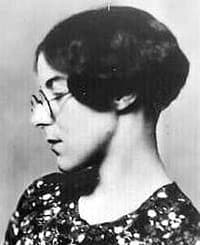
Sylvia Nora Townsend Warner was an English novelist, poet and musicologist, known for works such as Lolly Willowes, The Corner That Held Them, and Kingdoms of Elfin.
Similar books
- Tipping the Velvet
Sarah Waters
4.0 (58k) average on GoodreadsHistorical FictionFeatures a young woman's journey of self-discovery and unconventional love in Victorian London, with a similar exploration of identity and desire.
- A Tale of Two Cities
Charles Dickens
3.9 (810k) average on GoodreadsHistorical FictionA classic novel set during a major European revolution, focusing on love, sacrifice, and the impact of political upheaval on personal lives.
- Les Misérables
Victor Hugo
4.2 (683k) average on GoodreadsHistorical FictionWhile both novels are set against French revolutionary periods, Hugo's work offers an epic panorama of social justice, redemption, and heterosexual romance. Warner's Summer Will Show is more intimate, focusing on a woman's internal journey of self-discovery and non-normative relationships, rather than broad societal struggles.
- Germinal
Emile Zola
4.2 (29k) average on GoodreadsHistorical FictionZola's novel is a work of social realism focused on the grim realities of working-class life and collective action during labor strikes. Summer Will Show, in contrast, foregrounds individual consciousness, intellectual awakening, and the radical potential of personal and queer relationships, offering a different lens on revolution than Zola's more class-centric approach.
- Nineteen Eighty-Four
George Orwell
4.2 (5.5M) average on GoodreadsFictionWinston Smith dreams of truth and rebellion in a world where Big Brother watches all, but he confronts the terrifying power of a regime that controls not just actions, but thoughts.
- The Frozen River
Ariel Lawhon
4.4 (600k) average on GoodreadsFictionIn 1789 Maine, a heroic midwife's diary helps her expose a murder and get justice in a town that wants to silence her.





Enjoyed the summary?
A summary gives you the shape of the book. The book itself has the detail, the examples and the voice.
Find Summer Will Show on AmazonAs an Amazon Associate, BookBrief earns from qualifying purchases. How we're funded