
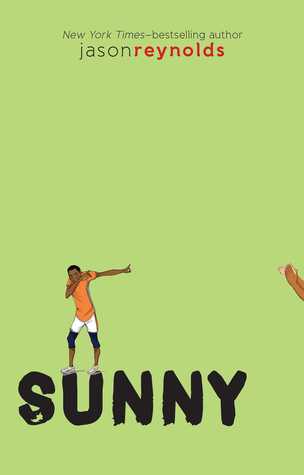
Synopsis
Covers the whole plot, including the ending.
- Difficulty
- Easy
- Pacing
- Moderate
- Mood
- Hopeful, Reflective, Inspiring, Emotional
- Read it if
- You enjoy heartfelt stories about overcoming grief and finding your own path, especially within a sports context.
- Skip it if
- You prefer fantasy or sci-fi, or stories with complex, multi-layered plots.
Sunny Plot Summary
Covers the whole plot, including the ending.
The Weight of a Name
Sunny, whose full name is Sunny "Sunshine" Young, introduces himself. He reveals his inner conflict, feeling his nickname is a cruel joke because he believes he caused his mother's death during childbirth. His father, Darryl, makes this belief worse through his emotional distance and insistence on being called "Darryl" instead of "Dad." Sunny finds comfort, or at least a distraction, in running track, an activity his mother excelled at. He is a natural, always winning races, which seems to be the only thing that earns a quick nod of approval from Darryl. However, Sunny secretly dislikes running, feeling it is a forced tribute rather than a personal passion.
A Sudden Stop
During an important track meet, Sunny is expected to win the mile, just as his mother always did. The pressure from Darryl, who watches from the stands with his usual quiet expression, is huge. However, in a moment of rebellion and self-assertion, Sunny stops running mid-race. He simply walks off the track, leaving his coach, teammates Ghost, Patina, and Lu, and especially Darryl, shocked. This act directly goes against his father's unspoken expectations and publicly states that he will no longer fit into the identity given to him by his mother's memory and his father's grief.
The Coach's Challenge
After his dramatic exit from the race, Coach Brody talks to Sunny. Instead of scolding him, Coach Brody, known for his unique insights, calmly asks Sunny what he *wants* to do. Sunny, surprised by the question, says he loves dancing, especially hip-hop. Coach Brody understands that forcing Sunny to run would not work. He doesn't dismiss the idea. Instead, he challenges Sunny to find a way to include his passion for movement and rhythm into a track and field event, keeping him on the team and supporting his unique talents.
Discovering the Discus
Sunny, encouraged by Coach Brody, starts looking into different track and field events. He finds the discus throw, an event that immediately interests him. He sees the smooth, spinning movements, the power, and the release as a form of dance—a "hard-hitting hip-hop ballet." The idea of spinning, building speed, and then letting go appeals deeply to him, both physically and emotionally. This discovery gives him a way forward, allowing him to stay with his friends on the Defenders team while pursuing a sport that feels truly his own.
Learning to Let Go
Training for the discus is hard for Sunny. The technique needs exact timing, balance, and a powerful release. He first struggles with the spin, often losing control or not creating enough force. Coach Brody and even his teammates offer advice, but Sunny's biggest problem is internal. The act of letting go of the discus becomes a symbol for letting go of his guilt and the emotional weight he carries. He realizes that holding on too long, both to the discus and to his past, stops him from reaching his full potential.
Family Ghosts
Darryl remains emotionally distant, making Sunny call him by his first name and rarely having meaningful talks. Sunny feels a constant need to prove himself, but also deep anger towards his father's inability to connect. He remembers parts of his parents' past, learning that his mother was a lively, loving woman who cared deeply for Darryl. This knowledge makes Sunny's feelings more complicated. He sees his father's grief, though misplaced, as a sign of a deep love he once shared. He begins to understand Darryl's pain, even if he doesn't excuse his behavior.
The Power of Rhythm
Using his love for dance, Sunny starts to use music in his discus practice. He pictures the spin and release as a dance move, matching his body to hip-hop beats. This approach not only makes practice more fun but also greatly improves his technique. He finds his flow, his balance, and the explosive power needed for a good throw. This blend of his two passions—dance and a new track event—becomes a strong symbol of his journey toward self-acceptance and finding his own unique rhythm in life.
A Revelation from Coach Brody
Coach Brody, sensing Sunny's remaining guilt, has a serious talk with him. He shares his own experiences with loss and stresses that Sunny is not responsible for his mother's death. He explains that life is unpredictable and that grief can appear in many ways, often unfairly. Coach Brody helps Sunny understand that Darryl's distance is a sign of his own unresolved pain, not an accusation against Sunny. This conversation is a turning point, giving Sunny much-needed outside confirmation that starts to break down his deep-seated self-blame.
The First Competition
The day of his first discus competition arrives. Sunny is nervous but also excited. He does a pre-throw dance ritual, focusing his energy. During his throws, he remembers Coach Brody's advice about letting go and sees his movements as a dance. He doesn't win, but he makes a good throw, showing great improvement and new confidence. More importantly, he feels a sense of achievement and real joy, proving to himself that he can succeed on his own terms and in his chosen event.
A Glimmer of Connection
After the competition, Darryl approaches Sunny. He doesn't offer a big apology or a warm hug, but he does acknowledge Sunny's performance, in his usual quiet way. He might say something like, "Good throw," or simply nod with a hint of pride in his eyes. This small gesture, though not a complete reconciliation, is a significant step. It shows Sunny that his father is starting to see him for who he is now, an individual with his own talents and passions, rather than just a reminder of his lost love. It signals a chance for healing in their relationship.
Embracing the Sunshine
By the end of the book, Sunny starts to accept his nickname, "Sunshine." He realizes that while life has its sad times, he also has an inner light and a capacity for joy. His discus journey, his talks with Coach Brody, and the subtle change in his father's attitude all help him feel more self-acceptance. He understands that he is not defined by his past or his father's grief, but by his own choices, passions, and the unique rhythm he brings to the world. He is learning to shine, authentically.
Sunny Characters
Sunny "Sunshine" Young
Protagonist
A guilt-ridden teenager who finds his voice through dance and discus.
Sunny is a seemingly upbeat and friendly kid, but beneath his "sunshine" exterior lies deep-seated guilt over his mother's death during his birth. He believes his father, Darryl, blames him, leading to a strained relationship where Sunny constantly seeks approval. He initially runs track to honor his mother's memory, despite disliking it. Sunny is creative, finding joy in dance, and possesses an innate desire to connect and be understood. His journey is about shedding the burden of perceived responsibility and forging his own identity.
Relationships: Darryl (Strained, distant father-son relationship marked by unresolved grief and blame.); Coach Brody (Mentor and confidant who helps Sunny process his grief and discover his true passion.); Ghost (Teammate and friend, part of the 'newbies' group.); Patina (Teammate and friend, part of the 'newbies' group.); Lu (Teammate and friend, part of the 'newbies' group.)
Darryl
Supporting
Sunny's emotionally distant father, consumed by grief.
Darryl is Sunny's father, a man emotionally crippled by the loss of his wife during childbirth. He is stoic, rarely showing affection or warmth towards Sunny, and insists on being called by his first name. His grief has manifested as a wall between him and his son, making Sunny feel responsible for his mother's death. He pushes Sunny to excel in running, seeing it as a way to keep his wife's memory alive, but fails to see Sunny's individual needs and desires. His arc is subtle, showing slight thaws in his emotional armor.
Relationships: Sunny (Strained, distant father-son relationship marked by unresolved grief and blame.); Sunny's Mother (Deceased wife, whose memory and loss profoundly impact Darryl's life and relationship with Sunny.)
Coach Brody
Supporting
The wise and unconventional track coach who mentors Sunny.
Coach Brody is the head coach of the Defenders track team. He is an astute observer of human nature, with a knack for understanding his athletes beyond their athletic performance. He is patient, empathetic, and encourages his team members to find their own path. He challenges Sunny to explore his passion for dance and creatively integrate it into track, ultimately guiding him towards the discus. Coach Brody acts as a surrogate father figure and a source of profound wisdom for Sunny, helping him process his guilt and grief.
Relationships: Sunny (Mentor and confidant.); Ghost (Coach and mentor.); Patina (Coach and mentor.); Lu (Coach and mentor.)
Ghost (Castle Cranshaw)
Supporting
Sunny's teammate and friend, also a 'newbie' on the team.
Ghost is one of Sunny's teammates and friends, part of the core group of 'newbies' on the Defenders team. He is known for his speed and his own complex background, having been introduced in the first book of the series. Ghost provides camaraderie and a sense of belonging for Sunny, as they navigate the challenges of track and adolescence together. He represents the supportive community Sunny finds outside of his strained family dynamic.
Relationships: Sunny (Teammate and friend.); Patina (Teammate and friend.); Lu (Teammate and friend.)
Patina "Patty" Jones
Supporting
Sunny's teammate and friend, a determined and fierce competitor.
Patina, or Patty, is another member of the Defenders team and a close friend to Sunny. She is a strong-willed and determined runner, known for her competitive spirit and her protective nature. Like Ghost, she provides a sense of community and understanding for Sunny, having her own set of personal challenges she's navigating. Her presence reinforces the idea of found family and shared struggles among the teammates.
Relationships: Sunny (Teammate and friend.); Ghost (Teammate and friend.); Lu (Teammate and friend.)
Lu (Lucien Clay)
Supporting
Sunny's teammate and friend, known for his albinism and strong personality.
Lu is the fourth member of the 'newbies' on the Defenders track team. He is characterized by his albinism, which he embraces with confidence, and his strong, often outspoken, personality. Lu adds another layer to Sunny's support system, offering a different perspective and a directness that can be both challenging and affirming. He, like the other teammates, represents the diverse backgrounds and shared journey of the track team members.
Relationships: Sunny (Teammate and friend.); Ghost (Teammate and friend.); Patina (Teammate and friend.)
Sunny's Mother (Deceased)
Mentioned
The catalyst for Sunny's guilt and Darryl's grief.
Sunny's mother is a pivotal character despite being deceased. Her memory casts a long shadow over Sunny's life, as he believes he caused her death during childbirth. She is remembered as a talented runner, a loving wife, and a vibrant individual. Her legacy is the source of both Sunny's initial drive to run and his deep-seated guilt. Her absence shapes the entire dynamic between Sunny and Darryl, and her character is slowly revealed through their memories and the impact she had on their lives.
Relationships: Sunny (Mother-son relationship, profoundly impacted by her death at his birth.); Darryl (Wife, whose loss leads to Darryl's immense grief.)
Sunny Themes
Grief and Guilt
The main theme is Sunny's deep guilt over his mother's death and Darryl's unresolved grief. Sunny feels responsible, and his father's emotional distance makes it worse. This shows in Sunny's reluctance to embrace his own identity and his initial, forced running. Coach Brody's wisdom helps Sunny understand that grief is complex and often misdirected, slowly easing his self-blame. The theme explores how people cope with loss and the harm of unaddressed guilt.
“I was born. She died. The equation was simple. And the answer was me. Always me.”
Identity and Self-Acceptance
Sunny's journey is about discovering and accepting his true self, separate from others' expectations. He first runs to honor his mother and get his father's approval, but this is not what he truly wants. His decision to stop running and pursue discus, which he links to his love for dance, is a strong act of self-definition. The discus becomes a symbol for finding his own rhythm and 'letting go' of the past, allowing him to embrace his unique talents and personality, finally accepting his nickname 'Sunshine.'
“Maybe what I needed wasn't to run. Maybe what I needed was to dance.”
The Power of Mentorship and Community
Coach Brody is an important mentor, offering Sunny guidance, understanding, and a safe place to explore his feelings. Unlike Darryl, Coach Brody actively listens to Sunny and encourages his individuality. The 'newbies'—Ghost, Patina, and Lu—form a supportive group, a found family that provides friendship and a sense of belonging. This network of positive relationships helps Sunny deal with his emotional challenges and gives him the encouragement he lacks at home, which is essential for his growth and healing.
“Sometimes, the only way to figure out what you're supposed to do is to figure out what you're not supposed to do.”
Reconciliation and Healing
While not a full solution, the book explores the difficult path toward reconciliation, especially between Sunny and Darryl. Darryl's grief has created a gap between them, but Sunny's journey toward self-acceptance subtly affects his father. Darryl's small gestures of acknowledgment at the end suggest a chance for healing and a change in their relationship. The theme suggests that healing is a process, not a single event, and that understanding and empathy can eventually bridge even deep emotional divides.
“He didn't say much. He never did. But he saw me. And that was enough for now.”
Plot Devices & Literary Techniques
Symbolism of Running vs. Discus/Dance
Running represents inherited burden, while discus/dance represents self-discovery.
Running symbolizes Sunny's inherited burden and his attempt to live up to his mother's legacy and his father's expectations. It is a forced activity that he secretly resents. In contrast, the discus throw, which Sunny reinterprets as a form of 'hard-hitting hip-hop ballet,' symbolizes his journey of self-discovery and embracing his authentic passions. The act of 'letting go' of the discus directly mirrors his need to release his guilt and emotional baggage, making it a powerful symbol of liberation and finding his own unique rhythm in life.
The Nickname 'Sunshine'
An ironic nickname that becomes a symbol of internal transformation.
Sunny's nickname, 'Sunshine,' initially serves as a source of irony and internal conflict. He feels it's a cruel joke, given his perceived role in his mother's death and his melancholic inner world. However, as Sunny progresses through his journey of self-acceptance and healing, the nickname transforms into a symbol of his genuine inner light and his capacity for joy. By the end of the book, 'Sunshine' becomes an authentic reflection of his personal growth, representing his ability to shine despite his past.
First-Person Narrative (Sunny's Voice)
Provides intimate access to Sunny's guilt, thoughts, and emotional journey.
The story is told from Sunny's first-person perspective, allowing readers direct access to his internal monologue, his deep-seated guilt, his observations of his father, and his evolving understanding of himself. This narrative choice is crucial for conveying the emotional weight he carries and for readers to empathize with his struggles. It highlights his wit, vulnerability, and the unique way he processes the world, making his journey of self-discovery particularly impactful and personal.
Metaphor of 'Letting Go'
The physical act of releasing the discus mirrors emotional release.
The act of 'letting go' is a recurring metaphor throughout the story, particularly in relation to the discus throw. Sunny learns that for a successful throw, he must spin, build momentum, and then precisely release the discus. This physical action directly parallels his emotional journey: he must process his past, build inner strength, and then 'let go' of his guilt, his father's expectations, and the burden of his mother's death. It's a powerful and tangible representation of his psychological liberation.
Sunny Quotes
“I wasn't scared of the dark. I was scared of what was in it. Or what wasn't.”
“Sometimes you gotta run so you can fly.”
“My dad always said, 'The only thing you can control is how you react.'”
“It's hard to be sad when you're running. Or maybe it's easier to be sad when you're running, because then you can just let it all out.”
“Grief is a tricky thing. It makes you feel like you're shrinking, even when the world around you is getting bigger.”
“The track was my church, my playground, my therapist. It was where I could be myself, or at least, the self I wanted to be.”
“Silence can be loud too, especially when it's full of unspoken words.”
“You can't outrun your past, but you can run towards your future.”
“Sometimes the best way to help someone is just to be there. Not to fix anything, but just to be.”
“A good story isn't about what happens, it's about how you tell it.”
“The hardest part about growing up is realizing that not everything gets fixed. Some things just... are.”
“Every step you take is a choice. A choice to keep going, or a choice to stop.”
“My brother might be gone, but his rhythm, his beat, it was still in me. And I could run to it.”
Quiz
10 questions on the plot and the characters. Each answer comes with a short explanation.
Question 1
What is Sunny's perceived role in his mother's death?
- He believes he caused it by being born.
- He thinks he was too young to help her.
- He feels guilty for not being a better son.
- He blames his father for not getting help sooner.
Show answer
A. He believes he caused it by being born. Sunny believes he is a murderer because his mother died giving birth to him, a belief reinforced by his father's treatment.
Question 2
What is the name of the track team Sunny is on?
- The Sprinters
- The Champions
- The Defenders
- The Track Stars
Show answer
C. The Defenders The text states that Sunny is 'the chillest dude on the Defenders team.'
Question 3
What is Sunny's father's name, as Sunny is made to call him?
- David
- Darryl
- Daniel
- Dennis
Show answer
B. Darryl Sunny's dad makes him call him Darryl instead of 'Dad,' which contributes to Sunny's feelings of guilt.
Question 4
What track event does Sunny's father expect him to excel in, mirroring his mother's success?
- The sprint
- The hurdle race
- The long jump
- The mile run
Show answer
D. The mile run Sunny's dad expects him to win first place ribbons running the mile, just like his mom did.
Question 5
What activity does Sunny initially propose to Coach when he stops running?
- Singing
- Dancing
- Painting
- Writing
Show answer
B. Dancing When Coach asks what Sunny wants to do instead of running, Sunny's answer is 'Dance.'
Question 6
What is the ultimate track event Sunny takes up that incorporates elements of dance?
- Shot put
- Javelin throw
- Discus throw
- Hammer throw
Show answer
C. Discus throw Sunny discovers the discus throw, which 'encompasses the hard hits of hip-hop, the precision of ballet, and the showmanship of dance.'
Question 7
How does Sunny's relationship with his father change after he stops running the mile?
- It improves significantly as they find common ground.
- It becomes worse than ever before.
- It remains unchanged, as his father was always distant.
- His father becomes indifferent, showing no reaction.
Show answer
B. It becomes worse than ever before. The text states, 'With his relationship with his dad now worse than ever, the last thing Sunny wants to do is leave the other newbies—his only friends—behind.'
Question 8
What internal conflict does Sunny primarily struggle with throughout the story?
- His desire to be the fastest runner on the team.
- His struggle to accept responsibility for his mother's death and his father's distance.
- His challenge in making friends with the other team members.
- His difficulty in choosing between running and dancing.
Show answer
B. His struggle to accept responsibility for his mother's death and his father's distance. The core of Sunny's struggle is his self-perception as a 'murderer' due to his mother's death and his father's subsequent emotional distance, which he hopes to 'let go' of.
Question 9
The phrase 'learning when to let go at just the right time' in the context of the discus throw is a metaphor for what?
- Mastering the physical technique of the sport.
- Releasing his emotional burdens and self-blame.
- Deciding which track event he truly enjoys.
- Forgetting about his past to focus on the future.
Show answer
B. Releasing his emotional burdens and self-blame. The text explicitly states: 'As Sunny practices the discus, learning when to let go at just the right time, he’ll let go of everything that’s been eating him up inside, perhaps just in time.' This directly links the physical act to his emotional release.
Question 10
What aspect of Sunny's personality is highlighted as a contrast to his inner turmoil?
- His quiet and reserved nature.
- His competitive and aggressive drive.
- His 'sunny' disposition, goofy smile, and kindness.
- His rebellious attitude towards authority.
Show answer
C. His 'sunny' disposition, goofy smile, and kindness. The introduction describes Sunny as 'just that—sunny. Always ready with a goofy smile and something nice to say, Sunny is the chillest dude on the Defenders team,' contrasting with his secret belief that he's a murderer.
Sunny FAQ
What is the central conflict Sunny faces in the story?
Sunny grapples with profound guilt over his mother's death during childbirth, believing himself to be a 'murderer.' This internal struggle is exacerbated by his father, Darryl's, emotional distance and refusal to acknowledge him as 'Dad,' which fuels Sunny's self-blame and impacts his identity.
Why does Sunny initially quit running, despite his past success?
Sunny quits running because he genuinely dislikes it, despite his natural talent and his father's insistence on him excelling in the mile, just like his late mother. His decision to stop mid-race is a quiet rebellion against his father's expectations and a desperate attempt to assert his own identity.
How does Coach Brody respond to Sunny's desire to dance instead of run?
Coach Brody, known for his unconventional coaching methods, doesn't dismiss Sunny's desire to dance outright. Instead, he creatively finds a way to integrate Sunny's passion into track by suggesting the discus throw, recognizing its potential to channel Sunny's rhythmic and expressive energy.
What role do the other 'newbies' (Ghost, Patina, Lu) play in Sunny's journey?
The other newbies—Ghost, Patina, and Lu—represent Sunny's nascent support system and his only friends on the team. Their camaraderie and shared experience as an elite track team provide a sense of belonging for Sunny, making his decision to stop running even more difficult due to the fear of leaving them behind.
How does the discus throw become a metaphor for Sunny's emotional healing?
The discus throw, with its emphasis on precision, power, and knowing 'when to let go at just the right time,' directly mirrors Sunny's internal process of confronting his guilt and grief. By mastering the physical act of releasing the discus, he learns to emotionally release the burdens he's been carrying.
What specific detail reveals Darryl's deep-seated grief and how it manifests?
Darryl's refusal to let Sunny call him 'Dad' and his insistence on calling him 'Darryl' is a key detail. This linguistic barrier highlights his inability to reconcile Sunny's existence with his wife's death, projecting his unresolved grief onto his son rather than confronting it directly.
Are there subtle hints that Sunny's mother was also burdened by expectations regarding her running?
While not explicitly stated, the text implies a cycle of expectation, as Sunny's father fixates on Sunny winning first place ribbons 'just like his mom did.' This suggests that running might have been a source of pressure, not just joy, for Sunny's mother, linking her experience to Sunny's.
How does Sunny's 'goofy smile' and 'something nice to say' serve as a coping mechanism?
Sunny's outwardly 'sunny' demeanor, characterized by his goofy smile and pleasantries, functions as a profound coping mechanism. It's a facade he maintains to mask his deep internal pain and guilt, attempting to project an image that contradicts his self-perception as a 'murderer' and to avoid further conflict.
Analyze the psychological impact of Darryl's emotional neglect on Sunny's self-worth.
Darryl's emotional neglect, particularly his refusal to be called 'Dad' and his distant behavior, profoundly damages Sunny's self-worth. It reinforces Sunny's belief that he is responsible for his mother's death and unworthy of love, creating a deep sense of inadequacy and guilt that shapes his identity.
How does Sunny's desire to dance represent an assertion of agency and individuality?
Sunny's desire to dance, a stark contrast to the running expected of him, is a powerful assertion of his agency and individuality. It's a declaration of his own passions and a rejection of the path his father has laid out, symbolizing his quest to define himself outside of his family's tragic history.
What is the significance of the Junior Olympics in the broader context of the series and Sunny's personal growth?
The Junior Olympics serve as a significant external goal for the Defenders team, symbolizing aspiration and high achievement. For Sunny, qualifying for it, especially through the discus, would represent not just athletic success but a profound personal victory, proving his worth and talent on his own terms.
Could Darryl's coldness towards Sunny be interpreted as a misguided attempt to protect himself from further grief?
It's highly plausible that Darryl's coldness is a misguided self-preservation mechanism. By maintaining emotional distance and blaming Sunny, he avoids confronting the raw pain of losing his wife, inadvertently creating a new wound in his relationship with his son rather than healing his own.
How does the novel challenge traditional notions of masculinity through Sunny's journey?
The novel challenges traditional masculinity by showcasing Sunny's vulnerability, his internal emotional struggles, and his preference for dance over running. It redefines strength not as stoicism or athletic prowess in a specific sport, but as the courage to express oneself authentically and confront personal demons.
What is the broader message about parental expectations and their impact on children in 'Sunny'?
The broader message highlights the immense and often damaging pressure parental expectations can place on children. Darryl's insistence on Sunny mirroring his mother's running success, coupled with his emotional distance, demonstrates how parental grief and unfulfilled desires can inadvertently stunt a child's personal growth and sense of self.
How does the discus throw, combining 'hip-hop, ballet, and showmanship,' symbolize Sunny's integrated identity?
The discus throw, by blending the 'hard hits of hip-hop,' 'precision of ballet,' and 'showmanship of dance,' becomes a perfect symbol for Sunny's integrated identity. It allows him to combine his internal rhythm and expressive nature with a powerful, disciplined athletic act, showing that his multifaceted personality is not a weakness but a strength.
About the author
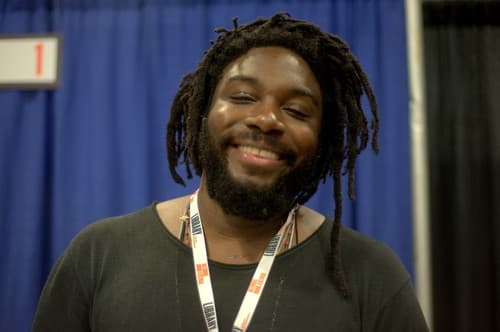
Jason Reynolds is an American author known for his young adult fiction. His notable works include "Long Way Down," which explores themes of grief and revenge, as well as "Ghost," "Patina," and "Sunny," which are part of the Track series focusing on youth and athletics. Reynolds has received multiple awards for his contributions to literature for young readers.
Similar books
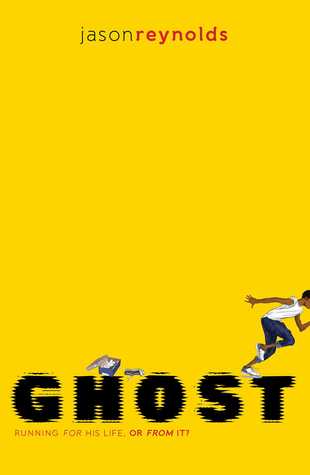
- Ghost
Jason Reynolds
4.2 (29k) average on GoodreadsChildren'sPart of the same 'Track' series, focusing on a different character's journey with similar themes of overcoming challenges.
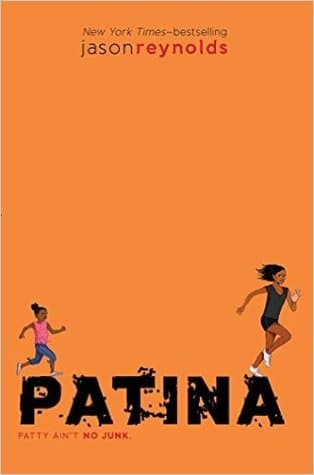
- Patina
Jason Reynolds
4.2 (9k) average on GoodreadsChildren'sAnother book in the 'Track' series, exploring personal struggles and growth within a team setting.
- The Crossover
Kwame Alexander
4.3 (42k) average on GoodreadsChildren'sFeatures a young athlete navigating family issues and personal growth, told with unique prose.
- Nineteen Eighty-Four
George Orwell
4.2 (5.5M) average on GoodreadsFictionWinston Smith dreams of truth and rebellion in a world where Big Brother watches all, but he confronts the terrifying power of a regime that controls not just actions, but thoughts.
- The Frozen River
Ariel Lawhon
4.4 (600k) average on GoodreadsFictionIn 1789 Maine, a heroic midwife's diary helps her expose a murder and get justice in a town that wants to silence her.
- A Man Called Ove
Fredrik Backman
4.4 (569k) average on GoodreadsFictionA stubborn widower, who lives by strict rules, finds his quiet world changed by a lively new family next door, making him face his past and find happiness in human connection.



Enjoyed the summary?
A summary gives you the shape of the book. The book itself has the detail, the examples and the voice.
Find Sunny on AmazonAs an Amazon Associate, BookBrief earns from qualifying purchases. How we're funded