
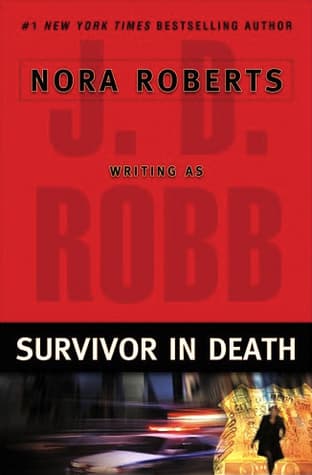
Synopsis
Covers the whole plot, including the ending.
- Difficulty
- Medium
- Pacing
- Fast
- Mood
- Suspenseful, Gritty, Emotional, Determined, Intense
Survivor In Death Plot Summary
Covers the whole plot, including the ending.
The Swisher Family Massacre
Lieutenant Eve Dallas responds to a horrific crime scene: the Swisher family – Robert, Carol, and their son Bobby – were murdered in their beds with extreme precision. The security system was bypassed, and the killers used night vision. The scene suggests professional, military-trained assassins. Dallas and her team, including Detective Peabody, find no clues, DNA, or motive. The only survivor is nine-year-old Nixie Swisher, who hid in the kitchen pantry and saw parts of the attack. Nixie is traumatized and struggles to communicate, making her a challenging but important witness for Dallas, who feels an unexpected empathy for the orphaned girl.
Nixie's Testimony and Safe Haven
Nixie Swisher, deeply traumatized, cannot speak clearly about the murders. Dallas, despite her usual discomfort with children, takes Nixie in, providing her a safe, temporary home. With Dr. Mira, a police psychiatrist, Nixie slowly begins to open up, drawing disturbing pictures and saying fragmented words that hint at the killers' appearance and methods. Her descriptions of 'men in black' and specific details, though vague, are critical. Dallas feels increasingly protective of Nixie, a feeling that echoes her own difficult past as an orphaned child and abuse survivor.
Initial Investigation and Lack of Motive
The investigation into the Swisher murders is stalled by the complete lack of a clear motive. Robert Swisher was a middle-management accountant with no known enemies, criminal connections, or financial problems. Carol Swisher was a homemaker, and Bobby was a typical teenager. There is no evidence of robbery, personal vendetta, or a message left behind. The military precision of the killings and the high-tech security breach point to professional contract killers, but the 'who' and 'why' remain a mystery. Dallas and Peabody examine every part of the Swisher family's lives, finding nothing.
Roarke's Resources and Global Connections
Frustrated by the dead ends, Dallas asks her husband, Roarke, for help. Roarke, with his wealth, global network, and shadowy past, investigates alongside the police. His resources allow him to access databases and information channels unavailable to the NYPD. He uncovers a link between Robert Swisher's company and a large international corporation with ties to organized crime, specifically a syndicate known as the 'Union.' This connection, initially dismissed by official channels, becomes the most promising lead, suggesting the Swishers were collateral damage in a much larger, global criminal operation.
The Union and Corporate Espionage
Roarke's investigation shows that the Union, a secretive and ruthless criminal organization, was involved in corporate espionage and hostile takeovers. Robert Swisher's company, while seemingly harmless, was a target for acquisition by a corporation secretly controlled by the Union. The Swisher family was killed not for personal reasons, but because Robert Swisher may have unknowingly found incriminating information or posed a minor obstacle to the Union's plans. This makes the case an international criminal conspiracy, showing the extreme lengths the Union will go to protect its interests.
Another Target: The Chen Family
As Dallas and Roarke investigate further, they discover another family, the Chens, who had a similar profile to the Swishers and were also connected to the Union's corporate targets. The Chens are now in danger. Dallas realizes the Union is systematically eliminating anyone who might have even a slight connection to their illegal activities, ensuring no loose ends. This realization increases the urgency of the investigation, as Dallas races to protect the Chen family, who are unaware of the danger they are in. The pattern confirms the professional, ruthless nature of their adversaries.
Protecting the Chens and Setting a Trap
Acting quickly, Dallas and her team, with Roarke's advice, reach the Chen family just as the Union's assassins prepare their attack. They secure the Chens and set a trap, turning the ambush on the killers. This leads to a tense standoff and a violent confrontation. Dallas shows her tactical brilliance and Roarke his resourcefulness, working together to protect innocents and engage the highly trained assassins. The encounter provides important intelligence and confirms the identity of the organization behind the Swisher murders.
Confronting the Assassins
The confrontation at the Chen residence becomes a full-blown firefight. Dallas, Peabody, and other officers engage the Union's hit squad, who are ex-military, highly disciplined, and utterly ruthless. The battle is fierce, with casualties on both sides. Dallas, using her own combat experience and strong resolve, directly confronts the lead assassins. The intensity of the battle shows the extreme danger and the professional skill of their opponents, pushing Dallas and her team to their limits. They neutralize the immediate threat, but the Union itself remains largely untouched.
Unmasking the Local Connection
Following the confrontation, Dallas and Roarke piece together the local connections that allowed the Union to operate so effectively. They identify a key local operative, a seemingly legitimate businessman who secretly facilitated the Union's corporate takeovers and provided logistical support for the assassinations. This individual, driven by greed, provided the vital intelligence on the Swishers and Chens. Unmasking this 'inside man' is important, as it provides a tangible link to the larger, more elusive organization and allows Dallas to make arrests, bringing some justice to the case.
Justice for the Swishers and Nixie's Future
With the local operatives arrested and the immediate threats neutralized, Dallas feels a sense of accomplishment, though she knows the Union is a large organization that will continue to operate. She ensures justice is served for the Swisher family, bringing closure to the horrific case. More importantly, Dallas focuses on Nixie's future. She arranges for Nixie to be placed with loving relatives, providing her stability and a chance at a normal life. This act of compassion and commitment to Nixie's well-being shows Dallas's personal growth and her ability to overcome her own past traumas, finding a deeper connection with the innocent survivor.
Survivor In Death Characters
Eve Dallas
Protagonist
Lieutenant, NYPD Homicide, driven by justice and haunted by her past.
Lieutenant Eve Dallas is a brilliant, highly intuitive homicide detective with the NYPD. Known for her relentless pursuit of justice, sharp mind, and often abrasive demeanor, she is deeply committed to her work. Beneath her tough exterior, she carries the scars of a horrific childhood, having been orphaned and abused. This case, involving a child witness, triggers her own traumatic memories but also fuels her fierce protectiveness. She struggles with emotional expression but demonstrates deep loyalty to her team and an unexpected tenderness towards Nixie.
Relationships: Roarke (Husband, partner, confidante); Nixie Swisher (Temporary guardian, protector); Delia Peabody (Partner, friend); Dr. Charlotte Mira (Therapist, colleague)
Roarke
Supporting
Billionaire, businessman, and Eve's devoted husband with a shadowy past.
Roarke is a charismatic, immensely wealthy, and influential businessman with a complex, often morally ambiguous past. He leverages his vast global network, technological prowess, and deep understanding of the criminal underworld to assist Eve in her most challenging cases. He is fiercely protective of Eve and provides her with unwavering support, both emotionally and practically. His resources and unique perspective are often crucial in solving crimes that baffle conventional police methods. He possesses a calm, calculating intelligence that complements Eve's intense, street-smart approach.
Relationships: Eve Dallas (Wife, partner, lover); Nixie Swisher (Protector, temporary guardian)
Delia Peabody
Supporting
Detective, Eve's loyal partner and friend.
Detective Delia Peabody is Eve Dallas's loyal and increasingly competent partner. Initially somewhat naive, Peabody has grown into a skilled detective under Eve's mentorship. She provides a grounded, often humorous counterpoint to Eve's intensity and is fiercely loyal. Peabody is observant, diligent, and possesses a strong moral compass. She is a vital support system for Eve, both professionally and personally, often acting as a bridge between Eve and the more conventional aspects of police work. She shows growing confidence and competence throughout the investigation.
Relationships: Eve Dallas (Partner, friend); Ian McNab (Boyfriend)
Nixie Swisher
Supporting
Nine-year-old sole survivor and witness to her family's murder.
Nixie Swisher is the nine-year-old daughter of the murdered Swisher family and the sole eyewitness to their brutal assassination. Deeply traumatized by the horrific event, she is initially withdrawn and unable to speak. Her innocence and vulnerability profoundly affect Eve Dallas, triggering Eve's own buried memories. Nixie's fragmented recollections and drawings are crucial to the investigation, providing the few clues available. She slowly begins to heal and trust under Eve's care, representing the innocent victims of the Union's ruthless reach.
Relationships: Eve Dallas (Temporary guardian, protector); Roarke (Temporary guardian, protector)
Dr. Charlotte Mira
Supporting
Police psychiatrist and Eve's trusted confidante.
Dr. Charlotte Mira is a highly skilled police psychiatrist who often works with Eve Dallas on cases involving trauma and psychological profiles. She is one of the few people Eve truly trusts and respects. Dr. Mira provides invaluable insights into the minds of both victims and perpetrators, and she helps Eve navigate her own emotional landscape, especially when a case touches too close to home. She plays a crucial role in helping Nixie process her trauma and extract vital information from her fragmented memories, always approaching her patients with empathy and professionalism.
Relationships: Eve Dallas (Therapist, colleague, friend)
Commander Whitney
Supporting
Eve's superior officer and mentor.
Commander Jack Whitney is Eve Dallas's direct superior and a seasoned police officer. He respects Eve's abilities and often gives her significant latitude in her investigations, despite her unconventional methods. He provides guidance and support, ensuring Eve has the resources she needs, while also holding her accountable. Whitney represents the more traditional, bureaucratic side of the police force, but he trusts Eve's instincts implicitly, even when her leads seem far-fetched. He is a steadfast figure of authority and integrity within the NYPD.
Relationships: Eve Dallas (Superior officer, mentor)
The Union (represented by various operatives)
Antagonist
A ruthless international criminal syndicate.
The Union is a shadowy, highly organized international criminal syndicate operating with extreme ruthlessness and efficiency. They are involved in corporate espionage, hostile takeovers, and contract assassinations, eliminating anyone who stands in their way or possesses compromising information. Their operatives are ex-military, highly trained, and show no mercy. They operate with a chilling detachment, viewing human lives as expendable assets in their pursuit of power and profit. While no single individual represents the entire Union, their collective actions drive the central conflict of the story.
Robert and Carol Swisher
Supporting
The murdered parents, catalysts for the investigation.
Robert and Carol Swisher were seemingly ordinary, middle-class parents living a quiet life. Robert worked as an accountant, and Carol was a homemaker. They were devoted to their children, Bobby and Nixie. Their brutal, unprovoked murders serve as the catalyst for Eve Dallas's investigation. They represent the innocent victims caught in the crosshairs of a much larger, more dangerous criminal enterprise, their deaths highlighting the indiscriminate ruthlessness of the Union. Though deceased, their lives and their tragic end drive much of the plot and Eve's determination.
Relationships: Nixie Swisher (Daughter); Bobby Swisher (Son)
Survivor In Death Themes
The Nature of Justice and Vengeance
The novel explores the complex line between seeking justice for victims and the desire for vengeance against perpetrators. Eve Dallas is driven to hold killers accountable, often blurring the lines between professional duty and personal retribution, especially when her own past is involved. The Union's actions show a twisted form of 'justice' for their own interests, contrasting sharply with Eve's moral code. The story ultimately affirms that true justice, though often imperfect, is about protecting the innocent and upholding the law, not merely inflicting pain.
“She wasn't looking for revenge; she was looking for justice. And that was a very different thing, though sometimes the outcome looked the same.”
Trauma, Memory, and Healing
This theme is central, focusing on how past traumas shape individuals and the process of healing. Eve's horrific childhood memories are triggered by Nixie's situation, forcing her to confront her own unresolved pain. Nixie's journey from silent, traumatized witness to a child beginning to heal shows the resilience of the human spirit and the importance of support systems. The narrative suggests that while trauma leaves lasting scars, it is possible to move forward and find peace through connection and compassion.
“The past was always there, a shadow at the edges, but it didn't have to define the now, or the future.”
The Interconnectedness of Crime and Power
The novel illustrates how seemingly isolated crimes can be deeply connected to vast, powerful, and often unseen networks of organized crime and corporate wrongdoing. The Swisher murders, initially appearing motiveless, are a small piece of a much larger international criminal enterprise, the Union. This theme highlights the insidious nature of unchecked power, demonstrating how wealth and influence can be used to commit atrocities on a grand scale, making it difficult for conventional law enforcement to combat.
“It wasn't just murder, Peabody. It was business. Big business. And that's always the nastiest kind.”
Family, Chosen and Biological
The concept of family is explored through multiple lenses. The tragic destruction of the biological Swisher family is contrasted with the 'chosen' family Eve has built with Roarke, Peabody, and her police colleagues. Eve's initial discomfort with Nixie evolves into a fierce protectiveness, demonstrating that family extends beyond blood ties and can be formed through shared experiences, loyalty, and love. The novel emphasizes the importance of providing a safe and nurturing environment, whether through traditional family structures or supportive relationships.
“Family wasn't just blood. It was the people who stood by you, the ones you fought for, the ones you loved.”
Plot Devices & Literary Techniques
The Child Witness (Nixie Swisher)
A vulnerable survivor as the only link to the perpetrators.
Nixie Swisher serves as the crucial plot device of the child witness. Her presence not only provides the only direct link to the killers but also acts as a powerful emotional trigger for Eve Dallas, forcing her to confront her own traumatic past. Nixie's initial inability to speak and her fragmented memories create suspense and challenge Eve's investigative skills. Her vulnerability heightens the stakes of the case and allows for a deeper exploration of Eve's character, revealing her capacity for empathy and protection.
Roarke's Resources and Network
Billionaire husband's illicit and legitimate global reach.
Roarke's vast wealth, advanced technology, and extensive global network (both legal and extralegal) function as a critical plot device. When conventional police methods hit dead ends, Roarke's unique capabilities allow the investigation to bypass bureaucratic limitations and access information, resources, and connections that would otherwise be impossible. This device enables the plot to expand beyond typical police procedural boundaries, uncovering the international scope of the crime and providing solutions to seemingly intractable problems, often through morally gray means that complement Eve's ethical framework.
Eve's Personal Trauma Echoes
The protagonist's past abuse mirrors the victim's experience.
Eve Dallas's own history of childhood abuse and being an orphan serves as a potent plot device. The Swisher case, particularly Nixie's situation, directly triggers Eve's buried memories and unresolved trauma. This device not only adds psychological depth to Eve's character but also fuels her intense drive to solve the case and protect Nixie. It provides a personal stake in the investigation, making it more than just another homicide, and allows for moments of introspection and vulnerability that further develop Eve's complex personality, enhancing reader empathy.
The Corporate/Criminal Syndicate (The Union)
A vast, shadowy organization as the ultimate antagonist.
The Union, a powerful international criminal syndicate, functions as a pervasive plot device. It represents an antagonist that is largely unseen but whose reach is immense and ruthless. This device allows the plot to escalate from a seemingly contained local murder to a global conspiracy involving corporate espionage and systematic elimination of targets. The Union's shadowy nature creates a sense of overwhelming threat and illustrates the difficulty of fighting organized crime, providing a formidable, long-term adversary for Eve and Roarke, transcending individual villains.
Quiz
10 questions on the plot and the characters. Each answer comes with a short explanation.
Question 1
What is the name of the protagonist investigating the Swisher case?
- Peabody
- Roarke
- Eve Dallas
- Nixie Swisher
Show answer
C. Eve Dallas Eve Dallas is the lieutenant investigating the case.
Question 2
How were the Swisher family members murdered?
- With poison
- In their beds with brutal, military precision
- During a home invasion
- In a staged accident
Show answer
B. In their beds with brutal, military precision The text states the family members were murdered 'in their beds with brutal, military precision'.
Question 3
Who is the sole eyewitness to the crime?
- Lieutenant Eve Dallas
- Roarke
- Peabody
- Nixie Swisher
Show answer
D. Nixie Swisher Nixie Swisher, the nine-year-old girl, is the sole eyewitness.
Question 4
What specific technological advantage did the killers use to navigate the house?
- Infrared sensors
- Thermal imaging
- Night vision
- Sonar
Show answer
C. Night vision The text mentions the killers 'used night vision to find their way through the cozy middle-class house'.
Question 5
What is one of Eve Dallas' personal motivations for solving this case?
- To impress her superiors
- To prove her skills to Roarke
- To put to rest some of her own darkest memories and deepest fears
- To gain a promotion
Show answer
C. To put to rest some of her own darkest memories and deepest fears The book excerpt states that Eve Dallas wants to solve the case 'to put to rest some of her own darkest memories - and deepest fears'.
Question 6
Which of the following is NOT a genre associated with the book 'Survivor In Death'?
- Romance
- Historical Fiction
- Science Fiction
- Mystery
Show answer
B. Historical Fiction The provided genres are Thriller, Mystery, Science Fiction, and Romance. Historical Fiction is not listed.
Question 7
What is Nixie Swisher's relationship to the victims?
- She is the killers' accomplice
- She is a neighbor
- She is the daughter of the victims
- She is a family friend
Show answer
C. She is the daughter of the victims The text states, 'Now Nixie Swisher is an orphan - and the sole eyewitness to a seemingly inexplicable crime,' implying she is a child of the murdered family.
Question 8
What is NOT explicitly mentioned as a characteristic of the killers' methods?
- They were highly skilled professionals
- They left behind DNA evidence
- They breached state-of-the-art security
- They displayed military precision
Show answer
B. They left behind DNA evidence The text explicitly states 'No DNA' and that the killers were 'pros' who 'breached state-of-the-art security' and used 'military precision'.
Question 9
What role does Roarke play in assisting Eve Dallas with the case?
- He acts as Eve's partner on the street
- He provides information only he can access
- He is the forensic specialist
- He is the chief of police
Show answer
B. He provides information only he can access The text mentions 'Roarke providing the kind of help only he can give,' implying his unique resources and access.
Question 10
What is Eve Dallas' known weakness or discomfort related to children in this scenario?
- She finds them too noisy
- She has a fear of them being harmed
- She is not good with them
- She distrusts their testimony
Show answer
C. She is not good with them The excerpt states, 'Kids are not Dallas' strong suit.'
Survivor In Death FAQ
What is the plot of Survivor In Death?
Survivor In Death follows Lieutenant Eve Dallas as she investigates the brutal murder of the Swisher family. The killers breached advanced security with military precision, leaving no obvious clues. The only survivor is nine-year-old Nixie Swisher, who becomes Eve's primary focus as she seeks justice and confronts her own past.
Who are the main characters in Survivor In Death?
The main characters are Lieutenant Eve Dallas, a tough and dedicated police detective, her billionaire husband Roarke, who provides crucial support and resources, and her partner, Detective Peabody. The young survivor, Nixie Swisher, also plays a pivotal role.
What genre is Survivor In Death?
Survivor In Death is a thriller and mystery novel with elements of science fiction, characteristic of J.D. Robb's In Death series. It also contains romantic elements between the main characters.
What makes the Swisher case difficult for Eve Dallas?
The Swisher case is difficult because the murders were carried out with extreme precision, the security systems were bypassed, and the killers left no discernible clues or DNA. The perpetrators were clearly highly skilled professionals.
How does Roarke help Eve in Survivor In Death?
Roarke uses his vast resources, influence, and unique connections to assist Eve in her investigation. He provides support, information, and access that the police department might not otherwise have.
What is Eve Dallas's personal connection to the Swisher case?
Eve Dallas has a personal connection to the case because she struggles with children and is reminded of her own dark memories and fears. Her promise to protect Nixie and find the killers becomes deeply personal.
Is Survivor In Death part of a series?
Yes, Survivor In Death is part of the long-running 'In Death' series by J.D. Robb, featuring Lieutenant Eve Dallas. It is recommended to read the books in order, though each can often be enjoyed as a standalone story.
What is the significance of Nixie Swisher in the story?
Nixie Swisher is the sole eyewitness to the murders, making her crucial to solving the case. She also becomes a focal point for Eve Dallas, challenging her and forcing her to confront her own vulnerabilities.
What are the key themes explored in Survivor In Death?
Key themes include justice, the impact of trauma, the nature of family, and the challenges of confronting one's past. The novel also explores the complexities of professional and personal relationships.
What is the setting of Survivor In Death?
Survivor In Death is set in a futuristic New York City in the year 2059, a common setting for J.D. Robb's In Death series. Advanced technology and societal changes are part of the backdrop.
About the author

J.D. Robb is a pseudonym for author Nora Roberts, known for her work in the romance and suspense genres. She is particularly recognized for the "In Death" series, which includes titles such as "Naked in Death," "Glory in Death," "Immortal in Death," "Rapture in Death," "Ceremony in Death," and "Holiday in Death." These novels blend elements of crime fiction with futuristic settings and strong character development.
Similar books
- Naked in Death
J.D. Robb
4.1 (167k) average on GoodreadsThrillerCompared to the very first book in the series, "Naked in Death," "Survivor In Death" showcases significant growth in both character depth and world-building. While "Naked" introduced the core characters and the futuristic setting, "Survivor" benefits from the established relationships and a more confident exploration of Eve's psychological scars. The romance between Eve and Roarke, which was raw and new in "Naked," is a mature, foundational element in "Survivor," allowing for more emotional complexity in their interactions and providing a stronger support system for Eve as she tackles difficult cases. The mysteries themselves are equally engaging, but "Survivor" feels more polished and emotionally resonant due to the accumulated character development.
- The Andromeda Strain
Michael Crichton
3.9 (223k) average on GoodreadsThrillerWhile both "Survivor In Death" and Michael Crichton's "The Andromeda Strain" incorporate science fiction elements into a thriller narrative, their approaches differ significantly. "The Andromeda Strain" is a hard science fiction thriller, focusing heavily on scientific accuracy, biological threats, and the procedural aspects of a scientific crisis. Its characters, while competent, often serve as conduits for the scientific exposition and plot progression. "Survivor In Death," on the other hand, uses its futuristic setting more as a backdrop for a character-driven police procedural. The science fiction elements primarily enhance the crime-solving process (e.g., advanced forensics) rather than being the central conflict. Robb prioritizes character development, emotional depth, and interpersonal relationships, whereas Crichton prioritizes scientific plausibility and the external threat itself. "Survivor" leans more into the 'futuristic mystery with romance' subgenre, while "Andromeda Strain" is a classic 'scientific disaster thriller'.
- Red Dragon
Thomas Harris
4.0 (274k) average on GoodreadsThrillerComparing "Survivor In Death" to Thomas Harris's "Red Dragon" highlights the different tones and psychological depths within the thriller genre. Both feature detectives hunting serial killers, but Harris delves into the darkest corners of human psychology with an intensity that Robb, while exploring trauma, doesn't always match. "Red Dragon" is a harrowing, almost visceral examination of evil, focusing on the psychological profiles of both the killer and the tormented FBI profiler, Will Graham. The atmosphere is consistently grim and suspenseful, with little room for the lighter moments or romantic subplots found in Robb's work. "Survivor In Death", while dealing with serious crimes, injects warmth through Eve's relationships and the inherent optimism of justice prevailing, even if imperfectly. Harris's prose is more literary and stark, creating a pervasive sense of dread, whereas Robb's is more accessible and character-focused, balancing the darkness with elements of hope and connection. Essentially, "Red Dragon" is a psychological horror thriller, while "Survivor In Death" is a futuristic romantic police procedural.
- Angels & Demons
Dan Brown
3.9 (2.7M) average on GoodreadsThrillerA Harvard symbologist races through Rome's ancient sites, deciphering cryptic clues to unmask the Illuminati and stop a vengeful plot to destroy the Vatican with a stolen antimatter weapon.
- Gone Girl
Gillian Flynn
4.1 (2.3M) average on GoodreadsThrillerA wife's sudden disappearance on her fifth anniversary reveals a web of lies and psychological warfare, exposing the secrets within a seemingly perfect marriage.
- The Girl on the Train
Paula Hawkins
3.9 (2.1M) average on GoodreadsThrillerA woman’s fascination with a seemingly perfect couple she watches from her daily train commute leads her into a dark investigation when she witnesses something that shatters their idyllic image.





Enjoyed the summary?
A summary gives you the shape of the book. The book itself has the detail, the examples and the voice.
Find Survivor In Death on AmazonAs an Amazon Associate, BookBrief earns from qualifying purchases. How we're funded