
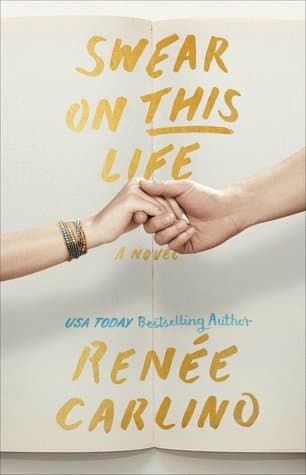
Synopsis
Covers the whole plot, including the ending.
- Difficulty
- Easy
- Pacing
- Moderate
- Mood
- Emotional, Reflective, Romantic, Melancholy
- Read it if
- You enjoy second-chance romances, stories about confronting the past, and a blend of contemporary and 'book within a book' narratives.
- Skip it if
- You dislike emotional drama, stories with a focus on childhood trauma, or plots driven by misunderstandings and past secrets.
Swear on This Life Plot Summary
Covers the whole plot, including the ending.
The Literary Sensation
Emiline Watts, a writing instructor at UC San Diego, struggles with her own writing and a stagnant relationship with her boyfriend, Trevor. She reluctantly goes to a book club where the debut novel, 'All the Stars in the Sky' by J. Colby, is discussed. From the first page, Emiline is unsettled. The story, from a young girl named Emerson, describes a childhood of poverty, neglect, and abuse in rural Ohio. The events, characters, and even specific phrases in the book are like Emiline's own traumatic past with her childhood best friend and first love, Jackson. She feels a deep sense of dread and recognition, confirming her belief that J. Colby must be Jase, the boy she hasn't seen in over a decade.
Confronting the Past
Emiline's shock quickly turns to anger. She feels violated that Jase used her painful childhood experiences for his own gain, especially since the novel changes the ending, portraying a different fate for the characters than what Emiline remembers. Her boyfriend, Trevor, dismisses her feelings, making her feel more alone. Needing answers and closure, Emiline decides she must find J. Colby and confront him. She starts by contacting her old best friend, Chloe, who still lives in Ohio, hoping Chloe knows where Jase is or what happened to him after they lost touch.
The Road Trip to Ohio
Emiline, now set on finding Jase, drives from San Diego back to her childhood home in rural Ohio. The long journey is filled with memories of her past, especially her early life with Jase. She remembers their shared poverty, their dysfunctional homes—Emiline with her neglectful, alcoholic mother and Jase with his abusive stepfather. Their bond formed in hardship; they found comfort and escape in each other, dreaming of a future away from their bleak lives. Her return to Ohio brings anxiety, knowing she will confront Jase and the painful memories of her youth.
Reconnecting with Chloe
Arriving in Ohio, Emiline meets Chloe, her childhood best friend, who is now a successful local businesswoman. Chloe is surprised and guarded at first, but eventually talks about the years after Emiline left. She confirms that Jase did become a writer and that 'All the Stars in the Sky' is about Emiline. Chloe also says Jase has been living a quiet, somewhat reclusive life, and gives Emiline a general idea of his current location. Their reunion is bittersweet, as they deal with lingering resentments and unspoken histories, but Chloe supports Emiline's search for answers.
The First Encounter
Following Chloe's directions, Emiline finds Jase. He lives in a modest cabin, still writing, and is shocked to see her after so many years. Their first meeting is full of anger, hurt, and unspoken longing. Emiline immediately confronts him about the novel, accusing him of stealing her story and using her trauma. Jase admits the book is about their past but defends his creative choices, explaining that writing helped him process and preserve their story. He shows deep, lingering affection for her and regret over their separation, which complicates Emiline's emotions.
Unraveling the Past
Over the next few days, Emiline and Jase spend time together, slowly uncovering their complicated past. They revisit old places, sharing memories and filling in the gaps of the years they spent apart. Jase explains his reasons for writing the novel, saying it was a tribute to her and their bond, not exploitation. He talks about his life after she left, including his struggles and his dedication to writing. As they talk, Emiline starts to see his side, understanding that his experience of their childhood, while similar, was not identical to hers, and that his fictionalized ending held a deeper meaning for him.
The Truth About the Ending
Emiline asks Jase about the novel's ending, where the character based on Jase dies. Jase, through tears, reveals the truth: he was diagnosed with a serious illness shortly after Emiline left for college. The fictional death in the book was a way for him to cope with his own fear and a symbol of their shared dreams dying when she left. This revelation changes Emiline's anger to deep empathy and regret, as she understands his suffering and the burden he carried alone.
Reconciliation and Forgiveness
Overwhelmed by Jase's confession, Emiline processes the pain he endured. She realizes her initial anger came from her own unresolved trauma and her inability to fully face her past. As they continue to talk, she offers him forgiveness, understanding, and comfort. She apologizes for her part in their separation and for not reaching out sooner. Their shared vulnerability breaks down the remaining barriers between them, leading to a deep reconciliation. Emiline starts to see the novel not as a betrayal, but as a sign of their lasting love and a powerful act of survival.
A New Beginning
With the truth revealed and forgiveness given, Emiline and Jase rekindle their connection. They spend days revisiting their childhood spots, sharing laughter and tears, and rediscovering the deep love that had always been between them. Emiline breaks up with Trevor, realizing her relationship with him was a distraction from her true feelings and her past. Jase's health, while still a concern, is manageable, and he wants to build a future with Emiline. They begin to imagine a life where they can finally be together, supporting each other and pursuing their shared dreams of writing.
Swear on This Life
Inspired by Jase's courage and their journey, Emiline finds the motivation and clarity to pursue her own writing. She starts a novel that tells her side of their story, giving voice to her experiences and the healing she found. The title of her book, 'Swear on This Life,' becomes a sign of their lasting love and the promise of a future together. The novel ends with Emiline and Jase committed to each other, having overcome their past traumas and found a way to combine their individual stories into a shared narrative of hope, love, and literary success.
Principal Figures
Emiline Watts (Emerson)
Protagonist
A struggling writer who confronts her past trauma.
Emiline is an adjunct writing instructor at UC San Diego, intelligent but creatively blocked. She carries deep emotional scars from a childhood marked by poverty, neglect, and abuse. Initially cynical and resentful, she uses her long-term relationship with Trevor as a shield against true intimacy and confronting her past. Her journey is defined by her re-engagement with her traumatic memories and her eventual embrace of vulnerability and self-forgiveness.
Relationships: Jase (Jackson) (Childhood best friend and first love, later rekindled romantic partner.); Trevor (Long-term boyfriend, a stable but ultimately unfulfilling relationship.); Chloe (Childhood best friend, later a source of information and support.)
Jase (Jackson Colby)
Love Interest / Deuteragonist
A bestselling author who writes about his and Emiline's shared past.
Jase, known as J. Colby, is a gifted writer who uses his and Emiline's shared traumatic past as the basis for his debut novel. He is sensitive, artistic, and deeply empathetic, having endured his own significant childhood abuse. Despite his literary success, he lives a somewhat reclusive life, haunted by his past and a secret illness. His motivation for writing the book is not exploitation, but a profound need to process his experiences and honor his connection with Emiline.
Relationships: Emiline (Emerson) (Childhood best friend and first love, later rekindled romantic partner.)
Trevor
Supporting
Emiline's stable but emotionally detached boyfriend.
Trevor is Emiline's long-term boyfriend. He represents stability and a comfortable, if uninspired, life. He is practical and generally supportive, but lacks the emotional depth and understanding to truly connect with Emiline's past trauma or her literary aspirations. His inability to comprehend the significance of Jase's novel to Emiline highlights the emotional distance in their relationship, ultimately leading to their breakup.
Relationships: Emiline (Long-term boyfriend, eventually ex-boyfriend.)
Chloe
Supporting
Emiline's childhood best friend who provides crucial information.
Chloe is Emiline's childhood best friend who remained in their Ohio hometown and built a successful life. She serves as a link to Emiline's past, providing both context and crucial information about Jase's whereabouts and his life after Emiline left. She is pragmatic and resilient, having also navigated the challenges of their impoverished upbringing. Her reunion with Emiline is initially strained but ultimately supportive, demonstrating the enduring power of childhood friendship.
Relationships: Emiline (Childhood best friend.)
Emiline's Mother
Mentioned
A neglectful and alcoholic parent.
Emiline's mother is portrayed through Emiline's memories as an alcoholic and neglectful parent. Her presence (or lack thereof) profoundly shaped Emiline's childhood, contributing to her emotional scars and her need for escape. She represents the dysfunctional home life that Emiline and Jase both experienced, a key factor in their bond.
Relationships: Emiline (Neglectful mother-daughter relationship.)
Jase's Stepfather
Mentioned
An abusive figure in Jase's childhood.
Jase's stepfather is mentioned as an abusive presence in Jase's childhood. Like Emiline's mother, he represents the harsh realities of their upbringing and the shared trauma that bonded Emiline and Jase. His abuse further highlights the desperate circumstances from which Jase sought escape, both physically and through his writing.
Relationships: Jase (Abusive stepfather-stepson relationship.)
Themes & Insights
The Power of Storytelling and Art as Healing
This theme explores how writing can help process trauma, express pain, and find healing. Jase's novel, 'All the Stars in the Sky,' helps him confront his past, honor his love for Emiline, and cope with his illness. Emiline, initially angry, finds her own voice and healing by writing her version of their story. This act of creation turns their individual suffering into shared understanding, as when Jase explains the deeper meaning behind his fictional ending to Emiline, helping her understand his pain.
“I wrote our story because I had to. It was the only way I knew how to keep you alive, to keep us alive, when I thought I wouldn’t be.”
First Love and Enduring Connection
The novel explores the lasting impact of first love, especially one formed in shared hardship. Emiline and Jase's bond, developed in their difficult childhoods, becomes a lifeline for both. Despite years apart and unresolved pain, their connection remains strong and eventually rekindles. Their reunion shows that some loves are so fundamental they last through time and distance, offering a unique understanding that other relationships cannot, as seen by Emiline's inability to connect with Trevor on the same level.
“Some loves are too important to lose, no matter how much time passes or how much pain you carry.”
Trauma, Memory, and Perspective
The story looks at how individual experiences of trauma shape memory and perspective. Emiline and Jase share a past, but their interpretations and emotional processing of it differ. Emiline first sees Jase's novel as a betrayal, a use of her pain. However, as she hears his side, especially his secret illness, she realizes his 'creative liberties' came from his own suffering. This theme highlights that truth is often complex, and healing requires acknowledging different views of shared experiences, as Emiline learns to see the 'fiction' as Jase's truth.
“His truth wasn’t my truth, not exactly. But it was still true.”
Forgiveness and Redemption
A central theme is the journey toward forgiveness, both of others and of oneself. Emiline must forgive Jase for what she first sees as exploitation, but more importantly, she must forgive herself for leaving him and for her own anger. Jase needs Emiline's understanding and forgiveness for his choices and for carrying his secrets. Their reconciliation shows that true healing comes from facing pain, offering empathy, and letting go of resentment, opening a path toward redemption and a shared future.
“Forgiveness isn’t about condoning what happened. It’s about letting go of the anger that’s holding you captive.”
Plot Devices & Literary Techniques
The Novel Within the Novel
Jase's book, 'All the Stars in the Sky,' acts as a mirror and catalyst.
Jase's debut novel is not merely a plot point but a central narrative device. It serves as the catalyst for Emiline's journey, forcing her to confront her past and seek out Jase. More importantly, it acts as a mirror, reflecting their shared history but also highlighting the differing perspectives and emotional truths of their experiences. The novel's fictionalized elements, particularly the tragic ending, hold a deeper, personal truth for Jase, which Emiline must uncover to understand him and their past fully. It blurs the lines between fiction and reality, becoming a vehicle for revelation and reconciliation.
Flashbacks and Dual Timelines
Interweaving past and present to reveal character motivations and history.
The story effectively uses flashbacks to Emiline and Jase's childhood, interspersing these memories with Emiline's present-day journey. These flashbacks are crucial for establishing their profound bond, the traumatic circumstances of their upbringing, and the foundation of their first love. They provide context for Emiline's initial anger and Jase's motivations. The dual timelines build suspense, gradually revealing the full scope of their shared history and the secrets that kept them apart, allowing the reader to understand the emotional weight of their reunion.
The Mysterious Author (J. Colby)
Anonymity creates intrigue and allows for narrative control.
The author's anonymity, 'J. Colby,' is a key plot device that fuels Emiline's quest. The mystery surrounding the author's identity initially drives Emiline's suspicion and anger, compelling her to investigate. This anonymity also allows Jase to tell their story from his perspective without immediate confrontation, giving him a degree of emotional distance and control over the narrative. When his identity is revealed, it intensifies the emotional impact of the reunion and the subsequent revelations, as Emiline confronts not just a book, but the author she knows intimately.
Swear on This Life Quotes
“I’d rather have a short, happy life than a long, miserable one.”
“Some people are just meant to be. You know? Like the stars aligned and they just found each other.”
“It’s amazing how much you can love someone, even when they drive you completely insane.”
“The best stories are the ones that never end. They just keep living in your heart.”
“Sometimes you have to let go of the life you thought you’d have, and learn to love the life you have.”
“He was my first love, my first heartbreak, and the one person I could never truly forget.”
“You don’t just stop loving someone. You either do, or you don’t.”
“Our story wasn't perfect, but it was ours, and that made it beautiful.”
“Sometimes the quietest people have the loudest thoughts.”
“Every scar tells a story. Some are visible, others are hidden deep inside.”
“You can run from your past, but you can’t hide from it.”
“True love isn’t about being perfect for each other, it’s about being perfect with each other.”
“We were just two broken pieces that somehow fit together.”
“Life has a funny way of bringing you back to where you’re supposed to be.”
Quiz
10 questions on the plot and the characters. Each answer comes with a short explanation.
Question 1
What is the name of the mysterious bestselling author whose debut novel captivates Emiline?
- Jason Colby
- J. Colby
- Jackson Colby
- Jase Colby
Show answer
B. J. Colby The book states the author is 'J. Colby,' a mysterious author whose identity Emiline later discovers.
Question 2
What is Emiline's profession at UC San Diego?
- Adjunct writing instructor
- Tenured English professor
- Literary agent
- Librarian
Show answer
A. Adjunct writing instructor Emiline is described as an 'adjunct writing instructor at UC San Diego' with her own stalled literary career.
Question 3
What are the names of the two main childhood best friends in J. Colby's novel?
- Emiline and Jase
- Emerson and Jackson
- Emily and Jack
- Emma and Jay
Show answer
B. Emerson and Jackson The novel is about 'Emerson and Jackson, two childhood best friends who fall in love'.
Question 4
Why is Emiline initially reluctant to read J. Colby's novel?
- She dislikes romance novels.
- She is jealous of another successful writer while her own career is stalled.
- She prefers to read classic literature.
- She believes the book is poorly written.
Show answer
B. She is jealous of another successful writer while her own career is stalled. Emiline 'isn’t thrilled to celebrate the accomplishments of a young and gifted writer' due to her own stalled literary career and bumpy relationship.
Question 5
What is the primary reason Emiline becomes furious after recognizing her past in the novel?
- J. Colby did not give her credit in the acknowledgements.
- He co-opted her painful past and took dramatic creative liberties with the ending.
- He portrayed her in a negative light throughout the story.
- The book was published without her consent.
Show answer
B. He co-opted her painful past and took dramatic creative liberties with the ending. Emiline is 'furious that he co-opted her painful past and took some dramatic creative liberties with the ending.'
Question 6
In what rural state and general setting did Emiline and Jase grow up?
- Coastal California
- Rural Ohio
- New York City
- Suburban Florida
Show answer
B. Rural Ohio The story takes place in 'their impoverished town in rural Ohio,' indicating their childhood setting.
Question 7
How long has it been since Emiline last saw Jase, her childhood best friend and first love?
- A few months
- Less than a year
- Over a decade
- About five years
Show answer
C. Over a decade Jase is described as 'the best friend and first love she hasn’t seen in over a decade.'
Question 8
What is Emiline's primary motivation for seeking out 'J. Colby'?
- To collaborate on a sequel to the novel.
- To congratulate him on his success.
- To confront him and put her mind at ease about the truth behind the fiction.
- To demand financial compensation for using her story.
Show answer
C. To confront him and put her mind at ease about the truth behind the fiction. Her only way to 'put her mind at ease is to find and confront 'J. Colby,' to learn the truth behind the fiction.'
Question 9
What is the central conflict Emiline faces regarding J. Colby's novel?
- The novel's poor critical reception.
- The struggle between the fictionalized narrative and her deeply personal, painful reality.
- Her inability to get a copy of the bestselling book.
- The literary community's refusal to acknowledge J. Colby's talent.
Show answer
B. The struggle between the fictionalized narrative and her deeply personal, painful reality. The core conflict revolves around Emiline's recognition of her 'own dark and desperate childhood' in the novel, juxtaposed with the 'dramatic creative liberties' taken, creating a tension between fiction and her painful reality.
Question 10
Which of the following best describes Emiline's initial emotional response to discovering the novel is based on her life?
- Flattered and grateful
- Indifferent and bored
- Furious and unsettled
- Amused and nostalgic
Show answer
C. Furious and unsettled The text explicitly states, 'Far from being flattered that he wrote the novel from her perspective, Emiline is furious that he co-opted her painful past.' She is also unsettled by the creative liberties taken.
Swear on This Life FAQ
What is the central premise of 'Swear on This Life'?
The novel centers on Emiline, an adjunct writing instructor, who discovers that a bestselling book by mysterious author 'J. Colby' is a fictionalized account of her own difficult childhood and first love, Jase. She becomes determined to find J. Colby to confront him about using her past and altering the story's ending.
Who are the main characters in the 'book within a book' and how do they relate to Emiline's past?
The 'book within a book' features Emerson and Jackson, two childhood best friends growing up in poverty in rural Ohio. Emerson is a direct representation of Emiline, while Jackson is the fictionalized version of Jase, Emiline's childhood best friend and first love.
Why is Emiline initially reluctant to read J. Colby's novel, despite her literary background?
Emiline, an aspiring writer herself with a stalled career and a complicated relationship with Trevor, feels a sense of professional jealousy towards a successful new author. She is also wary of reading stories that might remind her of her own traumatic childhood, which she has tried to distance herself from.
What specifically angers Emiline about J. Colby's novel, beyond just using her story?
Emiline is furious not only that Jase used her painful past without her permission, but also that he took 'dramatic creative liberties' with the ending. This suggests that the fictional ending in the book differs significantly from what actually happened between them, creating a major point of contention and mystery.
What is Emiline's relationship status at the beginning of the novel, and how does it influence her journey?
Emiline is in a long-term, somewhat 'bumpy' relationship with Trevor. This relationship serves as a contrast to her intense first love with Jase and highlights her current emotional state, making her re-evaluation of her past and feelings for Jase even more complex.
What is the significance of the title 'Swear on This Life'?
The title likely refers to a promise or vow made between Emiline and Jase during their childhood, symbolizing their deep bond and shared dreams. It also alludes to the authenticity and weight of the story being told, both in J. Colby's novel and Emiline's real life.
How does Jase's decision to write the novel from Emiline's perspective impact her?
Jase's choice deeply impacts Emiline by forcing her to confront her repressed memories and the trauma of her past from an outside viewpoint. It also makes her question his intentions, his memory of their shared history, and whether his portrayal accurately reflects her inner world.
What clues might alert Emiline that J. Colby is Jase, even before she fully accepts it?
The sheer specificity and accuracy of the childhood details, the unique setting of their impoverished town, and the intimate portrayal of the characters Emerson and Jackson would be undeniable clues. These elements would resonate only with someone who lived that exact experience with her.
How does the novel explore the theme of memory versus fiction?
The book delves into how personal memories can be reframed or altered when turned into fiction, raising questions about truth, perspective, and authorial intent. Emiline grapples with Jase's 'creative liberties,' highlighting the subjective nature of remembering shared experiences.
What role does Emiline's current career as a writing instructor play in her reaction to the book?
As a writing instructor, Emiline possesses a critical and analytical eye, allowing her to recognize the literary merit of the novel while also being acutely aware of its factual discrepancies. Her professional background makes her confrontation with Jase more about craft and integrity, not just personal feelings.
How does the concept of 'the long dirt road' symbolize Emiline and Jase's childhood?
The 'long dirt road' symbolizes their shared isolation, poverty, and the limited opportunities in their rural Ohio town. It represents the path they both dreamed of escaping and the foundational, sometimes harsh, environment that shaped their early lives and relationship.
What potential psychological impact does reading a fictionalized version of her trauma have on Emiline?
Reading the novel forces Emiline to re-experience her past traumas, potentially triggering old wounds and anxieties she thought she had overcome. It also makes her question her own perception of events, leading to a complex emotional journey of rediscovery and healing.
What might be Jase's motivation for writing the novel, rather than contacting Emiline directly?
Jase might have written the novel as a way to process his own past and their shared trauma, or as a desperate attempt to reach Emiline when direct contact felt impossible. It could also be a form of apology or a way to rewrite an ending he regretted.
How does the book explore the idea of 'first love' and its lasting impact?
The novel deeply explores the enduring power of first love, showing how Emiline and Jase's intense childhood bond continues to influence their adult lives. It suggests that such a profound connection, even after years apart, can shape identity and future relationships.
What could be the 'truth behind the fiction' that Emiline is prepared to learn?
The 'truth' could involve Jase's true reasons for leaving, the real events that led to their separation, or his perspective on their shared past that Emiline hasn't considered. It might also reveal the true meaning of the altered ending in his novel and his enduring feelings for her.
How does Emiline's stalled literary career contrast with J. Colby's success?
Emiline's struggle highlights the irony that the story she lived, which she couldn't write, became a bestseller for someone else. This contrast fuels her initial resentment but also motivates her to confront Jase, pushing her to reclaim her narrative and her own voice.
What clues might indicate the specific changes Jase made to the 'ending' of their story?
The ending likely involves their separation or what happened immediately after. Perhaps Jase fictionalized a more hopeful or tragic conclusion than reality, or he might have altered his own actions or Emiline's reactions in a way that deeply upsets her interpretation of their past.
In what ways might Emiline's perception of her childhood differ from Jase's, as revealed by the book?
Emiline might have focused more on the pain and trauma, while Jase might have emphasized their love, resilience, or shared dreams. The book could highlight their differing coping mechanisms or how they individually processed their impoverished circumstances and eventual separation.
Similar books
- Beach Read
Emily Henry
4.1 (86k) average on GoodreadsRomanceInvolves two authors, a small town, and themes of overcoming writer's block and confronting past heartbreaks.
- The Fault in Our Stars
John Green
4.2 (3.6M) average on GoodreadsYoung AdultWhile both deal with profound emotional experiences, 'The Fault in Our Stars' grounds its emotional impact in the immediate struggles and witty dialogue of its characters, focusing on their present reality. 'Swear on This Life' employs a meta-narrative twist to explore past trauma and its fictionalization, making it more structurally complex but potentially less immediately relatable in its emotional core.
- To All the Boys I've Loved Before
Jenny Han
4.2 (490k) average on GoodreadsYoung Adult'To All the Boys I've Loved Before' offers a lighter, more conventional high school romance, focusing on evolving relationships and internal character growth within a contemporary setting. 'Swear on This Life' delves into deeper themes of past trauma, identity, and the nature of storytelling, positioning it as a more introspective and structurally ambitious YA romance.
- Harry Potter and the Sorcerer's Stone
J.K. Rowling
4.5 (7M) average on GoodreadsFantasyRescued from a miserable life under the stairs, an orphaned boy discovers he's a wizard destined for a magical school, where he uncovers a dangerous secret tied to the dark wizard who murdered his parents.
- The Hunger Games
Suzanne Collins
4.3 (6.4M) average on GoodreadsFantasyIn a future where children fight to the death on live television, Katniss Everdeen volunteers for the arena, turning a death sentence into a fight for survival and a spark of rebellion.
- To Kill a Mockingbird
Harper Lee
4.3 (4.5M) average on GoodreadsHistorical FictionIn the 1930s Jim Crow South, Harper Lee writes about racial injustice, moral growth, and the quiet courage of a lawyer father, Atticus Finch, as seen through his young daughter's eyes.





Enjoyed the summary?
A summary gives you the shape of the book. The book itself has the detail, the examples and the voice.
Find Swear on This Life on AmazonAs an Amazon Associate, BookBrief earns from qualifying purchases. How we're funded