
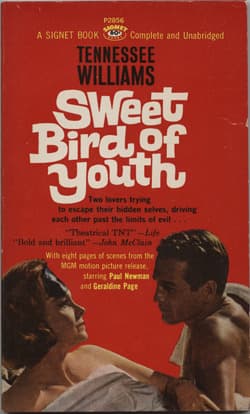
Synopsis
Covers the whole plot, including the ending.
- Difficulty
- Medium
- Pacing
- Moderate
- Mood
- Dark, Desperate, Melancholic, Intense
- Read it if
- You enjoy classic American plays, stories about faded glory and desperate ambition, or character studies of deeply flawed individuals grappling with their past.
- Skip it if
- You prefer lighthearted stories, happy endings, or are sensitive to themes of violence, manipulation, and despair.
Sweet Bird of Youth Plot Summary
Covers the whole plot, including the ending.
A Starlet's Descent and a Gigolo's Return
The play opens in a luxurious hotel room in St. Cloud, Florida. Chance Wayne, a handsome but aging gigolo, is traveling with Alexandra Del Lago, a once-famous movie star now dealing with alcoholism, drug addiction, and the reality of her fading career. Alexandra, using the name Princess Kosmonopolis, is on the run from a disastrous film comeback attempt, convinced she has made a terrible flop. Chance, who has been her lover and companion, has brought her to his hometown with a desperate plan: to use her influence and money to launch his own acting career and to reclaim his lost love, Heavenly Finley, daughter of the powerful Boss Finley. Alexandra is initially resistant to staying, wanting to escape her perceived failure, but Chance manipulates her into remaining.
A Desperate Plea and a Bitter Revelation
Chance, with a hopeful delusion, tries to contact Heavenly Finley. He speaks to Aunt Nonnie, Heavenly's aunt and his former caregiver. Aunt Nonnie reveals that Heavenly has undergone a hysterectomy because of a venereal disease Chance unknowingly transmitted to her years ago. This news shatters Chance's romanticized image of their past and his future with Heavenly. Aunt Nonnie also warns him about Boss Finley, Heavenly's father, who has vowed revenge on Chance for corrupting his daughter and for his past actions in town. Chance is shaken but still clings to a desperate hope, trying to downplay the severity of the news to himself and Alexandra.
Alexandra's Awakening and Chance's Delusion
While Chance is preoccupied with Heavenly, Alexandra receives a phone call that changes everything. Her agent, George Scudder, informs her that her latest film, which she believed was a catastrophic failure, is a huge success. This news revitalizes Alexandra, restoring her confidence and sense of self-worth. She quickly sheds her 'Princess Kosmonopolis' persona, eager to return to Hollywood and reclaim her career. With her newfound power, she sees Chance for what he is: a washed-up gigolo clinging to a past that no longer exists. She is now less willing to indulge his fantasies or finance his acting ambitions, though she still feels some pity for him.
Boss Finley's Political Rally and Threat
Boss Finley, a powerful, corrupt, and racist politician, holds a rally in St. Cloud. He uses the platform to express hateful rhetoric, appealing to the prejudices of the crowd. During the rally, he publicly denounces Chance Wayne, accusing him of corrupting his daughter, Heavenly, and of being a 'degenerate.' Finley makes thinly veiled threats against Chance, promising violent retribution. His son, Tom Jr., and his henchman, Scotty, are present, reinforcing the danger Chance is in. The rally shows the oppressive and conservative atmosphere of St. Cloud, a contrast to the glamorous world Chance wants.
Heavenly's Confession and Despair
Heavenly Finley, pale and fragile, appears in Chance's hotel room. She confirms the tragic details of her hysterectomy, her voice filled with bitterness and a lingering, desperate love for Chance. She confesses that her father, Boss Finley, forced her to undergo the operation after blaming Chance for her illness. Heavenly expresses her deep unhappiness and the impact of Chance's abandonment on her life. Despite her suffering, she cannot entirely sever her emotional ties to him, creating a complex dynamic of love, resentment, and shared despair. Her presence shows the irreversible damage caused by their past relationship.
Chance's Failed Escape and Final Decision
As the situation grows more serious, Chance tries to flee St. Cloud. He tries to get money from Alexandra, but she, now rejuvenated by her success, is less inclined to help him escape the consequences of his actions. She offers him a way out, but it involves him leaving St. Cloud immediately and permanently. Chance, however, is too caught in his delusions and his desire to see Heavenly one last time. His efforts to leave are blocked by Boss Finley's men, who are looking for him. Trapped and out of options, Chance realizes his escape is futile and begins to accept his impending fate.
Alexandra's Departure and Chance's Sacrifice
Alexandra Del Lago, having regained her status and power, prepares to leave St. Cloud for New York and her return to Hollywood. She makes a final offer to Chance: to take him with her as her kept man, acknowledging his beauty but also his limitations. Chance, however, refuses. He has made a decision, influenced by his conversation with Heavenly and a growing sense of responsibility. He chooses to stay and face Boss Finley's men, accepting the brutal punishment that awaits him as a form of penance for the harm he inflicted upon Heavenly and for his own wasted life. Alexandra departs, leaving Chance alone to confront his destiny.
The Confrontation and the Unseen Violence
In the play's climax, Chance Wayne is left in his hotel room, awaiting Boss Finley's henchmen. He knows what is coming: castration, a brutal act of vengeance for his actions against Heavenly. He delivers a final, desperate monologue, reflecting on his wasted youth, his lost dreams, and the destructive nature of time. He removes his shirt, symbolically baring himself for the impending violence. The stage directions indicate that the men arrive, but the actual act of violence is not shown. The audience is left to imagine the horror, emphasizing the irreversible consequences of Chance's choices and the cruelty of the world he inhabits.
Sweet Bird of Youth Characters
Chance Wayne
Protagonist
A handsome, aging gigolo and failed actor haunted by his past.
Chance Wayne is a once-promising young man from St. Cloud, Florida, who left his hometown to pursue an acting career, only to become a kept man for older, wealthy women. He is handsome but deeply insecure, clinging to the illusion of his youth and a romanticized past with Heavenly Finley. He is a dreamer, but his dreams are tainted by self-delusion, opportunism, and a fundamental weakness of character. He uses people, particularly women, to further his own ambitions, but ultimately lacks the talent and discipline to succeed. His journey in the play is one of a desperate return, a confrontation with his past, and a final, tragic acceptance of his fate.
Relationships: Alexandra Del Lago (lover, companion, benefactor); Heavenly Finley (lost love, victim of his past actions); Boss Finley (antagonist, vengeful father)
Alexandra Del Lago (Princess Kosmonopolis)
Supporting
A faded movie star battling addiction and the fear of irrelevance.
Alexandra Del Lago is a once-revered Hollywood actress now in her fifties, grappling with the decline of her career, drug addiction, and severe anxiety. She travels under the pseudonym 'Princess Kosmonopolis,' a persona she adopts to cope with her perceived failure. She is intelligent, cynical, and deeply vulnerable, but also possesses a fierce will to survive. Her relationship with Chance is transactional; she uses him for comfort and validation, while he uses her for money and influence. Her character arc is one of reawakening and reclaiming her power when she discovers her latest film is a success, shedding her 'Princess' facade and confronting the realities of her life.
Relationships: Chance Wayne (lover, companion, ultimately discarded); George Scudder (agent)
Boss Finley
Antagonist
A powerful, corrupt, and racist politician seeking revenge on Chance Wayne.
Boss Finley is the ruthless and demagogic political boss of St. Cloud, Florida. He is a symbol of the Old South's prejudices and moral hypocrisy, using his power to control his family and his community. He is fiercely protective of his daughter, Heavenly, viewing her as his property, and is consumed by a desire for vengeance against Chance Wayne, whom he blames for Heavenly's illness and his family's dishonor. Finley uses his political rallies to whip up fear and hatred, embodying the oppressive forces that trap Chance and Heavenly. He represents the destructive consequences of unchecked power and moral corruption.
Relationships: Heavenly Finley (daughter, controlled and manipulated); Tom Finley Jr. (son, enforcer); Chance Wayne (object of his hatred and vengeance)
Heavenly Finley
Supporting
Chance Wayne's former lover, deeply scarred by his abandonment and her father's cruelty.
Heavenly Finley is Boss Finley's daughter and Chance Wayne's idealized lost love. She is fragile, beautiful, and deeply damaged, having undergone a forced hysterectomy due to a venereal disease contracted from Chance. She embodies the tragic consequences of Chance's reckless actions and her father's oppressive control. Heavenly is torn between a lingering, desperate love for Chance and a bitter resentment for the suffering he caused her. Her appearance in the play reveals the stark reality of Chance's past and shatters his illusions, showing the irreversible harm inflicted upon her. She represents lost innocence and the crushing weight of societal judgment.
Relationships: Chance Wayne (former lover, source of both love and pain); Boss Finley (father, oppressor); Aunt Nonnie (aunt, caregiver)
Tom Finley Jr.
Supporting
Boss Finley's thuggish son, eager to carry out his father's violent commands.
Tom Finley Jr. is Boss Finley's crude and violent son, serving as his father's enforcer. He is a brutish and unthinking character, completely subservient to his father's will and eager to participate in the violence against Chance Wayne. He embodies the aggressive, uncultured aspect of the Finley family's power. Tom Jr. has no discernible independent motivation beyond pleasing his father and upholding the family's brutal code of honor. He is a constant physical threat to Chance, representing the immediate danger and the raw, unrefined cruelty of St. Cloud's power structure.
Relationships: Boss Finley (father, master); Chance Wayne (target of his violence)
Aunt Nonnie
Supporting
Heavenly's aunt and Chance's former caregiver, who reveals painful truths.
Aunt Nonnie is Heavenly Finley's aunt and was Chance Wayne's caregiver during his youth. She is a compassionate but weary woman who serves as a voice of truth and a link to the past. It is Aunt Nonnie who reveals the devastating news of Heavenly's hysterectomy to Chance, shattering his illusions. She cares deeply for Heavenly and still holds a residual affection for Chance, despite his flaws. She represents the quiet suffering and moral conscience within the Finley household, acting as a messenger of the painful realities that Chance has tried to escape.
Relationships: Heavenly Finley (niece, cared for); Chance Wayne (former charge, object of concern); Boss Finley (brother-in-law)
George Scudder
Mentioned
Alexandra Del Lago's agent, who delivers the news of her film's success.
George Scudder is Alexandra Del Lago's agent. Although he never appears onstage, his phone call is a pivotal moment in the play, as he informs Alexandra that her film is a smash hit, not a flop as she believed. This news instantly transforms Alexandra's mental state, restoring her confidence and driving her decision to return to Hollywood. Scudder represents the external, objective reality of the entertainment industry, contrasting sharply with Alexandra's subjective fears and Chance's delusional aspirations.
Relationships: Alexandra Del Lago (agent-client)
Scotty
Supporting
One of Boss Finley's enforcers.
Scotty is one of Boss Finley's henchmen, often seen with Tom Finley Jr. He is a menacing, silent presence, representing the physical threat that Boss Finley wields. Like Tom Jr., he is a tool of Finley's power and is present at the rally and later involved in the search for Chance. His role is to amplify the atmosphere of danger and to physically carry out Finley's violent commands, underscoring the brutal reality of St. Cloud's power dynamics.
Relationships: Boss Finley (employer); Tom Finley Jr. (associate)
Sweet Bird of Youth Themes
The Illusion of Youth and Lost Dreams
The play explores the destructive nature of clinging to past glories and the futility of escaping time. Chance Wayne is an example, obsessed with his youthful beauty and a romanticized past with Heavenly, ignoring his current reality as a failed actor and gigolo. Alexandra Del Lago also deals with this, initially believing her career is over and her beauty faded. Both characters confront the truth that youth is fleeting and dreams, if not actively pursued, can become self-delusion. Chance's ultimate self-sacrifice is a final, desperate attempt to reclaim meaning from his wasted life.
“'Time is the only enemy... We're always running away from it, and it always catches us.'”
Corruption and Hypocrisy
Tennessee Williams exposes the corruption and moral hypocrisy in the American South, particularly through Boss Finley. Finley, a self-proclaimed man of God and a political leader, preaches racial hatred and moral rectitude while orchestrating violence and controlling his family through fear. His public image hides his brutal, private actions, such as forcing Heavenly's hysterectomy. This theme shows how power can be used to enforce a twisted moral code, destroying individual lives while claiming to uphold societal values. St. Cloud is a symbol of this moral decay.
“'I'm a man of God! I'm a consecrated Christian and a consecrated public servant!'”
Sexual Exploitation and Gender Roles
The play portrays the exploitation of both men and women for sexual and financial gain, and the restrictive gender roles of the era. Chance Wayne, as a gigolo, exploits older women like Alexandra for money and connections, while also being exploited for his youth and beauty. Heavenly Finley is a victim of both Chance's recklessness and her father's control; her body is a battleground for male honor. Women in the play are often seen as objects to be controlled, protected, or used, showing a society where female agency is limited. The tragic consequences of these dynamics, for Heavenly, are central to the play's emotional impact.
“'I don't ask you to love me, Princess. I just ask you to let me be with you.'”
The Price of the Past
The past weighs heavily on every character, dictating their present circumstances and future prospects. Chance Wayne's past actions with Heavenly, his abandonment, and the venereal disease he transmitted, directly lead to her suffering and Boss Finley's vengeful pursuit. Alexandra Del Lago's past failures and successes in Hollywood define her identity and anxieties. The play shows that one cannot truly escape the consequences of their history, especially when those actions have caused harm to others. The inability to move on from the past, whether through regret or obsession, leads to tragic outcomes for many characters.
“'The past is not a package you can put away.'”
Plot Devices & Literary Techniques
Symbolism of Time and Clocks
Represents the relentless march of age and the dwindling opportunities for characters.
Throughout the play, references to time, clocks, and the aging process are prevalent, particularly for Chance and Alexandra. Chance is acutely aware of his fading youth and the ticking clock on his acting aspirations, while Alexandra constantly battles the fear of irrelevance due to her age. The 'sweet bird of youth' itself is a metaphor for fleeting beauty and opportunity. This pervasive symbolism underscores the characters' desperation to either halt or reverse time, ultimately highlighting its unstoppable and destructive power, especially for those whose identities are tied to their physical appearance or past glories.
The 'Princess Kosmonopolis' Persona
An alter ego used by Alexandra Del Lago to cope with her perceived failure and identity crisis.
Alexandra Del Lago adopts the false identity of 'Princess Kosmonopolis' as a psychological defense mechanism. This persona allows her to distance herself from her perceived professional failure and personal despair. It is a fabricated reality, a shield against the harsh truths of her life. The shedding of this persona, when she learns of her film's success, signifies her reclaiming of her true identity and power, demonstrating the psychological impact of fame and the fragility of self-worth in the entertainment industry. It highlights the theme of illusion versus reality.
Offstage Violence and Foreshadowing
Builds suspense and emphasizes the brutal, unseen consequences of the characters' actions.
Tennessee Williams frequently uses offstage violence and heavy foreshadowing to create a sense of impending doom. Boss Finley's threats against Chance are made publicly, and the audience is made aware of the specific, brutal punishment awaiting him. The actual act of castration is never shown onstage, but the anticipation and the implied horror are far more impactful. This technique heightens the psychological tension, allowing the audience to imagine the brutality, and emphasizes the irreversible nature of the consequences without explicitly depicting graphic acts, making the ending more chilling and profound.
The Southern Gothic Setting
Creates an atmosphere of decay, violence, and moral corruption in St. Cloud, Florida.
The setting of St. Cloud, Florida, functions as a classic Southern Gothic environment. It is a place of faded grandeur, moral decay, and simmering violence, dominated by the corrupt figure of Boss Finley. The oppressive heat, the underlying racism, and the grotesque elements of retribution (like the threat of castration) are all hallmarks of this genre. The setting is not merely a backdrop but an active force, contributing to the characters' entrapment and illustrating the societal pressures and hypocrisies that ultimately destroy them. It enhances the themes of corruption and the inescapable past.
Sweet Bird of Youth Quotes
“Time is the longest distance between two places.”
“I don't ask for your pity, but just for your understanding—not even that—no. Just for your recognition of me in you, and the enemy, time, in us all.”
“The human animal is a beast that dies and if he's got money he buys and buys and buys and I think the reason he buys everything he can buy is that in the back of his mind he has the crazy hope that one of his purchases will be life everlasting!”
“We're all of us sentenced to solitary confinement inside our own skins, for life!”
“I've been to the top and I've been to the bottom, and believe me, the bottom is better.”
“You see, I don't have a home. I have a place to stay.”
“The only thing worse than a liar is a liar that's also a hypocrite!”
“I'm not a young man anymore, but I'm not an old one either. I'm in that no-man's-land between the two.”
“Life is all memory, except for the one present moment that goes by you so quick you hardly catch it going.”
“I've always depended on the kindness of strangers.”
“The world is a violent and cruel place, and the only way to survive in it is to be violent and cruel yourself.”
“You can't beat time, but you can beat the clock if you try.”
“I'm not a has-been. I'm a will-be.”
“The past is the present, isn't it? It's the future, too.”
Quiz
10 questions on the plot and the characters. Each answer comes with a short explanation.
Question 1
What is the primary reason Chance Wayne returns to his hometown of St. Cloud?
- To start a new business venture
- To reunite with his childhood sweetheart, Heavenly Finley
- To escape legal troubles in another state
- To attend a family funeral
Show answer
B. To reunite with his childhood sweetheart, Heavenly Finley Chance returns to St. Cloud primarily to reconnect with Heavenly Finley, his former love, whom he left years earlier. His obsession with her drives much of the plot, despite the dangers posed by her powerful father, Boss Finley.
Question 2
Who is Alexandra Del Lago, and what is her relationship to Chance?
- A wealthy heiress who hires Chance as a bodyguard
- A fading movie actress who travels with Chance as his companion
- Chance's estranged mother who disowned him
- A local journalist investigating Chance's past
Show answer
B. A fading movie actress who travels with Chance as his companion Alexandra Del Lago is an aging Hollywood actress who accompanies Chance to St. Cloud. She relies on him for companionship and support, while he uses her fame and resources in his quest to win back Heavenly.
Question 3
What tragic event from the past haunts Chance's relationship with Heavenly?
- Chance accidentally caused Heavenly's brother's death
- Chance gave Heavenly a sexually transmitted disease that left her infertile
- Chance stole money from Heavenly's family
- Chance publicly humiliated Heavenly at a town event
Show answer
B. Chance gave Heavenly a sexually transmitted disease that left her infertile Chance infected Heavenly with a venereal disease years earlier, which resulted in a hysterectomy and left her unable to have children. This act fuels Boss Finley's hatred and desire for revenge against Chance.
Question 4
What is Boss Finley's primary motivation for opposing Chance?
- He believes Chance is a threat to his political career
- He wants to protect Heavenly from further harm and uphold family honor
- He owes money to Chance and fears exposure
- He is jealous of Chance's relationship with Alexandra
Show answer
B. He wants to protect Heavenly from further harm and uphold family honor Boss Finley is driven by a desire to shield Heavenly from Chance, whom he blames for ruining her life and tarnishing the family's reputation. His political power allows him to orchestrate violence against Chance.
Question 5
How does the play explore the theme of the 'sweet bird of youth'?
- As a literal bird that symbolizes freedom in the town
- As the fleeting nature of youth, beauty, and opportunity
- As a nickname for Heavenly's pet canary
- As a metaphor for political corruption in the South
Show answer
B. As the fleeting nature of youth, beauty, and opportunity The title refers to the transient quality of youth and its associated dreams. Characters like Chance and Alexandra cling to past glories, highlighting how time erodes beauty and chances for happiness.
Question 6
What violent act does Boss Finley's son, Tom Junior, commit against Chance?
- He poisons Chance's drink at a bar
- He orchestrates a castration as revenge for Heavenly
- He shoots Chance in a duel
- He burns down Chance's family home
Show answer
B. He orchestrates a castration as revenge for Heavenly Tom Junior, under Boss Finley's orders, leads a group that castrates Chance at the end of the play. This brutal act symbolizes the destruction of Chance's masculinity and future, driven by the family's vengeance.
Question 7
Why does Alexandra Del Lago initially believe her career has ended?
- She lost her voice in a stage accident
- She thinks her latest film was a critical failure
- She was blacklisted for political reasons
- She suffered a nervous breakdown during a performance
Show answer
B. She thinks her latest film was a critical failure Alexandra flees Hollywood after what she believes is a disastrous film premiere, convinced her star has faded. Later, she discovers the film was actually a success, but this revelation comes too late to change her desperate state.
Question 8
What symbolic role does the 'heavenly' name play in the story?
- It represents the purity and innocence that Chance has corrupted
- It refers to a religious revival in St. Cloud
- It is the title of Boss Finley's political campaign
- It describes the weather on the day Chance returns
Show answer
A. It represents the purity and innocence that Chance has corrupted Heavenly's name contrasts with the grim reality of her life—she is no longer 'heavenly' due to the disease and trauma inflicted by Chance. It underscores themes of lost innocence and the gap between ideal and real.
Question 9
How does Chance attempt to regain his status in St. Cloud?
- By bribing local officials with money from Alexandra
- By leveraging Alexandra's fame to impress people and win back Heavenly
- By starting a smear campaign against Boss Finley
- By marrying a wealthy local widow
Show answer
B. By leveraging Alexandra's fame to impress people and win back Heavenly Chance uses Alexandra's celebrity as a tool to gain attention and credibility in St. Cloud, hoping this will help him reconnect with Heavenly and restore his former social standing.
Question 10
What is the significance of the play's setting in the American South?
- It highlights themes of racial tension, though not central to the plot
- It emphasizes decay, tradition, and the oppressive power of patriarchal figures
- It provides a backdrop for musical numbers in the play
- It allows for comedic relief through Southern dialects
Show answer
B. It emphasizes decay, tradition, and the oppressive power of patriarchal figures The Southern setting reinforces the play's themes of societal decay, rigid social hierarchies, and the destructive influence of figures like Boss Finley, who wield power through tradition and violence.
Sweet Bird of Youth FAQ
What is 'Sweet Bird of Youth' about?
The play follows Chance Wayne, a drifter who returns to his hometown of St. Cloud, Florida, with aging movie star Alexandra Del Lago. He seeks to reunite with his childhood sweetheart, Heavenly Finley, but faces violent opposition from her father, Boss Finley, a corrupt political boss who blames Chance for Heavenly's past trauma.
Why should I read 'Sweet Bird of Youth'?
It's a powerful exploration of aging, lost youth, and the American Dream's corruption, blending Southern Gothic drama with sharp social commentary. Williams' poetic dialogue and complex characters, like Chance's desperate ambition and Alexandra's fading glamour, create a haunting, emotionally charged narrative.
What is the background/setting of 'Sweet Bird of Youth'?
Set in the 1950s in St. Cloud, Florida, a small Southern town dominated by Boss Finley's political machine. The setting reflects themes of decay and nostalgia, with the Gulf Coast's faded glamour mirroring the characters' lost dreams and societal corruption.
What are the most memorable quotes?
Key quotes include Chance's line, 'I don't ask for your pity, but just for your understanding,' and Alexandra's reflection, 'The human heart is the most deceitful of all things and desperately wicked.' These capture the play's themes of desperation and moral ambiguity.
What writing style does Tennessee Williams use?
Williams employs a lyrical, poetic Southern Gothic style with rich symbolism and emotional intensity. His dialogue blends realism with poetic flourishes, using motifs like birds and the sea to underscore themes of fleeting youth and inevitable decay.
What minor details add significant meaning?
The recurring motif of birds, such as the 'sweet bird' symbolizing lost innocence and youth, subtly reinforces the play's themes. Chance's constant references to his past as a local football hero highlight how he clings to faded glory, deepening his tragic arc.
What are some subtle foreshadowing moments?
Early mentions of Boss Finley's violent tendencies and Chance's reckless behavior foreshadow the brutal climax. For example, Heavenly's brother Tom's threats and the town's gossip about past events hint at the inevitable confrontation and Chance's downfall.
What unexpected character connections exist?
Alexandra Del Lago and Heavenly Finley are indirectly connected through Chance: Alexandra represents the corrupted dream of fame Chance pursues, while Heavenly symbolizes the pure youth he lost. This triangle underscores the play's contrast between illusion and reality.
What are unspoken character motivations?
Chance is driven by a deep-seated fear of obscurity and a need to reclaim his past glory, not just love for Heavenly. Boss Finley's opposition stems from protecting his political image and control over the town, masking his own corruption and guilt over Heavenly's suffering.
What psychological complexities do characters exhibit?
Chance displays narcissism and denial, clinging to youthful fantasies despite reality. Alexandra grapples with addiction and self-loathing as her fame fades. Heavenly shows trauma and passivity, caught between her father's dominance and Chance's illusions.
What are the major emotional turning points?
Key moments include Alexandra's realization that her comeback has failed, leading to a breakdown; Chance's confrontation with Boss Finley, where his hopes are shattered; and the violent climax where Chance is castrated, symbolizing his ultimate loss of youth and power.
How do relationship dynamics evolve?
Chance and Alexandra's relationship shifts from mutual exploitation to a fragile bond of shared desperation. Chance's obsession with Heavenly deteriorates into tragic futility as her family's hostility intensifies, culminating in a breakdown of all connections.
Which parts remain ambiguous or open-ended?
The fate of Heavenly after Chance's castration is left unclear, as is whether Alexandra will recover from her despair. The play's ending leaves Chance broken but alive, inviting debate over whether he finds redemption or remains trapped in his illusions.
What are controversial scenes or decisions?
Chance's castration by Boss Finley's men is highly controversial, symbolizing brutal punishment and loss of masculinity. Critics debate its necessity, with some viewing it as a powerful critique of violence, while others see it as overly graphic or symbolic excess.
'Sweet Bird of Youth' ending explained: how it ends & what it means
The play ends with Chance physically and emotionally broken after being castrated, while Alexandra leaves in despair. It symbolizes the destruction of youthful dreams and the harsh reality of time's passage, suggesting that clinging to the past leads to ruin in a corrupt world.
About the author
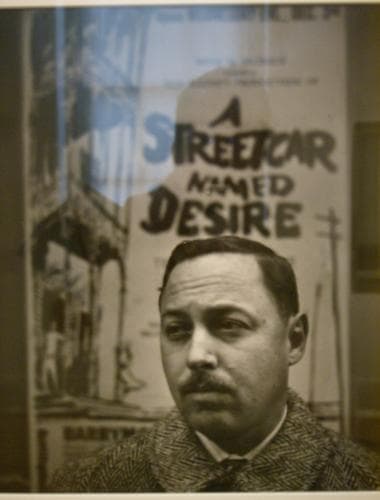
Thomas Lanier Williams III, known by his pen name Tennessee Williams, was an American playwright and screenwriter. Along with contemporaries Eugene O'Neill and Arthur Miller, he is considered among the three foremost playwrights of 20th-century American drama.
Similar books
- A Streetcar Named Desire
Tennessee Williams
4.0 (261k) average on GoodreadsFictionExplores similar themes of fading beauty, southern decay, and psychological fragility with intense character drama.
- Death of a Salesman
Arthur Miller
3.5 (186k) average on GoodreadsFictionA poignant play about the American dream gone awry, focusing on a man's desperate clinging to past glory and his ultimate self-destruction.
- Nineteen Eighty-Four
George Orwell
4.2 (5.5M) average on GoodreadsFictionWinston Smith dreams of truth and rebellion in a world where Big Brother watches all, but he confronts the terrifying power of a regime that controls not just actions, but thoughts.
- The Frozen River
Ariel Lawhon
4.4 (600k) average on GoodreadsFictionIn 1789 Maine, a heroic midwife's diary helps her expose a murder and get justice in a town that wants to silence her.
- A Man Called Ove
Fredrik Backman
4.4 (569k) average on GoodreadsFictionA stubborn widower, who lives by strict rules, finds his quiet world changed by a lively new family next door, making him face his past and find happiness in human connection.
- The Art of Racing in the Rain
Garth Stein
4.2 (452k) average on GoodreadsFictionThrough the eyes of Enzo, a wise and observant dog, a race car driver's family navigates a journey of love, loss, and resilience, learning that life's most important lessons often come in the curves, not just on the straightaways.




Enjoyed the summary?
A summary gives you the shape of the book. The book itself has the detail, the examples and the voice.
Find Sweet Bird of Youth on AmazonAs an Amazon Associate, BookBrief earns from qualifying purchases. How we're funded