“It has always seemed to me that a truly honest man, like a truly honest woman, is a charmingly naive creature.”
— Reflecting on the nature of honesty in people.


John Steinbeck (1954)
Goodreads Rating
4.10/ 5(13,051 reviews)
Summary Read
13 min
Book Length
250 min
Sign in to track this book
In Monterey's bohemian back alleys, outcasts and dreamers navigate love and longing, hoping for 'Sweet Thursday' after life's inevitable 'Lousy Wednesdays'.
Ask anything about Sweet Thursday and get instant answers grounded in the summary.
Doc, a marine biologist, returns to his lab on Cannery Row after serving in World War II. He finds the Row mostly empty and his friends scattered. Mack and the boys, his loyal but often troublesome companions, have moved into his lab, much to his frustration. The Palace Flophouse, their usual home, is in disrepair. Doc feels sad and unable to create, struggling to find joy in his scientific work or his life. He wants something new, a spark to renew his passion, but does not know what that might be. The familiar sights and sounds of the Row offer little comfort in his current state of emptiness.
The local brothel, the Bear Flag Restaurant, has a new madam named Fauna. She is practical and ambitious, determined to improve the establishment's reputation and finances. Fauna introduces new rules and aims to create a more 'refined' atmosphere, much to the amusement and occasional annoyance of the Row's regulars. Suzy, a young, naive, and somewhat troubled girl, arrives at the Bear Flag, looking for work. Fauna sees potential in Suzy but also recognizes her vulnerability. Fauna's arrival brings a new energy to the Row, as her business sense and strict rules clash with the Row's traditional free-spirited nature.
Doc continues to struggle with his post-war sadness and a feeling of emptiness. His scientific work seems meaningless, and he cannot bring himself to write the book he has planned. He finds himself drawn to the Bear Flag, not for its services, but for the company and observation it offers. Meanwhile, Suzy tries to adapt to her new life. She is good-hearted but often clumsy and insecure, struggling with her past and her place in the world. She finds herself drawn to Doc, sensing a shared loneliness and a kindness beneath his rough exterior. Their paths begin to cross, subtly at first.
Concerned by Doc's sadness, Mack and the boys (Hazel, Whitey, and Eddie) decide they must do something to 'save' him. Their efforts are well-intentioned but often comically bad. They believe Doc needs a woman to bring back his spirit, and their clumsy attempts to set him up with various women on the Row only add to his irritation. They also try to get him to work on his book, but their methods are more distracting than helpful. Their schemes show their deep affection for Doc, even if their execution leaves much to be desired, often creating more chaos than order in Doc's already troubled life.
Mack and the boys decide a big party is the perfect solution for Doc's sadness. They carefully plan a surprise party, gathering food, drink, and entertainment from various sources, often through questionable means. The party, held at Doc's lab, quickly becomes a chaotic but good-natured event. Doc, initially resistant, finds himself reluctantly enjoying the company, despite the damage to his lab. The party brings together many of the Row's eccentric inhabitants, showing the unique community spirit and the boys' strong loyalty to Doc, even if it means a significant mess for him to clean up afterward.
Feeling increasingly out of place and misunderstood, Suzy decides to leave the Bear Flag. She packs her few belongings and sets out on her own, aiming for a new beginning. Her departure deeply affects Doc, who, in her absence, finally recognizes the strong connection he feels for her. Her quiet strength and vulnerability have awakened something within him that he had not realized was missing. He feels a sudden, urgent need to find her, realizing that she might be the 'something new' he has been searching for, the reason for his return to life and purpose.
Doc, now fully aware of his feelings, asks Mack and the boys to help him find Suzy. They search the Row and the surrounding areas, asking questions and following leads. Their search shows their shared dedication and unspoken bond. Even Fauna, despite her initial reservations about Suzy, offers her help, recognizing the genuine affection Doc holds for the young woman. The search has minor mishaps and typical Cannery Row detours, but their combined determination to reunite Doc with Suzy shows the deep affection and community spirit present on the Row.
In their desperation, Mack and the boys decide to consult the local 'oracle,' an old, reclusive woman named Joseph and Mary who lives in a shack near the ocean. She is known for her mysterious statements and her connection to the spiritual side of the Row. The boys approach her with a mix of awe and skepticism, hoping she can provide a clear path to Suzy. Her advice is, as expected, enigmatic and symbolic, but it gives them a renewed sense of purpose and direction, even if they do not fully understand it. Her guidance, however unclear, helps to energize their efforts and reinforce their belief in their mission.
Doc eventually finds Suzy staying in a broken-down boat, feeling lost and alone. Their reunion is tender and touching. Doc expresses his feelings for her, acknowledging his own emotional struggles and the comfort she brings him. Suzy, initially hesitant, accepts his sincerity. Their reconciliation is not a grand romantic gesture but a quiet understanding, a recognition of shared loneliness and a mutual need for companionship. They decide to face the future together, marking a turning point for both characters and for the atmosphere of Cannery Row itself, offering hope and renewed purpose.
With Suzy by his side, Doc finds his creative spark returning. He is able to begin writing his book, his scientific work reignited by the presence of love and companionship. Suzy, no longer lost, finds a sense of belonging and purpose with Doc. The Row, while still maintaining its eccentric charm, settles into a new rhythm. Mack and the boys are content seeing Doc happy, their mission accomplished. The novel ends with a sense of gentle optimism, suggesting that even in the most unconventional places, love and connection can bring profound change and a renewed sense of life's possibilities.
The Protagonist
Doc transitions from a state of post-war despair and creative paralysis to finding renewed purpose and love through his relationship with Suzy.
The Protagonist/Love Interest
Suzy evolves from a lost and insecure girl seeking refuge to finding self-worth and a loving partnership with Doc.
The Supporting
Mack remains consistently loyal and committed to Doc's well-being, finding satisfaction in helping his friend.
The Supporting
Fauna establishes herself as a capable and influential figure on the Row, maintaining her pragmatic approach while showing a softer side.
The Supporting
Hazel remains a consistent, loyal, and good-hearted member of Mack's group.
The Mentioned/Supporting
Joseph and Mary serves as a static, symbolic figure, offering cryptic guidance rather than undergoing personal development.
The main theme is Doc's post-war sadness and his struggle to find meaning in his scientific work and life. He feels an emptiness that his intellect alone cannot fix. Suzy's own search for a place where she belongs and is valued mirrors this theme. The eccentric residents of Cannery Row, in their own way, find purpose in their loyalty to Doc, even if their methods are unusual. Ultimately, Doc finds his purpose not in grand scientific discoveries, but in the simple, deep connection with another person, suggesting that meaning can often be found in unexpected places and relationships.
“''He was not a man who could be happy without a purpose, and his purpose had gone out of him.''”
Despite their unconventional lives, the residents of Cannery Row show a deep sense of community and strong loyalty, especially towards Doc. Mack and the boys' elaborate, often misguided, plans to 'save' Doc are driven purely by their affection and concern for him. They pool their meager resources and energy to throw him parties, find him a woman, and ultimately help him find Suzy. This theme shows that even in a place considered to be on the edges of society, strong bonds of friendship and community support can thrive, helping to combat individual loneliness and despair. Their loyalty to Doc drives much of the story.
“''It was a community of the lost, but they were lost together, and in that, there was a kind of salvation.''”
The power of love to transform is a key theme, especially for Doc and Suzy. Doc's intellectual pursuits and scientific work do not relieve his deep sadness; he only begins to heal and regain his enthusiasm for life and work through his connection with Suzy. Suzy, in turn, finds a sense of belonging, self-worth, and stability in Doc's affection, escaping her past vulnerabilities. Their relationship shows that emotional connection and genuine human intimacy can be a strong force for redemption, capable of pulling people out of despair and providing a new foundation for meaning and happiness. Their love is not idealized but practical and deeply felt.
“''He had found his reason, not in the sea, but in the warm, clumsy, loving presence of a girl.''”
The novel explores different aspects of happiness, suggesting it is not found in conventional success or material wealth. Doc's intelligence does not bring him joy, while Mack and the boys, despite their poverty, find contentment in their simple lives and their strong loyalty to Doc. Fauna seeks happiness through order and business success, while Suzy initially just wants acceptance. The book ultimately suggests that true happiness often comes from connection, purpose, and accepting life's imperfections, rather than seeking an idealized existence. It is about finding joy in the small, often messy, moments of life.
“''Happiness is a funny thing. It comes on you suddenly, and goes away just as suddenly. It's a road you don't know where it's going.''”
A mysterious figure who provides cryptic guidance and foreshadowing.
Joseph and Mary serves as a mystical plot device, offering enigmatic prophecies and advice to Mack and the boys. Her pronouncements, while not directly revealing plot points, provide a sense of destiny and reinforce the slightly surreal, whimsical atmosphere of Cannery Row. She helps to guide the characters' actions, even if her words are open to interpretation, and adds a layer of folkloric wisdom to the narrative, suggesting that there are forces beyond the purely rational at play in their lives. Her presence underscores the unique blend of the mundane and the magical on the Row.
A central gathering place symbolizing community and unconventional living.
The Palace Flophouse, the dilapidated residence of Mack and the boys, acts as a symbolic hub for the Row's unconventional community. It's a place of camaraderie, shared poverty, and endless plotting. As a plot device, it facilitates the boys' collaborative efforts to help Doc, serving as the brainstorming center for their various schemes. Its dilapidated state reflects the characters' rejection of societal norms, while its function as a home underscores their deep-seated loyalty and interdependence. It's where the heart of their collective, well-meaning mischief resides.
A symbolic representation of Doc's mental state and creative block.
Doc's unfinished book on marine biology serves as a powerful symbol of his emotional and creative paralysis. His inability to work on it directly reflects his post-war disillusionment and lack of purpose. The book's progress (or lack thereof) is a barometer for Doc's mental state. As a plot device, the boys' attempts to get him to write it highlight their concern for him, even if their methods are counterproductive. When Doc finally begins to write again at the end of the novel, it signifies his emotional healing and renewed engagement with life, directly linked to his relationship with Suzy.
A setting that introduces new characters and challenges societal norms.
The Bear Flag Restaurant, the local brothel, is a crucial setting that introduces Fauna and Suzy, driving significant plot developments. It challenges conventional notions of morality and respectability, yet it operates with its own distinct set of rules and a surprising degree of community integration. As a plot device, it serves as the initial point of connection between Doc and Suzy, and Fauna's management style provides both conflict and opportunity within the Row's ecosystem. It's a place where societal outcasts find a form of belonging and economic survival.
“It has always seemed to me that a truly honest man, like a truly honest woman, is a charmingly naive creature.”
— Reflecting on the nature of honesty in people.
“The things we want are never the things we have.”
— A general observation on human desire and dissatisfaction.
“There are people who can't take a good thing. They think it's a trick.”
— Discussing characters' inability to accept happiness or good fortune.
“Doc knew that the world was a great big place, and that there were no answers, only choices.”
— Doc's philosophical outlook on life's complexities.
“A man's got to do what a man's got to do, even if it's crazy.”
— The sentiment driving some of the characters' more unusual actions.
“It takes a very strong man to be a failure.”
— A paradoxical thought about resilience in the face of defeat.
“There isn't a man in the world who doesn't want to get rid of his loneliness.”
— Exploring the universal human desire for connection.
“The trouble with people is that they're too damn human.”
— A wry comment on the flaws and complexities of human beings.
“It's the nature of things for things to go wrong.”
— A fatalistic view on the inevitability of problems.
“Maybe a good man is a man who knows he's not good, and spends his whole life trying to be.”
— A definition of goodness based on self-awareness and effort.
“You can't have everything you want, but you can want everything you have.”
— A twist on contentment and appreciation.
“The things a man will do for a woman, and the things a woman will let him do for her.”
— Observing the dynamics of male-female relationships.
“Sometimes you just have to give up and let things happen.”
— A pragmatic approach to situations beyond one's control.
“It takes a little genius to be a good bum.”
— A humorous and insightful remark on the skill required for a life of leisure or unconventional living.
Ready to see how well you understood this book? Take our interactive quiz with 10 questions.
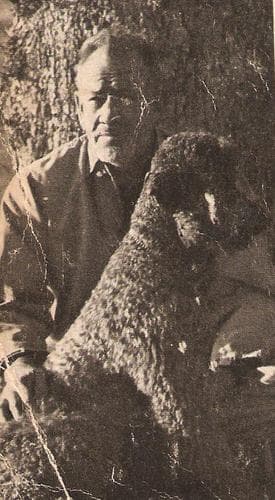
John Ernst Steinbeck was an American writer. He won the 1962 Nobel Prize in Literature "for his realistic and imaginative writings, combining as they do sympathetic humor and keen social perception". He has been called "a giant of American letters."
Support the author — grab the full book.
As an Amazon Associate, BookBrief earns from qualifying purchases, at no extra cost to you. How we're funded.