

Synopsis
Covers the whole plot, including the ending.
- Difficulty
- Easy
- Pacing
- Slow
- Mood
- Quirky, Melancholy, Humorous, Reflective, Warm
- Read it if
- You enjoy character-driven literary fiction with a focus on community, quirky characters, and a blend of humor and melancholy.
- Skip it if
- You prefer fast-paced plots, clear moral lines, or stories with high stakes and dramatic tension.
Sweet Thursday Plot Summary
Covers the whole plot, including the ending.
The Return to the Row
Doc, a marine biologist, returns to his lab on Cannery Row after serving in World War II. He finds the Row mostly empty and his friends scattered. Mack and the boys, his loyal but often troublesome companions, have moved into his lab, much to his frustration. The Palace Flophouse, their usual home, is in disrepair. Doc feels sad and unable to create, struggling to find joy in his scientific work or his life. He wants something new, a spark to renew his passion, but does not know what that might be. The familiar sights and sounds of the Row offer little comfort in his current state of emptiness.
Fauna's Grand Opening
The local brothel, the Bear Flag Restaurant, has a new madam named Fauna. She is practical and ambitious, determined to improve the establishment's reputation and finances. Fauna introduces new rules and aims to create a more 'refined' atmosphere, much to the amusement and occasional annoyance of the Row's regulars. Suzy, a young, naive, and somewhat troubled girl, arrives at the Bear Flag, looking for work. Fauna sees potential in Suzy but also recognizes her vulnerability. Fauna's arrival brings a new energy to the Row, as her business sense and strict rules clash with the Row's traditional free-spirited nature.
Doc's Despair and Suzy's Arrival
Doc continues to struggle with his post-war sadness and a feeling of emptiness. His scientific work seems meaningless, and he cannot bring himself to write the book he has planned. He finds himself drawn to the Bear Flag, not for its services, but for the company and observation it offers. Meanwhile, Suzy tries to adapt to her new life. She is good-hearted but often clumsy and insecure, struggling with her past and her place in the world. She finds herself drawn to Doc, sensing a shared loneliness and a kindness beneath his rough exterior. Their paths begin to cross, subtly at first.
The Plan to Save Doc
Concerned by Doc's sadness, Mack and the boys (Hazel, Whitey, and Eddie) decide they must do something to 'save' him. Their efforts are well-intentioned but often comically bad. They believe Doc needs a woman to bring back his spirit, and their clumsy attempts to set him up with various women on the Row only add to his irritation. They also try to get him to work on his book, but their methods are more distracting than helpful. Their schemes show their deep affection for Doc, even if their execution leaves much to be desired, often creating more chaos than order in Doc's already troubled life.
The Art of the Party
Mack and the boys decide a big party is the perfect solution for Doc's sadness. They carefully plan a surprise party, gathering food, drink, and entertainment from various sources, often through questionable means. The party, held at Doc's lab, quickly becomes a chaotic but good-natured event. Doc, initially resistant, finds himself reluctantly enjoying the company, despite the damage to his lab. The party brings together many of the Row's eccentric inhabitants, showing the unique community spirit and the boys' strong loyalty to Doc, even if it means a significant mess for him to clean up afterward.
Suzy's Departure and Doc's Realization
Feeling increasingly out of place and misunderstood, Suzy decides to leave the Bear Flag. She packs her few belongings and sets out on her own, aiming for a new beginning. Her departure deeply affects Doc, who, in her absence, finally recognizes the strong connection he feels for her. Her quiet strength and vulnerability have awakened something within him that he had not realized was missing. He feels a sudden, urgent need to find her, realizing that she might be the 'something new' he has been searching for, the reason for his return to life and purpose.
The Search for Suzy
Doc, now fully aware of his feelings, asks Mack and the boys to help him find Suzy. They search the Row and the surrounding areas, asking questions and following leads. Their search shows their shared dedication and unspoken bond. Even Fauna, despite her initial reservations about Suzy, offers her help, recognizing the genuine affection Doc holds for the young woman. The search has minor mishaps and typical Cannery Row detours, but their combined determination to reunite Doc with Suzy shows the deep affection and community spirit present on the Row.
The Intervention of the Oracle
In their desperation, Mack and the boys decide to consult the local 'oracle,' an old, reclusive woman named Joseph and Mary who lives in a shack near the ocean. She is known for her mysterious statements and her connection to the spiritual side of the Row. The boys approach her with a mix of awe and skepticism, hoping she can provide a clear path to Suzy. Her advice is, as expected, enigmatic and symbolic, but it gives them a renewed sense of purpose and direction, even if they do not fully understand it. Her guidance, however unclear, helps to energize their efforts and reinforce their belief in their mission.
The Reconciliation
Doc eventually finds Suzy staying in a broken-down boat, feeling lost and alone. Their reunion is tender and touching. Doc expresses his feelings for her, acknowledging his own emotional struggles and the comfort she brings him. Suzy, initially hesitant, accepts his sincerity. Their reconciliation is not a grand romantic gesture but a quiet understanding, a recognition of shared loneliness and a mutual need for companionship. They decide to face the future together, marking a turning point for both characters and for the atmosphere of Cannery Row itself, offering hope and renewed purpose.
A New Beginning
With Suzy by his side, Doc finds his creative spark returning. He is able to begin writing his book, his scientific work reignited by the presence of love and companionship. Suzy, no longer lost, finds a sense of belonging and purpose with Doc. The Row, while still maintaining its eccentric charm, settles into a new rhythm. Mack and the boys are content seeing Doc happy, their mission accomplished. The novel ends with a sense of gentle optimism, suggesting that even in the most unconventional places, love and connection can bring profound change and a renewed sense of life's possibilities.
Sweet Thursday Characters
Doc
Protagonist
A marine biologist struggling with post-war ennui and artistic block.
Doc is a highly intelligent and sensitive marine biologist who runs Western Biological Laboratories on Cannery Row. He is a respected figure among the Row's denizens, known for his scientific expertise, his kindness, and his quiet melancholy. After serving in World War II, Doc returns to the Row feeling disillusioned and suffering from a profound artistic and emotional block. He yearns for something to rekindle his passion for life and work but struggles to identify what that 'something' might be, often retreating into his scientific studies or silent contemplation.
Relationships: Mack and the boys (Deep, loyal friendship; they are Doc's devoted but often clumsy protectors.); Suzy (Love interest; she is the catalyst for his emotional and creative revival.); Fauna (Acquaintance; they share a mutual respect and understanding of the Row's dynamics.)
Suzy
Protagonist/Love Interest
A naive and vulnerable young woman seeking belonging and a new life.
Suzy is a young woman who arrives on Cannery Row seeking work at the Bear Flag Restaurant. She is described as clumsy, shy, and somewhat naive, with a troubled past that has left her feeling insecure and lost. Despite her circumstances, Suzy possesses an inner strength and a deep capacity for kindness. She struggles to find her place in the world and often feels misunderstood, but she yearns for genuine connection and a stable life. Her quiet presence and vulnerability are what ultimately draw Doc to her.
Relationships: Doc (Love interest; he provides her with stability and a sense of belonging.); Fauna (Employer and mentor; Fauna tries to guide Suzy but also pushes her towards independence.); Mack and the boys (Acquaintances; they are protective of her due to their loyalty to Doc.)
Mack
Supporting
The leader of the Palace Flophouse bums, fiercely loyal to Doc.
Mack is the unofficial leader of the group of bums living in the Palace Flophouse. He is a cunning, resourceful, and deeply philosophical character, despite his outward appearance as a vagrant. Mack possesses a profound understanding of human nature and a fierce, unwavering loyalty to Doc. He orchestrates many of the boys' schemes, always with the best intentions for Doc, even if their execution is often chaotic and unconventional. He represents the heart and soul of the Cannery Row community spirit.
Relationships: Doc (Deep, unwavering friendship; Doc is his primary concern and object of affection.); The boys (Hazel, Whitey, Eddie) (Leader and friend; they follow his lead and share his devotion to Doc.); Fauna (Acquaintance; they operate in separate spheres but respect each other's roles on the Row.)
Fauna
Supporting
The new, ambitious, and pragmatic madam of the Bear Flag Restaurant.
Fauna is the new madam of the Bear Flag Restaurant, the local brothel. She is a shrewd, intelligent, and business-minded woman who aims to elevate the establishment's reputation and profitability. Fauna is pragmatic and has a strong sense of order, contrasting with the general chaos of Cannery Row. She is kind but firm, seeing potential in Suzy and offering her guidance, though always with an eye on the bottom line. She represents a new, more organized force on the Row, bringing a touch of respectability to its edges.
Relationships: Suzy (Employer and mentor; she guides Suzy but also pushes her to take responsibility.); Doc (Acquaintance; she respects his intellect and empathizes with his struggles.); Mack and the boys (Acquaintances; she tolerates their antics but maintains her distance.)
Hazel
Supporting
One of Mack's boys, known for his unique name and simple nature.
Hazel is one of Mack's loyal companions, a large, simple-minded man. He received his unusual name because his mother wanted a daughter. Hazel is good-natured and follows Mack's lead without question, participating enthusiastically in all the schemes to help Doc. He often provides comic relief through his literal interpretations and straightforward observations. Despite his simplicity, he is fiercely devoted to Doc and contributes to the collective efforts to bring happiness back to his friend.
Relationships: Mack (Follower and friend; he is always part of Mack's plans.); Doc (Devoted friend; he participates in all efforts to help Doc.); Whitey and Eddie (Companions; they are part of the core group of bums.)
Joseph and Mary
Mentioned/Supporting
A reclusive, prophetic old woman consulted for guidance.
Joseph and Mary is an enigmatic, reclusive old woman who lives in a shack and is considered a local oracle or prophetess by the residents of Cannery Row. She speaks in cryptic, symbolic language and is believed to have a special connection to the spiritual or unseen forces of the world. Her pronouncements, while often obscure, are taken seriously by Mack and the boys, who consult her when they are at a loss. She represents the mystical, superstitious undercurrents of the Row's culture.
Relationships: Mack and the boys (Consultants; they seek her wisdom in times of need.); The general population of Cannery Row (Respected figure; she is seen as a source of mystical insight.)
Sweet Thursday Themes
The Search for Meaning and Purpose
The main theme is Doc's post-war sadness and his struggle to find meaning in his scientific work and life. He feels an emptiness that his intellect alone cannot fix. Suzy's own search for a place where she belongs and is valued mirrors this theme. The eccentric residents of Cannery Row, in their own way, find purpose in their loyalty to Doc, even if their methods are unusual. Ultimately, Doc finds his purpose not in grand scientific discoveries, but in the simple, deep connection with another person, suggesting that meaning can often be found in unexpected places and relationships.
“'He was not a man who could be happy without a purpose, and his purpose had gone out of him.'”
Community and Loyalty
Despite their unconventional lives, the residents of Cannery Row show a deep sense of community and strong loyalty, especially towards Doc. Mack and the boys' elaborate, often misguided, plans to 'save' Doc are driven purely by their affection and concern for him. They pool their meager resources and energy to throw him parties, find him a woman, and ultimately help him find Suzy. This theme shows that even in a place considered to be on the edges of society, strong bonds of friendship and community support can thrive, helping to combat individual loneliness and despair. Their loyalty to Doc drives much of the story.
“'It was a community of the lost, but they were lost together, and in that, there was a kind of salvation.'”
Love as Redemption
The power of love to transform is a key theme, especially for Doc and Suzy. Doc's intellectual pursuits and scientific work do not relieve his deep sadness; he only begins to heal and regain his enthusiasm for life and work through his connection with Suzy. Suzy, in turn, finds a sense of belonging, self-worth, and stability in Doc's affection, escaping her past vulnerabilities. Their relationship shows that emotional connection and genuine human intimacy can be a strong force for redemption, capable of pulling people out of despair and providing a new foundation for meaning and happiness. Their love is not idealized but practical and deeply felt.
“'He had found his reason, not in the sea, but in the warm, clumsy, loving presence of a girl.'”
The Nature of Happiness
The novel explores different aspects of happiness, suggesting it is not found in conventional success or material wealth. Doc's intelligence does not bring him joy, while Mack and the boys, despite their poverty, find contentment in their simple lives and their strong loyalty to Doc. Fauna seeks happiness through order and business success, while Suzy initially just wants acceptance. The book ultimately suggests that true happiness often comes from connection, purpose, and accepting life's imperfections, rather than seeking an idealized existence. It is about finding joy in the small, often messy, moments of life.
“'Happiness is a funny thing. It comes on you suddenly, and goes away just as suddenly. It's a road you don't know where it's going.'”
Plot Devices & Literary Techniques
The Oracle (Joseph and Mary)
A mysterious figure who provides cryptic guidance and foreshadowing.
Joseph and Mary serves as a mystical plot device, offering enigmatic prophecies and advice to Mack and the boys. Her pronouncements, while not directly revealing plot points, provide a sense of destiny and reinforce the slightly surreal, whimsical atmosphere of Cannery Row. She helps to guide the characters' actions, even if her words are open to interpretation, and adds a layer of folkloric wisdom to the narrative, suggesting that there are forces beyond the purely rational at play in their lives. Her presence underscores the unique blend of the mundane and the magical on the Row.
The Palace Flophouse
A central gathering place symbolizing community and unconventional living.
The Palace Flophouse, the dilapidated residence of Mack and the boys, acts as a symbolic hub for the Row's unconventional community. It's a place of camaraderie, shared poverty, and endless plotting. As a plot device, it facilitates the boys' collaborative efforts to help Doc, serving as the brainstorming center for their various schemes. Its dilapidated state reflects the characters' rejection of societal norms, while its function as a home underscores their deep-seated loyalty and interdependence. It's where the heart of their collective, well-meaning mischief resides.
Doc's Book
A symbolic representation of Doc's mental state and creative block.
Doc's unfinished book on marine biology serves as a powerful symbol of his emotional and creative paralysis. His inability to work on it directly reflects his post-war disillusionment and lack of purpose. The book's progress (or lack thereof) is a barometer for Doc's mental state. As a plot device, the boys' attempts to get him to write it highlight their concern for him, even if their methods are counterproductive. When Doc finally begins to write again at the end of the novel, it signifies his emotional healing and renewed engagement with life, directly linked to his relationship with Suzy.
The Bear Flag Restaurant
A setting that introduces new characters and challenges societal norms.
The Bear Flag Restaurant, the local brothel, is a crucial setting that introduces Fauna and Suzy, driving significant plot developments. It challenges conventional notions of morality and respectability, yet it operates with its own distinct set of rules and a surprising degree of community integration. As a plot device, it serves as the initial point of connection between Doc and Suzy, and Fauna's management style provides both conflict and opportunity within the Row's ecosystem. It's a place where societal outcasts find a form of belonging and economic survival.
Sweet Thursday Quotes
“It has always seemed to me that a truly honest man, like a truly honest woman, is a charmingly naive creature.”
“The things we want are never the things we have.”
“There are people who can't take a good thing. They think it's a trick.”
“Doc knew that the world was a great big place, and that there were no answers, only choices.”
“A man's got to do what a man's got to do, even if it's crazy.”
“It takes a very strong man to be a failure.”
“There isn't a man in the world who doesn't want to get rid of his loneliness.”
“The trouble with people is that they're too damn human.”
“It's the nature of things for things to go wrong.”
“Maybe a good man is a man who knows he's not good, and spends his whole life trying to be.”
“You can't have everything you want, but you can want everything you have.”
“The things a man will do for a woman, and the things a woman will let him do for her.”
“Sometimes you just have to give up and let things happen.”
“It takes a little genius to be a good bum.”
Quiz
10 questions on the plot and the characters. Each answer comes with a short explanation.
Question 1
What is the name of the new headmistress of the local brothel in 'Sweet Thursday'?
- Dora
- Fauna
- Suzy
- Mack
Show answer
B. Fauna Fauna takes over as the new headmistress of the brothel, replacing Dora who passed away.
Question 2
What is the profession of Hazel, a character mentioned in the book's description?
- A scientist at the Western Biological Laboratory
- A fisherman
- A bum
- A bartender at the La Ida
Show answer
C. A bum The description explicitly states Hazel is 'a bum whose mother must have wanted a daughter'.
Question 3
What is the primary setting for 'Sweet Thursday'?
- San Francisco's Barbary Coast
- The Salinas Valley
- Monterey's Cannery Row
- Los Angeles' Skid Row
Show answer
C. Monterey's Cannery Row The book returns to the 'scene of Cannery Row, the weedy lots and junk heaps and flophouses of Monterey'.
Question 4
What is 'Sweet Thursday' in the context of the book's title?
- A special type of local wine
- The day after 'Lousy Wednesday', a naturally bad day
- A nickname for the local brothel
- A specific holiday celebrated in Monterey
Show answer
B. The day after 'Lousy Wednesday', a naturally bad day The book description clarifies, 'Sweet Thursday is what they call the day after Lousy Wednesday, which is one of those days that are just naturally bad.'
Question 5
What is the relationship between 'Sweet Thursday' and Steinbeck's earlier novel, 'Cannery Row'?
- It is a prequel, set before the events of 'Cannery Row'.
- It features entirely new characters and a different setting.
- It is a sequel, revisiting the same setting and some characters from 'Cannery Row'.
- It is a parallel story, happening concurrently but in a different part of Monterey.
Show answer
C. It is a sequel, revisiting the same setting and some characters from 'Cannery Row'. The description states, 'Returning to the scene of Cannery Row,' indicating it's a continuation or revisit.
Question 6
Which of the following best describes the general atmosphere or tone of the Monterey described in 'Sweet Thursday'?
- A bustling, prosperous industrial center.
- A quiet, idyllic coastal town for retirees.
- A 'netherworld of laughter and tears' among the weedy lots and flophouses.
- A place primarily focused on academic and scientific pursuits.
Show answer
C. A 'netherworld of laughter and tears' among the weedy lots and flophouses. The description characterizes it as a 'netherworld of laughter and tears' and mentions 'weedy lots and junk heaps and flophouses,' painting a picture of a rough but vibrant community.
Question 7
Which character from 'Cannery Row' is Dr. Doc, the marine biologist, trying to write a scientific paper about in 'Sweet Thursday'?
- The octopus
- The sea otter
- The starfish
- The hagfish
Show answer
D. The hagfish Doc struggles to complete a paper on the hagfish, a recurring motif that reflects his creative and emotional blocks.
Question 8
What is the primary motivation for the residents of Cannery Row to try and help Doc find happiness in 'Sweet Thursday'?
- They want him to leave Monterey so they can take over his lab.
- They believe his unhappiness is causing bad luck for the whole community.
- They deeply care for him and want to see their friend content and productive.
- They are trying to trick him into giving them money.
Show answer
C. They deeply care for him and want to see their friend content and productive. The community, including Mack and the boys, Fauna, and Suzy, are genuinely fond of Doc and conspire to find him a suitable partner to restore his 'sweetness'.
Question 9
What unique characteristic does Suzy, a new character in 'Sweet Thursday', possess that initially makes her seem out of place in the brothel?
- She is an accomplished musician.
- She is a highly educated intellectual.
- She is fiercely independent and struggles with the traditional role of a 'working girl'.
- She has a hidden fortune she is trying to protect.
Show answer
C. She is fiercely independent and struggles with the traditional role of a 'working girl'. Suzy is introduced as a new 'girl' at the Bear Flag Restaurant, but she is depicted as a strong-willed, independent individual who resists the conventional expectations of her profession, creating conflict and intrigue, especially in her relationship with Doc.
Question 10
What object do the boys from the Palace Flophouse use to try and 'fix' Doc's perceived unhappiness, believing it has special powers?
- A rare scientific specimen Doc collected.
- A lucky fishing net.
- A broken telescope.
- A rusty cannon.
Show answer
D. A rusty cannon. Mack and the boys acquire a rusty cannon, believing that firing it will somehow 'blast away' Doc's melancholy and restore his good spirits, which is a classic example of their unconventional and superstitious problem-solving.
Sweet Thursday FAQ
What is the primary setting of 'Sweet Thursday' and how does it relate to Steinbeck's earlier work?
'Sweet Thursday' is set in the familiar locale of Cannery Row, Monterey, California, specifically focusing on the Palace Flophouse and the Bear Flag Restaurant. It serves as a direct sequel to Steinbeck's 'Cannery Row,' revisiting many of the same characters and the bohemian, impoverished community that defines the area.
Who are the main returning characters from 'Cannery Row' and what are their roles in 'Sweet Thursday'?
Doc, the marine biologist, returns as the central figure, grappling with a creative block in his scientific work and a general malaise. Mack and the boys are still residents of the Palace Flophouse, largely unchanged in their convivial, opportunistic lifestyle, providing the backdrop of camaraderie and occasional mischief for Doc's narrative.
Who is Suzy and what is her initial relationship with Doc?
Suzy is a new character, a young woman who arrives in Cannery Row after a difficult past, initially working as a prostitute at Fauna's Bear Flag Restaurant. Her initial relationship with Doc is one of cautious attraction and mutual understanding, marked by her shyness and his intellectual detachment, which slowly evolves into deeper affection.
What is the central conflict or quest that drives the plot of 'Sweet Thursday'?
The central conflict revolves around Doc's profound unhappiness and creative stagnation, which he believes can only be alleviated by finding love and connection, specifically with Suzy. Mack and the boys, along with Fauna, conspire to bring Doc and Suzy together, often with humorous and well-intentioned but misguided schemes.
Who is Fauna and what role does she play in the community?
Fauna is the new, somewhat eccentric and philosophical headmistress of the Bear Flag Restaurant, the local brothel. She acts as a maternal figure and a shrewd observer of human nature, often orchestrating events to help Doc and Suzy, believing in the power of love and connection to heal.
How does the symbolism of 'Sweet Thursday' contrast with 'Lousy Wednesday'?
'Lousy Wednesday' symbolizes periods of bad luck, stagnation, and despair that characters like Doc experience, representing a low point. 'Sweet Thursday', in contrast, represents the hope for a new beginning, a turning point where good fortune and happiness become possible, often through the intervention of community and love.
What is the significance of the 'experiment' that Doc is trying to complete?
Doc is attempting to complete a complex scientific experiment involving octopi, but he is plagued by a creative block and a lack of passion for his work. This scientific stagnation mirrors his emotional and spiritual emptiness, and its completion becomes intertwined with his personal quest for fulfillment.
How does the character of Hazel reflect broader themes of identity and societal expectations?
Hazel, a kind-hearted but dim-witted bum, was named by his mother who had desperately wanted a daughter. This detail highlights themes of mistaken identity and the impact of parental expectations, subtly underscoring how individuals in Cannery Row often live outside conventional societal norms and roles.
What is the underlying motivation for Mack and the boys' constant meddling in Doc's life?
Mack and the boys, despite their rough exteriors, deeply care for Doc and recognize his unhappiness. Their constant meddling, though often clumsy and counterproductive, stems from a genuine desire to see their friend happy and productive again, reflecting their unique brand of loyalty and community spirit.
How does Doc's internal struggle with isolation and connection manifest throughout the novel?
Doc's struggle manifests as a profound melancholy and a sense of detachment from his work and the world, despite being surrounded by people. He longs for a genuine connection but is initially hesitant to pursue it, using intellectual pursuits as a shield, until Suzy's presence forces him to confront his emotional needs.
What psychological journey does Suzy undergo from her arrival to her relationship with Doc?
Suzy arrives in Cannery Row emotionally wounded and guarded, seeking a fresh start but wary of intimacy. Her journey involves gradually shedding her defenses, learning to trust, and finding a sense of belonging and self-worth through her burgeoning relationship with Doc and the acceptance of the community.
How does the novel explore the concept of love and its various forms within the Cannery Row community?
The novel explores love in its romantic form between Doc and Suzy, but also highlights the unconventional, platonic love and loyalty among Mack and the boys, and the almost maternal affection Fauna holds for her girls and the community. It suggests love can be messy, imperfect, but ultimately redemptive and essential for human well-being.
Is 'Sweet Thursday' a more optimistic book than 'Cannery Row'? Why or why not?
While 'Cannery Row' often celebrated the resilience and simple joys of its characters amidst poverty, 'Sweet Thursday' offers a more explicit and hopeful resolution to Doc's personal malaise, culminating in his pursuit of love and a renewed sense of purpose. This focus on a positive outcome for the protagonist lends it a more overtly optimistic tone.
How does Steinbeck use humor to explore deeper themes of human struggle and connection?
Steinbeck employs a gentle, often ironic humor through the antics of Mack and the boys, and Fauna's philosophical pronouncements, to lighten the otherwise somber themes of Doc's depression and Suzy's past. This humor allows readers to approach serious subjects like loneliness, longing, and the search for meaning with a sense of warmth and accessibility, making the characters more endearing.
What is the significance of the ending, with Doc seemingly leaving Cannery Row with Suzy?
The ending signifies Doc's personal transformation and his choice to embrace love and a future beyond his intellectual solitude in Cannery Row. It represents a departure from his previous life of detachment and a hopeful step towards a shared future with Suzy, suggesting that true fulfillment lies in human connection rather than isolated pursuit of knowledge.
About the author
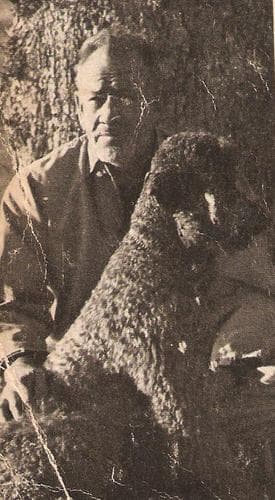
John Ernst Steinbeck was an American writer. He won the 1962 Nobel Prize in Literature "for his realistic and imaginative writings, combining as they do sympathetic humor and keen social perception". He has been called "a giant of American letters."
Similar books
- Cannery Row
John Steinbeck
4.0 (112k) average on GoodreadsLiterary FictionDirect sequel, features many of the same characters and the same setting and tone.
- The Grapes of Wrath
John Steinbeck
4.0 (750k) average on GoodreadsHistorical FictionShares Steinbeck's distinctive prose and focus on marginalized communities, though 'Sweet Thursday' is lighter.
- The Pearl
John Steinbeck
3.5 (188k) average on GoodreadsHistorical FictionWhile both Sweet Thursday and The Pearl (1947) are Steinbeck novels, they differ significantly in scope, tone, and thematic focus. The Pearl is a stark, allegorical novella exploring themes of greed, fate, and the corrupting influence of wealth, told with a lean, almost fable-like style. Its characters are archetypal, and its message is direct and tragic. Sweet Thursday, on the other hand, is a more sprawling, character-driven novel that, despite its underlying melancholy, aims for a more optimistic resolution. Its themes are more about human connection and belonging in a specific, detailed community. Where The Pearl is a cautionary tale, Sweet Thursday is an exploration of the possibility of redemption and happiness, albeit one that struggles to achieve the profound impact of Steinbeck's more focused works. The narrative styles also differ greatly: The Pearl is concise and symbolic, while Sweet Thursday is expansive and rich in local color.
- The Old Man and the Sea
Ernest Hemingway
3.8 (831k) average on GoodreadsLiterary FictionA Cuban fisherman's long struggle with a giant marlin becomes a story of endurance and dignity, now retold for young adults with illustrations, phonetic guides, and writing prompts in Traditional Chinese.
- One Hundred Years of Solitude
Gabriel García Márquez
4.1 (753k) average on GoodreadsLiterary FictionThrough the multi-generational story of the Buendía family, a mythical town deals with the repeating patterns of time, love, and solitude, as the extraordinary mixes with the ordinary.
- The Goldfinch
Donna Tartt
3.9 (720k) average on GoodreadsLiterary FictionHaunted by a tragic explosion and clutching a stolen Dutch masterpiece, a young orphan navigates the opulent drawing rooms of New York and the gritty underbelly of the art world, desperately seeking connection and redemption amidst a life spiraling into crime and obsession.





Enjoyed the summary?
A summary gives you the shape of the book. The book itself has the detail, the examples and the voice.
Find Sweet Thursday on AmazonAs an Amazon Associate, BookBrief earns from qualifying purchases. How we're funded