

Synopsis
Covers the whole plot, including the ending.
- Difficulty
- Easy
- Pacing
- Moderate
- Mood
- Reflective, poignant, bittersweet, sometimes suspenseful or melancholic
Tales Plot Summary
Covers the whole plot, including the ending.
The Last Dance
In 'The Last Dance,' Amelia and Thomas are a couple at a grand ball, their movements in sync as they waltz. The atmosphere is bittersweet, tense. Their hushed exchanges reveal this is their final night together; Thomas leaves for war. They try to savor every moment, every touch, every glance, knowing it might be their last. Amelia clings to Thomas, her eyes full of love and dread. Thomas tries to reassure her, but his own fear is clear. The music swells, amplifying the weight of their coming separation, leaving them with only the memory of their last shared dance.
Whispers in the Attic
Young Clara spends a summer at her eccentric grandmother’s old house. Bored, she explores the forbidden attic, a dusty room filled with forgotten items. Among the furniture and chests, she finds a hidden journal, bound in faded leather. As she reads, she uncovers entries detailing a tragic love affair and a hushed disappearance in her family. The journal hints at betrayal and a desperate cover-up, painting a darker picture of her ancestors. Clara grows disturbed by the revelations, realizing the 'ghosts' in the house are not supernatural, but lingering past secrets that refuse to stay buried, changing how she sees her family.
The Collector of Tears
Mr. Abernathy, a reclusive and sad old man, lives alone. His only companions are the meticulously labeled jars on his shelves. Each jar holds a single tear, collected from people he sees daily—a child who lost a toy, a teenager with a broken heart, a widow mourning her husband. He doesn't interact with them; he observes their vulnerable moments from afar, feeling a strange connection to their pain. He believes that by 'collecting' their tears, he lessens their burden, absorbing a piece of their sorrow. This ritual gives him purpose and a unique empathy, filling the void in his lonely life, even if it is an unusual coping method.
Echoes in the Rain
Mark returns to the rain-slicked park bench where he and Sarah shared their first kiss years ago. The persistent drizzle matches the ache in his heart. Every raindrop seems to carry an echo of her laughter, every rustle of leaves a whisper of her voice. He sits, lost in a vivid memory of that day, reliving their playful talk, the warmth of her hand, and the spark of their new love. The reality of her absence contrasts sharply with the memory, showing the deep loss he still feels. The park, once a symbol of their beginning, now reminds him of what was and what will never be again, leaving him with longing and regret.
The Unsent Letter
Eleanor clutches a handwritten letter, its pages crinkled from handling. It is addressed to David, her childhood sweetheart, whom she hasn't seen in twenty years. The letter confesses enduring love and a secret she has kept for years. She paces her apartment, torn between wanting to reconnect and fearing she will disrupt their current lives. The 'what ifs' bother her: What if he is happy? What if he has forgotten her? What if her confession only brings pain? The unsent letter shows her internal conflict, representing both hope and the risk of opening old wounds. Its fate is uncertain, a symbol of a choice that could redefine her future.
Crimson Tide
Elara has planned her revenge for years, fueled by a betrayal that shattered her life. Her target is Victor, a man who wronged her deeply, escaping justice through cunning. She tracks him to his secluded mansion, where the air is tense. As the 'Crimson Tide' begins to rise, a metaphor for the coming confrontation, Elara confronts Victor, her voice cold and steady, recounting the pain he caused. Victor, initially dismissive, slowly realizes how determined she is. The scene builds to a climax, where Elara must decide how far she will go for retribution. The story explores how vengeance can corrupt and the fine line between justice and becoming what one hates.
The Watchmaker's Apprentice
Young Leo, an orphan, is apprenticed to Master Eldrin, a reclusive watchmaker whose shop is filled with intricate timepieces. Leo soon notices odd things: clocks chime out of sync, and he hears faint whispers from inside them. One night, working late, he discovers that Eldrin is not just repairing clocks; he is putting fragmented memories and emotions into them, essentially trapping moments in time. Each tick and tock holds a story, a laugh, or a tear. Leo is both fascinated and disturbed, realizing his master is not just a craftsman but a curator of human experience, a silent witness to countless lives, and that he himself is now part of this secret.
Beneath the Willow Tree
Evelyn and Arthur, both elderly, meet by chance under the ancient weeping willow tree in their childhood park. Decades have passed since they last spoke, their friendship broken by unspoken feelings and a misunderstanding from their youth. Initially, their conversation is hesitant, polite, but as they recall shared adventures and innocent dreams, their old camaraderie slowly returns. However, beneath the nostalgia is regret and the lingering sting of what could have been. The willow tree, a witness to their past and present, is a symbol of enduring connection and time's passage, prompting them to confront the unresolved emotions between them.
The Memory Weaver
In a mystical realm, lives the Memory Weaver, an ethereal being who collects the most potent memories from humanity. The Weaver observes individuals at their most vulnerable and joyous, carefully plucking moments of love, loss, success, and failure. These collected memories are not merely stored; they are rewoven, sometimes blended, sometimes amplified, to create new narratives that reflect human experience. The Weaver's purpose is not to alter the past, but to understand and preserve what it means to be human, to ensure that the emotional fabric of existence continues to evolve and inspire. The process is delicate and helps understand how all lives are connected through shared emotions.
A Second Chance at Sunset
Elara, diagnosed with a terminal illness, has resigned herself to spending her remaining days alone, reflecting on an unfulfilled life. However, a chance meeting with Liam, an optimistic artist at a hospice support group, changes her perspective. Despite their grim circumstances, a deep connection blossoms. Liam, captivated by Elara's quiet strength and dry wit, encourages her to appreciate each fleeting moment. Their love story, unfolding against the backdrop of impending loss, is poignant. It shows that even in the face of death, life can offer unexpected joys and that love can bloom in unlikely circumstances. They find solace and happiness in their shared journey, savoring every 'sunset' together.
Tales Characters
Amelia
Supporting
A woman bidding farewell to her love before war.
Amelia is portrayed as a woman deeply in love, facing the agonizing reality of separation from her partner. She is sensitive and emotionally vulnerable, yet possesses an underlying strength as she tries to come to terms with the uncertainty of the future. Her actions are guided by love and a profound sense of loss, making her a sympathetic figure whose sorrow resonates with the reader. She embodies the universal experience of heartbreak and the struggle to maintain hope in dire circumstances.
Relationships: Thomas (Lover/Partner)
Clara
Protagonist
A curious girl who uncovers a family secret.
Clara is a young, inquisitive girl with a keen sense of curiosity that leads her to explore forbidden places. She is initially portrayed as bored and restless, but her discovery of the journal ignites a deeper, more mature side of her personality. She is observant and intelligent, piecing together fragments of information to uncover a hidden truth. Her journey is one of innocence lost, as she confronts the darker complexities of her family's past, forcing her to re-evaluate her understanding of her lineage.
Relationships: Grandmother (Granddaughter)
Mr. Abernathy
Protagonist
A reclusive old man who collects tears.
Mr. Abernathy is a deeply melancholic and reclusive old man, defined by his unusual hobby of collecting tears. He is an observer of life, rather than an active participant, finding a strange form of connection and empathy through the sorrows of others. His character highlights themes of loneliness and the unconventional ways people cope with their own emotional voids. Despite his peculiar nature, he is not malicious, but rather a solitary soul seeking meaning in the shared human experience of pain.
Mark
Protagonist
A man haunted by the memory of a lost love.
Mark is a grieving individual, deeply affected by the loss of his beloved Sarah. He is contemplative and prone to introspection, finding himself drawn back to places that hold significant memories. His character embodies the enduring pain of loss and the struggle to move on when memories are so vivid. He is a romantic at heart, whose love for Sarah continues to shape his present, even in her absence. His journey is one of profound longing and the bittersweet experience of reliving cherished moments.
Relationships: Sarah (Lost love)
Eleanor
Protagonist
A woman torn by an unsent confession of love.
Eleanor is a woman grappling with a profound internal conflict. She is thoughtful and sensitive, burdened by a long-held secret and the weight of unspoken emotions. Her character represents the universal struggle of making difficult choices that could drastically alter one's life and the lives of others. She is courageous in her contemplation, yet hesitant due to fear of the unknown consequences. Her emotional journey is one of intense indecision, caught between the desire for resolution and the anxiety of potential disruption.
Relationships: David (Childhood sweetheart)
Elara (Crimson Tide)
Protagonist
A woman seeking retribution for a past wrong.
Elara is a woman consumed by a quest for justice and revenge. Her character is defined by her unwavering resolve and the years of meticulous planning she has invested in her pursuit. She is strong-willed and determined, capable of suppressing her emotions to achieve her goal. However, beneath her hardened exterior lies the deep pain of past betrayal. Her story explores the moral complexities of vengeance and the potential for it to transform an individual, forcing her to confront her own capacity for darkness.
Relationships: Victor (Antagonist/Betrayer)
Leo
Protagonist
A young apprentice who uncovers a magical secret.
Leo is a young, observant, and curious apprentice. Orphaned and seeking a place in the world, he finds himself drawn to the mysteries of Master Eldrin's workshop. He is intelligent and perceptive, noticing details that others might overlook. His character embodies a sense of wonder and a yearning for knowledge. His discovery of the clocks' magical properties marks a turning point, opening his eyes to a world beyond ordinary perception and inviting him into a secret, fantastical realm.
Relationships: Master Eldrin (Mentor/Master)
Evelyn
Protagonist
An old friend reuniting with a past love.
Evelyn is a woman in her later years, carrying the weight of unspoken words and past regrets. She is initially guarded and polite, but as she reminisces with Arthur, her true emotions and the lingering pain of their past misunderstanding surface. She is reflective and nostalgic, yet also possesses a quiet strength in confronting unresolved feelings. Her character explores themes of lost opportunities and the enduring impact of youthful choices on later life, highlighting the bittersweet nature of revisiting the past.
Relationships: Arthur (Old friend/Unresolved love interest)
The Memory Weaver
Supporting
A mystical being who collects and reshapes human memories.
The Memory Weaver is not a human character but a fantastical, ethereal entity. It is portrayed as wise, ancient, and deeply connected to the human experience. Its role is to observe, collect, and reweave the most profound human memories, acting as a curator of emotional history. This being is detached yet empathetic, understanding the nuances of joy and sorrow without experiencing them directly. The Weaver serves as a symbolic representation of the collective consciousness and the enduring nature of human emotion.
Elara (A Second Chance)
Protagonist
A terminally ill woman who finds unexpected love.
Elara is a woman facing the end of her life with quiet resignation, initially feeling unfulfilled. She is introspective and perhaps a bit melancholic, but possesses a dry wit and a hidden capacity for joy. Her character arc is one of unexpected transformation, as she opens herself to love and experiences profound happiness in her final days. She embodies resilience and the powerful human capacity for connection, even in the face of terminal illness, proving that life's most precious moments can occur at any stage.
Relationships: Liam (Love interest)
Tales Themes
The Bittersweet Nature of Memory
Across several stories, memory is not a simple recollection, but a complex emotional experience. It can be a source of comfort and nostalgia, as seen in 'Echoes in the Rain' where Mark revisits cherished moments. However, memory also brings regret, loss, and unresolved pain, as experienced by Evelyn and Arthur in 'Beneath the Willow Tree', or the secrets Clara uncovers in 'Whispers in the Attic'. The book shows that while memories connect us to our past, they often come with a mix of joy and sorrow, shaping our present and future.
“Every raindrop seemed to carry an echo of her laughter, every rustle of the leaves a whisper of her voice.”
The Search for Connection and Meaning
Many characters in 'Tales' are driven by a human need to connect with others and find purpose. Mr. Abernathy, for instance, finds meaning through his collection of tears, a way to connect to human suffering. Eleanor's struggle with the unsent letter highlights the yearning for reconciliation. Even in the face of death, Elara in 'A Second Chance at Sunset' finds connection and fulfillment through unexpected love. This theme explores diverse ways individuals seek to lessen loneliness and give their lives meaning, often through shared emotional experiences.
“This peculiar ritual provided him with a sense of purpose and a peculiar form of empathy, filling the void in his own lonely life.”
The Weight of Unspoken Words and Secrets
Several stories explore the impact of things left unsaid or hidden truths. Clara's discovery of a family secret in 'Whispers in the Attic' reveals how concealed pasts can affect present generations. Eleanor's internal battle over sending the unsent letter shows the burden of unconfessed love and its potential to alter destinies. Similarly, the long-standing misunderstanding between Evelyn and Arthur in 'Beneath the Willow Tree' shows how unspoken regrets can break relationships for decades. This theme highlights the power of communication, or its absence, in shaping lives and relationships, often leading to lingering pain or missed opportunities.
“The unsent letter became a tangible manifestation of her internal conflict, representing both hope and the profound risk of opening old wounds.”
Transformation Through Love and Loss
The collection often explores how emotional experiences, especially love and loss, can change individuals. Amelia in 'The Last Dance' is transformed by the impending loss of her love, experiencing a deep emotional shift. Elara in 'A Second Chance at Sunset' finds unexpected personal growth and fulfillment through a late-life love, even with terminal illness. Conversely, Mark in 'Echoes in the Rain' is defined by the enduring pain of loss, showing how grief can shape identity. This theme illustrates the transformative power of human relationships and the emotional journeys they create, whether through joy, sorrow, or both.
“Their love story, unfolding against the backdrop of impending loss, is poignant and profound, proving that even in the face of death, life can offer unexpected joys.”
Plot Devices & Literary Techniques
Framing Device
A narrative structure that sets the stage for the main story.
While 'Tales' is a collection of short stories, the overarching concept of 'never forgotten memories' acts as a subtle framing device. Each story, though distinct, contributes to this central theme, creating a cohesive emotional landscape for the reader. The title itself, 'Tales,' implies a storytelling tradition, and the collective experience of reading these diverse narratives serves to reinforce the idea that memories, regardless of genre or specific plot, leave a lasting impression. This device subtly guides the reader's interpretation, encouraging them to find common threads of human experience across the varied narratives.
Symbolism
Objects or elements that represent deeper meanings.
The collection heavily utilizes symbolism to enrich its narratives. Examples include the 'jars of tears' in 'The Collector of Tears,' which symbolize Mr. Abernathy's peculiar empathy and loneliness, and the 'unsent letter' in its namesake story, representing Eleanor's internal conflict and the weight of unspoken words. The ancient 'willow tree' in 'Beneath the Willow Tree' symbolizes enduring connection and the passage of time. These symbols are not merely decorative but are integral to conveying the deeper emotional and thematic messages within each short story, allowing for a more profound and layered reading experience.
Flashback
A scene that takes the narrative back in time.
Flashbacks are frequently employed to reveal crucial past events and deepen character motivation. In 'Echoes in the Rain,' Mark's vivid recollection of his first kiss with Sarah transports the reader to a happier past, highlighting the stark contrast with his present grief. Similarly, Clara's discovery of the journal in 'Whispers in the Attic' functions as an extended flashback, revealing a hidden family history. This device is crucial for providing context, explaining present emotional states, and emphasizing the lasting impact of past experiences on the characters' current lives and decisions, making the 'never forgotten memories' theme palpable.
Foreshadowing
Hints or clues about future events or developments.
Foreshadowing is used to build suspense and emotional anticipation. In 'The Last Dance,' the bittersweet atmosphere and the couple's hushed exchanges subtly hint at the impending separation and the likely tragic outcome, creating a sense of dread. In 'Crimson Tide,' Elara's meticulous planning and the story's title itself ('Crimson Tide') foreshadow the dark and potentially violent confrontation that is to come. This device effectively draws the reader deeper into the narrative, making them anticipate and emotionally prepare for the unfolding events, reinforcing the lasting impact of each story.
Quiz
10 questions on the plot and the characters. Each answer comes with a short explanation.
Question 1
What is the primary theme of Ramona Meisel's "Tales"?
- The excitement of new adventures
- The bittersweet nature of unforgettable memories
- The thrill of discovering ancient mysteries
- The joy of building new relationships
Show answer
B. The bittersweet nature of unforgettable memories The description explicitly states that the book paints 'the bittersweet taste of never forgotten memories,' highlighting this as the central theme.
Question 2
What kind of content does "Tales" consist of?
- New, unpublished short stories
- A single, long-form novel
- A collection of previously published short stories
- Essays on the author's life experiences
Show answer
C. A collection of previously published short stories The text mentions that "Tales" is 'a hotchpotch of previous published short stories, reformatted and reimagined.'
Question 3
Which of the following genres is NOT mentioned as being present in "Tales"?
- Romance
- Science Fiction
- Tragedy
- Thriller
Show answer
B. Science Fiction The description lists romance, tragedy, and thriller as genres present in the book. Science Fiction is not mentioned.
Question 4
What is suggested about the length or impact of the stories in "Tales"?
- They are all very long and require significant reading time.
- They are short but have a lasting emotional effect.
- They are primarily action-packed and fast-paced.
- They are meant to be read quickly and forgotten.
Show answer
B. They are short but have a lasting emotional effect. The text states that the stories 'sometimes only last a second, the aftermath of each story will follow you for a while,' indicating brevity with significant impact.
Question 5
The phrase 'hotchpotch' in the description of "Tales" implies:
- A meticulously organized and thematic collection.
- A diverse and varied mixture of elements.
- A single, continuous narrative.
- A collection with a very narrow focus.
Show answer
B. A diverse and varied mixture of elements. 'Hotchpotch' means a confused mixture or jumble. In this context, it suggests a collection made up of diverse and varied previously published stories that have been reassembled.
Question 6
The description suggests that the 'reformatted and reimagined' aspect of the stories means they are:
- Identical to their original published versions.
- Potentially altered or presented in a new way.
- Only available in a digital format.
- Completely new narratives with similar themes.
Show answer
B. Potentially altered or presented in a new way. The terms 'reformatted' and 'reimagined' indicate that the stories have undergone changes from their original published state, suggesting they are not exactly the same.
Question 7
What does the phrase 'the aftermath of each story will follow you for a while' imply about the reader's experience?
- The stories are easily forgotten once read.
- The stories evoke a lingering emotional or psychological response.
- The reader will need to research the historical context.
- The stories are intended to be read multiple times for full understanding.
Show answer
B. The stories evoke a lingering emotional or psychological response. This phrase suggests that the stories have a profound and lasting impact on the reader, leaving a trace or impression that persists beyond the act of reading.
Question 8
Given the description, which of the following would be the LEAST likely characteristic of a story within "Tales"?
- A deeply emotional climax in a romance story.
- A shocking twist ending in a thriller.
- A tragic resolution to a character's struggle.
- A straightforward, uncomplicated happy ending.
Show answer
D. A straightforward, uncomplicated happy ending. The book is described as having a 'bittersweet taste' and includes genres like tragedy and thriller. A straightforward, uncomplicated happy ending would likely contradict the overall tone and genre mix.
Question 9
The description emphasizes both the brevity of some stories ('last a second') and their lasting impact ('aftermath will follow you'). This juxtaposition primarily serves to:
- Highlight the author's ability to convey complex emotions efficiently.
- Suggest that the book is suitable for readers with very little time.
- Indicate that the stories are experimental in form.
- Downplay the emotional weight of the collection.
Show answer
A. Highlight the author's ability to convey complex emotions efficiently. The contrast between a story's short duration and its long-lasting effect showcases the author's skill in creating impactful narratives that resonate deeply, even if they are concise.
Question 10
If "Tales" is a 'hotchpotch of previous published short stories, reformatted and reimagined,' what can be inferred about the author's creative process for this book?
- The author started from scratch with entirely new material.
- The author focused on a single, overarching plotline.
- The author revisited and reworked existing work rather than creating entirely new pieces.
- The author primarily focused on editing and proofreading.
Show answer
C. The author revisited and reworked existing work rather than creating entirely new pieces. The phrasing 'hotchpotch of previous published short stories, reformatted and reimagined' directly implies that the author took existing material and altered it, rather than creating completely new stories or just editing.
Tales FAQ
What is "Tales" by Ramona Meisel about?
"Tales" is a collection of previously published short stories by Ramona Meisel. These stories have been reformatted and reimagined to evoke the bittersweet feeling of unforgettable memories, exploring themes from romance to tragedy and thrillers.
What genres are included in "Tales"?
The collection "Tales" features a diverse range of genres, including romance, tragedy, and thriller stories. This variety ensures there's something to capture the interest of many different readers.
Are the stories in "Tales" new or previously published?
The stories in "Tales" are a collection of previously published works by Ramona Meisel. However, they have been reformatted and reimagined for this collection.
What kind of reading experience can I expect from "Tales"?
You can expect a reading experience that delves into the bittersweet taste of memories. While some stories might be brief, their emotional impact is designed to linger with the reader long after they've finished.
Who is the author of "Tales"?
The author of "Tales" is Ramona Meisel.
Is "Tales" a novel or a short story collection?
"Tales" is a collection of short stories, not a single, continuous novel.
What makes the stories in "Tales" unique?
The uniqueness of the stories in "Tales" lies in their reimagined format and their ability to capture the essence of lingering, unforgettable memories, often with a bittersweet undertone.
Can I read "Tales" if I haven't read Ramona Meisel's previous works?
Yes, "Tales" is a collection of reimagined stories and can be enjoyed independently, even if you haven't read Ramona Meisel's previous publications.
What is the overall tone of "Tales"?
The overall tone of "Tales" is often described as bittersweet, focusing on the lasting impact of memories, which can range from romantic to tragic and thrilling.
How long are the stories in "Tales"?
The book description mentions that the stories "sometimes only last a second," implying a range of lengths, with some being very brief but impactful.
About the author

Ramona Meisel is a fiction author known for her book "Tales." Her work often explores various themes and narratives, contributing to the contemporary literary landscape.
Similar books
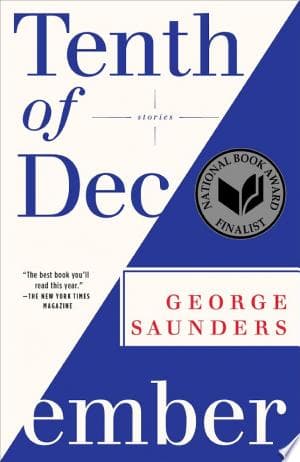
- Tenth of December
George Saunders
4.0 (62k) average on GoodreadsLiterary FictionWhile both Meisel and Saunders craft impactful short stories, Saunders' work in "Tenth of December" typically grounds its surreal or satirical elements in deeply human and often heartbreakingly relatable characters and situations. Meisel's "Tales" often leans further into abstract themes and atmospheric mood, sometimes at the expense of direct emotional connection, whereas Saunders frequently uses his stylistic flair to amplify the emotional core and social commentary of his narratives. Meisel's ambiguity feels more inherent to the fabric of her reality, while Saunders' departures from realism often serve as a sharp lens on our own.
- Harry Potter and the Sorcerer's Stone
J.K. Rowling
4.5 (7M) average on GoodreadsFantasyRescued from a miserable life under the stairs, an orphaned boy discovers he's a wizard destined for a magical school, where he uncovers a dangerous secret tied to the dark wizard who murdered his parents.
- The Hunger Games
Suzanne Collins
4.3 (6.4M) average on GoodreadsFantasyIn a future where children fight to the death on live television, Katniss Everdeen volunteers for the arena, turning a death sentence into a fight for survival and a spark of rebellion.
- Nineteen Eighty-Four
George Orwell
4.2 (5.5M) average on GoodreadsFictionWinston Smith dreams of truth and rebellion in a world where Big Brother watches all, but he confronts the terrifying power of a regime that controls not just actions, but thoughts.
- Pride & Prejudice
Jane Austen
4.3 (4.9M) average on GoodreadsElizabeth Bennet and Mr. Darcy navigate love and misunderstanding, learning that first impressions can be wrong.
- To Kill a Mockingbird
Harper Lee
4.3 (4.5M) average on GoodreadsHistorical FictionIn the 1930s Jim Crow South, Harper Lee writes about racial injustice, moral growth, and the quiet courage of a lawyer father, Atticus Finch, as seen through his young daughter's eyes.





Enjoyed the summary?
A summary gives you the shape of the book. The book itself has the detail, the examples and the voice.
Find Tales on AmazonAs an Amazon Associate, BookBrief earns from qualifying purchases. How we're funded