
Core Idea
- Difficulty
- Medium
- Read it if
- You are seeking a foundational text in Eastern philosophy and spirituality, interested in concepts of natural harmony, minimalist living, and paradoxical wisdom, or looking for an alternative perspective on leadership and personal conduct.
- Skip it if
- You prefer highly structured, linear arguments, practical self-help guides with step-by-step instructions, or a theological framework with a personal God.
Key Takeaways from Tao Te Ching
Embrace the Uncarved Block
Simplicity and naturalness are the highest forms of wisdom.
The Tao Te Ching often promotes returning to an original, pure state, called the 'uncarved block.' This means a deep simplicity that comes before complex social rules and artificial differences. When people move away from the Tao's natural flow, they create complex systems of right and wrong, and government, to make up for lost natural harmony. These systems, though they seem good, are actually signs of a deeper problem, a move away from the Tao's easy correctness. So, the wise person tries not to add to the world's complexities but to remove them, showing the basic truth and ease underneath. This search for simplicity is a strong act of freedom from social pressures and the endless desire for 'more.'
“When the Great Way is lost, there is benevolence and righteousness. When cleverness and profit arise, there are great hypocrites. When the six family relationships are not in harmony, there are filial piety and paternal affection. When the country is in chaos and disorder, there are loyal ministers.”
In the book: Chapter 18, which suggests that virtues like 'benevolence and righteousness' only become necessary when humanity has strayed from the natural Way. Also, the frequent mention of 'uncarved block' (pu) as a metaphor for original simplicity.
Try this: Identify areas in your life where you've over-engineered solutions or created unnecessary rules. Practice simplifying your routines, decisions, and even your thoughts. For example, instead of striving for a complex 'perfect' diet, focus on eating whole, unprocessed foods. Embrace natural inclinations over forced discipline.
Related ideas: wu-wei, simplicity, naturalness
The Power of Emptiness
True utility often resides in what is absent or unmanifest.
Lao Tzu offers a deep contradiction: the most important parts of things are often their 'nothingness' or emptiness. A wheel's use is not in its spokes, but in the empty space at its center that lets it turn. A cup's purpose is not its clay sides, but the empty space inside that holds liquid. A house's function relies on the empty spaces of its rooms and windows. This idea goes beyond physical things to abstract ideas: real leadership leaves room for others to act, good communication involves listening, and deep wisdom often shows as silence. People usually focus on what is present, real, and full. Yet, the Tao Te Ching points our attention to the creative power of absence, space, and possibility. This 'emptiness' is not a void but a rich place for creation and function.
“Thirty spokes converge upon a single hub; it is on the hole in the center that the use of the cart hinges. Clay is molded into vessels; it is on their empty interior that their use depends. Doors and windows are cut out to make a house; it is on their empty space that the use of the house depends. Therefore, just as we take advantage of what is, we should recognize the utility of what is not.”
In the book: Chapter 11, which explicitly uses the examples of a wheel, a vessel, and a house to illustrate the utility of emptiness.
Try this: In problem-solving, consider what is missing or what space needs to be created, rather than just what needs to be added. In communication, practice active listening and allow for pauses. In design, appreciate negative space. For personal growth, cultivate moments of quiet and reflection, recognizing their generative power.
Related ideas: emptiness, void, wu-wei, paradox
Water as the Ultimate Teacher
Adaptability, humility, and persistence lead to insurmountable strength.
Lao Tzu sees water as a key symbol of the Tao. Water shows the ideal qualities of the wise person and the enlightened leader. It flows to the lowest places, showing humility and not arguing, yet it is completely necessary for life. It is soft and flexible, able to change its shape to any container, yet with constant erosion, it can cut canyons through solid rock. Its quiet, humble nature lets it nourish everything without seeking attention or showing power. This contradiction of soft power, flexibility, and ultimate strength is central to Taoist thought. By acting like water, one learns to handle life's challenges with grace, overcome problems with patience instead of force, and have influence through subtle, widespread ways rather than clear control.
“The highest good is like water. Water benefits all things and does not contend. It dwells in places that others despise, and so it is close to the Tao. In dwelling, it is good to be close to the earth. In mind, it is good to be deep. In giving, it is good to be benevolent. In speech, it is good to be sincere. In government, it is good to be orderly. In affairs, it is good to be capable. In action, it is good to be timely. Because it does not contend, it is without fault.”
In the book: Chapter 8, which extensively describes the virtues of water as a model for human conduct and alignment with the Tao.
Try this: When faced with conflict, try to yield rather than resist, finding the path of least resistance. Cultivate humility by seeking to serve rather than dominate. Practice persistent effort over bursts of intensity. Observe how water flows and adapts, and apply these principles to your own decision-making.
Related ideas: yielding, softness, persistence, humility
Action Through Non-Action (Wu Wei)
Effortless action aligned with the natural flow achieves more.
Wu Wei, often translated as 'non-action' or 'effortless action,' is a main idea in Taoist thought. It does not mean being lazy or passive. Instead, it means acting in perfect harmony with the universe's natural rhythms and rules (the Tao). It means letting things happen naturally, only stepping in when needed and with very little force, like a skilled gardener who cares for plants without forcing them to grow. The wise person, practicing Wu Wei, gets great results precisely because they do not try hard or fight. Their actions are natural, intuitive, and perfectly timed, leading to outcomes that feel organic and lasting. This way of doing things is very different from the Western focus on hard work, control, and aggressive goal-setting. It suggests that real mastery comes from yielding and aligning, not from overpowering.
“The Tao never acts, yet nothing is left undone. If kings and princes could but hold fast to this, all things would transform themselves. If, after transformation, they should desire to act, they would be restrained by the nameless simplicity. The nameless simplicity is freedom from desire. Freedom from desire brings tranquility, and the world will rectify itself.”
In the book: Chapter 37, which explains how the Tao 'never acts, yet nothing is left undone' and how rulers adhering to this principle would see the world rectify itself.
Try this: Instead of forcing solutions, step back and observe the natural tendencies of a situation. When leading, empower your team to act autonomously rather than micromanaging. In personal endeavors, find your flow state where action feels effortless and aligned. Learn to trust intuition over rigid planning.
Related ideas: wu-wei, effortlessness, spontaneity, flow
The Value of the Feminine
Embracing receptivity, yielding, and inner strength brings balance.
The Tao Te Ching often compares the 'masculine' (assertive, dominant, active) with the 'feminine' (receptive, yielding, passive). While not about gender, it suggests developing feminine qualities as necessary for true strength and alignment with the Tao. To 'keep to the feminine' means to accept receptiveness, humility, and inner stillness, instead of always trying for outward control and showing power. The image of the 'ravine' or 'valley' is powerful: it is low, empty, and receptive, yet it gathers all the water and nourishes life. This approach suggests that real power is not in clear dominance, but in a quiet, nurturing ability that lets things grow naturally. It asks us to balance society's often aggressive, 'masculine' tendencies with the wisdom of yielding and inner strength, returning to a state of innocent possibility like a baby.
“Know the masculine, but keep to the feminine. Be a ravine to the world. If you are a ravine to the world, the constant virtue will not depart from you, and you will return to the state of an infant.”
In the book: Chapter 28, which explicitly advises knowing the masculine but keeping to the feminine, and linking it to being a ravine and returning to the state of an infant.
Try this: In leadership, prioritize listening and nurturing growth over commanding. In relationships, practice empathy and receptivity. In personal development, cultivate moments of stillness and introspection, allowing insights to emerge rather than forcing them. Embrace vulnerability as a source of strength.
Related ideas: yin-yang, receptivity, humility, softness
Smallness as Greatness
The subtle, unassuming, and humble hold profound power.
The Tao Te Ching often challenges common ideas of greatness, saying that real power and lasting influence are not in what is grand, obvious, or famous, but in what is subtle, humble, and unassuming. The wise person does not try to be the tallest tree but the deep root, not the bright flower but the nourishing fruit. This view encourages focusing on inner growth and self-control over external conquest and display. It suggests that satisfaction, richness, and lasting strength come from within, from being happy with what is, and from a quiet, steady adherence to one's true nature. The greatest achievements are often those that are not seen by a quick look, yet they are very impactful in their depth and resilience.
“The great man abides in the thick, not in the thin; in the fruit, not in the flower. Hence he rejects the one and takes the other. He who knows others is wise; he who knows himself is enlightened. He who conquers others is strong; he who conquers himself is mighty. He who is content is rich. He who acts with vigor has a will. He who does not lose his place will endure. He who dies but does not perish has longevity.”
In the book: Chapter 33, which contrasts knowing others with knowing oneself, and conquering others with conquering oneself, linking true power to internal mastery and contentment.
Try this: Instead of seeking public recognition, focus on mastering your craft for its own sake. Cultivate contentment with what you have rather than constantly striving for more. Prioritize inner peace and self-awareness over external achievements or status symbols. Find dignity in humble tasks.
Related ideas: humility, inner-strength, contentment, subtlety
The Danger of Excessive Desire
Attachment to material things and external validation leads to suffering.
Lao Tzu warns against the dangers of too much desire and attachment to sensory pleasures and external things. While not promoting strict self-denial, he points out that an endless hunger for 'more' — whether it is more possessions, more excitement, or more recognition — eventually leads to unhappiness, confusion, and a departure from the Tao. The constant search for external pleasure makes us blind to true wisdom, dulls our senses, and harms our character. The wise person, in contrast, puts inner contentment and basic needs ('for the belly') before superficial sensory pleasure ('for the eye'). This is a strong criticism of consumerism and a call to develop a deep sense of enough, realizing that true well-being comes from within, not from collecting things outside.
“He who knows how to be content will suffer no disgrace. He who knows when to stop will incur no danger. He will last long. The five colors blind the eye. The five notes deafen the ear. The five tastes dull the palate. Racing and hunting madden the mind. Things hard to get injure one’s conduct. Therefore, the sage is for the belly, not for the eye. Hence he rejects the one and takes the other.”
In the book: Chapter 12, which details how excessive sensory input and the pursuit of 'things hard to get' lead to harm, and contrasts this with the sage's focus on essential needs.
Try this: Practice mindful consumption: question why you desire certain things. Regularly declutter your physical and mental space. Limit your exposure to overwhelming sensory input (e.g., excessive screen time). Cultivate gratitude for what you have, rather than focusing on what you lack.
Related ideas: desire, attachment, contentment, moderation
The Paradox of Leadership
The best leader is one whose presence is barely felt, yet whose impact is profound.
The Tao Te Ching offers a very different leadership model from typical top-down, command-and-control approaches. The ideal ruler, or wise leader, acts with such subtlety and alignment with the natural order that their people feel they are leading themselves. Their actions are so perfectly timed and minimal that outcomes seem to happen naturally, creating a sense of ownership and empowerment among the people. This 'invisible hand' approach builds a self-organizing, harmonious society that does not need constant direction, fear, or even obvious praise. It is a leadership style based on trust, detachment, and a deep understanding of human nature, allowing the group to thrive without the heavy burden of authoritarian control. The leader's ego is completely absent from the process, ensuring lasting results.
“The best rulers are those whose subjects only know that they exist; the next best are those whom they love and praise; the next are those whom they fear; and the next are those whom they despise. When the best ruler's work is done and his aim fulfilled, the people will all say, 'We ourselves have done it.'”
In the book: Chapter 17, which outlines the four types of rulers, with the highest being one whose existence is barely known, and whose people believe they achieved results themselves.
Try this: In leadership roles, focus on creating an environment where others can thrive independently. Provide resources and guidance, but avoid micromanaging. Empower your team to make decisions and take ownership. Celebrate collective achievements, attributing success to the group rather than solely to your own efforts.
Related ideas: leadership, wu-wei, empowerment, humility
The Cycles of Reversal
Extremes inevitably revert to their opposites; moderation is key.
A basic rule of the Tao is the idea of reversal: everything that reaches an extreme will eventually go back to its opposite. Good times turn into bad times, strength into weakness, fame into obscurity, and vice versa. This is not a negative view but an acceptance of life's dynamic, cyclical nature. Understanding this rule encourages moderation in everything and warns against holding on to any single state, whether good or bad. It helps create a sense of detachment, knowing that no condition lasts forever. The wise person, aware of these cycles, avoids extremes, stays flexible, and understands that 'weakness' or yielding can be a strong way to last and finally overcome 'strength.' This constant change comes from the interaction of Being and Non-being, what is visible and what is not.
“Reversal is the movement of the Tao. Weakness is the function of the Tao. All things in the world come from Being, and Being comes from Non-being.”
In the book: Chapter 40, which states 'Reversal is the movement of the Tao' and 'Weakness is the function of the Tao.' This idea is also implicitly present in many other chapters discussing the balance of opposites.
Try this: Avoid overcommitting or pushing beyond natural limits. When experiencing success, remain humble and prepare for potential shifts. When facing challenges, remember that they are temporary. Embrace the idea that yielding can be a powerful strategy, and that apparent weakness can lead to strength.
Related ideas: reversal, cycles, yin-yang, moderation
The Nameless and the Named
True reality transcends human language and conceptualization.
The first lines of the Tao Te Ching immediately set up a basic contradiction: the ultimate reality, the Tao, cannot be understood or described with human language. Any attempt to define it with words will limit and distort its true nature. The 'nameless' Tao is the undifferentiated, unmanifest source from which all existence ('heaven and earth') comes. The 'named' refers to the manifest world, the 'ten thousand things' that we see and label. While we can see the Tao's effects through our desires and interactions with the world, its deep essence can only be understood by not desiring and by quiet thought, where the mind is free from the limits of labels. This shows the limits of intellectual understanding and points to a direct, intuitive grasp of reality.
“The Tao that can be told is not the eternal Tao. The name that can be named is not the eternal name. The nameless is the beginning of heaven and earth. The named is the mother of the ten thousand things. Therefore, constantly without desire, one can observe its subtlety. Constantly with desire, one can observe its manifestations.”
In the book: Chapter 1, the very first chapter, which clearly distinguishes between the nameless and the named Tao, and their respective roles in revealing subtlety and manifestations.
Try this: Recognize the limits of language and logic when trying to understand profound truths. Practice meditation or mindfulness to quiet the mind and experience reality beyond conceptual frameworks. Be open to ambiguity and paradox. Avoid rigid definitions and embrace the mystery inherent in existence.
Related ideas: Tao, nameless, mystery, non-duality
Tao Te Ching Quotes
“The Tao that can be told is not the eternal Tao; The name that can be named is not the eternal name.”
“When people see some things as beautiful, other things become ugly. When people see some things as good, other things become bad.”
“The best of all leaders is he who helps people find their own way, and then steps aside.”
“He who knows that enough is enough will always have enough.”
“A journey of a thousand miles begins with a single step.”
“The softest thing in the world overcomes the hardest thing in the world.”
“Know the masculine, keep to the feminine.”
“Govern a great nation as you would cook a small fish. Do not overdo it.”
“Empty your mind of all thoughts. Let your heart be at peace.”
“If you realize that all things change, there is nothing you will try to hold on to. If you aren't afraid of dying, there is nothing you won't do.”
“The wise man does not lay up his own treasures. The more he gives to others, the more he has for his own.”
“The greatest perfection seems imperfect, yet its use is inexhaustible.”
“He who is without desire sees the mystery. He who is with desire sees only the manifestations.”
“Fame or your own self: which is more precious? Self or possessions: which is more important?”
Quiz
10 questions on the main ideas. Each answer comes with a short explanation.
Question 1
According to the Tao Te Ching, what qualities are shared by the enlightened sage, the ideal ruler, and the perfected individual?
- Wealth, power, and influence
- Humility, spontaneity, and generosity
- Ambition, assertiveness, and self-promotion
- Strict adherence to rigid laws and doctrines
Show answer
B. Humility, spontaneity, and generosity The book description explicitly states that the Tao Te Ching teaches that the qualities of the enlightened sage or ideal ruler are identical with those of the perfected individual, and to follow the Tao is to embody humility, spontaneity, and generosity.
Question 2
What is the traditional attribution for the authorship of the Tao Te Ching?
- Confucius
- Zhuangzi
- Lao Tzu
- Mencius
Show answer
C. Lao Tzu The book description clearly states, 'Traditionally attributed to the legendary -Old Master, - Lao Tzu'.
Question 3
The Tao Te Ching is described as teaching the 'Way of all things' (Tao). What does realizing their true nature through the Tao primarily lead to?
- Accumulation of material possessions
- Mastery of complex philosophical debates
- Embodiment of humility, spontaneity, and generosity
- Achieving absolute control over others
Show answer
C. Embodiment of humility, spontaneity, and generosity The description states, 'To follow the Tao or Way of all things and realize their true nature is to embody humility, spontaneity, and generosity.'
Question 4
How does the Tao Te Ching relate to contemporary issues like leadership in business and politics?
- It provides specific modern business strategies and political manifestos.
- Its words are useful in mastering the arts of leadership and developing balance in everyday life.
- It advocates for aggressive competition and power struggles in these fields.
- It has no relevance to modern practical applications.
Show answer
B. Its words are useful in mastering the arts of leadership and developing balance in everyday life. The text states, 'Today, Lao Tzu's words are as useful in mastering the arts of leadership in business and politics as they are in developing a sense of balance and harmony in everyday life.'
Question 5
What was John C. H. Wu's specific role in bringing the Tao Te Ching to English readers?
- He discovered the original ancient manuscript.
- He authored the original Tao Te Ching in Chinese.
- He rendered the subtle text into English, retaining its freshness and depth.
- He provided the illustrations for the Shambhala Pocket Library edition.
Show answer
C. He rendered the subtle text into English, retaining its freshness and depth. John C. H. Wu 'has done a remarkable job of rendering this subtle text into English while retaining the freshness and depth of the original.'
Question 6
The Tao Te Ching is referred to as 'The Classic of the Way and Its Virtue.' What does 'Virtue' (Teh) in this context most closely imply according to Taoist principles?
- Moralistic righteousness and strict ethical codes.
- The manifestation or embodiment of the Tao in individuals and things.
- A reward system for following specific religious rituals.
- The accumulation of good deeds for future reincarnation.
Show answer
B. The manifestation or embodiment of the Tao in individuals and things. While not explicitly defined in the provided text, 'Teh' (or 'De') in Taoism generally refers to the manifestation or active expression of the Tao, the inherent character or virtue that arises from aligning with the Way. This is a key concept beyond just 'good deeds'.
Question 7
What is the primary function of the Shambhala Pocket Library series, as exemplified by this edition of the Tao Te Ching?
- To publish lengthy academic dissertations on religious history.
- To provide short, portable teachings from notable figures and classic texts in a compact format.
- To showcase original artwork exclusively from Robert Spellman.
- To create new spiritual texts for contemporary audiences.
Show answer
B. To provide short, portable teachings from notable figures and classic texts in a compact format. The Shambhala Pocket Library 'is a collection of short, portable teachings from notable figures across religious traditions and classic texts' and 'distill the wisdom and heart of the work...into a compact format'.
Question 8
While the text highlights 'humility, spontaneity, and generosity' as key virtues, a deeper understanding of Taoist spontaneity (Ziran) implies which of the following?
- Acting impulsively without any thought or consideration.
- Conforming strictly to societal norms and expectations.
- Acting in accordance with one's intrinsic nature, free from artificiality and external coercion.
- Deliberately planning every action to appear effortless.
Show answer
C. Acting in accordance with one's intrinsic nature, free from artificiality and external coercion. Spontaneity (Ziran) in Taoist philosophy isn't mere impulsiveness but acting 'naturally so,' in harmony with one's true nature and the flow of the Tao, without conscious effort or artificiality. This requires a deeper understanding beyond the surface mention.
Question 9
The Tao Te Ching emphasizes 'balance and harmony in everyday life.' Which of the following Taoist concepts, though not explicitly named in the description, is most central to achieving this balance?
- The pursuit of eternal life through alchemy.
- The principle of Wu Wei (non-action or effortless action).
- Strict adherence to a hierarchical social structure.
- Aggressive confrontation of opposing forces.
Show answer
B. The principle of Wu Wei (non-action or effortless action). While not explicitly mentioned, the concept of Wu Wei (non-action or effortless action) is fundamental to achieving balance and harmony in Taoist thought, as it advocates for acting in alignment with the natural flow of the Tao rather than through forced or excessive effort. This requires inferring a core Taoist concept from the provided description's emphasis on 'balance and harmony'.
Question 10
Considering the Tao Te Ching's age and its spiritual nature, what challenge would John C. H. Wu likely have faced most significantly in 'rendering this subtle text into English while retaining the freshness and depth of the original'?
- Locating the physical manuscript of the original text.
- Translating ancient, nuanced philosophical concepts accurately and poetically into a modern language.
- Convincing publishers of the text's relevance to a contemporary audience.
- Obtaining permission from Lao Tzu's descendants for translation rights.
Show answer
B. Translating ancient, nuanced philosophical concepts accurately and poetically into a modern language. The primary challenge in translating ancient philosophical and spiritual texts like the Tao Te Ching lies in conveying its subtle, often paradoxical, and culturally specific concepts accurately and effectively into a different language, especially while preserving its poetic and profound 'freshness and depth.' This is a common hurdle for translators of such works.
Tao Te Ching FAQ
What is the Tao Te Ching?
The Tao Te Ching is an ancient Chinese classic text, traditionally attributed to the philosopher Lao Tzu. It is a foundational text for Taoism, offering profound insights into spirituality, philosophy, and the art of living in harmony with the universe.
Who was Lao Tzu?
Lao Tzu, meaning 'Old Master,' is the traditional author of the Tao Te Ching. While historical details about him are scarce and debated, he is revered as a central figure in Taoist philosophy, embodying wisdom and the pursuit of the 'Way.'
What is the 'Tao'?
The 'Tao' translates to 'The Way' or 'The Path.' In the Tao Te Ching, it refers to the natural order of the universe, the underlying principle that governs all existence, and a path of living that aligns with this natural flow.
Does the Tao Te Ching offer practical advice for modern life?
Absolutely. The Tao Te Ching's teachings on humility, spontaneity, generosity, and effortless action are highly applicable to contemporary challenges, offering guidance for leadership, personal well-being, and navigating complex situations.
How is the Tao Te Ching different from Western philosophical texts?
Unlike many Western philosophical texts that emphasize rational argument and distinct concepts, the Tao Te Ching often uses paradox, metaphor, and poetic language to convey its truths, focusing on intuition, non-action, and the interconnectedness of all things.
What makes John C. H. Wu's translation unique?
John C. H. Wu's translation is lauded for its lucidity and ability to retain the freshness and depth of the original text. As a jurist and scholar, Wu brought a unique blend of intellectual rigor and spiritual understanding to his rendering of this subtle work.
Is the Tao Te Ching a religious text?
While it is a foundational text for philosophical Taoism, which has religious expressions, the Tao Te Ching itself can be approached as a spiritual and philosophical guide rather than a strictly religious scripture. Its wisdom transcends specific dogmas.
How can I apply the concept of 'Wu Wei' in my daily life?
'Wu Wei' or 'non-action' doesn't mean doing nothing, but rather acting in harmony with the natural flow of things, without forced effort or resistance. You can apply it by observing situations, acting spontaneously when appropriate, and letting go of the need to control every outcome.
What is the significance of the Shambhala Pocket Library edition?
The Shambhala Pocket Library edition presents this classic in a compact, portable format, making its profound wisdom accessible and convenient for everyday reading. It distills the essence of Shambhala Publications' fifty years of publishing into a collectible and reader-friendly book.
About the author
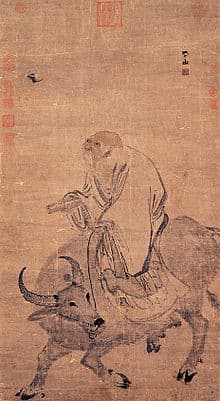
Lao Tzu was an ancient Chinese philosopher and writer, traditionally regarded as the founder of Taoism. He is best known for his work "Tao Te Ching," a foundational text that explores the nature of existence and the principles of harmony and balance in life. His teachings have had a profound influence on Chinese culture and philosophy.
Similar books
- The Art of War
Sun Tzu
4.0 (330k) average on GoodreadsBusinessOffers ancient Chinese strategic wisdom, though focused on military rather than personal/spiritual.
- Zen and the Art of Motorcycle Maintenance: An Inquiry Into Values
Robert M. Pirsig
3.8 (200k) average on GoodreadsPsychologyExplores philosophical concepts of quality, value, and understanding through a narrative journey.
- Meditations
Marcus Aurelius
4.2 (124k) average on GoodreadsLeadershipA collection of philosophical reflections on virtue, reason, and living in harmony with nature, from a Western perspective.
- Eat, Pray, Love
Elizabeth Gilbert
3.6 (1.5M) average on GoodreadsLifestyleA heartbroken writer leaves her conventional life for a year-long global search for pleasure in Italy, spiritual devotion in India, and unexpected love and balance in Bali.
- Educated
Tara Westover
4.5 (796k) average on GoodreadsBiographyRaised in the Idaho mountains by fundamentalist survivalists, a young woman forges her own path to education, battling fierce family loyalty and personal demons to discover a world beyond her isolated upbringing.
- The Poisonwood Bible
Barbara Kingsolver
4.1 (659k) average on GoodreadsLiterary FictionA zealous missionary's rigid faith clashes with the Belgian Congo's wilderness and people, unraveling his family through the eyes of his five unforgettable women.





Enjoyed the summary?
A summary gives you the shape of the book. The book itself has the detail, the examples and the voice.
Find Tao Te Ching on AmazonAs an Amazon Associate, BookBrief earns from qualifying purchases. How we're funded