
Estimated read time: 8 min read
One Sentence Summary
The "Tao Te Ching" by Lao Tzu is a foundational text of Taoism that offers poetic guidance on living in harmony with the natural order and embracing simplicity, humility, and non-action.
Table of Contents
Introduction
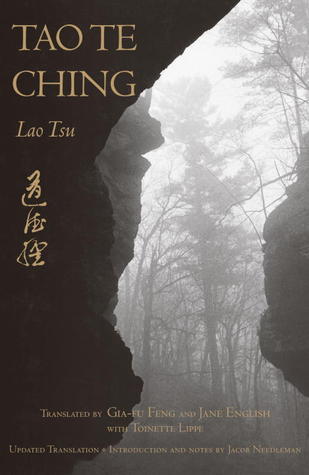
Imagine a book that has whispered wisdom to emperors, monks, artists, and rebels for over two millennia. That’s the Tao Te Ching, a slim, enigmatic text attributed to the ancient Chinese sage Lao Tzu. If you’ve ever found yourself pondering life’s big questions between classes or during a late-night existential crisis, this book has a knack for addressing the universal—often in just a handful of poetic lines. The Tao Te Ching isn’t just a relic of ancient philosophy; it’s a living guide for anyone seeking balance, simplicity, and a bit of peace amidst the chaos of modern life.
Historical Context
The Tao Te Ching emerged during the tumultuous Spring and Autumn Period of Chinese history (roughly 6th century BCE). This was a time when China wasn’t so much a country as a chessboard of warring states, plagued by political intrigue and philosophical debate.
Major Historical Events
- Constant Warfare: Competing kingdoms and shifting alliances.
- Intellectual Ferment: A blossoming of philosophical schools including Confucianism, Legalism, and Mohism.
- The Age of Sages: The period saw the rise of legendary thinkers like Confucius and Sun Tzu.
Notable Figures and Inspiration
- Lao Tzu: Shrouded in myth, Lao Tzu (literally “Old Master”) is said to have been an archivist who, disillusioned with political corruption, left society behind. Legend has it that he wrote the Tao Te Ching at the urging of a border guard as he left civilization for the mountains.
- Philosophical Rivals: The text often responds, implicitly or explicitly, to the ideas of Confucius and other contemporaries.
Brief Synopsis
Plot Overview
Calling the Tao Te Ching a “plot-driven” book is a stretch—it isn’t a novel, but rather a collection of 81 short chapters (or verses), each offering a meditation on the nature of the Tao (“the Way”), virtue, leadership, and life. The text doesn’t lay out a linear argument. Instead, it invites readers into a flowing, paradoxical dance, challenging conventional wisdom and urging us to embrace the mysterious and the simple.
Setting
The Tao Te Ching is steeped in the imagery of ancient China: mountains cloaked in mist, rivers carving their way through stone, and rulers contemplating the art of governance. The atmosphere is tranquil, mysterious, and often paradoxical—a world where “the soft overcomes the hard” and “those who know do not speak.”
Main Characters
While the Tao Te Ching does not feature characters in the usual sense, it does refer to archetypes and personas central to its teachings. Here’s a table to help clarify:
| Name or Archetype | Role in the Text | Key Traits | Importance to the Message |
|---|---|---|---|
| Lao Tzu (the Sage) | Author/Archetypal Wise Figure | Humble, enigmatic, insightful | Embodies the Tao and its virtues |
| The Sage | Model disciple of the Tao | Detached, flexible, compassionate | Demonstrates ideal behavior |
| The Ruler | Ideal leader | Non-coercive, leads by example | Shows how Taoist principles apply to governance |
| The Ordinary Person | Follower or student of the Tao | Seeks wisdom, struggles with ego | Stands in for the reader |
| The Fool | Opposes the Tao | Self-important, forceful, rigid | Warns against ego and ambition |
Plot Summary
Here’s your roadmap to the winding, poetic journey of the Tao Te Ching:
The Nature of the Tao
- The Tao that can be named is not the eternal Tao. The book opens with a paradox, warning against trying to pin down the ineffable.
- Tao is the source of all things, yet it is formless, elusive, and beyond words.
The Virtue of Wu Wei (Non-Action)
- The text champions wu wei, or effortless action—acting in harmony with the natural flow rather than forcing outcomes.
- The sage does not compete or contend, yet everything is accomplished.
Leadership and Power
- The best leaders are invisible; their presence is felt but not flaunted.
- Ruling through fear or force breeds resentment. Instead, the wise ruler leads by example, humility, and restraint.
Simplicity and Contentment
- Complexity breeds confusion. The Taoist path is one of simplicity, humility, and minimal desire.
- “He who knows he has enough is rich”; contentment is the foundation of happiness.
Paradox and Mystery
- The Tao Te Ching delights in paradox: “The soft overcomes the hard,” “The highest virtue appears like a valley.”
- Emptiness—like that of a bowl or a doorway—is what gives objects their usefulness.
Themes and Motifs
Let’s dig into the central ideas that have made the Tao Te Ching a perennial favorite:
| Theme | Description | Broader Context |
|---|---|---|
| The Tao (the Way) | The unseen, underlying order of the universe | Connects to Eastern philosophies |
| Wu Wei (Non-Action) | Acting in harmony with nature; effortless action | Contrasts with Western activism |
| Simplicity | Rejects excess, embraces naturalness | Prefigures minimalist movements |
| Paradox | Uses contradiction to reveal deeper truths | Invites critical thinking |
| Leadership | Advocates humility, non-coercion, and service | Influences modern leadership styles |
| Yin and Yang | The interplay of opposites—soft/hard, light/dark, male/female | Resonates with holistic thinking |
| Contentment | Finds fulfillment in having “enough” | Counters consumerist culture |
| The Limits of Language | Notes that words can’t capture ultimate reality | Anticipates postmodern skepticism |
Literary Techniques and Style
The Tao Te Ching is a masterclass in poetic minimalism and mystery.
Structure and Language
- Aphoristic Style: Each chapter is short, often just a few lines or stanzas, packed with meaning.
- Poetry and Parallelism: The book relies on vivid imagery, parallel constructions, and repetition.
- Metaphor and Paradox: Rivers, valleys, and uncarved blocks become symbols for profound truths.
Narrative Voice
- Detached and Enigmatic: The narrator is often impersonal, using paradox and ambiguity to provoke thought.
- Didactic Yet Playful: The text teaches, but with a wink—often undermining the very certainty it offers.
Influence
- The Tao Te Ching’s style influenced later Chinese poetry, Zen Buddhism, and even modern writers like Ursula K. Le Guin (who published her own translation).
Author's Background
Lao Tzu: Myth and Reality
- Enigmatic Figure: Little is known about Lao Tzu, whose name simply means “Old Master.”
- Legendary Biography: Said to have worked as a record-keeper, Lao Tzu reportedly wrote the Tao Te Ching as he left China, disillusioned by corruption.
- Possible Contemporary of Confucius: Some stories have Lao Tzu advising Confucius himself.
Influence and Legacy
- Founding Figure of Daoism: Along with Chuang Tzu, Lao Tzu is a foundational voice in Daoist philosophy.
- Global Reach: The Tao Te Ching has been translated into more than 250 languages.
- Impact on Other Fields: The text has inspired artists, activists, environmentalists, and anyone seeking a gentler way to live.
Key Takeaways
- The Tao is the ultimate source and pattern of the universe, but it cannot be captured by language.
- True strength lies in flexibility, humility, and yielding.
- Wu wei (non-action) means acting in alignment with the natural flow, not passivity.
- Leaders should be humble and serve their people, not dominate them.
- Contentment and simplicity breed happiness; excess and ambition bring suffering.
- Paradox is not a flaw, but a feature—embrace it for deeper wisdom.
- Letting go of ego allows one to find harmony with the world.
Reader's Takeaway
Reading the Tao Te Ching can feel like having a conversation with a wise, slightly mischievous grandparent—one who answers your questions with riddles and gently turns your assumptions upside down. The book offers:
- A sense of calm amid anxiety: Its call for simplicity and acceptance soothes the overburdened mind.
- A challenge to ambition: The text asks, “What if winning isn’t everything?”
- A toolkit for leadership and relationships: Its principles apply as much to group projects as to kingdoms.
- Permission to be imperfect: “The crooked is made straight,” says Lao Tzu.
In a world obsessed with doing more, faster, and louder, the Tao Te Ching offers a radical alternative: do less, go with the flow, and find richness in emptiness.
Conclusion
The Tao Te Ching endures not because it offers easy answers, but because it asks the right questions. Its paradoxical wisdom is both a balm and a prod—a call to live more gently, think more deeply, and embrace the mysterious dance of life. Whether you’re a stressed-out student, a thoughtful professor, or just someone searching for meaning, this ancient text has something to say. Pick it up, sit with its riddles, and let the Tao shape your way.
Tao Te Ching FAQ
What is the Tao Te Ching?
The Tao Te Ching is a classic Chinese philosophical text attributed to Lao Tzu, offering teachings on the nature of the Tao (the Way) and how to live in harmony with it. It is foundational to Taoism and influential in Eastern philosophy.
Who wrote the Tao Te Ching?
The Tao Te Ching is traditionally attributed to Lao Tzu, an ancient Chinese philosopher and sage believed to have lived in the 6th century BCE, though details about his life remain largely legendary.
What are the main themes of the Tao Te Ching?
Key themes include the importance of simplicity, humility, flexibility, and non-action (wu wei). It emphasizes living in harmony with the Tao, the natural order of the universe.
How is the Tao Te Ching structured?
The Tao Te Ching consists of 81 short chapters or verses, written in poetic form. The first part focuses on the Tao and its principles; the second discusses the application of Taoist philosophy in governance and daily life.
What does 'Tao' mean?
'Tao' (or 'Dao') translates to 'the Way' or 'the Path.' In the context of the Tao Te Ching, it represents the fundamental, ineffable principle that underlies and unites all things in the universe.
Why is the Tao Te Ching considered important?
The Tao Te Ching is a cornerstone of Taoist philosophy and has deeply influenced Chinese culture, religion, and governance. Its wisdom has also impacted other traditions, such as Buddhism and Confucianism, and inspired thinkers worldwide.
Is the Tao Te Ching religious or philosophical?
The Tao Te Ching is primarily a philosophical text, though it has also been interpreted in religious contexts, especially within Taoism. It offers guidance on ethics, governance, and personal conduct.
How can I apply the teachings of the Tao Te Ching to my life?
The Tao Te Ching encourages living simply, acting with humility, embracing flexibility, and letting go of excessive desires or rigid control. Many find its teachings relevant for stress reduction, mindful living, and ethical decision-making.
Are there different translations of the Tao Te Ching?
Yes, there are many English translations of the Tao Te Ching. Since the original text is poetic and open to interpretation, different translators may offer varying perspectives on its meaning.