
Synopsis
Covers the whole plot, including the ending.
- Difficulty
- Easy
- Pacing
- Moderate
- Mood
- Dreamy, Hopeful, Whimsical, Inspiring
- Read it if
- You enjoy beautifully illustrated children's books with a strong message of hope, family, and overcoming adversity through imagination.
- Skip it if
- You are looking for a complex plot or a book without allegorical elements.
Tar Beach Plot Summary
Covers the whole plot, including the ending.
The Tar Beach Rooftop
Eight-year-old Cassie Louise Lightfoot introduces herself and her favorite place: the tar beach rooftop of her Harlem apartment building in 1939. This is where her family goes to cool off on hot summer nights. She recalls one evening with her mother, father, and little brother, Be Be, sharing a picnic of fried chicken, watermelon, and soda pop. As her parents talk, Cassie lies on a blanket, looking at the stars, and begins to imagine she can fly. This rooftop, covered in tar paper, becomes the starting point for her fantastical journey.
First Flight Over Harlem
Cassie describes her first flight, soaring high above the buildings of Harlem. She feels free and powerful as she glides through the night sky. Her main goal is to claim the George Washington Bridge, which her father helped build but was never allowed to join the union for. She imagines herself wrapping the bridge in her arms, declaring it hers and her family's. This is a symbolic act of ownership and recognition for her father's unacknowledged work. This act is not just for her father, but for all the Black people who helped build it.
Claiming the Ice Cream Factory
Continuing her flight, Cassie sees the ice cream factory. She knows her mother loves ice cream, especially peach, and her father enjoys it too. Using her new power of flight, Cassie decides to claim the ice cream factory. By 'claiming' it, she imagines a future where her family will always have ice cream, getting free scoops whenever they want. This playful act shows her wish to provide for her family and bring them joy, using her imagination to overcome everyday limits.
Freeing Her Father from Hard Work
Cassie thinks about her father, a skilled construction worker who built many of New York's famous buildings, including the George Washington Bridge. She regrets that he has to work long hours, often in dangerous conditions, and never gets to fly. She wishes she could share her flying ability with him so he would not have to work so hard and could enjoy life more. This shows Cassie's deep love for her father and her desire to ease his burdens through her imagination.
Joining the Union
Building on her wish to help her father, Cassie imagines him flying with her to the union building. In her dream, his ability to fly would grant him entry and membership into the union, a privilege denied to him in reality due to racial prejudice. This act symbolizes her wish for fairness and equality for her father, allowing him to receive the recognition and fair treatment he deserves for his hard work and skill. It makes a statement about racial discrimination in the workplace.
Claiming the City
Cassie's flight goes beyond Harlem. She soars over various New York City landmarks, including the Empire State Building and the Statue of Liberty. With each landmark, she 'claims' it for her family. This act is not about literal ownership, but about asserting her family's right to belong and thrive in a city that often excludes them. It is a statement of identity and belonging, as she symbolically reclaims spaces that represent the American dream.
Sharing Flight with Be Be
After her solo adventures, Cassie returns to the tar beach and finds her little brother, Be Be, still asleep on the blanket. She gently wakes him and invites him to join her flight. She describes carrying him in her arms, and together they fly over the city, sharing the magical experience. This moment shows Cassie's protective and caring nature, and her desire to share her joy and freedom with her beloved sibling, extending the power of imagination to him.
The Stars as Diamonds
Cassie and Be Be fly even higher, among the twinkling stars. Cassie imagines the stars are diamonds, scattered across the night sky. She describes how they are so close she can almost touch them, and she envisions collecting them. This further shows the boundless nature of her imagination and her ability to turn ordinary things into something precious and magical. It is a beautiful image of childhood wonder and the richness of her inner world.
Return to Tar Beach
As the night progresses, Cassie and Be Be gently descend back to the tar beach rooftop. The dream flight ends as they land softly on their blanket, still surrounded by their sleeping family. The transition from the fantastical flight back to the reality of the rooftop is smooth, suggesting that imagination stays even when awake. The experience, though a dream, feels real and empowering to Cassie.
Morning After
The next morning, Cassie wakes up, the memory of her flight clear and fresh. She knows that even though it was a dream, the sense of freedom and power she felt is real within her. She carries the magic of her tar beach adventure into her day, understanding that her imagination can go beyond the limits of her reality. The story ends with Cassie believing in her ability to fly, both in her dreams and through her spirit.
Principal Figures
Cassie Louise Lightfoot
Protagonist
An imaginative and spirited eight-year-old girl who dreams of flying.
Cassie is the vibrant and imaginative eight-year-old narrator of the story. She possesses a keen sense of observation and a boundless inner world, transforming her Harlem rooftop into 'tar beach,' a launchpad for her dreams. She is deeply empathetic, particularly towards her family, and uses her imagination not just for personal escape but as a tool for justice and empowerment. Her spirit is indomitable, and she embodies the innocent yet powerful desire to transcend limitations.
Relationships: Mama (Cecilia) (Loving mother, shares a bond over ice cream.); Papa (Calvin) (Hard-working father, Cassie deeply admires and wishes to alleviate his struggles.); Be Be (Younger brother, Cassie is protective and shares her magical experiences with him.)
Mama (Cecilia)
Supporting
Cassie's loving mother, who enjoys family time on the tar beach.
Cassie's mother is depicted as a nurturing and present figure, enjoying the simple pleasures of family time on the tar beach. She is mentioned as loving peach ice cream, a detail Cassie remembers and uses to fuel her imaginative claims. While not a central figure in the flying adventure, her presence grounds Cassie's world in love and domesticity, providing a secure base from which Cassie can launch her dreams.
Relationships: Cassie Louise Lightfoot (Loving mother-daughter bond.); Papa (Calvin) (Husband, partner in family life.)
Papa (Calvin)
Supporting
Cassie's hardworking father, a skilled construction worker facing racial discrimination.
Cassie's father is a skilled and dedicated construction worker who helped build iconic New York City landmarks like the George Washington Bridge. Despite his talent and hard work, he faces racial discrimination, being denied entry into the union. He is a symbol of the unrecognized labor and struggles of African Americans during that era. Cassie's desire to help him fly and achieve justice is a central motivation for her imaginative adventures.
Relationships: Cassie Louise Lightfoot (Beloved father, Cassie deeply admires and empathizes with his struggles.); Mama (Cecilia) (Wife, partner in family life.)
Be Be
Supporting
Cassie's younger brother, who joins her on a dream flight.
Be Be is Cassie's little brother, a younger sibling who is present during the family's tar beach outings. He is initially asleep but is later invited by Cassie to join her on her magical flight. His inclusion in Cassie's adventure highlights her desire to share her joy and power with her loved ones, and also symbolizes the passing down of dreams and imagination within the family. He is a silent companion, representing the universal innocence of childhood.
Relationships: Cassie Louise Lightfoot (Younger brother, Cassie is protective and shares adventures with him.)
Themes & Insights
The Power of Imagination and Dreams
The main theme of 'Tar Beach' is the power of imagination. Cassie's ability to fly is not just a fantasy; it is a way to cope and feel strong. From the ordinary rooftop, she creates a world where she can claim landmarks, get ice cream, and grant her father union membership, overcoming the limits of her 1939 Harlem reality. Her dreams allow her to take control and find joy amid racial and economic hardship, showing that inner freedom can overcome outside restrictions.
“I will always be free to fly as long as I remember who I am.”
Racial Injustice and Empowerment
The story addresses racial injustice through Cassie's father's experience. He helped build the George Washington Bridge but was denied union membership because of his race. Cassie's imaginative act of 'claiming' the bridge and wishing her father could fly to the union building is a symbolic reclaiming of dignity and justice. Her flights are an act of empowerment, challenging the unfairness African Americans faced in the 1930s, allowing her to symbolically correct wrongs that are beyond her control in reality.
“I claimed the George Washington Bridge. That bridge my daddy helped build. I told him it belonged to us. He was so proud.”
Family Love and Community
Family love is a key part of 'Tar Beach.' The story opens with a warm picture of the Lightfoot family enjoying a picnic on their rooftop, showing their close bonds. Cassie's imaginative flights are often driven by her desire to help her family—getting ice cream for her mother, freeing her father from hard work, and sharing the joy of flight with Be Be. The 'tar beach' itself is a shared space, representing the warmth and strength of the Harlem community, where families find comfort and connection despite their circumstances.
“We'd have a picnic of fried chicken and watermelon and soda pop.”
African American Identity and Heritage
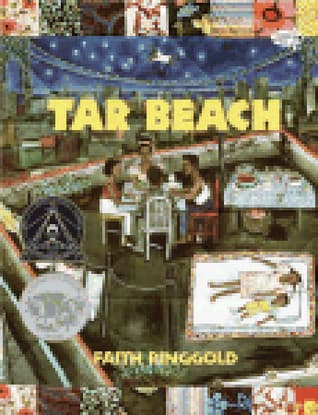
The story is rooted in African American identity and heritage, from the Harlem setting in the 1930s to the specific struggles her father faced. The story celebrates strength within the community, using the 'tar beach' as a unique cultural space. Ringgold's visual style, often inspired by story quilts, further supports this theme, connecting the story to a rich tradition of Black artistic expression and storytelling. Cassie's dreams are not just personal but also reflect a shared desire for freedom and recognition.
“Sleeping on 'tar beach' was better than any air-conditioned bedroom, and cooler than any park with its grass and trees.”
Plot Devices & Literary Techniques
Magical Realism
The blending of a realistic setting with fantastical elements, such as flying.
The story seamlessly integrates the magical act of Cassie flying with the very real and grounded setting of 1939 Harlem. This device allows for a deeper exploration of themes like freedom and empowerment, as Cassie's fantastical abilities directly address the real-world limitations and injustices she and her family face. The flying isn't questioned within the narrative; it's presented as a natural extension of Cassie's inner world, making the symbolic acts of 'claiming' feel tangible and impactful.
First-Person Narration
The story is told from the perspective of the protagonist, Cassie Louise Lightfoot.
By telling the story through Cassie's eyes, the reader gains intimate access to her thoughts, feelings, and imaginative world. This perspective makes her dreams and desires deeply personal and relatable. Her innocent yet profound voice allows complex themes like racial injustice to be understood through a child's hopeful lens, making the message more poignant and accessible. It emphasizes the subjective power of her imagination.
Symbolism of Flight
Flying represents freedom, empowerment, and transcending limitations.
Cassie's ability to fly is the most prominent symbol in the story. It represents her escape from the economic and racial constraints of her reality, offering her a sense of boundless freedom and control. Her flights are not just physical; they are acts of symbolic empowerment, allowing her to 'claim' what is rightfully hers or her family's, and to soar above the struggles that ground others. It embodies the human spirit's capacity to rise above adversity through imagination and hope.
The 'Tar Beach' Setting
The rooftop serves as both a mundane family gathering spot and a magical launchpad.
The 'tar beach' is a powerful symbol of transformation. What is in reality a tar-papered rooftop, a common feature of city apartments, becomes in Cassie's imagination a magical, cool, and liberating space. It's where her family finds respite from the heat and where Cassie finds the inspiration to fly. This duality highlights how ordinary environments can be imbued with extraordinary meaning and possibility through the lens of imagination and childhood wonder.
Tar Beach Quotes
“I will fly over the city, past the Empire State Building, and the George Washington Bridge, and the lights of the city will be like diamonds.”
“Being eight years old and flying over New York City is the best.”
“That's me, Cassie Louise Lightfoot, and I'm flying.”
“My daddy could fly. He took me flying over the bridge to see where he helped build it.”
“I can fly anywhere I want to. And I can make anything happen.”
“The stars were so close that I could almost touch them.”
“This is my building. My daddy helped build it. He's a union man.”
“I flew over the bridge, the George Washington Bridge, that Daddy helped build.”
“I took my brother Be Be up with me. He was scared at first, but then he loved it.”
“I can fly over the city and look down on everyone.”
“I claimed it for my own. There ain't nobody gonna tell me I can't have it.”
“The stars were sparkling like diamonds on a black velvet cloth.”
“All you have to do is fly up above the surface of the earth and look down.”
“I will always remember my daddy and how he helped build the most beautiful bridge in the world.”
Quiz
10 questions on the plot and the characters. Each answer comes with a short explanation.
Question 1
What is the name of the eight-year-old protagonist who dreams of flying in 'Tar Beach'?
- Faith Ringgold
- Cassie Louise Lightfoot
- Bebe Lightfoot
- Harlem Rose
Show answer
B. Cassie Louise Lightfoot The main character and narrator of 'Tar Beach' is Cassie Louise Lightfoot, an eight-year-old girl.
Question 2
What year does Cassie's dream adventure take place in 'Tar Beach'?
- 1929
- 1949
- 1939
- 1959
Show answer
C. 1939 The story explicitly states that Cassie's dream adventure takes place in 1939 Harlem.
Question 3
What specific landmark does Cassie's father want to own, which Cassie tries to 'claim' by flying over it?
- The Empire State Building
- The George Washington Bridge
- The Brooklyn Bridge
- The Statue of Liberty
Show answer
B. The George Washington Bridge Cassie flies over the George Washington Bridge, claiming it for her father so he wouldn't have to 'join the union' to work on it.
Question 4
What is the 'tar beach' in the title of the book?
- A specific beach in New York City where Cassie goes
- The rooftop of Cassie's apartment building
- A local park covered in asphalt
- A nickname for Harlem's streets
Show answer
B. The rooftop of Cassie's apartment building The 'tar beach' refers to the tar-covered rooftop of Cassie's apartment building, where her family relaxes.
Question 5
What does Cassie's ability to fly symbolize in the story?
- Her desire to become an airplane pilot
- A literal escape from her living situation
- The power of imagination and the ability to overcome limitations
- Her family's wealth and privilege
Show answer
C. The power of imagination and the ability to overcome limitations Cassie's flying symbolizes the freedom and power of imagination, allowing her to 'master her world' and claim things she desires.
Question 6
What specific job did Cassie's father have that limited his opportunities, prompting Cassie's desire to 'claim' things for him?
- A construction worker who couldn't join the union
- A taxi driver struggling to make ends meet
- A musician unable to get gigs in Harlem
- A store owner whose business was failing
Show answer
A. A construction worker who couldn't join the union Cassie mentions her father couldn't join the union and thus couldn't work on the George Washington Bridge, inspiring her to 'claim' it for him.
Question 7
Besides the George Washington Bridge, what other significant item does Cassie 'claim' by flying over it, related to her family?
- The stars and the moon for her mother
- A new apartment building for her family
- The entire ice-cream factory for her brother
- A fancy car for her grandparents
Show answer
C. The entire ice-cream factory for her brother Cassie flies over the ice-cream factory and claims it for her brother, suggesting he could have all the ice cream he wants.
Question 8
The story is described as 'part autobiographical, part fictional.' What aspect of the story most clearly reflects Faith Ringgold's own background?
- Cassie's desire to travel the world
- The setting of 1930s Harlem and the experiences of an African-American family
- The magical ability to fly and grant wishes
- The specific names of Cassie's family members
Show answer
B. The setting of 1930s Harlem and the experiences of an African-American family Faith Ringgold grew up in Harlem in the 1930s, making the setting and the cultural context of the family's life a strong autobiographical element.
Question 9
How does Cassie describe the feeling of flying and looking down at the world, particularly in relation to her family?
- It makes her feel lonely and isolated from them.
- It gives her a sense of power and the ability to change their circumstances.
- It makes her wish she could stay in her dream forever.
- It reminds her of her limitations and struggles.
Show answer
B. It gives her a sense of power and the ability to change their circumstances. Cassie's flying allows her to 'claim' things for her family, giving her a sense of agency and power to improve their lives, even if only in her dreams.
Question 10
What artistic medium or style is 'Tar Beach' primarily known for, as mentioned in the book's description?
- Black and white photography
- Simple line drawings
- Spectacular artwork resonating with color and texture, often in a quilt-like style
- Digital animation stills
Show answer
C. Spectacular artwork resonating with color and texture, often in a quilt-like style The book description highlights the 'spectacular artwork resonates with color and texture,' characteristic of Faith Ringgold's story quilts, which 'Tar Beach' is based on.
Tar Beach FAQ
What is the main premise of 'Tar Beach'?
'Tar Beach' follows eight-year-old Cassie Louise Lightfoot as she dreams of flying above her Harlem neighborhood in 1939. From her rooftop, which she calls 'tar beach,' she soars over significant landmarks and uses her newfound power to claim ownership of important places and people, intertwining fantasy with the realities of her life.
Who is Cassie Louise Lightfoot, and what are her aspirations?
Cassie Louise Lightfoot is the imaginative protagonist who dreams of being free to go wherever she wants. She longs for a life where she can claim not only the George Washington Bridge but also the ice cream factory and even her father's union, symbolizing her desire for agency, prosperity, and connection to her family's legacy.
What is the significance of the 'tar beach' rooftop in the story?
The 'tar beach' rooftop is Cassie's sanctuary and launching pad for her dreams. It's a real place where her family gathers, eats, and sleeps to escape the summer heat, but in her imagination, it becomes the literal point from which she gains the power of flight, transforming a mundane space into a magical one.
What historical period and setting does the book depict?
The book is set in Harlem, New York, in 1939, during a period of significant cultural and social change for African Americans. It subtly references the challenges and dreams of the era, from the Great Depression's impact on working families to the vibrant community life.
How does Cassie's family play a role in her flying adventures?
Cassie's family, particularly her father, is central to her motivations. She wishes to claim the George Washington Bridge for him, as he helped build it but couldn't join the union due to racial barriers. Her desire to claim things for her family reflects her love and her wish to improve their circumstances.
What specific historical detail about Cassie's father is revealed through her flight?
Cassie reveals that her father, a skilled builder, helped construct the George Washington Bridge but was not allowed to join the union because he was Black. This detail highlights the racial discrimination prevalent in 1939 and underscores Cassie's desire to symbolically right this injustice by claiming the bridge for him.
Are there any hidden symbols in the objects Cassie wants to claim?
Yes, the objects Cassie wants to claim are highly symbolic. The George Washington Bridge represents her father's unrecognized labor and the aspirations of the Black community. The ice cream factory symbolizes material comfort and childhood joy, while claiming her father's union represents a desire for justice, equality, and collective strength.
How does the quilt art style contribute to the storytelling?
Faith Ringgold's signature quilt art style, with its vibrant colors and narrative panels, blurs the line between fine art and folk art, mirroring the blend of reality and fantasy in Cassie's story. The quilt format itself suggests warmth, comfort, and the passing down of stories through generations, much like a family heirloom.
What is the psychological significance of Cassie's ability to fly?
Cassie's ability to fly represents her burgeoning sense of agency and empowerment in a world where she, as a young Black girl, might otherwise feel powerless. It's a psychological coping mechanism, allowing her to transcend limitations, control her environment, and fulfill her deepest desires, even if only in her dreams.
How does Cassie's perspective as an eight-year-old shape the narrative's emotional tone?
Cassie's eight-year-old perspective imbues the narrative with a sense of wonder, innocence, and unbridled imagination. Her emotional tone is hopeful and determined, despite the underlying historical realities, allowing the story to be both deeply personal and universally appealing through the lens of a child's pure desire for freedom and justice.
Does Cassie's flight symbolize escapism or empowerment?
Cassie's flight is more accurately interpreted as empowerment rather than pure escapism. While it allows her to momentarily transcend her reality, her actions are deliberate and focused on claiming things for her family and community, reflecting a proactive desire to alter her world, even if only in her imagination, rather than simply fleeing it.
What is the allegorical meaning behind Cassie 'claiming' the George Washington Bridge?
The allegorical meaning behind Cassie claiming the George Washington Bridge is a powerful statement about unrecognized labor and racial injustice. By 'owning' it, she symbolically reclaims the dignity and contribution of her father and others like him who were denied their rightful place due to discrimination, asserting their legacy and inherent worth.
How does the book blend autobiography and fiction?
Faith Ringgold blends autobiography and fiction by drawing on her own childhood experiences growing up in Harlem during the 1930s. While Cassie's flying adventures are fictional, the setting, the family dynamics, and the underlying themes of racial struggle and aspiration are deeply rooted in Ringgold's personal history, making the narrative resonate with authenticity.
Is 'Tar Beach' primarily a children's book or does it have deeper adult themes?
While 'Tar Beach' is accessible and enjoyable for children due to its fantastical elements and vibrant art, it possesses profound adult themes of racial injustice, economic hardship, the power of dreams, and the legacy of family. Its layers of meaning make it a rich text for readers of all ages to interpret and discuss.
What message about dreams and reality does 'Tar Beach' convey?
'Tar Beach' conveys that dreams are not just escapist fantasies but powerful tools for processing reality, asserting desires, and envisioning a better future. Cassie's dreams allow her to symbolically overcome real-world limitations and injustices, suggesting that imagination can be a profound source of strength and hope in the face of adversity.
About the author

Faith Ringgold is an American artist and author known for her contributions to children's literature and visual art. Her book "Tar Beach" is a notable work that combines storytelling with her distinctive quilt-making style, reflecting themes of family and community. Ringgold's work often addresses issues of race and identity, making her a significant figure in contemporary art and literature.
Similar books
- A Chair for My Mother
Vera B. Williams
4.2 (25k) average on GoodreadsChildren'sShares themes of family, dreams, and overcoming financial hardship from a child's perspective, with warm illustrations.
- The Snowy Day
Ezra Jack Keats
4.2 (104k) average on GoodreadsChildren'sA classic children's book celebrating the simple joys and imagination of a child in an urban setting, with vibrant art.
- The Little House
Virginia Lee Burton
4.3 (39k) average on GoodreadsFantasyBurton's book explores the physical transformation of a rural landscape into an urban one, focusing on observation and the passage of time. Ringgold's Tar Beach, conversely, focuses less on the city's physical changes and more on the individual's aspirational and spiritual relationship to their urban environment, using flight as a metaphor for transcending personal and societal limitations rather than merely observing them.
- Harry Potter and the Sorcerer's Stone
J.K. Rowling
4.5 (7M) average on GoodreadsFantasyRescued from a miserable life under the stairs, an orphaned boy discovers he's a wizard destined for a magical school, where he uncovers a dangerous secret tied to the dark wizard who murdered his parents.
- The Hunger Games
Suzanne Collins
4.3 (6.4M) average on GoodreadsFantasyIn a future where children fight to the death on live television, Katniss Everdeen volunteers for the arena, turning a death sentence into a fight for survival and a spark of rebellion.
- 1984
George Orwell
4.2 (3.1M) average on GoodreadsPoliticsIn a future where surveillance and thought control are absolute, a man's search for truth clashes with the Party, showing that hope can be a form of rebellion.






Enjoyed the summary?
A summary gives you the shape of the book. The book itself has the detail, the examples and the voice.
Find Tar Beach on AmazonAs an Amazon Associate, BookBrief earns from qualifying purchases. How we're funded