
Synopsis
Covers the whole plot, including the ending.
- Difficulty
- Easy
- Pacing
- Slow
- Mood
- Whimsical, Calm, Joyful, Reflective
- Read it if
- You want to share a timeless, gentle story about the simple joys of childhood and the magic of a snowy day, perfect for very young readers.
- Skip it if
- You are looking for a complex plot, fast-paced action, or extensive dialogue; this book is a quiet, observational experience.
The Snowy Day Plot Summary
Covers the whole plot, including the ending.
A World Transformed by Snow
The story begins with Peter, a young boy, waking up to the first snowfall of the season. His window shows a world completely changed, covered in a thick, white blanket of snow. Peter is happy about this change and watches the snow pile up, excited for the adventures outside. He quickly dresses in his snowsuit, ready to explore the new snowy place. His mother watches him with a smile as he gets ready to go out.
Exploring the Snowy Landscape
Outside, Peter steps into the deep snow. He makes footprints and drags his feet to create long trails. He sees a big pile of snow and decides to climb it, pretending he is a mountain climber. From the top, he slides down, feeling the cold air and the soft snow. He also sees snow on the tree branches, making white shapes against the sky, which adds to his morning adventure.
Snow Play and Imagination
Peter continues his play by making a snow angel. He lies in the fresh snow and moves his arms and legs to make the shape of wings and a body. He then sees older boys having a snowball fight, but he is too young to join them. So, he makes his own snowball, packing the snow tightly. He throws it at a tree, enjoying the sound it makes when it hits. He finds many ways to play with the snow.
Building a Snowman
With so much snow, Peter starts to build a snowman. He rolls a large snowball for the body, then a smaller one for the head. He finds small sticks for the snowman's arms and puts a rock for its nose. He steps back to look at his creation, feeling proud. The snowman stands in the fresh snow, showing Peter's creative play and his enjoyment of the winter day. He spends time making his snowy friend perfect.
A Special Snowball
Before going inside, Peter makes one last snowball. He carefully packs it and decides to save it. He puts the special snowball in his pocket, wanting to keep it as a memory of his wonderful snowy day. He wants to hold onto the magic and joy he felt, hoping to keep a piece of the winter world he explored. With his treasure safe, he walks home, the cold air on his nose.
Warmth and Reflection
Inside his warm house, Peter takes off his wet snowsuit and gets into a warm bath. As he soaks, he thinks about all the fun he had outside: making tracks, sliding down the snow mountain, making a snow angel, and building his snowman. The memories of his snowy adventures make him smile. The warm bath feels good after the cold outside, letting him relax and enjoy the day's experiences.
The Disappearing Snowball
After his bath, Peter remembers the special snowball in his pocket. He reaches into his pocket, but it is empty. The snowball is gone. He looks around and sees a small puddle of water on the floor, realizing his treasured snowball has melted. He feels sad as he understands he could not keep the snow forever. He learns about how quickly snow disappears in this quiet moment.
Dreaming of More Snow
Feeling a bit sad about the melted snowball, Peter goes to bed. As he falls asleep, he dreams of the snow, imagining the sun melting it all. But then, in his dream, he sees the sun go down, and snow starts to fall again. The dream brings hope, suggesting that the snowy adventures are not over. He wants another day with snow, looking forward to the joy it brings.
A New Snowy Morning
The next morning, Peter wakes up to an even better sight: it snowed all night, and the snow is higher than before. His sadness about the melted snowball is replaced by new excitement and wonder. He quickly dresses and calls to his friend next door, inviting him to play in the fresh, deep snow. The story ends with Peter and his friend going out together, ready for a new day of snowy adventures, showing the endless possibilities of childhood fun.
Principal Figures
Peter
Protagonist
A young boy who finds joy and wonder in a snowy day.
Peter is a curious, imaginative, and observant young boy who serves as the central character of the story. He embodies the pure joy and wonder of childhood as he experiences his first significant snowfall. His actions, from making footprints to building a snowman, reflect a child's natural inclination to explore and interact with their environment. He is resilient, bouncing back from the disappointment of his melted snowball to embrace the promise of more snow. Peter's quiet contemplation and active play illustrate the simple yet profound experiences of early childhood.
Relationships: Mother (caring and supportive); Friend (unnamed) (playmate for future adventures)
Peter's Mother
Supporting
A background figure who provides warmth and security for Peter.
Peter's mother is a quiet, supportive presence in the story. She is seen initially watching Peter prepare to go outside, and then later, she is implied to be the one who draws his warm bath. Her role is primarily to provide a safe and nurturing home environment for Peter, allowing him the freedom to explore and experience the world outside. She represents the comforting presence of a parent, ensuring Peter's well-being while he enjoys his childhood adventures. Her presence reinforces the feeling of security that allows Peter's imagination to flourish.
Relationships: Peter (mother-son relationship)
Older Boys
Mentioned
A group of boys engaged in a snowball fight, representing a slightly older peer group.
The older boys are briefly observed by Peter as they are engaged in a snowball fight. They serve as a point of reference for Peter, showing him an activity he is not yet old enough or perhaps skilled enough to join. Their presence highlights Peter's own age and the different stages of childhood play. While Peter watches them, he doesn't feel left out; instead, he is inspired to create his own snowball and play in his own way, demonstrating his independent spirit and self-reliance.
Relationships: Peter (observed peer group)
Peter's Friend (unnamed)
Supporting
A friend invited to play in the snow on the second day.
Peter's unnamed friend appears at the very end of the story, symbolizing the communal joy of play. After a day of solitary adventure, Peter calls for his friend, indicating a desire to share the renewed snowy wonderland. This character represents the transition from individual exploration to shared experiences, a natural progression in childhood development. The friend's presence signifies the potential for new, shared adventures and reinforces the idea that joy can be amplified when shared with others.
Relationships: Peter (childhood friend)
Themes & Insights
Childlike Wonder and Exploration
The main theme is Peter's pure wonder and joy when he experiences fresh snow. Every interaction, from making footprints to building a snowman, shows discovery and delight. Keats captures the magic through Peter's eyes, showing how ordinary things like snow become special places for a child's imagination. This theme is clear when Peter marvels at the snow on trees and slides down a snow pile, feeling like a mountain climber.
“He made a long, long path, by dragging his feet. And he also made some tracks, all by himself.”
The Ephemeral Nature of Joy and Loss
The story gently shows that some joys are short-lived. Peter tries to save the snow by putting a snowball in his pocket, but it melts. This shows a child's first encounter with loss and how things do not last. This moment of sadness quickly goes away with the new joy of another snowfall, teaching a gentle lesson about accepting what cannot be kept and finding new happiness. This theme is strongest when Peter finds the puddle.
“But when he put his hand in his pocket, his pocket was empty. His snowball had melted!”
Imagination and Play
Peter's day in the snow shows the power of a child's imagination. He turns a snow pile into a mountain, a flat surface into a place for snow angels, and a simple snowball into a toy for a pretend fight with a tree. His solitary play is full of self-made stories and activities, showing how children can find endless fun and creative ways to play with simple natural elements. All of Peter's activities outside show this theme.
“He climbed up on a big, big mountain of snow and slid all the way down.”
Resilience and Hope
Even though Peter is briefly disappointed by his melted snowball, he quickly recovers. His dream of snow returning, followed by the actual new snowfall the next morning, emphasizes resilience and the way hope comes back. It suggests that even when one joy ends, new chances for happiness and adventure will appear. Peter's excited call to his friend at the story's end reinforces this message of new optimism and the promise of future fun.
“And when he woke up, his room was very warm. The snow was still there, and it was piled up very high in front of his house.”
Plot Devices & Literary Techniques
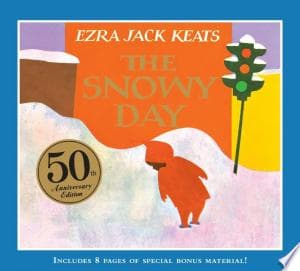
Collage Illustration
A visual technique combining cut paper and ink to create distinct textures and depth.
Keats famously used collage as his primary illustration technique in 'The Snowy Day.' This involves cutting out shapes from patterned paper and combining them with ink drawings to create the characters and settings. For instance, Peter's patterned snowsuit and the textured snowdrifts are created using this method. The collage adds a tactile quality and depth to the images, making the snow feel almost palpable and giving the characters a unique, handcrafted appearance that enhances the story's charm and childlike innocence.
Repetition and Simplicity
The use of simple, repetitive language to mirror a child's thought process.
The narrative employs simple sentence structures and occasional repetition, reflecting the direct and uncomplicated perspective of a young child. Phrases like 'Crunch, crunch, crunch' for Peter's footsteps or the straightforward descriptions of his actions (e.g., 'He made a snow angel. He made another.') create a rhythmic, accessible text. This simplicity makes the story highly engaging for young readers and effectively conveys Peter's focused, sensory experience of the snow without overly complex language or plot points.
Sensory Imagery
Descriptions that appeal directly to the five senses to immerse the reader in Peter's experience.
Keats utilizes sensory imagery to bring Peter's snowy day to life. The 'crunch, crunch, crunch' of Peter's feet in the snow, the feeling of the 'soft' snow when he slides down, the visual of the 'big, big mountain of snow,' and the warmth of his bath are all vivid sensory details. These descriptions allow young readers to feel the cold, see the white landscape, and experience the textures alongside Peter, making his adventures more immediate and relatable. The melted snowball leaving a 'little puddle' also appeals to sight and touch.
Symbolism of the Snowball
A small object that symbolizes Peter's attempt to hold onto transient joy.
The snowball Peter puts in his pocket serves as a powerful symbol. It represents his desire to preserve a moment of pure joy and the magic of the snowy day. Its inevitable melting symbolizes the ephemeral nature of childhood moments and the reality that some experiences cannot be literally kept. The subsequent arrival of more snow, however, symbolizes the cyclical nature of life and the promise that new joys and adventures will always come, even after a previous one has passed.
The Snowy Day Quotes
“One winter morning Peter woke up and looked out the window. Snow had fallen during the night. It covered everything as far as he could see.”
“He made a snowball and put it in his pocket for tomorrow.”
“Crunch, crunch, crunch, his feet sank into the snow.”
“He dragged his feet s-l-o-w-l-y to make tracks.”
“Then he went home and told his mother all about his adventures while she took off his wet socks.”
“He thought and thought and thought about them.”
“Before he got into bed he looked in his pocket. His pocket was empty.”
“The next day was warm. The snow was melting.”
“After breakfast he called to his friend from the window, and they went out together into the deep, deep snow.”
“He picked up a handful of snow—and another, and still another.”
“He smiled and smiled.”
“He woke up to find the snow had melted, but he knew that more would come.”
“He made a snowman and snow angels.”
“The snow was piled up very high.”
Quiz
10 questions on the plot and the characters. Each answer comes with a short explanation.
Question 1
What is the name of the little boy who is the main character in 'The Snowy Day'?
- Peter
- David
- Michael
- Sam
Show answer
A. Peter The main character is a little boy named Peter, who explores his city neighborhood on a snowy day. This was significant as one of the first picture books to feature an African American child as the protagonist.
Question 2
What does Peter do with the snowball he makes during his snowy day adventure?
- He throws it at a friend
- He puts it in his pocket to save for later
- He uses it to build a snowman
- He gives it to his mother
Show answer
B. He puts it in his pocket to save for later Peter makes a snowball and puts it in his pocket, hoping to keep it. Later, he discovers it has melted, which teaches him about the temporary nature of snow.
Question 3
What award did 'The Snowy Day' win in 1963?
- Newbery Medal
- Caldecott Medal
- Coretta Scott King Award
- National Book Award
Show answer
B. Caldecott Medal 'The Snowy Day' won the Caldecott Medal in 1963, which is awarded annually to the artist of the most distinguished American picture book for children.
Question 4
What does Peter do to make tracks in the snow?
- He uses a stick to draw patterns
- He walks with his feet pointed out and then pointed in
- He rides his sled back and forth
- He jumps up and down to make footprints
Show answer
B. He walks with his feet pointed out and then pointed in Peter experiments with walking in different ways—first with his feet pointed out like a duck, then with his feet pointed in—to create different tracks in the fresh snow.
Question 5
Why is 'The Snowy Day' considered a trailblazer in children's literature?
- It was the first book to use collage illustrations
- It was the first full-color picture book to feature a small black hero
- It introduced interactive elements like lift-the-flaps
- It was the first book about winter published in America
Show answer
B. It was the first full-color picture book to feature a small black hero As noted by sources like Horn Book magazine, 'The Snowy Day' was groundbreaking for being the first full-color picture book with an African American child as the central character, helping diversify children's literature.
Question 6
What happens when Peter tries to join the older boys in a snowball fight?
- They welcome him and let him play
- They ignore him and continue playing
- He decides not to join and watches from afar
- They give him a snowball to throw
Show answer
C. He decides not to join and watches from afar Peter sees older boys having a snowball fight and considers joining, but he decides he's not big enough and instead watches them before moving on to other activities.
Question 7
What artistic technique did Ezra Jack Keats primarily use in the illustrations for 'The Snowy Day'?
- Watercolor painting
- Collage with cut paper and textures
- Pen and ink drawings
- Digital artwork
Show answer
B. Collage with cut paper and textures Keats used collage techniques, combining cut paper, fabric, and other textured materials to create the book's distinctive and innovative illustrations.
Question 8
What does Peter dream about at the end of the snowy day?
- That the sun melted all the snow
- That he became a snowman
- That he could fly over the city
- That he found more snowballs in his pocket
Show answer
A. That the sun melted all the snow After his bath, Peter dreams that the sun has melted all the snow away. This reflects a child's anxiety about losing something wonderful, but he wakes to find more snow has fallen.
Question 9
Which of the following best describes a central theme of 'The Snowy Day'?
- The importance of family traditions in winter
- A child's sense of wonder and discovery in everyday moments
- The dangers of playing outside in cold weather
- Learning to share with friends during play
Show answer
B. A child's sense of wonder and discovery in everyday moments The book captures the theme of childhood wonder and the joy of discovery as Peter explores the simple pleasures of a snowy day, emphasizing imagination and sensory experience.
Question 10
How does the book conclude regarding the snow after Peter's dream?
- All the snow has melted, and Peter is disappointed
- Peter wakes to find it's still snowing, and he goes out again with a friend
- The snow turns to rain, ending the winter fun
- Peter's mother tells him the snow will return next year
Show answer
B. Peter wakes to find it's still snowing, and he goes out again with a friend After his worrisome dream, Peter wakes up to discover that it's still snowing. The final page shows him going outside again, this time with a friend, suggesting the continuation of wonder and play.
The Snowy Day FAQ
What is 'The Snowy Day' about?
The book follows a young boy named Peter as he explores his urban neighborhood after a fresh snowfall. He makes footprints, builds a snowman, slides down hills, and even tries to save a snowball for later, capturing the simple joys and discoveries of a child's snowy adventure.
Why should I read 'The Snowy Day'?
It's a timeless, award-winning classic that beautifully portrays childhood wonder and the universal excitement of snow. As one of the first mainstream picture books to feature a Black protagonist, it also holds historical significance in children's literature, making it both charming and culturally important.
What is the background/setting of 'The Snowy Day'?
The story is set in a mid-20th century urban environment, likely inspired by New York City, where Ezra Jack Keats lived. The illustrations show apartment buildings, fences, and snowy streets, creating a cozy, relatable cityscape that contrasts with the magical white blanket of snow.
What are the most memorable quotes?
While the text is minimal, key lines include 'Crunch, crunch, crunch, his feet sank into the snow' and 'He thought it would be fun to join the big boys in their snowball fight, but he knew he wasn't old enough.' These simple phrases evoke sensory experiences and childhood emotions vividly.
What writing style does the author use?
Ezra Jack Keats uses sparse, poetic prose with repetitive sounds like 'crunch' and 'plop' to mimic the sensory experience of snow. The text is concise and child-friendly, allowing the collage illustrations to carry much of the storytelling and emotional weight.
What minor details add significant meaning?
Small details like Peter's red snowsuit stand out against the white snow, symbolizing warmth and individuality. The melting snowball in his pocket subtly represents the fleeting nature of childhood moments, adding a layer of poignancy to the simple plot.
What are some subtle foreshadowing moments?
When Peter puts the snowball in his pocket, the text doesn't explicitly state it will melt, but the careful depiction of his pocket and later discovery hints at impermanence. This foreshadows the theme that some wonders can't be preserved, only cherished in memory.
What unexpected character connections exist?
Though Peter is the sole focus, the brief appearance of 'the big boys' in their snowball fight creates a subtle connection to older childhood. This contrast highlights Peter's age and innocence, emphasizing his solitary exploration as a distinct stage of development.
What are unspoken character motivations?
Peter's actions are driven by pure curiosity and a desire to interact with his transformed world. His attempt to save the snowball stems from an unconscious wish to hold onto the magic of the day, reflecting a child's early grasp of transience and memory.
What psychological complexities do characters exhibit?
Peter shows a mix of independence and vulnerability—he explores alone but also observes older boys from a distance, indicating a developing social awareness. His disappointment over the melted snowball reveals an emerging understanding of loss, balanced by resilience as he dreams of more snow.
What are the major emotional turning points?
Key moments include Peter's joyful discovery of snow angels and sliding, his hesitant observation of the snowball fight (feeling excluded), his sadness when the snowball melts, and the hopeful ending where he dreams of new snow, cycling from wonder to mild loss to renewed anticipation.
How do relationship dynamics evolve?
Peter's relationship with his environment is central—he moves from solitary play to briefly engaging with imagined elements (like the snowman) and observing others. This mirrors a child's growing interaction with the world, though the focus remains on his personal journey rather than social bonds.
Which parts remain ambiguous or open-ended?
The story doesn't specify Peter's exact age or family background, leaving room for readers to project their own experiences. The ending—where he dreams of more snow—is open-ended, suggesting the cyclical nature of joy and anticipation without resolving whether it snows again.
What are controversial scenes or decisions?
Upon its 1962 publication, some criticized the book for not explicitly addressing race, though its quiet normalization of a Black child in a universal story was groundbreaking. Today, it's celebrated for that representation, with debates focusing on its role in diversifying children's literature subtly.
'The Snowy Day' ending explained: how it ends & what it means
The book ends with Peter dreaming of the sun melting all the snow, then waking to find more snow has fallen. This symbolizes hope and renewal, implying that wonder can be rediscovered. It reinforces themes of impermanence and resilience, as Peter looks forward to new adventures rather than dwelling on loss.
About the author
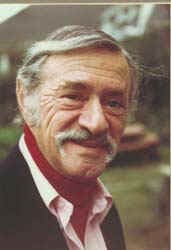
Ezra Jack Keats was an American writer and illustrator of children's books. He won the 1963 Caldecott Medal for illustrating The Snowy Day, which he also wrote. Keats wrote A Letter to Amy and Hi, Cat! but he was most famous for The Snowy Day. It is considered one of the most important American books of the 20th century.
Similar books
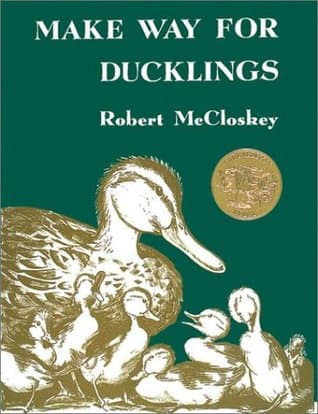
- Make Way for Ducklings
Robert McCloskey
4.2 (84k) average on GoodreadsChildren'sBoth are Caldecott Medal winners known for their distinctive illustrations. McCloskey's book features animal characters in a specific urban setting with detailed pen-and-ink drawings, focusing on a family's journey. Keats, in contrast, centers on a human child's individual experience and emotions, using vibrant collage to create a more intimate and universally relatable visual narrative.
- Harry Potter and the Sorcerer's Stone
J.K. Rowling
4.5 (7M) average on GoodreadsFantasyRescued from a miserable life under the stairs, an orphaned boy discovers he's a wizard destined for a magical school, where he uncovers a dangerous secret tied to the dark wizard who murdered his parents.
- The Hobbit, or There and Back Again
J.R.R. Tolkien
4.3 (2.9M) average on GoodreadsFantasyA comfort-loving hobbit named Bilbo Baggins is whisked away by a mischievous wizard and a band of dwarves on an unexpected journey to reclaim stolen treasure from a fearsome dragon, discovering courage and a magical ring along the way.
- Harry Potter and the Goblet of Fire
J.K. Rowling
4.6 (2.6M) average on GoodreadsFantasyA bewildered Harry Potter, underage and thrust into a deadly Triwizard Tournament, must brave dragons, mermaids, and a resurgent dark magic to survive a year that will forever alter the wizarding world.
- Harry Potter and the Order of the Phoenix
J.K. Rowling
4.5 (2.5M) average on GoodreadsFantasyIn a year of oppressive secrets and the threat of Voldemort, Harry Potter and Dumbledore's Army secretly train for war, shown through Jim Kay and Neil Packer's dark illustrations.
- The Lightning Thief
Rick Riordan
4.3 (2M) average on GoodreadsFantasyThrust into a world of mythological monsters and divine treachery, an ordinary boy discovers he's the son of Poseidon and must embark on a perilous quest across modern America to prevent an Olympian war.





Enjoyed the summary?
A summary gives you the shape of the book. The book itself has the detail, the examples and the voice.
Find The Snowy Day on AmazonAs an Amazon Associate, BookBrief earns from qualifying purchases. How we're funded