
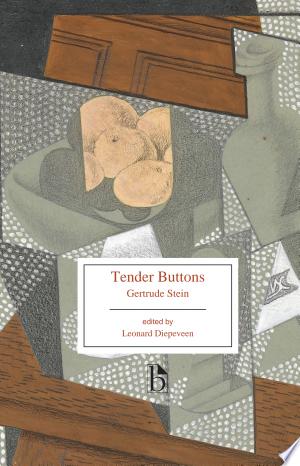

Estimated read time: 5 min read
One Sentence Summary
A collection of abstract and experimental prose poems that challenge traditional notions of language and meaning.
Table of Contents
Introduction
In "Tender Buttons," Gertrude Stein challenges traditional notions of language and meaning, pushing the boundaries of experimental writing. Published in 1914, this collection of prose poetry explores the everyday objects and experiences through a unique lens, emphasizing the musicality and visual aspects of language. Stein's unconventional style, characterized by repetition, fragmentation, and wordplay, invites readers to engage with the text in new and unexpected ways.
Brief Synopsis
"Tender Buttons" is divided into three sections: "Objects," "Food," and "Rooms." Each section consists of a series of prose poems, focusing on the aesthetics and sensory experiences associated with these themes.
Plot Overview and Setting: Unlike traditional narratives, "Tender Buttons" does not follow a specific plot or setting. Instead, Stein presents a series of impressions and observations, highlighting the beauty and significance of everyday objects and experiences.
Main Characters
The "characters" in "Tender Buttons" are not traditional individuals with distinct personalities and backgrounds. Instead, the poems focus on inanimate objects, food, and rooms, personifying them and exploring their significance in our lives.
Here are some of the main characters in "Tender Buttons":
| Character | Description |
|---|---|
| Objects | Everyday items, such as a coat, a plate, or a chair, are personified and explored in terms of their sensory qualities and symbolic meanings. |
| Food | Various types of food, such as sugar, eggs, and potatoes, are depicted in a way that emphasizes their textures, tastes, and cultural associations. |
| Rooms | Different rooms, like a living room or a bedroom, are presented as spaces that evoke specific moods and experiences. |
Summary of Different Story Points over Chapters
Objects
In the "Objects" section, Stein examines various objects, highlighting their physical characteristics and symbolic meanings. Through repetition and linguistic play, she invites readers to reevaluate their perception of these everyday items. For example, in the poem "A Carafe, That Is a Blind Glass," Stein explores the transparency and fragility of a glass carafe, questioning the boundaries between seeing and not seeing.
Food
In the "Food" section, Stein explores the sensual qualities of different types of food, focusing on their textures, tastes, and cultural significance. Through her fragmented and repetitive language, she creates a sensory experience for the reader. In the poem "Roastbeef," Stein describes the texture and color of the meat, emphasizing its presence and importance in our daily lives.
Rooms
In the "Rooms" section, Stein delves into the atmosphere and emotional resonances of different rooms. Through her unique use of language, she captures the essence of these spaces and their impact on our perception and emotions. In the poem "A Long Dress," Stein evokes the image of a flowing dress to explore the sense of movement and freedom associated with a room.
Main Events
As an experimental collection of prose poetry, "Tender Buttons" does not follow a linear narrative or present specific events. Instead, each poem offers a unique exploration of a particular object, food, or room. The main events in each poem revolve around the sensory qualities, symbolic associations, and emotional resonances evoked by these elements.
Themes and Insights
1. Perception and Reality: Stein's fragmented and repetitive language challenges conventional notions of perception and reality. By emphasizing the sensory qualities of objects, food, and rooms, she invites readers to question their preconceived notions and engage with the world in a more direct and immediate way.
2. Beauty in the Everyday: "Tender Buttons" celebrates the beauty and significance of everyday objects and experiences. Through Stein's unique poetic style, even the most mundane items are elevated to objects of contemplation and wonder, prompting readers to reassess their surroundings and find beauty in the ordinary.
3. Language and Meaning: Stein's experimental use of language raises questions about the nature of meaning and communication. By disrupting traditional syntax and word associations, she challenges readers to actively participate in the process of interpretation, highlighting the subjective and fluid nature of language.
Reader's Takeaway
Reading "Tender Buttons" is a journey into the realm of experimental poetry and a challenge to traditional ways of understanding language and meaning. Stein's unique style and innovative use of language may initially appear daunting, but with an open mind, readers can engage with the text on multiple levels. The collection encourages a new way of perceiving the world and invites readers to explore the beauty and significance of the everyday.
Conclusion
Gertrude Stein's "Tender Buttons" is a groundbreaking work of experimental poetry that defies traditional literary conventions. Through her fragmented and repetitive language, Stein explores the aesthetics and sensory experiences associated with everyday objects, food, and rooms. By challenging readers to reevaluate their perception of these elements, she invites them to engage with the text in new and unexpected ways. "Tender Buttons" is a testament to the power of language to transform our understanding of the world and to find beauty in the ordinary.
Tender Buttons FAQ
What is the genre of 'Tender Buttons'?
Tender Buttons is a collection of experimental prose poetry.
Who is the author of 'Tender Buttons'?
Gertrude Stein is the author of 'Tender Buttons'.
When was 'Tender Buttons' first published?
'Tender Buttons' was first published in 1914.
What is the writing style of 'Tender Buttons'?
The writing style of 'Tender Buttons' is characterized by fragmented language, wordplay, and abstract imagery.
What is the subject matter of 'Tender Buttons'?
'Tender Buttons' explores everyday objects and activities through poetic language, often challenging conventional meanings and associations.
Is 'Tender Buttons' a difficult book to read?
Yes, 'Tender Buttons' can be challenging to read due to its experimental style and unconventional use of language.
Are there any recurring themes in 'Tender Buttons'?
Some recurring themes in 'Tender Buttons' include domesticity, gender, and sensory experiences.
Is 'Tender Buttons' considered a significant work in literature?
Yes, 'Tender Buttons' is considered an important and influential work in modernist literature.
Are there any characters or plot in 'Tender Buttons'?
No, 'Tender Buttons' does not have traditional characters or plot. It focuses more on language and imagery.
Can you provide an example of a poem from 'Tender Buttons'?
Sure! Here's an excerpt from 'A Carafe, That Is a Blind Glass': 'A kind in glass and a cousin, a spectacle and nothing strange a single hurt color and an arrangement in a system to pointing. All this and not ordinary, not unordered in not resembling. The difference is spreading.'


