

Synopsis
Covers the whole plot, including the ending.
- Difficulty
- Medium
- Pacing
- Moderate
- Mood
- Dark, Suspenseful, Psychological, Unsettling
- Read it if
- You enjoy dark, psychological thrillers with morally ambiguous characters and a focus on the complexities of human nature and desire.
- Skip it if
- You prefer lighthearted stories, explicit resolutions, or are sensitive to themes of violence and psychological disturbance.
Tenderness Plot Summary
Covers the whole plot, including the ending.
Release and a New Hunt
Eighteen-year-old Eric Poole is released from juvenile detention, having served time for the murder of his parents. Despite his calm appearance, a deep pathology drives him. He believes he finds 'tenderness' in killing young women, a ritual he needs to feel complete. His parole officer, Mr. Theaman, observes Eric with suspicion and a desire for him to succeed, but is unaware of Eric's true nature. Eric quickly secures a job and a room, all while planning his next hunt. He begins frequenting the bus station, a place where vulnerable, runaway girls often gather, searching for his next 'Angel.' His internal monologue reveals his chilling detachment and twisted perception of intimacy.
Lori's Escape and Yearning
Fifteen-year-old Lori Cranston, feeling unloved by her strict stepfather and distant mother, runs away from her home in Monument, Massachusetts, for the third time. She carries a deep desire for affection, belonging, and to be seen and valued. Lori is both naive and precocious, often using her sexuality for attention, but she truly wants genuine connection. She heads to the bus station, a familiar spot for runaways, hoping to find someone who will offer her the 'tenderness' she seeks. Her past experiences have left her wary but still hopeful, making her susceptible to anyone who offers a semblance of kindness or understanding, even if it is superficial.
The Investigator's Obsession
Detective Jake Geoghan is haunted by a series of unsolved murders of young women, all sharing characteristics similar to Eric Poole's past crimes. Despite Eric's conviction for his parents' murder, Geoghan suspects Eric is responsible for these other deaths, even though Eric was incarcerated for some of them. Geoghan's superiors dismiss his theories, but he remains convinced of Eric's guilt and believes Eric has an accomplice or a copycat. He tracks Eric's movements, interviews people connected to him, and pores over case files, driven by a personal vendetta and a desire for justice for the victims. Geoghan's pursuit becomes an obsession, making him a formidable, though often frustrated, antagonist to Eric.
First Encounters and Misinterpretations
Lori arrives at the bus station, feeling vulnerable and alone. She spots Eric, who is observing the crowd with a predatory gaze, though Lori interprets it as quiet intensity. Their eyes meet, and a brief, unspoken connection forms. Lori, desperate for tenderness, sees Eric as a potential savior, someone kind and understanding, perhaps a fellow lost soul. Eric, on the other hand, recognizes Lori as a potential 'Angel,' a perfect candidate for his dark ritual, drawn to her vulnerability and beauty. He approaches her, offering a simple gesture of kindness—a shared cigarette—which Lori eagerly accepts, misinterpreting his true intentions as genuine interest and compassion. This initial encounter sets the stage for their intertwined fates.
A Precarious Alliance
After their initial meeting, Lori and Eric spend more time together. Eric, driven by his compulsion, is careful and manipulative, slowly drawing Lori into his world. He offers her the kindness and attention she craves, listening to her stories and offering a sense of stability she has not known. Lori, blinded by her desire for affection, sees Eric as her protector and savior. She is drawn to his quiet intensity, mistaking his controlled demeanor for strength and genuine care. They share intimate moments, but these are always on Eric's terms, designed to further his ultimate goal. Their relationship is a dangerous dance, with Lori unknowingly walking into a predator's trap, while Eric finds himself experiencing unexpected, fleeting moments of something akin to human connection.
Geoghan Closes In
Detective Geoghan's investigation into Eric Poole reaches a fever pitch. He gathers more circumstantial evidence, connecting Eric to the areas where other victims were last seen. Despite the lack of direct proof and the skepticism of his colleagues, Geoghan's intuition tells him Eric is responsible. He places Eric under constant surveillance, watching his every move, particularly his interactions with young women. Geoghan is convinced that Eric is preparing for another murder and feels a desperate urgency to intervene before another life is lost. His pursuit becomes a race against time, as he tries to predict Eric's next move and find the definitive evidence needed to put him away for good, aware that Eric is a master of deception.
The Road Trip
Eric, having planned his next 'tenderness' ritual, convinces Lori to embark on a road trip with him, promising her adventure and a new life together. Lori, feeling increasingly attached to Eric and believing he genuinely cares for her, eagerly agrees. She sees this journey as an escape from her past and a step towards a future with someone who finally understands her. Eric, however, sees it as the perfect opportunity to isolate Lori and carry out his deadly plan in a secluded location. As they travel, their bond deepens in Lori's eyes, while Eric struggles with a nascent, unfamiliar feeling that threatens his carefully constructed pathology. He finds himself conflicted, an internal battle brewing between his dark compulsion and the unexpected connection he feels with Lori.
Internal Conflict and External Threat
As Eric and Lori continue their journey, Eric is increasingly conflicted. Lori's genuine affection and vulnerability begin to chip away at his emotional walls. He experiences moments of genuine tenderness towards her, feelings he never anticipated. This internal struggle, however, does not erase his deep-seated pathology. He still plans to kill her, but the act is becoming more difficult to justify in his own mind. Meanwhile, Detective Geoghan, through tracking and intuition, narrows down Eric's likely destination. He mobilizes a team, determined to intercept Eric before he can harm Lori. The tension mounts as both Eric's internal conflict and Geoghan's external pursuit reach their peak, converging on the remote location Eric has chosen.
The Confrontation
Detective Geoghan and his team finally catch up to Eric and Lori in a secluded, wooded area. The confrontation is sudden and dramatic. Geoghan, armed and determined, orders Eric to surrender, simultaneously trying to warn Lori of the danger she is in. Lori is initially confused and defensive of Eric, unable to comprehend the accusations. Eric, cornered, reacts with a chilling calm, his true nature slowly becoming apparent to Lori. The standoff is fraught with peril, as Eric considers his options, his pathology warring with his newfound, fragile connection to Lori. The truth of Eric's past and his intentions for Lori begins to dawn on her, shattering her illusions and forcing her to confront the horrifying reality of her situation. The scene culminates in a desperate struggle for survival and understanding.
Aftermath and Unresolved Endings
In the chaotic aftermath of the confrontation, Eric is apprehended. Lori, traumatized but alive, is rescued. The immediate danger is over, but the emotional repercussions are profound. Lori is left to grapple with the betrayal and the terrifying realization of how close she came to death, her search for tenderness irrevocably tainted. Detective Geoghan feels a sense of vindication but also exhaustion, knowing the fight to truly understand and contain individuals like Eric is far from over. Eric, back in custody, remains an enigma, his internal self still a mystery. The novel concludes without offering easy answers, emphasizing the lasting impact of trauma, the complexities of human pathology, and the dangerous search for connection and tenderness in a fractured world.
Tenderness Characters
Eric Poole
Protagonist/Antagonist
A charming, intelligent young man with a profound, psychopathic compulsion to kill young women.
Eric Poole is an eighteen-year-old psychopath recently released from juvenile detention for murdering his parents. He is highly intelligent, manipulative, and possesses a chilling outward calm that belies his internal darkness. Eric is driven by a unique compulsion he calls 'tenderness,' which he finds in the act of killing girls. He is methodical and patient in his hunts, viewing his victims as 'Angels.' Despite his pathology, he experiences fleeting, unsettling moments of genuine connection with Lori, which challenge his carefully constructed emotional detachment.
Relationships: Lori Cranston (Victim/Object of twisted affection; he intends to kill her but develops unexpected, conflicted feelings.); Jake Geoghan (Obsessive detective pursuing him.); Mr. Theaman (Parole officer, largely unaware of Eric's true nature.)
Lori Cranston
Protagonist
A fifteen-year-old runaway searching for love and belonging, making her vulnerable to manipulation.
Lori Cranston is a fifteen-year-old runaway, emotionally naive but sexually precocious, who desperately seeks tenderness and a sense of belonging. She comes from a troubled home, feeling unloved by her family, which fuels her repeated escapes. Lori is impressionable and yearns for connection, often misinterpreting attention for genuine affection. Her vulnerability makes her an ideal target for Eric, but her inherent resilience and capacity for love also make her a catalyst for his unexpected internal conflict. She is a survivor, despite her difficult circumstances.
Relationships: Eric Poole (Object of her affection and hope for tenderness, unknowingly her intended victim.); Mother/Stepfather (Distant and unsupportive family she runs away from.)
Detective Jake Geoghan
Antagonist (to Eric)/Supporting (to Lori)
A relentless detective obsessed with proving Eric Poole's guilt in a series of unsolved murders.
Detective Jake Geoghan is a driven and intuitive police detective who becomes obsessed with Eric Poole. He is convinced that Eric is responsible for a series of unsolved murders of young women, despite Eric being incarcerated for some of the crimes. Geoghan is a man of strong convictions, often at odds with his superiors, and is fueled by a personal sense of justice for the victims. His relentless pursuit of Eric makes him a formidable adversary, and he acts as a protective force, albeit indirectly, for potential victims like Lori. He represents the persistent force of law and order against a cunning criminal.
Relationships: Eric Poole (His primary target and obsession.); Lori Cranston (A potential victim he strives to save.)
Mr. Theaman
Supporting
Eric's parole officer, who observes him with a mixture of hope and unease.
Mr. Theaman is Eric's parole officer, a figure of authority tasked with overseeing Eric's reintegration into society. He genuinely hopes Eric will reform and lead a normal life, but he also harbors an underlying sense of unease about Eric's quiet, controlled demeanor. He represents the system's attempt at rehabilitation, but is ultimately outmatched by Eric's deep-seated pathology. His interactions with Eric highlight the deceptive nature of Eric's charm and the limitations of external oversight in understanding true evil.
Relationships: Eric Poole (Parolee under his supervision.)
Tenderness Themes
The Nature of Tenderness
The novel explores the multifaceted and often twisted interpretations of 'tenderness.' For Lori, it is genuine love, affection, and belonging, a desire for a caring connection she lacked at home. For Eric, however, 'tenderness' is a chilling euphemism for killing, a ritualistic release that brings him a perverted sense of intimacy and completion. The contrast of these two definitions highlights the vast difference between healthy human connection and psychopathic delusion. The story questions whether true tenderness can exist in the face of such profound darkness, and whether it can be a force for salvation or simply another vulnerability to be exploited, as seen in Lori's desperate search leading her to Eric.
“He sought tenderness, but the tenderness he found was always in the taking, never in the giving.”
Vulnerability and Exploitation
Vulnerability is central, particularly through Lori's character. Her emotional and social vulnerability, stemming from a lack of love at home and a desperate desire for connection, makes her an easy target for Eric. The novel details how predators like Eric identify and exploit these weaknesses. Lori's youth, naiveté, and desire for attention are all factors Eric manipulates. This theme extends to the other victims, often runaways, who are similarly isolated and seeking solace. It warns about the dangers for those who are most exposed and searching for acceptance in a world that can be cruel.
“She was an open wound, and he was the only one offering a balm, though it was poison.”
The Elusiveness of Justice
This theme is embodied by Detective Jake Geoghan's relentless pursuit of Eric Poole. Despite Eric's history and Geoghan's strong intuition, concrete evidence is often scarce, and the system struggles to contain a criminal as cunning and manipulative as Eric. The difficulty in proving Eric's guilt, especially when he was incarcerated for past crimes, highlights the limitations of the legal system when dealing with sophisticated psychopaths. Geoghan's frustration and obsession show that true justice can be elusive, often requiring extraordinary dedication. The novel suggests that while the law strives for order, forces of evil constantly challenge its reach and effectiveness.
“Justice was a slippery thing, always just out of reach, especially when dealing with shadows.”
The Battle Between Good and Evil (Internal and External)
The novel presents a multifaceted battle between good and evil. Externally, it is the classic struggle between Detective Geoghan, representing order and justice, and Eric, embodying manipulative evil. Internally, the most compelling conflict occurs within Eric himself. While fundamentally psychopathic, Lori's genuine affection triggers an unexpected, nascent struggle within him, a flicker of humanity that wars with his dark compulsion. This internal battle, though not transformative, adds complexity to Eric's character, suggesting that even the most hardened evil can be momentarily touched by something good. For Lori, the battle is for her very soul and survival against overwhelming malevolence.
“He felt the stirrings of something new, a warmth that both repelled and fascinated him, a dangerous deviation from his sacred ritual.”
Plot Devices & Literary Techniques
Dual Perspective Narrative
The story is told primarily through the alternating viewpoints of Eric and Lori, with interspersed chapters from Geoghan.
This device allows the reader intimate access to the psychological landscapes of both the predator and the prey, as well as the relentless pursuer. The alternating perspectives of Eric's chilling internal monologue, Lori's naive hopes, and Geoghan's determined investigation create dramatic irony and suspense. Readers are privy to Eric's sinister intentions while Lori remains blissfully unaware, heightening the tension and fear. It also allows for a deeper exploration of their motivations and the stark contrast in their perceptions of 'tenderness'.
Foreshadowing
Subtle hints and ominous descriptions that predict future events and heighten suspense.
Cormier masterfully employs foreshadowing through Eric's internal thoughts and actions. Early descriptions of Eric's meticulous planning, his observation of potential victims at the bus station, and his chilling philosophy on 'tenderness' all hint at his ultimate goal. Lori's repeated escapes and her desperate search for love also foreshadow her vulnerability and eventual encounter with danger. This device builds a sense of dread and inevitability, keeping the reader on edge and anticipating the tragic convergence of the characters.
The Motif of 'Tenderness'
The recurring concept of 'tenderness' with vastly different meanings for different characters.
The central motif of 'tenderness' acts as a powerful plot device by creating a profound sense of irony and psychological depth. For Lori, it's a genuine human need for love and care, driving her actions. For Eric, it's a perverse justification for murder, a ritualistic act of control and release. This dual meaning highlights the psychological chasm between them and fuels the core conflict. The pursuit of 'tenderness' is what brings them together, yet it means salvation for one and destruction for the other, making the very word a symbol of their intertwined, tragic fates.
Tenderness Quotes
“The game was always the same. He was the hunter, she was the prey. And the prize was always the same: her fear.”
“There were two kinds of people in the world: the ones who were afraid and the ones who made them afraid.”
“Sometimes, the only way to save yourself is to lose yourself.”
“Love was a dangerous thing. It made you vulnerable. It made you weak. It made you human.”
“He understood then that some people were born broken, and no amount of fixing could ever make them whole.”
“The past was a shadow that followed you, no matter how fast you ran.”
“She was like a moth drawn to a flame, knowing it would burn her, but unable to resist.”
“Tenderness. It was a word that promised so much, and delivered so little.”
“He played the game with an artist's touch, each move calculated, each word a brushstroke.”
“The truth was a weapon, and sometimes, it hurt more than any lie.”
“She was looking for a hero, and all she found was a reflection of her own darkness.”
“Sometimes the greatest prison is the one you build for yourself.”
“There was a thin line between love and obsession, and they had crossed it long ago.”
“The world was a stage, and everyone played their part, whether they knew it or not.”
“He was a whisper in the dark, a promise of something forbidden and irresistible.”
Quiz
10 questions on the plot and the characters. Each answer comes with a short explanation.
Question 1
Why was Eric released from juvenile detention at the beginning of the novel?
- He completed his sentence for a robbery conviction.
- He turned eighteen and was legally an adult.
- He was found innocent of the crime he was accused of.
- He was granted parole for good behavior.
Show answer
B. He turned eighteen and was legally an adult. Eric was released from juvenile detention because he turned eighteen, reaching the age limit for juvenile facilities.
Question 2
What is the primary motivation behind Eric's killings?
- Revenge against those who wronged him.
- A desire for control and power over his victims.
- A search for a specific, elusive 'tenderness' that he can only find by killing.
- Financial gain from his victims' possessions.
Show answer
C. A search for a specific, elusive 'tenderness' that he can only find by killing. Eric's killings are driven by his twisted search for 'tenderness,' a feeling he believes he can only achieve through the act of murder.
Question 3
What is Lori's typical response when her mother tries to discipline or confront her?
- She becomes withdrawn and silent.
- She runs away from home.
- She lashes out verbally and physically.
- She seeks advice from her friends.
Show answer
B. She runs away from home. Lori frequently runs away from home whenever she feels misunderstood or confronted by her mother, a recurring pattern in her life.
Question 4
Which character is a police detective dedicated to catching Eric?
- Detective Anderson
- Detective Kroll
- Detective Miller
- Detective Jones
Show answer
B. Detective Kroll Detective Kroll is the dedicated investigator who relentlessly pursues Eric throughout the novel, convinced of his guilt in the murders.
Question 5
What object does Eric associate with his first successful 'tenderness' experience?
- A specific brand of chewing gum.
- A small, silver locket.
- A faded photograph.
- A red ribbon.
Show answer
A. A specific brand of chewing gum. Eric associates the chewing gum with the specific feeling of 'tenderness' he experiences during his first murder, making it a recurring motif.
Question 6
What is the primary way Lori attempts to cope with her feelings of loneliness and lack of attention?
- By focusing on her schoolwork and hobbies.
- By seeking out older boys and engaging in sexually precocious behavior.
- By confiding in her best friend and seeking advice.
- By immersing herself in fantasy novels and movies.
Show answer
B. By seeking out older boys and engaging in sexually precocious behavior. Lori, emotionally naive and craving attention, often seeks out older boys and engages in sexually precocious behavior as a way to feel desired and fill her emotional void.
Question 7
What is the significance of the novel's title, 'Tenderness,' in relation to Eric's character?
- It represents the genuine affection he desires from others.
- It refers to the gentle way he treats his victims before killing them.
- It is the twisted, almost mystical, sensation he experiences during and after committing murder.
- It describes the softness of the girls he targets.
Show answer
C. It is the twisted, almost mystical, sensation he experiences during and after committing murder. For Eric, 'tenderness' is not a conventional emotion but a dark, almost spiritual, sensation he achieves through the act of killing, making it a central paradox of his character.
Question 8
Where does Eric first encounter Lori after his release from detention?
- At a local diner.
- At a bus stop.
- At the bowling alley.
- At a public park.
Show answer
C. At the bowling alley. Eric first sees Lori at the bowling alley, where she is with her friends, marking their initial, fateful connection.
Question 9
What is the central irony of Lori and Eric's relationship?
- They both seek tenderness, but Eric finds it in taking life, while Lori finds it in connection.
- Lori is older than Eric, yet she is more naive.
- Eric is wealthy, but Lori comes from a poor background.
- They both hate their parents, but for very different reasons.
Show answer
A. They both seek tenderness, but Eric finds it in taking life, while Lori finds it in connection. The core irony is that both characters desperately seek 'tenderness,' but their definitions and methods of achieving it are diametrically opposed: Eric through murder, Lori through human connection.
Question 10
What was the official charge for which Eric was incarcerated in juvenile detention?
- Aggravated assault.
- The murder of his parents.
- Grand theft auto.
- Arson.
Show answer
B. The murder of his parents. The book explicitly states that Eric was in juvenile detention for the murder of his parents, a fact central to his character and the plot.
Tenderness FAQ
What is the central premise of 'Tenderness'?
The novel revolves around Eric, an 18-year-old recently released from juvenile detention for parricide, who seeks 'tenderness' through serial murder, and Lori, a 15-year-old runaway, who also craves tenderness and becomes entangled with Eric. Their intertwined searches for affection lead them down a dangerous path, questioning if they can save or destroy each other.
Who are the main protagonists in 'Tenderness'?
The two primary protagonists are Eric Poole, an emotionally detached and psychopathic young man with a compulsion to kill, and Lori Cranston, a vulnerable and naive runaway who is drawn to Eric's quiet intensity. Their perspectives drive much of the narrative, revealing their inner thoughts and motivations.
What is Detective Dan Cottler's role in the story?
Detective Dan Cottler is the persistent law enforcement officer who investigated Eric's original crime and becomes increasingly convinced Eric is responsible for the new murders. He meticulously tracks Eric, driven by a gut feeling and a sense of justice, even when others doubt his suspicions.
How does the novel explore the concept of 'tenderness'?
The novel explores 'tenderness' in twisted and dark ways, showing how Eric equates it with the act of killing, finding a perverse sense of intimacy and control. Lori, conversely, seeks genuine affection and acceptance, often misinterpreting Eric's dangerous nature as a form of care, highlighting the subjective and often distorted nature of emotional needs.
What is the significance of the recurring motif of the 'bird' in Eric's thoughts?
The 'bird' motif in Eric's thoughts represents his victims and his predatory instincts. He sees the girls as delicate creatures, easily captured and broken, which he then 'releases' through death, a chilling metaphor for his twisted perception of freedom and control, and his detachment from human life.
Are there any subtle clues about Eric's past beyond the parricide that explain his behavior?
While the novel focuses on the parricide, subtle details suggest a history of emotional neglect and possibly abuse, indicated by his profound detachment and lack of empathy, which are deeply ingrained. His juvenile detention experience further solidified his isolation, contributing to his inability to form healthy attachments.
How does Cormier use the dual perspective to build suspense?
Cormier uses the dual perspective of Eric and Lori to create dramatic irony and heighten suspense. Readers are privy to Eric's dangerous thoughts and intentions, while Lori remains unaware of his true nature, creating a constant tension and fear for her safety as she gets closer to him.
What is the implied fate of Lori and Eric at the novel's ambiguous ending?
The ending leaves their fate ambiguous, with Eric and Lori escaping into the unknown, implying that their destructive cycle will likely continue. It suggests that their 'tenderness' found in each other is a temporary, unsustainable bond, and their fundamental natures remain unchanged, leading to an uncertain future.
How does Eric's psychopathy manifest, and what are its key characteristics?
Eric's psychopathy manifests through his profound lack of empathy, his manipulative charm, and his ability to compartmentalize his violent actions from his seemingly normal interactions. He experiences no remorse, viewing his victims as objects, and his 'tenderness' is a perverse expression of power and control, not genuine affection.
What psychological needs drive Lori's attraction to Eric, despite his obvious flaws?
Lori's attraction to Eric stems from her deep-seated need for acceptance, attention, and a sense of belonging, which she hasn't found in her own family. Her emotional naiveté makes her vulnerable to Eric's quiet intensity, misinterpreting his detachment as a form of understanding or a unique connection, overlooking the danger.
How does the novel portray the cycle of violence and its impact on the characters?
The novel portrays the cycle of violence through Eric's repetitive acts and the ripple effect on others, particularly Detective Cottler's relentless pursuit. It suggests that violence begets more violence and that characters like Eric are trapped within their own destructive patterns, unable to break free from their compulsions.
In what ways does 'Tenderness' explore the theme of nature versus nurture regarding Eric's psychopathy?
'Tenderness' subtly explores nature vs. nurture by presenting Eric as inherently psychopathic, with his lack of empathy seeming innate, yet also hinting at environmental factors like his family background and juvenile detention. It doesn't offer a definitive answer, leaving readers to ponder the origins of his profound disturbance.
Is the ending meant to be a condemnation of society or a reflection of inescapable human darkness?
The ending leans towards reflecting inescapable human darkness, particularly Eric's, suggesting that some individuals are beyond redemption or rehabilitation. While society's systems (like juvenile detention) fail to reform him, the primary focus is on the inherent nature of Eric and Lori's intertwined destinies.
How does the novel challenge traditional notions of love and romance?
The novel fundamentally challenges traditional notions of love by presenting Eric's 'tenderness' as a perversion, equating it with control and murder, and Lori's 'love' as a dangerous delusion. It forces readers to confront the dark underbelly of human connection, where affection can be twisted into something destructive rather than nurturing.
Does the title 'Tenderness' carry an ironic meaning throughout the book?
Yes, the title 'Tenderness' is deeply ironic. For Eric, it refers to the delicate act of killing, a twisted sense of intimacy. For Lori, it represents her desperate search for genuine affection. The irony highlights the vast disparity between their perceptions and the dark, violent reality of their connection.
To what extent is Lori responsible for her own predicament, or is she purely a victim?
Lori's predicament is complex; while she is a victim of Eric's manipulation and violence, her own emotional naiveté and desperate search for love contribute to her vulnerability. Her choices to run away and repeatedly seek connection, even with dangerous individuals, play a role in her entanglement, making her not purely a passive victim.
How does Cormier's writing style contribute to the unsettling atmosphere of the novel?
Cormier's sparse, direct, and often detached writing style, particularly when detailing Eric's thoughts, creates an unsettling and clinical atmosphere. His use of short sentences and a matter-of-fact tone when describing horrific acts amplifies the chilling nature of the narrative, immersing readers in the characters' psychological states.
About the author

Robert Cormier was an American author known for his young adult fiction that often explores complex themes of morality and the human experience. His notable works include The Chocolate War, After the First Death, Heroes, Tenderness, Beyond the Chocolate War, and We All Fall Down. Cormier's writing is characterized by its realistic portrayal of adolescence and its challenges.
Similar books
- The Chocolate War
Robert Cormier
3.5 (40k) average on GoodreadsYoung AdultExplores dark themes and psychological torment within a young adult context.
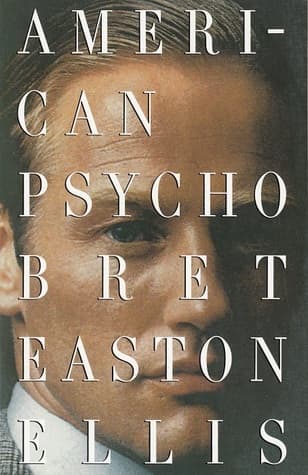
- American Psycho
Bret Easton Ellis
3.8 (242k) average on GoodreadsThrillerFeatures a protagonist driven by violent compulsions and a search for an elusive 'tenderness' through disturbing acts.
- We Need to Talk About Kevin
Lionel Shriver
4.0 (162k) average on GoodreadsLiterary FictionDelves into the psychology of a young killer and the devastating impact on those around him.
- I Know What You Did Last Summer
Lois Duncan
3.5 (12k) average on GoodreadsThrillerDuncan's novel is a YA thriller focusing on external threats and the consequences of past actions, driven by a vengeful stalker. Tenderness delves much deeper into the internal psychology of a predator and the complex motivations of its characters, making it more of a psychological study than a straightforward mystery.
- Angels & Demons
Dan Brown
3.9 (2.7M) average on GoodreadsThrillerA Harvard symbologist races through Rome's ancient sites, deciphering cryptic clues to unmask the Illuminati and stop a vengeful plot to destroy the Vatican with a stolen antimatter weapon.
- Gone Girl
Gillian Flynn
4.1 (2.3M) average on GoodreadsThrillerA wife's sudden disappearance on her fifth anniversary reveals a web of lies and psychological warfare, exposing the secrets within a seemingly perfect marriage.





Enjoyed the summary?
A summary gives you the shape of the book. The book itself has the detail, the examples and the voice.
Find Tenderness on AmazonAs an Amazon Associate, BookBrief earns from qualifying purchases. How we're funded