

Synopsis
Covers the whole plot, including the ending.
- Difficulty
- Easy
- Pacing
- Moderate
- Mood
- Humorous, Heartbreaking, Reflective, Hopeful
- Read it if
- You enjoy coming-of-age stories with humor and heart, that tackle serious themes of identity, poverty, and resilience, and are interested in contemporary Native American experiences.
- Skip it if
- You prefer lighthearted stories without significant tragic elements or find discussions of racism and prejudice uncomfortable.
The Absolutely True Diary of a Part-Time Indian Plot Summary
Covers the whole plot, including the ending.
A Life on the Rez and a Shocking Revelation
Arnold Spirit Jr., known as Junior, describes his life on the Spokane Indian Reservation, detailing the widespread poverty, alcoholism, and hopelessness there. He calls himself 'hydrocephalic' with various physical problems, making him an easy target for bullies, including his best friend, Rowdy. Junior finds comfort and a way to express himself by drawing cartoons. During a geometry class, his teacher, Mr. P, throws a textbook at him, frustrated with the old, neglected resources at the reservation school. Mr. P then tells Junior to leave the reservation to find hope and a better future, saying that if he stays, he will die, both literally and figuratively. This meeting gives Junior a new idea: to transfer to the all-white Reardan High School.
The Leap to Reardan and Initial Struggles
Junior decides to transfer to Reardan High School, a choice that makes almost everyone on the Spokane Reservation turn against him, especially Rowdy, who feels betrayed. Junior's first day at Reardan is humiliating; he is the only Native American student besides the school mascot, feels out of place, and is mocked. He punches a racist bully named Roger, surprisingly earning respect from the white students rather than punishment. He struggles with the commute, often hitchhiking or walking twenty-two miles when his father is too drunk or lacks gas money. Despite the initial problems, he starts to make connections, particularly with Penelope, a popular white girl, and Gordy, the school's smartest student.
Navigating Two Worlds
Junior lives a double life, a 'part-time Indian.' At Reardan, he is 'Arnold,' the smart Native American kid who plays basketball. On the reservation, he is 'Junior,' seen as a traitor for leaving his community. He becomes friends with Penelope, who has bulimia, and they pretend to date, eventually developing real affection. He also connects with Gordy over their shared interest in learning. He experiences racism, both obvious and subtle, from students and teachers at Reardan, but also finds unexpected allies. His family, though at first supportive, struggles with his choice, and his connection to the reservation becomes more strained, especially with Rowdy, who refuses to speak to him.
Basketball Triumphs and Tragedies
Junior tries out for the Reardan basketball team and, despite his small size, makes the varsity squad. During a game against his old school, Wellpinit, Junior is heavily booed and physically attacked by Rowdy during play. Reardan loses the first game. However, in a later, important rematch, Junior plays very well, outsmarting Rowdy and leading Reardan to an upset victory against Wellpinit, a moment of mixed triumph. This success is overshadowed by several terrible losses: his grandmother is hit by a drunk driver and dies, his father's best friend, Eugene, is shot and killed by a friend over a dispute about the last drink, and his older sister, Mary, dies in a trailer fire on the reservation, likely due to an accidental fire while she was drunk. Each death makes Junior and his family feel deeper grief and despair.
Grief, Belonging, and Reconciliation
Overwhelmed by the tragedies, Junior almost gives up on Reardan. His classmates show him unexpected support, going to his grandmother's funeral and offering condolences. He realizes that while he is a part-time Indian, he is also a part-time Reardan student, belonging to both worlds in a unique way. He accepts the complex nature of his identity and grief. Eventually, Rowdy, still distant, starts to communicate with Junior again, first through a cartoon that Junior's mother passes on. In the final scene, Rowdy visits Junior, and they play one-on-one basketball, not keeping score, showing a tentative reconciliation and the lasting bond of their friendship. Junior thinks about his future, realizing he doesn't have to choose just one identity but can embrace who he is in many ways.
Principal Figures
Arnold Spirit Jr. (Junior)
Protagonist
A budding cartoonist who leaves the Spokane Reservation for a better education.
Junior is a fourteen-year-old Spokane Indian boy born with hydrocephalus, leading to various physical and social challenges. He is intelligent, observant, and possesses a sharp wit, often expressing himself through cartoons. He is deeply loyal to his family and his best friend, Rowdy, but also harbors a strong desire for a future beyond the poverty and despair of the reservation. His decision to attend Reardan High School marks his journey of self-discovery, where he grapples with his identity as a 'part-time Indian' and learns to navigate two vastly different cultural worlds. He is driven by hope and a belief in his own potential.
Relationships: Rowdy (Best friend and rival); Penelope (Girlfriend and confidante); Gordy (Academic friend and mentor); Mary Spirit (Older sister); Arnold Spirit Sr. (Father); Agnes Adams Spirit (Mother); Grandma Spirit (Grandmother)
Rowdy
Supporting
Junior's best friend, a tough and loyal protector with a violent streak.
Rowdy is Junior's best friend from the reservation, known for his incredible strength, fighting prowess, and anger issues stemming from his abusive father. He is fiercely loyal to Junior, protecting him from bullies, but also deeply possessive. When Junior decides to leave for Reardan, Rowdy feels betrayed and lashes out, severing their friendship. Despite his anger, Rowdy is shown to care deeply for Junior, expressing his emotions through actions and drawings rather than words. He represents the reservation's struggle and resistance to change, making his eventual, tentative reconciliation with Junior all the more significant.
Relationships: Arnold Spirit Jr. (Best friend); Rowdy's Father (Abusive father)
Penelope
Supporting
Junior's white girlfriend at Reardan, who struggles with her own hidden issues.
Penelope is a popular, beautiful, and seemingly perfect white girl at Reardan High School. She initially agrees to 'date' Junior as a form of rebellion against her racist father, but their relationship evolves into genuine affection and mutual support. Penelope reveals her secret struggle with bulimia, highlighting that even those who appear to have everything can suffer. She is ambitious, dreaming of studying architecture, and encourages Junior to pursue his own dreams. Her acceptance of Junior helps him feel more comfortable in his new environment and navigate the cultural divide.
Relationships: Arnold Spirit Jr. (Girlfriend/friend); Penelope's Father (Racist father)
Gordy
Supporting
The smartest kid at Reardan, who becomes Junior's academic mentor and friend.
Gordy is the resident genius at Reardan High School, known for his encyclopedic knowledge and love of reading. He is initially socially awkward but bonds with Junior over their shared intellectual curiosity. Gordy serves as Junior's academic mentor, teaching him about the joy of learning and the importance of critical thinking. He helps Junior navigate the academic challenges of Reardan and validates Junior's intelligence, offering a different kind of friendship than Rowdy. Gordy represents the intellectual opportunities available off the reservation.
Relationships: Arnold Spirit Jr. (Academic friend)
Mr. P
Supporting
Junior's geometry teacher on the reservation who inspires him to leave.
Mr. P is Junior's geometry teacher at the Wellpinit school on the reservation. He is initially presented as a somewhat dishevelled and ineffective teacher. However, after Junior throws a textbook at him, Mr. P reveals a profound understanding of the cyclical despair on the reservation. He apologizes for his own past role in 'killing' the dreams of Native American students and directly tells Junior that he must leave the reservation to find hope and a better life. His advice is the catalyst for Junior's decision to attend Reardan, making him a pivotal figure in Junior's journey.
Relationships: Arnold Spirit Jr. (Teacher/mentor)
Mary Spirit (Mary Runs Away)
Supporting
Junior's older sister who finds her own escape from the reservation.
Mary Spirit is Junior's older sister, whom he describes as beautiful and smart but who has retreated into her parents' basement after high school, unable to find her purpose on the reservation. Inspired by Junior's bravery in leaving, she impulsively marries a Flathead Indian and moves to Montana, seeking her own escape and a new life. Junior calls her 'Mary Runs Away' because she finally leaves the reservation. Her brief period of happiness, described in her letters to Junior, is tragically cut short when she dies in a trailer fire, an event that deeply affects Junior and his family.
Relationships: Arnold Spirit Jr. (Brother); Arnold Spirit Sr. (Father); Agnes Adams Spirit (Mother)
Grandma Spirit
Supporting
Junior's wise and tolerant grandmother, a source of cultural pride.
Grandma Spirit is Junior's beloved grandmother, whom he describes as one of the most tolerant and accepting people he knows. She is a source of wisdom, humor, and cultural pride for Junior, embodying the positive aspects of his Native American heritage. She is a teetotaler, which makes her death by a drunk driver particularly poignant and ironic. Her passing is one of the profound tragedies Junior experiences, highlighting the senselessness of loss on the reservation and the impact of alcoholism. Her last words, a plea for forgiveness for her killer, exemplify her extraordinary character.
Relationships: Arnold Spirit Jr. (Grandson); Arnold Spirit Sr. (Son); Agnes Adams Spirit (Daughter-in-law)
Arnold Spirit Sr.
Supporting
Junior's alcoholic but loving father.
Junior's father is an alcoholic who frequently disappears on drinking binges, leaving his family without money or transportation. Despite his struggles with addiction, he is a loving father who tries his best, often taking Junior to school or giving him what little money he has. He plays the saxophone and has unfulfilled musical dreams. His quiet support for Junior's decision to leave the reservation, despite his own inability to escape, underscores the complex challenges of life on the rez. His grief over his mother's and daughter's deaths further reveals his vulnerability.
Relationships: Arnold Spirit Jr. (Son); Agnes Adams Spirit (Wife); Mary Spirit (Daughter)
Agnes Adams Spirit
Supporting
Junior's strong and supportive mother.
Junior's mother is a strong, intelligent woman who, despite her own struggles with poverty and the challenges of reservation life, provides a stable and loving home for Junior. She is a former alcoholic who quit drinking to raise her children. She is Junior's primary source of emotional support and encouragement, always pushing him to pursue his education. She is deeply affected by the deaths of her mother and daughter, but her resilience and love hold the family together. She acts as a bridge between Junior and Rowdy, passing messages and fostering reconciliation.
Relationships: Arnold Spirit Jr. (Son); Arnold Spirit Sr. (Husband); Mary Spirit (Daughter)
Themes & Insights
Identity and Belonging
The novel explores Junior's struggle to define his identity as he lives between the Spokane Reservation and the mostly white Reardan High School. He feels like a 'part-time Indian,' not fully belonging to either world. This theme is clear in his thoughts and cartoons, showing his confusion and eventual acceptance of his many-sided self. His relationships with Rowdy (representing his reservation identity) and Penelope/Gordy (representing his Reardan identity) further show this tension. He comes to understand that identity is complex and not limited to one place or group.
“I was half Indian in one place and half white in the other. It was like being a magician, like I was trying to make myself disappear. And, in a way, I was. I was trying to make my Indian half disappear.”
Poverty and Hope
Poverty is a constant presence on the reservation, affecting every part of Junior's life, from a lack of school resources to his family's struggle for basic needs. The book clearly shows the despair, alcoholism, and lack of opportunity that often come with this poverty. Junior's decision to leave the reservation is an act of hope, a desperate attempt to break the cycle. The difference between poor Wellpinit and wealthy Reardan highlights the sharp contrasts in opportunity. Despite the overwhelming problems, Junior's journey shows the lasting power of hope and individual choice.
“I was going to be the first one to leave the rez and go to a white school. I was going to be a pioneer. And I was going to bring hope to the reservation.”
Racism and Prejudice
The novel addresses both obvious and subtle forms of racism and prejudice. Junior experiences direct racist comments and stereotypes from students at Reardan, and his family faces systemic discrimination. The 'us vs. them' way of thinking between the reservation and Reardan is always present. However, the book also challenges these expectations, showing that prejudice can exist on both sides (e.g., Rowdy's initial rejection of Junior) and that unexpected allies can appear (e.g., Roger, Penelope). It looks at the complexities of racial identity and the problems of overcoming deep-seated biases.
“I realized that I was an Indian who was trying to be an Indian in a white world. And that was a really bad idea.”
Grief and Resilience
Junior experiences several devastating losses, including his grandmother, his father's best friend Eugene, and his sister Mary. These tragedies, often linked to the widespread alcoholism and despair on the reservation, highlight the deep grief and trauma in Native American communities. Despite these huge setbacks, Junior shows great resilience. He finds ways to cope, drawing strength from his family, his new friends, and his art. The book emphasizes that while grief is hard, the human spirit's ability to be resilient and find meaning can continue.
“I realized that, sure, I was a Spokane Indian. I belonged to that tribe. But I also belonged to the tribe of basketball players. And I belonged to the tribe of cartoonists. And I belonged to the tribe of chronic masturbators. And I belonged to the tribe of guys who wanted to date pretty white girls. And I belonged to the tribe of poor people. And I belonged to the tribe of people who knew what it was like to be hungry and to have their parents be hungry and their grandparents be hungry. And I belonged to the tribe of people who had lost people they loved.”
Friendship and Betrayal
The main relationship between Junior and Rowdy explores friendship, loyalty, and betrayal. Their bond is at first strong, built on shared experiences and Rowdy's protection of Junior. However, Junior's choice to leave the reservation feels like a deep betrayal to Rowdy, leading to a bitter split. The novel examines the pain of this separation and the slow, difficult path to making up. It also shows how new friendships form at Reardan, demonstrating how different kinds of bonds can offer support and challenge personal growth.
“I knew that Rowdy was going to hate me forever. I knew that I was going to be lonely forever. But I also knew that I was going to be okay. I was going to be okay because I was going to be a part-time Indian.”
Plot Devices & Literary Techniques
First-Person Narrative with Junior's Cartoons
Provides direct access to Junior's thoughts and emotions through text and visual art.
The story is told entirely from Junior's perspective, offering an intimate and often humorous insight into his mind. His voice is distinct, engaging, and reflective of a teenage boy. Crucially, the narrative is interspersed with Junior's own drawings and cartoons. These visuals are not mere illustrations; they are an integral part of the storytelling, functioning as Junior's primary mode of expression, communication, and coping mechanism. They often convey emotions, social commentary, or plot points that words alone might not capture, making the reader feel directly connected to Junior's inner world and artistic talent.
The 'Part-Time Indian' Metaphor
Symbolizes Junior's divided identity and the struggle to belong.
The phrase 'part-time Indian' is a central metaphor that Junior uses to describe his experience of straddling two distinct cultures: his Spokane Reservation heritage and the white world of Reardan High School. This device encapsulates his feeling of not fully belonging to either, being 'too Indian' for Reardan and 'too white' for the rez. It highlights the internal conflict and external pressures he faces, constantly code-switching and adapting. The metaphor evolves throughout the book, ultimately representing his acceptance that identity is fluid and can encompass multiple affiliations, rather than being a binary choice.
The Basketball Games
Serve as a microcosm for the conflict between the reservation and Reardan.
The two basketball games between Wellpinit (Junior's old school) and Reardan (his new school) are powerful plot devices. They physically manifest the cultural and personal conflict Junior experiences. The first game, where Junior is booed and injured, represents his initial rejection by his community. The second game, where Reardan triumphs due to Junior's play, symbolizes his growing confidence and ability to succeed in the white world, but also the bittersweet nature of his separation. These games are high-stakes emotional battlegrounds that reflect the larger socio-economic disparities and the personal betrayals and reconciliations between Junior and Rowdy.
Tragic Deaths
Emphasize the pervasive despair and impact of alcoholism on the reservation.
The recurring motif of tragic deaths (Grandma Spirit, Eugene, Mary Spirit) serves as a stark reminder of the harsh realities and cyclical despair on the Spokane Reservation. These events, often linked to alcoholism, are not just personal losses for Junior but also commentary on systemic issues. They highlight the fragility of life and the deep-seated trauma within the community. While devastating, these tragedies also serve to deepen Junior's resolve, strengthen his family bonds, and ultimately lead to moments of unexpected empathy and support from his Reardan peers, underscoring the universal nature of grief.
The Absolutely True Diary of a Part-Time Indian Quotes
“I think the world is a series of broken dams and floods, and my cartoons are tiny little lifeboats.”
“If you let people into your life a little bit, they can be pretty damn amazing.”
“Life is a constant struggle between being an individual and being a member of the community.”
“I was a zero on the rez. If I stayed, I would always be a zero.”
“We all have to find our own ways to say goodbye.”
“The only thing more pathetic than Indians on TV is Indians watching Indians on TV.”
“I used to think the world was broken down by tribes. By Black and White. By Indian and White. But I know that isn't true. The world is only broken into two tribes: the people who are assholes and the people who are not.”
“I draw because words are too unpredictable. I draw because words are too limited.”
“Poverty doesn't give you strength or teach you lessons about perseverance. No, poverty only teaches you how to be poor.”
“I was crying because I knew I was never going to drink and because I was never going to kill myself and because I was going to have a better life out in the white world.”
“You have to dream big to get big.”
“I realized that I might be a lonely Indian boy, but I was not alone in my loneliness.”
“We lived on a combination of irregular paychecks, hope, fear, and government surplus food.”
“I was a boy who wanted to be a boy, but the rez wanted me to be a warrior.”
Quiz
10 questions on the plot and the characters. Each answer comes with a short explanation.
Question 1
What is the name of the protagonist and narrator of the book?
- Rowdy
- Arnold Spirit Jr.
- Sherman Alexie
- Mr. P
Show answer
B. Arnold Spirit Jr. The protagonist is Arnold Spirit Jr., who goes by the nickname 'Junior.' He is a 14-year-old Spokane Indian boy who narrates the story through his diary entries and cartoons.
Question 2
Why does Junior decide to leave the reservation school and attend Reardan High School?
- Because he wants to play on a better basketball team
- Because he is expelled for throwing a book at his teacher
- Because he finds his mother's name in a geometry textbook, realizing how outdated the reservation's resources are
- Because his family moves to a new town for better job opportunities
Show answer
C. Because he finds his mother's name in a geometry textbook, realizing how outdated the reservation's resources are Junior discovers his mother's name written in a 30-year-old geometry textbook at his reservation school, which symbolizes the poverty and neglect on the rez. This moment, along with encouragement from his teacher Mr. P, motivates him to seek better education at Reardan.
Question 3
What is the name of Junior's best friend on the reservation, who initially feels betrayed by Junior's decision to leave?
- Gordy
- Rowdy
- Penelope
- Roger
Show answer
B. Rowdy Rowdy is Junior's best friend on the reservation, known for his toughness and loyalty. He punches Junior and cuts off their friendship when Junior decides to attend Reardan, seeing it as a betrayal of their community.
Question 4
How does Junior initially get to school at Reardan, given that it is 22 miles away from the reservation?
- He rides a bicycle his parents bought him
- He hitchhikes or walks, often relying on the kindness of strangers
- He takes a school bus provided by Reardan High
- His father drives him every day in their reliable car
Show answer
B. He hitchhikes or walks, often relying on the kindness of strangers Junior's family is too poor to afford consistent transportation, so he often has to walk or hitchhike the 22 miles to Reardan, highlighting the economic challenges he faces in pursuing his education.
Question 5
What significant event occurs during a basketball game between Wellpinit (the reservation school) and Reardan?
- Junior scores the winning point and is carried off the court by his teammates
- Rowdy intentionally fouls Junior, leading to a fight that ends the game
- Junior's team loses badly, and he feels humiliated in front of his old community
- Reardan wins by a large margin, and Junior realizes the depth of the rez's poverty and despair
Show answer
D. Reardan wins by a large margin, and Junior realizes the depth of the rez's poverty and despair During the game, Reardan defeats Wellpinit by a huge score. Junior observes the hopelessness and poverty of the reservation players, including his former friend Rowdy, which deepens his understanding of the systemic issues facing his community.
Question 6
Which character at Reardan becomes Junior's friend and helps him navigate the social challenges of the white school?
- Penelope, a popular girl with whom Junior develops a crush
- Gordy, a nerdy and intelligent student who becomes his academic ally
- Roger, a jock who initially bullies Junior but later respects him
- Coach, who supports Junior's basketball skills and integration
Show answer
B. Gordy, a nerdy and intelligent student who becomes his academic ally Gordy is a smart, bookish student at Reardan who befriends Junior. He helps Junior with his studies and provides intellectual companionship, showing that Junior can find acceptance beyond racial lines.
Question 7
What theme is highlighted by Junior's experience of attending funerals for multiple loved ones during the story?
- The importance of family traditions in Native American culture
- The prevalence of death and tragedy due to poverty and alcoholism on the reservation
- The celebration of life through communal gatherings
- The conflict between modern medicine and traditional healing practices
Show answer
B. The prevalence of death and tragedy due to poverty and alcoholism on the reservation Junior attends several funerals, including those of his grandmother, his father's friend Eugene, and his sister Mary. These events underscore the high rates of death on the reservation caused by issues like alcoholism, poverty, and despair, a central theme in the book.
Question 8
How does Junior's identity as a 'part-time Indian' manifest in his social interactions?
- He alternates between wearing traditional Native attire and modern clothing to fit in
- He feels torn between his loyalty to the reservation and his aspirations for a better future at Reardan
- He speaks two languages fluently and code-switches depending on the setting
- He participates in both tribal ceremonies and Christian church services regularly
Show answer
B. He feels torn between his loyalty to the reservation and his aspirations for a better future at Reardan Junior struggles with feeling like he doesn't fully belong either on the reservation or at Reardan. He is seen as a traitor by some on the rez for leaving, while at Reardan, he faces racism and isolation, embodying the conflict of navigating two worlds.
Question 9
What role do Junior's cartoons play in the narrative structure of the book?
- They are primarily decorative illustrations added by the publisher
- They serve as a visual diary that expresses his emotions, thoughts, and humor, integral to his voice and storytelling
- They are used to teach readers about Spokane Indian history and culture
- They are fictional comics that Junior hopes to publish someday as a career
Show answer
B. They serve as a visual diary that expresses his emotions, thoughts, and humor, integral to his voice and storytelling The cartoons, drawn by Ellen Forney based on Junior's character, are a key part of the book. They provide insight into Junior's inner world, adding humor, pathos, and a unique perspective that complements the text, reflecting his artistic aspirations and coping mechanisms.
Question 10
In the context of the book, what does Junior mean when he says, 'I was carrying the burden of my tribe'?
- He feels physically weak due to health problems from his birth
- He believes he is responsible for ending the cycle of poverty and despair for all Native Americans through his success
- He is tasked with preserving traditional Spokane stories and passing them to future generations
- He has to financially support his family after his father loses his job
Show answer
B. He believes he is responsible for ending the cycle of poverty and despair for all Native Americans through his success Junior feels immense pressure to succeed at Reardan not just for himself, but as a representative of his tribe. He hopes that by breaking away and achieving his dreams, he can inspire change and hope for others on the reservation, carrying the weight of their collective struggles.
The Absolutely True Diary of a Part-Time Indian FAQ
What is 'The Absolutely True Diary of a Part-Time Indian' about?
The novel follows Junior, a 14-year-old Spokane Indian boy living on the reservation, who transfers from his underfunded reservation school to the affluent, all-white Reardan High School to pursue better educational opportunities. Through his cartoons and diary entries, Junior navigates poverty, racism, friendship, and family while grappling with his dual identity as both a 'reservation Indian' and a 'part-time Indian' in the white world.
Why should I read 'The Absolutely True Diary of a Part-Time Indian'?
This book offers a raw, humorous, and poignant look at contemporary Native American life through the eyes of a resilient protagonist. It tackles serious themes like poverty, racism, and identity with honesty and wit, while Junior's cartoons and voice make the story accessible and emotionally engaging for readers of all backgrounds.
What is the background/setting of the book?
The story is set in the early 2000s on the Spokane Indian Reservation in Washington state, where Junior lives in poverty with his family, and at Reardan High School, a predominantly white school in a nearby farm town. The reservation is depicted as a place of both community and despair, marked by alcoholism and limited opportunities, contrasting sharply with the wealthier, racially tense environment of Reardan.
What are the most memorable quotes from the book?
Key quotes include Junior's realization, 'I was carrying the burden of my tribe, of my family, of my friends,' and his defiant statement, 'I was a reservation Indian, and I was a part-time Indian. And I was going to be both.' Another poignant line is, 'Poverty doesn't give you strength or teach you lessons about perseverance. No, poverty only teaches you how to be poor.'
What writing style does Sherman Alexie use?
Alexie employs a first-person narrative in the form of Junior's diary entries, blending candid, conversational prose with Ellen Forney's expressive cartoons that illustrate Junior's thoughts and emotions. The style is humorous, self-deprecating, and brutally honest, capturing the voice of a teenage boy grappling with complex social issues.
What minor details add significant meaning to the story?
Junior's obsession with drawing cartoons serves as a coping mechanism and a way to process his experiences, symbolizing his creativity and resilience. The recurring mention of his dog, Oscar, who is euthanized due to poverty, subtly highlights the harsh realities of reservation life and foreshadows later tragedies.
What are some subtle foreshadowing moments in the book?
Early references to alcohol abuse on the reservation, such as Junior's father's drinking, foreshadow the deaths of his sister Mary and his grandmother in alcohol-related incidents. Junior's initial isolation at Reardan hints at the ongoing tension between his old and new identities, which culminates in conflicts with friends like Rowdy.
What unexpected character connections exist?
Junior's friendship with Gordy, a nerdy white boy at Reardan, becomes a source of intellectual companionship, challenging stereotypes about reservation Indians. Additionally, Junior's rivalry-turned-complex-bond with Rowdy, his best friend from the rez, evolves through shared grief and basketball, revealing deep, unspoken loyalty.
What are unspoken character motivations in the story?
Junior's father drinks to escape the hopelessness of reservation life, but his occasional acts of kindness, like driving Junior to school, show a hidden desire to support his son's dreams. Rowdy's aggression masks his pain over Junior 'abandoning' the rez and his own struggles with an abusive father, driving his initial hostility.
What psychological complexities do characters exhibit?
Junior grapples with survivor's guilt, feeling torn between his ambition and loyalty to his community, which manifests in anxiety and self-doubt. Rowdy displays a mix of anger and vulnerability, using toughness to hide his emotional wounds, while Junior's sister Mary's move to Montana reflects a desperate search for escape that ends tragically.
What are the major emotional turning points in the book?
Key turning points include Junior's decision to leave Wellpinit for Reardan, which isolates him from his tribe; the death of his grandmother, which unites the community in grief; and the deaths of his sister Mary and his father's friend Eugene, which force Junior to confront the cycle of tragedy on the reservation. His final basketball game against Wellpinit, where he earns Rowdy's respect, marks a reconciliation.
How do relationship dynamics evolve throughout the story?
Junior's relationship with Rowdy shifts from close friendship to bitter rivalry after Junior leaves the rez, then slowly mends through shared loss and a symbolic basketball game. His bond with Penelope, a white girl at Reardan, grows from a superficial crush to a deeper connection based on mutual insecurities, while his family relationships become more strained yet ultimately supportive of his choices.
Which parts of the book remain ambiguous or open-ended?
The novel leaves Junior's future beyond high school uncertain, with no clear resolution on whether he will fully escape the reservation's cycle of poverty. The fate of his family and community is also open-ended, reflecting the ongoing struggles of Native American life without offering a neat solution.
What are controversial scenes or decisions in the book?
Junior's decision to transfer to Reardan is controversial, as it is seen by some on the rez as a betrayal of his culture. The depiction of poverty, alcoholism, and violence on the reservation has sparked debate over stereotypes, though Alexie bases it on personal experience to highlight systemic issues.
How does the book end, and what does it mean?
The book ends with Junior and Rowdy playing one-on-one basketball, symbolizing a tentative reconciliation and mutual respect despite their different paths. Junior reflects on being a 'part-time Indian,' accepting his dual identity and the hope that comes from breaking cycles of despair. The ending emphasizes resilience and the complexity of belonging to two worlds.
What role do the cartoons by Ellen Forney play in the narrative?
The cartoons visually express Junior's inner thoughts, emotions, and humor, serving as a therapeutic outlet and enhancing the diary format. They provide commentary on themes like racism, poverty, and identity, making abstract concepts more relatable and adding depth to Junior's character as an artist.
How does the book address themes of identity and belonging?
Junior constantly wrestles with his identity as both a Spokane Indian and a student in a white world, feeling like an outsider in both settings. His journey highlights the tension between cultural loyalty and personal ambition, ultimately suggesting that identity can be fluid and multifaceted rather than fixed.
What is the significance of basketball in the story?
Basketball serves as a metaphor for Junior's struggles and triumphs, representing his fight against racism and his quest for acceptance. Games against Wellpinit and Reardan become battlegrounds for cultural conflict and personal redemption, culminating in his final game with Rowdy that symbolizes healing and connection.
About the author
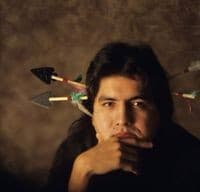
Sherman Alexie is a Native American author known for his contributions to contemporary literature. His notable works include "The Absolutely True Diary of a Part-Time Indian," which explores the life of a young Indian boy navigating between two worlds, and "Reservation Blues," a novel that intertwines music and Native American culture. Alexie's writing often addresses themes of identity, race, and the complexities of modern life on reservations.
Similar books
- The Hate U Give
Angie Thomas
4.5 (504k) average on GoodreadsYoung AdultExplores a teenager navigating two vastly different worlds and dealing with racial injustice and identity.
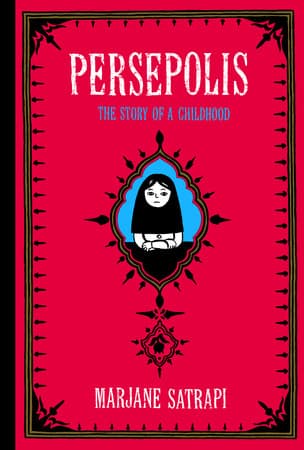
- Persepolis: The Story of a Childhood
Marjane Satrapi
4.3 (158k) average on GoodreadsBiographyA graphic novel memoir about a young person's coming-of-age amidst cultural and political upheaval, using art to tell the story.
- Speak
Laurie Halse Anderson
4.0 (485k) average on GoodreadsPsychologyFeatures a protagonist who uses art as a coping mechanism while dealing with trauma and finding their voice.
- Harry Potter and the Sorcerer's Stone
J.K. Rowling
4.5 (7M) average on GoodreadsFantasyRescued from a miserable life under the stairs, an orphaned boy discovers he's a wizard destined for a magical school, where he uncovers a dangerous secret tied to the dark wizard who murdered his parents.
- The Hunger Games
Suzanne Collins
4.3 (6.4M) average on GoodreadsFantasyIn a future where children fight to the death on live television, Katniss Everdeen volunteers for the arena, turning a death sentence into a fight for survival and a spark of rebellion.
- To Kill a Mockingbird
Harper Lee
4.3 (4.5M) average on GoodreadsHistorical FictionIn the 1930s Jim Crow South, Harper Lee writes about racial injustice, moral growth, and the quiet courage of a lawyer father, Atticus Finch, as seen through his young daughter's eyes.





Enjoyed the summary?
A summary gives you the shape of the book. The book itself has the detail, the examples and the voice.
Find The Absolutely True Diary of a Part-Time Indian on AmazonAs an Amazon Associate, BookBrief earns from qualifying purchases. How we're funded