

Synopsis
Covers the whole plot, including the ending.
- Difficulty
- Easy
- Pacing
- Moderate
- Mood
- Adventurous, Humorous, Nostalgic, Lighthearted
- Read it if
- You enjoy classic coming-of-age stories about childhood adventures, mischief, and the enduring power of friendship, set against a vivid historical backdrop.
- Skip it if
- You prefer fast-paced modern narratives or are sensitive to dated cultural perspectives and language.
The Adventures of Tom Sawyer Plot Summary
Covers the whole plot, including the ending.
The Whitewashed Fence
Tom Sawyer, a mischievous boy living with his Aunt Polly and half-brother Sid in St. Petersburg, Missouri, must whitewash a long fence as punishment for skipping school. Instead of doing the work himself, Tom makes a clever plan. He pretends the chore is an artistic privilege, making it seem desirable and exclusive. As other boys, like Ben Rogers, pass by, Tom acts uninterested in their offers to help, making them more curious. The boys then eagerly trade their prized possessions — an apple, a kite, a dead rat and a string, marbles, and other trinkets — for a chance to paint a section of the fence. By the end of the day, the fence is perfectly whitewashed, and Tom has many treasures, without having lifted a brush.
First Encounter with Becky Thatcher
After successfully tricking his friends into whitewashing the fence, Tom attends Sunday school. He tries to impress Judge Thatcher and the new girl, Becky Thatcher, by falsely winning a Bible. He then goes to school, where he is immediately taken with Becky, who has just arrived in St. Petersburg. Tom, known for his romantic flair, tries to win her over by drawing pictures and writing notes. He eventually persuades her to get 'engaged' to him, a common childhood game, sealed with a kiss. However, their new romance quickly ends when Becky discovers Tom was previously 'engaged' to Amy Lawrence. Feeling betrayed and jealous, Becky rejects Tom, leaving him heartbroken and alone.
Graveyard Murder
Upset by Becky Thatcher's rejection, Tom seeks adventure with Huckleberry Finn, the town outcast. They go to the graveyard at midnight, a superstitious time, to perform a charm they believe will cure warts using a dead cat. Hidden among the tombstones, they witness a shocking crime: Dr. Robinson is murdered during a grave-robbing attempt by Injun Joe and Muff Potter. Injun Joe, holding a grudge against Dr. Robinson, stabs him with Muff Potter's knife, then frames the unconscious, drunken Muff Potter for the crime. Terrified and bound by an oath, Tom and Huck swear never to tell what they saw, fearing Injun Joe.
The Boys Become Pirates
Haunted by the murder and feeling misunderstood, Tom decides to run away from home. He convinces Huckleberry Finn and his friend, Joe Harper, to join him in becoming pirates on Jackson's Island, a deserted island in the Mississippi River. The boys steal food and supplies, enjoying their new freedom and living outside rules. They swim, fish, and explore the island, imagining themselves as buccaneers. Meanwhile, in St. Petersburg, the town believes the boys have drowned. Search parties are organized, causing great sadness among their families and friends.
Attending Their Own Funeral
While on Jackson's Island, Tom, Huck, and Joe discover the town is holding a funeral service for them, believing them dead. Tom, always a showman, plans a dramatic return. The boys secretly go back to St. Petersburg and hide in the church gallery during their own funeral. At the end of the service, to the shock and joy of the grieving people, the three boys step out from their hiding place. Their return is met with tears of relief and celebration, turning the sad event into a joyful reunion, though Aunt Polly gives Tom a deserved 'licking' for his trick.
The Trial of Muff Potter
Despite his fear of Injun Joe, Tom's conscience is bothered by Muff Potter being wrongly accused of Dr. Robinson's murder. As the trial goes on and evidence against Muff Potter seems strong, Tom struggles with his oath of silence. Finally, during the trial, Tom can no longer bear the guilt. He bravely takes the stand and tells the true events of that night in the graveyard, pointing directly at Injun Joe as the real murderer. Injun Joe, shocked and exposed, escapes the courtroom, leaving the town terrified but relieved for Muff Potter.
The Search for Treasure
After the trial, Tom and Huck, convinced Injun Joe is still a threat, decide to hunt for buried treasure, inspired by pirate stories. They explore haunted houses and find a large sum of gold hidden in an old, abandoned house. To their horror, they also find Injun Joe and his accomplice planning to hide their own loot there. Tom and Huck barely escape being seen, realizing the treasure they seek is connected to the dangerous murderer. They continue their search with new purpose and caution, knowing Injun Joe is still at large.
The Cave Adventure
During a picnic with Becky Thatcher and other townspeople, Tom and Becky explore the large, winding McDougal's Cave. They go deeper than anyone before, getting lost in the darkness. Their candles eventually burn out, leaving them stranded and scared. They spend days trapped, eating a single piece of cake, while the town frantically searches for them. During this time, Tom, despite his own fear, tries to keep Becky's spirits up, showing new maturity.
Injun Joe's Demise
While lost in McDougal's Cave with Becky, Tom sees Injun Joe in another part of the cave, showing the murderer is also hiding there. After what feels like a long time, Tom finds a small opening and leads a weakened Becky to safety, returning to the town's great relief. A few weeks later, Judge Thatcher orders the cave sealed with an iron door to prevent more accidents. Tom, hearing this, is horrified, realizing Injun Joe was still inside. They rush back to the cave and find Injun Joe dead just inside the sealed entrance, having starved to death trying to escape.
The Discovery of the Treasure
With Injun Joe dead, Tom and Huck return to McDougal's Cave, specifically to the spot where Tom had last seen Injun Joe. They discover the hidden treasure chest Injun Joe had been guarding, filled with thousands of dollars in gold coins. The boys are thrilled by their find, becoming instantly rich. Their discovery is a big event in St. Petersburg, and their new wealth raises their social standing. Tom's adventures have brought him fame and fortune, confirming his reputation as a hero and a very lucky boy.
Huck's Adoption
After finding Injun Joe's treasure, Huckleberry Finn, now wealthy, is adopted by the Widow Douglas and her sister, Miss Watson. They try to civilize him by giving him a proper home, education, and religious teaching. However, Huck finds the rules of polite society unbearable. He dislikes wearing clean clothes, attending school, and following strict manners. He repeatedly runs away, preferring his old, free life of wandering and sleeping outdoors. Tom, seeing Huck's unhappiness, convinces him he must endure these changes to truly be part of their 'gang' of respectable boys, appealing to Huck's desire for adventure and belonging.
The Adventures of Tom Sawyer Characters
Tom Sawyer
Protagonist
A mischievous, imaginative, and ultimately good-hearted boy.
Tom is an orphaned boy living with his Aunt Polly in the fictional town of St. Petersburg, Missouri. He is characterized by his love for adventure, pranks, and a vivid imagination, often getting into trouble but possessing a clever mind to escape consequences. Despite his mischievous nature, Tom has a strong moral compass, evident in his decision to testify against Injun Joe. He craves attention and admiration, especially from Becky Thatcher, and often acts impulsively. His resourcefulness and bravery are key to solving mysteries and finding treasure.
Relationships: Aunt Polly (guardian, disciplinarian, loving); Huckleberry Finn (best friend, adventure companion); Becky Thatcher (love interest); Joe Harper (close friend, adventure companion); Sid Sawyer (half-brother, tattletale)
Huckleberry Finn
Supporting
The town's outcast, free-spirited, and loyal friend.
Huck is the son of the town drunk, living a life of freedom outside societal norms, often sleeping outdoors and fending for himself. He is uneducated but possesses a strong sense of street smarts and practical knowledge. Huck is superstitious and often provides a grounded, albeit sometimes naive, perspective to Tom's more romanticized view of adventure. Despite his rough exterior, he is fiercely loyal to Tom and has a good heart, though he struggles immensely with the constraints of 'civilized' life after his adoption.
Relationships: Tom Sawyer (best friend, adventure companion); Widow Douglas (adopter, benefactor); Miss Watson (adopter, disciplinarian)
Becky Thatcher
Supporting
The new girl in town and Tom's primary love interest.
Becky is the daughter of Judge Thatcher, new to St. Petersburg, and quickly becomes the object of Tom's affection. She is pretty, kind, and initially charmed by Tom's antics. However, she also possesses a degree of pride and jealousy, leading to their initial breakup when she discovers Tom's past engagement to Amy Lawrence. Her vulnerability is highlighted when she gets lost in the cave, relying on Tom's strength and ingenuity. She represents the conventional, respectable society that Tom navigates.
Relationships: Tom Sawyer (love interest); Judge Thatcher (father)
Aunt Polly
Supporting
Tom's kind-hearted but strict guardian.
Aunt Polly is Tom's elderly guardian and his mother's sister. She genuinely loves Tom but struggles to discipline him, often torn between her affection and her duty to raise him properly. She is religious and tries to instill moral values in Tom, though she is frequently outsmarted by his cleverness. Her character embodies both the frustrations and the deep love of a parent figure dealing with a spirited child.
Relationships: Tom Sawyer (nephew, ward); Sid Sawyer (nephew, ward)
Injun Joe
Antagonist
The vengeful and dangerous murderer.
Injun Joe is a half-Native American, half-white man who is an outcast in St. Petersburg and harbors deep resentments. He is characterized by his malice, cunning, and capacity for violence, particularly evident in his murder of Dr. Robinson and his subsequent framing of Muff Potter. He is a formidable and terrifying presence, representing true evil in Tom and Huck's world. His pursuit of treasure and his ultimate demise in the cave serve as a stark consequence for his villainy.
Relationships: Dr. Robinson (victim of murder); Muff Potter (scapegoat); Tom Sawyer (witness to his crime, later discoverer of his treasure)
Muff Potter
Supporting
The town drunk framed for murder.
Muff Potter is a kind but weak-willed old fisherman, known for his love of drink. He is a sympathetic figure, easily manipulated by Injun Joe and framed for Dr. Robinson's murder. Despite his flaws, he is not inherently malicious, and his plight evokes pity from Tom and Huck. His innocence and the injustice of his situation are a major catalyst for Tom's moral awakening.
Relationships: Injun Joe (framing accomplice); Tom Sawyer (savior, witness)
Sid Sawyer
Supporting
Tom's well-behaved but tattletale half-brother.
Sid is Tom's younger half-brother, presented as the 'good' boy who always follows the rules and never gets into trouble. However, he is also a tattletale, often exposing Tom's misdeeds to Aunt Polly. He serves as a foil to Tom's rebellious nature, highlighting Tom's mischievousness by contrast. Sid lacks Tom's imagination and adventurous spirit.
Relationships: Tom Sawyer (half-brother); Aunt Polly (guardian)
Joe Harper
Supporting
Tom's best friend and fellow adventurer.
Joe is one of Tom's closest friends and his partner in many childhood adventures, including the 'pirate' escapade to Jackson's Island. He shares Tom's love for imaginative play and escaping the dullness of school. While not as clever or daring as Tom, Joe is a loyal companion, often following Tom's lead in their schemes. He experiences homesickness during their pirate adventure, showing a more sensitive side.
Relationships: Tom Sawyer (best friend, adventure companion)
The Adventures of Tom Sawyer Themes
The Conflict Between Childhood Freedom and Adult Society
The novel explores the contrast between the free, imaginative world of children and the strict, often fake, demands of adult society. Tom and Huck often try to escape school, church, and chores, preferring the freedom of the river, islands, and caves. This is clear when Tom tricks his friends into whitewashing the fence, turning a chore into a game. Huck's struggle with being 'civilized' by the Widow Douglas further shows this conflict, as he wants his old, wild life, showing how hard it is to fit into expectations that limit natural impulses.
“Work consists of whatever a body is OBLIGED to do, and that Play consists of whatever a body is not obliged to do.”
Moral Development and Conscience
Tom's moral growth, especially his struggle with conscience, is a main theme. At first, Tom acts out of self-interest and a wish for attention, but seeing Dr. Robinson's murder forces him to face a deep moral problem. His internal fight over testifying against Injun Joe, despite the danger, is a key moment. This theme also applies to Huck, who struggles with loyalty to Tom versus fear of Injun Joe, and later, his discomfort with the 'civilized' world. The boys' actions against injustice and their choice to do what is right show their growing moral sense.
“The truth was, that Tom's conscience had been upbraiding him night and day.”
Superstition and Folk Beliefs
Superstition is a big part of Tom and Huck's lives, reflecting the folk beliefs in their Missouri setting. They see meaning in signs, omens, and rituals, from using a dead cat to cure warts to hearing strange sounds as ghosts. Their fear of Injun Joe grows because of their belief in curses and the supernatural. This theme adds cultural realism and often brings both humor and real fear, shaping their choices and how they understand events, such as their initial hesitation to enter the haunted house.
“Then they talked about dead cats, and all the properties of dead cats, and the lucky signs and unlucky.”
The Allure of Adventure and Imagination
The novel celebrates childhood imagination and the excitement of adventure. Tom constantly turns everyday life into exciting escapades, whether whitewashing a fence, playing pirates on Jackson's Island, or hunting for buried treasure. His imagination lets him and his friends escape boring daily life and create their own heroic stories. This theme highlights the importance of play and fantasy in childhood, sharply contrasting with the often hard realities of the adult world, and ultimately leading to real discoveries and successes.
“He was not for this world; he was for the world of fancy, the world of dreams.”
Plot Devices & Literary Techniques
Dramatic Irony
The audience knows more than the characters.
Dramatic irony is frequently used, particularly when the town believes Tom, Huck, and Joe are dead. The readers are aware that the boys are alive and hiding on Jackson's Island, observing the town's grief and funeral preparations. This creates a sense of anticipation and a humorous tension as the boys secretly witness their own memorial service, leading to their dramatic reappearance. It also highlights Tom's theatrical nature and his desire for attention, knowing the impact their 'resurrection' will have.
Foreshadowing
Hints of future events or dangers.
Foreshadowing is used to build suspense, especially concerning Injun Joe. When Tom and Huck first witness the murder in the graveyard, their blood oath of silence and deep fear of Injun Joe immediately hint at future confrontations and dangers. Later, their repeated encounters with Injun Joe, even when he's just a shadowy figure, foreshadow the eventual discovery of his hidden treasure and his ultimate demise in McDougal's Cave, creating a sense of impending doom and adventure.
The Quest Motif
A journey to find something, often treasure.
The quest motif drives much of the later plot, beginning with Tom and Huck's decision to hunt for buried treasure. This quest transforms their childish games into a serious, dangerous pursuit, leading them to various locations like the haunted house and McDougal's Cave. The treasure represents not only wealth but also the ultimate validation of their adventurous spirit and the culmination of their bravery. It provides a clear objective that propels the narrative forward and intertwines with their conflict against Injun Joe.
The Doppelgänger
A character who mirrors another, often with contrasting traits.
Sid Sawyer functions as a doppelgänger for Tom. While not a literal double, Sid embodies the 'good' and obedient child that Tom is expected to be, serving as a constant contrast to Tom's mischievous and rebellious nature. Sid's tendency to tattle on Tom highlights Tom's defiance and often gets him into trouble, thereby emphasizing Tom's unique personality and his struggle against conformity. Sid's presence underscores the societal expectations that Tom constantly subverts.
The Adventures of Tom Sawyer Quotes
“Rubbish! you don't know anything about it. Oh, please, auntie, I'll be good!”
“It was a truly magnificent spectacle. The white-washed fence was a picture of perfect art.”
“The less he was required to do, the more he was admired.”
“He had discovered a great law of human action, without knowing it -- namely, that in order to make a man or a boy covet a thing, it is only necessary to make the thing difficult to attain.”
“She went to her work, sighing, and Tom went to his play, singing.”
“He was not the Model Boy of the village. He knew too much.”
“The glorious soul of Tom Sawyer was for the moment in the ascendant. He was going to be an Indian, and a pirate, and a robber, and a hero.”
“The dead silence that followed was awful. Tom knew his doom was sealed.”
“Aunt Polly was one of those people who are always doing their duty, and are always regretting it.”
“It was a wonderful life, a wild, free, lawless life, and Tom was perfectly happy.”
“He was a boy of spirit and ambition, and he was not going to be outdone by any girl.”
“Huck Finn was the only really independent person in the community.”
“He had a great mind to go home and get a book, but he knew he couldn't enjoy it.”
“The average boy is a terror; he is a nuisance; he is a joy.”
“It was a long, dreary night, and the children were glad to see the dawn.”
Quiz
10 questions on the plot and the characters. Each answer comes with a short explanation.
Question 1
What is Tom's punishment for skipping school to go swimming?
- He has to clean the entire house.
- He is sent to bed without dinner.
- He has to whitewash Aunt Polly's fence.
- He is forbidden from playing with Huckleberry Finn.
Show answer
C. He has to whitewash Aunt Polly's fence. As punishment for skipping school to go swimming, Aunt Polly assigns Tom the chore of whitewashing the fence surrounding the house.
Question 2
Who is the 'town's social outcast' and Tom's friend?
- Sid
- Mary
- Becky Thatcher
- Huckleberry Finn
Show answer
D. Huckleberry Finn The text states that Tom 'often sneaks out his bedroom window at night to adventure with his friend, Huckleberry Finn the town's social outcast.'
Question 3
How does Tom manage to get the fence whitewashed without doing the work himself?
- He pays other boys to do it for him.
- He convinces Aunt Polly to do it herself.
- He tricks other boys into thinking whitewashing is a privilege.
- He runs away from home to avoid the chore.
Show answer
C. He tricks other boys into thinking whitewashing is a privilege. In a brilliant scheme, Tom is able to con the neighborhood boys into completing the chore for him, managing to convince them of the joys of whitewashing.
Question 4
What event do Tom and Huckleberry Finn witness in the graveyard at night?
- A secret meeting of town elders.
- The theft of valuable items from a grave.
- The murder of Dr. Robinson.
- A ghost appearing from a tomb.
Show answer
C. The murder of Dr. Robinson. Shortly after Becky shuns him, he accompanies Huckleberry Finn to the graveyard at night, where they witness the murder of Dr. Robinson.
Question 5
Why does Becky Thatcher break off her 'engagement' with Tom?
- She finds out Tom cheated on a school test.
- She learns Tom was previously 'engaged' to Amy Lawrence.
- Tom makes fun of her in front of her friends.
- Her parents forbid her from seeing Tom.
Show answer
B. She learns Tom was previously 'engaged' to Amy Lawrence. Their romance collapses when she learns Tom has been 'engaged' previously to Amy Lawrence.
Question 6
What characteristic primarily distinguishes Sid from Tom?
- Sid is much stronger than Tom.
- Sid is a 'tattle-tale' and less mischievous.
- Sid is older than Tom.
- Sid is more popular among the town children.
Show answer
B. Sid is a 'tattle-tale' and less mischievous. Unlike his brother Sid, Tom receives 'lickings' from his Aunt Polly; ever the mischief-maker, would rather play hooky than attend school and often sneaks out his bedroom window at night to adventure with his friend, Huckleberry Finn the town's social outcast. Tom, despite his dread of schooling, is extremely clever and would normally get away with his pranks if Sid were not such a 'tattle-tale.'
Question 7
What does the description of Aunt Polly's spectacles imply about her character or her priorities?
- She is nearsighted and struggles to see clearly.
- She prioritizes appearance and 'style' over practicality.
- She uses them to intimidate Tom and other children.
- She is very wealthy and can afford expensive accessories.
Show answer
B. She prioritizes appearance and 'style' over practicality. The text states, 'She seldom or never looked through them for so small a thing as a boy; they were her state pair, the pride of her heart, and were built for 'style,' not service—she could have seen through a pair of stove-lids just as well.' This highlights her focus on appearance.
Question 8
What does the excerpt suggest about Aunt Polly's typical way of interacting with Tom when he's missing?
- She immediately assumes he is in serious trouble.
- She calls his name repeatedly, expecting mischief.
- She calmly waits for him to reappear on his own.
- She asks other family members to find him.
Show answer
B. She calls his name repeatedly, expecting mischief. The excerpt begins with 'TOM!' No answer. 'TOM!' No answer. 'You TOM!' No answer. This repetition suggests a familiar pattern of calling out for a mischievous and often absent Tom.
Question 9
The description of St. Petersburg as a 'quaint town' where 'the Christian faith is predominant, the social network is close-knit, and familiarity resides' suggests which thematic element?
- The corrupting influence of urban life.
- A critique of religious hypocrisy.
- The idealized innocence and simplicity of rural American life.
- The challenges of social mobility in a rigid class system.
Show answer
C. The idealized innocence and simplicity of rural American life. This description strongly evokes a sense of nostalgic, idealized small-town America, common in historical fiction that romanticizes a simpler past.
Question 10
The phrase 'she could have seen through a pair of stove-lids just as well' (referring to Aunt Polly's spectacles) is an example of what literary device?
- Metaphor
- Hyperbole
- Personification
- Alliteration
Show answer
B. Hyperbole Hyperbole is exaggerated statements or claims not meant to be taken literally. Saying she could see through stove-lids is a clear exaggeration to emphasize the spectacles' lack of practical use for vision.
The Adventures of Tom Sawyer FAQ
What is the central conflict that drives Tom Sawyer's initial adventures?
Tom Sawyer's initial adventures are driven by his constant desire to avoid responsibility and seek excitement, often clashing with Aunt Polly's attempts to instill discipline. This is exemplified by his brilliant scheme to con other boys into whitewashing the fence for him, turning a chore into a coveted privilege.
Who are the primary characters in Tom Sawyer's immediate household, and what are their roles?
Tom lives with his Aunt Polly, who acts as his guardian and disciplinarian, often struggling with his mischievous nature. His half-brother Sid is a 'tattle-tale' who frequently exposes Tom's pranks, while his cousin Mary is generally more well-behaved and serves as a contrast to Tom's antics.
How does Tom Sawyer's relationship with Becky Thatcher evolve throughout the early parts of the story?
Tom initially attempts to impress Becky Thatcher with flamboyant antics at school and persuades her to get 'engaged' with a kiss. However, their nascent romance quickly collapses when Becky discovers Tom's prior 'engagement' to Amy Lawrence, leading her to shun him.
What significant event do Tom and Huckleberry Finn witness in the graveyard, and how does it impact them?
Tom and Huckleberry Finn witness the murder of Dr. Robinson by Injun Joe in the graveyard. This traumatic event profoundly impacts them, filling them with fear and a solemn pact of silence, setting the stage for major plot developments.
Describe the town of St. Petersburg and its influence on Tom's upbringing.
St. Petersburg is depicted as a quaint, close-knit small town on the Mississippi River, characterized by its predominant Christian faith and familiar social network. This environment provides both the boundaries Tom constantly tests and the community he ultimately learns to value, despite his rebellious nature.
What is the significance of the 'stove-lids' comment regarding Aunt Polly's spectacles?
The 'stove-lids' comment highlights Aunt Polly's character, indicating her spectacles are for 'style' rather than 'service.' It subtly suggests her wisdom and perception extend beyond mere sight, implying she often knows what Tom is up to even without clear visual evidence.
How does Tom's 'engagement' to Amy Lawrence, though brief, foreshadow later romantic entanglements?
Tom's 'engagement' to Amy Lawrence foreshadows his impulsive and somewhat fickle nature in romantic pursuits, particularly his initial approach to Becky Thatcher. It reveals a pattern of engaging quickly and perhaps not fully considering the implications, leading to immediate complications.
What hidden detail about Tom's character is revealed by his ability to con the neighborhood boys into whitewashing?
Tom's successful con reveals his innate understanding of human psychology, particularly the desire for what is perceived as exclusive or difficult to obtain. He masterfully manipulates his peers by making a mundane chore seem like a coveted privilege, showcasing his cleverness and persuasive skills.
Beyond being a 'tattle-tale,' what deeper role does Sid play in defining Tom's character?
Sid serves as a foil to Tom, representing conformity and conventional 'goodness' within the household. His consistent exposure of Tom's misdeeds not only provides plot points but also emphasizes Tom's rebellious spirit and highlights the societal expectations Tom constantly challenges.
How does Tom's dread of schooling and preference for playing hooky reflect a common psychological struggle?
Tom's aversion to school and his desire for play reflect a common psychological tension between duty/structure and freedom/exploration, particularly in childhood. He prioritizes immediate gratification and adventure over long-term learning, a relatable conflict for many young individuals.
Analyze the psychological impact of witnessing Dr. Robinson's murder on Tom and Huck.
Witnessing the murder profoundly traumatizes Tom and Huck, instilling deep fear, guilt, and a sense of shared secret. This event forces them to confront mortality and moral dilemmas far beyond their years, accelerating their psychological development from carefree boys to individuals burdened by a terrible secret.
What psychological need does Tom's 'flamboyant' behavior at school fulfill for him?
Tom's flamboyant behavior at school fulfills a deep psychological need for attention and validation. By chasing, yelling, and running around, he asserts his presence and individuality, seeking to be noticed and admired by his peers, especially new arrivals like Becky Thatcher.
How does Tom's relationship with Huckleberry Finn contrast with his relationship with other boys, psychologically speaking?
Tom's relationship with Huck is built on shared rebellion and a deeper, more profound bond of trust and mutual understanding, particularly after witnessing the murder. Unlike his transactional relationships with other boys (e.g., the whitewashing), his connection with Huck is based on genuine companionship and shared experiences outside societal norms.
Is Tom Sawyer a truly 'bad' boy, or is his mischief a manifestation of something else?
Tom Sawyer is not inherently 'bad'; his mischief is primarily a manifestation of his vibrant imagination, boundless energy, and an independent spirit that resists conventional constraints. He often acts out of a desire for adventure and recognition rather than malice, though his actions sometimes have unintended consequences.
How does the novel subtly critique or endorse the 'Christian faith' and 'close-knit' social network of St. Petersburg through Tom's experiences?
The novel subtly critiques the hypocrisy sometimes found within the 'Christian faith' and 'close-knit' social network, particularly through figures like Aunt Polly who struggles with discipline despite her piety. It also endorses the sense of community and moral grounding these elements provide, even as Tom often rebels against them, suggesting a complex view of small-town life.
Could Tom's cleverness, as seen in the whitewashing incident, be interpreted as a nascent form of entrepreneurial spirit?
Yes, Tom's cleverness in the whitewashing incident can certainly be interpreted as a nascent form of entrepreneurial spirit. He identifies a need (his chore), creates perceived value (the 'joy' of whitewashing), and successfully delegates the labor, demonstrating resourcefulness and an ability to motivate others for his own benefit.
To what extent is Tom's character a product of his environment versus his innate personality?
Tom's character is a complex blend of both his environment and innate personality. St. Petersburg's strictures and expectations provide the boundaries he pushes against, while his innate desire for adventure and attention shapes his responses. His environment offers opportunities for mischief, but his personality drives him to seize them.
Discuss the moral ambiguity of Tom's actions, particularly his initial reluctance to reveal the truth about Dr. Robinson's murder.
Tom's initial reluctance to reveal the truth about the murder highlights a significant moral ambiguity. While driven by fear for his life, his silence allows an innocent man to be wrongly accused. This demonstrates the conflict between self-preservation and justice, forcing Tom to grapple with profound ethical choices.
About the author
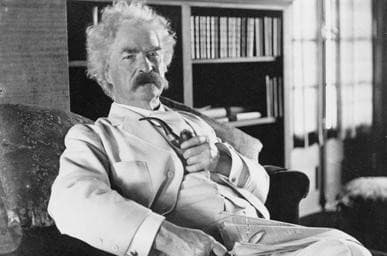
Samuel Langhorne Clemens, best known by his pen name Mark Twain, was an American writer, humorist, entrepreneur, publisher, and lecturer. He was praised as the "greatest humorist the United States has produced", and William Faulkner called him "the father of American literature". His novels include The Adventures of Tom Sawyer (1876) and its sequel, Adventures of Huckleberry Finn (1884), the latter of which has often been called the "Great American Novel". Twain also wrote A Connecticut Yankee in King Arthur's Court (1889) and Pudd'nhead Wilson (1894), and co-wrote The Gilded Age: A Tale of Today (1873) with Charles Dudley Warner.
Similar books
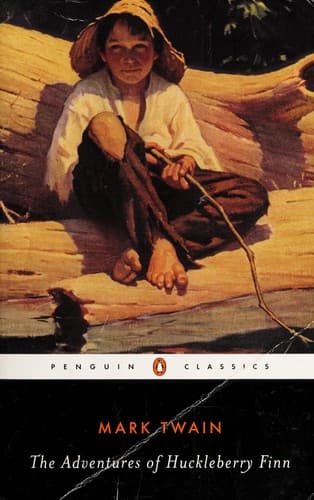
- The Adventures of Huckleberry Finn
Mark Twain
3.8 (1.2M) average on GoodreadsHistorical FictionFeatures the same beloved character, Huckleberry Finn, and explores similar themes of adventure and freedom along the Mississippi River.
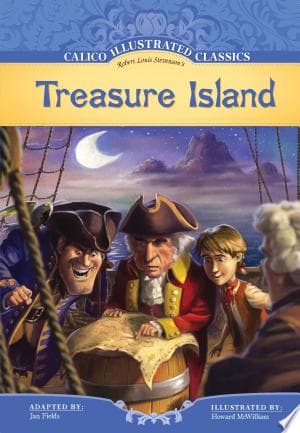
- Treasure Island
Robert Louis Stevenson
A classic adventure tale centered on a young boy, Jim Hawkins, searching for buried treasure and encountering dangerous villains.
- Harry Potter and the Sorcerer's Stone
J.K. Rowling
4.5 (7M) average on GoodreadsFantasyRescued from a miserable life under the stairs, an orphaned boy discovers he's a wizard destined for a magical school, where he uncovers a dangerous secret tied to the dark wizard who murdered his parents.
- The Hobbit, or There and Back Again
J.R.R. Tolkien
4.3 (2.9M) average on GoodreadsFantasyA comfort-loving hobbit named Bilbo Baggins is whisked away by a mischievous wizard and a band of dwarves on an unexpected journey to reclaim stolen treasure from a fearsome dragon, discovering courage and a magical ring along the way.
- Harry Potter and the Goblet of Fire
J.K. Rowling
4.6 (2.6M) average on GoodreadsFantasyA bewildered Harry Potter, underage and thrust into a deadly Triwizard Tournament, must brave dragons, mermaids, and a resurgent dark magic to survive a year that will forever alter the wizarding world.
- Harry Potter and the Order of the Phoenix
J.K. Rowling
4.5 (2.5M) average on GoodreadsFantasyIn a year of oppressive secrets and the threat of Voldemort, Harry Potter and Dumbledore's Army secretly train for war, shown through Jim Kay and Neil Packer's dark illustrations.




Enjoyed the summary?
A summary gives you the shape of the book. The book itself has the detail, the examples and the voice.
Find The Adventures of Tom Sawyer on AmazonAs an Amazon Associate, BookBrief earns from qualifying purchases. How we're funded