
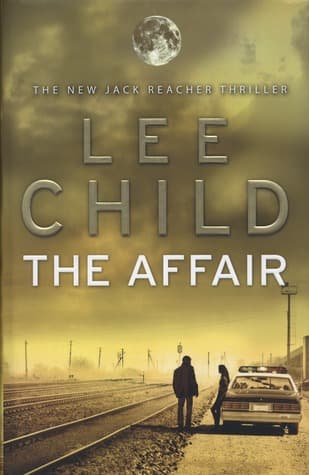
Synopsis
Covers the whole plot, including the ending.
- Difficulty
- Medium
- Pacing
- Fast
- Mood
- Suspenseful, Gritty, Intense, Morally complex
- Read it if
- You enjoy military thrillers, a strong sense of justice, and seeing a beloved character's origin story unfold.
- Skip it if
- You prefer fantasy or romance over gritty crime thrillers with military themes.
The Affair Plot Summary
Covers the whole plot, including the ending.
The Murder in Carter Crossing
In March 1997, Janet Salter is found murdered behind a bar in Carter Crossing, Mississippi. Sheriff Elizabeth Devereaux starts an investigation, but the nearby U.S. Army base, Fort Kelham, complicates things. Major Jack Reacher, still in the military police, is sent undercover by Colonel Reed and General Garber to investigate. His specific task is to find out if a soldier is involved and, if so, to keep it quiet to protect the Army's reputation. He is told to work discreetly and report to his superiors, which immediately raises questions about the military's real intentions.
Undercover and First Impressions
Reacher arrives in Carter Crossing, pretending to be a civilian drifter. He quickly assesses the town and its residents, noticing the tension between locals and soldiers from Fort Kelham. He meets Sheriff Elizabeth Devereaux, an intelligent and capable former Marine. They are suspicious of each other at first, but also show growing respect. Reacher begins his own quiet investigation, observing the crime scene and local dynamics, while Devereaux continues her official inquiries, which seem to be blocked, possibly by military interference.
The Second Murder and Escalation
Soon after Reacher arrives, another local woman, Maria Perez, is found murdered in a similar way to Janet Salter. This second killing makes the investigation more urgent and puts more pressure on both Reacher and Devereaux. The murder pattern suggests a serial killer, and the focus remains on whether the killer is a soldier or a local. Reacher and Devereaux start sharing information more openly, their professional relationship growing as they realize they might be working against a common, powerful enemy.
Uncovering Military Secrets
As Reacher investigates further, he uncovers a troubling secret at Fort Kelham. He learns that Lieutenant Colonel John Garber Jr., the son of a high-ranking general, has been involved in a series of sexual assaults and murders of local women. The military, led by General Garber Sr. and Colonel Reed, has been actively covering up his crimes to protect the general's career and the Army's reputation. This discovery puts Reacher in a moral dilemma; his orders were to contain the situation, but his sense of justice demands exposure.
Devereaux's Own Investigation
Sheriff Devereaux, despite a lack of cooperation from Fort Kelham and subtle stalling, continues her careful investigation. She notices inconsistencies and attempts by military personnel to block her inquiries. Through her own leads and observations, she starts to suspect a military connection to the murders and senses a coordinated effort to hide information. Her independent work brings her closer to the truth Reacher is uncovering, creating a parallel path to the same conclusion.
The Confrontation with Garber Jr.
Reacher, after confirming John Garber Jr.'s guilt, confronts him. Garber Jr. is revealed as a sadistic and arrogant individual, sure he is untouchable due to his father's influence. The confrontation turns into a violent fight. Reacher, using his combat skills and experience, subdues Garber Jr. This direct action starts the final, irreversible steps of Reacher's military career and the dismantling of the cover-up.
The Cover-Up Exposed
With Garber Jr. caught, Reacher and Devereaux work together to expose the full extent of the military's cover-up. They gather evidence implicating General Garber Sr. and Colonel Reed in obstructing justice and protecting a murderer. The truth reveals corruption within a part of the military command, prioritizing institutional image over justice for the victims. This collaboration strengthens their trust and respect for each other, despite their different loyalties.
Reacher's Moral Dilemma and Decision
Faced with the choice of following his orders to maintain the cover-up or exposing the truth and facing the consequences, Reacher makes a clear moral stand. He decides that protecting a murderer and a corrupt system is wrong. His actions directly go against his superiors' wishes, sealing his fate within the military. This decision is a key moment, marking his shift from a dedicated military police officer to the independent, justice-seeking drifter he becomes.
The Aftermath and Consequences
The evidence gathered by Reacher and Devereaux leads to the arrests of General Garber Sr. and Colonel Reed for their roles in the cover-up. John Garber Jr. faces justice for the murders. As a direct result of his insubordination and exposure of military corruption, Jack Reacher is honorably discharged from the Army. This ends his long and distinguished military career, setting the stage for his life as a civilian wanderer, guided by his own moral code.
A New Beginning
With his military career over, Reacher packs his few belongings and leaves Carter Crossing. The experience strengthens his belief in personal justice and his distrust of institutional power structures that compromise integrity. He acknowledges the deep connection he formed with Sheriff Devereaux, but ultimately chooses the solitary path of a drifter, free from the demands of command. This ending directly precedes the beginning of 'Killing Floor' and his iconic status as a lone wolf.
Principal Figures
Jack Reacher
Protagonist
A highly skilled military police major on the verge of a life-changing decision.
Jack Reacher is a major in the U.S. Army Military Police Corps, known for his exceptional investigative skills, physical prowess, and unwavering moral compass. He is pragmatic, observant, and possesses a deep sense of justice. Despite being a career soldier, he holds a strong disdain for corruption and abuses of power within the military. He is analytical, often working alone, and relies on his instincts and training to solve complex problems, even when it means defying orders.
Relationships: Elizabeth Devereaux (professional ally and romantic interest); Colonel Reed (superior officer, complicit in cover-up); General Garber Sr. (superior officer, orchestrator of cover-up)
Elizabeth Devereaux
Supporting
The sharp and determined Sheriff of Carter Crossing.
Elizabeth Devereaux is the county sheriff of Carter Crossing, a former U.S. Marine, and a highly capable investigator. She is intelligent, resilient, and deeply committed to justice for her community. Despite facing stonewalling from the military, she persists in her investigation, demonstrating a strong moral character and a refusal to be intimidated. She forms a complex professional and personal relationship with Reacher, based on mutual respect and attraction.
Relationships: Jack Reacher (professional ally and romantic interest); Janet Salter (murder victim, subject of her investigation)
John Garber Jr.
Antagonist
A sadistic lieutenant colonel and serial killer, protected by his powerful father.
John Garber Jr. is a lieutenant colonel in the U.S. Army and the psychopathic son of General Garber Sr. He is the serial murderer of the local women, driven by a perverse sense of entitlement and cruelty. Arrogant and cunning, he believes himself untouchable due to his father's influence and the military's willingness to cover up his crimes. He embodies the corrupting influence of unchecked power and privilege.
Relationships: General Garber Sr. (father and protector); Janet Salter (murder victim); Maria Perez (murder victim)
General Garber Sr.
Antagonist
A high-ranking general who orchestrates a cover-up to protect his son and career.
General Garber Sr. is a powerful and influential figure within the U.S. Army. He is the father of John Garber Jr. and the architect of the elaborate cover-up designed to protect his son from justice and preserve his own reputation and career. He represents the institutional corruption and moral compromise that Reacher ultimately rebels against. He is ruthless and calculating, willing to sacrifice ethical principles for personal and institutional gain.
Relationships: John Garber Jr. (son and object of protection); Colonel Reed (subordinate, accomplice in cover-up); Jack Reacher (subordinate, target of manipulation)
Colonel Reed
Supporting
Reacher's commanding officer, complicit in the cover-up.
Colonel Reed is Reacher's immediate commanding officer and a key figure in General Garber Sr.'s cover-up operation. He is tasked with controlling Reacher and ensuring the military's involvement in the murders remains concealed. Reed is a pragmatic and ambitious officer, willing to follow orders, even when they are morally questionable, to advance his career. He represents the 'company man' who prioritizes institutional loyalty over justice.
Relationships: Jack Reacher (subordinate, target of manipulation); General Garber Sr. (superior officer, co-conspirator)
Janet Salter
Mentioned
The first murder victim, whose death sparks the investigation.
Janet Salter is the first victim of John Garber Jr. Her brutal murder behind a bar in Carter Crossing is the catalyst for the entire story. While she does not appear as a living character, her death drives the plot and motivates both Sheriff Devereaux and, ultimately, Jack Reacher to seek justice. Her fate highlights the vulnerability of the local women and the depravity of the killer.
Relationships: John Garber Jr. (her murderer); Elizabeth Devereaux (the sheriff investigating her death)
Maria Perez
Mentioned
The second murder victim, whose death escalates the investigation.
Maria Perez is the second victim of John Garber Jr., murdered in a similar fashion to Janet Salter. Her death confirms the presence of a serial killer and intensifies the pressure on the authorities. Her murder underscores the danger in Carter Crossing and fuels Reacher's resolve to uncover the truth, pushing him further into defiance of his orders. Like Janet, she is a victim whose fate drives the narrative.
Relationships: John Garber Jr. (her murderer); Elizabeth Devereaux (the sheriff investigating her death)
Themes & Insights
Justice vs. Institutional Loyalty
This theme explores the conflict between an individual's moral duty to seek justice and the demands of loyalty to an institution, especially the military. Reacher is initially sent to protect the Army's image. But as he uncovers the truth of John Garber Jr.'s crimes and the cover-up by General Garber Sr., he faces a deep moral problem. His decision to expose the truth, knowing it will end his career, shows this struggle. The theme highlights how institutions can become corrupt when self-preservation is more important than ethics.
“I had orders. But I had a conscience too.”
The Abuse of Power and Privilege
The novel clearly shows how power and privilege can be misused to commit crimes and avoid justice. John Garber Jr.'s serial murders are possible because of his father's high rank and influence in the military, allowing him to act without punishment. General Garber Sr. and Colonel Reed actively manipulate the investigation and obstruct justice, showing how those in authority can corrupt the system for personal gain or protection. This theme emphasizes the dangerous results when accountability is bypassed by status.
“Some men think the rules don't apply to them, especially when their fathers are generals.”
The Nature of Undercover Work and Deception
Reacher's undercover assignment forces him into a world of deception, where his true identity and intentions must be hidden. This theme explores the psychological cost and moral uncertainties in such work. Reacher must constantly decide whom to trust and how much information to reveal, balancing his mission with his personal code. His initial deception of Sheriff Devereaux, while necessary for his cover, creates tension and highlights the blurred lines between ally and enemy in a complex investigation.
“Undercover means you're a lie, walking and talking.”
The Birth of a Lone Wolf
This prequel is an origin story for Reacher's 'lone wolf' persona. The events in Carter Crossing are the clear reason for his decision to leave the military and live free from institutional limits. His disappointment with the Army's corruption and his strong commitment to his own moral code solidify his future path as an independent drifter who delivers justice on his own terms. The novel explains why Reacher chose a life of solitary wandering instead of continuing a distinguished military career.
“My life in the Army was over. My life as Reacher was just beginning.”
Masculinity and Violence
The novel examines different aspects of masculinity, especially in relation to violence. John Garber Jr. shows a toxic masculinity, using violence to control and satisfy himself, enabled by his privileged position. In contrast, Reacher's masculinity is defined by his disciplined combat skills and his use of violence only as a last resort for justice. The military setting itself highlights a culture where certain forms of violence are allowed, but the story draws a clear line between honorable service and criminal depravity.
“There's a line, even for soldiers, between fighting and being a monster.”
Plot Devices & Literary Techniques
Undercover Investigation
Reacher's secret mission to investigate military involvement in the murders.
This device is central to the narrative, allowing Reacher to operate outside traditional military channels and gather information without immediately alerting the conspirators. It creates suspense as Reacher navigates a dual role, balancing his official orders (to contain the situation) with his personal drive for justice. The undercover aspect also facilitates his initial, cautious interactions with Sheriff Devereaux, building a slow-burn alliance while maintaining secrecy from his superiors.
Moral Dilemma
Reacher's internal conflict between following orders and upholding justice.
The moral dilemma is the core engine of Reacher's character arc in this novel. He is ordered to protect the Army's reputation, even if it means covering up a murder. As he uncovers the truth about Garber Jr. and the extent of the cover-up, Reacher is forced to choose between his career and his conscience. This internal conflict drives his actions and ultimately leads to his pivotal decision to leave the military, defining the character's future trajectory.
Red Herring
Initial misdirection pointing towards a generic soldier or local.
The plot initially suggests that the murderer could be any soldier from Fort Kelham or a local resident, creating a broad field of suspects. This misdirection serves to heighten the mystery and allows the military to initially control the narrative by deflecting specific accusations. It also allows Reacher to conduct his initial investigation broadly before narrowing down on the true culprit and the specific, high-level cover-up, making the eventual reveal of Garber Jr.'s identity more impactful.
Institutional Corruption
The systemic cover-up orchestrated by high-ranking military officials.
This device creates a powerful antagonist beyond just the killer. The corruption within the military, particularly General Garber Sr.'s active involvement in shielding his son, provides a formidable obstacle for Reacher and Devereaux. It highlights the dangers of unchecked power and how institutions can prioritize self-preservation over justice, turning the military itself into an adversary for Reacher, forcing him to choose between his loyalty and his moral code.
The Affair Quotes
“The army taught him a thing or two about the way the world worked, and one of them was that you didn't always get to choose your battles. Sometimes they chose you.”
“He had a rule of thumb: if it looked like trouble, it probably was. And if it felt like trouble, it definitely was.”
“There was no such thing as a perfect crime. Just imperfect investigations.”
“He didn't like surprises. Not when they involved guns.”
“Silence was a weapon, too. Sometimes the most effective one.”
“The truth was a messy business. Especially when people tried to bury it.”
“He was a big man, but he moved like a shadow. Which was why he was so good at what he did.”
“Some secrets were meant to stay buried. Others had a way of clawing their way to the surface.”
“He preferred simple. Simple was usually honest. Complicated was usually a lie.”
“The world was full of bad people. And sometimes, good people had to do bad things to stop them.”
“He didn't carry a watch. Or a phone. Or any of the things that tied people down. He was free.”
“A man's word was his bond. Or it should be. In the army, it was everything.”
“He knew the difference between a threat and a promise. And he knew which one was more dangerous.”
“Sometimes the only way to find out what was going on was to stir things up.”
Quiz
10 questions on the plot and the characters. Each answer comes with a short explanation.
Question 1
In what month and year is 'The Affair' by Lee Child set, just six months before the events of 'Killing Floor'?
- September 1996
- March 1997
- September 1997
- March 1996
Show answer
D. March 1996 The book description states the action is set just six months before 'Killing Floor', which opened in September 1997. Therefore, 'The Affair' is set in March 1997 minus six months, which is March 1996.
Question 2
What is the initial crime that Jack Reacher is sent to investigate in Carter Crossing, Mississippi?
- A robbery at the army base
- A soldier gone missing
- A woman found with her throat cut behind a bar
- An explosion at a local factory
Show answer
C. A woman found with her throat cut behind a bar The synopsis clearly states that 'A woman has her throat cut behind a bar in Carter Crossing, Mississippi,' which is the inciting incident.
Question 3
What is Jack Reacher's rank and military branch when he is sent undercover to Carter Crossing?
- Captain in the Green Berets
- Major in the military police
- Sergeant in the Army Rangers
- Lieutenant Colonel in Army Intelligence
Show answer
B. Major in the military police The description states, 'Jack Reacher, still a major in the military police, is sent in undercover.'
Question 4
What is the former military background of the county sheriff in Carter Crossing?
- US Army Ranger
- US Air Force Security Forces
- US Marine
- US Navy SEAL
Show answer
C. US Marine The text mentions, 'The county sheriff is a former US Marine - and a stunningly beautiful woman.'
Question 5
What is the primary conflict Reacher faces regarding his duty and personal ethics in this book?
- Whether to expose corruption within the local police department or protect the sheriff.
- Whether to follow the army's directives or pursue justice, potentially jeopardizing his military career.
- Whether to ignore the murder or risk his own life to solve it.
- Whether to reveal his undercover identity prematurely or continue his deception.
Show answer
B. Whether to follow the army's directives or pursue justice, potentially jeopardizing his military career. The synopsis highlights this internal struggle: 'If he does what the army wants, will he be able to live with himself? And if he doesn't, will the army be able to live with him?' This points to a conflict between army orders and personal integrity.
Question 6
What significant event in Reacher's career does 'The Affair' mark?
- His first major promotion within the military police.
- The end of his undercover assignments.
- A turning point, potentially leading to his departure from the army.
- His decision to specialize in cold cases.
Show answer
C. A turning point, potentially leading to his departure from the army. The text explicitly states, 'it marks a turning point in Reacher's career' and questions if it is 'his last case in uniform'.
Question 7
What is the geographical relationship between the murder scene and the army base?
- The murder occurred on the army base itself.
- The army base is located across the state from the murder scene.
- The murder happened in a neighboring county, far from the base.
- The army base is just down the road from the murder scene.
Show answer
D. The army base is just down the road from the murder scene. The description states, 'Just down the road is a big army base,' indicating close proximity to the murder site.
Question 8
What is the core dilemma presented regarding the murderer's identity?
- Whether the killer is a local drug dealer or a rival gang member.
- Whether the killer is a local resident or a soldier from the nearby base.
- Whether the killer is a drifter passing through or a long-term resident.
- Whether the killer is a professional assassin or an amateur.
Show answer
B. Whether the killer is a local resident or a soldier from the nearby base. The central question posed in the synopsis is: 'Is the murderer a local guy - or is he a soldier?' This highlights the ambiguity of the killer's origin.
Question 9
What specific actions are questioned regarding the Pentagon's involvement and the sheriff's investigation?
- Whether the Pentagon is providing too much assistance, overwhelming the sheriff.
- Whether the Pentagon is stonewalling the sheriff, and if the sheriff herself is deliberately hindering the investigation.
- Whether the Pentagon is secretly funding the sheriff's investigation, and if she is aware of it.
- Whether the Pentagon is trying to take over the investigation, and if the sheriff is resisting.
Show answer
B. Whether the Pentagon is stonewalling the sheriff, and if the sheriff herself is deliberately hindering the investigation. The text asks, 'Is the Pentagon stonewalling her? Or doesn't she really want to find the killer?' This implies both the Pentagon's potential obstruction and the sheriff's possible complicity.
Question 10
The title of the book, 'The Affair', most likely refers to which of the following, based on the provided synopsis?
- A romantic relationship between Reacher and the sheriff.
- A clandestine military operation or a scandalous event being covered up.
- A diplomatic incident between the local town and the army base.
- A personal vendetta Reacher has against the military.
Show answer
B. A clandestine military operation or a scandalous event being covered up. Given the themes of military involvement, potential stonewalling, and Reacher's ethical dilemma regarding army orders, 'The Affair' likely refers to a secret or scandalous event, an 'affair' in the sense of a matter or situation, particularly one that is illicit or involves a cover-up, rather than solely a romantic one, though that could also be a sub-plot.
The Affair FAQ
What is the central mystery Jack Reacher is sent to investigate in Carter Crossing?
Reacher is dispatched undercover to Carter Crossing, Mississippi, to investigate the throat-slitting murder of a woman behind a local bar. The primary concern is whether the killer is a local civilian or a soldier from the nearby army base, and the Pentagon is keen to control the narrative.
Who is the local authority Reacher must work with, and what is her background?
Reacher's local contact is Sheriff Elizabeth Deveraux, a stunningly beautiful woman and a former US Marine. Her military background suggests a certain level of competence, yet her investigation into the murder seems stalled, raising Reacher's suspicions.
What is the significance of the novel's timeline relative to other Jack Reacher books?
"The Affair" is set in March 1997, just six months before the events of "Killing Floor," the very first Jack Reacher novel. This places it at a crucial juncture, depicting Reacher's final days in uniform and the circumstances leading to his eventual departure from the military.
What internal conflict does Reacher face regarding his military duties?
Reacher grapples with a profound moral dilemma: whether to follow the army's directives, which may involve covering up uncomfortable truths, or to pursue justice independently. This internal struggle is central to his character development and ultimately influences his decision to leave the military.
What role does the army base play in the murder investigation?
The nearby army base is central to the investigation, as it presents a significant pool of potential suspects and a powerful institutional presence that seeks to control information. The Pentagon's involvement suggests a desire to protect the army's reputation, potentially at the expense of justice.
How does Sheriff Deveraux's past as a Marine influence her actions or Reacher's perception of her?
Her Marine background initially suggests a strong, capable ally, but it also makes Reacher wary. He questions if her loyalty to the military, or perhaps past trauma, is influencing her stalled investigation or if she is deliberately obstructing it under orders.
What 'hidden details' about the murder victim emerge that complicate the investigation?
The victim, a local woman working behind a bar, is not just a random target. Reacher uncovers connections she had to individuals on the military base, suggesting the murder is more complex than a simple local crime and potentially linked to a larger conspiracy.
Are there any specific characters from Reacher's past or future that are subtly hinted at or appear in this novel?
While not explicitly named for future appearances, this novel establishes Reacher's disillusionment with the military, a foundational aspect of his character in subsequent books. The corrupt military elements he encounters here solidify his resolve to become an unattached drifter.
What is the true nature of the 'affair' referenced in the book's title?
The title refers to multiple layers: the murder investigation itself (an 'affair' of state or local importance), the illicit relationships uncovered during the investigation, and perhaps even the 'affair' Reacher has with duty versus personal morality that defines his career turning point.
How does Reacher's 'undercover' status affect his investigative methods?
Being undercover forces Reacher to operate with more subtlety and less direct authority than usual, requiring him to gather intelligence discreetly and build trust. This often involves observing and listening rather than immediately confronting, a contrast to his later, more direct approach.
What psychological impact does the cover-up attempt have on Reacher?
The military's attempts to cover up the truth profoundly affect Reacher, intensifying his moral outrage and solidifying his disillusionment with institutional power. This experience is a significant catalyst for his decision to leave the army and become an independent agent of justice.
Discuss the 'turning point' in Reacher's career as mentioned in the synopsis.
The turning point is Reacher's realization that he can no longer reconcile his personal code of ethics with the army's demands, especially when those demands involve corruption and injustice. This case forces him to choose between obedience and his conscience, leading to his eventual resignation.
What larger themes about military justice or institutional corruption are explored in the novel?
The novel critically examines themes of military justice, highlighting how institutions can prioritize self-preservation and public image over truth and accountability. It exposes the potential for corruption within hierarchical structures and the ethical compromises demanded of those within them.
How does the setting of rural Mississippi contribute to the atmosphere and plot?
The rural Mississippi setting, with its small-town dynamics and proximity to a large military base, creates a tense atmosphere where local secrets intertwine with military power. The isolation and close-knit community enhance the sense of suspicion and the difficulty of uncovering hidden truths.
What is the ultimate fate of the true killer, and how does Reacher ensure justice is served?
Reacher uncovers a conspiracy involving high-ranking individuals on the base, revealing the true killer is a soldier connected to a network of illicit activities. He ensures justice is served not through official channels, but often through his own brutal brand of vigilante justice, dismantling the cover-up and holding the responsible parties accountable.
How does Reacher's relationship with Sheriff Deveraux evolve throughout the investigation?
Initially, their relationship is marked by suspicion and professional tension, as Reacher questions her motives and stalled investigation. As they uncover more layers of the conspiracy, a complex dynamic of grudging respect, professional partnership, and personal attraction develops between them.
What specific acts of defiance does Reacher commit against his military superiors?
Reacher actively disregards direct orders to cease his investigation, pursues leads the military wants buried, and ultimately exposes the truth even when it implicates high-ranking officers. His defiance culminates in actions that make his continued service in the army untenable.
In what ways does this book foreshadow Reacher's loner lifestyle in future novels?
The events of "The Affair" are the direct catalyst for Reacher's decision to leave the military, stripping him of his uniform and official ties. This experience solidifies his distrust of institutions and sets him on the path to becoming the rootless, independent drifter seen in subsequent books.
About the author

Lee Child is a British author known for his thriller novels featuring the character Jack Reacher. His notable works include "Killing Floor," "Die Trying," "One Shot," "Gone Tomorrow," "The Affair," and "61 Hours." Child's writing is characterized by suspenseful plots and intricate storytelling, making him a prominent figure in contemporary fiction.
Similar books
- Killing Floor
Lee Child
4.0 (249k) average on GoodreadsThrillerFirst book in the Jack Reacher series, establishing his character and solo adventures.
- The Hunt for Red October
Tom Clancy
4.1 (336k) average on GoodreadsThrillerMilitary intrigue and high-stakes tension, though more focused on espionage.
- The Poet
Michael Connelly
4.2 (82k) average on GoodreadsThrillerWhile both The Affair and The Poet involve intricate conspiracies and law enforcement investigations, The Affair uniquely focuses on the origin story of its protagonist, Jack Reacher, showing his formative years and ethical awakening. The Poet features a more established protagonist (Jack McEvoy) who is already a seasoned crime reporter, making his character arc less about initial formation and more about navigating an existing, complex world.
- American Assassin
Vince Flynn
4.2 (75k) average on GoodreadsThrillerBoth The Affair and American Assassin serve as origin stories for their respective protagonists. However, The Affair depicts Jack Reacher's initial disillusionment with military protocol and his first steps towards becoming an independent operative within the military's confines. In contrast, American Assassin shows Mitch Rapp's recruitment and training into a clandestine CIA black ops program after a personal tragedy, immediately immersing him in a world of espionage and targeted assassinations, a far more direct and brutal initiation into a shadowy world than Reacher's initial, more investigative path.
- Angels & Demons
Dan Brown
3.9 (2.7M) average on GoodreadsThrillerA Harvard symbologist races through Rome's ancient sites, deciphering cryptic clues to unmask the Illuminati and stop a vengeful plot to destroy the Vatican with a stolen antimatter weapon.
- Gone Girl
Gillian Flynn
4.1 (2.3M) average on GoodreadsThrillerA wife's sudden disappearance on her fifth anniversary reveals a web of lies and psychological warfare, exposing the secrets within a seemingly perfect marriage.






Enjoyed the summary?
A summary gives you the shape of the book. The book itself has the detail, the examples and the voice.
Find The Affair on AmazonAs an Amazon Associate, BookBrief earns from qualifying purchases. How we're funded