

Synopsis
Covers the whole plot, including the ending.
- Difficulty
- Easy
- Pacing
- Moderate
- Mood
- Enchanting, Romantic, Hopeful, Adventurous
- Read it if
- You enjoy classic fairy tale retellings with a strong female protagonist, a dash of magic, and a sweet romance.
- Skip it if
- You prefer gritty, realistic fantasy or stories without a predictable 'happily ever after' structure.
The Amaranth Enchantment Plot Summary
Covers the whole plot, including the ending.
A Life of Servitude at the Jeweler's Shop
Lucinda Chapdelaine, a sixteen-year-old, lives a life of drudgery and abuse working at her Aunt Mathilde's jewelry shop in the city of Valleroy. Her parents disappeared ten years prior, presumed dead, after attending a royal ball, leaving Lucinda an orphan. Mathilde constantly reminds Lucinda of her supposed debt and worthlessness, forcing her to clean, polish, and assist with customers, while denying her any education or kindness. Lucinda often finds solace in the intricate beauty of the jewels and the fantastical stories she imagines, longing for a life beyond her aunt's cruel grasp and haunted by the mystery of her parents' disappearance. She occasionally overhears hushed conversations about the royal family and the ongoing search for Prince Kian's missing betrothed.
The Arrival of the Amaranth and a Mysterious Customer
One day, a peculiar, gaunt man named Mr. Butterfield enters Mathilde's shop, carrying a small, plain wooden box. Inside is a breathtaking amaranth-colored jewel, unlike anything Lucinda has ever seen. The jewel glows faintly, and Lucinda feels an inexplicable pull towards it. Mr. Butterfield explains he needs it set into a specific necklace design and insists on Lucinda's involvement in the design process, much to Mathilde's annoyance. He pays an exorbitant sum in advance, stipulating that Lucinda must engrave a specific, complex inscription on the clasp. This interaction sparks hope and curiosity in Lucinda, hinting at secrets beyond her mundane existence.
The Enchanted Necklace and a Glimpse of Magic
As Lucinda works on the Amaranth necklace, she discovers that the jewel has magical properties. When she holds it, she experiences vivid, fleeting visions and sensations, almost as if she can hear whispers from the past. The intricate inscription Mr. Butterfield requested turns out to be a coded message. With the help of a kind baker's son, Henri, who secretly teaches her to read, Lucinda deciphers parts of the message, realizing it speaks of a 'true queen' and a 'forgotten throne.' This revelation deepens her suspicion that the jewel is tied to a greater mystery, possibly even to her own missing parents.
The Royal Ball and a Hidden Identity
Mr. Butterfield returns, now appearing more refined, and presents Lucinda with a beautiful gown, inviting her to the royal ball, ostensibly to deliver the finished necklace to a mysterious recipient. Overwhelmed but excited, Lucinda attends the ball, posing as a lady of quality. There, she encounters Prince Kian, the charming and melancholic heir to the throne, who is still searching for his lost betrothed. Lucinda is captivated by the royal court and its opulence, but also by an undercurrent of unease. She sees the Dowager Queen, a formidable presence, and feels a strange familiarity with the castle's layout, a place she has only heard about in stories.
The Reveal and a Familiar Face
At the ball, Mr. Butterfield reveals himself to be Lord Averill, a loyal advisor to the late King and a guardian of royal secrets. He explains that Lucinda is not just a jeweler's assistant, but the rightful Princess Aurelia, the true heir to the throne, whose parents (the King and Queen) were overthrown and imprisoned by the Dowager Queen and her ambitious brother, Lord Vane. The Amaranth necklace is a royal artifact, a symbol of sovereignty that reveals the true monarch. Lucinda's parents, he explains, entrusted her to Mathilde for safekeeping, hoping she would remain hidden until the time was right for her return.
Confrontation and Capture
The revelation at the ball culminates in a tense confrontation. Lord Averill presents Lucinda, the necklace glowing, as Princess Aurelia. However, the Dowager Queen, aided by Lord Vane, quickly moves to discredit and capture her. They accuse her of being an imposter and a witch. Lucinda, though initially stunned, tries to assert her claim, but the Dowager Queen's guards are too numerous. In the ensuing chaos, Lucinda is apprehended, and Lord Averill is also captured, leaving Prince Kian shocked and confused by the sudden turn of events, unsure who to believe.
Imprisonment and a Desperate Plan
Lucinda is thrown into the castle dungeons, where she is interrogated by the Dowager Queen and Lord Vane. They mock her claims and reveal the grim truth: her parents are not dead but have been held captive in a hidden section of the castle for years. They intend to use Lucinda to force her parents to abdicate their claim officially. While imprisoned, Lucinda uses her wits and the subtle magic of the Amaranth (which she managed to keep) to communicate with Lord Averill in a nearby cell. Together, they begin to formulate a desperate plan for escape and to expose the Dowager Queen's treachery.
Escape and Alliance with Henri
With Lord Averill's guidance and her own ingenuity, Lucinda manages a daring escape from the dungeons. She flees the castle, disoriented but determined. Her first instinct is to seek out Henri, the kind baker's son who taught her to read and with whom she developed a strong bond. Henri, though initially shocked by her true identity, immediately believes her story and pledges his loyalty. He provides her with food, shelter, and his unwavering support, proving to be an invaluable ally in her quest to reclaim her birthright and free her parents.
Gathering Support and a Royal Betrayal
Lucinda and Henri begin to discreetly gather support among the common folk and a few loyalists who remember the true King and Queen. Meanwhile, Prince Kian, disturbed by the Dowager Queen's harshness and Lucinda's earnest pleas, starts to investigate the claims himself. He finds inconsistencies in his mother's stories and begins to doubt the official narrative of his 'lost betrothed.' He secretly meets with Lord Averill, who, having also escaped, confirms Lucinda's story and reveals the extent of the Dowager Queen's conspiracy, including the true fate of Lucinda's parents.
The Final Confrontation and Restoration
Armed with evidence and growing support, Lucinda, Henri, Lord Averill, and now a conflicted but convinced Prince Kian, orchestrate a dramatic confrontation. They expose the Dowager Queen and Lord Vane's decade-long deception to the court and the public, revealing the imprisoned King and Queen. The Amaranth necklace, glowing brightly, confirms Lucinda's identity as Princess Aurelia. The people, witnessing the truth, turn against the usurpers. The Dowager Queen and Lord Vane are arrested, and Lucinda's parents are freed, their rightful place on the throne restored. Lucinda, now Princess Aurelia, begins to heal the kingdom alongside her family and a newly enlightened Prince Kian.
A New Reign and a Budding Romance
With her parents back on the throne, Lucinda, now Princess Aurelia, embraces her royal duties. She works to right the wrongs committed during the Dowager Queen's reign, bringing justice and prosperity back to Valleroy. Her bond with Prince Kian deepens as they work together, sharing their vision for the kingdom. Kian, having overcome his initial confusion and fear, recognizes Lucinda's strength, compassion, and wisdom. Their shared experiences and mutual respect blossom into a genuine affection, hinting at a future where they rule side-by-side, united in their love for each other and their kingdom.
Principal Figures
Lucinda Chapdelaine / Princess Aurelia
Protagonist
A spirited and resourceful orphaned girl who discovers she is the rightful heir to the throne.
Lucinda is a kind, intelligent, and observant sixteen-year-old girl, forced into servitude by her cruel Aunt Mathilde. Despite her harsh upbringing, she maintains a resilient spirit, a love for stories, and an innate curiosity. She possesses a natural talent for jewelry design and an intuitive connection to magic. Her deep longing for her lost parents fuels her hidden strength and determination. She is compassionate and quick-witted, often finding creative solutions to problems, and values loyalty above all else.
Relationships: Aunt Mathilde (Abusive guardian); Henri (Loyal friend and confidant); Mr. Butterfield / Lord Averill (Mentor and royal guardian); Prince Kian (Love interest and future royal partner); King and Queen (her parents) (Long-lost parents)
Prince Kian
Supporting / Love Interest
The melancholic prince haunted by the disappearance of his betrothed, who eventually allies with Lucinda.
Prince Kian is initially portrayed as a somewhat passive and melancholic figure, burdened by the long-standing mystery of his missing betrothed (who is, unbeknownst to him, Lucinda herself). He is kind-hearted and just, but has been manipulated by his mother, the Dowager Queen. He struggles with doubt and suspicion, but possesses an inherent sense of fairness and a desire for truth. He is observant and ultimately capable of independent thought, which leads him to question the official narrative.
Relationships: Lucinda Chapdelaine / Princess Aurelia (Love interest and future royal partner); Dowager Queen (Mother, manipulative antagonist); Lord Vane (Uncle, antagonistic figure)
Aunt Mathilde
Antagonist / Supporting
Lucinda's cruel and greedy aunt, who exploits her niece for labor.
Aunt Mathilde is a bitter, avaricious woman who runs a jewelry shop. She is physically and emotionally abusive towards Lucinda, constantly reminding her of her low status and the supposed burden she represents. Mathilde's primary motivations are greed and maintaining her comfortable, if unremarkable, social standing. She is oblivious to the larger political machinations but is a direct instrument of Lucinda's suffering and isolation, having been paid to keep her hidden. Her cruelty stems from a mix of resentment and self-interest.
Relationships: Lucinda Chapdelaine / Princess Aurelia (Abused niece); Lord Vane (Conspirator, paid her to hide Lucinda)
Mr. Butterfield / Lord Averill
Supporting
A loyal royal advisor who orchestrates Lucinda's return to the throne.
Lord Averill, initially disguised as the unassuming Mr. Butterfield, is a highly intelligent, cunning, and deeply loyal former advisor to Lucinda's parents. He is dedicated to restoring the rightful monarchy and has spent years meticulously planning Lucinda's return. He is resourceful and patient, carefully observing Lucinda before revealing her true identity. He serves as Lucinda's primary mentor and protector, guiding her through the complexities of court intrigue and royal history. He is willing to take great risks for the sake of justice and the kingdom.
Relationships: Lucinda Chapdelaine / Princess Aurelia (Protector and mentor); King and Queen (her parents) (Loyal advisor); Henri (Ally)
Henri
Supporting
A kind and intelligent baker's son who becomes Lucinda's first true friend and ally.
Henri is a compassionate, brave, and intelligent young man. Despite his humble background as a baker's son, he possesses a quick mind and a strong sense of justice. He secretly teaches Lucinda to read, demonstrating his kindness and his belief in her potential. He becomes Lucinda's most trusted friend and a crucial ally, providing practical support, emotional comfort, and unwavering loyalty throughout her journey. His common sense and street smarts are invaluable in their quest.
Relationships: Lucinda Chapdelaine / Princess Aurelia (Best friend and loyal ally)
Dowager Queen
Antagonist
The ambitious and ruthless mother of Prince Kian, who usurped the throne.
The Dowager Queen is the primary antagonist, a cunning and power-hungry woman who orchestrated the overthrow of Lucinda's parents and seized control of the kingdom. She maintains a facade of legitimacy but rules with an iron fist, manipulating her son, Prince Kian, and suppressing any dissent. She is ruthless, deceptive, and will stop at nothing to maintain her power, even imprisoning the true monarchs and attempting to eliminate Lucinda. Her motivations are purely selfish and driven by a thirst for control.
Relationships: Prince Kian (Son, whom she manipulates); Lord Vane (Brother and co-conspirator); Lucinda Chapdelaine / Princess Aurelia (Rival for the throne)
Lord Vane
Antagonist
The Dowager Queen's brother and co-conspirator, a cruel and ambitious nobleman.
Lord Vane is the Dowager Queen's equally ambitious and cruel brother. He is her primary accomplice in the usurpation of the throne and in maintaining the deception. He is depicted as cold, calculating, and lacking in empathy, serving as the enforcer of the Dowager Queen's will. He is directly involved in the imprisonment of Lucinda's parents and the efforts to suppress the truth. His motivation is primarily power and the benefits derived from his sister's reign.
Relationships: Dowager Queen (Sister and co-conspirator); Aunt Mathilde (Paid her to hide Lucinda)
Themes & Insights
Identity and Self-Discovery
The novel explores Lucinda's journey from an orphaned, abused girl to the rightful Princess Aurelia. Her identity is initially defined by her servitude and her aunt's cruelty, but through her innate talents and the discovery of the Amaranth, she slowly uncovers her true heritage. This theme is central as Lucinda grapples with who she thought she was versus who she truly is, leading her to embrace her royal responsibilities and inherent strength. The Amaranth necklace is a physical manifestation of her true identity, revealing her royal blood.
“You are not merely a girl who polishes jewels, Lucinda. You are a jewel yourself, waiting to be revealed.”
Justice and Restoration
A core theme is the fight to restore justice to the kingdom of Valleroy, which has suffered under the tyrannical rule of the Dowager Queen and Lord Vane. Lucinda's quest is not just personal but for the good of the realm. The story highlights the importance of truth prevailing over deception and the restoration of a rightful, compassionate ruler. The struggle to free her parents and expose the usurpers directly embodies this theme, showing how even a single individual can bring about significant change and correct historical wrongs, returning the kingdom to a state of balance and fairness.
“A crown is not merely a pretty thing to wear, Princess. It is a promise to your people.”
The Power of Love and Loyalty
Love and loyalty are powerful forces in the narrative. Henri's steadfast friendship and love for Lucinda provide her with crucial support and hope. Lord Averill's decade-long loyalty to the true royal family drives his intricate plan to restore Lucinda to the throne. The budding romantic love between Lucinda and Prince Kian, built on mutual respect and shared ideals, signifies a future of partnership and stability for the kingdom. The memory of her parents' love sustains Lucinda through her darkest times, demonstrating how these bonds can overcome adversity and oppression.
“Some treasures are more precious than any jewel. They are found in the hearts of those who stand by you.”
Deception and Truth
The entire plot hinges on a decade-long deception by the Dowager Queen and Lord Vane, who have hidden the true monarchs and fabricated a story about Prince Kian's lost betrothed. Lucinda's journey is one of uncovering this elaborate web of lies. The magical Amaranth jewel is a catalyst for revealing the truth, making the invisible visible. The theme explores how easily truth can be suppressed for power and how difficult, yet ultimately necessary, it is to uncover and confront falsehoods. The climax of the story is the grand reveal of the truth to the entire court.
“A lie can wear a crown for a time, but truth, like a jewel, will always shine through.”
Plot Devices & Literary Techniques
The Amaranth Enchantment (Jewel)
A magical, amaranth-colored jewel that reveals royal lineage and holds prophetic visions.
The Amaranth is the central magical artifact in the story. It is a jewel of extraordinary beauty and power, glowing with an internal light. Its primary function is to reveal the true heir to the throne, glowing intensely in the presence of someone with royal blood. It also allows Lucinda to experience faint visions or echoes of past events and provides her with a subtle, intuitive guidance. It acts as both a symbol of Lucinda's true identity and a practical tool in her quest, proving her claims and inspiring belief in others. Its enchantment is key to unraveling the decade-long deception.
The Hidden Princess Trope
A classic narrative device where the protagonist is of royal birth but unaware of their true heritage.
This device is fundamental to Lucinda's character arc. She lives a life of poverty and servitude, completely ignorant of her royal lineage as Princess Aurelia. This trope creates dramatic irony, as the audience knows (or suspects) her true identity before she does. It allows for a powerful transformation as Lucinda rises from her humble beginnings to reclaim her rightful place, highlighting themes of destiny, hidden potential, and the contrast between appearance and reality. Lord Averill's meticulous plan to reveal her identity is built around this very premise.
Coded Message / Prophecy
An encrypted inscription on the Amaranth necklace that guides Lucinda to her destiny.
The intricate inscription Mr. Butterfield requests on the necklace's clasp serves as a coded message, initially indecipherable to Lucinda. With Henri's help, she deciphers parts of it, which allude to a 'true queen' and a 'forgotten throne.' This device not only provides crucial plot information and hints at Lucinda's royal destiny but also serves to motivate her to learn to read and to delve deeper into the mystery. It also acts as a subtle form of prophecy, foreshadowing her eventual return to power and legitimizing her claim when revealed.
The Evil Stepmother/Aunt Figure
A classic antagonist archetype embodied by Aunt Mathilde, who oppresses the protagonist.
Aunt Mathilde fulfills the role of the 'evil aunt' (a variation of the evil stepmother trope), providing the initial oppressive environment from which Lucinda must escape. Her cruelty, greed, and constant belittling of Lucinda establish the protagonist's sympathetic plight and create a clear motivation for her desire for a better life. This device highlights Lucinda's resilience and resourcefulness, as she learns to navigate a harsh world and develop inner strength despite the lack of familial love and support. Mathilde's character sets the stage for Lucinda's eventual triumph over adversity.
The Amaranth Enchantment Quotes
“Perhaps I would learn to be a queen. Or perhaps I would be a queen who learned to be a blacksmith.”
“There are some things a princess cannot do, and there are some things a princess must do. You will learn the difference.”
“Magic is not about what you can do. It's about what you believe you can do.”
“A crown is not just gold and jewels. It is the weight of a kingdom.”
“Sometimes the greatest enchantments are the ones we make ourselves.”
“Love, true love, is not a spell. It is a choice, made every day.”
“Even a common girl can have an uncommon destiny.”
“The world is full of wonders, if only you open your eyes to see them.”
“Courage isn't the absence of fear, but the triumph over it.”
“It takes more than a pretty face to rule a kingdom. It takes a clever mind and a stout heart.”
“Sometimes the right thing to do is the hardest thing to do.”
“A secret is a heavy burden, especially one that could change everything.”
“The greatest magic of all is finding your own strength.”
“Even the smallest spark can ignite the greatest change.”
Quiz
10 questions on the plot and the characters. Each answer comes with a short explanation.
Question 1
What is the name of the jewelry store where Lucinda Chapdelaine is forced to work?
- The Golden Locket
- The Amaranth Gem
- The Gilded Cage
- The Silver Charm
Show answer
C. The Gilded Cage Lucinda works in her evil aunt's jewelry store, which is called The Gilded Cage, a name that reflects her trapped existence.
Question 2
What event marks the disappearance of Lucinda's parents?
- They went on a long journey abroad.
- They were abducted from their home.
- They left for the royal ball and never returned.
- They vanished during a magical accident.
Show answer
C. They left for the royal ball and never returned. Lucinda's parents disappeared after attending the royal ball, leaving her to be raised by her aunt.
Question 3
What is the primary theme of Lucinda's initial situation at her aunt's shop?
- Unrequited love
- Perpetual servitude and longing for freedom
- The pursuit of magical power
- Revenge against her enemies
Show answer
B. Perpetual servitude and longing for freedom Lucinda is described as being in 'perpetual servitude' at her aunt's shop, highlighting her trapped and unfree existence.
Question 4
What two key events happen on the same day that set Lucinda's journey in motion?
- A new apprentice arrives and a valuable gem is stolen.
- A mysterious visitor and a bizarre piece of jewelry enter the shop.
- The royal family visits and a magical curse is discovered.
- Lucinda receives a letter and finds a hidden map.
Show answer
B. A mysterious visitor and a bizarre piece of jewelry enter the shop. The story explicitly states that 'a mysterious visitor and an even more bizarre piece of jewelry both enter the shop' on the same day, initiating the plot.
Question 5
What is the name of the magical entity Lucinda falls under the spell of?
- The Emerald Sorceress
- The Amaranth Witch
- The Crystal Enchantress
- The Obsidian Seer
Show answer
B. The Amaranth Witch The book's description clearly states that Lucinda will 'fall under the Amaranth Witch's spell'.
Question 6
Beyond avenging her parents, what larger goal does Lucinda aim to achieve for her town?
- To establish a new magical academy.
- To discover a hidden treasure.
- To restore justice and expose corrupt danger.
- To unite warring kingdoms.
Show answer
C. To restore justice and expose corrupt danger. The synopsis mentions Lucinda's goal to 'restore justice to a town that does not yet know the corrupt danger around them'.
Question 7
What is the overarching genre combination of 'The Amaranth Enchantment'?
- Science Fiction, Mystery, Thriller
- Fantasy, Historical Fiction, Young Adult, Romance
- Contemporary, Slice of Life, Coming-of-Age
- Horror, Gothic, Detective
Show answer
B. Fantasy, Historical Fiction, Young Adult, Romance The provided information explicitly lists the genres as 'Fantasy, Historical Fiction, Young Adult, Romance'.
Question 8
What personal aspiration, beyond solving the mystery of her parents, does Lucinda hope to achieve?
- To become the most powerful sorceress in the kingdom.
- To marry a wealthy merchant for security.
- To capture the heart of a prince.
- To open her own successful jewelry business.
Show answer
C. To capture the heart of a prince. The description concludes with Lucinda possibly achieving 'maybe - just maybe - Lucinda might capture the heart of a prince'.
Question 9
How does the 'bizarre piece of jewelry' that enters the shop contribute to the narrative's progression?
- It serves as a disguise for the mysterious visitor.
- It is a key item that sets in motion a string of twists and turns.
- It is a family heirloom that reveals Lucinda's true lineage.
- It contains a map to a hidden magical realm.
Show answer
B. It is a key item that sets in motion a string of twists and turns. The synopsis states that the mysterious visitor and the bizarre piece of jewelry 'both enter the shop, setting in motion a string of twists and turns'. This indicates its crucial role in advancing the plot.
Question 10
What aspect of Lucinda's character is highlighted by her desire to 'avenge her parents' death' and 'restore justice'?
- Her ambition for personal power.
- Her deep sense of loyalty and moral righteousness.
- Her naive belief in fairy tales.
- Her desire to escape her responsibilities.
Show answer
B. Her deep sense of loyalty and moral righteousness. Avenging her parents and restoring justice points to a strong sense of right and wrong, and a commitment to those she cares about, indicating loyalty and moral righteousness.
The Amaranth Enchantment FAQ
What is the central mystery that drives Lucinda's initial quest in 'The Amaranth Enchantment'?
Lucinda's primary motivation is to uncover the truth behind her parents' disappearance. They vanished after attending a royal ball years ago, leaving her in the cruel care of her Aunt Matilda and fueling her desire for answers and justice.
Who is the 'mysterious visitor' mentioned in the synopsis, and what role do they play?
The mysterious visitor is a disguised Prince Leopold, who enters Aunt Matilda's shop to commission a special piece of jewelry. His interaction with Lucinda and the subsequent events at the ball are pivotal in setting her on the path to discovering the truth about her parents and the kingdom's corruption.
What is the significance of the 'bizarre piece of jewelry' that enters the shop?
The bizarre piece of jewelry is the enchanted Amaranth pendant, which is a key tool of the Amaranth Witch. It holds powerful magic, capable of revealing hidden truths and influencing perceptions, and its presence in the shop directly connects Lucinda to the witch's machinations and the fate of her parents.
How does Lucinda manage to attend the royal ball despite her circumstances?
Lucinda attends the royal ball by using her wits and the assistance of the Amaranth pendant, which momentarily grants her the appearance and attire suitable for the event. This allows her to encounter Prince Leopold and begin her investigation into the disappearance of her parents.
Who is the Amaranth Witch, and what is her ultimate goal?
The Amaranth Witch is revealed to be Queen Malva, Leopold's stepmother, who orchestrated the disappearance of Lucinda's parents and others to consolidate her power and maintain control over the kingdom. Her ultimate goal is to secure her reign and prevent anyone from exposing her dark secrets.
What is the true nature of the 'spell' Lucinda falls under from the Amaranth Witch?
The 'spell' Lucinda falls under is less about direct magical control and more about manipulation through illusion and misdirection. The Amaranth Witch uses the pendant to cloud Lucinda's judgment and make her question her perceptions, leading her to initially trust the wrong people or doubt her own instincts.
How are Lucinda's parents connected to Queen Malva's past actions?
Lucinda's parents, skilled jewelers, discovered a secret about Queen Malva's use of enchanted jewelry to manipulate the king and court. They were silenced and disappeared by Malva to prevent them from exposing her treachery and magical influence.
What subtle clues hint at Prince Leopold's true identity before his reveal?
Leopold's refined demeanor, his specific request for a unique piece of jewelry, and his genuine concern for Lucinda's well-being, despite her humble status, subtly suggest he is more than just an ordinary customer. His knowledge of court events also offers a hint.
Beyond the magical enchantments, how does Queen Malva maintain her power and influence?
Queen Malva maintains power through a combination of fear, political maneuvering, and control over information. She strategically discredits rivals, spreads rumors, and uses her position to isolate the king, making it difficult for anyone to challenge her authority without direct proof.
How does Lucinda's prolonged servitude under Aunt Matilda impact her psychological resilience?
Lucinda's time with Aunt Matilda fosters a strong sense of self-reliance and determination. While it instills a deep desire for freedom and justice, it also makes her wary of trust, but her inner strength prevents her from being truly broken, instead fueling her quest.
What psychological challenges does Prince Leopold face in his role, especially concerning his stepmother?
Prince Leopold grapples with the psychological burden of suspicion and powerlessness. He suspects his stepmother's malice but lacks concrete proof, leading to internal conflict, a sense of isolation, and the difficulty of acting against a powerful figure he is bound by familial ties to.
In what ways does Lucinda's grief over her parents' disappearance manifest and motivate her?
Lucinda's grief manifests as a persistent ache and an unyielding drive for truth. It transforms into a powerful motivator, pushing her past fear and doubt, as she believes that finding answers about her parents is the only way to truly honor their memory and find peace.
How does the theme of 'appearance vs. reality' play out through the use of enchanted jewelry and disguises?
The theme of appearance vs. reality is central, with enchanted jewelry like the Amaranth pendant altering perceptions and disguises obscuring true identities. This forces characters, especially Lucinda and Leopold, to look beyond superficial fronts to uncover the genuine intentions and truths hidden beneath.
Is the romance between Lucinda and Prince Leopold purely a fairytale trope, or is there a deeper connection?
While it has fairytale elements, their connection is deeper. It's built on mutual respect, shared values of justice, and a bond formed through adversity, as they both seek to expose corruption and restore balance to the kingdom, rather than just superficial attraction.
How does 'The Amaranth Enchantment' subvert or lean into traditional fairytale tropes?
The book leans into tropes like the orphaned heroine and the royal ball but subverts them by giving Lucinda significant agency. She's not a passive recipient of magic but actively solves mysteries, uses her skills, and drives the plot, making her a more proactive protagonist.
What is the broader message about justice and corruption that the book conveys?
The book conveys that justice often requires courage and perseverance to uncover hidden truths, even against powerful, corrupt forces. It highlights how corruption can fester unseen and how individuals, even those without traditional power, can make a significant difference in exposing it.
How does Lucinda's skill as a jeweler contribute to her success beyond just creating beautiful objects?
Lucinda's skill as a jeweler gives her a unique understanding of precious materials and their properties, including enchanted ones. This knowledge allows her to recognize the Amaranth pendant's true nature, understand its workings, and even utilize it to her advantage in her quest.
Could the Amaranth Witch's actions be interpreted as having any sympathetic motivations, or is she purely evil?
Queen Malva is largely portrayed as purely evil, driven by an insatiable lust for power and control. While her past might hint at insecurities, the narrative does not offer significant sympathetic motivations for her cruel and manipulative actions against Lucinda's family and the kingdom.
About the author

Julie Berry is an author known for her works of fiction, including "Lovely War," "The Amaranth Enchantment," and "The Scandalous Sisterhood of Prickwillow Place." Her writing often blends historical elements with imaginative storytelling, appealing to both young adult and middle-grade readers. Berry's books have received various accolades and recognition within the literary community.
Similar books
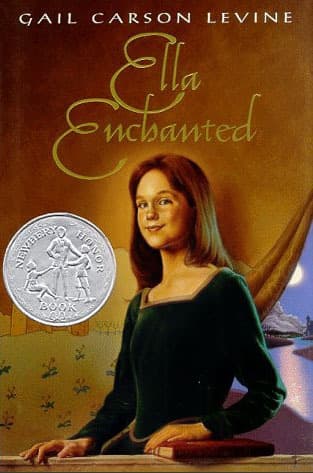
- Ella Enchanted
Gail Carson Levine
4.0 (387k) average on GoodreadsFantasyFeatures a strong, resourceful heroine overcoming magical curses and societal expectations in a fairy tale setting.
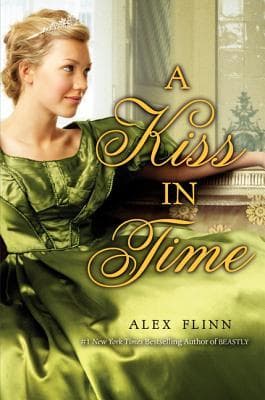
- A Kiss in Time
Alex Flinn
3.8 (19k) average on GoodreadsFantasyA modern take on a classic fairy tale, blending magic, romance, and a quest for justice.
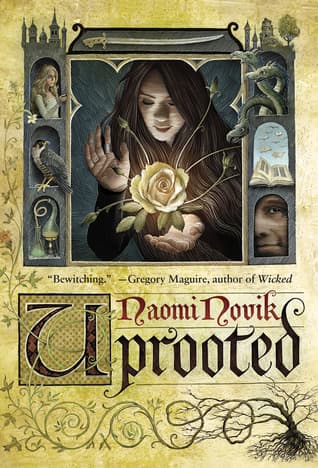
- Uprooted
Naomi Novik
4.1 (167k) average on GoodreadsFantasyBoth novels feature young women drawn into magical circumstances and royal courts. "The Amaranth Enchantment" offers a more grounded, historically detailed setting with magic as a specific element. Novik's "Uprooted," in contrast, builds a more expansive and deeply integrated fantasy world where magic is a fundamental, wild, and often dangerous force, making its magical system feel more central and complex than Berry's.
- Harry Potter and the Sorcerer's Stone
J.K. Rowling
4.5 (7M) average on GoodreadsFantasyRescued from a miserable life under the stairs, an orphaned boy discovers he's a wizard destined for a magical school, where he uncovers a dangerous secret tied to the dark wizard who murdered his parents.
- The Hunger Games
Suzanne Collins
4.3 (6.4M) average on GoodreadsFantasyIn a future where children fight to the death on live television, Katniss Everdeen volunteers for the arena, turning a death sentence into a fight for survival and a spark of rebellion.
- 1984
George Orwell
4.2 (3.1M) average on GoodreadsPoliticsIn a future where surveillance and thought control are absolute, a man's search for truth clashes with the Party, showing that hope can be a form of rebellion.



Enjoyed the summary?
A summary gives you the shape of the book. The book itself has the detail, the examples and the voice.
Find The Amaranth Enchantment on AmazonAs an Amazon Associate, BookBrief earns from qualifying purchases. How we're funded