
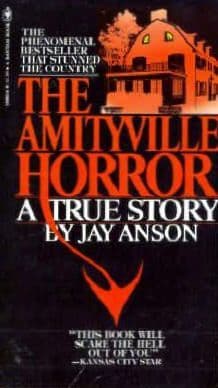
Synopsis
Covers the whole plot, including the ending.
- Difficulty
- Easy
- Pacing
- Fast
- Mood
- Terrifying, Suspenseful, Dark, Unsettling
- Read it if
- You enjoy 'true story' horror, haunted house narratives, or psychological thrillers based on alleged real events.
- Skip it if
- You prefer supernatural stories with clear explanations or are easily disturbed by graphic descriptions of alleged demonic activity and child endangerment.
The Amityville Horror Plot Summary
Covers the whole plot, including the ending.
The DeFeo Murders and the House on Ocean Avenue
The story begins by detailing the horrific past of 112 Ocean Avenue in Amityville, Long Island. On November 13, 1974, Ronald DeFeo Jr. murdered his entire family—his parents and four younger siblings—as they slept. DeFeo later said voices in the house told him to commit the murders. This event casts a long shadow over the property, setting the stage for the supernatural events that follow. The house, despite its appearance, becomes known for evil, a fact its next residents will soon learn.
The Lutz Family's Dream Home
In December 1975, George and Kathleen Lutz, with Kathy's three children—Daniel, Christopher, and Missy—find their 'dream home' in Amityville. The real estate agent tells them about the DeFeo murders, but they are drawn to the large, Dutch Colonial house and its low price. They decide to move in, believing they can overcome the house's past and create a happy new life. They see the lower price as a result of the murders, not a sign of something worse. Their optimism quickly fades as unexplainable events begin.
Immediate Disturbances and Father Mancuso's Warning
Almost immediately after moving in, the Lutz family experiences unsettling events. Doors slam, windows open, and an intense cold fills certain rooms. Kathy's Catholic priest, Father Mancuso (a made-up name for Father Pecoraro), tries to bless the house. A powerful, unseen voice commands him to 'GET OUT!' He also feels a slap and develops a severe fever and blisters. His phone calls to the Lutzes are full of static, stopping him from fully warning them. These early events suggest the house is not just haunted, but actively hostile.
George's Transformation and the Fly Infestation
George Lutz begins to change. He becomes constantly cold, obsessed with keeping fires burning, and often wakes at 3:15 AM—the exact time of the DeFeo murders. He grows more irritable and distant. At the same time, the house has a strange fly problem, especially in the sewing room, despite it being winter. The flies appear from nowhere, defying explanation and adding to the growing sense of dread and uncleanliness, further isolating the family.
Missy's Imaginary Friend and the Red Room
Four-year-old Missy Lutz develops an 'imaginary friend' named Jodie, whom she describes as a pig-like creature with glowing red eyes. Missy's talks with Jodie become more unsettling, hinting at an evil influence. The family also finds a small, hidden red room in the basement, which they did not know about. Their dog, Harry, refuses to go near the house and especially avoids the red room, showing extreme fear. This room gives off a strong feeling of evil, suggesting it may be a center for the malevolent presence.
Kathy's Terrors and the Oozing Walls
Kathy Lutz faces increasing physical and emotional torment. She has nightmares, feels unseen hands touching her, and smells a foul, sulfurous odor. Once, she sees a demonic face with glowing red eyes staring from the dark. The house walls begin to 'bleed' green slime, and black stains appear on fixtures. These events show a deeper intrusion of the supernatural, moving beyond poltergeist activity to something more insidious and physical, directly attacking Kathy and the house.
The Children's Ordeal
The children are also affected by the house's evil. Daniel and Christopher have nightmares, see glowing red eyes, and report being pushed by unseen forces. Daniel says he was levitated in his bed. Missy continues to talk to Jodie, whose influence seems to grow, making her act strangely. Their fear and distress increase, showing the widespread nature of the haunting and the danger it poses to the whole family, especially the most vulnerable members. The children's experiences add a layer of tragic helplessness.
The Increasing Intensity and Physical Manifestations
The supernatural activity grows dramatically. Objects are thrown, furniture moves, and phantom footsteps are heard throughout the house. George and Kathy see a large, cloaked figure with glowing red eyes in the doorway. Doors and windows open and close on their own. The house becomes filled with disembodied voices, growls, and screams. These increasingly violent and clear events leave no doubt in the Lutzes' minds that they are dealing with a powerful, evil entity determined to drive them out or worse.
The Final Night and Escape
On the 28th day, the terror reaches its peak. The house explodes in paranormal activity: severe cold spots, flying objects, and the clear presence of multiple entities. George describes being attacked by an unseen force, while Kathy is tormented by terrifying visions. The family is traumatized and exhausted. Realizing their lives are in danger and they cannot fight the evil, George and Kathy decide to flee, leaving most of their belongings behind. They escape with only the clothes they are wearing, convinced the house is completely possessed.
Aftermath and Public Scrutiny
After fleeing, the Lutzes find safety with Kathy's mother. They immediately contact paranormal investigators, including Ed and Lorraine Warren, to help them understand and confirm their experiences. Their story quickly gains public attention, attracting both believers and skeptics. The book details their attempts to cope with the trauma and the subsequent investigations, which reportedly confirm an evil force. The Lutzes' account sparks national interest in the Amityville haunting, securing its place in popular culture as a chilling ghost story.
The Amityville Horror Characters
George Lutz
Protagonist
The stepfather and patriarch who becomes increasingly affected by the house's evil.
George Lutz is a hardworking, practical man, initially skeptical of the supernatural. He is devoted to his wife, Kathy, and her children. However, upon moving into 112 Ocean Avenue, he undergoes a profound and disturbing transformation. He becomes withdrawn, irritable, perpetually cold, and obsessed with the fireplace. He frequently wakes up at 3:15 AM and feels an overwhelming sense of dread. His physical and mental state deteriorates rapidly under the house's influence, making him a central figure in the escalating horror.
Relationships: Kathy Lutz (Husband, partner in terror); Daniel Lutz (Stepfather); Christopher Lutz (Stepfather); Missy Lutz (Stepfather)
Kathy Lutz
Protagonist
George's wife and mother of the children, who experiences intense psychological and physical torment.
Kathy Lutz is a loving mother and wife, initially excited about their new home. She is Catholic and more open to spiritual concepts than George, but unprepared for the malevolence they encounter. She experiences some of the most terrifying phenomena, including being touched by unseen hands, seeing demonic faces, and having nightmares. She is deeply concerned for her children's safety and her husband's deteriorating condition. Her resilience is tested to its limits as the house's evil directly targets her, both physically and psychologically.
Relationships: George Lutz (Wife, partner in terror); Daniel Lutz (Mother); Christopher Lutz (Mother); Missy Lutz (Mother)
Father Mancuso (Father Pecoraro)
Supporting
A Catholic priest who attempts to bless the house and is met with immediate, violent opposition.
Father Mancuso is Kathy Lutz's Catholic priest. He is initially called to bless the new home, but his attempt is met with a powerful, disembodied voice commanding him to 'GET OUT!' He experiences a severe physical attack, developing a fever and blisters on his hands. His subsequent attempts to contact the Lutzes are thwarted by strange phone interference. He serves as an early, credible witness to the house's malevolence and provides a religious perspective on the demonic forces at play, confirming the spiritual nature of the haunting.
Relationships: Kathy Lutz (Spiritual advisor/confidante)
Missy Lutz
Supporting
The youngest child who befriends a demonic entity disguised as an imaginary friend.
Missy Lutz is four years old and the youngest of Kathy's children. She quickly develops an 'imaginary friend' named Jodie, whom she describes as a pig-like creature with glowing red eyes. Her innocent interactions with Jodie become increasingly unsettling, as the entity's influence over her grows. Missy's connection to Jodie provides chilling evidence of the demonic presence directly affecting the children, making her a particularly vulnerable and tragic figure in the unfolding horror.
Relationships: George Lutz (Stepdaughter); Kathy Lutz (Daughter); Jodie (Imaginary friend/demonic entity)
Daniel Lutz
Supporting
Kathy's eldest son, who experiences frightening physical and psychological phenomena.
Daniel Lutz is one of Kathy's sons from a previous marriage. He is old enough to understand the gravity of the situation and experiences various frightening phenomena. He reports nightmares, seeing glowing red eyes, and even being levitated in his bed by unseen forces. His experiences contribute to the growing fear within the family and underscore the fact that the haunting is affecting all members, not just the adults. He represents the vulnerability of older children to such malevolent forces.
Relationships: George Lutz (Stepfather); Kathy Lutz (Mother); Christopher Lutz (Brother); Missy Lutz (Brother)
Christopher Lutz
Supporting
Kathy's middle son, also subjected to the house's terrifying influences.
Christopher Lutz is another of Kathy's sons. Like Daniel, he experiences disturbing events in the house, including nightmares and the feeling of unseen presences. He is a witness to some of the escalating poltergeist activity and contributes to the overall atmosphere of fear and distress among the children. His experiences reinforce the pervasive nature of the haunting and the danger it poses to the entire family, particularly the younger members.
Relationships: George Lutz (Stepfather); Kathy Lutz (Mother); Daniel Lutz (Brother); Missy Lutz (Brother)
Jodie
Antagonist
A pig-like demonic entity that befriends Missy.
Jodie is the 'imaginary friend' of four-year-old Missy Lutz. Described as a pig-like creature with glowing red eyes, Jodie is in fact a malevolent demonic entity. It manipulates Missy, drawing her into its influence, and is a clear manifestation of the evil inhabiting the house. Jodie represents the insidious way the demonic presence targets the most innocent and vulnerable members of the family, using deception and false companionship to gain a foothold.
Relationships: Missy Lutz (False friend/demonic manipulator)
Ronald DeFeo Jr.
Mentioned
The previous occupant who murdered his family in the house.
Ronald DeFeo Jr. is the young man who murdered his parents and four siblings at 112 Ocean Avenue in November 1974. His horrific act is the catalyst for the house's dark reputation and is believed to have opened a portal or intensified the malevolent forces within the home. His claim of being compelled by voices adds to the chilling premise that the house itself is inherently evil or possesses the power to corrupt its inhabitants.
The Amityville Horror Themes
The Corrupting Power of Evil
This theme explores how evil forces can not only cause terror but also subtly corrupt people and places. George Lutz's change from a practical, loving husband to an irritable, distant, and constantly cold man is a key example. The house itself becomes a physical sign of this corruption, 'bleeding' green slime and attracting flies, showing widespread decay. The story suggests that long exposure to such evil can change one's very being, making escape a matter of spiritual and psychological survival, as seen in George's growing obsession with the cold and his violent outbursts.
“The house was alive, and it wanted them out... or worse.”
The Invasion of the Domestic Space
The story effectively uses the fear of one's home, usually a safe place, becoming a source of terror. The Lutz family's 'dream home' quickly turns into a nightmare, with every part of domestic life invaded. From the children's bedrooms where they are levitated and attacked, to the kitchen where objects fly, and the walls that ooze slime, the house stops being a safe haven. This theme highlights how vulnerable a family is when their most private space is compromised, making the horror deeply personal and inescapable, as the evil operates within their daily lives.
“This was their dream house, but it had become their worst nightmare.”
The Struggle Between Faith and Demonic Influence
Kathy Lutz's Catholic faith and her reliance on Father Mancuso add a spiritual dimension to the conflict. Father Mancuso's violent encounter during the house blessing immediately shows the demonic nature of the haunting. The failure of religious rites to cleanse the house, and the direct attack on the priest, suggest a powerful, deep-seated evil that resists traditional spiritual measures. This theme explores the limits of faith against overwhelming demonic power and the spiritual battle inherent in the Lutzes' fight for survival, emphasizing that this is more than just a ghost story, but a battle for souls.
“Get out! Get out! It was a guttural, demonic roar.”
The Fragility of Reality and Perception
The book constantly blurs the lines between reality and illusion, making both characters and readers question what is real. The unexplained events, George's personality changes, and the children's interactions with 'Jodie' challenge normal understanding. George's initial doubt and the family's attempts to explain the events show how hard it is to accept the truly unexplainable. This theme highlights the psychological toll of the haunting, as the family's grasp on normal life breaks down, leading to deep terror and ultimately, forced escape from a reality they can no longer understand or control.
“They were living in a nightmare, but it was a nightmare that was real.”
Plot Devices & Literary Techniques
The 'True Story' Claim
The book's assertion of being a non-fiction account.
The most significant plot device is the book's framing as a 'true story.' This claim immediately heightens the reader's sense of dread and suspense, making the horrific events recounted feel more immediate and terrifying. It blurs the line between fiction and reality, inviting readers to believe that such supernatural occurrences are possible. This device taps into primal fears by suggesting that the extraordinary can intrude upon the ordinary, lending a chilling credibility to every strange occurrence and making the horror more impactful.
Rising Action through Escalation
The gradual increase in intensity and malevolence of the haunting.
The narrative meticulously builds tension through a relentless escalation of paranormal activity. It begins with subtle disturbances like cold spots and strange smells, progresses to poltergeist activity with slamming doors and moving objects, and culminates in terrifying physical attacks, demonic manifestations, and the psychological torment of the family. This gradual but consistent increase in intensity prevents the reader from becoming desensitized and maintains a constant state of dread, mirroring the Lutzes' own increasing terror and desperation.
The Unreliable Narrator (George Lutz's Transformation)
George's deteriorating mental state influences his perception and reactions.
While the book is written from an omniscient perspective, George Lutz's internal struggle and transformation serve as a form of unreliable narration. His growing irritability, obsession with cold, and constant waking at 3:15 AM show him becoming increasingly unhinged. This suggests that the house isn't just causing external phenomena but actively manipulating his mind, making his judgment and reactions questionable. This adds a layer of psychological horror, as the reader wonders if George's perceptions are entirely trustworthy, further disorienting the experience.
The Hidden 'Red Room'
A newly discovered, sinister room in the basement.
The discovery of the small, hidden 'red room' in the basement serves as a potent symbol and a focal point for the house's evil. Its previous concealment and the immediate sense of dread it imparts, combined with the family dog's extreme fear of it, establish it as a place of concentrated malevolence. This device adds a layer of mystery and foreboding, suggesting deeper, ancient evils at play within the house's very foundations, and provides a tangible, albeit terrifying, representation of the unseen forces.
The Amityville Horror Quotes
“The house was a good house, a happy house, before the DeFeos.”
“For God's sake, get out!”
“He saw Kathy's face contorted in a silent scream, her eyes wide with terror.”
“A cold, clammy hand seemed to brush against his face.”
“The feeling of an oppressive weight, a suffocating presence, was constant.”
“The red room. It was always there, behind the stairs, waiting.”
“Flies. Thousands of them. Even in winter.”
“Something evil was in that house, something that wanted to stay.”
“The crucifix turned itself upside down.”
“He could hear the Pig. Always the Pig.”
“Sleep was no escape. The nightmares were worse.”
“The house was alive. And it hated them.”
“Thirty days. That's all it took for our lives to be shattered.”
“We were not just victims of a haunting; we were victims of a murder.”
Quiz
10 questions on the plot and the characters. Each answer comes with a short explanation.
Question 1
In what month and year did the Lutz family move into the Amityville house?
- November 1974
- December 1975
- January 1976
- October 1975
Show answer
B. December 1975 The back cover explicitly states, 'In December 1975, the Lutz family moved into their dream home.'
Question 2
Who murdered the DeFeo family in the house before the Lutzes moved in?
- George Lutz
- A random intruder
- Ronald DeFeo
- A member of the local police
Show answer
C. Ronald DeFeo The back cover states that the Lutzes moved into 'the same home where Ronald DeFeo had murdered his parents, brothers and sisters just one year earlier.'
Question 3
How many days did the Lutz family ultimately stay in the Amityville house before fleeing?
- 7 days
- 14 days
- 28 days
- 42 days
Show answer
C. 28 days The subtitle of the book and the back cover both clearly state '28 Days of Terror' and 'forcing them to flee the house in 28 days'.
Question 4
What primary reason did the Lutz family give for fleeing their new home?
- Financial difficulties
- Disputes with neighbors
- Belief that the house was possessed by evil spirits
- Problems with the house's structural integrity
Show answer
C. Belief that the house was possessed by evil spirits The back cover states they were 'convinced that it was possessed by evil spirits,' which led to their flight.
Question 5
The book compares its 'shocks and gripping suspense' to which other horror titles?
- Psycho, Carrie, and Jaws
- The Exorcist, The Omen, or Rosemary's Baby
- Frankenstein, Dracula, and The Haunting of Hill House
- Poltergeist, The Conjuring, and Insidious
Show answer
B. The Exorcist, The Omen, or Rosemary's Baby The back cover explicitly states, 'with all the shocks and gripping suspense of The Exorcist, The Omen or Rosemary's Baby.'
Question 6
What is the 'one vital difference' mentioned about 'The Amityville Horror' compared to the other horror stories it is likened to?
- It features a unique type of supernatural entity.
- The story is presented as true.
- It involves a larger family.
- It takes place in a more isolated location.
Show answer
B. The story is presented as true. The back cover states, 'but with one vital difference...the story is true.'
Question 7
What specific type of phenomena did the Lutz family experience in the house?
- Technological malfunctions
- Financial scams
- Psychic phenomena
- Animal infestations
Show answer
C. Psychic phenomena The back cover mentions 'the psychic phenomena that followed created the most terrifying experience'.
Question 8
Before the Lutz family moved in, how long before their arrival did Ronald DeFeo commit the murders?
- Six months
- One year
- Two years
- Three months
Show answer
B. One year The back cover specifies 'the same home where Ronald DeFeo had murdered his parents, brothers and sisters just one year earlier.'
Question 9
What is implied to be the primary source of the 'evil spirits' possessing the house?
- The house's original construction on cursed land.
- The previous violent murders committed by Ronald DeFeo.
- A demonic cult that previously owned the property.
- A portal to another dimension located in the basement.
Show answer
B. The previous violent murders committed by Ronald DeFeo. While not explicitly stated as the *source* of the spirits, the text heavily links the house's evil to the DeFeo murders, stating the Lutzes moved into the 'same home where Ronald DeFeo had murdered his parents, brothers and sisters just one year earlier' followed by the 'psychic phenomena' and belief in 'evil spirits'. The implication is that these violent events are connected to the haunting.
Question 10
The back cover describes the Lutz family's story as 'never before disclosed in full detail.' What does this suggest about the book's narrative approach?
- It is a fictionalized account based on rumors.
- It aims to provide a comprehensive and intimate perspective on their experiences.
- It focuses primarily on the history of the DeFeo murders.
- It is a collection of interviews with various witnesses.
Show answer
B. It aims to provide a comprehensive and intimate perspective on their experiences. The phrase 'never before disclosed in full detail' implies that the book will offer a complete and in-depth account directly from the family, suggesting a comprehensive and intimate perspective on their ordeal.
The Amityville Horror FAQ
What is the central premise of 'The Amityville Horror'?
The book chronicles the 28-day ordeal of the Lutz family – George, Kathy, and their three children – after they move into a large Dutch Colonial house in Amityville, New York. This house was the site of the horrific DeFeo murders a year prior, and the Lutzes soon experience a barrage of terrifying paranormal phenomena that ultimately forces them to flee.
Who are the primary members of the Lutz family, and what are their initial roles in the narrative?
George Lutz is the stepfather and patriarch, initially skeptical but soon the most directly affected by the malevolent presence, often feeling cold and compelled to keep fires burning. Kathy Lutz is the biological mother of the three children, Missy, Daniel, and Christopher, and she experiences her own distinct supernatural encounters, including being touched and having vivid nightmares.
What are some of the initial, less severe paranormal occurrences the Lutzes experience?
Early phenomena include a persistent foul odor resembling sewage or perfume, cold spots, doors opening and closing on their own, and strange noises like disembodied voices and footsteps. Kathy also experiences inexplicable feelings of dread and being watched, while George starts noticing subtle personality shifts and an obsession with the house.
What role does Father Pecoraro (Father Mancuso in the book) play in the story?
Father Pecoraro is a Catholic priest who attempts to bless the house shortly after the Lutzes move in but is immediately afflicted by a powerful, disembodied voice warning him to 'Get out!' He later suffers from blistering hands and a mysterious flu-like illness, unable to provide further spiritual aid directly at the house.
What ultimately forces the Lutz family to abandon the house after only 28 days?
The escalating intensity of the phenomena, including levitating objects, slime oozing from walls, George's increasing aggression and obsession, Kathy's physical and emotional distress, and the children's terrifying encounters (like Missy's imaginary pig friend, Jodie), collectively make the house uninhabitable. The psychological and physical toll became unbearable, leading to their abrupt departure.
Are there any subtle clues about the DeFeo murders that might link to the paranormal activity?
The book suggests that the malevolent entity might be connected to the previous murders, particularly Ronald DeFeo Jr.'s actions. The specific timing of some phenomena, the discovery of the red room in the basement, and the overall oppressive atmosphere are implied to be residual or direct manifestations of the evil that culminated in the DeFeo family's demise.
What is the significance of the 'red room' in the basement, and how is it discovered?
The red room is a small, previously unnoticed room in the basement that the family dog, Harry, refuses to enter. When George eventually forces himself to investigate, he feels an overwhelming sense of dread and cold. It's later speculated to be a portal or a place where the evil energy is concentrated, possibly used by the previous owner, John Ketcham, for dark purposes.
How do the children's experiences differ from George and Kathy's, and what specific entity is associated with Missy?
The children often experience more direct and vivid apparitions, such as Missy's 'imaginary' friend, Jodie, described as a demonic pig-like creature with glowing red eyes. Daniel and Christopher also report being terrorized by unseen forces. These experiences highlight the vulnerability of the children and the entity's ability to manifest in forms appealing or terrifying to them.
What is implied about the house's history beyond the DeFeo murders, particularly regarding Native American lore?
The narrative alludes to the house being built on a former Shinnecock Indian burial ground or a place used for dark rituals by the tribe. This detail suggests a deeper, historical layer of malevolence predating the DeFeo tragedy, potentially explaining the intensity and specific nature of the hauntings.
How does George Lutz's personality change throughout the 28 days, and what might be the psychological explanation for this?
George becomes increasingly irritable, obsessed with keeping fires burning, and experiences chronic coldness and sleeplessness. Psychologically, this could be interpreted as the entity's direct influence, slowly possessing him or feeding off his energy, leading to a breakdown of his rational mind and an erosion of his empathy towards his family.
Discuss the psychological impact of the events on Kathy Lutz, particularly her nightmares and physical ailments.
Kathy suffers from terrifying nightmares, often involving the DeFeo murders or sexual assault, and experiences physical manifestations like being touched or levitated. This reflects profound psychological trauma, anxiety, and a feeling of violation, indicating the entity's assault on her emotional and physical well-being, pushing her to the brink of a breakdown.
To what extent can the family's experiences be attributed to mass hysteria or shared delusion?
While critics often suggest mass hysteria, the book presents the events as independently verified and affecting multiple family members and even outsiders like Father Pecoraro. However, the intense stress and fear within the isolated house could have amplified individual perceptions and led to a collective reinforcement of belief in the supernatural.
How does the book portray the emotional toll of living in a haunted house on family dynamics?
The book vividly depicts the erosion of family unity, trust, and peace. George's increasing volatility and Kathy's terror create a highly strained environment, forcing the children to cope with fear and confusion. The shared trauma, while initially bringing them together, ultimately drives them apart in their individual struggles against the unseen evil.
What is the primary debate surrounding the veracity of 'The Amityville Horror' story?
The main debate centers on whether the events described by the Lutzes are genuine paranormal occurrences or an elaborate hoax. Skeptics point to inconsistencies in their accounts, the swift publication of the book, and later confessions by some involved that parts were fabricated for financial gain, while proponents cite the family's consistent narrative and the impact on their lives.
How does the book's claim of being 'true' influence its impact on readers?
The assertion that the story is 'true' significantly heightens the book's horror and suspense, making the events feel more immediate and terrifying. It blurs the line between fiction and reality, leading readers to question their own beliefs about the supernatural and the safety of their homes, thereby amplifying the psychological impact of the narrative.
What does the ending, with the Lutzes fleeing, suggest about battling such malevolent forces?
The abrupt ending, with the family's desperate escape, implies that some malevolent forces are insurmountable, and direct confrontation is futile. It suggests that survival sometimes means abandoning the fight and prioritizing one's safety, even if it means leaving behind possessions and a 'dream home,' highlighting the overwhelming power of the evil they faced.
Could the book be interpreted as a commentary on the fragility of the American Dream?
Yes, the book can be seen as such a commentary. The Lutzes move into what they believe is their dream home, only for it to become a nightmare. This subverts the ideal of home as a safe haven and suggests that even the most cherished aspirations can be corrupted or destroyed by forces beyond one's control, highlighting vulnerability.
How does the book's structure, focusing on a specific 28-day period, contribute to its effectiveness?
The confined 28-day timeframe intensifies the narrative, creating a relentless build-up of terror without reprieve. This structure mirrors the family's escalating dread and claustrophobia, emphasizing the rapid deterioration of their sanity and safety, making the reader feel trapped alongside them and heightening the sense of urgency and horror.
About the author
Jay Anson was an American author primarily known for his work in the horror genre. He is best recognized for his novel "The Amityville Horror," which explores the alleged paranormal experiences of a family in a haunted house. Anson's writing often blends fiction with elements of true crime and supernatural themes.
Similar books
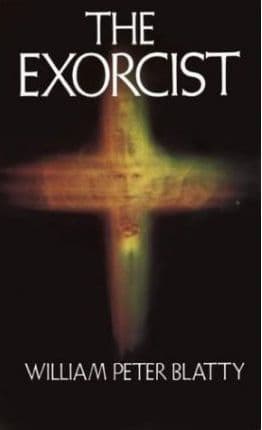
- The Exorcist
William Peter Blatty
4.2 (181k) average on GoodreadsThrillerBoth deal with demonic possession and the terror it inflicts on a family.
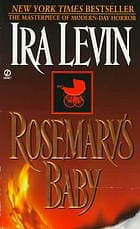
- Rosemary's Baby
Ira Levin
4.0 (112k) average on GoodreadsThrillerBoth involve a family moving into a new home that harbors a sinister, supernatural secret.
- The Haunting of Hill House
Shirley Jackson
3.8 (162k) average on GoodreadsThrillerA classic haunted house story with psychological elements and a pervasive sense of dread.
- Angels & Demons
Dan Brown
3.9 (2.7M) average on GoodreadsThrillerA Harvard symbologist races through Rome's ancient sites, deciphering cryptic clues to unmask the Illuminati and stop a vengeful plot to destroy the Vatican with a stolen antimatter weapon.
- Gone Girl
Gillian Flynn
4.1 (2.3M) average on GoodreadsThrillerA wife's sudden disappearance on her fifth anniversary reveals a web of lies and psychological warfare, exposing the secrets within a seemingly perfect marriage.
- The Girl on the Train
Paula Hawkins
3.9 (2.1M) average on GoodreadsThrillerA woman’s fascination with a seemingly perfect couple she watches from her daily train commute leads her into a dark investigation when she witnesses something that shatters their idyllic image.




Enjoyed the summary?
A summary gives you the shape of the book. The book itself has the detail, the examples and the voice.
Find The Amityville Horror on AmazonAs an Amazon Associate, BookBrief earns from qualifying purchases. How we're funded