

Synopsis
Covers the whole plot, including the ending.
- Difficulty
- Easy
- Pacing
- Moderate
- Mood
- Heartwarming, Humorous, Adventurous, Charming
- Read it if
- You love classic Disney stories, charming animal characters, and a heartwarming adventure with a touch of jazz.
- Skip it if
- You prefer complex narratives, dark themes, or stories without clear-cut good vs. evil.
The Aristocats Plot Summary
Covers the whole plot, including the ending.
The Grand Duchess and Her Cats
In 1910 Paris, the wealthy retired opera singer Madame Adelaide Bonfamille lives in a grand mansion with her cat Duchess and her three kittens: Marie, Berlioz, and Toulouse. One evening, Madame Adelaide calls her lawyer, Georges Hautecourt, to finalize her will. To his surprise, Madame Adelaide states that her entire fortune will go to her cats first. Only after they die will the estate go to her butler, Edgar Balthazar. Edgar, overhearing this, is angry at the thought of waiting decades for the cats to die naturally before he inherits.
Edgar's Nefarious Plan
Angry about Madame Adelaide's will, Edgar plans to get rid of the cats. He prepares a special supper for them, putting sleeping pills in their milk. After Duchess and her kittens drink the milk and fall asleep, Edgar puts them into a basket. Under cover of darkness, he rides his motorcycle with a sidecar out of Paris, planning to leave them far from home. However, two hounds, Napoleon and Lafayette, chase him, causing the basket of cats to fall into the countryside, leaving them lost.
Stranded and Meeting O'Malley
Duchess and her kittens wake up alone and confused in the countryside, far from their comfortable Parisian home. Marie, Berlioz, and Toulouse are scared and hungry. As they wander, a charming and street-smart alley cat named Thomas O'Malley appears. He is immediately taken with Duchess and, learning of their situation, offers to help them return to Paris. Duchess, at first cautious of his rough nature, reluctantly accepts his help, realizing they have no other choice.
The Train Journey and Goose Assistance
O'Malley tries to lead Duchess and the kittens back towards Paris. They try to hitch a ride on a passing freight train, but the kittens struggle to keep up. Luckily, they meet two English geese, Amelia and Abigail Gabble, who are going to Paris. The geese, with their distinct waddle, take the cats under their wing. They help the kittens across the train tracks and guide them for part of their journey, providing company and a funny moment as they waddle towards the city.
A Rooftop Rendezvous
Upon reaching Paris, O'Malley, wanting to impress Duchess and provide a safe place, takes the family to his bohemian rooftop home. From there, they hear the sounds of jazz music from a nearby building. O'Malley introduces them to his friend, Scat Cat, and his band of alley cats, who are having a lively jam session. Duchess and the kittens are at first overwhelmed by the energetic atmosphere but soon enjoy the music and friendship. Marie even sings, and Berlioz plays the piano, showing their talents.
Edgar's Failed Attempt
After a night of music, O'Malley and Duchess share a tender moment, showing growing affection. However, their reunion with Madame Adelaide is still pending. Meanwhile, back at the mansion, Edgar grows more paranoid that the cats might return. He sees a newspaper report about Madame Adelaide's worry over her missing pets, increasing his anxiety. He sets a trap, and when the cats finally make their way back to the mansion, Edgar captures them again, putting them into a sack and getting ready to ship them to Timbuktu.
The Rescue Mission
Roquefort, Madame Adelaide's mouse, sees Edgar's actions and realizes the cats are in danger. He bravely sets off to find O'Malley and warn him. O'Malley, hearing the news, immediately gathers Scat Cat and his jazz band for a rescue mission. Together, the alley cats, led by O'Malley, storm the mansion. A chaotic but successful battle against Edgar happens, with the combined efforts of the streetwise cats and Roquefort, who cleverly frees Duchess and the kittens from their sack.
Edgar's Demise
During the rescue, Edgar, overwhelmed by the cats, is outsmarted. As he tries to escape, he trips and falls into the trunk he meant to ship the cats in. The trunk is then locked and loaded onto a truck, destined for Timbuktu. Edgar, caught in his own trap, is sent far away, ensuring he will not bother Madame Adelaide or her cats again. His greed leads to his ironic end.
A Happy Reunion and New Family
With Edgar gone, Duchess and her kittens are happily reunited with a relieved and overjoyed Madame Adelaide. The mansion is filled with happiness again. Madame Adelaide, grateful for O'Malley's bravery and affection for Duchess, welcomes him into their family. She officially adopts him, ensuring he will not have to live on the streets again. The once-stray alley cat finds a loving home, and the family is complete, with Madame Adelaide now having a larger, happier feline family.
The Aristocats' New Life
The story ends with Madame Adelaide, inspired by O'Malley and the kindness of the alley cats, deciding to change her will again. She creates a foundation to provide homes for all of Paris's alley cats, ensuring no cat will be without shelter or love. Scat Cat and his band, along with many other street cats, gather at the mansion, celebrating their new good fortune with a lively jazz performance. The mansion becomes a center of music and feline friendship, symbolizing a new era of generosity and community.
Principal Figures
Duchess
Protagonist
A graceful, refined, and loving mother cat.
Duchess is a beautiful and elegant white Turkish Angora cat, the matriarch of her family. She is deeply devoted to her three kittens, Marie, Berlioz, and Toulouse, and to her owner, Madame Adelaide Bonfamille. She embodies grace, maternal instinct, and a gentle spirit. Though accustomed to a life of luxury, she shows resilience and adaptability when faced with adversity, always prioritizing her children's safety. Her initial reserve towards O'Malley slowly gives way to affection as she recognizes his good heart.
Relationships: Madame Adelaide Bonfamille (owner and beloved companion); Marie (daughter); Berlioz (son); Toulouse (son); Thomas O'Malley (love interest and eventual partner)
Thomas O'Malley
Protagonist
A charming, street-smart alley cat with a heart of gold.
Abraham de Lacy Giuseppe Casey Thomas O'Malley, or simply O'Malley, is a charismatic orange alley cat. He is a smooth-talker with a carefree spirit, living life on his own terms on the streets of Paris. Despite his rough-and-tumble exterior, he possesses a deep sense of loyalty, bravery, and a genuine kindness. He is instantly smitten with Duchess and takes on the role of protector for her and her kittens, guiding them back to Paris and ultimately finding love and a family he never expected.
Relationships: Duchess (love interest and eventual partner); Marie (step-daughter figure); Berlioz (step-son figure); Toulouse (step-son figure); Scat Cat (best friend and fellow musician)
Marie
Supporting
A delicate and often dramatic white kitten who believes she is the most ladylike.
Marie is the middle kitten and the only daughter of Duchess. She is a white kitten who often believes herself to be the epitome of grace and femininity, frequently reminding her brothers that 'ladies don't start fights.' She can be a bit of a drama queen and prone to exaggeration, but she possesses a sweet nature and a budding talent for singing. She looks up to her mother and tries to emulate her elegance, even in the most trying circumstances.
Relationships: Duchess (mother); Berlioz (brother); Toulouse (brother)
Berlioz
Supporting
A shy and sensitive black kitten with a talent for playing the piano.
Berlioz is the youngest kitten, a black male with a gentle and artistic disposition. He is somewhat shy and reserved, often overshadowed by his more boisterous siblings, but he possesses a clear talent for playing the piano, inherited from his mother. He is sensitive and easily frightened but shows courage when necessary, particularly when defending his family. His musical abilities are a source of pride for his mother and a bonding point with his new feline friends.
Relationships: Duchess (mother); Marie (sister); Toulouse (brother)
Toulouse
Supporting
A feisty and artistic orange kitten who dreams of being a tough alley cat.
Toulouse is the oldest kitten, an orange male who fancies himself a tough and adventurous street cat, often imitating O'Malley. He enjoys painting and is prone to playful mischief and bravado, despite his small size. He is the most outspoken and energetic of the kittens, often getting into playful squabbles with Marie. His admiration for O'Malley grows throughout their journey, and he eagerly embraces the idea of a more adventurous life.
Relationships: Duchess (mother); Marie (sister); Berlioz (brother)
Madame Adelaide Bonfamille
Supporting
A wealthy and eccentric retired opera singer and the cats' devoted owner.
Madame Adelaide is a kind-hearted and elderly Parisian aristocrat. She is immensely fond of her cats, Duchess and her kittens, treating them as her own children. Her love for them is so profound that she intends to leave her entire fortune to them, a decision that sets the main conflict in motion. She is oblivious to Edgar's villainy and deeply distressed by the disappearance of her pets. Her generosity extends beyond her immediate family, as she ultimately establishes a foundation for all the alley cats of Paris.
Relationships: Duchess (beloved pet); Marie (beloved pet); Berlioz (beloved pet); Toulouse (beloved pet); Edgar Balthazar (trusted but disloyal butler)
Edgar Balthazar
Antagonist
Madame Adelaide's greedy and conniving butler.
Edgar is Madame Adelaide's seemingly loyal butler, but beneath his polite facade lies a deep-seated greed and resentment. When he discovers he must wait for the cats to die before inheriting Madame Adelaide's fortune, he plots to eliminate them. He is bumbling and clumsy, yet driven by a sinister determination. His villainy is motivated purely by avarice, and he consistently underestimates the intelligence and resourcefulness of the cats, leading to his downfall. He is a classic comedic villain.
Relationships: Madame Adelaide Bonfamille (employer (whom he betrays)); Duchess (target of his villainy); Marie (target of his villainy); Berlioz (target of his villainy); Toulouse (target of his villainy)
Roquefort
Supporting
A brave and intelligent mouse who aids the cats.
Roquefort is Madame Adelaide's house mouse, a small but exceptionally clever and courageous character. He is a loyal friend to Duchess and her kittens, often acting as a spy and messenger. Despite his timid nature, he demonstrates remarkable bravery when he realizes the cats are in danger, venturing out to find O'Malley and rallying the alley cats for the rescue mission. He plays a crucial role in exposing Edgar's plot and ensuring the cats' safe return.
Relationships: Duchess (friend); Thomas O'Malley (ally); Scat Cat (ally)
Scat Cat
Supporting
O'Malley's best friend and leader of a jazz band of alley cats.
Scat Cat is a cool, smooth-talking alley cat and the leader of a jazz band composed of other street cats. He is O'Malley's best friend and a loyal companion. With his trumpet and his signature scat singing, he embodies the free-spirited, musical soul of Parisian alley life. He readily joins O'Malley in the rescue mission, demonstrating his loyalty and proving that street smarts and camaraderie can triumph over villainy. He and his band provide much of the film's memorable music.
Relationships: Thomas O'Malley (best friend); Duchess (new friend); His band members (fellow musicians and friends)
Themes & Insights
Family and Belonging
The main theme is about what family means, going beyond blood or social status. Duchess and her kittens, initially a traditional family, grow to include O'Malley, who finds a home and purpose. Madame Adelaide's love for her cats, and her decision to care for all of Paris's alley cats, shows that family is built on love, care, and acceptance, not just biology or wealth. The friendship of the alley cats, especially Scat Cat's band, also highlights the importance of community as a chosen family.
“'Why, that's just the kind of cat she needs! A big, strong, handsome tomcat to protect her and her little ones.”
Class and Social Barriers
The story subtly explores the difference between the aristocratic world of Duchess and Madame Adelaide and the free-spirited world of the alley cats. Duchess and her kittens are used to luxury, while O'Malley and his friends live by their wits on the streets. Duchess's initial hesitation to trust O'Malley comes from these social differences. However, the story shows that love, kindness, and bravery overcome these artificial barriers, as the 'aristocats' and the 'alley cats' find common ground and form a new, integrated family, with Madame Adelaide's foundation bridging the gap.
“'We are not vagabonds. We are aristocats!”
Greed vs. Generosity
Edgar's character shows how destructive greed can be. His desire for Madame Adelaide's fortune drives him to cruel acts, ultimately leading to his downfall. In contrast, Madame Adelaide represents great generosity, not only towards her pets but eventually towards all the less fortunate cats of Paris. The theme highlights that true wealth is not in possessions but in compassion, love, and the willingness to share, contrasting Edgar's selfish actions with the kindness of characters like O'Malley and Madame Adelaide.
“'But I'm the only heir! I'm the only heir!”
The Power of Music and Art
Music is a constant and unifying force throughout the film. Berlioz's piano playing, Marie's singing, and especially Scat Cat's jazz band, show how music crosses barriers and builds connections. The lively jazz numbers bring moments of joy, celebration, and friendship, bringing together cats from different backgrounds. Art, through Toulouse's painting, also shows individual expression. Music is not just entertainment; it is a language that connects characters, lifts spirits, and creates a sense of shared identity, ending with the joyful jazz party.
“'Everybody wants to be a cat, because a cat's the only cat who knows where it's at.”
Plot Devices & Literary Techniques
The Will
Madame Adelaide's will is the catalyst for the entire plot.
Madame Adelaide's eccentric will, stipulating that her fortune goes to her cats before Edgar, serves as the primary inciting incident. It directly motivates Edgar's villainous plot to eliminate the cats, thereby setting the entire adventure in motion. Without this specific detail in the will, Edgar would have no reason to act, and the cats would never have been abandoned. It establishes the stakes and the central conflict between the cats' right to their home and Edgar's greed.
The Drugged Milk
The means by which Edgar removes the cats from the mansion.
The drugged milk is the specific method Edgar uses to incapacitate Duchess and her kittens. This device is crucial because it allows Edgar to remove the cats from the mansion without a struggle, creating the initial separation that drives the plot. It highlights Edgar's cunning (albeit clumsy) and the cats' vulnerability, plunging them into their perilous journey and enabling their encounter with O'Malley. It's a classic plot device for initiating a forced journey or abduction.
Roquefort the Mouse as Messenger
Roquefort's role in alerting O'Malley and orchestrating the rescue.
Roquefort, the timid house mouse, acts as the vital messenger when the cats are recaptured by Edgar. His brave decision to seek out O'Malley and inform him of the cats' predicament is a critical plot device. Without Roquefort's intervention, O'Malley and the alley cats would not have known the danger Duchess and her kittens were in, and the final rescue would not have occurred. He represents the unexpected hero, proving that even the smallest character can have a significant impact on the narrative's resolution.
The Aristocats Quotes
“Ladies do not start fights, but they can finish them!”
“Everybody wants to be a cat!”
“Oh, dear. All that packing and unpacking is so exhausting.”
“Why, you're the most beautiful cat in the whole world.”
“Money, money, money! That's all you can think about!”
“You can't eat me! I'm a lady!”
“We're not just friends, we're family!”
“Now, that's what I call a catnap!”
“You know, cats don't like water.”
“I may be a mouse, but I have the heart of a lion!”
“Groovy, man, groovy!”
“Don't you worry, Duchess. Everything's going to be all right.”
“It's a beautiful day for a kidnapping!”
“Look, Mama, I'm a tiger!”
Quiz
10 questions on the plot and the characters. Each answer comes with a short explanation.
Question 1
What is the name of the kind and wealthy owner of Duchess and her kittens?
- Madame Adelaide Bonfamille
- Marie Antoinette
- Eleanor Vance
- Lady Tremaine
Show answer
A. Madame Adelaide Bonfamille Madame Adelaide Bonfamille is the kind owner who adores her cats and plans to leave her fortune to them.
Question 2
Which of Duchess's kittens is known for singing and playing the violin?
- Marie
- Toulouse
- Berlioz
- Napoleon
Show answer
C. Berlioz Berlioz is the shy, musical kitten who plays the piano and sings, often getting into playful squabbles with his siblings.
Question 3
What is the name of the butler who tries to get rid of the cats?
- Edgar Balthazar
- Horace Badun
- Jasper Badun
- Percival C. McLeach
Show answer
A. Edgar Balthazar Edgar Balthazar is Madame Bonfamille's conniving butler who overhears her will and plots to remove the cats to inherit her fortune himself.
Question 4
Where does Edgar initially take the cats to abandon them?
- The Eiffel Tower
- The countryside outside of Paris
- A bustling city market
- The River Seine
Show answer
B. The countryside outside of Paris Edgar drives the cats in a basket far out into the French countryside, intending to leave them there.
Question 5
What instrument does Thomas O'Malley claim to play?
- The trumpet
- The saxophone
- The trombone
- He doesn't play an instrument; he's a singer.
Show answer
D. He doesn't play an instrument; he's a singer. While Thomas O'Malley sings and is part of a jazz band, he doesn't explicitly claim to play a specific instrument himself. He's more of a vocalist and leader.
Question 6
Which animal assists Thomas O'Malley and the cats in their journey back to Paris by giving them a ride?
- A dog
- A horse
- A goose
- A mouse
Show answer
C. A goose Roquefort the mouse helps, but it's Amelia and Abigail Gabble, the geese, who give the cats a ride on their backs to Paris.
Question 7
What is the name of the mouse who tries to help the cats get back home and later informs Thomas O'Malley of Edgar's return?
- Gus
- Roquefort
- Bernard
- Remy
Show answer
B. Roquefort Roquefort is the resourceful mouse who lives in Madame Bonfamille's house and acts as a loyal friend to the cats.
Question 8
What specific item does Edgar use to tranquilize the cats the first time he tries to get rid of them?
- Sleeping pills in milk
- A tranquilizer dart
- Chloroform on a rag
- A special catnip concoction
Show answer
A. Sleeping pills in milk Edgar puts sleeping pills into a bowl of cream for the cats, causing them to fall asleep so he can take them away.
Question 9
What is the primary theme explored through Duchess's interactions with Thomas O'Malley and her decision to stay with him?
- The importance of wealth and status
- The conflict between domesticity and freedom
- The dangers of city life versus country life
- The pursuit of musical fame
Show answer
B. The conflict between domesticity and freedom Duchess is torn between her comfortable, 'aristocratic' life with Madame Bonfamille and the adventurous, free-spirited life offered by Thomas O'Malley, representing the theme of choosing between security and freedom.
Question 10
During the climactic fight to stop Edgar, which character is responsible for trapping Edgar inside the trunk meant for the cats?
- Thomas O'Malley
- Frou-Frou the horse
- Scat Cat
- Roquefort the mouse
Show answer
B. Frou-Frou the horse Frou-Frou, the horse, delivers the final kick that sends Edgar tumbling into the trunk, which is then sealed and sent to Timbuktu.
The Aristocats FAQ
What is the central premise of 'The Aristocats'?
The story revolves around a family of aristocratic cats—Duchess and her three kittens, Marie, Berlioz, and Toulouse—who are set to inherit their wealthy owner Madame Adelaide Bonfamille's fortune. Their greedy butler, Edgar Balthazar, discovers this and plots to eliminate them to secure the inheritance for himself, leading to their abandonment in the countryside.
Who are the primary protagonists among the cats?
Duchess is the elegant mother cat, while her kittens are Marie, a prim and proper white cat; Berlioz, a shy, artistic black cat; and Toulouse, a mischievous orange tabby. They are later joined by Thomas O'Malley, a street-smart alley cat who becomes their guide and protector.
What is Edgar Balthazar's motivation for kidnapping the cats?
Edgar overhears Madame Adelaide's will being read by her lawyer, Georges Hautecourt, stating that the cats will inherit everything, and only after their passing will the fortune revert to him. Fearing he'll never receive the inheritance, he drugs the cats and abandons them far from Paris.
How do the cats meet Thomas O'Malley?
After being abandoned in the French countryside, Duchess and her kittens encounter Thomas O'Malley on a bridge as they try to find their way back to Paris. He offers to help them navigate the unfamiliar territory and escape the dangers of the rural environment, forming an immediate bond with Duchess.
What role do the geese, Amelia and Abigail, play in the cats' journey?
Amelia and Abigail are two English geese whom the cats meet while trying to return to Paris. They provide initial guidance and a mode of transportation for a portion of their journey, helping them get closer to the city before the cats continue on their own.
Are there any subtle visual gags or background details that hint at future events?
Early in the film, when Edgar is serving Madame Adelaide, his facial expressions and actions subtly convey his discontent and his perception of the cats' privileged status, foreshadowing his eventual villainous plot to remove them from the will.
What is the significance of the 'Everybody Wants to Be a Cat' sequence?
This musical number, performed by Scat Cat and his alley cat band, serves as a celebration of their carefree, bohemian lifestyle, contrasting sharply with the aristocratic world Duchess and her kittens come from. It introduces them to a different kind of freedom and community, highlighting the film's themes of embracing diversity and finding joy in unexpected places.
Are there any historical or cultural references embedded in the film's setting or characters?
The film is set in Paris in 1910, a period known for its artistic and cultural flourishing, which is subtly reflected in characters like Berlioz, named after the composer, and Toulouse, named after the painter Toulouse-Lautrec. The jazz music also reflects the burgeoning influence of American culture on Europe.
How does Duchess's character evolve throughout the story?
Initially, Duchess is a refined, somewhat sheltered aristocrat, primarily concerned with her family's well-being and maintaining their status. Through her adventures with Thomas O'Malley and the alley cats, she learns to embrace spontaneity, street smarts, and a less rigid view of life, ultimately choosing love and a more diverse family over her former privileged existence.
What psychological motivations drive Edgar's villainy beyond simple greed?
Beyond financial gain, Edgar seems driven by a deep-seated resentment and a sense of injustice. He feels overlooked and undervalued by Madame Adelaide, believing that his years of loyal service are unrewarded compared to the cats' unearned inheritance, fueling his bitterness and desire for revenge.
How do the kittens' personalities reflect different coping mechanisms during their ordeal?
Marie, with her refined demeanor, often tries to maintain a sense of order and properness despite their predicament. Berlioz, the shy artist, often withdraws or expresses himself through his music. Toulouse, the most adventurous, frequently mimics O'Malley and tries to assert himself, showing a more active, though sometimes misguided, approach to their challenges.
What does Thomas O'Malley represent in terms of character archetype?
Thomas O'Malley embodies the 'charming rogue with a heart of gold' archetype. He's a free-spirited, independent wanderer who initially avoids commitment but is ultimately drawn to family and responsibility by Duchess's influence, representing a blend of freedom and inherent goodness.
Is there an underlying message about class or social mobility in 'The Aristocats'?
The film subtly explores themes of class by contrasting the rigid, aristocratic world of Madame Adelaide and her cats with the freewheeling, communal life of the alley cats. Ultimately, it suggests that true happiness and family are not defined by wealth or social standing, but by love, acceptance, and shared experiences, blurring traditional class lines.
How does the film challenge traditional notions of 'family'?
The film significantly broadens the definition of family. Initially, family is biological (Duchess and her kittens) and human-pet (Madame Adelaide). By the end, Thomas O'Malley and the entire alley cat jazz band are integrated into Madame Adelaide's home, showing that family can be chosen, diverse, and extend beyond conventional boundaries.
What is the significance of the ending, where Madame Adelaide adopts all the alley cats?
This ending signifies Madame Adelaide's complete acceptance of Duchess's new family and lifestyle, demonstrating her open-mindedness and generosity. It represents a joyful resolution where different worlds merge, emphasizing that love and companionship are more valuable than exclusive wealth or social status, and that her home is now enriched by a larger, more vibrant family.
Some argue Edgar is simply a victim of circumstances; what evidence supports or refutes this?
One could argue Edgar is a victim of circumstances because Madame Adelaide's will places the cats' inheritance before his, creating a situation where he feels unfairly treated. However, his active decision to drug and abandon the cats, and later to try and ship them to Timbuktu, demonstrates malicious intent and a willingness to commit crimes, refuting the idea that he is merely a passive victim.
What does the 'cat-mouse' dynamic between Edgar and Roquefort the mouse symbolize?
The dynamic between Edgar and Roquefort, where the mouse actively works against the human villain, subverts the traditional predator-prey relationship. It symbolizes that even the smallest and seemingly weakest can be instrumental in defeating a larger, more powerful antagonist, representing courage and intelligence over brute force.
How does the film portray the concept of 'home'?
Initially, home is a grand Parisian mansion filled with luxury. However, the cats' journey shows that home is not just a physical location but a feeling of belonging, safety, and love, found wherever their chosen family is. By the end, the mansion becomes a home for a diverse, expanded family, embodying warmth and acceptance rather than just opulence.
About the author

The Walt Disney Company is an American multinational entertainment and media conglomerate known for its animated films and characters. It has produced numerous popular works, including "101 Dalmatians," "Toy Story," "Disney Frozen," "Pocahontas," and "The Aristocats," which have become iconic in children's literature and film. The company is recognized for its significant impact on the entertainment industry and family entertainment.
Similar books
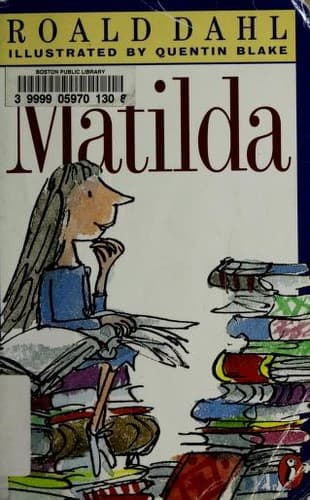
- Matilda
Roald Dahl
4.3 (648k) average on GoodreadsFantasyIn contrast to Matilda, where the child protagonist actively uses her intellect and agency to overcome injustice and shape her destiny, the characters in The Aristocats are largely reactive, relying on external assistance (like O'Malley or the geese) to resolve their predicament. Matilda offers a more empowering narrative focused on individual agency and challenging authority.
- Harry Potter and the Sorcerer's Stone
J.K. Rowling
4.5 (7M) average on GoodreadsFantasyRescued from a miserable life under the stairs, an orphaned boy discovers he's a wizard destined for a magical school, where he uncovers a dangerous secret tied to the dark wizard who murdered his parents.
- The Hobbit, or There and Back Again
J.R.R. Tolkien
4.3 (2.9M) average on GoodreadsFantasyA comfort-loving hobbit named Bilbo Baggins is whisked away by a mischievous wizard and a band of dwarves on an unexpected journey to reclaim stolen treasure from a fearsome dragon, discovering courage and a magical ring along the way.
- Harry Potter and the Goblet of Fire
J.K. Rowling
4.6 (2.6M) average on GoodreadsFantasyA bewildered Harry Potter, underage and thrust into a deadly Triwizard Tournament, must brave dragons, mermaids, and a resurgent dark magic to survive a year that will forever alter the wizarding world.
- Harry Potter and the Order of the Phoenix
J.K. Rowling
4.5 (2.5M) average on GoodreadsFantasyIn a year of oppressive secrets and the threat of Voldemort, Harry Potter and Dumbledore's Army secretly train for war, shown through Jim Kay and Neil Packer's dark illustrations.
- The Lightning Thief
Rick Riordan
4.3 (2M) average on GoodreadsFantasyThrust into a world of mythological monsters and divine treachery, an ordinary boy discovers he's the son of Poseidon and must embark on a perilous quest across modern America to prevent an Olympian war.





Enjoyed the summary?
A summary gives you the shape of the book. The book itself has the detail, the examples and the voice.
Find The Aristocats on AmazonAs an Amazon Associate, BookBrief earns from qualifying purchases. How we're funded