
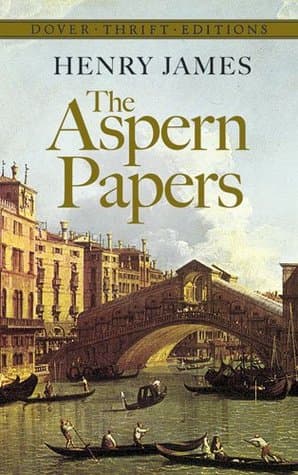
Synopsis
Covers the whole plot, including the ending.
- Difficulty
- Medium
- Pacing
- Slow
- Mood
- Atmospheric, Suspenseful, Introspective, Subtle
- Read it if
- You enjoy psychological dramas, character studies, and tales of obsession set in atmospheric European locales.
- Skip it if
- You prefer fast-paced plots or clear-cut moral resolutions.
The Aspern Papers Plot Summary
Covers the whole plot, including the ending.
The Obsession Begins
The unnamed narrator, a scholar of the Romantic poet Jeffrey Aspern, arrives in Venice with one goal: to get the 'Aspern Papers.' These papers, rumored to include intimate letters and manuscripts, are thought to be with Juliana Bordereau, Aspern's former mistress, an old, reclusive woman living in a crumbling palazzo. The narrator's colleague, John Cumnor, failed to get access, but the narrator believes he can succeed. He sees these papers as a key part of Aspern's literary legacy, and his desire to have them borders on fanaticism, leading him to think of increasingly deceptive plans.
Infiltrating the Palazzo
Driven by his search, the narrator learns that Juliana Bordereau lives with her equally reclusive, middle-aged niece, Tina Bordereau. He plans to rent rooms in their run-down palazzo, pretending to be a gentleman looking for a quiet place to write. He offers a very high rent, which, despite the ladies' hesitation and Juliana's clear suspicion, they accept because they are poor. This puts him in the house where the papers are supposedly hidden, close to his goal.
The First Glimpses of Juliana
After moving into the palazzo, the narrator finds himself in a place of faded luxury and deep secrecy. Juliana Bordereau is rarely seen, a shadowy figure whose presence is felt more than observed. He gets only brief glimpses of her, often with her face hidden, adding to her mystery and his frustration. His main contact is Tina Bordereau, a plain, shy woman who seems to live in her aunt's shadow. The narrator tries to build a relationship with Tina, hoping she will lead him to the papers, though he struggles with her reserved nature and her aunt's watchful eye.
The Garden and the Portrait
The narrator spends his days in the palazzo's overgrown, neglected garden, which reflects the decaying life inside. His impatience grows as weeks pass without progress. He tries to talk to Tina about her aunt and Aspern, but she avoids the topic. One day, he sees Juliana in the garden, wearing a green shade over her eyes. During this brief, unsettling meeting, he notices a small portrait of Aspern, which Juliana quickly hides. This confirms his belief that the papers, or at least relics of Aspern, are with her, increasing his resolve and urgency.
A Breakthrough and a Setback
Through careful maneuvering, the narrator eventually sees Juliana's face more clearly, noting its ancient, almost mummified look, yet still seeing traces of the beauty that captivated Aspern. He continues trying to charm Tina, hoping she will eventually betray her aunt's trust. However, Juliana's health seems to worsen, making her even harder to reach. The narrator faces more waiting and uncertainty, his initial hope fading as the difficulty of his task becomes clearer. He realizes Juliana is a strong opponent, fully aware of his intentions.
The Dinner Invitation
Suddenly, Juliana Bordereau invites the narrator to dinner. This is an unusual gesture, breaking her long reclusiveness and offering the narrator a direct, though possibly dangerous, chance to talk with her. He is both excited and nervous, understanding that this meeting could either bring him closer to his goal or expose his true motives. He prepares for dinner with anticipation and strategy, knowing that every word and gesture will be watched by the sharp old woman, despite her age.
The Confrontation and Juliana's Collapse
During dinner, Juliana subtly hints that she knows the narrator's true purpose, showing a shrewdness that belies her age. The narrator, feeling trapped, tries to deflect, but Juliana's sharp mind sees through his pretense. The tension builds to a confrontation where Juliana, despite her weakness, directly challenges him about his search for the papers. The emotional stress of this meeting is too much for her, and she collapses, leaving the narrator shocked and guilty, realizing the impact of his actions.
The Narrator's Desperation and Tina's Revelation
After Juliana's collapse, she is confined to her bed, seemingly dying. The narrator, desperate to get the papers before they are lost, becomes bolder. Tina, now caring for her aunt and facing loss, becomes more open with the narrator. She confirms the existence of the Aspern papers, saying Juliana had kept them hidden, guarding Aspern's memory. Tina's revelation gives the narrator renewed, frantic hope, pushing him to consider even bolder plans to get the documents.
The Proposal and the Price
As Juliana's condition worsens, Tina, facing a lonely future, makes a surprising offer to the narrator. She implies that after her aunt's death, she would give him the Aspern papers, but only if he marries her. This unexpected condition presents the narrator with a difficult moral choice. His obsession with the papers clashes with his unwillingness to marry a woman he does not love, showing the extreme personal cost of his literary ambition. He must face the true price of his desire, which he finds too high.
The Escape and the Return
Shocked and disgusted by Tina's proposal, the narrator leaves Venice, unable to reconcile his ambition with a loveless marriage. He tries to distance himself from the palazzo, hoping the city's charm will distract him. However, the pull of the Aspern Papers is too strong. His obsession continues, and after a short absence, he feels drawn back to Venice and the palazzo, convinced he must find another way to get the papers, unwilling to accept Tina's terms, yet unable to give up his goal.
Juliana's Death and Tina's Offer
Upon his return, the narrator learns that Juliana Bordereau has died. With the papers' guardian gone, the narrator's hope rises again. Tina, now alone, again presents her offer: the papers in exchange for marriage. She makes it clear this is her final condition, the only way she will give them up. The narrator again faces the high price of his ambition, the choice between his literary obsession and a life with Tina, a choice that makes him confront his own moral limits.
The Rejection and the Burning
Unable to marry Tina, the narrator rejects her offer. The idea of such a union repels him, even with the papers within reach. Tina, heartbroken and perhaps seeking revenge, then reveals she has destroyed the Aspern Papers, burning them one by one. She later sends him a small portrait of Aspern, the only thing left. The narrator is left with the crushing realization that his obsessive and manipulative search led to the permanent loss of the very treasures he wanted, a deep and ironic defeat.
Principal Figures
The Narrator
Protagonist
An unnamed literary critic obsessed with acquiring the Aspern Papers.
The narrator is a scholar and literary critic, deeply engrossed in the life and works of the deceased Romantic poet Jeffrey Aspern. He is driven by an intense, almost fanatical desire to uncover and possess Aspern's private papers, believing them essential to completing the poet's legacy. He is intelligent, articulate, and highly manipulative, willing to employ deception and emotional exploitation to achieve his goals. Despite his intellectual prowess, he displays a profound lack of empathy and self-awareness regarding the impact of his actions on others, particularly Tina Bordereau. His ambition borders on the unethical, revealing a moral blindness in his pursuit of literary glory.
Relationships: Juliana Bordereau (Antagonistic, driven by his desire for her papers); Tina Bordereau (Exploitative, manipulative, using her as a means to an end); Jeffrey Aspern (Obsessive admiration and scholarly pursuit)
Juliana Bordereau
Antagonist
Jeffrey Aspern's ancient, reclusive former mistress and guardian of his papers.
Juliana Bordereau is an ancient, almost mythical figure, once the beautiful mistress of Jeffrey Aspern. Now living in extreme old age and poverty in a decaying Venetian palazzo, she remains fiercely protective of Aspern's memory and the papers she possesses. She is shrewd, perceptive, and acutely aware of the narrator's true intentions, despite her physical frailty. She commands a formidable presence, even from her sickbed, and her refusal to part with the papers makes her the primary obstacle to the narrator's quest. Her past beauty and connection to Aspern are central to her allure and her power over the narrator.
Relationships: The Narrator (Antagonistic, wary, and protective against his designs); Tina Bordereau (Aunt and guardian, though somewhat neglectful and demanding); Jeffrey Aspern (Former lover, whose memory she fiercely protects)
Tina Bordereau
Supporting
Juliana's plain, middle-aged niece, dependent on her aunt and vulnerable to the narrator's influence.
Tina Bordereau is Juliana's niece, a plain, shy, and emotionally starved woman in her forties. She has spent her entire life in her aunt's shadow, isolated and without prospects. She is initially reserved but gradually becomes more open and vulnerable to the narrator's attentions, mistaking his manipulative charm for genuine affection. She longs for companionship and a life beyond the confines of the palazzo. Her desperation for a future, combined with her loyalty to her aunt's legacy, drives her to make the ultimate offer to the narrator, revealing her profound loneliness and her capacity for both hope and devastation.
Relationships: The Narrator (Recipient of his manipulative attention, she develops feelings for him); Juliana Bordereau (Niece and caregiver, deeply loyal but also constrained by her aunt)
Jeffrey Aspern
Mentioned
The deceased Romantic poet whose letters and papers are the object of the narrator's quest.
Jeffrey Aspern is the deceased Romantic poet whose literary legacy fuels the entire plot. Though never appearing directly, his presence is pervasive through the narrator's obsession, Juliana's guardianship, and the lingering aura of his past. He represents the unattainable ideal of artistic genius and the allure of hidden biographical details. The papers attributed to him are not just documents but symbols of artistic immortality and the private lives of public figures. His mysterious charm and romantic entanglements, particularly with Juliana, are central to the story's intrigue.
Relationships: The Narrator (Object of his scholarly obsession); Juliana Bordereau (Former lover, whose memory she protects)
John Cumnor
Mentioned
A fellow literary scholar who previously attempted to acquire the Aspern Papers.
John Cumnor is a fellow literary scholar, mentioned by the narrator as having previously attempted, and failed, to acquire the Aspern Papers. His failure serves as a baseline against which the narrator measures his own cunning and determination. Cumnor's existence reinforces the idea that the papers are highly sought after and difficult to obtain, thus validating the narrator's extraordinary efforts. He represents the conventional, perhaps more ethical, approach to literary acquisition, contrasting sharply with the narrator's unscrupulous methods.
Relationships: The Narrator (Colleague and rival in the pursuit of the papers)
Themes & Insights
Obsession and Morality
The narrator's relentless pursuit of the Aspern Papers shows how intense desire can break down moral boundaries. His goal, though academic, quickly turns into deception and exploitation. He justifies his manipulative actions toward Juliana and Tina, believing the literary world's gain outweighs the personal cost. This theme is central to the confrontation where Juliana, despite her age, exposes his true intentions, highlighting his ethical compromises. Ultimately, his moral blindness leads to the destruction of the very objects he wanted, a clear consequence of unchecked ambition.
“I had caught the fever, and I was not to be cured till I had got into the house.”
The Price of Art and Legacy
The novella explores the high cost, both personal and ethical, of preserving or getting artistic legacies. The Aspern Papers are shown as valuable treasures, yet the narrator's attempt to get them causes Tina's emotional suffering and Juliana's final collapse. The story asks if the pursuit of art justifies exploiting human relationships and invading privacy. Tina's act of burning the papers comments on this theme, suggesting some legacies are best left alone, or that the human cost of getting them can be too great, making them worthless.
“I was prepared to be bold, to be ingenious, to be patient, to be clever.”
Youth, Age, and Faded Glory
The contrast between youth and age, and the sad beauty of faded glory, fills the story. Juliana and Tina represent lives past their prime, living in a decaying Venetian palazzo that mirrors their own decline. Juliana, once a lively figure in Aspern's life, is now a reclusive shadow, holding onto the last bits of her past. The narrator, in his search, tries to bring back a past era, but his actions only show the irreversible passage of time and the futility of clinging to the past. The palazzo itself, with its overgrown garden and crumbling facade, symbolizes the inevitable decay of all things, including lives and memories.
“The place was a kind of old palace, a 'palazzo' as they say, and it was in a state of advanced decay.”
Gender and Power Dynamics
The story subtly examines power dynamics between genders, especially how the male narrator tries to control the two women. The narrator, representing male intellectual authority, sees Juliana and Tina mainly as obstacles or tools. He tries to charm, manipulate, and exploit Tina's vulnerability, assuming she will be easily swayed. However, Juliana, despite her age and physical weakness, proves to be a strong opponent, with a sharp mind that sees through his deceptions. Tina, too, ultimately uses destructive power, asserting herself by destroying the papers, denying the narrator his prize and undermining his control.
“She was a person whom nature had not formed to make a figure in the world.”
Plot Devices & Literary Techniques
The Unreliable Narrator
The story is told from the perspective of a biased, self-serving narrator.
The entire story is filtered through the consciousness of the unnamed narrator, who is deeply biased and morally compromised. His account often rationalizes his manipulative behavior and downplays the ethical implications of his actions. This unreliability forces the reader to question his motives, interpretations, and even the accuracy of his observations, particularly regarding Juliana and Tina. The device enhances the psychological depth of the novella, making the reader an active participant in discerning the truth and judging the narrator's character, rather than simply accepting his version of events.
Symbolism of the Palazzo
The decaying Venetian villa symbolizes faded glory, isolation, and the passage of time.
The dilapidated Venetian palazzo where Juliana and Tina live serves as a powerful symbol. Its faded grandeur, crumbling architecture, and overgrown garden reflect the past glory of Aspern's era and the present decay of the Bordereau women's lives. It symbolizes the isolation of the two women, cut off from the modern world, and the slow, inevitable march of time that erodes both physical structures and human lives. The palazzo also represents the locked-away secrets and the resistance to external intrusion, mirroring Juliana's own guarded nature.
The MacGuffin (The Aspern Papers)
The papers themselves are the central object of desire, driving the plot.
The Aspern Papers function as a classic MacGuffin: they are the central object of desire that drives the entire plot and motivates the narrator's actions, yet their actual content is never revealed. Their specific importance lies not in what they contain, but in the narrator's obsessive belief in their value and the lengths he will go to acquire them. This device allows the focus to remain on the psychological drama and the moral dilemmas of the characters, rather than on the papers themselves, highlighting the destructive nature of unchecked ambition.
Suspense and Mystery
The gradual revelation of information creates tension and keeps the reader engaged.
James masterfully employs suspense and mystery throughout the narrative. The narrator's slow, cautious infiltration of the palazzo, the elusive nature of Juliana, and the tantalizing hints about the papers' existence all contribute to a mounting sense of tension. The reader is kept guessing about the contents of the papers, Juliana's true intentions, and whether the narrator will succeed in his quest. This slow-burn approach, characterized by subtle psychological maneuvering and delayed gratification, builds anticipation and draws the reader deeper into the narrator's obsessive world.
The Aspern Papers Quotes
“I can't say how delicious I found it, this sense of being for the first time in my life, in a house that was a house, and not a mere habitation.”
“She was a perfectly preserved ruin, a masterpiece of decay, a monument to the ravages of time and the triumphs of art.”
“The papers were there, I was sure of it; I could smell them, almost, as I could smell the old books.”
“She was a woman of a certain age, as they say, but of no age at all, if you looked at her eyes.”
“I was living in the house with the treasure, and I must get at it. I must get at it.”
“There was a kind of solemnity in her silence, as if she were guarding a secret that was too sacred to be spoken.”
“I was a man of letters, and I had come to Venice to find the letters of another man of letters.”
“It was a house of secrets, of whispers, of hidden things, and I was a part of it now.”
“The past was alive in that house, a tangible presence, a breath on the air.”
“She had a way of looking at me that made me feel as if I were transparent, as if she could see right through me.”
“I had to be patient, to be subtle, to be a serpent in the garden of her old age.”
“It was not a question of my wanting to possess them, but of my needing to know them.”
“The old woman was a fortress, and I was laying siege to her, day by day, hour by hour.”
“I was caught in a web, a silken, ancient web, spun by the past and stretched across the present.”
Quiz
10 questions on the plot and the characters. Each answer comes with a short explanation.
Question 1
What is the narrator's primary motivation for going to Venice?
- To enjoy the scenic beauty of the city.
- To write a biography of Jeffrey Aspern.
- To acquire the private papers of the deceased poet Jeffrey Aspern.
- To escape a scandal in his home country.
Show answer
C. To acquire the private papers of the deceased poet Jeffrey Aspern. The narrator is a literary critic and collector whose sole purpose in Venice is to obtain the precious Aspern papers.
Question 2
Who are the two women living in the decaying Venetian villa?
- Juliana Bordereau and her daughter, Tina.
- Juliana Bordereau and her niece, Miss Tina.
- Miss Tina and her maid, Pasquale.
- Jeffrey Aspern's widow and her sister.
Show answer
B. Juliana Bordereau and her niece, Miss Tina. The villa is occupied by Juliana Bordereau, Jeffrey Aspern's former mistress, and her aging niece, Miss Tina.
Question 3
Under what pretense does the narrator gain access to the villa?
- He claims to be a distant relative of Juliana.
- He offers to purchase the villa outright.
- He rents a room in the villa as a lodger.
- He introduces himself as a friend of Jeffrey Aspern.
Show answer
C. He rents a room in the villa as a lodger. The narrator rents a suite of rooms in the villa, presenting himself as a tenant, which allows him to live under the same roof as the papers.
Question 4
What is the narrator's initial impression of Miss Tina Bordereau?
- She is strikingly beautiful and vivacious.
- She is a shrewd businesswoman, difficult to deceive.
- She is plain, shy, and somewhat pathetic.
- She is artistic and shares his passion for literature.
Show answer
C. She is plain, shy, and somewhat pathetic. The narrator initially finds Miss Tina to be an uninteresting, mousy figure, contrasting sharply with his idealized image of Aspern's circle.
Question 5
How does Juliana Bordereau react to the narrator's interest in Aspern?
- She is eager to share her memories and the papers with him.
- She is highly suspicious and fiercely protective of her privacy and the papers.
- She pretends ignorance of Aspern and his connection to her.
- She tries to sell him forged documents.
Show answer
B. She is highly suspicious and fiercely protective of her privacy and the papers. Juliana is acutely aware of the narrator's true intentions and maintains a vigilant, often hostile, guard over the papers, revealing her sharp intellect despite her age.
Question 6
What is the 'overwhelming price' the narrator might pay to attain his heart's desire?
- A large sum of money to purchase the papers.
- His reputation, if his unscrupulous methods are discovered.
- Marrying Miss Tina Bordereau.
- Having to live in Venice permanently.
Show answer
C. Marrying Miss Tina Bordereau. After Juliana's death, Miss Tina implies that the papers would be available to him if he were to marry her, presenting a moral dilemma for the narrator.
Question 7
What happens to Juliana Bordereau towards the end of the novella?
- She successfully sells the papers to another collector.
- She dies after a sudden illness, leaving Miss Tina in charge.
- She confronts the narrator and exposes his deception.
- She moves to a new villa, taking the papers with her.
Show answer
B. She dies after a sudden illness, leaving Miss Tina in charge. Juliana Bordereau dies, which shifts the custodianship of the papers to Miss Tina and creates a new opportunity for the narrator, albeit with a new challenge.
Question 8
What does the novella imply about the nature of obsession and literary pursuit?
- That all literary pursuits are inherently noble and ethical.
- That the pursuit of art and biographical detail can lead to moral compromise and unscrupulous behavior.
- That only those with pure intentions should engage in literary scholarship.
- That the ends always justify the means in the quest for historical truth.
Show answer
B. That the pursuit of art and biographical detail can lead to moral compromise and unscrupulous behavior. The narrator's increasingly deceptive and manipulative actions highlight the theme that an obsessive quest, even for something seemingly noble like literary artifacts, can corrupt one's ethics.
Question 9
What ultimately happens to the Aspern Papers?
- The narrator successfully acquires them and publishes their contents.
- Miss Tina burns them, piece by piece, after the narrator rejects her.
- They are confiscated by the Venetian authorities.
- Miss Tina donates them to a local museum.
Show answer
B. Miss Tina burns them, piece by piece, after the narrator rejects her. In a climactic act, Miss Tina destroys the papers after the narrator, unable to commit to marrying her, effectively rejects her offer, signifying the ultimate failure of his quest.
Question 10
The novella explores the conflict between which two primary values?
- Youth versus old age.
- Artistic passion versus financial gain.
- The public's right to knowledge versus individual privacy and the sanctity of personal history.
- European culture versus American pragmatism.
Show answer
C. The public's right to knowledge versus individual privacy and the sanctity of personal history. The central conflict revolves around the narrator's belief in the importance of making Aspern's private life public for literary posterity, clashing with Juliana and Miss Tina's fierce protection of personal privacy and the intimacy of their past.
The Aspern Papers FAQ
What is the central premise of 'The Aspern Papers'?
The novella follows an unnamed literary critic and editor, obsessed with the deceased Romantic poet Jeffrey Aspern, as he attempts to acquire Aspern's private letters and papers. These documents are held by Aspern's aged former mistress, Juliana Bordereau, and her equally elderly niece, Miss Tina, in a secluded Venetian palazzo.
Who are the main characters in the story?
The primary characters are the unnamed narrator (the 'editor'), Juliana Bordereau (Aspern's former mistress), and Miss Tina Bordereau (Juliana's niece). Jeffrey Aspern is a pivotal character, though he is deceased, and his presence is felt through the narrator's obsession and the lingering aura in the palazzo.
What is the narrator's primary goal, and how does he attempt to achieve it?
The narrator's goal is to obtain the precious Aspern papers. He ingratiates himself with Juliana and Miss Tina by renting rooms in their dilapidated Venetian palazzo, feigning an appreciation for their garden and offering to pay an exorbitant sum, all as a pretext to gain access to the hidden documents.
What is the significance of the Venetian setting?
Venice, with its decaying grandeur and labyrinthine canals, perfectly mirrors the fading lives of Juliana and Miss Tina and the narrator's morally ambiguous quest. The city's atmosphere of hidden histories and past glories enhances the sense of mystery and the narrator's entrapment within his own machinations.
How does the narrator's perception of Miss Tina evolve throughout the story?
Initially, the narrator views Miss Tina as a meek, unremarkable 'poor lady' and a mere obstacle or tool in his scheme. As Juliana's health declines, he begins to see her as a potential ally and, eventually, as a desperate woman who might be manipulated into handing over the papers, even contemplating marriage as a means to his end.
What 'hidden details' about Jeffrey Aspern are only hinted at?
Aspern is presented as a charismatic and influential Romantic poet, but the exact nature of his relationship with Juliana and the contents of his letters are kept tantalizingly vague. The narrator's fervent desire for the papers suggests they contain intimate, perhaps scandalous, details about Aspern's life and loves, elevating his legend.
What is the implied fate of the Aspern papers at the end?
After Juliana's death and the narrator's rejection of Miss Tina's proposal, Miss Tina burns the papers one by one. She sends him a small portrait of Aspern, implying the papers are irrevocably lost, having been destroyed rather than falling into the hands of someone who did not truly value them.
How does Henry James use the 'unnamed narrator' to enhance the story's themes?
The unnamed narrator forces the reader to focus on his actions and internal struggles, making his moral descent more universal and relatable. His anonymity also contributes to the air of mystery and underscores his detachment and self-serving nature, allowing the reader to judge his ethics without the bias of a name.
What is the significance of the 'portrait of Aspern' that Miss Tina eventually gives the narrator?
The portrait serves as a poignant consolation prize and a symbol of what the narrator truly lost. It is a material object, a representation, but devoid of the intimate revelations the letters promised. It signifies the lasting, public image of Aspern, distinct from the private, destroyed truth.
How does Juliana Bordereau manipulate the narrator despite her failing health?
Juliana, even from her sickbed, demonstrates remarkable cunning. She exploits the narrator's eagerness by demanding exorbitant rent, feigning interest in his proposed biography, and using the papers as bait, always keeping them just out of reach and subtly gauging his desperation, revealing her sharp intellect.
What psychological flaw drives the narrator's actions?
The narrator is driven by an obsessive intellectual pride and a profound sense of entitlement to Aspern's legacy. He believes his scholarly pursuit justifies any deception, revealing a self-serving ego and a lack of empathy for the human cost of his quest, particularly regarding Juliana and Miss Tina's feelings.
What is the 'overwhelming price' the narrator faces for his desire?
The 'overwhelming price' is the potential marriage to Miss Tina, which she proposes as the condition for inheriting the papers. The narrator finds this prospect repulsive, as it would mean sacrificing his personal freedom and romantic ideals for his intellectual obsession, ultimately leading him to lose everything.
How does the story comment on the ethics of literary biography?
'The Aspern Papers' raises profound questions about the right to privacy versus the public's right to know, particularly concerning the lives of artists. It critiques the invasive and often unscrupulous methods employed by biographers who prioritize sensationalism or academic gain over the personal dignity of their subjects and their families.
Is the narrator a sympathetic character?
The narrator is largely unsympathetic. While his passion for literature might initially be admirable, his increasing deceit, manipulation, and ultimate willingness to exploit Miss Tina for his own gain reveal a profound moral bankruptcy. His self-absorption makes it difficult for readers to empathize with his plight.
What role does money play in the dynamics between the characters?
Money acts as a powerful tool and a symbol of power. The narrator uses his wealth to gain access to the palazzo, while Juliana uses her financial demands to control him and assert her authority. The Bordereaus' poverty makes them vulnerable but also highlights Juliana's resilience in protecting her legacy.
How does the novella explore themes of aging and memory?
The story profoundly examines aging through Juliana and Miss Tina, who are living relics of a bygone era, clinging to fragmented memories and physical remnants of their past. The decaying palazzo symbolizes their fading lives and the transient nature of memory, contrasted with the narrator's desire to preserve a specific, idealized past.
What kind of love, if any, is depicted in the story?
The story depicts several forms of love: the narrator's intellectual love bordering on obsession for Aspern's work, Juliana's enduring, protective love for Aspern's memory and her own past, and Miss Tina's desperate, unrequited 'love' for the narrator, born from loneliness and a desire for a future. True romantic love is notably absent.
What is the ultimate irony of the narrator's quest?
The ultimate irony is that the narrator's obsessive, unscrupulous pursuit of the papers directly leads to their destruction. His refusal to pay the 'overwhelming price' of marrying Miss Tina, which would have granted him access, results in him losing his heart's desire entirely, leaving him with nothing but a small portrait.
About the author
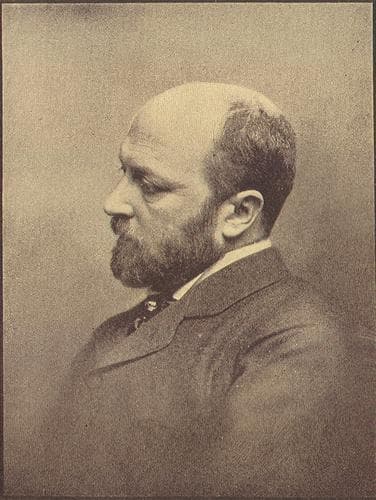
Henry James was an American-British author. He is regarded as a key transitional figure between literary realism and literary modernism, and is considered by many to be among the greatest novelists in the English language. He was the son of Henry James Sr. and the brother of philosopher and psychologist William James and diarist Alice James.
Similar books
- The Turn of the Screw
Henry James
3.4 (104k) average on GoodreadsMysteryExplores psychological intensity and ambiguous narrative, featuring a governess in a secluded estate.
- A Study in Scarlet
Arthur Conan Doyle
4.2 (324k) average on GoodreadsHistorical FictionWhile both involve mystery, Doyle's novel is an external, clue-driven mystery focused on deductive reasoning and the intellectual prowess of Sherlock Holmes. James's mystery is internal, character-driven, and explores moral failings and psychological descent, with far less emphasis on overt plot action.
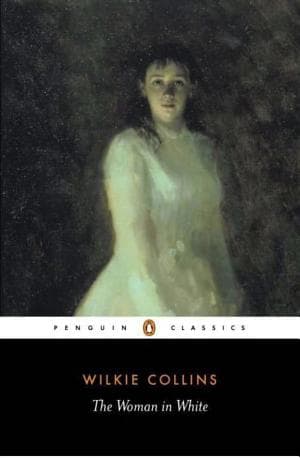
- The Woman in White
Wilkie Collins
4.0 (132k) average on GoodreadsHistorical FictionCollins's novel also deals with secrets and hidden identities but relies on melodramatic plot twists and a more conventional suspense structure. James prioritizes the slow, agonizing revelation of character and ethical compromise over rapid plot development, offering a more introspective and psychologically unsettling form of suspense.
- Angels & Demons
Dan Brown
3.9 (2.7M) average on GoodreadsThrillerA Harvard symbologist races through Rome's ancient sites, deciphering cryptic clues to unmask the Illuminati and stop a vengeful plot to destroy the Vatican with a stolen antimatter weapon.
- Gone Girl
Gillian Flynn
4.1 (2.3M) average on GoodreadsThrillerA wife's sudden disappearance on her fifth anniversary reveals a web of lies and psychological warfare, exposing the secrets within a seemingly perfect marriage.
- The Girl on the Train
Paula Hawkins
3.9 (2.1M) average on GoodreadsThrillerA woman’s fascination with a seemingly perfect couple she watches from her daily train commute leads her into a dark investigation when she witnesses something that shatters their idyllic image.





Enjoyed the summary?
A summary gives you the shape of the book. The book itself has the detail, the examples and the voice.
Find The Aspern Papers on AmazonAs an Amazon Associate, BookBrief earns from qualifying purchases. How we're funded