
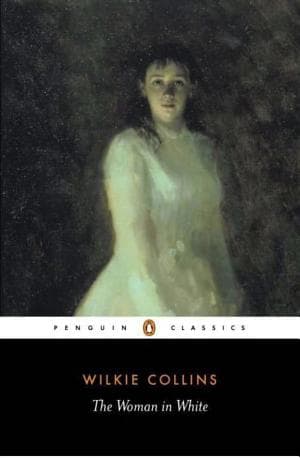
Synopsis
Covers the whole plot, including the ending.
- Difficulty
- Medium
- Pacing
- Slow
- Mood
- Suspenseful, Intriguing, Victorian, Melancholy
- Read it if
- You enjoy classic Victorian mysteries with intricate plots, strong character development, and a slow-burn sense of dread.
- Skip it if
- You prefer fast-paced thrillers or find lengthy descriptions and epistolary narratives tedious.
The Woman in White Plot Summary
Covers the whole plot, including the ending.
A Chance Encounter on Hampstead Heath
Walter Hartright, a young drawing teacher, walks home across Hampstead Heath one night and meets a distressed woman in white. She asks for directions to London and seems upset. She tells Walter she fears a powerful baronet and warns him to be careful. She also mentions a deep secret. After helping her find a cab, Walter learns from two men chasing her that she has escaped from an asylum. This meeting stays with Walter, making him curious about her identity and her link to the baronet.
Arrival at Limmeridge House
Walter Hartright travels to Limmeridge House in Cumberland to teach drawing to Miss Laura Fairlie and Miss Marian Halcombe. When he meets Laura, Walter is struck by her strong resemblance to the mysterious woman in white he met. He quickly falls in love with Laura, even though she is engaged to Sir Percival Glyde. Marian, Laura's smart half-sister, notices Walter's feelings but tells him to keep them professional. Walter learns more about Laura's upcoming marriage and her family's history, strengthening his connection to this new world.
The Betrothal and the Warning
Before Laura's wedding to Sir Percival Glyde, Marian Halcombe gets an anonymous letter warning Laura about the marriage, hinting at Sir Percival's true nature and past. Marian confronts Sir Percival, who calls the letter a mean trick. Despite Marian's strong doubts and Walter's hidden heartbreak, Laura, bound by a promise to her dead father, goes ahead with the marriage. Walter, unable to watch the wedding, leaves Limmeridge House, his heart heavy with unrequited love and a bad feeling about Laura's future with Sir Percival. His leaving is a major change, leaving Laura mostly unprotected.
Life at Blackwater Park
Laura and Marian move to Sir Percival Glyde's estate, Blackwater Park. Their life there is not happy. Sir Percival is bad-tempered, bad with money, and increasingly cruel to Laura. Soon, Sir Percival's close friend, Count Fosco, joins them—a charming but dangerous Italian nobleman with a sharp mind and a liking for unusual pets. Marian, seeing Fosco's manipulative ways and Sir Percival's growing malice, feels a strong sense of worry. She starts a detailed diary, writing down the strange events and the increasing tension in the house, sensing a plan forming around Laura.
The Discovery of Sir Percival's Secret
Marian Halcombe, worried about Laura, grows more suspicious of Sir Percival Glyde. She overhears talks and sees his secret behavior, leading her to look into his past. Through hard work, Marian finds a shocking secret: Sir Percival is not the rightful heir to Blackwater Park. He was born outside of marriage, and his claim to the title and estate is false. This discovery makes Laura, who knows a detail that could expose him, a dangerous problem for Sir Percival. Marian realizes Laura is in great danger and tries to warn her, but she is stopped.
The Asylum Plot
Driven by the need to get Laura's money and prevent his illegitimacy from being known, Sir Percival Glyde, with Count Fosco's help, carries out a terrible plan. They drug Laura, making her seem mentally unstable. At the same time, Anne Catherick, the woman in white who looks very much like Laura and has a history of mental illness, is brought to Blackwater Park. Anne, already weak, dies soon after arriving. Fosco and Glyde then switch their identities: Laura is put in an asylum under Anne's name, while Anne Catherick is buried as Laura Fairlie. The world believes Laura Fairlie is dead, and Sir Percival gets her large fortune.
Walter's Return and the Truth
Walter Hartright, back in England, visits the graveyard where 'Laura Fairlie' is supposedly buried. To his surprise, he meets Laura herself, alive but broken, having escaped from the asylum. She is confused and believes she is Anne Catherick. Walter, certain of her true identity, takes her and Marian, who has recovered from a serious fever, into his care. He understands the horrible truth of the plot by Sir Percival and Count Fosco. Vowing to restore Laura's identity and expose the villains, Walter begins a careful and dangerous investigation, collecting evidence to prove Laura is alive and Sir Percival is a fraud.
The Fire at the Vestry
Walter Hartright's investigation leads him to the church vestry in Old Welmingham, where Sir Percival Glyde's birth certificate is kept. Walter thinks this document holds the key to proving Sir Percival's illegitimacy. Sir Percival, realizing Walter is close to finding his secret, tries to destroy the records by setting the building on fire. In his desperate act, Sir Percival gets trapped in the fire and dies. His death, though violent, removes one of the main enemies and gives Walter a new way to finally prove Laura's identity, as the original birth certificate is now lost forever.
Confrontation with Count Fosco
With Sir Percival dead, Walter Hartright focuses on Count Fosco, the one who planned Laura's identity theft. Walter tracks Fosco to London and confronts him. Fosco, surprisingly, does not fight. Instead, he reveals the full details of the conspiracy, explaining his reasons and the clever ways they used to trick everyone. He also confesses his own dark past as a member of a secret Italian society, which he betrayed. Fosco, seeing Walter's determination and sense of justice, and fearing the results of his own betrayal, offers Walter a way to prove Laura's identity in exchange for safe passage out of England.
Restoration of Identity and Justice
Following Count Fosco's information, Walter Hartright gathers clear proof of Laura Fairlie's identity. He presents the evidence, showing that the woman buried as Laura was Anne Catherick, and that the woman living under Anne's name is the real Laura Fairlie. The legal system, after some doubt, accepts the strong evidence. Laura's identity and fortune are returned. Walter and Laura, free from the past and their enemies, marry and live a peaceful life with Marian. Justice is served, and their family line continues with the birth of their child.
Principal Figures
Walter Hartright
Protagonist
The earnest drawing master who falls in love with Laura and uncovers a conspiracy.
Walter is an honest, intelligent, and determined young man from a modest background. He possesses a strong sense of justice and loyalty, particularly towards those he cares for. His artistic sensibility makes him observant, and his moral compass guides his actions. He is initially somewhat naive but grows significantly in courage and resourcefulness as he navigates the complex web of deceit surrounding Laura Fairlie. His love for Laura is a primary motivator, driving him to extraordinary lengths to right the wrongs committed against her.
Relationships: Laura Fairlie (Deeply in love, eventually marries); Marian Halcombe (Close confidante and ally); Count Fosco (Antagonist, intellectual adversary); Sir Percival Glyde (Antagonist, rival for Laura's well-being)
Laura Fairlie
Protagonist
The gentle, beautiful heiress whose identity is stolen.
Laura is a delicate, kind, and somewhat passive young woman, characterized by her striking beauty and gentle nature. She is deeply devoted to her family and possesses a strong sense of duty, which ultimately makes her vulnerable to manipulation. Her resemblance to Anne Catherick is a crucial plot point. Despite her initial fragility and the trauma she endures, she displays resilience and a quiet strength when supported by Walter and Marian. Her inheritance and social standing make her a target for the unscrupulous.
Relationships: Walter Hartright (In love, eventually marries); Marian Halcombe (Devoted half-sister, protector); Sir Percival Glyde (Unloved husband, tormentor); Anne Catherick (Physical double, whose identity is swapped)
Marian Halcombe
Supporting
Laura's intelligent, strong-willed, and fiercely protective half-sister.
Marian is the intellectual and emotional backbone of the story. She is plain in appearance but possesses a sharp mind, keen observational skills, and an indomitable spirit. She is fiercely protective of Laura, acting as her guardian and confidante. Marian is brave, resourceful, and unafraid to confront danger or challenge authority. Her diary entries provide crucial insights into the unfolding plot and character motivations. Her loyalty and unwavering determination are instrumental in uncovering the truth.
Relationships: Laura Fairlie (Devoted half-sister, protector); Walter Hartright (Close ally and friend); Count Fosco (Intellectual adversary, object of his grudging admiration)
Count Fosco
Antagonist
The cunning, obese Italian nobleman, mastermind of the conspiracy.
Count Fosco is a complex and chilling villain. He is an enormously corpulent man with a charming, cultivated manner, a love for animals, and a brilliant, manipulative mind. His intelligence and strategic thinking make him a formidable adversary. He is utterly amoral, driven by self-interest and a desire for power and control. Despite his villainy, he possesses a strange magnetism and a certain theatricality, which makes him both terrifying and compelling. He is a master of deception and psychological manipulation.
Relationships: Sir Percival Glyde (Accomplice, co-conspirator); Marian Halcombe (Admirer of her intellect, but an enemy); Walter Hartright (Intellectual adversary)
Sir Percival Glyde
Antagonist
Laura's cruel and deceitful husband, driven by greed and a dark secret.
Sir Percival is a baronet, ostensibly a gentleman, but in reality, he is a cruel, ill-tempered, and financially desperate man. He marries Laura for her fortune and is willing to go to extreme lengths to maintain his social standing and conceal his illegitimate birth. He is prone to violent outbursts and lacks any genuine affection or morality. His secret past is a constant source of anxiety and drives many of his malevolent actions. He is more of a brute force villain compared to Fosco's calculated evil.
Relationships: Laura Fairlie (Husband, tormentor); Count Fosco (Accomplice, co-conspirator); Walter Hartright (Rival, enemy)
Anne Catherick
Supporting
The mysterious 'woman in white' with a striking resemblance to Laura Fairlie.
Anne is a frail, mentally unstable young woman who first appears to Walter Hartright on Hampstead Heath. She is obsessed with Laura Fairlie, whom she resembles, and harbors a deep-seated fear of Sir Percival Glyde. She is the illegitimate daughter of Laura's mother's sister, making her Laura's half-sister. Her past connections to the Fairlie family and her knowledge of Sir Percival's secret make her a dangerous figure to the villains. Her physical resemblance to Laura is the central plot device for the identity swap.
Relationships: Laura Fairlie (Half-sister, physical double); Walter Hartright (Initial mysterious contact); Sir Percival Glyde (Feared by her, knows his secret)
Frederick Fairlie
Supporting
Laura and Marian's hypochondriac, self-absorbed uncle.
Frederick Fairlie is Laura and Marian's uncle and guardian. He is an eccentric, highly sensitive hypochondriac, obsessed with his own delicate health and comfortable surroundings. He avoids any form of stress or unpleasantness and is largely oblivious to the suffering of others, especially his nieces. His self-absorption and passivity make him an ineffective protector for Laura, inadvertently enabling the villains' schemes. He represents a certain type of Victorian gentry, more concerned with aesthetics and personal comfort than moral responsibility.
Relationships: Laura Fairlie (Uncle and guardian, largely ineffectual); Marian Halcombe (Uncle, often annoyed by her practicality)
Themes & Insights
Identity and Impersonation
The novel looks at how identity can be changed and stolen, especially for women in Victorian society. Laura Fairlie's whole life is erased and replaced with Anne Catherick's, showing how easily personal identity can be lost when powerful, dishonest people are involved. The plot depends on the physical likeness between Laura and Anne, but also on the legal and social rules that allow such a trick. This theme is central when Laura is put in the asylum under Anne's name, losing her name, money, and mental health, forcing Walter to try to restore who she really is.
“What is the secret of the resemblance between the two women?”
Justice and Social Injustice
The search for justice against great odds is a main theme. Walter Hartright's strong investigation against Sir Percival Glyde and Count Fosco shows how hard it is for ordinary people to challenge powerful, corrupt figures in a seemingly orderly society. The novel shows the weaknesses in the legal system and how easily women, especially those with property, can be used. Walter's final victory is a win for moral right over social and legal wrong, showing that persistence can overcome systemic corruption, even if it means working outside normal legal channels at first.
“I am a man, and I can be revenged.”
The Role of Women in Victorian Society
The novel strongly criticizes the limited power and vulnerability of women in 19th-century England. Laura Fairlie, as an heiress, is seen as property to be controlled and used, first by her engagement and then by her husband. Her identity is easily erased because her legal standing is tied to men. Marian Halcombe, despite her intelligence and strength, is also limited by social expectations and her gender, which stops her from directly acting. The asylum system is also shown as a tool to silence and control women who do not fit expectations or are seen as inconvenient. The women's struggles highlight how uncertain their position was.
“A woman's place is to suffer and to be silent.”
Appearance Versus Reality
Collins skillfully uses the contrast between how things appear and what they truly are. Sir Percival Glyde seems like a respectable baronet, but he is a dishonest, cruel man. Count Fosco's charming manner hides a brilliant, dangerous mind. The physical resemblance between Laura and Anne is the biggest trick, leading to the devastating identity swap. The whole mystery depends on removing layers of lies and illusions to show the unpleasant truth beneath the polished surface of Victorian society. Walter's journey is one of constantly questioning what he sees.
“The truth is rarely pure and never simple.”
Plot Devices & Literary Techniques
First-Person Narrators (Epistolary Format)
Multiple characters recount events from their unique perspectives.
The novel is presented as a collection of testimonies from various characters, primarily Walter Hartright, Marian Halcombe (through her diary), and occasionally others like Mr. Gilmore. This allows for a multifaceted exploration of events, building suspense and revealing character biases. The shifting perspectives create a sense of realism and immediacy, as the reader pieces together the truth from different, often conflicting, accounts, mirroring a legal investigation. It also highlights the subjective nature of truth and the limited understanding of individual characters at any given time.
The Double (Doppelgänger)
The striking physical resemblance between Laura Fairlie and Anne Catherick.
The uncanny likeness between Laura Fairlie and Anne Catherick is the central plot device that enables the entire conspiracy. Without this resemblance, the identity swap would be impossible. It serves not only as a crucial narrative mechanism but also as a symbolic representation of the fragility of identity. The existence of the 'double' creates immediate mystery and foreboding, foreshadowing the tragic events to come and constantly reminding the reader of the potential for confusion and deception. It is the linchpin of the villains' plan.
The Unreliable Narrator (Subtle)
Characters' biases and limited knowledge shape their accounts.
While not overtly unreliable in a deceptive way, each narrator's account is filtered through their personal biases, emotions, and limited knowledge. For example, Walter's romantic feelings for Laura influence his perception, and Marian's strong personality colors her judgments. This device forces the reader to critically evaluate each testimony, piece together the larger picture, and understand that no single character possesses the complete truth. It enhances the mystery and creates a more complex, nuanced narrative experience, making the reader an active participant in solving the puzzle.
Hidden Secrets and Letters
Crucial information is often concealed or revealed through secret documents.
The plot is propelled by hidden secrets, particularly those related to Sir Percival Glyde's past and his illegitimate birth. Letters, such as the anonymous warning to Laura or the letters from Mrs. Catherick, serve as critical conduits for revealing vital information that moves the plot forward or exposes truths. The pursuit of these hidden documents, like Sir Percival's birth certificate, becomes a driving force for Walter's investigation. These devices heighten suspense and emphasize the vulnerability of individuals to information that can be suppressed or manipulated.
The Woman in White Quotes
“I was struck by the absence of all in her dress and manner which can be called coarse or common. She was dressed in plain white, and there was a purity and delicacy about her which seemed to emanate from herself and to penetrate to her dress.”
“The secret of all she had suffered was in the first two words of her name. She was a woman, and she was in white.”
“No man ever yet knew the whole of any woman's heart.”
“The greatest men, the cleverest men, the men of the most delicate susceptibility and the profoundest genius, have to walk for themselves, and by themselves, in the valley of the shadow of death.”
“Circumstances make a man, as they make a woman.”
“It is the great misfortune of my life that I have not been able to make myself understood.”
“The one great secret of our happiness, if we are to be happy at all, is to live in the present.”
“To be able to wait is the great thing. And to know when to begin, and when to end.”
“I am a living, breathing, thinking, feeling, woman. I am Marian Halcombe.”
“The faintest trace of a smile flickered for a moment on his lips as he looked at me. It was a smile which I understood, and which I did not like.”
“There are some women who are destined to be unfortunate; and I am one of them.”
“God's justice is a slow justice, and a sure justice.”
“The best way to be safe is to be afraid.”
“It is no use to regret. What is done, is done.”
Quiz
10 questions on the plot and the characters. Each answer comes with a short explanation.
Question 1
What is the profession of the protagonist, Walter Hartright, at the beginning of the novel?
- Lawyer
- Artist and Drawing Master
- Doctor
- Private Investigator
Show answer
B. Artist and Drawing Master Walter Hartright is introduced as a drawing master, which leads to his employment at Limmeridge House and his first encounter with Laura Fairlie.
Question 2
What is the name of the mysterious woman Walter Hartright first encounters dressed in white?
- Laura Fairlie
- Marian Halcombe
- Anne Catherick
- Countess Fosco
Show answer
C. Anne Catherick The woman in white is Anne Catherick, who bears a striking resemblance to Laura Fairlie and becomes central to the mystery.
Question 3
Which character is described as having 'the most remarkable eyes' and is often depicted as intellectual and strong-willed, despite her physical appearance?
- Laura Fairlie
- Mrs. Michelson
- Marian Halcombe
- Anne Catherick
Show answer
C. Marian Halcombe Marian Halcombe is consistently described as intelligent, resourceful, and having distinct, expressive eyes, contrasting with her plain features.
Question 4
What is the primary motive behind Sir Percival Glyde's plot against Laura Fairlie?
- Revenge against the Fairlie family
- To inherit her wealth and conceal his illegitimacy
- To marry Marian Halcombe instead
- To escape a previous marriage
Show answer
B. To inherit her wealth and conceal his illegitimacy Sir Percival's main goal is to gain control of Laura's fortune and prevent the discovery of his parents never being legally married, which would invalidate his claim to his title and estate.
Question 5
Where does Walter Hartright first meet Laura Fairlie?
- In London, after she is institutionalized
- At Blackwater Park, Sir Percival's estate
- At Limmeridge House, where he is employed as a drawing master
- On a journey through Italy, during his travels
Show answer
C. At Limmeridge House, where he is employed as a drawing master Walter Hartright is hired by Frederick Fairlie to teach drawing to Laura and Marian at Limmeridge House, leading to his first meeting with Laura.
Question 6
What is Count Fosco's defining characteristic, often highlighted through his physical description and habits?
- His extreme shyness and reclusiveness
- His immense size, love for pets (especially white mice and canaries), and intellectual cunning
- His constant fidgeting and nervous disposition
- His impoverished state and desperate attempts to gain wealth
Show answer
B. His immense size, love for pets (especially white mice and canaries), and intellectual cunning Count Fosco is famously depicted as a corpulent, charming, yet dangerous villain, with a peculiar fondness for small animals and a sharp, manipulative mind.
Question 7
How does Walter Hartright ultimately prove Laura's true identity after she has been declared dead and replaced by Anne Catherick in the asylum?
- By finding a secret will hidden by Mr. Fairlie
- By exposing Sir Percival Glyde's bigamy through a witness account
- By obtaining a certified copy of the marriage register proving Sir Percival's illegitimacy, which was the motive for the plot
- By having Marian Halcombe testify in court about the switch
Show answer
C. By obtaining a certified copy of the marriage register proving Sir Percival's illegitimacy, which was the motive for the plot Walter's diligent investigation leads him to the church where Sir Percival claimed his parents were married. He discovers the altered register and, with the help of the parish clerk, proves Sir Percival's illegitimacy, thereby dismantling the entire conspiracy.
Question 8
What is the significance of the diary entries used in the novel's narrative structure?
- They serve as a personal confession from the villains, revealing their true intentions to the reader.
- They provide a direct and unfiltered account of each character's inner thoughts and feelings, often contradicting their outward actions.
- They offer multiple perspectives on the events, creating suspense and allowing the reader to piece together the mystery from different points of view.
- They are purely ornamental and do not significantly contribute to the plot progression.
Show answer
C. They offer multiple perspectives on the events, creating suspense and allowing the reader to piece together the mystery from different points of view. Wilkie Collins famously uses a 'series of narratives' from different characters (Walter, Marian, Mr. Fairlie, etc.) to present the story, gradually revealing information and building suspense from various subjective viewpoints.
Question 9
Which character ultimately dies in a fire at the vestry while attempting to destroy evidence of his crime?
- Count Fosco
- Frederick Fairlie
- Sir Percival Glyde
- Professor Pesca
Show answer
C. Sir Percival Glyde Sir Percival Glyde dies in a fire at the vestry of the church in Old Welmingham, while trying to burn the parish register that contained the proof of his parents' unmarried status.
Question 10
What is the central theme explored through Laura Fairlie's predicament and the conspiracy against her?
- The importance of social status and maintaining appearances in Victorian society.
- The vulnerability of women and the abuse of power within legal and social systems in Victorian England.
- The romantic ideal of love conquering all obstacles, regardless of circumstance.
- The psychological impact of isolation and mental illness on individuals.
Show answer
B. The vulnerability of women and the abuse of power within legal and social systems in Victorian England. The novel powerfully highlights how easily a woman could be stripped of her identity, wealth, and freedom due to the legal limitations placed on women and the manipulative actions of unscrupulous men, particularly within the context of marriage and property rights in the Victorian era.
The Woman in White FAQ
What is the central mystery that drives the plot of 'The Woman in White'?
The central mystery revolves around the uncanny resemblance between Laura Fairlie and Anne Catherick, the titular 'Woman in White,' and how this connection is exploited by Sir Percival Glyde and Count Fosco to steal Laura's identity and fortune. Walter Hartright's journey to uncover the truth links these two women's fates and exposes a sinister conspiracy.
Who is Walter Hartright and what is his initial role in the story?
Walter Hartright is an art master who is hired to teach drawing to Laura Fairlie and Marian Halcombe at Limmeridge House. He quickly falls in love with Laura, but their social standing prevents any immediate union. His encounter with Anne Catherick on a moonlit road sets the entire intricate plot into motion.
Describe the character of Marian Halcombe and her significance to the narrative.
Marian Halcombe is Laura Fairlie's devoted half-sister, known for her sharp intellect, strong will, and unconventional beauty. She serves as Laura's protector and a crucial ally to Walter, often taking direct action and displaying remarkable courage in her efforts to expose Sir Percival Glyde and Count Fosco's villainy.
What is Sir Percival Glyde's motivation for marrying Laura Fairlie?
Sir Percival Glyde's primary motivation for marrying Laura Fairlie is her substantial inheritance, as he is deeply in debt and desperate for money. He also needs to prevent her from discovering the secret surrounding his illegitimate birth and the true identity of his parents, which would expose him as an imposter.
Who is Count Fosco and what makes him such a memorable villain?
Count Fosco is an obese, charming, and highly intelligent Italian nobleman, deeply involved in the conspiracy against Laura. His suave demeanor, love for pets, and chillingly logical approach to villainy, combined with his ruthlessness and psychological manipulation, make him a uniquely captivating and terrifying antagonist.
What is the true connection between Anne Catherick and Laura Fairlie, beyond their physical resemblance?
The true connection is that Anne Catherick is the illegitimate daughter of Laura's father, Mr. Fairlie, making her Laura's half-sister. This familial link, combined with their striking resemblance, is the key element that Sir Percival Glyde and Count Fosco exploit to substitute Anne's corpse for Laura's and thereby steal Laura's identity and fortune.
How does the painting of Laura and Anne by Professor Pesca serve as a subtle clue early in the story?
The painting, commissioned by Mr. Fairlie, depicts both Laura and Anne Catherick, highlighting their startling resemblance. While seemingly innocent, it subtly foreshadows the later plot point where their similar appearances are used to interchange their identities, serving as an early visual hint to their connection and future manipulation.
What is the secret Sir Percival Glyde is so desperate to conceal about his birth?
Sir Percival Glyde is not the legitimate heir to Blackwater Park; he is an illegitimate child who assumed the identity of the true Sir Percival, who died in infancy. This secret is guarded by a forged marriage certificate, and its exposure would strip him of his title, property, and social standing, hence his extreme measures to hide it.
What role does Mrs. Catherick's letter play in unraveling the conspiracy?
Mrs. Catherick's letter, though initially withheld, contains vital information about Sir Percival Glyde's true identity and the forgery of his marriage certificate. It confirms his illegitimacy and provides the crucial evidence Walter and Marian need to prove Laura's identity and expose the entire fraudulent scheme.
How does Count Fosco manipulate Laura and Marian psychologically?
Count Fosco uses a combination of charm, subtle threats, and gaslighting to erode Laura's mental state, making her question her own sanity and memory. He also isolates Marian, exploiting her love for Laura to control her actions, while observing and analyzing their every move to anticipate their resistance.
Discuss the psychological impact of Laura's identity theft on her character.
Laura's identity theft leaves her deeply traumatized, suffering from memory loss and a profound sense of disorientation. She experiences a complete loss of self, questioning her own reality and struggling to reclaim her past. This ordeal leaves her emotionally fragile, dependent on Walter and Marian to reconstruct her life.
Analyze Marian Halcombe's psychological resilience in the face of adversity.
Marian exhibits remarkable psychological resilience, enduring severe illness, isolation, and constant danger while maintaining her resolve to protect Laura. Her strong will, keen intellect, and unwavering loyalty enable her to overcome immense psychological pressure and continue fighting against the formidable villains.
How does the narrative structure, with multiple narrators, contribute to the psychological depth of the story?
The multi-narrator structure, featuring Walter, Marian, and others, provides diverse perspectives on events, revealing characters' inner thoughts, biases, and emotional states. This allows readers to piece together a more complete psychological portrait of the characters and the conspiracy, highlighting the subjective nature of truth and perception.
Is 'The Woman in White' primarily a critique of Victorian marriage laws and women's lack of rights?
Yes, the novel can be interpreted as a strong critique of Victorian marriage laws, which left married women with virtually no legal rights over their property or even their own identities. Laura's plight directly illustrates how easily a woman could be stripped of her fortune and freedom by a manipulative husband under the existing legal framework.
How does the motif of 'doubles' or 'doppelgängers' contribute to the novel's themes?
The motif of doubles, primarily seen in Laura and Anne Catherick, highlights themes of identity, social class, and the fragility of personal recognition. It suggests that identity can be stolen or manipulated, especially for women, and questions what truly constitutes a person's essence beyond their name and social standing.
To what extent is Count Fosco's character a commentary on foreignness or 'otherness' in Victorian England?
Count Fosco can be seen as a commentary on Victorian anxieties about foreignness. His Italian origin, combined with his intellectual cunning and moral depravity, plays into xenophobic stereotypes of the 'Continental villain' – sophisticated, charming, yet ultimately untrustworthy and dangerous, contrasting with perceived English virtues.
Does the ending, with Walter and Laura's eventual happiness, fully resolve all the novel's thematic concerns about justice?
While Walter and Laura achieve a measure of personal happiness and justice is served against the villains, the ending doesn't entirely resolve all thematic concerns. The fragility of Laura's recovery and the lingering trauma suggest that the scars of the injustice remain, and the novel implicitly critiques a society where such a conspiracy could occur, even if partially rectified.
What is the significance of the 'woman in white' motif beyond Anne Catherick?
Beyond Anne Catherick herself, the 'woman in white' symbolizes vulnerability, innocence, and the spectral presence of injustice. It represents the marginalized and forgotten women whose lives are manipulated or destroyed by patriarchal power structures, haunting the conscience of the powerful and driving the narrative towards revelation.
About the author
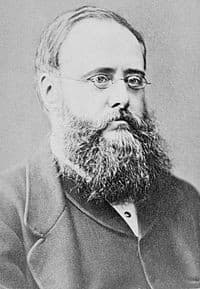
William Wilkie Collins was an English novelist and playwright known especially for The Woman in White (1859), a mystery novel and early "sensation novel", and for The Moonstone (1868), which established many of the ground rules of the modern detective novel and is also perhaps the earliest clear example of the police procedural genre.
Similar books
- Bleak House
Charles Dickens
4.0 (97k) average on GoodreadsHistorical FictionShares a sprawling cast, social commentary, and a central mystery with legal entanglements.
- The Moonstone
Wilkie Collins
3.9 (79k) average on GoodreadsHistorical FictionAnother foundational detective novel by the same author, featuring a complex plot and multiple narrators.
- Rebecca
Daphne du Maurier
4.2 (450k) average on GoodreadsThrillerFeatures a gothic atmosphere, a sinister household, and a focus on a woman's struggle against a powerful, manipulative man.
- To Kill a Mockingbird
Harper Lee
4.3 (4.5M) average on GoodreadsHistorical FictionIn the 1930s Jim Crow South, Harper Lee writes about racial injustice, moral growth, and the quiet courage of a lawyer father, Atticus Finch, as seen through his young daughter's eyes.
- The Great Gatsby
F. Scott Fitzgerald
3.9 (3.8M) average on GoodreadsHistorical FictionIn the opulent Roaring Twenties, a mysterious millionaire's lavish parties hide his desperate, tragic pursuit of a lost love, exposing the emptiness within the American Dream.
- Pride and Prejudice
Jane Austen
4.3 (3M) average on GoodreadsHistorical FictionIn a society focused on status and money, Elizabeth Bennet navigates love and pride, challenging Mr. Darcy and social expectations to find true affection.




Enjoyed the summary?
A summary gives you the shape of the book. The book itself has the detail, the examples and the voice.
Find The Woman in White on AmazonAs an Amazon Associate, BookBrief earns from qualifying purchases. How we're funded