
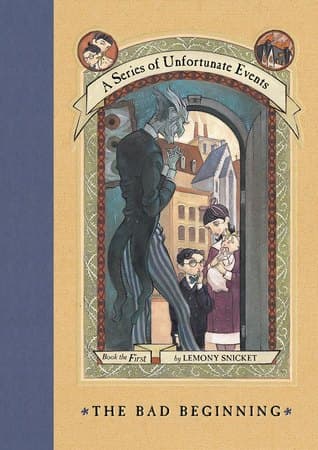
Synopsis
Covers the whole plot, including the ending.
- Difficulty
- Easy
- Pacing
- Moderate
- Mood
- Melancholy, Suspenseful, Witty, Darkly Humorous
- Read it if
- You enjoy dark humor, clever child protagonists, and mysteries with a clear villain and an overarching sense of impending doom.
- Skip it if
- You prefer lighthearted stories, happy endings, or books where adults are competent and helpful.
The Bad Beginning Plot Summary
Covers the whole plot, including the ending.
A Day at the Beach Turns to Tragedy
Violet, Klaus, and Sunny Baudelaire are enjoying a gloomy day at Briny Beach when Mr. Poe, a banker and family friend, arrives with bad news. Their parents have died in a fire that also destroyed their mansion, leaving only ashes and a charred safe. The children are now orphans. Mr. Poe explains they must live with a guardian until Violet, the eldest, turns eighteen. Despite their shock and sadness, the children must leave their familiar life for an uncertain future. Mr. Poe manages their affairs and their large, but currently unavailable, inheritance.
Arrival at Count Olaf's Decrepit Home
Mr. Poe takes the Baudelaire orphans to their new guardian, Count Olaf, a distant relative they have never met. Olaf's house is a run-down, dirty mansion in a grimy part of the city. When they arrive, Olaf shows himself to be a tall, thin man with an unpleasant unibrow and an eye tattoo on his ankle, which the children find disturbing. He immediately treats them poorly, making them share a single, cramped bedroom with one bed and demanding they do all household chores. The children quickly realize Olaf only cares about their inherited money, not their well-being.
Life Under Olaf's Tyranny
Life with Count Olaf is bad. He forces Violet, Klaus, and Sunny to do hard chores like chopping wood, weeding his garden, and cooking his meals. He gives them little, unappetizing food like cold porridge. He never takes them out or offers any comfort. When Klaus complains about the lack of food, Olaf backhands him across the face. The children try to tell Mr. Poe about Olaf's cruelty, but Mr. Poe dismisses them. He is too focused on rules and does not see the danger the children are in, believing Olaf is just eccentric.
Olaf's Theatrical Ambitions and a Mysterious Play
Count Olaf announces that he and his theater group will perform a play called 'The Marvelous Marriage.' He insists that all three Baudelaire orphans must take part. Violet plays the bride, Sunny is a silent baby, and Klaus is a minor character. The children are uneasy about the play, especially when Olaf says the marriage ceremony in the play will be legally binding. Klaus, using his love for reading, finds a book on marriage law. He learns that if a real justice of the peace performs the marriage and Violet says 'I do' in front of witnesses, it will be legitimate.
Klaus's Discovery and Olaf's Threat
Klaus, after hours in the library, finds the legal loophole Count Olaf plans to use. The play's script, written by Olaf, includes a line where Violet, as the bride, must say 'I do' and sign a legal document. With a real justice of the peace officiating and witnesses present, the marriage would be legal, giving Olaf control of the Baudelaire fortune. When Klaus confronts Olaf, the count gets angry and dangles Sunny from the top of his tower, threatening to drop her if Violet refuses the ceremony. The children are trapped and must obey to save their baby sister.
The Performance of 'The Marvelous Marriage'
The night of the play arrives. Violet wears a scratchy white gown, Klaus is dressed as a notary, and Sunny is in a cage. Justice Strauss, Olaf's kind neighbor and a real justice of the peace, is made to officiate, thinking it is just part of the show. Violet, under duress and fearing for Sunny's life, says 'I do' and signs the marriage document with her left hand, though she is right-handed. Olaf brags, thinking he has secured the Baudelaire fortune. The audience, including Mr. Poe, does not realize the sinister reality happening on stage.
Violet's Clever Revelation
After the curtain call, Count Olaf tells the audience his real intentions, declaring himself married to Violet and the rightful heir to the Baudelaire fortune. Mr. Poe, finally understanding the situation, is horrified. However, Violet, clever and resourceful, calmly reveals that the marriage is not legally binding. She explains that she signed the document with her left hand, despite being right-handed, making her signature invalid under the law. Justice Strauss confirms this technicality, stopping Olaf's elaborate plan.
Olaf's Escape and the Children's Uncertain Future
Angry at Violet's cleverness and his plan's failure, Count Olaf tries to run away. He tells his henchman, the Hook-Handed Man, to turn off the lights, making the theater dark. In the confusion, Olaf and his entire theater group escape. Mr. Poe, flustered and ineffective, apologizes to the children. Justice Strauss offers to take them in, but Mr. Poe says she is not a relative according to the parents' will. The Baudelaire orphans are again without a guardian, facing an uncertain future, but now fully aware of the ongoing threat from the escaped Count Olaf.
The Bad Beginning Characters
Violet Baudelaire
Protagonist
The eldest Baudelaire, an inventive and resourceful inventor.
Violet is the eldest Baudelaire sibling, a fourteen-year-old girl with a remarkable talent for inventing and mechanics. She often ties her hair back with a ribbon when deep in thought, a habit that signals her problem-solving mode. Driven by a fierce protectiveness for her younger siblings, she consistently uses her intelligence to find solutions to the seemingly insurmountable problems presented by Count Olaf. Her resourcefulness is key to their survival and her ability to outsmart Olaf's legal trickery. She is burdened by the responsibility of her siblings' care but rises to the challenge with quiet determination.
Relationships: Klaus Baudelaire (protective older sister); Sunny Baudelaire (caring older sister); Count Olaf (victim of his schemes, forced almost-wife); Mr. Poe (guardian's representative, often frustrated by his ineffectiveness); Justice Strauss (kind potential guardian, friend)
Klaus Baudelaire
Protagonist
The middle Baudelaire, an intelligent and avid reader.
Klaus is the middle Baudelaire child, a twelve-year-old boy with a prodigious memory and a love for books. He wears glasses and frequently uses his vast knowledge, acquired through extensive reading, to uncover crucial information and solve mysteries. His intelligence often complements Violet's inventiveness, making them a formidable team. Klaus is the one who uncovers Count Olaf's legal plot regarding the marriage, demonstrating his crucial role in protecting his family. He is brave despite his fear, willing to confront Olaf when necessary, even at personal risk.
Relationships: Violet Baudelaire (supportive younger brother); Sunny Baudelaire (caring older brother); Count Olaf (victim of his abuse, target of his threats); Mr. Poe (guardian's representative, often ignored by him); Justice Strauss (kind potential guardian, friend)
Sunny Baudelaire
Protagonist
The infant Baudelaire, known for her sharp teeth and unique vocabulary.
Sunny is the youngest Baudelaire sibling, an infant with unusually strong, sharp teeth that she uses for biting and lifting objects. Her speech consists of mostly indecipherable baby talk, though her siblings often understand her meaning. Despite her age, Sunny is incredibly brave and resourceful, contributing to the family's efforts in her own unique ways, such as biting the Hook-Handed Man or holding objects. She is the most vulnerable of the siblings and often the target of Count Olaf's threats, making her safety a constant concern for Violet and Klaus.
Relationships: Violet Baudelaire (cherished younger sister); Klaus Baudelaire (cherished younger sister); Count Olaf (target of his threats, used as leverage)
Count Olaf
Antagonist
The greedy, repulsive villain determined to steal the Baudelaire fortune.
Count Olaf is the primary antagonist, a cruel and avaricious man who becomes the Baudelaire orphans' first legal guardian. He is distinctive for his tall, thin figure, unpleasant unibrow, and a tattoo of an eye on his left ankle. His sole motivation is to acquire the Baudelaire fortune, and he resorts to neglect, abuse, and elaborate schemes, including a fraudulent marriage, to achieve his goal. He surrounds himself with a motley, equally villainous theater troupe who assist in his nefarious plans. Olaf represents the embodiment of evil and the relentless misfortune that plagues the children.
Relationships: Violet Baudelaire (abusive guardian, attempted husband); Klaus Baudelaire (abusive guardian); Sunny Baudelaire (abusive guardian, used as leverage); Mr. Poe (manipulates him with false pretenses); Justice Strauss (manipulates her into assisting his scheme); His Theater Troupe (accomplices, henchmen)
Mr. Poe
Supporting
The well-meaning but utterly ineffectual banker in charge of the Baudelaire affairs.
Mr. Poe is an administrator at Mulctuary Money Management and the executor of the Baudelaire parents' will. He is well-meaning but incredibly oblivious, bureaucratic, and often suffers from a persistent cough. Despite being responsible for the children's welfare, he repeatedly fails to recognize Count Olaf's malevolence and the children's suffering, often dismissing their pleas as childish complaints or Olaf's behavior as mere eccentricity. His adherence to rules and inability to think outside the box make him an unwitting enabler of Olaf's schemes, though he genuinely believes he is doing his best.
Relationships: Violet, Klaus, Sunny Baudelaire (guardian's representative, ineffective protector); Count Olaf (initially trusting, later shocked by his villainy)
Justice Strauss
Supporting
Count Olaf's kind neighbor and a sympathetic judge.
Justice Strauss is a kind, elderly woman who lives next door to Count Olaf. She is a judge and possesses a large, well-stocked library, which she generously allows Klaus to use. She is genuinely fond of the Baudelaire children and treats them with warmth and respect, offering them a brief respite from Olaf's cruelty. Unaware of Olaf's true intentions, she is coerced into officiating the 'marriage' in the play, believing it to be mere entertainment. Her offer to adopt the children after Olaf's plot is revealed highlights her compassion, though it is thwarted by Mr. Poe's adherence to the will.
Relationships: Violet, Klaus, Sunny Baudelaire (sympathetic neighbor, temporary friend, potential guardian); Count Olaf (neighbor, manipulated by him)
The Hook-Handed Man
Supporting
A member of Count Olaf's theater troupe and his primary henchman.
The Hook-Handed Man is one of Count Olaf's most prominent henchmen, identifiable by the hooks replacing his hands. He is a menacing figure who directly participates in Olaf's schemes, including threatening the children and assisting in Olaf's escape. He embodies the physical threat that Olaf's troupe poses to the Baudelaire orphans. His presence reinforces the idea that Olaf is not alone in his villainy and has a network of equally sinister associates.
Relationships: Count Olaf (loyal henchman); Violet, Klaus, Sunny Baudelaire (antagonist, physical threat)
The Bad Beginning Themes
Incompetence of Adults
A main theme in the book is the complete incompetence and unawareness of the adults meant to protect the Baudelaire orphans. Mr. Poe, despite his good intentions, repeatedly fails to see through Count Olaf's obvious disguises and bad plots, dismissing the children's real concerns. His focus on rules prevents him from seeing real danger. This theme shows the children's isolation and forces them to rely only on their own intelligence to survive, as the adult world constantly fails them.
““I am afraid that your parents have, in fact, perished in a terrible fire,” Mr. Poe said, and then coughed into his handkerchief.”
Resilience and Resourcefulness
Despite great sadness, neglect, and direct threats, the Baudelaire orphans show great resilience and resourcefulness. Violet uses her inventing skills, Klaus uses his knowledge from books, and even baby Sunny helps with her biting. They always work together to solve problems and escape danger, often outsmarting the adults around them. Their ability to think and act well when facing trouble is their strongest weapon against Count Olaf's plans, showing their inner strength and refusal to give up.
“If only we had some way of getting up there,” Violet said, thinking aloud. “We could climb the side of the tower.”
The Nature of Evil and Greed
Count Olaf is pure evil and greed. His only goal is to get the Baudelaire fortune, and he will neglect, abuse, and even try fraudulent marriage to get it. He shows no empathy or regret, finding entertainment in the children's suffering. This theme explores how greed can corrupt people and lead them to do bad things, and how evil can be sneaky, often hiding in plain sight or seeming legitimate. Olaf's acting also suggests how evil can put on a convincing show.
“You see, orphans, I am now your legal father, and you are my children. The Baudelaire fortune is mine!”
Loss and Grief
The entire story is about loss and grief. The children start the story having just lost their parents and their home in a terrible fire. This initial trauma sets the mood for their later misfortunes. Their parents' absence creates a gap no new guardian can fill, and their inherited money, meant to secure their future, becomes the very thing that brings danger. The book subtly explores how children deal with great loss and how it shapes how they see the world, making them cautious and often cynical about others' intentions.
“The Baudelaire orphans were not, of course, very happy. They were thinking of their parents, and of their home, and of their whole lives, which had been turned upside down.”
Plot Devices & Literary Techniques
The Narrator (Lemony Snicket)
A distinctive, melancholic, and meta-fictional voice.
Lemony Snicket serves as both the author and the in-story narrator, directly addressing the 'Dear Reader' with warnings and philosophical asides. His voice is characterized by a dry, morbid wit, a vast vocabulary, and a constant foreboding tone. He frequently defines complex words and offers cynical observations about the world and human nature. This meta-fictional device creates a unique reading experience, distancing the reader slightly from the immediate horror while simultaneously drawing them into the grim reality of the Baudelaire's lives, emphasizing the tragic nature of their story.
Dramatic Irony
The reader and orphans are aware of danger, while adults remain oblivious.
Dramatic irony is a key device, particularly in the interactions between the Baudelaire orphans, Count Olaf, and Mr. Poe. The reader and the children are acutely aware of Olaf's villainy and his sinister intentions, while Mr. Poe and other adults remain utterly oblivious. For instance, Mr. Poe fails to recognize Olaf's obvious 'disguises' or the true nature of the 'play.' This creates tension and frustration for the reader, highlighting the children's isolation and the adults' incompetence, making the children's plight even more agonizing.
Symbolism of the Eye
A recurring symbol representing observation, secrets, and Olaf's pervasive influence.
The symbol of the eye appears repeatedly throughout the book. It is most prominently featured as a tattoo on Count Olaf's ankle and is present in the decor of his dilapidated house. The eye symbolizes constant observation, secrets, and the pervasive, watchful influence of Count Olaf and potentially a larger, mysterious organization. It implies that the children are always being watched, and that there are hidden depths to the tragedy that are yet to be revealed. It creates an unsettling atmosphere of being perpetually under surveillance and danger.
The Baudelaire Fortune
A macguffin driving the plot and symbolizing their lost security.
The Baudelaire fortune acts as a central macguffin, the object that drives the entire plot. It is the reason Count Olaf pursues the orphans, and its inaccessibility until Violet comes of age creates the legal loophole Olaf attempts to exploit. While it represents the children's lost security and their parents' legacy, it also becomes a source of immense danger, attracting villainy rather than providing comfort. The fortune serves as a tangible representation of what the children have lost and what they constantly fight to protect.
The Bad Beginning Quotes
“If you are interested in stories with happy endings, you would be better off reading some other book.”
“It is a curious thing, the death of a parent. You never get over it, but you learn to live with it.”
“Fate is like a strange, unpopular restaurant filled with odd little waiters who bring you things you never asked for and don't always like.”
“The way sadness works is one of the strange riddles of the world.”
“It is very useful, when one is young, to learn the difference between 'literally' and 'figuratively'.”
“A library is like an island in the middle of a vast sea of ignorance, particularly if the library is very tall and the surrounding area has been flooded.”
“Sometimes, just saying that you hate something, and having someone agree with you, can make you feel better about a terrible situation.”
“Wicked people never have time for reading. It's one of the reasons for their wickedness.”
“It is a terrible thing to have to say, but sometimes it is better to be alone than to be in bad company.”
“The world is quiet here.”
“There are many things in this world that are not what they seem.”
“It is a sad truth that the world is full of people who are eager to believe the worst about others.”
“A good library will never be too neat, or too dusty, because somebody will always be in it, taking books off the shelves and staying up late reading them.”
“Misfortune, like a cockroach, is very difficult to get rid of once it has infested your home.”
Quiz
10 questions on the plot and the characters. Each answer comes with a short explanation.
Question 1
What terrible news do the Baudelaire children receive at the beach at the beginning of the book?
- That their parents have been lost in a shipwreck
- That their parents have died in a fire
- That their family fortune has been stolen
- That they must move to a distant relative's house
Show answer
B. That their parents have died in a fire At the beach, Mr. Poe informs Violet, Klaus, and Sunny Baudelaire that their parents have perished in a fire that destroyed their home, marking the start of their series of misfortunes.
Question 2
Who is appointed as the Baudelaire children's guardian after their parents' death?
- Mr. Poe
- Count Olaf
- Justice Strauss
- Aunt Josephine
Show answer
B. Count Olaf Count Olaf, a distant relative, is named their guardian by Mr. Poe, the executor of their parents' estate, despite Olaf's obvious greed and villainy.
Question 3
What is Count Olaf's primary motivation for taking in the Baudelaire children?
- To provide them with a loving home
- To steal their enormous fortune
- To teach them valuable life lessons
- To use them as servants in his theater troupe
Show answer
B. To steal their enormous fortune Count Olaf is driven by greed to access the Baudelaire fortune, which the children will inherit when Violet comes of age, leading him to devise schemes to get it.
Question 4
How does Count Olaf attempt to gain control of the Baudelaire fortune in this book?
- By forging their parents' will
- By forcing Violet to marry him in a play
- By kidnapping Sunny and demanding a ransom
- By burning down their new home
Show answer
B. By forcing Violet to marry him in a play Olaf writes a play where Violet must marry him, and since it's performed in front of a real judge, he argues it should be legally binding to access her inheritance.
Question 5
What unique skill does each Baudelaire child possess that helps them in their struggles?
- Violet invents, Klaus reads, and Sunny bites
- Violet cooks, Klaus paints, and Sunny sings
- Violet writes, Klaus calculates, and Sunny climbs
- Violet gardens, Klaus builds, and Sunny hides
Show answer
A. Violet invents, Klaus reads, and Sunny bites Violet is an inventor who ties her hair up to think, Klaus is a avid reader with a photographic memory, and Sunny has sharp teeth she uses to bite objects and people.
Question 6
Why does Justice Strauss initially fail to help the Baudelaire children when they reveal Count Olaf's plan?
- She is secretly working with Count Olaf
- She does not believe the children's story
- She is bound by legal technicalities in the play
- She is afraid of Count Olaf's threats
Show answer
C. She is bound by legal technicalities in the play As a judge, Justice Strauss points out that the marriage in the play might be legally valid since she officiated it, showing how Olaf exploits legal loopholes.
Question 7
What recurring theme in the book is highlighted by the children's constant misfortune despite their intelligence and resourcefulness?
- The importance of family loyalty
- The unpredictability of life and injustice
- The power of friendship over adversity
- The value of education in overcoming obstacles
Show answer
B. The unpredictability of life and injustice The book emphasizes that bad things can happen to good, clever people through no fault of their own, a central theme in Lemony Snicket's series about the Baudelaires' unlucky lives.
Question 8
How do the Baudelaire children ultimately thwart Count Olaf's marriage scheme?
- By proving Olaf forged the marriage license
- By having Violet sign with her left hand instead of her right
- By convincing Mr. Poe to intervene during the play
- By escaping before the ceremony is completed
Show answer
B. By having Violet sign with her left hand instead of her right Violet signs the marriage document with her left hand, knowing her legal signature is with her right hand, thus invalidating the contract and saving their fortune.
Question 9
What symbolic element does Count Olaf's house represent in contrast to the Baudelaire children's previous life?
- A place of safety and warmth
- The decay and neglect following their loss
- A center for artistic creativity
- A symbol of new beginnings and hope
Show answer
B. The decay and neglect following their loss Olaf's dirty, dilapidated house with one eye-shaped design mirrors his villainy and the children's fallen status, contrasting sharply with their former happy, cultured home.
Question 10
In the context of the book, what does Lemony Snicket's narration style, with its direct addresses and warnings, primarily serve to do?
- Provide comic relief in a dark story
- Distance the reader from the characters' pain
- Emphasize the moral lessons for children
- Create a meta-narrative that comments on storytelling itself
Show answer
D. Create a meta-narrative that comments on storytelling itself Snicket's asides, like warning readers to stop reading, break the fourth wall and reflect on the nature of unhappy tales, adding depth to the narrative framework.
The Bad Beginning FAQ
What is 'The Bad Beginning' about?
The book follows the three Baudelaire siblings—Violet, Klaus, and Sunny—who become orphans after their parents die in a mysterious fire. They are sent to live with their distant relative Count Olaf, who schemes to steal their enormous inheritance through a forced marriage plot, putting the children in constant danger.
Why should I read 'The Bad Beginning'?
Despite its dark premise, the book offers clever wordplay, dry humor, and a compelling mystery that engages both children and adults. It explores themes of resilience, intelligence, and the importance of family bonds in the face of adversity, making it both entertaining and thought-provoking.
What is the background/setting of 'The Bad Beginning'?
The story is set in an unspecified time and place with a vaguely Victorian or gothic atmosphere. Key locations include the Baudelaire mansion, the beach where the children receive the terrible news, and Count Olaf's dilapidated house, which reflects his sinister nature.
What are the most memorable quotes?
Notable quotes include the opening line, 'If you are interested in stories with happy endings, you would be better off reading some other book,' and Count Olaf's menacing, 'I am your closest living relative, and I will decide what is best for you.' These set the tone for the series' dark humor and ominous themes.
What writing style does the author use?
Lemony Snicket employs a metafictional style, directly addressing the reader with warnings and definitions of complex words. The narrative is darkly humorous, ironic, and filled with literary allusions, creating a unique voice that balances tragedy with wit.
What minor details add significant meaning?
Small details like the itchy clothing the Baudelaires are forced to wear symbolize their discomfort and loss of control. The cold porridge for breakfast highlights Count Olaf's neglect and cruelty, reinforcing the children's miserable living conditions under his care.
What are some subtle foreshadowing moments?
Early scenes, such as the mysterious fire that kills the Baudelaire parents, hint at larger conspiracies explored later in the series. Count Olaf's immediate interest in the children's fortune foreshadows his greedy schemes, setting up the central conflict.
What unexpected character connections exist?
Mr. Poe, the banker managing the Baudelaire estate, is a distant family friend but proves inept at protecting the children. This connection highlights the theme of unreliable adults and sets up future alliances and betrayals in the series.
What are unspoken character motivations?
Count Olaf's greed drives his actions, but his deeper motivation may stem from envy of the Baudelaires' wealth and status. The children's determination to outsmart him is fueled by their love for their parents and desire to preserve their family legacy.
What psychological complexities do characters exhibit?
Violet channels her grief into inventing, Klaus into reading, and Sunny into biting—each using their unique skills to cope. Count Olaf displays narcissism and manipulation, masking his insecurity with cruelty, while Mr. Poe's bureaucratic indifference shows how well-meaning adults can fail children.
What are the major emotional turning points?
Key moments include the children learning of their parents' death at the beach, their realization of Count Olaf's evil intentions, and the climax where Violet narrowly avoids forced marriage. These events shift the story from sorrow to active resistance against injustice.
How do relationship dynamics evolve?
The Baudelaires grow closer, relying on each other's strengths—Violet's inventiveness, Klaus's research, and Sunny's fierceness. Their relationship with Count Olaf deteriorates from suspicion to outright hostility, while interactions with Mr. Poe reveal the limits of adult support.
Which parts remain ambiguous or open-ended?
The cause of the fire that killed the Baudelaire parents is left unexplained, hinting at a larger mystery. Count Olaf's escape at the end leaves his fate unresolved, setting up future books and emphasizing that the children's troubles are far from over.
What are controversial scenes or decisions?
The forced marriage plot, where Count Olaf tries to wed Violet to gain the fortune, is controversial for its dark themes in a children's book. Mr. Poe's failure to protect the children sparks debate about adult responsibility and systemic neglect.
'The Bad Beginning' ending explained: how it ends & what it means
The book ends with Count Olaf escaping justice, and the Baudelaires moving to a new guardian, Mr. Poe's cousin. This underscores the series' theme that misfortune is ongoing and adults are often unreliable, leaving the children to rely on their own wits and bond as a family.
About the author
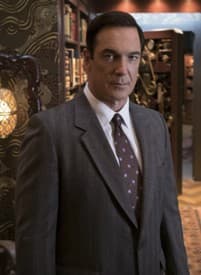
Lemony Snicket is the pen name of author Daniel Handler, known for his children's books featuring dark humor and whimsical storytelling. His series "A Series of Unfortunate Events" includes titles such as The Bad Beginning, The Reptile Room, The Wide Window, The Miserable Mill, The Austere Academy, and The Ersatz Elevator, which follow the misadventures of the Baudelaire orphans. Snicket's work has garnered a significant following and has been adapted into various media, including films and television.
Similar books
- Coraline
Neil Gaiman
4.0 (23k) average on GoodreadsFantasyFeatures a clever child protagonist facing a sinister, magical adult in a dark, atmospheric setting.
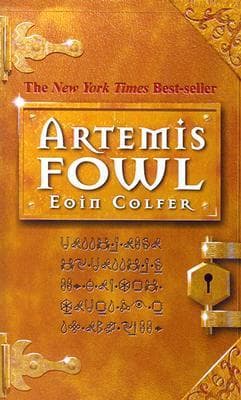
- Artemis Fowl
Eoin Colfer
3.9 (496k) average on GoodreadsFantasyShowcases brilliant, resourceful children in a world where adults are often outsmarted or misguided.
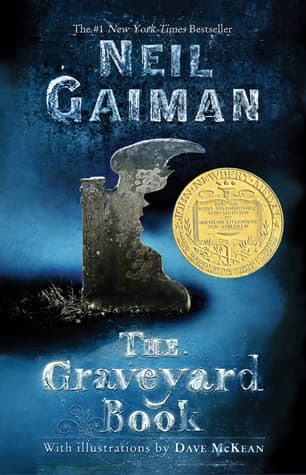
- The Graveyard Book
Neil Gaiman
4.1 (438k) average on GoodreadsFantasyFollows an orphaned child raised in unusual circumstances, constantly threatened by a malevolent force from their past.
- Harry Potter and the Sorcerer's Stone
J.K. Rowling
4.5 (7M) average on GoodreadsFantasyUnlike Harry Potter, where orphans find a benevolent magical world and powerful adult mentors who protect them, the Baudelaire orphans face a world of incompetent or malevolent adults and must rely solely on their own wits. Snicket actively deconstructs the 'chosen one' narrative, presenting children as victims of circumstance rather than destiny, and magic as absent.
- The Hunger Games
Suzanne Collins
4.3 (6.4M) average on GoodreadsFantasyIn a future where children fight to the death on live television, Katniss Everdeen volunteers for the arena, turning a death sentence into a fight for survival and a spark of rebellion.
- 1984
George Orwell
4.2 (3.1M) average on GoodreadsPoliticsIn a future where surveillance and thought control are absolute, a man's search for truth clashes with the Party, showing that hope can be a form of rebellion.




Enjoyed the summary?
A summary gives you the shape of the book. The book itself has the detail, the examples and the voice.
Find The Bad Beginning on AmazonAs an Amazon Associate, BookBrief earns from qualifying purchases. How we're funded