

Synopsis
Covers the whole plot, including the ending.
- Difficulty
- Medium
- Pacing
- Moderate
- Mood
- Atmospheric, Mythic, Eerie, Enchanting
- Read it if
- You love atmospheric historical fantasy rooted in folklore, strong female protagonists, and a touch of dark magic.
- Skip it if
- You prefer fast-paced action, clear-cut good vs. evil, or stories without magical realism elements.
The Bear and the Nightingale Plot Summary
Covers the whole plot, including the ending.
A Childhood Steeped in Spirits and Stories
Vasilisa Petrovna, known as Vasya, is born in the remote village of Lesnaya Zemlya, in northern Rus', during a harsh winter. Her mother, Marina, a noblewoman with a touch of magic, dies shortly after Vasya's birth, but not before prophesying that Vasya will have a difficult life and a powerful destiny. Vasya grows up with her siblings Sasha, Alyosha, Kolya, and Irina, cared for by her nurse, Dunya. Dunya tells them tales of ancient Russian folklore, particularly the 'chyerti' – house spirits, water spirits, and the Frost Demon, Morozko. Vasya, unlike her siblings, sees and interacts with these spirits, a gift she keeps secret, often leaving offerings for the domovoi, dvorevoi, and leshy.
A New Stepmother and the Arrival of Orthodoxy
After Marina's death, Vasya's father, Pyotr Vladimirovich, a boyar, feels lonely and worried for his children. He travels to Moscow at the Grand Prince's request to seek a new wife. There, he marries Olga Vladimirovna, the pious sister of the Grand Prince's wife, a woman devoted to the Russian Orthodox Church. Olga, accompanied by a zealous priest named Konstantin Nikonovich, arrives in Lesnaya Zemlya. Appalled by the villagers' continued adherence to pagan customs and household spirits, Olga immediately forbids such practices, viewing them as sinful idolatry. Konstantin reinforces this new doctrine, preaching against the 'demons' and the old ways.
The Spirits Wane and Misfortune Grows
Under Olga's strictures and Konstantin's sermons, the villagers, including Vasya's family, stop leaving offerings for the household spirits. Vasya, however, secretly tends to them, observing their growing weakness and sadness. The absence of traditional protections soon affects the physical world. Crops begin to fail, livestock fall ill, and the harsh Russian winter becomes more brutal. People sicken, and a sense of dread settles over Lesnaya Zemlya. Vasya notices more malevolent chyerti, such as the rusalka and the vodianoi, growing bolder, their power unchecked by the weakened good spirits.
Konstantin's Obsession and Vasya's Growing Isolation
The young priest, Konstantin, is drawn to Vasya, but his fascination is twisted by his religious fervor. He perceives her wildness, unusual eyes, and independence as signs of demonic influence, particularly after witnessing her unkempt hair and discerning gaze. He tries to 'save' her through prayer and increasingly harsh admonishments, viewing her as a temptress or a witch. Vasya finds Konstantin's presence unsettling and his fervent faith threatening to her world. Her stepmother, Olga, also sees Vasya as a rebellious, ungodly child, a constant source of frustration and a threat to her own spiritual well-being.
The Arrival of the Bear and the Nightmares
As the spiritual protections of the village dwindle, a greater evil begins to stir. The ancient, malevolent Bear, Medven, a force of chaos and destruction, starts to awaken. Its influence shows in terrifying nightmares that plague the villagers, particularly Olga. These dreams depict a monstrous bear, demanding offerings and sowing fear. The chyerti, particularly the more malevolent ones, grow in strength and number, actively harming people and animals. Vasya, sensing the true danger, tries to warn her family, but her warnings are dismissed as childish fantasies or, by Olga and Konstantin, as further evidence of her wickedness.
Vasya's Encounter with Morozko
Driven by her connection to the spirits and her concern for her village, Vasya ventures deeper into the forbidden forest. There, she encounters Morozko, the Frost Demon, the figure of legend from Dunya's tales. He is not entirely malevolent, but a powerful, ancient being of winter and death. Morozko, initially intrigued by Vasya's ability to see him and her fierce spirit, reveals to her the true nature of the escalating crisis: his brother, Medven, the Bear, is awakening, feeding on the fear and neglect of the old ways. Medven seeks to break free and reclaim his dominion, threatening to plunge the world into eternal winter and chaos.
The Sacrificial Offering and Vasya's Choice
The nightmares and misfortunes intensify, pushing Olga to desperation. Believing the village is cursed due to its pagan past and Vasya's perceived wickedness, Olga becomes convinced that a human sacrifice is necessary to appease the evil spirits. She targets Vasya, seeing her as a suitable offering. She manipulates Pyotr into agreeing to send Vasya to a convent or marry her off, effectively removing her from the village. The true threat of Medven looms, and Vasya realizes that simply leaving will not save her family or her home. She understands that she must confront the Bear directly, using her unique gifts.
The Confrontation in the Forest
Armed with her courage and the knowledge from Morozko, Vasya enters the forest to face Medven. She finds the ancient Bear, a monstrous, shadowy entity, growing in power. Morozko appears, torn between his desire to maintain the balance of nature and his familial bond with Medven. Vasya, using her ability to see and command spirits, rallies the weakened but still present good chyerti, including the domovoi and leshy, to her aid. She confronts Medven not with brute force, but with cunning and the power of belief, weakening his hold by restoring faith in the spirits and challenging his perception of his own power.
The Resolution and a New Path
Vasya, with Morozko's subtle assistance and her own growing power, defeats Medven, banishing him back to his slumber. The immediate threat to Lesnaya Zemlya is averted, and the nightmares cease. The villagers, still influenced by Olga and Konstantin, remain largely unaware of the true battle fought. Konstantin, witnessing Vasya's abilities, is terrified and further convinced of her demonic nature. Olga, though relieved, remains resentful. To protect her, and to allow her to fully embrace her destiny, Vasya's brother Sasha, now a monk, sends her a horse and encourages her to leave. Vasya, understanding she can no longer live a conventional life in the village, rides away, embracing her freedom and her connection to the magical world, ready to seek her own path.
The Bear and the Nightingale Characters
Vasilisa Petrovna (Vasya)
Protagonist
Wild, independent young woman with the gift of seeing spirits, destined for a unique path.
Vasya is the youngest daughter of Pyotr and Marina, born with a rare gift: the ability to see and interact with the 'chyerti'—the spirits of hearth, forest, and water. She is fiercely independent, preferring the wildness of the forest to domestic duties, and possesses an untamed spirit. Her connection to the old ways of Rus' sets her apart from her family and the increasingly Christianized village. She is courageous, compassionate, and unwavering in her commitment to protect her family and home, even when it means defying authority and facing ancient evils. Her blue eyes are a tell-tale sign of her connection to Morozko's lineage.
Relationships: Pyotr Vladimirovich (Loving father, but often bewildered by her); Olga Vladimirovna (Antagonistic stepmother, views her as a witch); Konstantin Nikonovich (Obsessed, fear-driven admirer/antagonist); Morozko (Mentor, protector, and enigmatic ally); Dunya (Loving nurse and storyteller); Sasha Petrovich (Supportive older brother, eventually a monk)
Morozko (The Frost Demon)
Supporting/Mentor
Ancient, powerful spirit of winter, death, and balance, with an ambiguous nature.
Morozko is the legendary Frost Demon, a powerful, ancient being associated with winter, death, and the natural world. He is not inherently evil, but a force of nature who maintains balance. He appears as a handsome, cold man with eyes like ice and a connection to the deepest parts of winter. He is the brother of Medven, the Bear, and has a complex relationship with the forces of chaos and order. Morozko is initially intrigued by Vasya, recognizing her unique lineage and abilities. He acts as a guide and protector, subtly assisting her in her quest, and represents the fading pagan beliefs of Rus'.
Relationships: Vasilisa Petrovna (Mentor, protector, and enigmatic ally); Medven (Brother and ancient adversary)
Olga Vladimirovna
Antagonist
Pious, city-bred noblewoman, Vasya's stepmother, who seeks to impose strict Christian order.
Olga is Pyotr's second wife, a devout and rigid noblewoman from Moscow, sister to the Grand Prince's wife. She is beautiful but cold, deeply religious, and terrified of the pagan 'demons' and superstitions of the rural village. She views Vasya's wildness and connection to the old ways as a direct affront to God and a source of sin. Her fear and piety lead her to forbid all offerings to the household spirits, inadvertently weakening the village's protections. She is tormented by nightmares sent by Medven, further fueling her conviction that Vasya is the source of evil.
Relationships: Pyotr Vladimirovich (Husband, whom she often manipulates); Vasilisa Petrovna (Antagonistic stepdaughter, views her as a witch); Konstantin Nikonovich (Confidant and fellow religious zealot)
Konstantin Nikonovich
Antagonist
Zealous young priest, tormented by his own desires and convinced of Vasya's demonic nature.
Konstantin is a charismatic but deeply troubled young priest who accompanies Olga to Lesnaya Zemlya. He is fiercely dedicated to the Orthodox Church and views the old pagan beliefs as the work of the devil. He is immediately drawn to Vasya, a fascination that quickly twists into obsession and fear, as he perceives her wild beauty and unusual gifts as demonic. He struggles with his own carnal desires and projects his internal conflicts onto Vasya, believing her to be a temptress or a witch who must be saved or destroyed. His sermons against the chyerti contribute significantly to their weakening.
Relationships: Vasilisa Petrovna (Obsessed, fear-driven admirer/antagonist); Olga Vladimirovna (Confidant and fellow religious zealot)
Pyotr Vladimirovich
Supporting
Boyar of Lesnaya Zemlya, Vasya's father, a kind but often overwhelmed leader.
Pyotr is the boyar (lord) of Lesnaya Zemlya, a loving father, and a generally good-hearted man. He is practical and loyal to his family and village. After the death of his first wife, Marina, he struggles with loneliness and the demands of raising his children. He brings Olga home, hoping to provide a mother for his children and bring order to his household, but he is caught between his love for his wild daughter, Vasya, and his new wife's rigid piety. He often fails to understand Vasya's unique gifts and struggles to protect her from Olga's condemnation and Konstantin's zeal.
Relationships: Vasilisa Petrovna (Loving father, but often bewildered by her); Olga Vladimirovna (Wife, whom he struggles to understand and appease); Marina (Deceased first wife)
Sasha Petrovich
Supporting
Vasya's eldest brother, who leaves to become a monk and later offers her freedom.
Sasha is Vasya's eldest brother, a kind and thoughtful young man. He is initially concerned about Vasya's wild nature but loves her deeply. He chooses to leave his family and become a monk in a monastery in Moscow, seeking a life of piety and spiritual devotion. Despite his monastic vows, he remains connected to his family and holds a deep affection for Vasya. He eventually becomes an important figure in Moscow and provides the means for Vasya to escape her fate in Lesnaya Zemlya, understanding her need for freedom.
Relationships: Vasilisa Petrovna (Supportive older brother); Pyotr Vladimirovich (Son)
Dunya
Supporting
Vasya's beloved nurse, a fount of traditional Russian folk tales and wisdom.
Dunya is the elderly nurse who raises Vasya and her siblings. She is a repository of ancient Russian folklore, sharing stories of the chyerti, Morozko, and other mythical beings with the children. She implicitly understands Vasya's unique connection to the spirit world, though she doesn't explicitly acknowledge it. Dunya represents the dying traditions and beliefs of the old Rus', and her stories provide Vasya with the framework to understand her own abilities and the dangers facing her village. She is a source of comfort and wisdom for Vasya.
Relationships: Vasilisa Petrovna (Loving nurse and storyteller)
Medven (The Bear)
Antagonist
Ancient, malevolent spirit of chaos and destruction, Morozko's brother.
Medven is the primordial Bear, an ancient and malevolent spirit of chaos, destruction, and winter, and Morozko's brother. He represents the wild, untamed, and destructive aspects of nature, and feeds on fear and neglect of the old ways. He is imprisoned but begins to awaken as the villagers abandon their traditions and the chyerti weaken. Medven sends terrifying nightmares to Olga and others, seeking to break free and plunge the world into an eternal, brutal winter. He is a force of raw, untamed power that Vasya must ultimately confront.
Relationships: Morozko (Brother and ancient adversary); Vasilisa Petrovna (Primary antagonist)
Marina
Mentioned
Vasya's deceased mother, a noblewoman with a touch of magic.
Marina is Vasya's mother, Pyotr's first wife. She is a noblewoman from Moscow, but her family lineage carries a touch of magic and a connection to the old ways, which she passes on to Vasya. She dies shortly after Vasya's birth, but not before prophesying Vasya's difficult life and powerful destiny. Her spirit sometimes appears to Vasya in dreams, offering cryptic guidance and warnings. Her heritage is crucial to understanding Vasya's abilities.
Relationships: Vasilisa Petrovna (Deceased mother, source of her magic); Pyotr Vladimirovich (Deceased first wife)
The Bear and the Nightingale Themes
Conflict Between Paganism and Christianity
The central conflict of the novel is the clash between the ancient pagan beliefs of rural Rus' and Russian Orthodox Christianity. Olga and Konstantin represent the zealous new faith, suppressing the worship of household spirits and traditional practices. This suppression weakens the protective chyerti, allowing malevolent forces like Medven to gain power. Vasya, with her ability to see and interact with these spirits, becomes the bridge and battleground for these two opposing worldviews, showing the dangers of abandoning ancient wisdom for rigid dogma. The book explores the idea that both belief systems have their place and power, and that balance is essential.
“For good or ill, the world was changing. It had been changing since the first prince rode out of Kiev to be baptized in the Dnieper, and it would change still more, now that the Grand Prince sat in Moscow. But the spirits of the hearth and the forest did not change. They remained.”
Identity and Self-Discovery
Vasya's journey is one of self-discovery and embracing her unique identity. Born with the gift of seeing spirits, she struggles to reconcile her true nature with the expectations of her family and society. Her wildness and independence are viewed as a curse by Olga and Konstantin, pushing her towards either marriage or the convent. Through her encounters with Morozko and her confrontation with Medven, Vasya learns to accept and use her powers. Her decision to ride out into the world at the end signifies her full embrace of her identity, free from societal constraints, and her determination to forge her own path.
“She was not a girl. She was a spirit of the woods, a witch, a creature of the night. She was Vasya.”
The Power of Belief and Stories
The novel shows the power of belief and the enduring legacy of stories. The strength of the chyerti, the benevolent household spirits, is tied to the villagers' belief in them and their offerings. When Olga and Konstantin forbid these practices, the spirits weaken, leading to misfortune. Dunya's fairy tales, initially just entertainment, become Vasya's guide to understanding the true nature of the world and its threats. The narrative suggests that belief, whether in pagan spirits or Christian saints, shapes reality, and that forgetting old stories leaves one vulnerable to the darkness they once warded off.
“The chyerti were fading. They were like a fire, and the people's belief was the fuel. If the fuel went out, so did the fire.”
Freedom vs. Confinement
A tension in the novel is the struggle between freedom and various forms of confinement. Vasya's wild spirit chafes against domestic expectations for women—marriage or the convent. Olga and Konstantin seek to confine Vasya, either physically or spiritually, believing her nature to be dangerous. The pagan spirits themselves are bound by the rules of their world and human beliefs. Vasya's ultimate choice to leave Lesnaya Zemlya on horseback symbolizes her rejection of societal confinement and her embrace of a life of freedom, charting her own course in a world that is both magical and dangerous.
“She had thought she wanted to be free. Now she was free. And it was a terrifying thing.”
Nature and the Supernatural
The Russian wilderness itself is a character in the story, intertwined with the supernatural. The harsh winters, deep forests, and frozen rivers are not merely settings but living entities with spirits—both benevolent and malevolent. The natural world reflects the spiritual health of the village; as the spirits wane, the land suffers. Vasya's deep connection to nature allows her to understand and navigate this supernatural world, recognizing the ancient magic that permeates every aspect of her world. The chyerti are manifestations of nature's forces, and their well-being is important to the survival of the human inhabitants.
“The forest was full of eyes tonight. Not human eyes, but the glints of things that watched from the shadows, things that had lived in the woods since before men had built their first fires.”
Plot Devices & Literary Techniques
The Chyerti (Household and Nature Spirits)
Anthropomorphic spirits representing elements of Russian folklore, whose power is tied to human belief.
The chyerti are a central plot device, personifying the ancient pagan beliefs of Rus'. They include the domovoi (house spirit), dvorevoi (yard spirit), bannik (bathhouse spirit), leshy (forest spirit), and vodianoi (water spirit), among others. Vasya's ability to see and interact with them is her unique gift. Their strength and ability to protect the village are directly linked to the villagers' belief in them and the offerings they receive. When Olga and Konstantin forbid these practices, the chyerti weaken, creating a vacuum that allows the more malevolent Medven to awaken and grow in power, driving the main conflict of the story.
Morozko's Prophecy/Guidance
The enigmatic Frost Demon's warnings and insights that steer Vasya's actions.
Morozko, the legendary Frost Demon, serves as a crucial guide and source of information for Vasya. His initial encounters with her are cryptic, but he gradually reveals the true nature of the threat posed by his brother, Medven. He explains the weakening of the chyerti and the consequences of the villagers' abandonment of the old ways. Morozko's warnings and the knowledge he imparts are essential for Vasya to understand her own powers, the ancient forces at play, and what steps she must take to protect her family and village. He represents a blend of mentor and dangerous, elemental force.
The Stepmother Trope
A classic fairy tale motif used to create conflict and force the protagonist's growth.
Olga, Vasya's stepmother, embodies the classic fairy tale 'evil stepmother' trope. Her arrival disrupts the family's peace and traditions, creating significant internal and external conflict for Vasya. Olga's rigid piety and fear-driven antagonism towards Vasya's wild nature and perceived 'witchcraft' force Vasya into isolation and ultimately compel her to act. This trope serves to heighten the stakes, provide a clear antagonist within the domestic sphere, and drive Vasya out of her comfort zone, propelling her towards her destiny and the confrontation with larger, supernatural evils. Her actions are indirectly responsible for the weakening of the village's protections.
The Awakening of Medven (The Bear)
A looming, ancient evil that serves as the primary external antagonist and catalyst for crisis.
Medven, the primordial Bear, is the ultimate external antagonist and a crucial plot device. His awakening, triggered by the neglect of the old ways and the weakening of the protective chyerti, introduces a tangible, existential threat to Lesnaya Zemlya. His influence manifests in nightmares, illness, and the intensification of winter's severity, creating a sense of escalating crisis. Medven represents chaos and destruction, and his presence forces Vasya to fully embrace her powers and confront him, bringing the magical and human conflicts to a dramatic head. His defeat signifies the temporary restoration of balance.
The Bear and the Nightingale Quotes
“Winter is a hungry beast, Vasya. It will eat your heart if you let it.”
“There is no such thing as a free gift. The forest always wants something back.”
“A girl is a bird without wings, who must make her home in a cage.”
“Fear is a cold companion, Vasya. It will keep you warm, but it will never truly comfort you.”
“The world is full of wonders, if you know how to look for them.”
“Some stories are meant to be told, and some are meant to be kept.”
“What is a man without his faith? A ship without a rudder.”
“Old ways die hard, especially when they live in the bones.”
“To be truly free, you must first know who you are.”
“Even the smallest spark can light a great fire.”
“The forest keeps its secrets well, but it also remembers.”
“Some people are born with fire in their blood, and some are born with ice.”
“A good horse, a good axe, and a good heart. That's all a man truly needs.”
“The world always finds a way to balance itself, Vasya. Even in the darkest winter.”
Quiz
10 questions on the plot and the characters. Each answer comes with a short explanation.
Question 1
What is the name of the winter demon Vasilisa's nurse tells stories about?
- Koschei
- Morozko (Frost)
- Leshy
- Domovoi
Show answer
B. Morozko (Frost) Vasilisa's nurse tells her the chilling story of Frost, the blue-eyed winter demon, also known as Morozko, who appears in the frigid night to claim unwary souls.
Question 2
What significant change occurs in Vasilisa's family after her mother dies?
- They move to Moscow to live with relatives.
- Her father brings home a new, devout stepmother.
- Vasilisa is sent away to a convent.
- The family begins to prosper financially.
Show answer
B. Her father brings home a new, devout stepmother. After Vasilisa's mother dies, her father goes to Moscow and brings home a new wife who is fiercely devout and city-bred, leading to significant changes in their household's customs.
Question 3
What is the new stepmother's immediate decree regarding the household spirits?
- She encourages more elaborate rituals for them.
- She ignores them entirely, focusing on Christian worship.
- She tries to appease them with new offerings.
- She appoints Vasilisa as the new caretaker of the spirits.
Show answer
B. She ignores them entirely, focusing on Christian worship. The new stepmother, being fiercely devout, forbids her family from honoring the household spirits, believing it to be pagan superstition.
Question 4
What are the consequences of the family ceasing to honor the household spirits?
- The family finds new wealth and prosperity.
- Crops begin to fail, evil creatures appear, and misfortune stalks the village.
- Vasilisa gains new magical abilities immediately.
- The villagers praise the stepmother for her piety.
Show answer
B. Crops begin to fail, evil creatures appear, and misfortune stalks the village. As a direct result of the family's acquiescence to the stepmother's decree, crops begin to fail, evil creatures of the forest creep nearer, and misfortune stalks the village, highlighting the importance of the old ways.
Question 5
How does Vasilisa's stepmother attempt to control her rebellious stepdaughter?
- By encouraging her to learn traditional domestic skills.
- By arranging a prestigious marriage for her.
- By grooming her for either marriage or confinement in a convent.
- By sending her away to live with distant relatives.
Show answer
C. By grooming her for either marriage or confinement in a convent. Vasilisa's stepmother grows ever harsher in her determination to groom her rebellious stepdaughter, seeing marriage or a convent as the only suitable paths for her.
Question 6
What unique gift does Vasilisa possess that she has long concealed?
- The ability to speak with animals.
- Exceptional skill in embroidery and weaving.
- Prophetic dreams about the future.
- Unusual strength and combat skills.
Show answer
A. The ability to speak with animals. Vasilisa possesses dangerous gifts she has long concealed, which include the ability to see and communicate with the spirits and creatures of the natural world, often manifested through her connection with animals.
Question 7
What is the primary motivation for Vasilisa to defy her family and use her hidden gifts?
- To escape the arranged marriage her stepmother plans.
- To prove her stepmother wrong about the old ways.
- To protect her family from a growing supernatural threat.
- To gain power and influence in the village.
Show answer
C. To protect her family from a growing supernatural threat. Vasilisa is compelled to defy even the people she loves and call on her dangerous gifts in order to protect her family from a threat that seems to have stepped from her nurse's most frightening tales.
Question 8
Which of the following best describes the central conflict in the story?
- A battle between rival noble families for land.
- The clash between ancient pagan beliefs and encroaching Christianity.
- Vasilisa's struggle to find a suitable husband.
- The village's fight against harsh winter conditions.
Show answer
B. The clash between ancient pagan beliefs and encroaching Christianity. The story is deeply rooted in the tension between the old Russian pagan traditions of honoring household and nature spirits, and the new, fiercely devout Christian faith brought by the stepmother, which forbids such practices.
Question 9
What role do the 'spirits of house and yard and forest' play in the narrative?
- They are malevolent entities that cause misfortune for the family.
- They are merely folklore, having no real impact on events.
- They are protective entities whose neglect leads to disaster.
- They are allies of the stepmother, helping her control Vasilisa.
Show answer
C. They are protective entities whose neglect leads to disaster. Wise Russians fear Frost and honor these spirits precisely because they are believed to protect homes from evil. Their neglect, due to the stepmother's decrees, directly correlates with the misfortune that befalls the village.
Question 10
Why does Vasilisa feel a particular connection to the stories of Frost and other spirits, unlike her siblings?
- She is the youngest and most impressionable sibling.
- She secretly believes her nurse is a witch.
- She senses that more hinges upon their rituals than anyone knows, indicating an innate connection to the supernatural world.
- She wants to use the stories to frighten her stepmother.
Show answer
C. She senses that more hinges upon their rituals than anyone knows, indicating an innate connection to the supernatural world. Vasilisa is unique in her family, sensing that more hinges upon their rituals than anyone knows, which foreshadows her ability to see and interact with these spirits, and her role in protecting her family.
The Bear and the Nightingale FAQ
What is 'The Bear and the Nightingale' about?
'The Bear and the Nightingale' is about Vasilisa (Vasya), a young woman in medieval Russia who possesses a rare gift: she can see and interact with the ancient spirits of house, yard, and forest. After her devout, city-bred stepmother forbids the family from honoring these spirits, misfortune plagues their village, forcing Vasya to embrace her dangerous abilities to protect her loved ones from an encroaching ancient evil.
Why should I read 'The Bear and the Nightingale'?
You should read 'The Bear and the Nightingale' for its enchanting blend of Russian folklore, rich historical detail, and a compelling coming-of-age story. It offers a unique protagonist in Vasya, who is fiercely independent and brave, navigating a world where ancient magic clashes with burgeoning Christianity, all wrapped in Arden's beautiful, evocative prose.
What is the background/setting of 'The Bear and the Nightingale'?
The story is set in medieval Russia, specifically in a remote village on the edge of the wilderness, where winter dominates for much of the year. The cultural backdrop is a fascinating blend of ancient Slavic pagan beliefs, with their household and nature spirits, and the more recently adopted Russian Orthodox Christianity, which views these older traditions as demonic.
What are the most memorable quotes?
One memorable quote is, 'She knew the world was wide, and she was a small thing in it, but she was not afraid.' This encapsulates Vasya's courageous spirit. Another is, 'A girl cannot be a horse, or a wolf, or a man. She is only a girl.' This highlights the societal expectations Vasya constantly defies.
What writing style does the author use?
Katherine Arden employs a lyrical and atmospheric writing style that is rich in sensory detail, particularly in describing the harsh Russian landscape and the magical elements. Her prose is evocative, drawing the reader into the fairy-tale quality of the narrative while maintaining a grounded historical feel.
What minor details add significant meaning?
The consistent presence of the small, protective domovoi (house spirit) in the background, often only visible to Vasya, underscores the quiet magic that exists in the world and the importance of honoring these unseen forces. His reactions often subtly hint at impending danger or the true nature of events.
What are some subtle foreshadowing moments?
Early mentions of Frost, the winter demon, by Vasya's nurse, as well as the quiet fear and respect shown by the villagers towards the forest, subtly foreshadow the increasing prominence of these supernatural elements. Also, Vasya's mother's dying words about her daughter's 'wild heart' and 'sight' hint at Vasya's unique destiny and connection to the spirit world.
What unexpected character connections exist?
The most significant unexpected connection is between Vasya and Morozko, the winter demon she was told to fear. Rather than a pure antagonist, he becomes a complex figure who is drawn to her unique nature and eventually helps her, revealing a deeper, ancient connection to the magical world.
What are unspoken character motivations?
Vasya's stepmother, Anna, is driven by a deep-seated fear and a desire for salvation, which manifests as extreme religious fervor. Her harsh treatment of Vasya stems not purely from malice, but from a desperate belief that Vasya's gifts are demonic and will condemn them all, as well as her own internal struggle with visions.
What psychological complexities do characters exhibit?
Vasya struggles with her identity, caught between societal expectations for women in medieval Russia and her innate magical abilities and wild spirit. Her stepmother, Anna, is tormented by visions and an inability to reconcile her faith with the lingering paganism of the world, leading to a fragile mental state and oppressive behavior.
What are the major emotional turning points?
A major emotional turning point is the death of Vasya's mother, which ushers in the stepmother and the subsequent suppression of the household spirits. Another is Vasya's decision to actively defy her stepmother and embrace her abilities, culminating in her confrontation with the ancient evil, Bear, and her deepening connection with Morozko.
How do relationship dynamics evolve?
The relationship between Vasya and her stepmother, Anna, devolves from initial wariness to open hostility, driven by Anna's fear and Vasya's defiance. Conversely, Vasya's relationship with Morozko, the winter demon, evolves from childhood fear to a complex, powerful bond of mutual understanding and respect, blurring the lines between human and spirit.
Which parts remain ambiguous or open-ended?
The exact nature of the relationship between Vasya and Morozko remains somewhat ambiguous at the end, hinting at a deep, powerful connection that transcends mortal love, but without a clear definition of their future. Vasya's ultimate path, as a woman of the wilderness and magic, is also left open, suggesting further adventures.
What are controversial scenes or decisions?
Vasya's decision to reject traditional roles, such as marriage or the convent, and embrace her wild, magical destiny might be seen as controversial within the historical context of the story. Her willingness to ally with Morozko, a figure traditionally feared as a demon, also challenges conventional morality.
'The Bear and the Nightingale' ending explained: how it ends & what it means
The book ends with Vasya defeating the ancient evil, the Bear, with the help of Morozko, the winter demon. Having saved her family and village, Vasya chooses to leave her home, riding a magical horse given to her by Morozko. This ending signifies her full acceptance of her unique identity and magical gifts, rejecting traditional human life to live as a 'child of the wild' with a deep, undefined connection to Morozko and the spirit world. It represents freedom and destiny fulfilled.
About the author

Katherine Arden is an American author known for her works of fiction that blend elements of fantasy and folklore. Her notable books include "The Bear and the Nightingale," "The Winter of the Witch," and "Small Spaces," which showcase her talent for creating immersive, atmospheric narratives. Arden's writing often draws on historical settings and rich cultural traditions.
Similar books
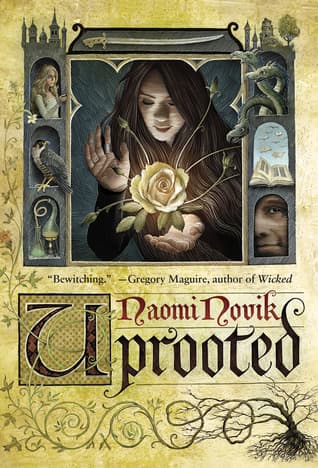
- Uprooted
Naomi Novik
4.1 (167k) average on GoodreadsFantasyFeatures a young woman with latent magic in a folklore-rich setting, dealing with ancient forest powers.
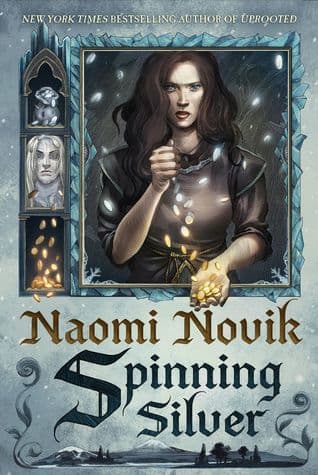
- Spinning Silver
Naomi Novik
4.2 (75k) average on GoodreadsFantasyAnother tale inspired by Eastern European folklore, focusing on strong women and winter magic.
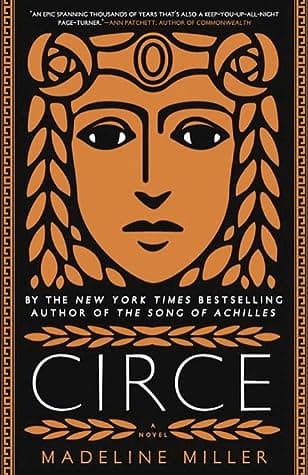
- Circe
Madeline Miller
4.3 (343k) average on GoodreadsFantasyA mythological retelling with a powerful female lead navigating her unique gifts and defying societal expectations.
- Harry Potter and the Sorcerer's Stone
J.K. Rowling
4.5 (7M) average on GoodreadsFantasyRescued from a miserable life under the stairs, an orphaned boy discovers he's a wizard destined for a magical school, where he uncovers a dangerous secret tied to the dark wizard who murdered his parents.
- The Hunger Games
Suzanne Collins
4.3 (6.4M) average on GoodreadsFantasyIn a future where children fight to the death on live television, Katniss Everdeen volunteers for the arena, turning a death sentence into a fight for survival and a spark of rebellion.
- 1984
George Orwell
4.2 (3.1M) average on GoodreadsPoliticsIn a future where surveillance and thought control are absolute, a man's search for truth clashes with the Party, showing that hope can be a form of rebellion.



Enjoyed the summary?
A summary gives you the shape of the book. The book itself has the detail, the examples and the voice.
Find The Bear and the Nightingale on AmazonAs an Amazon Associate, BookBrief earns from qualifying purchases. How we're funded