
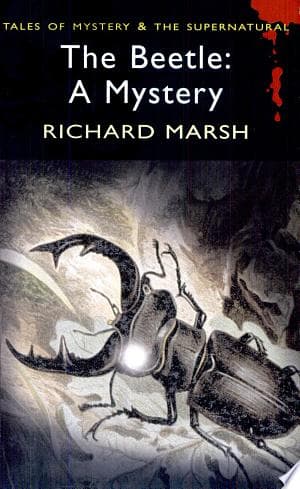
Synopsis
Covers the whole plot, including the ending.
- Difficulty
- Medium
- Pacing
- Moderate
- Mood
- Atmospheric, Suspenseful, Dark, Melodramatic
- Read it if
- You enjoy classic Victorian horror with a blend of supernatural mystery, melodrama, and a unique shapeshifting antagonist.
- Skip it if
- You prefer modern horror with fast pacing and clear-cut explanations, or are averse to dated social commentary.
The Beetle Plot Summary
Covers the whole plot, including the ending.
Robert Holt's Encounter with the Mysterious Beetle-Woman
Robert Holt, a clerk, is locked out of his lodgings and finds shelter in an empty Bloomsbury Square house. There, he meets a veiled figure who calls herself 'The Beetle'. This being has unsettling features and can change her appearance. She hypnotizes Holt and makes him write letters that involve important people in a strange, old cult. Holt is scared but also drawn to her. He sees her monstrous changes. He escapes, deeply troubled, but the experience connects him to an old Egyptian revenge plot.
Lady Arabella's Secret and Paul Lessingham's Past
Lady Arabella, a wealthy society woman, gets a disturbing letter from 'The Beetle'. It threatens her life and shows the creature knows about her past. Arabella was on an expedition to Egypt years ago. During that trip, a sacred ritual was disrespected, and a priestess of an ancient cult was wronged. Paul Lessingham, a Member of Parliament, was also on this expedition. Arabella lives in fear. She realizes the 'Beetle' wants revenge for the cult's mistreatment and fears for her reputation and life as the creature closes in.
Dolly Maude's Disappearance and Augustus Champnell's Investigation
Dolly Maude, a young woman engaged to Paul Lessingham, disappears from her home. Her disappearance is linked to 'The Beetle', making the events even stranger. Augustus Champnell, a detective, is hired to investigate. Champnell is at first skeptical of supernatural claims. He starts to connect Holt's story, Lady Arabella's fears, and Dolly's disappearance to one source: the shapeshifting 'Beetle' and its quest for revenge.
Holt's Return to the Empty House and Further Encounters
Still bothered by his first encounter, Robert Holt feels drawn back to the empty Bloomsbury Square house. He meets 'The Beetle' again, who continues to torment him and makes him her unwilling helper. During these meetings, Holt learns more about the creature's reasons: a strong desire for revenge against those who violated her Egyptian cult's sacred rites. He sees more of her grotesque transformations, confirming she is supernatural. Holt's mind is pushed to its limits as he tries to understand his horrifying situation and the rational world he knew. He becomes more involved in the Beetle's plans.
Lessingham's Confession and Arabella's Desperation
With the threats growing and Dolly gone, Paul Lessingham finally tells Champnell the full story of the Egyptian expedition. He admits he and Arabella disrespected a sacred tomb and a priestess. This started the Beetle's centuries-long revenge. Meanwhile, Lady Arabella, desperate from fear and the Beetle's presence, tries to leave London. However, 'The Beetle' is always there, appearing wherever Arabella goes, a constant reminder of coming danger. Arabella's mental state worsens as she sees her efforts are useless.
The Beetle's Pursuit of Lessingham
Lady Arabella is cornered, and 'The Beetle' focuses on Paul Lessingham. The creature uses its shapeshifting to enter Lessingham's life, appearing in different forms to torment him and remind him of his past actions. Lessingham becomes more paranoid. His public life falls apart under the mental attack. The Beetle's methods are subtle but terrifying, playing on his fears and loneliness. He struggles to convince others of the supernatural threat. The Beetle's actions often look like a clever human's work, making it hard for Champnell to understand the true enemy.
Dolly Maude's Imprisonment and Rescue Attempt
It is revealed that Dolly Maude is held captive by 'The Beetle' in a hidden room within the empty Bloomsbury house. The Beetle plans to use Dolly in its revenge, perhaps to sacrifice her or to torment Lessingham further. Robert Holt, despite his fear, feels a growing sense of responsibility for Dolly. Along with Augustus Champnell and Lessingham, a plan is made to rescue Dolly. This involves going into the house and facing the creature. The rescue attempt is dangerous, as the Beetle's powers and unpredictable nature make it a difficult opponent.
The Confrontation in the Empty House
The main characters, led by Champnell and Lessingham, with Holt's help, confront 'The Beetle' in the hidden rooms of the empty Bloomsbury house. The Beetle tells more about its old origins and its deep hatred, explaining it is an avenging spirit of the Egyptian cult. During the fight, the Beetle shows its full shapeshifting abilities, changing into monstrous forms, including a giant beetle, to scare and overpower its enemies. Dolly Maude is found, but the fight for her freedom and their lives is intense. The Beetle's supernatural strength and cleverness make it almost impossible to defeat.
The Beetle's Demise and the Aftermath
In a final fight, 'The Beetle' is defeated. The ancient creature, having gotten some revenge, collapses, its power seemingly gone. Dolly Maude is rescued but is deeply traumatized. Paul Lessingham and Lady Arabella deal with the mental effects of their past actions and the terrible results. Robert Holt, forced to be part of the supernatural events, is changed forever. His life is altered by his close encounters with the monstrous 'Beetle'. The experience leaves them all scarred, showing the power of old curses and how fragile the rational world is.
Principal Figures
The Beetle
Antagonist
An ancient Egyptian shapeshifting entity seeking revenge.
'The Beetle' is the primary antagonist, a mysterious and terrifying being of ancient Egyptian origin. It is a priestess of a forgotten cult, wronged centuries ago during a desecration of sacred rites. The Beetle possesses the ability to shapeshift, appearing as a beautiful, veiled woman, a monstrous insect, or other forms to achieve its goals. Its motivation is pure, relentless vengeance against those who wronged it and its cult, specifically Paul Lessingham and Lady Arabella. It operates with cunning and supernatural power, preying on the fears of its victims and demonstrating a profound knowledge of ancient magic and curses. It is a creature born of neither God nor man, an embodiment of retribution.
Relationships: Paul Lessingham (Primary target of revenge); Lady Arabella (Primary target of revenge); Robert Holt (Unwilling accomplice and victim of hypnosis)
Robert Holt
Protagonist/Witness
An impoverished clerk who becomes entangled in the Beetle's revenge.
Robert Holt is an impoverished and somewhat naive clerk whose life is turned upside down after his initial encounter with 'The Beetle'. He serves as an unwilling witness and a primary point-of-view character for much of the novel's supernatural events. Initially a victim of the Beetle's hypnotic powers, he is forced to write incriminating letters and becomes increasingly involved in the unfolding mystery. Despite his fear, he develops a sense of responsibility and empathy, particularly towards Dolly Maude, and ultimately aids in her rescue. His journey is one from mundane existence to confronting the terrifying supernatural, deeply scarring him.
Relationships: The Beetle (Captor/tormentor); Augustus Champnell (Informant and collaborator); Dolly Maude (Sympathetic acquaintance, aids in her rescue)
Paul Lessingham
Protagonist/Target
A Member of Parliament haunted by a past desecration in Egypt.
Paul Lessingham is a respected Member of Parliament and a man of standing in Victorian society. He is one of the primary targets of 'The Beetle's' revenge due to his involvement in the desecration of an ancient Egyptian cult's rites during an expedition years prior. He initially tries to deny or rationalize the supernatural events but is slowly forced to confront the truth of his past and the horrifying consequences. Lessingham's character represents the clash between rational Victorian society and the ancient, vengeful forces of the supernatural. He is engaged to Dolly Maude, making him even more vulnerable to the Beetle's schemes.
Relationships: The Beetle (Primary target of revenge); Lady Arabella (Accomplice in past crime, fellow target); Dolly Maude (Fiancée, victim of the Beetle); Augustus Champnell (Investigator and ally)
Lady Arabella
Supporting/Target
A beautiful socialite with a dark secret from an Egyptian expedition.
Lady Arabella is a beautiful and wealthy woman of high society, also a primary target of 'The Beetle's' vengeance. Like Lessingham, she was part of the fateful Egyptian expedition that desecrated the ancient cult. Arabella lives in constant fear, haunted by the Beetle's threats and its uncanny ability to appear wherever she goes. She is more immediately and openly terrified than Lessingham, often succumbing to hysteria and desperation. Her character highlights the psychological toll of the Beetle's torment, as her beauty and social standing offer no protection against the ancient curse. She desperately tries to escape, but to no avail.
Relationships: The Beetle (Primary target of revenge); Paul Lessingham (Accomplice in past crime, fellow target)
Dolly Maude
Supporting/Victim
Paul Lessingham's fiancée, who becomes a pawn in the Beetle's revenge.
Dolly Maude is the charming and innocent fiancée of Paul Lessingham. She represents purity and vulnerability, and her disappearance is a major plot point, serving to intensify the urgency of the investigation. Dolly becomes a pawn in 'The Beetle's' vengeful schemes, held captive in the empty house. Her capture directly impacts Lessingham, providing a strong emotional motivation for him to confront the entity. Though she is largely a victim, her presence is crucial to the plot, symbolizing the innocent caught in the crossfire of ancient curses and modern transgressions. She is eventually rescued, but deeply traumatized.
Relationships: Paul Lessingham (Fiancée); Robert Holt (Rescuer); The Beetle (Captor)
Augustus Champnell
Supporting
A shrewd private detective investigating the mysterious occurrences.
Augustus Champnell is a pragmatic and intelligent private detective hired to investigate the bizarre events surrounding Dolly Maude's disappearance and the threats to Lessingham and Arabella. Initially skeptical of any supernatural explanations, Champnell relies on logic and deduction. However, as he uncovers more evidence and witnesses the strange occurrences, he is gradually forced to accept the extraordinary nature of the case. He acts as the rational mind attempting to comprehend the irrational, providing a grounding perspective amidst the horror. Champnell is instrumental in piecing together the clues and formulating a plan to confront 'The Beetle'.
Relationships: Paul Lessingham (Client and ally); Robert Holt (Informant and ally)
Sydney Atherton
Mentioned
A friend of Robert Holt, providing initial lodging.
Sydney Atherton is a minor character, a friend of Robert Holt, who offers Holt temporary lodging after Holt is locked out of his own rooms. Atherton's role is brief but significant as his generosity inadvertently leads to Holt's fateful encounter with 'The Beetle' in the empty Bloomsbury house. He represents the mundane world from which Holt is abruptly pulled, highlighting the contrast between ordinary life and the extraordinary horror that unfolds.
Relationships: Robert Holt (Friend)
Themes & Insights
Revenge and Retribution
The main theme of 'The Beetle' is revenge, specifically the ancient Egyptian creature's quest for payback for disrespect shown to its cult. The Beetle's actions are driven by this desire. It seeks to punish Paul Lessingham and Lady Arabella over centuries. This theme suggests that some wrongs, especially against sacred powers, must be paid for, and that consequences will eventually arrive. The Beetle's persistence shows the unforgiving nature of old curses and the unavoidable results of past actions, no matter how much time passes. The story often reinforces that the past always catches up.
“Born of neither God nor man, it could change its shape at will, and it was bent on revenge for a crime committed against the devotees of an ancient religion.”
The Clash of Rationality and the Supernatural
The novel shows the conflict between Victorian society's growing belief in reason and the terrifying arrival of the supernatural. Characters like Augustus Champnell first think the strange events are delusions or tricks, relying on logical explanations. However, the 'Beetle's' impossible actions force them to face a reality beyond science. This theme reflects late-19th-century worries about the limits of human knowledge and the return of ancient, mystical forces in a supposedly modern age. The horror comes not just from the Beetle, but from the shattering of the characters' understanding of the world.
“It was a thing beyond human experience, a nightmare made flesh, and yet I knew it to be real.”
Identity and Transformation
The theme of identity is explored through 'The Beetle's' shapeshifting and how it challenges the human characters' fixed identities. The Beetle can appear as male or female, monstrous or beautiful, blurring what is real and what is seen. This unsettling fluidity reflects the disruption of the protagonists' own identities as they face a reality they cannot understand. Robert Holt, especially, changes from an ordinary clerk to someone marked by supernatural horror, his sense of self changed by his encounters with the changeable creature. The novel questions how stable identity is when facing the unknown.
“I saw him take a different shape before my eyes. His loose draperies fell about him...and there issued out of them a monstrous creature of the beetle tribe.”
Victorian Anxieties and Decadence
The novel reflects late-19th-century anxieties, especially fears of 'outsiders,' ancient cultures, and the era's perceived decay. The Egyptian setting and the 'Beetle's' foreign origins use contemporary fascinations and fears of colonialism and the unknown. The characters, like Lady Arabella and Paul Lessingham, represent upper society whose respectable lives hide past wrongs and moral failures. The Beetle's appearance from ancient Egypt and its targeting of these figures can be seen as a criticism of imperial overreach and the moral decay beneath a civilized surface, reflecting a society dealing with its own hidden problems.
“A creature of horror, 'born of neither God nor man', which can change its form at will. It is bent on revenge for a crime committed against the devotees of an ancient religion.”
Plot Devices & Literary Techniques
Shapeshifting
The Beetle's ability to change its form, creating terror and ambiguity.
The most prominent plot device is 'The Beetle's' ability to shapeshift, transforming between a beautiful, seductive woman, a monstrous insect, and other forms. This device serves multiple functions: it creates profound terror by making the antagonist unpredictable and unidentifiable; it allows the Beetle to infiltrate various social settings undetected; and it blurs the lines between reality and nightmare for the characters and the reader. The shifting forms also symbolize the instability of identity and the pervasive, insidious nature of the ancient curse, making the threat feel omnipresent and inescapable.
Hypnosis/Mind Control
Used by the Beetle to manipulate victims and gather information.
The Beetle frequently uses hypnosis or some form of mind control to manipulate its victims, most notably Robert Holt. This device allows the entity to force characters into acting against their will, compelling them to write letters, reveal secrets, or perform other tasks that further its vengeful agenda. It highlights the Beetle's supernatural power over human will and adds to the characters' sense of helplessness and violation. The use of hypnosis also creates ambiguity, as victims struggle to distinguish between their own actions and those forced upon them, blurring the lines of culpability and sanity.
The Empty House
A central, liminal setting for the supernatural encounters.
The empty house in Bloomsbury Square serves as a crucial plot device and symbolic setting. It is the initial site of Robert Holt's encounter with the Beetle and becomes a recurring location for the entity's activities and the imprisonment of Dolly Maude. As a derelict, unoccupied space in the heart of London, it symbolizes a liminal zone where the mundane world gives way to the supernatural. Its emptiness and forgotten nature reflect the ancient, forgotten cult from which the Beetle originates, creating an eerie contrast with the bustling Victorian city outside and serving as a hidden nexus for the unfolding horror.
Ancient Curse/Prophecy
The foundational motivation for the Beetle's actions.
The entire plot is driven by an ancient Egyptian curse or prophecy, activated by the desecration of a sacred tomb and priestess by Paul Lessingham and Lady Arabella. This plot device provides the Beetle's motivation and justifies its seemingly supernatural powers and centuries-long quest for revenge. It establishes a sense of inescapable destiny and highlights the idea that actions in the distant past can have terrifying, far-reaching consequences in the present. The curse serves as a powerful, immutable force that transcends modern understanding, making the Beetle's vengeance feel both inevitable and profoundly terrifying.
The Beetle Quotes
“I am the Beetle! I am the Beetle! I am the Beetle!”
“There are things in this world which are not to be explained by any known laws.”
“I have seen the Beetle, and I know that it is not of this earth.”
“The power of the Beetle is the power of the unknown.”
“In the darkness, the Beetle moves unseen, and in the light, it is but a shadow.”
“To look upon the Beetle is to look upon madness.”
“The Beetle does not kill; it consumes the soul.”
“There is no escape from the Beetle, for it is everywhere and nowhere.”
“The Beetle is a curse upon this house, and upon all who dwell within.”
“In the silence of the night, the Beetle whispers secrets that drive men to despair.”
“The Beetle is not a beast, but a force of nature, wild and untamed.”
“To understand the Beetle is to understand the darkness within us all.”
“The Beetle's gaze is like a poison, seeping into the mind and corrupting all thought.”
“In the end, the Beetle is but a reflection of our own deepest terrors.”
Quiz
10 questions on the plot and the characters. Each answer comes with a short explanation.
Question 1
What is the primary motivation driving the Beetle's actions in London?
- To spread a plague across the city
- To steal ancient Egyptian artifacts
- Revenge for a crime against ancient religious devotees
- To find a new host body to inhabit permanently
Show answer
C. Revenge for a crime against ancient religious devotees The Beetle seeks revenge for a crime committed against followers of an ancient Egyptian religion, as described in the book's summary. This drives its pursuit of victims throughout London.
Question 2
From which country does the Beetle originate according to the book's description?
- India
- Egypt
- Transylvania
- Greece
Show answer
B. Egypt The summary explicitly states the Beetle comes 'From out of the dark and mystic Egypt,' establishing its ancient Egyptian origins.
Question 3
What notable achievement did 'The Beetle' have upon its original publication?
- It won the first horror novel award in Britain
- It was immediately adapted into a successful stage play
- It once outsold Bram Stoker's 'Dracula'
- It was banned for its controversial themes
Show answer
C. It once outsold Bram Stoker's 'Dracula' The summary mentions that Richard Marsh's novel 'once outsold Dracula,' highlighting its initial commercial success compared to another famous horror novel of the era.
Question 4
What ability does the Beetle possess that makes it particularly terrifying?
- It can read minds
- It can change its form at will
- It can control the weather
- It can become invisible
Show answer
B. It can change its form at will The summary describes the Beetle as 'a creature of horror...which can change its form at will,' including transforming into a monstrous beetle, making it unpredictable and frightening.
Question 5
How is the Beetle described in terms of its origin?
- A demon summoned by occult rituals
- Born of neither God nor man
- A cursed human transformed by magic
- An alien being from another world
Show answer
B. Born of neither God nor man The summary quotes the Beetle as being 'born of neither God nor man,' emphasizing its unnatural and otherworldly nature that defies conventional categories.
Question 6
What literary period does 'The Beetle' reflect, according to the summary?
- The Romantic era
- The Edwardian age
- Late Victorian society (fin de siècle)
- The Modernist movement
Show answer
C. Late Victorian society (fin de siècle) The summary describes the novel as 'a fin de siècle melodrama embracing the fears and concerns of late Victorian society,' placing it at the end of the 19th century.
Question 7
What type of creature does the Beetle transform into during one described transformation?
- A wolf-like beast
- A serpent
- A monstrous creature of the beetle tribe
- A shadowy phantom
Show answer
C. A monstrous creature of the beetle tribe The summary includes a quote: 'there issued out of them a monstrous creature of the beetle tribe...' indicating one of its forms is specifically beetle-like.
Question 8
Which of the following best describes the Beetle's approach to its victims?
- It randomly attacks people in London
- It pursues them without mercy
- It only targets those who believe in ancient religions
- It seeks to convert victims to its cause
Show answer
B. It pursues them without mercy The summary states the Beetle 'pursues its victims without mercy,' highlighting its relentless and cruel nature in seeking revenge.
Question 9
What aspect of the novel does the introduction by David Stuart Davies likely provide?
- A sequel to the original story
- Critical analysis and historical context
- A summary of Richard Marsh's other works
- A disclaimer about the horror content
Show answer
B. Critical analysis and historical context Introductions in classic reprints, like this Wordsworth edition, typically offer critical insights, background on the author, and historical context, helping modern readers understand the book's significance.
Question 10
Why might 'The Beetle' resonate with fears of late Victorian society as suggested in the summary?
- It reflects anxieties about industrialization
- It taps into fears of the supernatural and foreign influences
- It critiques the British monarchy
- It promotes scientific rationalism over superstition
Show answer
B. It taps into fears of the supernatural and foreign influences As a fin de siècle horror novel, 'The Beetle' likely explores fears common in late Victorian times, such as the supernatural, ancient curses, and threats from foreign cultures like Egypt, blending them into its narrative.
The Beetle FAQ
What is 'The Beetle' by Richard Marsh about?
The novel follows a shape-shifting creature from ancient Egypt that arrives in Victorian London seeking revenge for a crime against its religious cult. It pursues multiple victims, including politician Paul Lessingham, journalist Robert Holt, and scientist Sydney Atherton, using its ability to transform into a monstrous beetle and other forms to terrorize them.
Why should I read 'The Beetle'?
As a horror masterpiece that once outsold 'Dracula', it offers a unique blend of fin de siècle melodrama, psychological terror, and social commentary on Victorian fears. Its shape-shifting antagonist and multi-perspective narrative create a compelling, atmospheric thriller that explores themes of imperialism, gender, and the occult.
What is the background/setting of 'The Beetle'?
The story is set in late Victorian London, with flashbacks to Egypt, reflecting Britain's colonial interests. The urban setting contrasts with the ancient, mystical origins of the Beetle, highlighting tensions between modernity and superstition, science and the supernatural in 1890s society.
What are the most memorable quotes from 'The Beetle'?
Key quotes include the Beetle's declaration, 'I am born of neither God nor man,' and descriptions of its transformations, such as, 'I saw him take a different shape before my eyes... there issued out of them a monstrous creature of the beetle tribe.' These lines emphasize its otherworldly horror and shape-shifting nature.
What writing style does Richard Marsh use in 'The Beetle'?
Marsh employs a multi-perspective, epistolary-style narrative with chapters told from different characters' viewpoints, creating suspense and psychological depth. His prose blends melodramatic horror with social realism, using vivid imagery to depict the Beetle's transformations and the characters' terror.
What minor details add significant meaning to 'The Beetle'?
Details like the Beetle's use of hypnosis and ancient Egyptian symbols underscore its mystical power and the threat of foreign 'invasion' to Victorian norms. The recurring motif of beetles in London's urban environment subtly hints at the creature's pervasive, insidious presence.
What are some subtle foreshadowing moments in 'The Beetle'?
Early references to Paul Lessingham's past in Egypt and his uneasy demeanor foreshadow his connection to the Beetle's revenge. Robert Holt's initial encounter with the creature in a dimly lit room hints at the pervasive, unseen danger that will escalate throughout the novel.
What unexpected character connections exist in 'The Beetle'?
Paul Lessingham's youthful transgression in Egypt—desecrating a sacred site—directly links him to the Beetle's quest for vengeance, connecting the political elite to ancient occult forces. This tie reveals how personal past actions have far-reaching consequences in the narrative.
What are unspoken character motivations in 'The Beetle'?
Paul Lessingham is driven by a desire to conceal his past shame and protect his political career, while the Beetle's motivation extends beyond mere revenge to enforcing ancient religious laws. Sydney Atherton's scientific curiosity masks a deeper fascination with the supernatural that puts him at risk.
What psychological complexities do characters exhibit in 'The Beetle'?
Robert Holt displays trauma and vulnerability after being hypnotized and controlled by the Beetle, reflecting Victorian anxieties about loss of agency. The Beetle itself embodies a complex mix of vengeance, religious fervor, and shape-shifting identity, challenging human notions of morality and form.
What are the major emotional turning points in 'The Beetle'?
Key moments include Robert Holt's initial capture and hypnosis by the Beetle, which instills dread, and Paul Lessingham's confession of his Egyptian crime, revealing the source of the horror. The climax, as the characters confront the Beetle, shifts from fear to desperate resistance.
How do relationship dynamics evolve in 'The Beetle'?
Relationships shift from suspicion to alliance as victims like Lessingham, Holt, and Atherton unite against the Beetle, overcoming social divisions. The Beetle's predatory interactions with its targets evolve from stealthy pursuit to overt, violent confrontation, heightening the stakes.
Which parts of 'The Beetle' remain ambiguous or open-ended?
The exact nature and origins of the Beetle—whether it is a supernatural entity, a psychological manifestation, or a product of ancient science—are left ambiguous. The fate of some characters and the full extent of the Beetle's powers are not fully resolved, inviting interpretation.
What are controversial scenes or decisions in 'The Beetle'?
Paul Lessingham's desecration of the Egyptian temple and his subsequent cover-up spark debate on colonial arrogance and moral responsibility. The Beetle's use of hypnosis and shape-shifting to violate personal autonomy raises ethical questions about power and vengeance.
'The Beetle' ending explained: how it ends & what it means
The novel concludes with the Beetle's apparent defeat, but its ultimate fate is ambiguous, leaving room for its possible return. This ending suggests that Victorian society's fears of the unknown and consequences of imperialism cannot be fully eradicated, echoing fin de siècle anxieties.
About the author
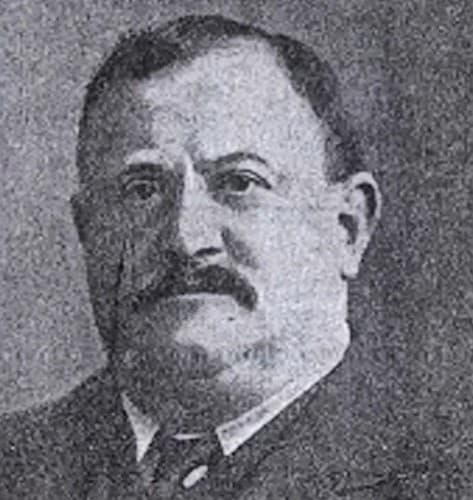
Richard Marsh was a British author active in the late 19th and early 20th centuries, primarily known for his fiction. His notable work, "The Beetle," published in 1897, is a supernatural thriller that reflects the era's fascination with the occult and the unknown. Marsh's writing often explores themes of identity and transformation.
Similar books
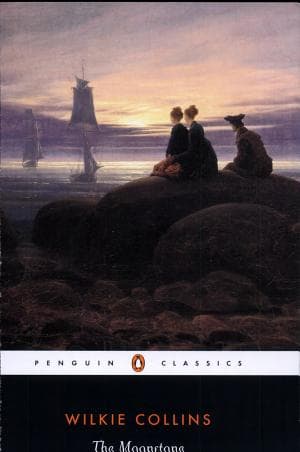
- The Moonstone
Wilkie Collins
3.9 (79k) average on GoodreadsHistorical FictionA Victorian mystery novel involving ancient curses and exotic artifacts, albeit without the supernatural horror element.
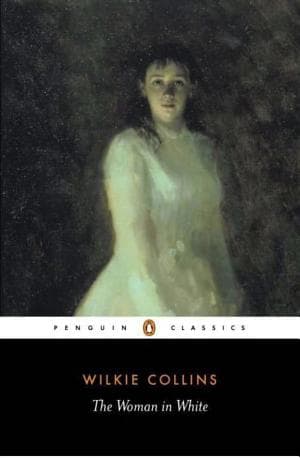
- The Woman in White
Wilkie Collins
4.0 (132k) average on GoodreadsHistorical FictionWhile The Woman in White (1860) is a detective novel rather than supernatural horror, both it and The Beetle employ multi-narrative structures to unfold their mysteries. Collins's novel is renowned for its meticulous plotting, intricate character development, and suspenseful revelation of truth through diverse witness accounts. The Beetle utilizes a similar technique but often struggles with the same level of narrative cohesion and character depth, sometimes sacrificing clarity for sensationalism. Collins's work is generally considered a masterclass in Victorian suspense, with a more controlled and sophisticated narrative voice.
- Angels & Demons
Dan Brown
3.9 (2.7M) average on GoodreadsThrillerA Harvard symbologist races through Rome's ancient sites, deciphering cryptic clues to unmask the Illuminati and stop a vengeful plot to destroy the Vatican with a stolen antimatter weapon.
- Gone Girl
Gillian Flynn
4.1 (2.3M) average on GoodreadsThrillerA wife's sudden disappearance on her fifth anniversary reveals a web of lies and psychological warfare, exposing the secrets within a seemingly perfect marriage.
- The Girl on the Train
Paula Hawkins
3.9 (2.1M) average on GoodreadsThrillerA woman’s fascination with a seemingly perfect couple she watches from her daily train commute leads her into a dark investigation when she witnesses something that shatters their idyllic image.
- The Da Vinci Code
Dan Brown
3.9 (1.9M) average on GoodreadsThrillerA symbologist and a cryptologist race through European landmarks, deciphering ancient codes and uncovering a conspiracy that could rewrite the foundations of Christianity.




Enjoyed the summary?
A summary gives you the shape of the book. The book itself has the detail, the examples and the voice.
Find The Beetle on AmazonAs an Amazon Associate, BookBrief earns from qualifying purchases. How we're funded