
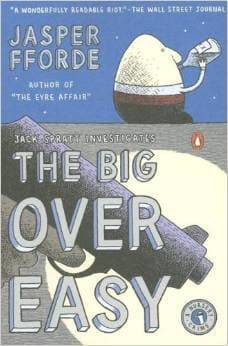
Synopsis
Covers the whole plot, including the ending.
- Difficulty
- Medium
- Pacing
- Moderate
- Mood
- Humorous, Witty, Absurdist, Mysterious, Quirky
- Read it if
- You enjoy clever, pun-filled mysteries that blend nursery rhyme characters with gritty detective work and absurd humor.
- Skip it if
- You prefer serious, grounded mysteries without fantastical elements or a strong comedic tone.
The Big Over Easy Plot Summary
Covers the whole plot, including the ending.
The Shattered Celebrity
The story begins in the overcast city of Reading, where Detective Inspector Jack Spratt of the Nursery Crime Division (NCD) is called to a gruesome death. Humpty Stuyvesant Van Dumpty III, a disgraced D-class nursery celebrity, ex-convict, and minor baronet, has fallen from a wall and shattered. The initial assessment suggests an accidental fall, but Spratt's intuition, from years of bizarre nursery-rhyme crimes, tells him otherwise. To complicate matters, Humpty's estranged wife, Felicity, is found dead at home, an apparent suicide, with a note confessing to pushing Humpty. The case is quickly closed by Spratt's superiors, who want to avoid another public relations disaster like the failed Three Little Pigs murder trial, but Spratt and his new assistant, Detective Sergeant Mary Mary, are not convinced.
A Reluctant Investigation
Against the wishes of his superior, Chief Inspector Frieda M. N. P. 'Mavis' Peep, Spratt begins a quiet investigation into Humpty's death. Mary Mary, at first by-the-book, quickly shows a sharp mind and keen observation skills, becoming a valuable asset. They discover Humpty was involved in shady dealings, including money laundering and smuggling. They interview potential witnesses and associates, including the enigmatic Mr. Gold, a notorious fence, and Humpty's former business partners. The more they dig, the more inconsistencies emerge about both Humpty's fall and Felicity's suicide, suggesting a more elaborate plot. The official narrative, pushed by the department, begins to fall apart under their scrutiny.
The Chiropody Connection
Spratt and Mary look deeper into Humpty's past, finding his involvement in 'International Chiropody,' a business that, on closer inspection, seems to be a front for something more illicit. They learn Humpty had a vast network of contacts and was deeply involved in Reading's underworld. Their investigation leads them to question the 'chiropody' services, which often involved high-value transactions and unusual clients. They also uncover that Humpty was trying to distance himself from some of his more dangerous associates, hinting at a power struggle within his criminal enterprise. This part of the case points to a larger, more sophisticated criminal organization in Reading.
Beanstalks and Bullion
The investigation takes an even stranger turn when Spratt and Mary find a connection between Humpty's activities and the illegal growing and distribution of magical beanstalks. These beanstalks are not just agricultural curiosities; they are used to smuggle large amounts of gold bullion across international borders. Humpty, it seems, was a key player in this operation. The team learns the beanstalks are grown in secret locations and provide a direct, untraceable route for illicit goods. This discovery raises the crime's scope from a simple murder to a complex international conspiracy, making the NCD's involvement critical and dangerous.
Titans and Asylum
As Spratt and Mary uncover the smuggling ring, they find another layer of the conspiracy: the illegal trafficking of Titans seeking asylum. These mythical giants, displaced from their homeland, are exploited and smuggled into Reading, often through the same beanstalk routes used for bullion. Humpty knew about, and possibly was involved in, this sensitive operation. The Titans in Reading create significant political and social tensions, and the NCD must be careful to avoid a diplomatic incident. The exploitation of these vulnerable beings adds a moral dimension to the already complex criminal enterprise, further motivating Spratt and Mary to find the truth.
The JellyMan Cometh
Throughout their investigation, Spratt and Mary hear whispers of 'the JellyMan' coming to town. This enigmatic figure, whose identity and purpose remain a mystery, is a major player in the criminal underworld, feared by even the most hardened criminals. His impending arrival creates a sense of dread and urgency for the detectives, as they realize he is likely connected to Humpty's murder and the larger conspiracy. The JellyMan's reputation suggests a ruthless individual who will stop at nothing to protect his interests. His arrival signals that the stakes are about to get much higher for Spratt and Mary.
A Web of Deceit
As Spratt and Mary get closer to the truth, they face increasing pressure from their superiors, particularly Chief Inspector Peep, who wants to keep the escalating scandal quiet. They realize there is a mole within the NCD, leaking information to criminals and sabotaging their efforts. This internal betrayal makes their work even more dangerous, forcing them to be cautious about who they trust. The detectives must navigate misinformation and misdirection, constantly questioning motives and allegiances within their own department. The stakes rise as they realize the corruption extends beyond the criminal underworld.
The Confrontation
Through diligent detective work and connecting clues, Spratt and Mary finally unmask the true mastermind behind Humpty's murder, the gold smuggling, and the Titan trafficking. The revelation is shocking, exposing a figure previously thought beyond suspicion. The confrontation is tense and dangerous, as the mastermind, revealed to be the seemingly innocuous Miss Havisham (now a powerful criminal overlord), tries to silence Spratt and Mary. The climax involves a perilous chase and a battle of wits, where Spratt's unconventional methods and Mary's sharp mind are tested against a formidable adversary who has infiltrated the highest levels of society.
Justice and Lingering Questions
In a climactic sequence, Spratt and Mary expose Miss Havisham's vast criminal enterprise and bring her and her key accomplices, including the JellyMan, to justice. Humpty's murder is solved, revealing a complex web of betrayal and greed. While the immediate case is closed, the larger implications of the Titan situation, the continued existence of illegal beanstalks, and the widespread corruption within Reading's institutions leave questions. The NCD gains respect, but the precarious balance between the 'real' world and the nursery rhyme world remains fragile. Spratt and Mary, having proven their worth, prepare for the next bizarre case Reading will inevitably throw their way.
The Aftermath and Loose Ends
With Miss Havisham and the JellyMan apprehended, Reading breathes a tentative sigh of relief, though the city remains overcast. The NCD receives a rare commendation, boosting its profile within the police department. Spratt and Mary reflect on the extraordinary events, acknowledging the strange nature of their work. While the major criminal network is dismantled, the novel hints at other nefarious elements and the constant struggle to maintain order in a world where nursery rhymes are literal and often deadly. The story ends with Spratt and Mary's partnership solidified, ready for the next challenge, knowing that in Reading, the bizarre is always just around the corner.
Principal Figures
Detective Inspector Jack Spratt
Protagonist
A cynical, unconventional detective leading the Nursery Crime Division.
Jack Spratt is the lead detective of the Nursery Crime Division, a unit dedicated to solving crimes involving nursery rhyme characters. He is a weary, often cynical individual, burdened by past failures (like the Three Little Pigs case) and the sheer absurdity of his job. Despite his jaded exterior, he possesses a keen intellect, an unwavering sense of justice, and an intuitive knack for connecting seemingly unrelated clues. He thrives on challenging conventional wisdom and often butts heads with his superiors. His personal life is hinted at as being somewhat messy, contributing to his world-weary demeanor.
Relationships: Detective Sergeant Mary Mary (professional partner, developing mutual respect); Chief Inspector Frieda M. N. P. 'Mavis' Peep (antagonistic superior); Humpty Stuyvesant Van Dumpty III (victim in his primary case)
Detective Sergeant Mary Mary
Protagonist/Supporting
Spratt's diligent and observant new assistant, initially by-the-book.
Mary Mary is Jack Spratt's newly assigned assistant. Initially, she is a by-the-book, meticulous, and somewhat naive officer, eager to prove herself and follow established procedures. However, she quickly adapts to the bizarre realities of the NCD and demonstrates an impressive capacity for observation, deduction, and quick thinking. Her methodical approach and sharp eye for detail complement Spratt's more intuitive and unconventional style. She is a quick learner and proves to be a loyal and indispensable partner, often providing the grounded perspective Spratt sometimes lacks. She represents a fresh perspective in the jaded NCD.
Relationships: Detective Inspector Jack Spratt (professional partner, developing mutual respect); Chief Inspector Frieda M. N. P. 'Mavis' Peep (superior)
Humpty Stuyvesant Van Dumpty III
Victim
The murdered D-class nursery celebrity whose death sets the plot in motion.
Humpty Stuyvesant Van Dumpty III is the central victim of the murder mystery. He is a disgraced D-class nursery celebrity, minor baronet, ex-convict, and former millionaire philanthropist. Despite his shattered state, his past life is gradually revealed through the investigation. He was a complex character: charming yet manipulative, involved in legitimate and highly illicit businesses, including money laundering, gold smuggling, and connections to Titan trafficking. His wealth and influence had dwindled, leaving him in a precarious position, making him a target for various factions within Reading's underworld. His death is the catalyst for the entire narrative.
Relationships: Felicity Van Dumpty (estranged wife, initially framed for his murder); Mr. Gold (business associate/fence); Miss Havisham (business associate/eventual mastermind)
Chief Inspector Frieda M. N. P. 'Mavis' Peep
Antagonist/Supporting
Spratt's exasperated superior, focused on public image and avoiding scandal.
Chief Inspector Peep is Spratt's long-suffering superior, perpetually exasperated by his unconventional methods and the NCD's tendency to attract public scrutiny. She is a bureaucrat first and foremost, deeply concerned with the police department's public image and avoiding any further scandals, especially after the disastrous Three Little Pigs trial. Peep often clashes with Spratt, preferring quick, easy answers over thorough, complex investigations. While not inherently malicious, her desire for order and her fear of bad publicity make her an obstacle to Spratt and Mary's pursuit of justice, often forcing them to work unofficially.
Relationships: Detective Inspector Jack Spratt (subordinate, often at odds with her); Detective Sergeant Mary Mary (subordinate)
Miss Havisham
Antagonist
The seemingly harmless former teacher, revealed as a criminal mastermind.
Miss Havisham, initially appearing as a seemingly innocuous, if eccentric, former teacher, is revealed to be the cunning and ruthless mastermind behind the entire criminal enterprise. She is exceptionally intelligent, manipulative, and has meticulously built a vast network involved in gold smuggling, Titan trafficking, and other illicit activities, using her unassuming facade as a cover. Her motives are driven by power and control, and she views others as pawns in her elaborate schemes. Her transformation from a literary character known for unrequited love to a criminal overlord is a key twist in the narrative, highlighting the dark underbelly of Reading.
Relationships: Humpty Stuyvesant Van Dumpty III (business associate, whom she eventually orchestrates the murder of); The JellyMan (enforcer/associate)
The JellyMan
Antagonist/Supporting
A feared enforcer and key figure in the criminal underworld.
The JellyMan is a mysterious and feared figure in Reading's criminal underworld. He acts as an enforcer and a vital cog in Miss Havisham's criminal machine. His name strikes fear into the hearts of other criminals, suggesting a ruthless and efficient operator. While his exact identity and origins are initially vague, he is clearly a significant player, responsible for carrying out the more violent and intimidating aspects of the syndicate's operations. His impending arrival creates a sense of urgency and danger for Spratt and Mary, as he represents the physical threat posed by the criminal network.
Relationships: Miss Havisham (enforcer/subordinate); Humpty Stuyvesant Van Dumpty III (victim's associate, involved in his death)
Mr. Gold
Supporting
A notorious fence and informant, providing cryptic clues.
Mr. Gold is a notorious fence and a key informant for Spratt, operating in the grimy underbelly of Reading. He deals in stolen goods and information, often speaking in riddles or half-truths. While he is a criminal, he operates under his own code and occasionally provides Spratt with valuable, albeit cryptic, clues. He represents the morally ambiguous figures that Spratt often has to deal with to get information. Mr. Gold is a survivor in a dangerous world, always looking out for his own interests but also possessing a grudging respect for Spratt's tenacity.
Relationships: Detective Inspector Jack Spratt (informant/contact); Humpty Stuyvesant Van Dumpty III (business associate/client)
Felicity Van Dumpty
Mentioned/Supporting
Humpty's estranged wife, initially framed for his murder.
Felicity Van Dumpty is Humpty's estranged wife, found dead in an apparent suicide shortly after Humpty's murder. She is initially framed as his killer, with a suicide note confessing to the crime. However, Spratt and Mary quickly doubt this narrative. Felicity's history with Humpty was tumultuous, marked by his philandering and their financial troubles. Her death serves as a crucial red herring, designed to close the case quickly and divert attention from the real perpetrators. Her tragic end highlights the ruthless efficiency of the criminal organization at play.
Relationships: Humpty Stuyvesant Van Dumpty III (estranged wife, victim of a cover-up)
The Three Little Pigs
Mentioned
Infamous defendants from a previous NCD case, whose trial serves as a departmental cautionary tale.
The Three Little Pigs are infamous figures from a previous high-profile NCD case, in which they were accused of murdering Mr. Wolff (the Big Bad Wolf). The NCD failed to secure a conviction, leading to public ridicule and departmental embarrassment. Their case is frequently referenced by Chief Inspector Peep as a cautionary tale, demonstrating the NCD's perceived incompetence and the need to avoid similar public relations disasters. While they do not appear physically in the story, their legacy casts a long shadow over Spratt and the NCD, influencing departmental decisions and creating pressure to quickly close the Humpty Dumpty case.
Relationships: Detective Inspector Jack Spratt (previous adversary/case subject); Mr. Wolff (alleged victim in their past trial)
Themes & Insights
The Disillusionment of Reality
The novel explores disillusionment by showing a world where beloved nursery rhyme characters are gritty, flawed, and often criminal. Their magical innocence is stripped away, revealing a cynical reality where Humpty Dumpty is a disgraced baronet involved in money laundering, and Miss Havisham is a criminal mastermind. This subversion of expectations creates a sense of pervasive disillusionment, mirroring Spratt's jaded perspective on his job and the world. The constant overcast weather in Reading further emphasizes this gloomy, unromanticized reality, contrasting with the cheerful imagery usually associated with nursery rhymes.
“Reading was a city of perpetual overcast, where even the sun seemed to have given up on the idea of a happy ending.”
Corruption and Bureaucracy
Corruption, both in the criminal underworld and the police department, is a central theme. The NCD's superiors, particularly Chief Inspector Peep, care more about public image and avoiding scandal than true justice, often hindering Spratt's investigation. A mole within the department highlights this corruption. This theme examines how systemic pressures and personal ambition can compromise integrity, making the pursuit of truth difficult and dangerous. The cover-up surrounding Humpty's death and the previous failure of the Three Little Pigs case exemplify how bureaucratic self-preservation can overshadow the call for justice.
“The truth, Spratt had learned, was often a secondary consideration when public perception was at stake.”
Identity and Reinvention
The theme of identity is explored through characters who have either fallen from grace or reinvented themselves. Humpty Dumpty, once a celebrity, is now a disgraced criminal, his public persona shattered. Miss Havisham's transformation from a jilted bride into a ruthless criminal mastermind is an example of reinvention, showing how past traumas or literary archetypes can be twisted into something new and dangerous. This theme questions the nature of identity, suggesting that even familiar figures can hide complex and often dark realities beneath their well-known facades, challenging the reader's preconceived notions.
“It was a strange thing, Spratt mused, how the past could define you, or how you could choose to redefine it entirely.”
The Nature of Justice
The novel constantly probes the nature of justice in a world that is absurd and often unfair. Spratt's relentless pursuit of truth, despite bureaucratic obstacles and the moral ambiguity of his informants like Mr. Gold, highlights a personal commitment to justice that goes beyond legal technicalities. The NCD's past failure to convict the Three Little Pigs, despite strong evidence, shows how elusive justice is and how it can be swayed by public opinion or clever legal maneuvering. The ending, while resolving the immediate case, leaves questions about broader injustices, such as the plight of the Titan asylum seekers, suggesting that true justice is a continuous and complex struggle.
“Justice, in Reading, was less a blindfolded lady with scales and more a squinting man with a very large magnifying glass and a headache.”
Plot Devices & Literary Techniques
Subverted Nursery Rhymes
Familiar nursery rhyme elements are twisted into gritty, realistic, or criminal contexts.
This is the foundational device of the novel. Classic nursery rhyme characters and scenarios are taken literally but placed in a dark, cynical, and often criminal modern setting. Humpty Dumpty is not just an egg, but a disgraced baronet and criminal. Mary Mary is a detective. The Three Little Pigs are unconvicted murderers. This device creates immediate humor through incongruity, but also allows Fforde to explore deeper themes of disillusionment and the loss of innocence. It constantly challenges reader expectations, making the familiar strange and the strange familiar, and underpins the unique tone of the 'Nursery Crime' genre.
Red Herrings
Misleading clues and false suspects are used to divert the investigation.
The novel employs multiple red herrings to complicate the murder mystery. The most prominent is the apparent suicide of Felicity Van Dumpty, Humpty's estranged wife, complete with a confession note, which is designed to quickly close the case. Other potential suspects and seemingly incriminating evidence are introduced throughout the investigation, leading Spratt and Mary down various false trails. This device serves to heighten suspense, maintain the mystery, and provide a showcase for Spratt and Mary's deductive skills as they sift through the misinformation to find the true culprit.
World-Building through Anachronism and Absurdity
The blending of modern and fantastical elements creates a unique, often absurd, setting.
The world of Reading is a meticulously crafted blend of gritty realism (police bureaucracy, urban decay) and fantastical elements (magical beanstalks, sentient eggs, Titans). This device creates a unique and immersive setting where the absurd is commonplace. For instance, international chiropody is a front for smuggling, and Titans seek asylum. This blend allows Fforde to comment on contemporary issues (immigration, crime) through a fantastical lens, while also enhancing the novel's comedic and genre-bending qualities. The consistent, logical application of these illogical elements makes the world believable within its own framework.
The Unreliable Narrative of Authority
The official police narrative is presented as flawed, forcing the protagonists to seek the truth independently.
This device highlights the conflict between the bureaucratic desire for order and the pursuit of truth. From the outset, Chief Inspector Peep and the NCD's superiors are eager to accept the convenient narrative of Humpty's accidental death and Felicity's suicide. They actively try to shut down Spratt's investigation and are quick to dismiss evidence that contradicts their preferred story. This forces Spratt and Mary to operate semi-officially, trusting their instincts over departmental directives. It underscores the theme of corruption and bureaucracy, making the protagonists' quest for justice a more challenging and morally charged endeavor against institutional inertia.
The Big Over Easy Quotes
“It was a dark and stormy night. Suddenly, a shot rang out!”
“The truth is a very subjective commodity. What is true for one person may be utter fabrication for another.”
“The world was not a stage, but a series of interconnected, highly unstable theatrical productions.”
“There are two kinds of people in the world: those who divide people into two kinds, and those who don't.”
“Nothing is ever truly lost, just misplaced or re-shelved in a more obscure section of the universe.”
“Every secret has a shelf life, and some are past their sell-by date.”
“The past is a foreign country; they do things differently there. Especially if they're still alive.”
“Logic is a fine thing, but sometimes it just gets in the way of a really good story.”
“It's not that I'm cynical; it's just that I've seen too many happy endings turn out to be prequels.”
“The greatest trick the devil ever pulled was convincing the world he didn't exist, but the second greatest was convincing people that all clues were relevant.”
“You can't spell 'mystery' without 'my' and 'story.'”
“Life, like a good book, should have a beginning, a middle, and an end. But not necessarily in that order.”
“The average person thinks 200 thoughts a minute. A detective, however, thinks 200 possible motives a minute.”
Quiz
10 questions on the plot and the characters. Each answer comes with a short explanation.
Question 1
Where is Humpty Stuyvesant Van Dumpty III found shattered to death?
- In his mansion in the wealthy part of town
- Beneath a wall in a shabby area of town
- At the base of a beanstalk
- Inside a giant egg carton
Show answer
B. Beneath a wall in a shabby area of town Humpty Dumpty is found shattered beneath a wall in a shabby area of Reading, which is the classic setup for his demise.
Question 2
What is Detective Inspector Jack Spratt's assistant's name?
- Little Bo Peep
- Goldilocks
- Mary Mary
- Red Riding Hood
Show answer
C. Mary Mary Detective Inspector Jack Spratt's assistant is named Mary Mary, a nod to the nursery rhyme 'Mary, Mary, Quite Contrary'.
Question 3
What past failure are the Reading Police Department superiors still smarting over?
- Their failure to catch the Gingerbread Man
- Their failure to convict the Three Pigs of murdering Mr. Wolff
- Their failure to solve the riddle of the Sphinx
- Their failure to prevent the Great Fire of London
Show answer
B. Their failure to convict the Three Pigs of murdering Mr. Wolff The Reading Police Department superiors are still upset about their inability to convict the Three Pigs for the murder of Mr. Wolff, showing a history of challenging cases.
Question 4
What is Humpty Dumpty's specific D-class nursery celebrity designation?
- Ovoid
- Bipedal
- Amorphous
- Cylindrical
Show answer
A. Ovoid Humpty Dumpty is described as an 'Ovoid D-class nursery celebrity,' referencing his egg-like shape.
Question 5
What convenient event initially points to Humpty Dumpty's ex-wife as the killer?
- She fled the country shortly after the murder.
- She left a signed confession at the scene.
- She conveniently shot herself.
- She was seen arguing with Humpty just before his death.
Show answer
C. She conveniently shot herself. The initial, seemingly open-and-shut conclusion is that Humpty's ex-wife was the killer, as she conveniently shot herself.
Question 6
Besides money laundering and bullion smuggling, what other unusual problem do Jack and Mary find themselves grappling with?
- Problems with magic carpets
- Problems with beanstalks
- Problems with glass slippers
- Problems with poisoned apples
Show answer
B. Problems with beanstalks The investigation expands to include 'problems with beanstalks,' hinting at the fantastical elements of the world.
Question 7
What is Humpty Dumpty's full, formal name mentioned in the description?
- Humpty Alexander Dumpty III
- Humpty Stuyvesant Van Dumpty III
- Humpty Bartholomew Dumpty III
- Humpty Reginald Dumpty III
Show answer
B. Humpty Stuyvesant Van Dumpty III Humpty Dumpty's full name is Humpty Stuyvesant Van Dumpty III, indicating his status and background.
Question 8
What specific time of year is it in Reading, making it 'a bad time for eggs'?
- Christmas
- Halloween
- Easter
- Midsummer
Show answer
C. Easter The story is set during Easter, humorously noted as 'a bad time for eggs' given Humpty Dumpty's fate.
Question 9
What unusual group of individuals are seeking asylum as part of the sinister plot?
- Fairies
- Giants
- Titans
- Gnomes
Show answer
C. Titans The plot involves 'titans seeking asylum,' adding another layer of fantastical elements to the mystery.
Question 10
What is the specialized medical field that becomes part of the 'cut and thrust world' of the international plot?
- Ophthalmology
- Dentistry
- Chiropody
- Cardiology
Show answer
C. Chiropody The plot delves into the 'cut and thrust world of international chiropody,' an unexpected and humorous detail for a crime mystery.
The Big Over Easy FAQ
What is the central mystery in 'The Big Over Easy'?
The central mystery revolves around the apparent suicide of Humpty Stuyvesant Van Dumpty III, who is found shattered beneath a wall. While the evidence points to his ex-wife, who also seemingly committed suicide, Detective Inspector Jack Spratt and Sergeant Mary Mary suspect foul play and a larger conspiracy.
Who are the main protagonists investigating Humpty Dumpty's death?
The main protagonists are Detective Inspector Jack Spratt, a seasoned and somewhat jaded officer, and his assistant, Sergeant Mary Mary. They are part of the Nursery Crimes Division of the Reading Police Department and are known for their unconventional investigative methods.
What is the significance of the 'Reading Police Department' and its past cases?
The Reading Police Department is a unique law enforcement agency in a world where nursery rhyme characters are real. They are still reeling from their failure to convict the Three Pigs for the murder of Mr. Wolff, which adds pressure to quickly close the Humpty Dumpty case, despite Spratt and Mary's doubts.
What kind of world does 'The Big Over Easy' take place in?
The story takes place in a world where characters from nursery rhymes and fairy tales exist as real people, holding jobs, committing crimes, and living in a recognizably modern, albeit slightly skewed, society. It's a blend of fantasy, mystery, and satirical elements, set specifically in the town of Reading.
What larger criminal plot do Spratt and Mary uncover during their investigation?
As Spratt and Mary delve deeper, they uncover a complex criminal plot involving cross-border money laundering, bullion smuggling, and even issues with beanstalks and titans seeking asylum. This expands the scope far beyond a simple domestic dispute, revealing a vast criminal enterprise.
How does the 'JellyMan' relate to the unfolding events?
The JellyMan is a mysterious and ominous figure whose impending arrival adds a layer of dread and urgency to the narrative. He is a significant criminal figure with deep connections to the underworld activities Spratt and Mary are investigating, and his presence complicates their efforts.
What hidden connections are there between Humpty Dumpty and the larger criminal network?
Humpty Dumpty, despite his public persona as a philanthropic ex-convict, was deeply entangled in the criminal network. His past as a 'minor baronet' and 'former millionaire' suggests a life of privilege that allowed him access to illicit dealings, and his death is a direct consequence of his involvement in the money laundering and smuggling operations.
Are there any subtle references to other nursery rhymes or fairy tales beyond the obvious ones?
Yes, the book is replete with subtle nods and background characters from various nursery rhymes and fairy tales. For example, the 'problems with beanstalks' alludes to Jack and the Beanstalk, and the 'titans seeking asylum' could hint at the giants from that tale, showing a broader integration of these classic stories into the world's fabric.
What role does the 'cut and thrust world of international chiropody' play in the story?
The 'cut and thrust world of international chiropody' is a humorous and unexpected element that ties into the criminal underworld. It's revealed to be a front or a key component in the money laundering and smuggling operations, demonstrating the absurd and intricate nature of the criminal network the protagonists are facing.
How does Jack Spratt's past experience as a detective influence his approach to the Humpty Dumpty case?
Jack Spratt's past experiences, particularly the failure to convict the Three Pigs, make him wary of easy answers and pressured conclusions. This history fuels his skepticism regarding Humpty Dumpty's apparent suicide, driving him to look deeper despite pressure from his superiors.
What is Mary Mary's psychological role in the investigative duo?
Mary Mary often acts as Spratt's moral compass and logical counterpoint, providing fresh perspectives and occasionally challenging his cynicism. Her dedication and attention to detail are crucial in piecing together the complex web of clues, balancing Spratt's more intuitive and jaded approach.
How does the pressure from their superiors affect Spratt and Mary's psychological state?
The pressure from their superiors, who are eager to close the case quickly after the embarrassment of the Mr. Wolff murder, creates significant stress for Spratt and Mary. This external pressure forces them to work under duress, often making them feel isolated in their pursuit of the truth and questioning their own judgment.
What psychological impact does living in a world of 'nursery crimes' have on the police force?
Living in a world where nursery rhyme characters commit serious crimes likely leads to a blend of cynicism and a unique understanding of human (or character) nature within the police force. They must navigate a reality that is both absurd and dangerous, requiring a specific kind of mental resilience and adaptability.
Is Humpty Dumpty portrayed as a purely villainous character, or is there more nuance to his personality?
Humpty Dumpty is presented with significant nuance. While deeply involved in criminal activities, his past as a 'philanthropist' and 'minor baronet' suggests a complex individual who may have once held good intentions or maintained a public facade. His character embodies the corruption of seemingly innocent figures.
What is the author's broader commentary on justice and law enforcement in 'The Big Over Easy'?
Jasper Fforde uses the fantastical setting to satirize aspects of justice and law enforcement, highlighting bureaucratic inefficiencies, political pressures, and the difficulty of achieving true justice. The police's past failures and the absurdity of the criminal underworld serve as a commentary on real-world systems.
How does the setting of 'Easter in Reading' contribute to the novel's themes or atmosphere?
The setting of Easter, traditionally a time of rebirth and new beginnings, starkly contrasts with the bleak, perpetually cloudy weather and the grim murder mystery. This juxtaposition emphasizes the dark underbelly of the seemingly innocent nursery rhyme world and adds to the novel's unique, slightly melancholic atmosphere.
What is the significance of the recurring motif of 'no one can remember the last sunny day'?
This motif creates a pervasive sense of gloom and suggests a metaphorical darkness hanging over the world, reflecting the moral decay and pervasive criminality. It underscores the idea that innocence has been lost, and the world is literally and figuratively overshadowed by its darker elements.
Does the novel suggest an underlying critique of traditional storytelling or nursery rhymes themselves?
Yes, by taking beloved nursery rhyme characters and placing them in a gritty, crime-ridden reality, the novel implicitly critiques the simplistic morality often found in traditional storytelling. It explores what happens when these characters are given complex, adult lives, revealing the darker, more cynical possibilities beyond their childhood narratives.
About the author
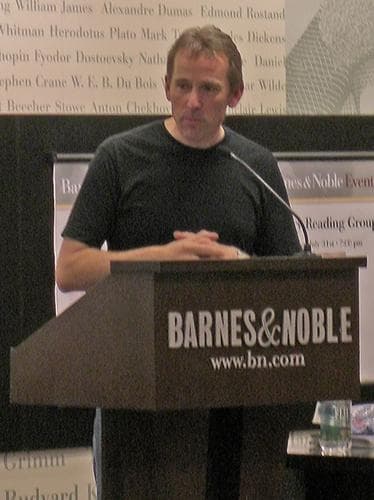
Jasper Fforde is a British author known for his imaginative and genre-blending fiction. His notable works include "The Eyre Affair," which features a literary detective, "Shades of Grey," set in a dystopian world, "The Big Over Easy," a whimsical take on nursery rhymes, "The Last Dragonslayer," a fantasy adventure, and "One of Our Thursdays Is Missing," which continues the adventures of Thursday Next.
Similar books
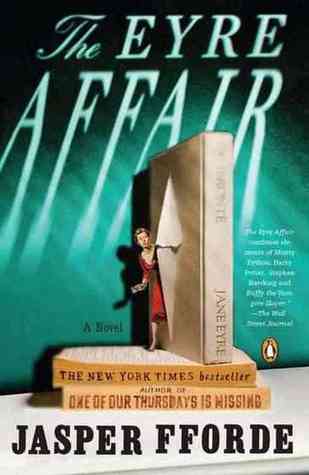
- The Eyre Affair
Jasper Fforde
3.9 (119k) average on GoodreadsFantasyShares the same author's unique blend of literary parody, wordplay, and meta-narrative detective work.
- Dirk Gently's Holistic Detective Agency
Douglas Adams
4.0 (121k) average on GoodreadsFantasyFeatures a similarly eccentric detective, a convoluted plot, and a whimsical, British sense of humor.
- Rivers of London
Ben Aaronovitch
3.9 (94k) average on GoodreadsFantasyCombines police procedural with urban fantasy and a distinctively British voice, though less overtly comedic.
- Harry Potter and the Sorcerer's Stone
J.K. Rowling
4.5 (7M) average on GoodreadsFantasyRescued from a miserable life under the stairs, an orphaned boy discovers he's a wizard destined for a magical school, where he uncovers a dangerous secret tied to the dark wizard who murdered his parents.
- The Hunger Games
Suzanne Collins
4.3 (6.4M) average on GoodreadsFantasyIn a future where children fight to the death on live television, Katniss Everdeen volunteers for the arena, turning a death sentence into a fight for survival and a spark of rebellion.
- 1984
George Orwell
4.2 (3.1M) average on GoodreadsPoliticsIn a future where surveillance and thought control are absolute, a man's search for truth clashes with the Party, showing that hope can be a form of rebellion.



Enjoyed the summary?
A summary gives you the shape of the book. The book itself has the detail, the examples and the voice.
Find The Big Over Easy on AmazonAs an Amazon Associate, BookBrief earns from qualifying purchases. How we're funded