
Synopsis
Covers the whole plot, including the ending.
- Difficulty
- Medium
- Pacing
- Moderate
- Mood
- Enchanting, Romantic, Suspenseful, Hopeful
- Read it if
- You enjoy classic fairy tale retellings with a strong female protagonist and a focus on magic, romance, and overcoming tyranny.
- Skip it if
- You prefer gritty realism or stories without magical elements and clear good-versus-evil conflicts.
The Black Swan Plot Summary
Covers the whole plot, including the ending.
The Baron's Cruelty and Odile's Hidden Knowledge
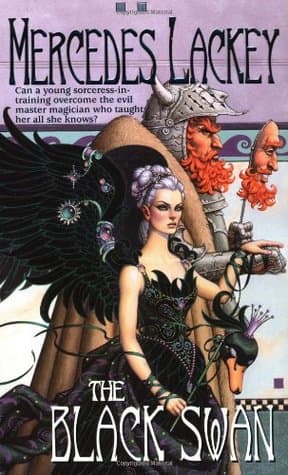
Odile Von Rothbart grows up in her father's isolated castle, tutored in magic but living under the shadow of his immense power and volatile temper. Baron Von Rothbart, bitter from his wife's death, dedicates his life to transforming young women into swans, forcing them to live as birds by day and human by night. Odile, though terrified of him, secretly studies his magic, learning not only the spells he teaches but also discerning the nuances of his power and his psychological weaknesses. She feels deep empathy for the swan-maidens, especially Princess Odette, who often tries to console her, and secretly uses her own growing magical abilities to ease their suffering, such as mending their torn gowns or providing warmer fires.
Odette's Bold Challenge
One evening, Princess Odette, driven by despair and a desire for freedom, confronts Baron Von Rothbart. To Odile's astonishment and the other swans' horror, Odette demands a way out of their enchantment. The Baron, amused by her defiance, agrees to a pact: if a man pledges his true love to Odette and remains faithful, breaking the enchantment, all the swan-maidens will be freed. However, he secretly plans to twist the conditions to ensure the pact is never fulfilled. Odile, witnessing this, immediately recognizes the trap in her father's manipulative nature and resolves to somehow aid Odette, even if it means directly opposing her father.
Prince Siegfried's Arrival
Prince Siegfried, pressured by his mother, the Queen, to choose a bride, flees to the woods for a hunt. There, he sees the beautiful Princess Odette transform from a swan back into a human. Instantly captivated, Siegfried learns of her plight and the Baron's cruel enchantment. He pledges his undying love to Odette, vowing to break the spell. Unbeknownst to him, Odile, observing from a distance, feels a glimmer of hope but also a sense of dread, knowing her father will not allow this easy resolution. Siegfried promises to declare his love publicly at the royal ball, believing this will fulfill the pact.
The Ball and the Deception
On the night of the royal ball, Baron Von Rothbart executes his plan. He transforms Odile to perfectly resemble Odette, enhancing her beauty with powerful glamour. He forces Odile to attend the ball with him, presenting her as Princess Odette. Prince Siegfried, blinded by magic and the strong resemblance, believes he is dancing with his beloved Odette. Despite Odile's internal struggle and attempts to subtly warn him, Siegfried publicly declares his love and allegiance to 'Odette' – unknowingly pledging himself to Odile. The moment he does, the real Odette, watching from afar, feels her heart break as the pact seems irrevocably shattered.
Odile's Guilt and Revelation
After Siegfried's fateful declaration, the Baron reveals his deception, mocking Siegfried and Odette. Overwhelmed by guilt and unable to bear her father's cruelty any longer, Odile confesses her true identity to Siegfried, explaining how her father had manipulated them both. She describes the forced glamour and her agonizing role in the deception. Siegfried is devastated, realizing his mistake and the depth of the Baron's wickedness. Odile, now fully committed to defying her father, implores Siegfried to understand that the true Odette is still waiting and that the pact, though twisted, might still be salvageable if they can unite against the Baron.
The Gathering at the Lake
Horrified by the Baron's treachery, Siegfried races to the swan lake, desperate to find Odette. He arrives to find her distraught, believing all hope is lost. Siegfried, with Odile's help, explains the deception and begs for Odette's forgiveness, reaffirming his true love for her. The other swan-maidens, witnessing this reunion and hearing Odile's confession, begin to understand Odile's true intentions. A fragile alliance forms between Siegfried, Odette, Odile, and the other swan-maidens, realizing that their only hope for freedom lies in confronting and defeating Baron Von Rothbart once and for all. They prepare for a final magical confrontation.
The Final Confrontation
Baron Von Rothbart arrives at the lake, furious at Odile's betrayal and the defiance of the swans. He unleashes his full magical power, summoning storms and dark creatures to thwart Siegfried and reclaim the swan-maidens. Odile, drawing upon all her hidden knowledge and innate power, steps forward to confront her father directly. She uses the very spells he taught her, but with a different intention and greater empathy, to counter his attacks. The battle is fierce, a clash of light and shadow, love and hatred, as Odile fights not just for her own freedom, but for the lives and souls of all the enchanted women, her former fear replaced by a fierce determination.
The Baron's Defeat
During the magical duel, Odile realizes that her father's power is rooted in his bitterness and his refusal to accept his wife's death. She uses her understanding of his weaknesses, combined with the love and hope from Siegfried and Odette, to weaken his hold. Siegfried and Odette, united in their true love, provide a focal point for the counter-spell. In a climactic moment, Odile channels a surge of pure, self-sacrificing magic, breaking through her father's defenses. The Baron's power shatters, and he is transformed into a weakened, non-magical bird, stripped of his sorcery. The enchantment over the swan-maidens is broken, and they return to their human forms permanently.
Freedom and New Beginnings
With Baron Von Rothbart defeated and the spell broken, joy erupts at the lake. The swan-maidens, finally free, embrace their human identities. Princess Odette and Prince Siegfried, their love proven true through adversity, are free to marry, uniting their kingdoms and ensuring a future of peace. Odile, no longer bound by her father's tyranny, emerges as a powerful and compassionate sorceress in her own right. She chooses to forge her own destiny, perhaps becoming an advisor, a protector, or simply a free woman exploring the world outside her father's shadow, having found her true strength and purpose through her act of defiance and redemption.
The Black Swan Characters
Odile Von Rothbart
Protagonist
The Baron's daughter and a powerful, compassionate sorceress.
Odile is the only child of Baron Von Rothbart, raised in isolation and educated in magic by her tyrannical father. Initially living in fear, she secretly hones her magical abilities, developing a deep empathy for the swan-maidens. She is intelligent, observant, and possesses a strong moral compass that eventually compels her to defy her father. Her internal struggle between fear and compassion drives much of the narrative.
Relationships: Baron Von Rothbart (Daughter, student, eventual adversary); Princess Odette (Sympathetic observer, eventually an ally and friend); Prince Siegfried (Briefly manipulated into a false engagement, then an ally)
Baron Von Rothbart
Antagonist
A powerful, vengeful sorcerer who enchants young women into swans.
Baron Von Rothbart is a formidable and cruel sorcerer, driven by bitterness and a desire for vengeance against all women, stemming from his wife's death. He is manipulative, arrogant, and possesses immense magical power, which he uses to control and torment his victims. He sees himself as a master of fate and delights in twisting the hopes of others. His inability to cope with grief fuels his villainy.
Relationships: Odile Von Rothbart (Father, teacher, eventual enemy); Princess Odette (Captor, tormentor); Prince Siegfried (Deceiver, rival)
Princess Odette
Supporting
The leader of the swan-maidens, enchanted by the Baron.
Princess Odette is a noble, courageous, and compassionate young woman, cursed to live as a swan by day. Despite her dire circumstances, she maintains hope and a strong spirit, often comforting the other swan-maidens. She is the one who dares to confront the Baron, setting the entire plot in motion. Her love for Prince Siegfried is pure and steadfast, forming a crucial element in breaking the enchantment.
Relationships: Baron Von Rothbart (Victim, captive); Prince Siegfried (True love, betrothed); Odile Von Rothbart (Fellow captive (in a sense), eventually an ally and friend)
Prince Siegfried
Supporting
A noble prince who falls in love with Odette and vows to free her.
Prince Siegfried is a good-hearted and honorable prince, initially burdened by the expectations of his royal duties. He is a romantic who believes in true love and is deeply moved by Odette's plight. Though briefly deceived by the Baron's magic, his love for Odette is genuine, and he is determined to right his wrong and defeat the sorcerer. He embodies the classic 'prince charming' archetype, but with a deeper emotional depth.
Relationships: Princess Odette (True love, betrothed); Odile Von Rothbart (Briefly deceived by her appearance, then an ally); Baron Von Rothbart (Rival, enemy)
The Queen (Siegfried's Mother)
Mentioned
Siegfried's mother, who pressures him to find a bride.
The Queen is Siegfried's mother, a pragmatic ruler concerned with her son's marriage and the continuation of the royal line. She represents the societal pressure that initially drives Siegfried to the woods, inadvertently setting him on his path to Odette. While not malicious, her insistence on a suitable match highlights the contrast with true love.
Relationships: Prince Siegfried (Mother)
The Swan-Maidens
Supporting
The flock of young women enchanted by Baron Von Rothbart.
The swan-maidens are the numerous young women cursed by Baron Von Rothbart, living as swans by day and human by night. They represent the collective suffering caused by the Baron's cruelty and provide a backdrop for Odette's leadership and Odile's compassion. Their longing for freedom is palpable, and their eventual release signifies the triumph over tyranny.
Relationships: Baron Von Rothbart (Captives); Princess Odette (Fellow captives, followers); Odile Von Rothbart (Secretly aided, eventually rescued by)
The Black Swan Themes
The Power of True Love
True love is a force capable of breaking the most potent magical enchantments and overcoming deception. Siegfried's unwavering devotion to Odette, even after being tricked, is the catalyst for the spell's undoing. This is clear when Siegfried declares his love for the false Odette, only for the true love between him and the real Odette to be reaffirmed and become instrumental in the Baron's defeat. It's not just romantic love, but a love that involves forgiveness, understanding, and sacrifice.
“Only a vow of true love, given freely and faithfully kept, can break the spell.”
Redemption and Self-Sacrifice
Odile's journey shows redemption. Initially complicit, though unwillingly, in her father's schemes, she chooses to defy him at great personal risk. Her act of revealing the deception to Siegfried and then directly confronting her father is a profound act of self-sacrifice. She risks her life and her father's wrath to free the innocent, showing that even those born into darkness can choose a path of light. Her transformation is the story's central redemptive arc.
“I cannot let him win. Not when I know the truth, and have the power to stop him.”
The Corrosive Nature of Vengeance
Baron Von Rothbart's motivation stems from his inability to cope with the death of his wife, leading him down a path of bitter vengeance against all womankind. His magic, though powerful, is twisted and destructive, fueled by his unresolved grief and anger. This theme shows how holding onto past hurts can corrupt an individual and cause immense suffering to others. His ultimate defeat signifies the triumph of healing and forgiveness over destructive resentment.
“They betrayed me, as she did. All women are the same.”
Inner Strength and Defiance
The story emphasizes inner strength, particularly in the face of overwhelming power. Odette's initial defiance of the Baron, demanding a pact, demonstrates her courage. More significantly, Odile's gradual realization of her own strength and her decision to directly oppose her terrifying father is a core part of this theme. She finds the courage not just to learn magic, but to use it for good, even if it means risking everything. This defiance is not born of recklessness, but of a deep moral conviction.
“You taught me well, Father. But you forgot to teach me to obey.”
Plot Devices & Literary Techniques
The Enchantment
The magical curse transforming women into swans.
The central plot device, the enchantment by Baron Von Rothbart, drives the entire conflict. It serves to isolate the victims, create a sense of urgency for freedom, and establish the stakes for both Odette and Odile. The enchantment's specific conditions (swan by day, human by night, broken by true love) provide the framework for the plot's progression and the Baron's manipulative schemes. Its ultimate breaking signifies the resolution of the main conflict.
The Pact
The Baron's deceptive agreement for the swans' freedom.
The pact is a crucial plot device, introduced by Odette's defiance. It provides a glimmer of hope but is designed by the Baron to be a trap, creating dramatic irony and suspense. The ambiguity and the Baron's intention to twist its terms fuel the deception at the ball and necessitate Odile's intervention. It sets up the 'test' of true love and becomes the foundation upon which the Baron's final defeat is built, as Odile exploits its underlying conditions.
Glamour Magic
Magical illusion used to alter appearance and deceive.
Glamour magic is a key device, most notably used by Baron Von Rothbart to transform Odile into Odette's exact likeness. This deception is the pivotal moment that nearly shatters Odette and Siegfried's hopes. It highlights the manipulative nature of the Baron's power and the vulnerability of perception. Odile's experience with the glamour also informs her understanding of her father's magic and contributes to her eventual ability to counter him.
The Swan Lake
The mystical location where the enchanted maidens reside.
The swan lake serves as both a prison and a sanctuary for the enchanted maidens. It is the physical manifestation of their curse and their only home. Symbolically, it represents their longing for freedom and their collective sorrow. It is also the chosen battleground for the final confrontation, imbued with the magic of their suffering and hope, making it a powerful setting for the story's climax and resolution.
The Black Swan Quotes
“The wind was picking up, and the distant rumble of thunder promised a storm.”
“There are some things that cannot be changed, and some that must be changed, no matter the cost.”
“She had always felt the pull of the lake, a sense of belonging that transcended her human form.”
“Love was a fragile thing, easily broken, but also capable of mending what seemed irreparable.”
“Sometimes, the greatest strength lies in admitting your weaknesses.”
“He saw not a swan, but the woman trapped within, and loved her all the more for it.”
“A promise made under duress is no promise at all.”
“The darkness was not merely an absence of light, but a presence, cold and malevolent.”
“Even the most beautiful things can hide the most terrible secrets.”
“True courage is not the absence of fear, but the triumph over it.”
“Some bonds are stronger than any curse, forged in the fires of loyalty and devotion.”
“The future is not written in stone, but in the choices we make today.”
“To truly live, one must be willing to risk everything.”
“The magic of a true heart can overcome even the darkest spells.”
Quiz
10 questions on the plot and the characters. Each answer comes with a short explanation.
Question 1
What is Baron Von Rothbart's primary motivation for turning women into swans?
- He enjoys their beauty as animals.
- He seeks vengeance against all womankind due to his wife's death.
- He needs their magical energy to maintain his own power.
- He is attempting to create a new species of magical bird.
Show answer
B. He seeks vengeance against all womankind due to his wife's death. The text explicitly states that Baron Von Rothbart's personal mission is to capture women who arouse his wrath and inspire his rage for vengeance against all womankind, considering his wife's untimely death the ultimate betrayal.
Question 2
What is Odile's relationship with her father, Baron Von Rothbart?
- She admires and respects his power.
- She feels only fear toward him despite his tutelage.
- She is indifferent to his actions and magical abilities.
- She is his willing accomplice in his schemes.
Show answer
B. She feels only fear toward him despite his tutelage. The description states that Odile 'feels only fear toward him' despite having studied under his stern tutelage.
Question 3
Under what conditions do the swan-maidens temporarily regain their human forms?
- During the full moon.
- When they are in the presence of true love.
- Briefly each night by the transitory light of the moon.
- Only when Baron Von Rothbart permits it.
Show answer
C. Briefly each night by the transitory light of the moon. The text specifies that the swan-maidens 'only regain their human forms briefly each night by the transitory light of the moon.'
Question 4
How does Odile feel about the swan-maidens her father has ensorcelled?
- She views them as her father's rightful captives.
- Her heart goes out to each and every one of them.
- She resents them for being a distraction to her studies.
- She is indifferent to their plight.
Show answer
B. Her heart goes out to each and every one of them. The text states that 'both as a woman and the guardian of his swan flock, her heart goes out to each and every young maiden ensorcelled by her vindictive father.'
Question 5
What significant action does Princess Odette take to challenge Baron Von Rothbart?
- She attempts to escape the flock on her own.
- She confronts him and wrests a pact for freedom.
- She tries to persuade Odile to help her directly.
- She uses her own magic to fight him.
Show answer
B. She confronts him and wrests a pact for freedom. Princess Odette 'finds the courage to confront her captor, wresting from him a pact which could lead to freedom for herself and all the swan-maidens.'
Question 6
What specific shape does Baron Von Rothbart take when he scours the land?
- A black wolf.
- A great bird of prey.
- A shadowy human figure.
- A monstrous serpent.
Show answer
B. A great bird of prey. The text describes Baron Von Rothbart as scouring the land 'in the shape of a great bird of prey.'
Question 7
What is the potential consequence for Odile if she fails in the final magical confrontation with her father?
- She will be turned into a swan alongside the others.
- She will be exiled from her father's castle.
- It will lead to her death and the murder of all in her flock.
- She will lose her magical abilities permanently.
Show answer
C. It will lead to her death and the murder of all in her flock. The passage states that if Odile fails in the final confrontation, it 'will lead to her death and the murder of all in her flock.'
Question 8
Beyond what her father intended, what has Odile learned?
- Advanced combat techniques from hidden tutors.
- Both more of the magical arts and of Von Rothbart’s idiosyncratic nature.
- The secrets to breaking any magical curse.
- The location of a powerful magical artifact.
Show answer
B. Both more of the magical arts and of Von Rothbart’s idiosyncratic nature. The text reveals that Odile 'has learned far more than her father, the baron, intended to teach her—both of the magical arts and of Von Rothbart’s idiosyncratic nature.'
Question 9
What specific challenge does Odile face regarding the pact Princess Odette secured?
- She must convince her father to honor the pact willingly.
- She needs to find a way to magically enforce the pact herself.
- She must have the strength to face her father in a final magical confrontation, knowing he will use all his cunning to avoid honoring it.
- She needs to find a loophole in the pact to free the swans.
Show answer
C. She must have the strength to face her father in a final magical confrontation, knowing he will use all his cunning to avoid honoring it. The passage states, 'Knowing Von Rothbart will use all of his magical cunning to avoid honoring this pact, will Odile have the strength to face him in a final magical confrontation...'
Question 10
What is the central theme highlighted by Odile's conflict with her father and her role as guardian of the swan flock?
- The corrupting influence of absolute power.
- The struggle between familial duty and moral conscience, and the courage to defy tyranny.
- The importance of mastering all forms of magic.
- The inevitability of fate and destiny.
Show answer
B. The struggle between familial duty and moral conscience, and the courage to defy tyranny. Odile is torn between her terrifying father and her empathy for the swan-maidens she guards. Her potential final confrontation with him for their freedom embodies the struggle between duty (to her father) and conscience (for the maidens), requiring immense courage to defy his tyrannical actions.
The Black Swan FAQ
What is the central conflict driving the plot of "The Black Swan"?
The central conflict revolves around Odile's struggle to free the swan-maidens from her father, Baron Von Rothbart's, curse. Her internal conflict between fear of him and empathy for the enchanted women, particularly Princess Odette, propels her to challenge his powerful magic and vindictive nature.
Who is Odile Von Rothbart and what is her relationship with her father?
Odile Von Rothbart is the only child of the powerful sorcerer Baron Von Rothbart. She has been tutored in magic by him but lives in constant fear due to his cruel nature and his transformation of women into swans. Despite her fear, she has gained a deep understanding of his magic and personality.
What motivates Baron Von Rothbart to turn women into swans?
Baron Von Rothbart's motivation stems from his wife's untimely death, which he perceives as the ultimate betrayal. This event ignited a deep-seated rage and desire for vengeance against all womankind, leading him to capture and ensorcell women into swan form.
Who is Princess Odette and what role does she play in the story?
Princess Odette is one of the noble maidens cursed by Baron Von Rothbart and a prominent member of his swan flock. She is significant because she finds the courage to confront the Baron, initiating a pact that offers a potential path to freedom for herself and all the other swan-maidens.
What is the nature of the pact made between Princess Odette and Baron Von Rothbart?
The pact is a crucial agreement where Odette confronts the Baron and secures a potential path to freedom for the enchanted women. While the specific terms aren't detailed, it implies a condition or challenge that, if met, would break the curse, though the Baron is expected to try and subvert it.
How does Odile's understanding of her father's 'idiosyncratic nature' contribute to her plan?
Odile's deep understanding of her father's idiosyncratic nature, beyond just his magical prowess, provides her with insight into his weaknesses, predictable behaviors, and potential blind spots. This intimate knowledge allows her to anticipate his cunning and strategize effectively to counter his efforts to avoid honoring the pact.
What specific magical abilities has Odile learned that her father did not intend to teach her?
The text implies Odile has learned advanced magical arts beyond basic tutelage, particularly in areas related to manipulating or understanding the curse itself, or perhaps counter-spells. Her ability to potentially confront him suggests a mastery of defensive or offensive magic that rivals his own, possibly in secret.
Is there any indication of Odile's mother's magical background or influence?
The synopsis doesn't explicitly state Odile's mother's magical background. However, her 'untimely death' and the Baron's extreme reaction suggest she might have been a powerful figure whose loss deeply impacted him, possibly even influencing the nature of his subsequent curse.
How does Odile's role as 'guardian of his swan flock' influence her perspective and actions?
As the guardian, Odile is in constant, intimate contact with the suffering swan-maidens, witnessing their plight daily. This close proximity fosters deep empathy and a sense of responsibility, strengthening her resolve to defy her father and seek their freedom, transforming her from a fearful observer to an active protector.
How does Baron Von Rothbart's grief over his wife's death manifest as a psychological defense mechanism?
Baron Von Rothbart's grief manifests as a severe psychological defense mechanism through projection and displacement. He projects his feelings of betrayal from his wife's death onto all women, displacing his sorrow and anger into a vindictive mission of capturing and cursing innocent maidens, rather than processing his loss healthily.
What psychological toll does living in fear of her father take on Odile, and how does she overcome it?
Living in fear of her father likely causes significant psychological stress, anxiety, and a sense of powerlessness for Odile. She overcomes this by cultivating empathy for the swan-maidens and developing a strong sense of justice, which ultimately empowers her to confront her fear and challenge her father, prioritizing their freedom over her own safety.
How does the transformation into swans symbolize the Baron's view of women?
The transformation into swans symbolizes the Baron's view of women as beautiful but ultimately powerless and trapped. He reduces them to elegant, voiceless creatures, stripped of their human agency and confined to a life dictated by his will, reflecting his desire to control and punish.
Is there a moral ambiguity in Odile's character, given her lineage and upbringing?
While Odile strives for good, there could be moral ambiguity in her character due to her lineage and upbringing under a dark sorcerer. She possesses immense power and knowledge of dark magic, raising questions about the temptations or internal struggles she might face in wielding such power, even for noble ends.
What is the significance of the swan-maidens only regaining human form briefly at night by moonlight?
The brief, moonlit return to human form signifies a fragile, fleeting hope and the enduring, yet suppressed, humanity of the maidens. Moonlight, often associated with mystery and hidden truths, suggests that their true selves are only accessible in moments of vulnerability and away from the harsh light of day, symbolizing their limited freedom.
How does the 'romance' element suggested in the genre description manifest in a story focused on vengeance and curses?
The romance element, though not explicit in the synopsis, likely emerges through Odile's journey, perhaps involving a character who sees beyond her fearsome father's shadow or aids her quest. It could be a subplot with one of the characters, possibly Odette, or even Odile herself finding love as she fights for freedom.
Could Baron Von Rothbart's actions be interpreted as a distorted form of protecting his daughter, Odile?
While his actions are primarily driven by vengeance, one could debate if a distorted, subconscious element of protecting Odile exists. By isolating her and controlling his environment, he might, in his twisted mind, believe he is shielding her from the perceived 'betrayal' of other women, though this interpretation is highly speculative.
What does the potential 'death and murder of all in her flock' signify if Odile fails?
This signifies Baron Von Rothbart's ultimate cruelty and the complete eradication of any hope for the swan-maidens. It means not just a continuation of their curse, but a final, irreversible act of vengeance, highlighting the immense stakes and the absolute necessity of Odile's success.
How does Odile's dual role as a woman and guardian of the flock strengthen her resolve?
Odile's identity as a woman allows her to deeply empathize with the maidens, recognizing that she, too, could have been a victim of her father's wrath. Her role as guardian places direct responsibility on her, transforming her personal empathy into a powerful, protective drive to liberate them.
About the author

Mercedes Lackey is an American author known for her contributions to the fantasy genre. Her notable works include "Brightly Burning," "The Black Swan," "Firebird," and "Hunter," which often feature strong character-driven narratives and imaginative world-building. Lackey's writing has garnered a dedicated readership and she is recognized for her unique blend of fantasy elements.
Similar books
- Uprooted
Naomi Novik
4.1 (167k) average on GoodreadsFantasyFeatures a powerful sorcerer, a young woman learning magic, and a dark, enchanted forest setting.
- A Court of Thorns and Roses
Sarah J. Maas
4.2 (476k) average on GoodreadsFantasyWhile both "The Black Swan" and "A Court of Thorns and Roses" are fantasy retellings with strong female protagonists and romantic elements, Lackey's approach is generally less focused on explicit romance and more on the protagonist's internal struggle and magical development. Maas's series often prioritizes high-stakes romance and political intrigue with more adult themes, whereas Lackey's novel maintains a more traditional YA sensibility in its exploration of self-discovery and moral dilemmas. Lackey's world-building, while detailed, is less sprawling than Maas's, focusing tightly on the immediate kingdom and its magical system.
- Harry Potter and the Sorcerer's Stone
J.K. Rowling
4.5 (7M) average on GoodreadsFantasyRescued from a miserable life under the stairs, an orphaned boy discovers he's a wizard destined for a magical school, where he uncovers a dangerous secret tied to the dark wizard who murdered his parents.
- The Hunger Games
Suzanne Collins
4.3 (6.4M) average on GoodreadsFantasyIn a future where children fight to the death on live television, Katniss Everdeen volunteers for the arena, turning a death sentence into a fight for survival and a spark of rebellion.
- 1984
George Orwell
4.2 (3.1M) average on GoodreadsPoliticsIn a future where surveillance and thought control are absolute, a man's search for truth clashes with the Party, showing that hope can be a form of rebellion.
- Divergent
Veronica Roth
4.2 (2.9M) average on GoodreadsFantasyIn a society divided by virtues, a sixteen-year-old's difference from the norm starts a rebellion that threatens her world.





Enjoyed the summary?
A summary gives you the shape of the book. The book itself has the detail, the examples and the voice.
Find The Black Swan on AmazonAs an Amazon Associate, BookBrief earns from qualifying purchases. How we're funded