
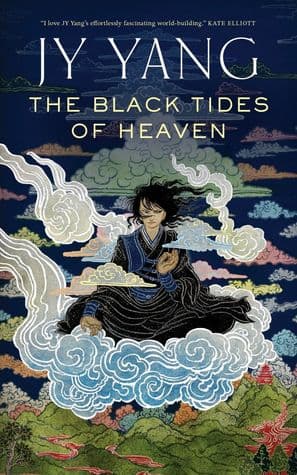
Synopsis
Covers the whole plot, including the ending.
- Difficulty
- Medium
- Pacing
- Moderate
- Mood
- Thought-provoking, Melancholy, Introspective, Political
- Read it if
- You enjoy intricate world-building, morally grey characters, and a unique take on gender and power dynamics in a fantasy setting.
- Skip it if
- You prefer clear-cut heroes and villains, or struggle with non-linear storytelling and ambiguous endings.
The Black Tides of Heaven Plot Summary
Covers the whole plot, including the ending.
The Grand Monastery and the Twins' Childhood
Mokoya and Akeha, the Protector's twin children, are sent to the Grand Monastery at a young age, a common practice for children of the ruling class. Unlike most children who choose their gender after puberty, the twins are raised gender-neutral, referred to as 'they.' Mokoya soon shows a powerful, though uncontrolled, gift for prophetic visions, often falling into trances and speaking of future events. Akeha, in contrast, develops a sharp mind and an ability to see the subtle manipulations and power dynamics around them. While Mokoya struggles with the burden of prophecy, Akeha quietly watches the Protectorate's political actions, especially those involving their mother, the Protector.
Mokoya's Visions and Akeha's Discontent
As the twins grow up, Mokoya's visions become more vivid and disturbing, often showing disasters and suffering. The Grand Abbot carefully manages these prophecies, using them to advise the Protectorate, though their full meaning is often hidden. Akeha, aware of these visions and the political maneuvering, becomes deeply concerned by the Protectorate's indifference to its citizens and its harsh suppression of the growing Machinist movement. They begin to question their mother's rule and society's rigid structure, feeling a growing sense of injustice.
The Machinists and the Seeds of Rebellion
Akeha, through observation and secret investigations, learns more about the Machinists—a group supporting technological advancement and fair resource distribution. This group often clashes with the Tensorate's traditional, magic-based power structure. Akeha sees the Protectorate's brutal repression of Machinist communities, deepening their disgust with their mother's rule. Akeha starts to view the Machinists not as rebels, but as a legitimate force for progress and justice. This growing sympathy creates a split between Akeha and the expectations placed on them as a Protector's child.
Akeha's Departure and Mokoya's Isolation
Driven by conscience and a desire for a different future, Akeha decides to leave the Tensorate and join the Machinist rebels. This is a painful choice, as it means leaving their beloved twin, Mokoya, behind. Mokoya, bound by their prophetic gift and role within the Monastery, cannot join Akeha. The separation is a deep emotional blow to both, breaking the strong bond they have shared since birth. Akeha's departure marks a significant turning point, committing them to a life of danger and resistance against their own family.
Life with the Rebels and New Relationships
Joining the Machinists, Akeha finds new purpose and belonging among those fighting for change. They learn practical skills, participate in acts of sabotage against the Tensorate, and offer strategic insights to the rebellion. Akeha also forms important relationships within the rebel ranks, notably with Wen, a practical and skilled Machinist leader, and with the charismatic and principled Batcha. These relationships provide Akeha with support and community, helping them navigate the challenges and moral complexities of their new life, though Mokoya's absence remains a constant pain.
The Unfolding Conflict
The war between the Protectorate and the Machinists grows, marked by skirmishes, spying, and political moves. Akeha uses their knowledge of the Tensorate's inner workings to help the rebels, often putting them in direct opposition to their mother's forces. They see firsthand the brutality of the conflict and the human cost of the Protectorate's harsh policies. Akeha's actions come from a deep belief that they are fighting for a fairer world, even as they deal with the personal cost of their choices and the potential harm to their family.
Mokoya's Struggle and the Burden of Prophecy
While Akeha is involved in the rebellion, Mokoya stays within the Grand Monastery. Their prophetic gift becomes both more powerful and more difficult. They receive fragmented visions of the war, often seeing glimpses of Akeha's dangerous activities and people's suffering. Mokoya feels increasingly isolated, unable to act directly and torn between loyalty to the Monastery and deep love for Akeha. The Grand Abbot continues to use Mokoya's prophecies for the Protectorate's benefit, further highlighting Mokoya's lack of control and their growing internal conflict.
A Moment of Convergence
During an intense phase of the conflict, a major event brings Akeha and Mokoya close, though not necessarily in direct contact. This closeness reawakens their deep twin bond, creating a powerful emotional connection. Mokoya experiences a surge of visions related to Akeha's current situation, while Akeha feels an unexplained pull towards their twin. This moment shows the lasting connection they share, even across the vast ideological and physical divide between them.
The Protector's Perspective and Manipulation
Throughout the story, the Protector, Mokoya and Akeha's mother, is shown as a calculating and ruthless leader, driven to maintain the Tensorate's power at all costs. Her past actions and current strategies show a willingness to manipulate her own children and sacrifice many lives for her political goals. Akeha's understanding of their mother's true nature strengthens their resolve to fight against her rule. Mokoya, though more sheltered, also begins to understand their mother's coldness and how their own gift has been used, adding to their internal struggle.
The Aftermath and Lingering Questions
The immediate story of *The Black Tides of Heaven* ends with a resolution to a specific phase of the conflict, though not necessarily the end of the war. Akeha has become a committed rebel, making significant sacrifices for their cause. Mokoya continues to struggle with their visions and their limited role within the Monastery, their future tied to the ongoing political struggles. The book leaves open questions about the rebellion's ultimate fate, the Tensorate, and whether the twins can truly reunite or reconcile. It emphasizes the long-term impact of their choices.
Principal Figures
Akeha
Protagonist
The perceptive twin who defects to the Machinist rebellion.
Akeha is the more grounded and analytical of the twins, possessing a keen intellect and an uncanny ability to understand the underlying power structures and political machinations of their world. Unlike Mokoya, whose gift is external and prophetic, Akeha's strength lies in their internal processing and strategic thinking. They are driven by a strong sense of justice and a deep disillusionment with the repressive policies of the Protectorate, particularly their mother's rule. Akeha is courageous, principled, and willing to make difficult sacrifices for what they believe is right, even if it means severing ties with their family and risking their life.
Relationships: Mokoya (Twin sibling; deep, unbreakable emotional bond despite physical and ideological separation.); The Protector (Mother; estranged and adversarial due to ideological differences and the Protector's tyranny.); Wen (Fellow Machinist and ally; pragmatic and supportive.); Batcha (Fellow Machinist and comrade; charismatic and principled.)
Mokoya
Protagonist
The prophetic twin burdened by visions and a constrained life in the Grand Monastery.
Mokoya is the twin blessed/cursed with the gift of prophecy, experiencing vivid and often disturbing visions of the future. They are more emotionally sensitive and less outwardly assertive than Akeha, often struggling with the overwhelming nature of their gift and the isolation it brings. Mokoya is deeply compassionate but often feels powerless to change the events they foresee, becoming a tool for the Protectorate through the Grand Abbot's interpretations. Their primary motivation is their profound love and connection to Akeha, and they yearn for a life free from the burden of prophecy and political manipulation.
Relationships: Akeha (Twin sibling; deep, unbreakable emotional bond despite physical and ideological separation.); The Protector (Mother; distant and manipulative, using Mokoya's gift for political gain.); Grand Abbot (Spiritual mentor and caretaker; interprets and manages Mokoya's prophecies for the Tensorate.)
The Protector
Antagonist
The ruthless and manipulative ruler of the Tensorate, and mother to Akeha and Mokoya.
The Protector is the calculating and powerful matriarch of the Tensorate, ruling with an iron fist. She is pragmatic, strategic, and utterly ruthless in her pursuit of maintaining her family's and the Tensorate's power. She views her children, Akeha and Mokoya, as assets to be managed and exploited for political gain rather than as individuals with their own desires. Her motivations stem from a deep-seated belief in the necessity of her rule and the established order, and she sees the Machinists as a dangerous threat to be eradicated. She embodies the oppressive forces Akeha rebels against.
Relationships: Akeha (Son; estranged and adversarial.); Mokoya (Daughter; viewed as a valuable asset due to her prophetic gift, but kept emotionally distant.)
Grand Abbot
Supporting
The head of the Grand Monastery and interpreter of Mokoya's prophecies.
The Grand Abbot is a powerful and influential figure within the Tensorate, responsible for the Grand Monastery and the guidance of its residents, including Mokoya. They act as an intermediary between Mokoya's visions and the Protectorate, interpreting and often selectively presenting the prophecies to serve political ends. While not overtly malicious, the Abbot is deeply entrenched in the existing power structure and prioritizes the stability of the Tensorate, even if it means constraining Mokoya's freedom and agency. They represent the institutional control over spiritual power.
Relationships: Mokoya (Spiritual mentor and overseer; manages and interprets Mokoya's prophetic gift.); The Protector (Political ally; provides counsel and prophecies to the ruling power.)
Wen
Supporting
A skilled and pragmatic Machinist leader who becomes Akeha's ally.
Wen is a seasoned and capable leader within the Machinist rebellion. Practical, resourceful, and fiercely loyal to the cause, Wen provides Akeha with guidance and support as they navigate their new life as a rebel. They are less driven by grand ideals and more by the immediate needs of the resistance and the protection of their people. Wen's pragmatic approach and combat skills make them a valuable asset to the rebellion and a trusted companion for Akeha, offering a grounded perspective amidst the larger ideological struggle.
Relationships: Akeha (Fellow Machinist and trusted ally; provides mentorship and support.)
Batcha
Supporting
A charismatic and principled Machinist who inspires the rebellion.
Batcha is a prominent figure in the Machinist movement, known for their charisma, strong convictions, and ability to rally others to the cause. They represent the ideological heart of the rebellion, advocating for equality, technological progress, and freedom from the Tensorate's oppression. Batcha's idealism and unwavering belief in a better future serve as a source of inspiration for Akeha and many other rebels. They are a powerful voice for change, embodying the hopes and dreams of the Machinist movement.
Relationships: Akeha (Fellow Machinist and comrade; shares ideological alignment.)
The Twins' Father
Mentioned
The Protector's consort, whose presence is largely absent from the narrative.
The twins' father is a largely absent figure in the narrative, serving primarily as the consort to the Protector. His role is more ceremonial than influential, highlighting the matriarchal power structure of the Tensorate. He represents the traditional, subdued role of male figures within this society. His lack of active involvement underscores the Protector's sole authority and the twins' direct lineage to her power and political machinations, rather than any paternal influence.
Relationships: The Protector (Consort; his influence is minimal.); Akeha (Father; distant, largely absent figure.); Mokoya (Father; distant, largely absent figure.)
Themes & Insights
Identity and Choice
The novel explores how individuals, especially Akeha, form their identity through their choices, particularly regarding gender and political alignment. In a society where gender is chosen at puberty, the twins' early life is gender-neutral, highlighting identity's fluidity. Akeha's decision to leave the Tensorate and join the Machinists is a powerful act of self-determination, defining who they are beyond their birthright. This theme appears when Akeha chooses to support a cause that directly opposes their mother, showing their agency in shaping their own moral and political identity, separate from family and societal expectations.
“You can choose who you are, Akeha. You always can.”
Prophecy vs. Free Will
This theme is central to Mokoya's character. Their prophetic visions often show a predetermined future, yet the story subtly questions if these visions are absolute or if individual choices can change them. Mokoya struggles with knowing what will happen but being unable to act, creating a sense of powerlessness. Akeha's active rebellion, in contrast, champions free will and the ability to create a different future. The tension between Mokoya's visions and Akeha's actions illustrates the debate about destiny versus human agency, and whether knowing the future truly dictates its unfolding.
“Knowing what is to come does not mean you can change it. Only that you must bear witness.”
Rebellion and Social Justice
The conflict between the Tensorate and the Machinists forms the core of this theme. The Tensorate represents a rigid, magic-based oligarchy that oppresses common people and stops technological advancement. The Machinists advocate for progress, equality, and a fairer society. Akeha's defection embodies the struggle against tyranny and the fight for social justice. The novel explores the motivations, sacrifices, and moral complexities in challenging an established, powerful regime. Scenes showing the brutal suppression of Machinist communities by the Protectorate emphasize the rebellion's necessity and urgency.
“There is a sickness at the heart of the Protectorate. And I cannot stand by and watch it fester.”
The Nature of Power
The book explores different forms of power: the traditional, magic-based 'tensor' power of the Protectorate, Mokoya's prophetic power, and the Machinists' emerging, technology-based power. It examines how power is gained, kept, and misused. The Protector's ruthless use of political power, the Grand Abbot's manipulation of spiritual power through Mokoya, and the Machinists' pursuit of technological power for social change all show the many sides of influence and control. The story questions whether power inherently corrupts or if it can be used for good, contrasting the Protector's tyranny with the Machinists' ideals.
“Power is not a gift, but a burden. And it demands a heavy price from those who wield it.”
Plot Devices & Literary Techniques
Twin Telepathy/Bond
The deep, almost psychic connection between Mokoya and Akeha.
The profound bond between Mokoya and Akeha serves as a crucial emotional anchor and narrative device. Even when physically separated by vast distances and ideological divides, they retain an intuitive understanding of each other's emotional states and, at times, a faint awareness of each other's experiences. This connection highlights the personal cost of their choices and provides a constant reminder of their shared past. It also acts as a narrative shortcut, allowing for moments of emotional resonance between them without direct communication, underscoring the enduring theme of family amidst conflict.
Prophetic Visions
Mokoya's ability to see the future, often in fragmented and disturbing ways.
Mokoya's prophetic visions are a primary plot driver, introducing elements of destiny and foreboding. These visions often foreshadow major events, create suspense, and provide glimpses into the broader political landscape and the suffering of the people. However, their fragmented nature and the Grand Abbot's selective interpretation ensure that they do not simply reveal the plot, but rather add layers of complexity and moral dilemma. They serve to highlight the theme of free will versus fate, as characters must decide how to react to or defy what is foreseen.
Gender Fluidity/Choice
A societal norm where individuals choose their gender after puberty.
This unique cultural aspect of the Tensorate society, where children are raised gender-neutral and choose their gender later, acts as a significant world-building element and a subtle plot device. It emphasizes themes of identity and self-determination, mirroring Akeha's larger choice to define their own path. While not a direct plot mover, it shapes character development and societal norms, allowing for a more expansive exploration of personal identity beyond traditional binary constraints. It also distinguishes the world from typical fantasy settings, reflecting a more progressive approach to selfhood.
The Black Tides of Heaven Quotes
“The past is a story we tell ourselves, and we can choose to tell it differently.”
“There are always other choices. You just have to be brave enough to make them.”
“Love isn't about being perfect. It's about being honest, and trying to be better.”
“To be truly free, one must first understand the chains that bind them.”
“Sometimes, the strongest thing you can do is ask for help.”
“The future is not fixed. It is made, moment by moment, by the choices we make.”
“Even the smallest spark can ignite the greatest change.”
“Knowledge is a weapon, and like any weapon, it can be used for good or ill.”
“Grief is not a weakness. It is a testament to the love you felt.”
“To understand someone, you must first listen to their story, not just hear it.”
“The greatest battles are often fought within ourselves.”
“There is a difference between surviving and living. Choose to live.”
“Sometimes the safest path is the one you forge yourself.”
Quiz
10 questions on the plot and the characters. Each answer comes with a short explanation.
Question 1
To which institution were Mokoya and Akeha sold as children?
- The Grand Academy
- The Protectorate's Palace
- The Grand Monastery
- The Machinist Guild
Show answer
C. The Grand Monastery The twins, Mokoya and Akeha, were sold to the Grand Monastery as children, where they developed their unique gifts.
Question 2
What is Mokoya's specific gift?
- The ability to manipulate machines
- A strange prophetic gift
- The power to control the Tensors
- Exceptional combat skills
Show answer
B. A strange prophetic gift Mokoya developed a 'strange prophetic gift' allowing her to receive visions of what would be.
Question 3
What does Akeha realize about his mother's Protectorate?
- It is a beacon of hope and justice.
- It is on the brink of collapse due to external threats.
- It is ruled by an benevolent dictator.
- There is a sickness at its heart.
Show answer
D. There is a sickness at its heart. Akeha 'saw the sickness at the heart of his mother's Protectorate,' indicating his disillusionment with the state.
Question 4
What is the primary goal of the Machinists in the story?
- To preserve the power of the state and the Tensors.
- To discover new levers to move the world and challenge the state.
- To restore the Grand Monastery to its former glory.
- To negotiate a peaceful resolution with the Protectorate.
Show answer
B. To discover new levers to move the world and challenge the state. The Machinists are described as discovering 'new levers to move the world every day,' indicating their rebellious and innovative nature against the Tensors.
Question 5
What is the relationship between 'The Black Tides of Heaven' and 'The Red Threads of Fortune'?
- They are a direct sequel and prequel, respectively.
- They are unrelated stories set in different universes.
- They are a pair of standalone introductions to the Tensorate Series.
- They are different editions of the same book.
Show answer
C. They are a pair of standalone introductions to the Tensorate Series. The description explicitly states that 'The Black Tides of Heaven' and 'The Red Threads of Fortune' are 'a pair of standalone introductions to JY Yang's Tensorate Series.'
Question 6
Why does Akeha leave the Tensorate behind?
- He is forced out by the Tensors.
- He seeks to join his sister Mokoya in a new venture.
- He is unwilling to continue being a pawn in his mother's schemes.
- He is exiled for his prophetic abilities.
Show answer
C. He is unwilling to continue being a pawn in his mother's schemes. Akeha leaves the Tensorate because he is 'unwilling to continue to play a pawn in his mother's twisted schemes,' aligning himself with the rebels.
Question 7
What contrasting abilities do Mokoya and Akeha possess regarding their understanding of the future/possibilities?
- Mokoya sees the past, Akeha sees the present.
- Mokoya receives visions of what would be, Akeha realizes what could be.
- Mokoya controls time, Akeha controls space.
- Mokoya predicts natural disasters, Akeha predicts political outcomes.
Show answer
B. Mokoya receives visions of what would be, Akeha realizes what could be. The text states that 'While Mokoya received visions of what would be, Akeha realized what could be,' highlighting their distinct but complementary insights.
Question 8
What is the central conflict represented by the Machinists and the Tensors?
- A conflict between ancient magic and new religious beliefs.
- A conflict between two rival monastic orders.
- A conflict between technological innovation/rebellion and state power/preservation.
- A conflict between two different interpretations of prophecy.
Show answer
C. A conflict between technological innovation/rebellion and state power/preservation. The Machinists 'discover new levers to move the world every day' (innovation/rebellion), while the Tensors 'fight to put them down and preserve the power of the state.'
Question 9
What is the primary internal struggle Akeha faces by joining the rebels?
- His fear of the Machinists' advanced technology.
- The potential shattering of the bond he shares with his twin sister, Mokoya.
- His inability to adapt to life outside the Grand Monastery.
- His desire to become the new Protector.
Show answer
B. The potential shattering of the bond he shares with his twin sister, Mokoya. The concluding question of the synopsis directly addresses Akeha's struggle: 'Can Akeha find peace without shattering the bond he shares with his twin sister?'
Question 10
Who is the 'Protector' and what is their relationship to Mokoya and Akeha?
- The head of the Grand Monastery, their mentor.
- The leader of the Machinists, their adopted parent.
- Their biological parent, whose schemes Akeha opposes.
- A legendary figure, an ancestor of the twins.
Show answer
C. Their biological parent, whose schemes Akeha opposes. Mokoya and Akeha are described as 'the twin children of the Protector,' and Akeha opposes 'his mother's twisted schemes,' confirming the Protector is their parent.
The Black Tides of Heaven FAQ
What is the core conflict that drives the plot of 'The Black Tides of Heaven'?
The central conflict revolves around the ideological clash between the ruling Tensorate, who wield 'tensors' (a form of elemental manipulation), and the technologically advanced Machinists, who seek to dismantle the Protectorate's rigid power structure. Akeha, one of the twin protagonists, finds himself caught between these factions after discovering the corruption within his mother's regime and eventually joining the rebellion.
Who are Mokoya and Akeha, and what are their unique abilities?
Mokoya and Akeha are the twin children of the Protector, raised in the Grand Monastery. Mokoya possesses a powerful prophetic gift, experiencing visions of future events, often violently. Akeha, in contrast, has a keen understanding of human motivations and societal mechanics, allowing him to perceive 'what could be' and the underlying power dynamics that move people.
What role does the Grand Monastery play in the twins' upbringing and the wider world?
The Grand Monastery serves as a neutral ground where children, including the Protector's twins, are educated and where their 'defaults' (gender assignments) are chosen at adulthood. It represents a sanctuary of learning and spiritual development, distinct from the political machinations of the Tensorate, yet it also shapes the powerful individuals who will eventually influence the world.
How does the concept of 'defaults' (gender assignment) function in this world?
In the Tensorate world, children are raised gender-neutral and choose their 'default' gender (male or female) upon reaching adulthood. This process is often a public ceremony, allowing individuals to align their external presentation with their internal identity. It highlights a society that values individual choice and self-determination regarding gender.
What prompts Akeha to leave the Tensorate and join the Machinists?
Akeha's disillusionment stems from witnessing the oppressive nature and moral corruption of his mother, the Protector, and her Tensorate regime. He sees the suffering caused by their policies and is drawn to the Machinists' promise of a more equitable society, which he believes offers a path to genuine change and freedom from his mother's control.
What is the significance of the 'black tides' mentioned in the title?
The 'black tides' refer to Mokoya's prophetic visions, which are often overwhelming, violent, and associated with destruction or significant upheaval. These visions are a central element of her character and frequently portend the major shifts and conflicts occurring in the world, including the rising rebellion and the eventual downfall of established powers.
Are there any subtle hints about the nature of the 'tensors' or the Tensorate's power beyond simple elemental control?
While tensors are primarily depicted as elemental control, there are suggestions that their power is deeply intertwined with the fabric of society and the state's authority. The Tensorate's ability to 'put down' rebels implies a more systemic or even symbolic control beyond just individual combat, hinting at a connection between their power and the maintenance of the social order itself.
How does the novella subtly set up the broader world of the Tensorate Series, beyond just this immediate story?
'The Black Tides of Heaven' introduces key factions like the Tensorate and Machinists, the unique gender system, and the political landscape of the Protectorate. It hints at the wider impact of Mokoya's visions and Akeha's choices, laying groundwork for future conflicts and character developments that are explored in its twin novella, 'The Red Threads of Fortune,' and subsequent books.
What is the underlying psychological impact of being a 'prophet' like Mokoya?
Mokoya's prophetic gift is a heavy burden, isolating her and causing significant psychological distress. She frequently experiences violent, disorienting visions that she cannot always control or understand, leading to a sense of helplessness and responsibility for events she foresees. This constant exposure to future calamities often leaves her emotionally scarred and withdrawn.
How does Akeha's ability to 'see the strings' influence his personal relationships and choices?
Akeha's ability to discern motivations and power dynamics makes him acutely aware of manipulation and pretense, leading to cynicism and difficulty forming genuine connections. It fuels his rebellion against his mother's schemes but also creates a rift with Mokoya, who struggles to understand his pragmatic, often detached, perspective on human behavior and political maneuvering.
Discuss the psychological dynamics of the twin bond between Mokoya and Akeha.
The twin bond between Mokoya and Akeha is exceptionally deep, almost telepathic, yet it is tested by their diverging paths. Mokoya relies on Akeha for grounding and understanding of the mundane world, while Akeha feels a profound protectiveness towards his sister. Their separation causes significant emotional pain for both, highlighting how their identities are intertwined despite their differing gifts and ideologies.
How does the Protector's parenting style impact Mokoya and Akeha differently?
The Protector's detached, strategic parenting, treating her children as assets rather than individuals, profoundly shapes both twins. Mokoya, already overwhelmed by her visions, seeks emotional connection and validation. Akeha, perceiving his mother's manipulation, develops a deep-seated resentment and a desire to escape her control, ultimately leading him to rebellion.
Is the rebellion led by the Machinists ultimately a force for good, or does the book present a more nuanced view?
The book presents a nuanced view. While the Machinists offer a compelling alternative to the oppressive Tensorate and fight for greater freedom, their methods can be radical, and the transition to a new order is fraught with violence and uncertainty. Akeha's journey suggests that even 'good' intentions can lead to difficult choices and potentially unintended consequences, avoiding a simple good vs. evil narrative.
What is the author's commentary on the nature of power through the depiction of the Tensorate?
The author suggests that power, even when initially established with good intentions, can become corrupting and self-perpetuating. The Tensorate, despite its initial role in maintaining order, evolves into an oppressive regime that prioritizes its own survival over the well-being of its citizens, demonstrating how unchecked authority can lead to tyranny and rebellion.
How does the ending of 'The Black Tides of Heaven' leave room for interpretation regarding Akeha's future?
The ending leaves Akeha at a significant crossroads, having fully committed to the Machinists but at the cost of his closeness with Mokoya. His future is ambiguous regarding whether he will find true peace, if the rebellion will succeed without further moral compromises, and if his bond with his sister can ever be fully repaired, setting the stage for further exploration in 'The Red Threads of Fortune'.
Does the book suggest that fate (Mokoya's visions) is immutable, or can free will (Akeha's actions) change it?
The book explores the tension between fate and free will. While Mokoya's visions show what 'will be,' Akeha's actions demonstrate 'what could be,' suggesting that while certain events might be fated, the specific path to them and the choices individuals make within those events still hold significant power. It implies that understanding the future doesn't necessarily dictate it, but allows for attempts to mitigate or influence its course.
What is the thematic significance of the 'sickness at the heart of his mother's Protectorate' that Akeha perceives?
The 'sickness' represents the systemic corruption and moral decay that has infiltrated the Tensorate's rule. It's not just about individual evil but about the fundamental flaws in a system that prioritizes control and power over justice and the welfare of its people. Akeha's perception of this 'sickness' is his driving motivation to seek radical change.
How does the world-building, particularly the gender system, contribute to the book's themes?
The gender-neutral upbringing and the 'default' system reinforce themes of identity, choice, and societal expectations. It highlights how personal identity is formed and chosen, rather than simply assigned at birth, and subtly critiques real-world rigid gender norms. This freedom of choice is juxtaposed with the political repression faced by the citizens under the Tensorate, creating a layered commentary on liberty.
About the author
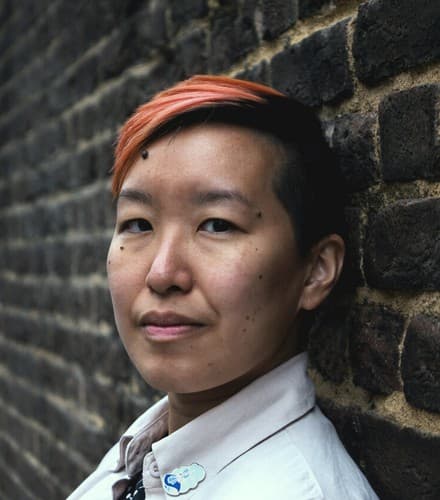
J.Y. Yang is a writer known for their contributions to speculative fiction. Their notable work, "The Black Tides of Heaven," explores themes of identity and power within a richly imagined world. Yang's writing often incorporates elements of fantasy and science fiction, reflecting diverse cultural influences.
Similar books
- The Left Hand Of Darkness
Ursula K. Le Guin
4.1 (120k) average on GoodreadsFantasyLe Guin's novel also explores gender fluidity, but Yang's approach is distinct. Le Guin's Gethenians are ambisexual and transition between genders, whereas Yang's characters are born 'gender neutral' and choose their gender, or have it assigned, presenting a different facet of gender identity and choice. Yang's work feels more contemporary in its direct engagement with non-binary identities.
- The Grace of Kings
Ken Liu
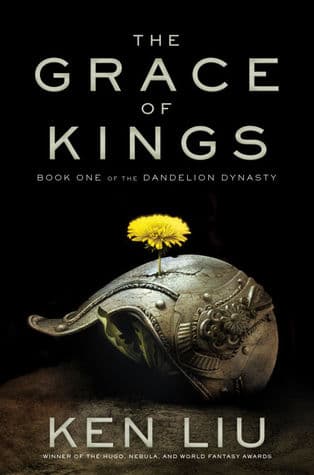
3.7 (12k) average on GoodreadsFantasyWhile both are considered 'silkpunk,' Liu's novel focuses on epic political drama, large-scale warfare, and mythological influences, with more traditional gender roles. Yang's The Black Tides of Heaven is more intimate, focusing on personal identity, family relationships, and the internal struggles of its protagonists, offering a more character-driven and introspective take on the genre.
- Harry Potter and the Sorcerer's Stone
J.K. Rowling
4.5 (7M) average on GoodreadsFantasyRescued from a miserable life under the stairs, an orphaned boy discovers he's a wizard destined for a magical school, where he uncovers a dangerous secret tied to the dark wizard who murdered his parents.
- The Hunger Games
Suzanne Collins
4.3 (6.4M) average on GoodreadsFantasyIn a future where children fight to the death on live television, Katniss Everdeen volunteers for the arena, turning a death sentence into a fight for survival and a spark of rebellion.
- 1984
George Orwell
4.2 (3.1M) average on GoodreadsPoliticsIn a future where surveillance and thought control are absolute, a man's search for truth clashes with the Party, showing that hope can be a form of rebellion.
- Divergent
Veronica Roth
4.2 (2.9M) average on GoodreadsFantasyIn a society divided by virtues, a sixteen-year-old's difference from the norm starts a rebellion that threatens her world.





Enjoyed the summary?
A summary gives you the shape of the book. The book itself has the detail, the examples and the voice.
Find The Black Tides of Heaven on AmazonAs an Amazon Associate, BookBrief earns from qualifying purchases. How we're funded