

Synopsis
Covers the whole plot, including the ending.
- Difficulty
- Medium
- Pacing
- Variable
- Mood
- Atmospheric, Dark, Sensual, Haunting, Subversive
- Read it if
- You enjoy dark, feminist retellings of fairy tales, appreciate lush, gothic prose, and are fascinated by explorations of sexuality, power, and transformation.
- Skip it if
- You prefer traditional, lighthearted fairy tales, or find explicit descriptions of violence and sexuality unsettling.
The Bloody Chamber and Other Stories Plot Summary
Covers the whole plot, including the ending.
The Bloody Chamber
A seventeen-year-old virgin pianist marries a wealthy, older Marquis and travels with him to his isolated, gothic castle. During their honeymoon, the Marquis lavishes her with jewels and attention, but also displays a possessive, almost predatory desire. He gives her a master key, explicitly forbidding her from opening one specific room: the bloody chamber. Driven by curiosity and a growing unease about her husband's past, she eventually succumbs to temptation and enters the room, discovering the gruesome remains of his previous wives, all beheaded. The key, now stained with indelible blood, reveals her transgression. The Marquis returns, discovers her disobedience, and prepares to execute her, but her mother, a formidable and resourceful woman, arrives just in time to save her, shooting the Marquis dead.
The Courtship of Mr Lyon
A financially ruined merchant, lost in a snowstorm, seeks refuge in a mysterious, opulent mansion. He plucks a single white rose for his youngest daughter, Beauty, from the Beast's garden. The Beast, a melancholy and solitary figure, confronts him, demanding Beauty's presence at his castle as recompense. Beauty, out of filial duty, agrees and lives with the Beast, who treats her with utmost kindness and respect, never forcing himself upon her. She gradually grows fond of him, seeing beyond his monstrous appearance. When her father falls ill, she returns home, promising to come back. However, she lingers, almost forgetting her promise, until she realizes the Beast is dying of a broken heart. She rushes back, confesses her love, and as she kisses him, he transforms into a handsome man.
The Tiger's Bride
A young woman, the daughter of an impoverished nobleman, is lost by her father in a game of cards to a wealthy, reclusive Beast. She is taken to his desolate, luxurious castle, where she is attended by silent, automaton-like servants. The Beast, who is revealed to be a tiger-man, desires to see her naked, a request she initially resists. However, she gradually sheds her societal inhibitions and embraces her own wildness. The Beast's valet, an old man, attempts to persuade her to leave, but she refuses. In a pivotal scene, the Beast strips away his own tiger skin, revealing a man beneath, and she, in turn, sheds her human skin, transforming into a tigress to join him, embracing her animalistic nature and true self.
Puss-in-Boots
Puss-in-Boots, a flamboyant, cunning, and highly articulate cat, serves an impoverished young man, a former soldier. Puss is a master manipulator, using trickery and deception to elevate his master's social standing. He engineers a series of elaborate schemes, including stealing and framing a rival, to convince the local wealthy merchant that his master is a powerful count. Puss also orchestrates a passionate affair between his master and the merchant's beautiful, sheltered daughter. Through his audacious lies and strategic interventions, Puss ensures his master marries the merchant's daughter, securing their fortune and position. The story is a witty, amoral take on ambition and the power of illusion, with Puss as the ultimate puppet master.
The Erl-King
A young woman wanders into a dark, ancient forest, drawn by its mysterious allure. She encounters the Erl-King, a beautiful yet sinister figure who lures young women to their deaths, transforming them into songbirds in cages. He seduces her with his charm and the promise of warmth and comfort, offering her a nest of his own hair. She feels a primal fear and fascination, recognizing his predatory nature. The forest itself seems to conspire with him, its sounds and shadows amplifying her unease. Ultimately, she realizes his true intent to trap her. In a moment of defiant clarity, she strangles him with his own hair, freeing herself from his enchantment and escaping the forest, though forever marked by the encounter.
The Snow Child
A Count, riding through a snowy landscape with his Countess, expresses a whimsical desire for a child 'as white as snow, with lips as red as blood, and hair as black as that raven's wing.' Almost immediately, a naked girl fitting this description appears, seemingly born from the snow itself. The Countess, consumed by jealousy, tries to harm the Snow Child. The Count, however, is captivated by her ephemeral beauty and innocence. As quickly as she appeared, the Snow Child begins to melt, leaving behind only a bloody stain on the snow where a rose had been, and a single black feather from her hair. The story is a brief, stark exploration of male desire, female jealousy, and the fleeting nature of perfection.
The Lady of the House of Love
A young English soldier, a virgin and a rationalist, is traveling through Romania by train. He decides to visit a ruined castle, unaware it is the lair of a beautiful, lonely vampire countess, a descendant of Dracula. The Countess is cursed with eternal life and an insatiable thirst for blood, which she despises. She lives in a state of melancholic despair, surrounded by the decaying opulence of her ancestral home and a garden of dead roses. She attempts to seduce the soldier, but he, innocent and unburdened by her dark history, simply falls asleep in her arms. His purity and lack of fear break her curse, and as dawn approaches, she turns into a mortal woman and dies peacefully, finally freed from her torment.
Wolf-Alice
Wolf-Alice is a wild girl, found abandoned and raised by wolves, who is brought to a convent to be civilized. She is completely feral, acting on instinct, unable to speak, and reflecting no image in mirrors. The nuns struggle to tame her, seeing her as an animal. She is eventually sent to live with the Duke, a reclusive, cursed figure who is a werewolf. Living in the Duke's decaying castle, Wolf-Alice slowly begins to shed her animalistic habits. She observes the Duke's transformations and eventually sees her own reflection in a bloody mirror, a moment of profound self-recognition. Through this, she begins to understand her humanity and the nature of the Duke's curse, learning compassion and self-awareness.
The Company of Wolves
A young, innocent girl, on her way to visit her grandmother, encounters a charming, handsome hunter in the forest. Her grandmother has warned her about wolves, both literal and metaphorical. The hunter challenges her to a race to her grandmother's house, promising a kiss to the winner. He arrives first, kills the grandmother, and disguises himself. When the girl arrives, she notices his strange appearance but, instead of fear, feels a growing sense of attraction and curiosity. She willingly disrobes and lies with him, embracing her own burgeoning sexuality and the wildness within her, transforming into a wolf herself rather than becoming a victim, and finding a new kind of freedom and power.
The Werewolf
A young girl lives in a superstitious village surrounded by a dangerous forest where wolves and werewolves are believed to roam. She is sent to her grandmother's house, carrying a basket of food. On her way, she encounters a wolf, which she bravely fends off, cutting off its paw with her axe. She brings the paw home as proof of her encounter. Later, she visits her ailing grandmother and finds her with a bandaged hand. The severed paw she brought home is discovered to be her grandmother's hand, revealing the grandmother as the werewolf. The villagers then execute the grandmother, and the girl inherits her cottage and property, demonstrating a pragmatic and unsentimental approach to survival in a harsh world.
Wolf-Alice's Awakening
Wolf-Alice, a girl raised by wolves, is brought to a convent but remains wild and unkempt. She is then sent to live with the Duke, a reclusive werewolf. Initially, she is a creature of instinct, unable to comprehend human concepts like reflection or shame. Her transformation begins subtly as she observes the Duke's nightly struggles with his curse. One night, after the Duke has torn himself in his wolf form, she finds a shard of mirror stained with his blood. Looking into it, she finally sees her own reflection, a moment of profound self-recognition that shatters her animalistic innocence. This act of seeing herself and then tending to the Duke's wounds marks her true awakening to humanity and compassion.
The Bloody Chamber and Other Stories Characters
The Young Bride
Protagonist
An innocent virgin who discovers her husband's dark secrets and finds her own strength.
The unnamed protagonist of 'The Bloody Chamber,' she is initially a naive and sheltered seventeen-year-old pianist, marrying an older, enigmatic Marquis. She is curious and intelligent, but also susceptible to the Marquis's allure and power. Her journey is one of awakening, from passive obedience to a terrifying realization of her husband's depravity. Despite her initial vulnerability, she possesses an inner strength that, combined with her mother's intervention, allows her to survive and escape her horrific fate.
Relationships: The Marquis (Husband, tormentor, and ultimately victim); Her Mother (Savior and protector)
The Marquis
Antagonist
A wealthy, aristocratic predator with a taste for dark pleasures.
The antagonist of 'The Bloody Chamber,' he is an immensely wealthy and powerful aristocrat, older than his young bride. He is charming, cultured, and seductive, but beneath this facade lies a sadistic and murderous nature. His desire for control and his collection of defiled wives reveal a profound misogyny and a thirst for power over women. He represents the patriarchal forces that seek to dominate and destroy female innocence, and his demise is a symbolic victory for female agency.
Relationships: The Young Bride (Wife and intended victim); His Previous Wives (Victims of his sadism)
Beauty
Protagonist
A kind and selfless daughter who sees beyond appearances.
The protagonist of 'The Courtship of Mr Lyon,' she is the youngest daughter of an impoverished merchant. Kind, selfless, and initially somewhat passive, she willingly sacrifices herself to live with the Beast to save her father. She possesses a rare ability to see beyond superficial appearances, recognizing the Beast's gentle nature beneath his monstrous exterior. Her compassion and capacity for genuine affection are key to breaking the Beast's curse, demonstrating that true love is born of understanding, not just physical attraction.
Relationships: The Beast/Mr Lyon (Captor, eventual lover); Her Father (Beloved family member)
The Beast / Mr Lyon
Supporting
A cursed, lonely aristocrat who yearns for love and acceptance.
The titular character of 'The Courtship of Mr Lyon,' he is a wealthy and reclusive figure, cursed with a monstrous appearance. Despite his terrifying exterior, he is deeply melancholic, gentle, and lonely, yearning for companionship and love. He treats Beauty with utmost respect and kindness, never forcing himself upon her. His vulnerability and hidden humanity are what ultimately draw Beauty to him, highlighting the theme that true beauty resides within. His transformation is a reward for his inherent goodness and Beauty's acceptance.
Relationships: Beauty (Object of his affection, eventual savior)
Puss-in-Boots
Protagonist
A cunning, amoral feline who manipulates events for his master's gain.
The clever, anthropomorphic cat in 'Puss-in-Boots' is a master of deception and social engineering. He is entirely self-serving, yet his ambition aligns with his master's welfare. Puss is flamboyant, articulate, and utterly amoral, using lies, trickery, and even violence to achieve his goals. He embodies the power of wit and illusion over genuine merit, demonstrating how social status can be fabricated through shrewd manipulation. He is a charming rogue, a trickster figure who thrives on chaos and control.
Relationships: His Master (Servant and benefactor); The Merchant's Daughter (Target of his schemes)
The Erl-King
Antagonist
A seductive, predatory nature spirit who traps young women.
A mythical, malevolent figure in 'The Erl-King,' he is a beautiful yet sinister embodiment of the wild, dangerous aspects of nature. He lures young women into his forest domain, enchanting them with his charm and the promise of warmth, only to transform them into caged songbirds. He represents predatory male desire and the entrapment of female freedom. His connection to the forest makes him seem almost elemental, a force of nature that preys on innocence, but he can be overcome by female will.
Relationships: The Young Woman (Intended victim)
The Countess (Vampire)
Protagonist
A melancholic vampire seeking release from her eternal curse.
The protagonist of 'The Lady of the House of Love,' she is a beautiful, aristocratic vampire, a descendant of Dracula, cursed with eternal life and an insatiable thirst for blood. She lives in a decaying castle, surrounded by symbols of death and faded glory. Unlike typical vampires, she is deeply melancholic and despises her own existence, longing for mortality and release. Her beauty is a trap, both for her victims and for herself. She embodies the tragic burden of immortality and the desire for peace.
Relationships: The Young Soldier (Potential victim, unwitting savior)
Wolf-Alice
Protagonist
A feral girl who gradually discovers her humanity and self-awareness.
The central character of 'Wolf-Alice,' she is a wild girl raised by wolves, representing a raw, untamed nature. Initially, she lacks human consciousness, language, and self-awareness, acting purely on instinct. Her journey is one of gradual civilization and self-discovery, prompted by her placement in a convent and then with the Duke. She learns to recognize her own reflection, comprehend shame, and develop empathy, ultimately choosing humanity and compassion over her animalistic past. She symbolizes the transition from instinct to consciousness.
Relationships: The Duke (Werewolf) (Guardian, fellow outcast, catalyst for her self-discovery); The Nuns (Attempted civilizers)
The Girl (Company of Wolves)
Protagonist
A young woman who embraces her wildness and sexuality when confronted by a wolf.
The protagonist of 'The Company of Wolves,' she is a young, innocent girl on her way to her grandmother's house. Unlike traditional Red Riding Hood figures, she is not merely a victim. She is curious, intelligent, and possesses a burgeoning awareness of her own sexuality. When confronted by the seductive wolf, she chooses to engage with him on her own terms, ultimately embracing her inner wildness and transforming into a wolf herself, signifying a powerful act of agency and self-acceptance rather than succumbing to fear.
Relationships: The Wolf/Hunter (Predator, seducer, eventual partner); Her Grandmother (Victim of the wolf)
The Bloody Chamber and Other Stories Themes
The Subversion of Innocence and Female Agency
Carter frequently challenges the traditional portrayal of innocent, passive heroines in fairy tales. Her female protagonists often move beyond victimhood to exert their own agency, often through embracing their sexuality or their 'animalistic' nature. In 'The Bloody Chamber,' the young bride's mother saves her, subverting the damsel-in-distress trope. In 'The Company of Wolves,' the girl doesn't fear the wolf but instead embraces her own wildness, transforming into a wolf herself, a powerful act of self-possession. This theme explores how women find power by rejecting societal expectations of purity and submission.
“She was not afraid of wolves, for she knew that the wolf is always in the forest, living there in the darkness of the trees, and that the only way to avoid him is to stay out of the forest.”
The Nature of Beastliness and Humanity
Many stories blur the lines between human and animal, exploring what it truly means to be a 'beast' or 'human.' Carter often suggests that savagery and civility are not mutually exclusive, and that true humanity can be found in unexpected places. In 'The Courtship of Mr Lyon' and 'The Tiger's Bride,' the monstrous Beasts are shown to possess more tenderness and integrity than many human characters. Conversely, 'The Bloody Chamber' reveals the Marquis's refined exterior hides a truly bestial cruelty. 'Wolf-Alice' directly tackles the journey from animalistic instinct to human self-awareness, suggesting that humanity is a learned state.
“Is she a wolf? Is she a child? The nuns would beat her to make her say 'amen.'”
Sexuality and Desire
Carter boldly reclaims and redefines female sexuality, often portraying it as a source of power rather than shame or vulnerability. The stories are steeped in sensuality, exploring both the liberating and dangerous aspects of desire. In 'The Bloody Chamber,' the Marquis's predatory sexuality is horrifying, but the bride's burgeoning awareness of her own body is a key part of her awakening. In 'The Tiger's Bride,' the protagonist's transformation into a tigress is an embrace of her primal, uninhibited desire. The collection challenges puritanical views, presenting female sexuality as a complex, potent force.
“The secret of his extraordinary powers was that he had a lady's hand; but she no longer possessed the hand of a lady.”
The Gothic and the Grotesque
Carter masterfully employs gothic elements – decaying castles, dark forests, isolated settings, and supernatural undertones – to create an atmosphere of dread and heightened emotion. The grotesque is used to shock and disturb, highlighting the darker aspects of human nature and the unsettling beauty of the macabre. The bloody chamber itself, with its gruesome display of headless wives, is the quintessential gothic image. The transformation scenes, like the Beast shedding his skin or Wolf-Alice seeing her reflection, often contain elements of the grotesque that are simultaneously terrifying and revelatory.
“The castle is a gloomy, magnificent place, and the Marquis is its bloody lord.”
The Power of Storytelling and Myth
Carter's entire collection is a testament to the enduring power of fairy tales and myths, even as she deconstructs and reconstructs them. She uses familiar narratives as a foundation, then twists them to expose their underlying psychological, social, and sexual implications. By retelling these stories, she reveals how myths shape our understanding of gender, power, and desire, and how they can be reinterpreted to reflect contemporary concerns. The act of retelling itself becomes a powerful tool for challenging established narratives and creating new meanings.
“All stories are born from other stories.”
Plot Devices & Literary Techniques
Symbolism of the Mirror/Reflection
Used to represent self-awareness, identity, and the gaze.
Mirrors and reflections are recurring motifs, particularly in 'Wolf-Alice' and 'The Tiger's Bride.' In 'Wolf-Alice,' the inability to see her reflection initially signifies her lack of human self-awareness. Her eventual recognition of herself in a bloody mirror marks her transition to humanity. In 'The Bloody Chamber,' the mirror reflects the bride's transformation and complicity. This device explores how characters perceive themselves and are perceived by others, often linking identity with visual representation and the gaze.
The Forbidden Chamber/Secret Room
Represents hidden truths, repressed desires, and patriarchal control.
Most prominently featured in 'The Bloody Chamber,' this device symbolizes the husband's darkest secrets and the patriarchal boundaries imposed upon women. It is a space of hidden knowledge and danger, tempting the protagonist to transgress. Her entry into the chamber is an act of defiance, leading to a terrifying revelation. Metaphorically, it can also represent the hidden aspects of a relationship or the repressed desires within the self that, once explored, lead to profound and often dangerous truths.
Animal Transformation
Explores the blurring of human and animal, and the embrace of primal nature.
A central device, particularly in 'The Company of Wolves,' 'The Tiger's Bride,' and 'Wolf-Alice.' This transformation is not always a curse, but often a liberation or an embrace of an authentic, primal self. It challenges the conventional divide between human and animal, suggesting that savagery and instinct are inherent parts of human nature, especially female nature. It allows characters to shed societal constraints and embody a raw, powerful identity, often linked to sexuality and freedom.
The Gothic Setting
Establishes an atmosphere of mystery, dread, and heightened emotion.
Carter frequently uses classic gothic settings – isolated castles ('The Bloody Chamber,' 'The Courtship of Mr Lyon'), dark, enchanted forests ('The Erl-King,' 'The Company of Wolves'), and decaying mansions ('The Lady of the House of Love'). These settings are not just backdrops; they are active elements that amplify themes of confinement, fear, sexual tension, and the supernatural. They create a sense of unease and foreboding, contributing to the stories' dark, sensual, and often terrifying atmosphere, immersing the reader in a world where logic is often superseded by primal forces.
Intertextuality (Fairy Tale Allusion)
Reimagines and subverts traditional fairy tale narratives.
The entire collection is built upon the device of intertextuality, directly referencing and retelling classic fairy tales like 'Beauty and the Beast,' 'Little Red Riding Hood,' and 'Bluebeard.' Carter uses these familiar frameworks to both evoke a sense of the archetypal and to deliberately subvert expectations. By twisting known narratives, she forces readers to re-examine the original stories' latent meanings, particularly concerning gender roles, sexuality, and power dynamics, offering radical new interpretations.
The Bloody Chamber and Other Stories Quotes
“The beautiful, wicked countess, who is not a woman but a vampire, said to me: ‘You are a man. You are a woman. You are a beast.’”
“For the Lord has an insatiable appetite for pain.”
“The lamb must learn to run with the tigers.”
“My father said he loved me, but he never said I was beautiful.”
“Fear and a little shame, and a good deal of curiosity.”
“He was a carnival; the chapbook hero; the beau ideal of a wolf.”
“The perennial sadness of a girl who is always waiting for a man.”
“She was a woman of that impeccable and severe beauty that takes a man’s breath away.”
“Can a bird sing only the song it knows or can it learn a new song?”
“She knew she was nobody's meat.”
“The Devil is a woman.”
“She could not bring herself to feel any fear of him, for he was not a wolf, nor a beast, but a man.”
“This is a world that is not so much a place as a state of mind.”
“He was an excellent provider, but he did not know how to love.”
Quiz
10 questions on the plot and the characters. Each answer comes with a short explanation.
Question 1
In 'The Bloody Chamber,' what is the Marquis's most prized possession that he forbids his new wife from seeing?
- A collection of rare jewels
- His ancestral library
- The locked room in the castle
- A portrait of his first wife
Show answer
C. The locked room in the castle The Marquis gives his wife a key and warns her not to use it to open the door to the bloody chamber, which she ultimately disobeys.
Question 2
In 'The Company of Wolves,' what distinctive feature does the grandmother warn the girl about regarding the wolf she might encounter?
- Its unusually large teeth
- Its lack of a shadow
- Its joining of its eyebrows over the nose
- Its ability to speak human language
Show answer
C. Its joining of its eyebrows over the nose The grandmother specifically warns the girl that if a man has eyebrows that meet, he is a werewolf.
Question 3
What is the primary theme explored in 'The Tiger's Bride'?
- The perils of greed and avarice
- The transformation of innocence into corruption
- The nature of female desire and the beast within
- The importance of familial loyalty
Show answer
C. The nature of female desire and the beast within 'The Tiger's Bride' subverts the traditional Beauty and the Beast narrative, focusing on the heroine's embrace of her own animalistic nature and desire, rather than merely taming the beast.
Question 4
In 'Puss-in-Boots,' what is the protagonist's main goal for his master?
- To help him become a famous musician
- To secure him a wealthy marriage and status
- To assist him in finding hidden treasure
- To teach him the art of magic
Show answer
B. To secure him a wealthy marriage and status Puss-in-Boots, a cunning and manipulative cat, orchestrates a series of events to elevate his master's social standing and marry him to a rich heiress.
Question 5
Which character ultimately saves the narrator from the Marquis in 'The Bloody Chamber'?
- The Marquis's valet
- Her mother
- A passing stranger
- The blind piano tuner
Show answer
B. Her mother At the climax of 'The Bloody Chamber,' the narrator's mother arrives on horseback and shoots the Marquis, saving her daughter from execution.
Question 6
In 'The Lady of the House of Love,' what is the true nature of the beautiful, yet melancholic, Countess?
- She is a cursed princess awaiting a kiss
- She is a vampire who preys on young men
- She is a ghost bound to her decaying mansion
- She is a witch who transforms her lovers into animals
Show answer
B. She is a vampire who preys on young men The Countess is a beautiful, centuries-old vampire doomed to a desolate existence, preying on men who visit her castle.
Question 7
The story 'The Werewolf' presents a different perspective on the traditional Little Red Riding Hood narrative by suggesting what about the 'wolf' figure?
- The wolf is merely a misunderstood creature of the forest.
- The grandmother herself is the werewolf.
- The wolf is a benevolent protector of the village.
- The girl actively seeks out the wolf for companionship.
Show answer
B. The grandmother herself is the werewolf. In 'The Werewolf,' the girl discovers that the 'wolf' who attacked her grandmother is, in fact, her grandmother transformed into a beast, leading to her being exposed and killed.
Question 8
What distinguishing characteristic sets apart the Beast in 'The Courtship of Mr Lyon' from the Beast in 'The Tiger's Bride'?
- Mr Lyon is explicitly a human transformed, while the Beast in 'The Tiger's Bride' is a natural animal.
- Mr Lyon is a solitary figure, whereas the Beast in 'The Tiger's Bride' has a retinue of animal servants.
- Mr Lyon is portrayed as gentle and melancholic, while the other Beast is more predatory and demanding.
- Mr Lyon's transformation is temporary, while the other Beast's is permanent.
Show answer
B. Mr Lyon is a solitary figure, whereas the Beast in 'The Tiger's Bride' has a retinue of animal servants. 'The Courtship of Mr Lyon' features a solitary Beast who lives alone, whereas the Beast in 'The Tiger's Bride' lives in a lavish, almost surreal, palace attended by automaton-like servants and other animals.
Question 9
What gothic element is most prominent in 'The Snow Child'?
- The decaying mansion and its secrets
- The supernatural creation of a fleeting, idealized figure
- The theme of forbidden love and incest
- The psychological torment of a confined protagonist
Show answer
B. The supernatural creation of a fleeting, idealized figure 'The Snow Child' focuses on the Count's desire for a perfect, ephemeral girl conjured from snow, representing the gothic ideal of the uncanny and the fleeting nature of beauty and desire.
Question 10
In 'Wolf-Alice,' what is the protagonist's journey of self-discovery primarily about?
- Learning to navigate human society and its strictures
- Reclaiming her humanity and understanding her own sexuality
- Seeking revenge against those who abandoned her
- Developing magical abilities inherited from her parents
Show answer
B. Reclaiming her humanity and understanding her own sexuality Wolf-Alice, raised by wolves, gradually sheds her animalistic behaviors and begins to understand her human body, self, and burgeoning sexuality, particularly in relation to the Duke/Werewolf.
The Bloody Chamber and Other Stories FAQ
What is the overarching theme connecting the diverse stories in 'The Bloody Chamber and Other Stories'?
The collection consistently explores themes of female agency, transformation, and the subversion of patriarchal power structures within traditional fairy tale frameworks. Carter re-examines the roles of predator and prey, often empowering female characters to navigate or even dismantle the expectations placed upon them by societal norms and mythical archetypes.
Which traditional fairy tales serve as the primary inspiration for the titular story, 'The Bloody Chamber'?
The titular story is a direct, gothic reimagining of the French folktale 'Bluebeard.' Carter retains the core elements of a wealthy, mysterious husband, a forbidden room, and a curious young bride, but infuses it with heightened sensuality, psychological tension, and a pivotal twist regarding the heroine's salvation.
How does 'The Company of Wolves' reinterpret 'Little Red Riding Hood'?
'The Company of Wolves' radically transforms 'Little Red Riding Hood' by stripping away the innocence and fear often associated with the protagonist. Instead, the young girl is portrayed as self-possessed and capable of understanding, even embracing, her own sexuality and the primal nature of the wolf, ultimately choosing to join him rather than be devoured.
What distinguishes Carter's 'Beauty and the Beast' adaptations ('The Courtship of Mr Lyon' and 'The Tiger's Bride') from their traditional counterparts?
Carter offers two distinct 'Beauty and the Beast' retellings. 'The Courtship of Mr Lyon' is a gentler, more faithful adaptation, focusing on the Beast's vulnerability and Beauty's compassion. 'The Tiger's Bride,' however, is far more radical, culminating in Beauty's own transformation into a tiger, signifying a complete embrace of her wild, animalistic self and an escape from human societal constraints.
Which story features a mechanical nightingale and explores themes of artificiality versus natural beauty and mortality?
'The Emperor's New Clothes' is not in this collection. The story featuring a mechanical nightingale and exploring artificiality versus natural beauty and mortality is 'The Nightingale' from Hans Christian Andersen, which Carter does not directly retell in this collection. However, 'The Tiger's Bride' touches upon similar themes of transformation and the 'natural' versus the 'civilized' through Beauty's metamorphosis.
In 'The Bloody Chamber,' what specific detail about the Marquis's past victims foreshadows the fate awaiting the young bride?
The Marquis's collection of explicit photographs and the detailed descriptions of his previous wives, particularly their jewels and the way they are displayed, serve as a chilling premonition. The young bride notices the 'choker of rubies' worn by a previous victim, mirroring the one the Marquis places on her, subtly linking her to their gruesome end.
How does the setting of the Marquis's castle in 'The Bloody Chamber' contribute to the story's gothic atmosphere and the protagonist's psychological state?
The remote, decaying yet opulent castle, isolated by the sea and mist, creates a suffocating, dream-like atmosphere that enhances the protagonist's sense of entrapment and vulnerability. Its labyrinthine corridors and hidden rooms symbolize the Marquis's secretive nature and the dark corners of her own burgeoning awareness of danger and desire.
What is the significance of the rose in 'The Courtship of Mr Lyon' and 'The Bloody Chamber'?
In 'The Courtship of Mr Lyon,' the single white rose represents the initial pact between Beauty and her father, and later, Beauty's purity and the fragile hope for Mr Lyon's transformation. In 'The Bloody Chamber,' the red roses, particularly the 'bloody roses' in the Marquis's garden, symbolize passion, danger, and the loss of innocence, directly linking to the violent sensuality within the castle.
In 'The Tiger's Bride,' what unique detail about the Beast's valet, the mute servant, suggests a deeper connection to the Beast's true nature?
The mute valet's unsettling, almost animalistic stillness and his unwavering devotion to the Beast hint at a shared, primal existence beyond human communication. His presence underscores the Beast's non-humanity and the isolated, untamed world he inhabits, further emphasizing Beauty's eventual immersion into that world.
How does the young bride's mother in 'The Bloody Chamber' differ psychologically from traditional fairy tale mothers, and what impact does this have?
The mother is portrayed as fiercely independent, a 'wild thing' who previously shot tigers and is a skilled markswoman. This strong, protective, and unconventional maternal figure embodies active agency and heroism, a stark contrast to the often passive or absent mothers in classic tales, ultimately saving her daughter and subverting the damsel-in-distress trope.
Discuss the psychological journey of the protagonist in 'The Company of Wolves' from innocence to self-awareness.
The protagonist's journey is less about losing innocence and more about recognizing and integrating her own burgeoning sexuality and primal instincts. Initially warned of wolves, she confronts the literal and metaphorical 'wolf' (the huntsman) with a blend of fear and curiosity, ultimately choosing to embrace her own wild nature and become one with the beast, signifying a powerful psychological awakening.
What psychological implications does Beauty's transformation into a tiger in 'The Tiger's Bride' have for her identity and self-acceptance?
Beauty's transformation signifies a radical embrace of her authentic self, shedding the constraints of human societal expectations and patriarchal ownership. It represents a profound act of self-acceptance, where she finds liberation and true identity not in conforming to human ideals of beauty or marriage, but in merging with her own wild, instinctual nature, becoming truly free.
How does the character of Puss in 'Puss-in-Boots' subvert expectations of traditional trickster figures, and what does this reveal about human nature?
Puss, while a trickster, is driven primarily by romantic love and loyalty to his master, rather than pure self-interest or mischief. His elaborate schemes are all in service of uniting his master with the wealthy bride, revealing a more nuanced portrayal of cunning that can be motivated by noble, albeit still manipulative, intentions, blurring the lines between selfish and selfless action.
Is 'The Bloody Chamber' a feminist text, and how does it challenge traditional gender roles?
Yes, 'The Bloody Chamber' is widely considered a foundational feminist text. It consistently challenges traditional gender roles by empowering female protagonists, subverting the damsel-in-distress trope, and re-examining female sexuality not as passive or victimized, but as a source of agency and transformation. Characters often escape or dismantle patriarchal structures through their own cunning, courage, or even embracing their 'monstrous' sides.
How do the stories use the gothic tradition to critique societal norms rather than just create suspense?
Carter employs gothic elements like isolated castles, decay, forbidden knowledge, and heightened sensuality not merely for suspense, but to expose and critique the repressive societal norms and patriarchal power structures inherent in the original fairy tales. The darkness and horror often stem from human cruelty, sexual repression, and the subjugation of women, rather than supernatural forces, making the critique of society central.
What is the significance of the motif of mirrors and reflections across the collection?
Mirrors and reflections often symbolize self-perception, identity, and the truth hidden beneath appearances. In 'The Bloody Chamber,' the bride sees her own image reflected in the Marquis's gaze, highlighting his objectification. In 'The Tiger's Bride,' Beauty's reflection changing signifies her internal transformation and acceptance of her true, wild self, challenging the superficiality of human beauty.
Do the endings of the stories, particularly 'The Company of Wolves' and 'The Tiger's Bride,' offer liberation or a different form of entrapment for the female protagonists?
While open to interpretation, many argue these endings represent liberation. In 'The Company of Wolves,' the girl actively chooses to shed societal constraints and embrace her primal nature, finding freedom in transformation. Similarly, Beauty's metamorphosis in 'The Tiger's Bride' is an escape from objectification and a profound act of self-definition, rather than a new form of entrapment.
How does Carter's opulent and sensual prose style contribute to the overall impact and meaning of the stories?
Carter's rich, gothic, and highly descriptive prose style, full of vivid imagery and sensory details, immerses the reader in the heightened emotional and physical landscapes of the tales. This luxurious language not only creates atmosphere but also emphasizes the sensuality, danger, and transformative power at the heart of her revisions, making the subversive messages even more potent and memorable.
What is the role of animals in Carter's retellings, and how do they differ from their traditional fairy tale counterparts?
Animals in Carter's tales are rarely simple symbolic figures; they embody primal instincts, untamed nature, and often represent a form of authenticity or liberation. Wolves are not purely evil but figures of raw sexuality and freedom, while the Beast in 'The Tiger's Bride' offers a path to self-acceptance through embracing one's animalistic self, challenging the human/animal dichotomy.
About the author

Angela Olive Pearce, who published under the name Angela Carter, was an English novelist, short story writer, poet, and journalist, known for her feminist, magical realism, and picaresque works. She is best known for her book The Bloody Chamber, which was published in 1979. In 2008, The Times ranked Carter tenth in their list of "The 50 greatest British writers since 1945". In 2012, Nights at the Circus was selected as the best ever winner of the James Tait Black Memorial Prize.
Similar books
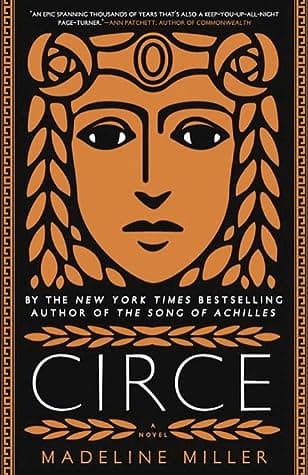
- Circe
Madeline Miller
4.3 (343k) average on GoodreadsFantasyFeminist retelling of ancient myths, giving agency and depth to traditionally marginalized female characters.
- Sexing the Cherry
Jeanette Winterson
3.8 (16k) average on GoodreadsLiterary FictionWhile both Carter and Winterson engage with myth, history, and gender fluidity, Winterson's approach in Sexing the Cherry often leans more towards magical realism, philosophical allegory, and a playful anachronism. Carter's The Bloody Chamber is more explicitly focused on the critical deconstruction of established patriarchal fairy tales and the darker, more visceral aspects of desire and power dynamics.
- Interview With The Vampire
Anne Rice
4.0 (485k) average on GoodreadsFantasyBoth authors explore gothic themes, sexuality, and the monstrous. However, Rice's Interview with the Vampire romanticizes its monstrous figures and explores themes of immortality, loneliness, and the aesthetics of the supernatural within a more traditional narrative structure. Carter's work, by contrast, uses the gothic and monstrous as a vehicle for a more pointed feminist critique and a deconstruction of the origins and implications of folklore, often with a more unsettling and less romanticized view of transformation and power.
- Harry Potter and the Sorcerer's Stone
J.K. Rowling
4.5 (7M) average on GoodreadsFantasyRescued from a miserable life under the stairs, an orphaned boy discovers he's a wizard destined for a magical school, where he uncovers a dangerous secret tied to the dark wizard who murdered his parents.
- The Hunger Games
Suzanne Collins
4.3 (6.4M) average on GoodreadsFantasyIn a future where children fight to the death on live television, Katniss Everdeen volunteers for the arena, turning a death sentence into a fight for survival and a spark of rebellion.
- 1984
George Orwell
4.2 (3.1M) average on GoodreadsPoliticsIn a future where surveillance and thought control are absolute, a man's search for truth clashes with the Party, showing that hope can be a form of rebellion.




Enjoyed the summary?
A summary gives you the shape of the book. The book itself has the detail, the examples and the voice.
Find The Bloody Chamber and Other Stories on AmazonAs an Amazon Associate, BookBrief earns from qualifying purchases. How we're funded