
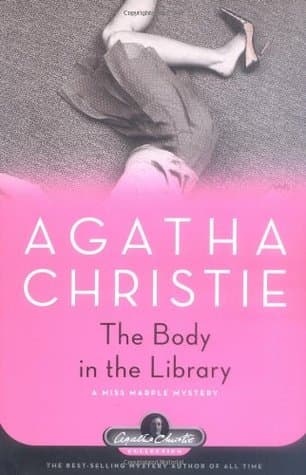
Synopsis
Covers the whole plot, including the ending.
- Difficulty
- Easy
- Pacing
- Moderate
- Mood
- Intriguing, Puzzling, Classic
- Read it if
- You enjoy classic, intricate 'whodunit' mysteries with a clever, unassuming detective and a satisfying reveal.
- Skip it if
- You prefer fast-paced thrillers with graphic details or modern police procedural elements.
The Body in the Library Plot Summary
Covers the whole plot, including the ending.
A Body Discovered in the Bantry Library
At 7 AM, Colonel Arthur Bantry's housemaid, Mary, tells him there is a dead young woman in their library at Gossington Hall. The woman is blonde, heavily made-up, wearing an evening dress, and unknown to the Bantrys. His wife, Dolly Bantry, is at first doubtful but quickly gets involved, seeing the scandal and mystery their quiet village of St. Mary Mead faces. Dolly Bantry contacts her old friend, Miss Jane Marple, knowing her insight into people will be helpful. Local police, led by Inspector Slack, arrive to investigate the victim's identity and how she ended up in the Bantrys' home.
Identifying the Victim and Initial Leads
Chief Constable Melchett and Inspector Slack quickly identify the body as Ruby Keene, an eighteen-year-old dancer from the Majestic Hotel in Milchester. Ruby had been working there and was last seen alive the previous night. Her cousin, Josie Turner, also a dancer at the Majestic, confirms the identification. The police interview staff and guests at the Majestic Hotel, focusing on anyone connected to Ruby. Suspects include Basil Blake, a film producer living nearby, and George Bartlett, a wealthy man who liked Ruby. Questions arise about Ruby's relationship with the much older millionaire, Conway Jefferson, who had taken a paternal interest in her.
The Second Body in the Quarry
The investigation changes when a second body is found in an abandoned quarry, inside Basil Blake's burned-out car. The body is so badly burned that identification is hard, but dental records show it is Pamela Reeve, a fifteen-year-old Guide from a nearby troop who had gone missing. Pamela's disappearance and her body found with the Ruby Keene case suggest a deliberate body swap. Miss Marple, observing, notices the difference between the two victims and starts to consider how their identities might have been exchanged to mislead the police and hide the real murder victim.
Conway Jefferson's Story and Ruby's Inheritance
Conway Jefferson, a wealthy invalid who lost his wife and daughter in a plane crash, had grown fond of Ruby Keene, seeing her as a daughter. He tells the police he planned to legally adopt Ruby and leave her his large fortune, removing his son-in-law, Mark Gaskell, and daughter-in-law, Adelaide Jefferson, from his will. This immediately gives a strong reason for those who would lose their inheritance. Jefferson's family members, especially Mark and Adelaide, become main suspects, though they claim not to care about the will change, which makes Miss Marple suspicious.
Miss Marple's Observations and Suspicions
While the police focus on usual leads, Miss Marple watches everyone involved, from the Bantrys' staff to the Majestic guests. She notes the mismatched clothing of the body in the library, especially the cheap evening dress and expensive shoes. She also pays close attention to the reactions of Josie Turner, Ruby's cousin, and Adelaide Jefferson, Conway's daughter-in-law. Miss Marple's understanding of human vanity and deceit leads her to question the first identification of the body in the library, believing the real victim was someone else, and that Ruby Keene was a part of a larger plan.
The Plan for Pamela Reeve
The police investigate Pamela Reeve's disappearance, finding she was last seen heading towards Basil Blake's property after being promised a film audition. This connects her directly to the film studio and Basil Blake, who is now a main suspect in both murders. It becomes clear that Pamela was deliberately killed, not as the main victim, but to be swapped. The reason for killing Pamela is to provide a body to be identified as Ruby Keene, allowing the real Ruby Keene to disappear or be killed without immediate detection. This plan suggests a careful and ruthless killer.
Josie Turner's Alibi and Behavior
Josie Turner, Ruby's cousin, has an alibi for the murder night, saying she was asleep in her room at the Majestic Hotel. However, Miss Marple finds Josie's calm and lack of real sadness over Ruby's death unsettling. Josie is ambitious and seems more worried about her own career. Miss Marple also notices Josie's subtle attempts to shift suspicion and control the story about Ruby's life and death. Her calm manner, even when discussing her cousin's murder, makes Miss Marple suspect that Josie knows more than she admits and might be involved in the crime.
The True Identity of the Library Body Revealed
Through observation and deduction, Miss Marple realizes the body in the library, first identified as Ruby Keene, is Pamela Reeve. The killer had dressed Pamela in Ruby's clothes and used heavy makeup to hide her true identity, knowing the Bantrys would not know Ruby. The real Ruby Keene was murdered earlier, and her body was then put in Basil Blake's car and burned, meant to be identified as Pamela Reeve, who was supposedly missing. This swap was designed to create confusion and buy time for the killer, directing suspicion away from the real victim and killer.
Unmasking the Killer: Josie Turner
Miss Marple, with Colonel Melchett and Inspector Slack, identifies Josie Turner as the killer. Josie, knowing Conway Jefferson's plans to adopt Ruby and make her his heir, secretly killed Ruby Keene and then placed Pamela Reeve's body, dressed in Ruby's clothes, in the Bantry library. Her reason was to get rid of Ruby and become Jefferson's adopted daughter and heir, or at least get part of the inheritance as the 'grieving' cousin. Josie manipulated the situation, using her resemblance to Ruby to help her plan, and then killed Pamela to create a false trail. Her reason was pure greed.
The Final Confession and Resolution
Josie Turner's plan is fully revealed. She had prepared Pamela Reeve, a young girl hoping for a film career, then killed her, dressed her in Ruby's clothes, and placed her in the Bantry library. She then killed Ruby Keene, put her body in Basil Blake's car, and set it on fire to destroy evidence and mislead the police into believing the burned body was Pamela. Josie's reason was financial, aiming to inherit Conway Jefferson's fortune, either directly or by pretending to be the upset relative. With Miss Marple's insights, the police gather enough evidence to confront Josie, leading to her arrest and a resolution to the double murder at Gossington Hall and the quarry.
Principal Figures
Miss Jane Marple
Consulting Detective
An elderly spinster with an unparalleled understanding of human nature, invited to solve the mystery.
Miss Marple is an elderly, observant spinster residing in St. Mary Mead. She possesses a sharp intellect and an uncanny ability to deduce the truth by drawing parallels between criminal behavior and the everyday events and personalities in her village. Her unassuming appearance often leads others to underestimate her, but her insights are consistently profound and accurate. She is invited by her friend Dolly Bantry to help solve the perplexing murder, and her quiet observations and deductions prove crucial to unraveling the complex plot.
Relationships: Dolly Bantry (Close friend and host); Colonel Arthur Bantry (Friend and host); Inspector Slack (Police contact and collaborator)
Dolly Bantry
Supporting Character
The vivacious and well-connected lady of Gossington Hall, whose library becomes a crime scene.
Dolly Bantry is the wife of Colonel Arthur Bantry and a prominent figure in St. Mary Mead society. She is practical, initially flustered by the discovery of the body, but quickly takes charge by inviting Miss Marple. Dolly is curious, enjoys gossip, and is fiercely protective of her home and reputation. She actively assists Miss Marple and the police, providing local context and often acting as a sounding board for Miss Marple's theories. Her social connections and presence in the village are essential to the narrative's setting.
Relationships: Colonel Arthur Bantry (Husband); Miss Jane Marple (Close friend)
Colonel Arthur Bantry
Supporting Character
The stoic, retired military man whose library is the scene of the first murder.
Colonel Bantry is the husband of Dolly Bantry and the owner of Gossington Hall. He is a retired military man, somewhat conventional and easily flustered by unexpected events. He is the one who first confirms the body in the library. While less involved in the active detection than his wife or Miss Marple, he provides a grounded, often bewildered perspective on the unfolding events. His primary concern is the scandalous nature of the crime and its impact on his home and wife.
Relationships: Dolly Bantry (Wife); Miss Jane Marple (Friend)
Ruby Keene
Victim
A young, ambitious dancer from the Majestic Hotel, whose murder sets the central mystery in motion.
Ruby Keene is an eighteen-year-old professional dancer working at the Majestic Hotel. She is described as blonde, attractive, and somewhat naive, with aspirations of a better life. She had attracted the attention of the wealthy Conway Jefferson, who intended to adopt her and make her his heiress. Her sudden disappearance and the discovery of a body initially identified as hers in the Bantry library are the catalysts for the entire mystery. Ruby's potential inheritance provides the central motive for the murders.
Relationships: Josie Turner (Cousin and fellow dancer); Conway Jefferson (Wealthy benefactor, intended adoptive father)
Josie Turner
Antagonist
Ruby Keene's ambitious cousin and fellow dancer, who holds crucial information.
Josie Turner is Ruby Keene's older cousin and a dancer at the Majestic Hotel. She is portrayed as more astute and ambitious than Ruby, with a calculating demeanor. Josie is instrumental in identifying Ruby's body and provides an alibi for the night of the murder. However, her composure, lack of genuine grief, and subtle manipulations draw Miss Marple's suspicion. Josie's deep understanding of Ruby's life and connections, combined with her own ambition, make her a key figure in the investigation, ultimately revealed as the orchestrator of the crimes.
Relationships: Ruby Keene (Cousin (victim of her plot)); Conway Jefferson (Potential benefactor through Ruby)
Conway Jefferson
Supporting Character
A wealthy invalid millionaire planning to adopt Ruby Keene and make her his heiress.
Conway Jefferson is a very wealthy man, an invalid confined to a wheelchair, who is staying at the Majestic Hotel. He recently lost his wife and daughter in a plane crash and sees Ruby Keene as a surrogate daughter. He intends to adopt Ruby and leave her his considerable fortune, disinheriting his current heirs. This act provides the primary financial motive for the murders. Jefferson is a sympathetic character, genuinely fond of Ruby, and deeply affected by her supposed death, though he remains clear-headed enough to provide vital information.
Relationships: Ruby Keene (Intended adopted daughter); Mark Gaskell (Son-in-law); Adelaide Jefferson (Daughter-in-law)
Inspector Slack
Supporting Character
The local police inspector, initially dismissive of Miss Marple but eventually respects her methods.
Inspector Slack is the lead police detective from Milchester, assigned to the case. He is initially portrayed as somewhat arrogant, quick to form his own conclusions, and dismissive of Miss Marple's 'old-fashioned' methods. He is meticulous in his police work, following conventional leads, but struggles to connect the dots of the elaborate plot. Over the course of the investigation, as Miss Marple's insights prove more accurate, he gradually comes to respect her intellect and collaboration, ultimately working with her to reveal the truth.
Relationships: Miss Jane Marple (Investigative collaborator); Chief Constable Melchett (Superior officer)
Chief Constable Melchett
Supporting Character
The Chief Constable, who has a higher regard for Miss Marple's abilities than Inspector Slack.
Chief Constable Melchett is Inspector Slack's superior. He is more open-minded and experienced than Slack, and crucially, he already has a high regard for Miss Marple's deductive abilities from previous cases. He ensures that Miss Marple is included in the investigation and often acts as a bridge between her unconventional methods and the police's more formal procedures. Melchett's trust in Miss Marple is vital for her to fully contribute to the solving of the mystery.
Relationships: Miss Jane Marple (Trusted advisor); Inspector Slack (Subordinate)
Pamela Reeve
Victim
A young Girl Guide whose charred body is found in a quarry, initially mistaken for Ruby Keene.
Pamela Reeve is a fifteen-year-old Girl Guide from the nearby village of Danemouth. She is described as having recently dyed her hair blonde and being eager for adventure and opportunities, particularly in the film industry. She is lured away under false pretenses and murdered, with her body then strategically placed in the Bantry library, dressed to impersonate Ruby Keene. Her subsequent discovery in a burnt car, initially identified as Ruby, is a crucial misdirection in the killer's plot. Pamela is an innocent victim, used as a pawn in a larger scheme.
Relationships: Josie Turner (Her murderer); Ruby Keene (Her body was swapped with Ruby's)
Themes & Insights
Appearance vs. Reality
This theme is central to the plot, dealing with mistaken identities and deliberate deception. The initial confusion over Ruby Keene's body in the library, and the later discovery of Pamela Reeve's burned body, are key examples. The killer carefully changes appearances—dressing Pamela to look like Ruby, burning Ruby's body to hide who she is—to create a false story. Miss Marple succeeds because she can see past these surface appearances and find the truth, often by noticing small differences in clothing or behavior.
“'It's so much easier to believe the obvious,' said Miss Marple, 'and so much more dangerous.”
Greed and Inheritance
The main reason for the double murder is Conway Jefferson's large fortune. His decision to adopt Ruby Keene and make her his only heir gives a strong reason for those who would lose their inheritance. The killer's plan is driven by the wish to eliminate Ruby and either claim the inheritance directly or through someone else. This theme shows how extreme wealth can corrupt people and lead to desperate, violent acts, even among seemingly respectable individuals.
“'Money,' said Miss Marple, 'is the root of all evil, and a very strong root it is.”
Social Class and Prejudice
The novel explores social class and its effect on how people are seen and how justice is applied. The 'respectable' Bantrys are shocked by a 'common' dancer's body in their library, showing societal judgments. The police, too, initially focus on certain people based on their background or job, like the film producer Basil Blake. Miss Marple, however, goes beyond these class lines in her observations, understanding that human nature is universal, regardless of social standing, allowing her to see motives others miss.
“'There's a lot of human nature in a small village,' said Miss Marple, 'and it's much the same as human nature anywhere else.”
The Nature of Evil
The book examines the nature of planned evil, especially in the killer's character. The careful planning, the cold-blooded murder of two innocent young women, and the calculated manipulation of appearances show a lack of empathy and a ruthless pursuit of self-interest. Miss Marple, with her understanding of human wickedness, recognizes that evil can exist beneath a normal exterior, and that bad crimes often come from ordinary reasons like greed.
“'Evil is not something that happens in books, dear. It happens everywhere.”
Plot Devices & Literary Techniques
Red Herring
Misleading clues and characters designed to divert suspicion.
Agatha Christie masterfully employs several red herrings to keep the reader guessing. The initial identification of the body in the library as Ruby Keene, the focus on Basil Blake's suspicious behavior, and the various alibis presented by other suspects (like Mark Gaskell and Adelaide Jefferson) all serve to distract from the true killer. These false leads force the reader to consider multiple possibilities, making the ultimate revelation more surprising and satisfying. Miss Marple's unique ability to see through these misdirections is key to solving the case.
Body Swap
The central deception where one victim's body is disguised as another.
The 'body swap' is the core plot device of the novel. The killer murders Pamela Reeve, dresses her in Ruby Keene's clothes and makeup, and places her in the Bantry library. Simultaneously, the real Ruby Keene is murdered, and her body is burned in a car wreck, to be identified as Pamela. This elaborate deception is designed to create utter confusion, misdirect the police about the identity of the primary victim, and buy time for the killer to consolidate their position regarding the inheritance. Unraveling this swap is Miss Marple's crucial insight.
The Unreliable Witness/Identification
The fallibility of initial witness accounts and identifications.
The novel highlights how easily witnesses can be mistaken, especially under pressure or when presented with manipulated evidence. The Bantrys' inability to identify the body in their own library, and Josie Turner's 'confirmation' of Ruby's identity, are crucial to the plot. The heavy makeup and the unusual context contribute to these misidentifications. This device underscores that what people see, or think they see, isn't always the truth, and that careful, objective investigation is needed to overcome these human errors and deliberate deceptions.
The 'Quiet Village' Setting
The juxtaposition of a heinous crime with a seemingly peaceful, respectable village.
The setting of St. Mary Mead, a quintessential English village, is a classic Christie device. The shock of finding a murdered 'glamour girl' in the library of the highly respectable Bantrys immediately creates a powerful sense of disruption and scandal. This contrast between the idyllic, seemingly innocent village life and the brutal, sophisticated crime highlights the idea that evil can permeate any environment, and that appearances of respectability can be deeply misleading. It also allows Miss Marple to use her intimate knowledge of human nature, honed in such a setting, to understand the broader criminal world.
The Body in the Library Quotes
“The young people of today are so careless. They have no sense of responsibility.”
“One must always look for the simplest explanation first.”
“It's always the quiet ones you have to watch.”
“A library is a very good place to find a body. So quiet and respectable.”
“People are so much alike everywhere. The same things happen to them.”
“The truth is always there, if you know where to look.”
“It is not the obvious person who is always guilty.”
“Money is a great motive for murder.”
“In a village, nothing remains a secret for long.”
“The dead tell no tales, but the living sometimes do.”
“Appearances are often deceptive.”
“Jealousy is a powerful emotion. It can drive people to do terrible things.”
“The past has a way of catching up with people.”
“Everyone has something to hide, even the most innocent-seeming person.”
Quiz
10 questions on the plot and the characters. Each answer comes with a short explanation.
Question 1
What is the name of the couple who discover the body in their library at the beginning of the book?
- The Bantrys
- The Marples
- The St. Johns
- The Jeffersons
Show answer
A. The Bantrys The book opens with Colonel and Mrs. Bantry waking up to find the body of a young woman in their library at Gossington Hall, setting the mystery in motion.
Question 2
What is the name of the hotel where Ruby Keene worked as a dancer before her disappearance?
- The Majestic Hotel
- The Grand Hotel
- The Seaside Inn
- The Royal Pavilion
Show answer
A. The Majestic Hotel Ruby Keene was a dancer at the Majestic Hotel in Danemouth, and her disappearance is central to the mystery, linking her to the body found in the Bantrys' library.
Question 3
Who is the wealthy elderly man who takes a keen interest in Ruby Keene and plans to adopt her?
- Conway Jefferson
- Colonel Bantry
- Sir Henry Clithering
- Mark Gaskell
Show answer
A. Conway Jefferson Conway Jefferson, a wealthy invalid, becomes fond of Ruby Keene and intends to adopt her, making her a potential heir and creating a motive for murder.
Question 4
What is the connection between the body in the library and the charred remains found in the quarry?
- They are both victims of the same murderer, but the body in the library is a decoy.
- They are sisters who were killed in separate incidents.
- They are unrelated; the quarry discovery is a red herring.
- They are both dancers from the same hotel who were murdered by a serial killer.
Show answer
A. They are both victims of the same murderer, but the body in the library is a decoy. The body in the library is actually that of a girl named Pamela Reeves, placed there to mislead investigators, while the charred remains in the quarry are Ruby Keene, the intended victim. Both were killed by the same perpetrator as part of a plot to conceal Ruby's murder.
Question 5
Why does Miss Marple suspect that the murder is connected to a hotel environment?
- Because of the victim's evening dress and makeup, which suggest a professional dancer or entertainer.
- Because the Bantrys often host hotel guests at their home.
- Because she overheard a conversation about a hotel while investigating.
- Because the police found a hotel key in the victim's pocket.
Show answer
A. Because of the victim's evening dress and makeup, which suggest a professional dancer or entertainer. Miss Marple deduces from the victim's attire and heavy makeup that she likely worked in a hotel or similar entertainment venue, guiding the investigation toward the Majestic Hotel and its staff.
Question 6
Who is revealed to be the murderer at the end of the book?
- Basil Blake
- Josie Turner
- Mark Gaskell
- Adelaide Jefferson
Show answer
B. Josie Turner Josie Turner, Ruby Keene's cousin and a dancer at the Majestic Hotel, is the murderer. She killed Ruby to inherit Conway Jefferson's money and used Pamela Reeves's body as a decoy.
Question 7
What role does Sir Henry Clithering play in the investigation?
- He is a retired police commissioner who assists Miss Marple and the local police.
- He is the chief suspect initially arrested for the murder.
- He is the lawyer representing the Bantrys in the case.
- He is a journalist covering the mystery for the newspapers.
Show answer
A. He is a retired police commissioner who assists Miss Marple and the local police. Sir Henry Clithering, a former Scotland Yard commissioner, is a friend of the Bantrys and Miss Marple. He provides official insight and helps bridge the gap between amateur sleuthing and police work.
Question 8
What is the significance of the 'heavy make-up' on the body in the library?
- It helps identify the victim as a professional dancer from a hotel.
- It is a clue that the victim was attending a masquerade ball.
- It suggests the victim was trying to disguise her identity.
- It indicates the victim was a actress in a local theater production.
Show answer
A. It helps identify the victim as a professional dancer from a hotel. The heavy, smeared makeup is a key detail that Miss Marple uses to infer the victim's profession, pointing toward the hotel entertainment scene and ultimately helping solve the case.
Question 9
How does Miss Marple's knowledge of village life help her solve the mystery?
- It allows her to understand human nature and motives, drawing parallels between the suspects and people in her village.
- She uses gossip from her village to directly identify the murderer.
- She recognizes the victim as someone from her own village.
- She applies local customs to interpret the crime scene evidence.
Show answer
A. It allows her to understand human nature and motives, drawing parallels between the suspects and people in her village. Miss Marple often solves cases by comparing the behavior and motives of suspects to individuals in her village of St. Mary Mead, using her insight into human psychology and social dynamics to uncover the truth.
Question 10
What is the motive behind the murder of Ruby Keene?
- Financial gain from Conway Jefferson's inheritance.
- Jealousy over her success as a dancer.
- Revenge for a past wrongdoing.
- To cover up an accidental death.
Show answer
A. Financial gain from Conway Jefferson's inheritance. Josie Turner murders Ruby Keene to secure Conway Jefferson's fortune for herself, as Jefferson planned to adopt Ruby and make her his heir, cutting out Josie and others from the inheritance.
The Body in the Library FAQ
What is 'The Body in the Library' about?
The novel centers on the discovery of a young woman's body in the library of Colonel and Mrs. Bantry's home, Gossington Hall. The victim, later identified as Ruby Keene, is a dancer from the Majestic Hotel, and her death is connected to the subsequent discovery of another girl's charred remains in a quarry. Miss Marple is called in to unravel the complex web of deception involving multiple suspects and motives.
Why should I read 'The Body in the Library'?
It's a classic Agatha Christie mystery that showcases Miss Marple's sharp observational skills in a seemingly straightforward case that becomes increasingly intricate. The plot features clever red herrings, a well-constructed puzzle, and a surprising resolution that ties together disparate elements like the hotel setting, family secrets, and financial motives.
What is the background/setting of 'The Body in the Library'?
The story is set in the English village of St. Mary Mead and the nearby Majestic Hotel, a seaside resort. The contrast between the quiet, respectable village life and the glamorous, deceptive world of the hotel creates a rich backdrop for the mystery, highlighting themes of appearance versus reality.
What are the most memorable quotes?
Notable quotes include Miss Marple's observation: 'The truth is, you see, that most people... are far too trusting for this wicked world,' and her remark on human nature: 'It is so difficult to be sure of anyone, isn't it? Even the people we know best.' These reflect the novel's themes of deception and hidden motives.
What writing style does the author use?
Agatha Christie employs a straightforward, third-person narrative with a focus on dialogue and plot progression. The style is concise and paced to build suspense, using Miss Marple's seemingly casual conversations to gradually reveal clues and insights into the characters' psyches.
What minor details add significant meaning?
Details like Ruby Keene's smeared makeup and evening dress hint at her last moments being rushed or violent, while the charred body in the quarry suggests an attempt to destroy evidence. The repeated mentions of Conway Jefferson's wealth and his attachment to Ruby subtly foreshadow the financial motives behind the crimes.
What are some subtle foreshadowing moments?
Early references to Ruby Keene's ambition and her resemblance to Josie Turner foreshadow the identity swap plot. The casual discussion of fire at the quarry and the hotel's financial troubles hint at the methods and motives for the murders, preparing readers for the later revelations.
What unexpected character connections exist?
Ruby Keene is connected to multiple characters: she is a dancer at the Majestic Hotel, favored by the wealthy Conway Jefferson, and her cousin Josie Turner is involved in the deception. The hotel owner, Basil Blake, and his wife have hidden ties to the victims, revealing a network of relationships driven by greed and secrecy.
What are unspoken character motivations?
Conway Jefferson's desire to adopt Ruby stems from loneliness after losing his own children, but it also blinds him to her manipulative nature. Josie Turner's involvement in the plot is driven by jealousy and financial gain, while Basil Blake's actions are motivated by a need to protect his business interests, all unspoken until revealed by Miss Marple.
What psychological complexities do characters exhibit?
Ruby Keene displays a mix of ambition and naivety, making her vulnerable to exploitation. Conway Jefferson shows a complex blend of grief and generosity, which is manipulated by others. Josie Turner's jealousy and resentment reveal how familial bonds can be twisted by greed, adding depth to the mystery's human elements.
What are the major emotional turning points?
Key emotional moments include the Bantrys' shock and fear upon discovering the body, Conway Jefferson's grief when he realizes Ruby's death, and the revelation of Josie Turner's betrayal. Miss Marple's final explanation brings a mix of relief and sadness as the full extent of the deception is uncovered.
How do relationship dynamics evolve?
The relationship between the Bantrys and Miss Marple shifts from initial skepticism to deep trust as she solves the case. Conway Jefferson's attachment to Ruby evolves from paternal affection to tragic realization, while the interactions among the hotel staff and guests become increasingly strained as suspicions arise, highlighting themes of trust and betrayal.
Which parts remain ambiguous or open-ended?
The exact sequence of events leading to Ruby Keene's murder is clarified, but some character motivations, such as the full depth of Josie Turner's resentment, are left partially unexplored. The aftermath for characters like Conway Jefferson is not detailed, leaving readers to ponder their emotional recovery.
What are controversial scenes or decisions?
Some readers might find the manipulation of Conway Jefferson's grief for financial gain controversial, as it preys on his vulnerability. The decision to use a charred body to mislead investigators raises ethical questions about the lengths to which the perpetrators go, adding a dark layer to the plot.
'The Body in the Library' ending explained: how it ends & what it means
Miss Marple reveals that Josie Turner killed Ruby Keene out of jealousy and to inherit Conway Jefferson's money, with help from others to stage the body and create a false trail. The ending underscores themes of greed and deception, showing how appearances can be deceiving and justice is restored through careful observation.
About the author
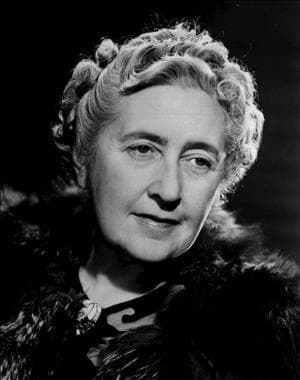
Dame Agatha Mary Clarissa Christie, Lady Mallowan, was an English writer known for her 66 detective novels and 14 short story collections, particularly those revolving around fictional detectives Hercule Poirot and Miss Marple. She also wrote the world's longest-running play, the murder mystery The Mousetrap, which has been performed in the West End since 1952. A writer during the "Golden Age of Detective Fiction", Christie has been called the "Queen of Crime". She also wrote six novels under the pseudonym Mary Westmacott. In 1971, she was made a Dame (DBE) by Queen Elizabeth II for her contributions to literature. Guinness World Records lists Christie as the best-selling fiction writer of all time, her novels having sold more than two billion copies.
Similar books
- And Then There Were None
Agatha Christie
4.3 (822k) average on GoodreadsThrillerAnother classic Christie with a complex plot and a high body count.
- Gaudy Night
Dorothy L. Sayers
4.2 (23k) average on GoodreadsHistorical FictionFeatures a brilliant female detective solving a mystery in a seemingly genteel setting.
- THE MURDER OF ROGER ACKROYD
Agatha Christie
4.2 (153k) average on GoodreadsThrillerA Christie novel known for its shocking twist and clever misdirection.
- Angels & Demons
Dan Brown
3.9 (2.7M) average on GoodreadsThrillerA Harvard symbologist races through Rome's ancient sites, deciphering cryptic clues to unmask the Illuminati and stop a vengeful plot to destroy the Vatican with a stolen antimatter weapon.
- Gone Girl
Gillian Flynn
4.1 (2.3M) average on GoodreadsThrillerA wife's sudden disappearance on her fifth anniversary reveals a web of lies and psychological warfare, exposing the secrets within a seemingly perfect marriage.
- The Girl on the Train
Paula Hawkins
3.9 (2.1M) average on GoodreadsThrillerA woman’s fascination with a seemingly perfect couple she watches from her daily train commute leads her into a dark investigation when she witnesses something that shatters their idyllic image.



Enjoyed the summary?
A summary gives you the shape of the book. The book itself has the detail, the examples and the voice.
Find The Body in the Library on AmazonAs an Amazon Associate, BookBrief earns from qualifying purchases. How we're funded