
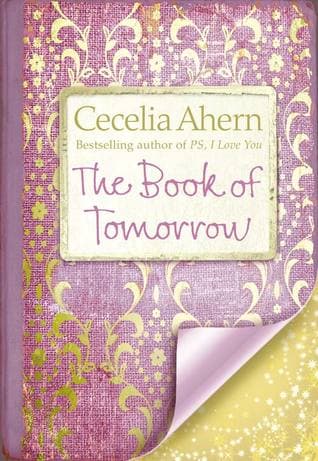
Synopsis
Covers the whole plot, including the ending.
- Difficulty
- Easy
- Pacing
- Moderate
- Mood
- Mysterious, Reflective, Hopeful, Enchanting
- Read it if
- You enjoy a blend of fantasy, mystery, and coming-of-age stories with a touch of romance, and like protagonists who undergo significant personal growth.
- Skip it if
- You prefer hard fantasy rules or dislike stories where the protagonist is initially self-centered and makes questionable choices.
The Book of Tomorrow Plot Summary
Covers the whole plot, including the ending.
The Arrival at Blackhall
Following her father James Goodwin's sudden suicide, 16-year-old Tamara Goodwin and her distant mother, Jennifer, leave their comfortable Dublin life. They move to Blackhall, a crumbling, isolated estate in rural Ireland owned by Jennifer's estranged sister, Rosaleen. Tamara feels lost in this bleak new environment, struggling with her grief and her mother's withdrawn state. Blackhall is silent and mysterious, with Rosaleen, a reclusive aunt, adding to the unsettling mood. Tamara feels a deep sense of loss and loneliness, longing for her old life and the close relationship she had with her father.
The Traveling Library and the Mysterious Book
One day, a traveling library, a converted bus full of books, arrives in the remote village near Blackhall. Intrigued, Tamara visits it and is drawn to a large, leather-bound book with a gold clasp and padlock, placed on a pedestal. The librarian, Father Bryan, seems to know more about the book, hinting at its unique nature. Despite being locked, Tamara feels a strong pull toward it. She takes the book back to Blackhall, a spark of curiosity ignited in her otherwise despairing life. The book's unusual appearance and the librarian's comments suggest it holds a secret, further piquing her interest.
Unlocking the Future
Driven by curiosity, Tamara tries to open the mysterious book. To her surprise, it unlocks without a key, revealing pages filled with her own handwriting. These are not past entries, but diary entries for upcoming days, describing events that haven't happened yet. Tamara is initially disbelieving, but as the events described in the book unfold exactly as written, she realizes the book is a diary of her own future. This discovery is both thrilling and terrifying, giving her an unprecedented, though limited, look into tomorrow. She begins to read the entries carefully, trying to understand this extraordinary phenomenon.
Unraveling Family Secrets
As Tamara continues to read future entries, she uncovers disturbing details about her family's history, particularly the strained relationship between her mother, Jennifer, and aunt, Rosaleen. The entries hint at a long-buried secret involving her father, James, and a tragic event that occurred years ago at Blackhall. The book reveals glimpses of hidden letters, quiet conversations, and unspoken tensions that have affected her family for decades. Tamara realizes that her father's suicide might be connected to these past events, and the book becomes her only way to understand the truth. She feels a growing urgency to piece together the clues.
The Boy from the Past
Among the future entries, Tamara often sees references to a boy named Alex. As she reads more, she learns that Alex was a young stable boy who worked at Blackhall years ago and had a close relationship with her father when he was younger. The entries suggest Alex's disappearance or death was a traumatic event for the family, especially her father. Tamara starts to see Alex's name connected to her father's past and the mystery of Blackhall. The book implies a deep connection between Alex, her father, and the family secrets, suggesting his fate is central to the unresolved grief and tension in the household.
Trying to Alter Tomorrow
With her knowledge of the future, Tamara begins to experiment with altering predicted events. She tries to prevent minor problems or guide conversations, hoping to improve outcomes. However, she quickly discovers that while she can influence small details, the major events described in the book seem set. Her attempts to change significant occurrences often lead to the same outcome, or even worse, create new, unforeseen problems. This realization brings a sense of fatalism, but also a deeper understanding of the book's power and limits. She grapples with knowing the future and the futility of trying to defy destiny.
The Confession and the Truth
Armed with information from the book, Tamara confronts her mother, Jennifer, about Alex and the secrets surrounding Blackhall. Initially, Jennifer resists and is distraught, but Tamara's persistence and the accuracy of her 'predictions' compel her mother to finally confess. Jennifer reveals the painful truth: Alex was her brother, Tamara's uncle, and he died tragically at Blackhall years ago. The family, particularly Rosaleen, blamed James (Tamara's father) for Alex's death, causing the deep rift and guilt that plagued them. This confession shatters Tamara's view of her family and explains the pervasive sorrow she sensed.
James's Guilt and Rosaleen's Blame
Jennifer explains that Alex, a spirited boy, had a horse riding accident. James, then a young man, was with him and tried to save him but failed. Rosaleen, Alex's mother, never forgave James, believing he was responsible for her son's death. This immense guilt haunted James throughout his life, leading to his suicide. The book had been her father's, a gift from Father Bryan, and he too had used it to try and understand or change the past, burdened by his secret. Tamara realizes the deep impact this event had on everyone, creating a web of blame, grief, and unspoken pain that ultimately led to her father's tragic end.
The Book's Origins and Purpose
Father Bryan, the librarian, reveals the book's true nature. It is a unique item, passed down through his family, that shows the future to those who are lost or need guidance. He explains that he had given the book to James years ago, hoping it would help him come to terms with Alex's death and find peace. However, James, consumed by guilt, couldn't escape his past. Now, the book has found its way to Tamara, suggesting it is her turn to use its power to heal her family and understand her own path. The book is not just a predictor but a tool for self-discovery and reconciliation, meant to break cycles of pain.
Forgiveness and Moving Forward
With the complete truth and the book's insights, Tamara helps her mother and Rosaleen reconcile. She helps them understand the full scope of James's suffering and their shared grief over Alex. The family finally confronts decades of unspoken pain and blame, allowing for a profound, though difficult, process of forgiveness. Tamara uses her knowledge, not to change the future, but to guide her family toward acceptance and healing. The book, having fulfilled its purpose for her, becomes a symbol of closure and the possibility of a better tomorrow.
A New Beginning
With the family secrets uncovered and healing begun, Tamara finds a sense of peace she hadn't known since her father's death. She no longer feels the weight of unanswered questions. The book's final entries suggest a future where she can move past her grief and embrace life again. She develops a deeper connection with her mother and aunt, and even finds a budding romance with a local boy. Tamara understands that while the book showed her tomorrow, her actions today, driven by understanding and empathy, truly shaped her future. She is ready to close the book on the past and open a new chapter in her life.
Principal Figures
Tamara Goodwin
Protagonist
A grieving teenager who discovers a book that reveals her future.
Tamara is a spirited and intelligent sixteen-year-old girl whose world is shattered by her father's suicide. Initially lost in grief and resentful of her new surroundings at Blackhall, she is pragmatic and curious. She deeply misses her father and struggles with her mother's emotional withdrawal. The discovery of the mysterious book transforms her from a passive observer of her own life into an active participant, driven by a desire to understand her family's past and prevent further tragedy. She is empathetic, determined, and ultimately courageous in confronting difficult truths.
Relationships: James Goodwin (Beloved father, shares a deep bond, his suicide deeply impacts her.); Jennifer Goodwin (Emotionally distant mother, strained relationship that slowly heals.); Rosaleen (Eccentric estranged aunt, initially hostile but forms a bond.); Father Bryan (Librarian and guardian of the book, mentor figure.); Alex (Deceased uncle, central to the family mystery, she feels a connection to his story.)
Jennifer Goodwin
Supporting
Tamara's emotionally withdrawn mother, burdened by past secrets.
Jennifer is Tamara's mother, a woman deeply affected by her husband's suicide and a long-buried family secret. She is initially cold, distant, and consumed by her own grief, making it difficult for Tamara to connect with her. Her emotional unavailability stems from years of suppressing the truth about Alex's death and the strain it put on her marriage and relationship with her sister, Rosaleen. Through Tamara's discoveries, Jennifer is forced to confront her past and slowly begins to open up, revealing a loving but deeply wounded woman who yearns for reconciliation and peace.
Relationships: Tamara Goodwin (Daughter, initially strained but eventually reconciled.); James Goodwin (Deceased husband, deeply loved but their marriage was burdened by secrets.); Rosaleen (Estranged sister, their relationship is broken by Alex's death, later reconciled.); Alex (Deceased brother, his death caused immense grief and family estrangement.)
James Goodwin
Mentioned
Tamara's deceased father, whose suicide initiates the story and whose past holds the central mystery.
James is Tamara's beloved father, whose unexpected suicide is the catalyst for the entire story. Though deceased, his presence looms large over Tamara's life and the narrative. He was a kind and loving father, but secretly carried a profound burden of guilt stemming from his perceived role in Alex's death years ago. He was the previous owner of the mysterious book, having received it from Father Bryan, and used it in an attempt to find peace or perhaps change the past, ultimately failing. His guilt and inability to resolve the past led to his tragic end.
Relationships: Tamara Goodwin (Daughter, shared a very close, loving bond.); Jennifer Goodwin (Wife, loved her but kept a major secret from her.); Rosaleen (Sister-in-law, blamed by her for Alex's death.); Alex (Deceased brother-in-law (or close friend), felt responsible for his death.); Father Bryan (Acquaintance, received the book from him.)
Rosaleen
Supporting
Tamara's eccentric and reclusive aunt, consumed by bitterness.
Rosaleen is Jennifer's sister and Tamara's aunt, the owner of Blackhall. She is a reclusive, bitter, and somewhat eccentric woman, deeply scarred by the death of her son (or brother, Alex) and her subsequent blaming of James. She holds a long-standing grudge against James and, by extension, Jennifer, which has led to decades of estrangement. Her initial interactions with Tamara are cold and unwelcoming. However, beneath her harsh exterior lies a profound grief and a desperate need for closure. She is a guardian of the family's secrets and eventually, through Tamara's efforts, begins to soften and heal.
Relationships: Tamara Goodwin (Niece, initially cold but grows to accept her.); Jennifer Goodwin (Estranged sister, blamed her husband for Alex's death, later reconciled.); James Goodwin (Brother-in-law, blamed him for Alex's death.); Alex (Deceased son/brother, his death is the source of her profound grief and bitterness.)
Alex
Mentioned
The deceased stable boy whose tragic death is the central mystery.
Alex is the young stable boy whose death at Blackhall years ago is the pivotal event that fractured the Goodwin family. He is Tamara's deceased uncle (Jennifer's brother and Rosaleen's son) and was a close friend to a young James. His death, an accident involving a horse, was misinterpreted or misattributed, leading Rosaleen to blame James. Alex's memory, and the unresolved grief and guilt surrounding his death, are the core of the family's dysfunction and James's eventual suicide. Though never physically present in the story, his life and death drive the entire plot, as Tamara seeks to uncover the truth of what happened to him.
Relationships: James Goodwin (Close friend, his death led to James's guilt.); Jennifer Goodwin (Brother, his death caused her immense grief and estrangement from Rosaleen.); Rosaleen (Son/brother, his death caused her profound grief and bitterness.)
Father Bryan
Supporting
The enigmatic librarian who guards the mysterious book.
Father Bryan is the kindly and wise librarian of the traveling library. He is the guardian and, in a sense, the facilitator of the mysterious book's journey. He has an ancient connection to the book, understanding its power and purpose. He is the one who initially provides the book to James and later to Tamara, guiding them subtly without revealing too much. He acts as a spiritual and philosophical mentor, offering cryptic advice and ultimately providing the missing pieces of the puzzle regarding the book's origins and the family's past. He represents wisdom, fate, and the acceptance of destiny.
Relationships: Tamara Goodwin (Mentor, provides her with the book and guidance.); James Goodwin (Acquaintance, gave him the book years ago.)
Brendan
Supporting
A local boy who becomes a potential romantic interest for Tamara.
Brendan is a friendly local boy Tamara meets in the village. He offers a sense of normalcy and a connection to the outside world during Tamara's isolated time at Blackhall. He is kind, understanding, and provides a much-needed distraction and source of comfort for Tamara. His presence hints at the possibility of a future beyond her grief and the family's secrets. While his role is not central to the mystery, he represents hope, new beginnings, and the potential for romance in Tamara's life as she starts to heal.
Relationships: Tamara Goodwin (Friend, potential romantic interest.)
Themes & Insights
Grief and Loss
The novel explores grief, especially after the unexpected loss of a loved one. Tamara's initial despair over her father's suicide, her mother's emotional shutdown, and Rosaleen's decades-long bitterness over Alex's death all show different ways people cope with deep loss. The story emphasizes how unresolved grief can harm relationships, creating a cycle of pain across generations. The book suggests that confronting grief, no matter how painful, is necessary for healing and moving forward, as seen in the family's eventual reconciliation.
“Grief is a ghost that haunts the living, but sometimes, the living can set it free.”
The Nature of Time and Destiny
The mysterious book, revealing future diary entries, challenges the characters' understanding of time, free will, and destiny. Tamara grapples with the ethics of knowing the future and the futility of trying to change major events. The book suggests that while minor details can be altered, certain significant events are predetermined or are part of a larger, unavoidable story. This theme is explored through Tamara's attempts to intervene and her eventual acceptance that the book's purpose is not to change the future, but to provide understanding and guidance for navigating it, as Father Bryan explains.
“Tomorrow is not a blank page; it's a page already written, waiting for you to read it.”
Family Secrets and Forgiveness
The novel is a mystery driven by long-buried family secrets. The strained relationships between Jennifer, Rosaleen, and James's guilt are all rooted in the unspoken truth about Alex's death. The story shows how secrets, even those kept with good intentions or out of pain, can poison family bonds and lead to decades of misunderstanding and resentment. Forgiveness, both of others and oneself, is crucial for healing. Tamara's role is to uncover these truths, forcing her family to confront their past and find a path toward reconciliation and forgiveness.
“Secrets are like heavy stones, the longer you carry them, the more they weigh you down.”
Self-Discovery and Coming of Age
Tamara's journey is one of self-discovery. Placed in an unfamiliar and challenging environment, and given an extraordinary gift, she matures quickly. The book helps her personal growth, allowing her to understand her family, her father, and ultimately herself. She learns about responsibility, empathy, and the power of her own actions. By confronting the past and helping her family heal, Tamara moves beyond her own grief and resentment, finding her voice and her place in the world. Her experiences shape her into a resilient and compassionate young woman.
“Sometimes, to find your own way, you first have to understand the paths others have taken.”
Plot Devices & Literary Techniques
The Future Diary (The Book of Tomorrow)
A magical, locked leather-bound book that reveals tomorrow's diary entries.
This is the central magical realism element and the primary plot device. The book functions as a future diary, showing Tamara her own handwritten entries for the upcoming days. It drives the mystery, providing clues about the family's past and foreshadowing future events. While it offers knowledge, it also highlights the limitations of free will, as major events seem unchangeable. Its existence forces Tamara to confront destiny and the responsibility that comes with knowing what's to come, ultimately serving as a tool for understanding and healing rather than simply prediction.
Foreshadowing through Diary Entries
The book's entries hint at future events and past secrets without full disclosure.
The diary entries serve as a constant source of foreshadowing. They reveal snippets of conversations, reactions, and events that will occur, building suspense and driving Tamara's investigation. These entries are often cryptic or incomplete, requiring Tamara to piece together the larger picture. This device not only propels the plot forward but also creates a sense of inevitability and urgency, as Tamara races against time to understand and potentially influence the unfolding future, especially concerning the family's dark past and her father's suicide.
The Isolated Setting of Blackhall
A crumbling, remote Irish estate that mirrors the family's brokenness.
Blackhall is more than just a setting; it's a character in itself and a significant plot device. Its isolation, decay, and atmosphere of unspoken sorrow mirror the emotional state of the Goodwin family and the secrets it holds. The remote location limits outside influence, forcing the characters to confront each other and their past. The estate's history is intertwined with Alex's death, making it a physical representation of the family's trauma. The oppressive environment amplifies Tamara's initial despair and underscores the profound weight of the secrets hidden within its walls.
The Estranged Family
The fractured relationships between Jennifer, Rosaleen, and the memory of James.
The deep-seated estrangement between Jennifer and Rosaleen, stemming from Alex's death and Rosaleen's blame of James, is a crucial plot device. This family rift creates a void of communication and understanding, allowing secrets to fester for decades. Tamara's arrival, armed with the book's insights, forces these characters to interact and eventually confront the unresolved issues that have plagued them. The estranged relationships provide the primary conflict and the emotional stakes of the story, as Tamara's ultimate goal becomes the healing and reconciliation of her broken family.
The Book of Tomorrow Quotes
“Perhaps the most important thing she'd learned was that you couldn't run away from yourself. No matter how far you went, what new life you built, you would always carry your past with you.”
“The Book of Tomorrow doesn't tell you what will happen, but what *might* happen. It shows you possibilities, not certainties.”
“Sometimes the things you run from are the very things you need to face.”
“Every day is a new page. You can choose what you write on it.”
“Grief is like a wave. It comes and goes, but it never really leaves you. You just learn to surf it.”
“The past isn't always what you remember it to be. Sometimes it's a story we tell ourselves to make sense of things.”
“Love isn't about grand gestures; it's about the quiet moments, the understanding, the acceptance.”
“Some secrets are meant to stay buried, not because they're bad, but because revealing them would cause more harm than good.”
“You can't truly live if you're constantly looking over your shoulder at what might have been.”
“Sometimes the greatest mysteries are hidden in plain sight, if only you know how to look.”
“It's not about being fearless, it's about facing your fears even when you're terrified.”
“The people who truly love you will stay, no matter how messy things get.”
“Every ending is just a new beginning, if you're brave enough to turn the page.”
“To truly understand someone, you must walk a mile in their shoes, or in this case, read their book.”
Quiz
10 questions on the plot and the characters. Each answer comes with a short explanation.
Question 1
What is the initial reason Tamara Goodwin and her mother move to the small village after her father's death?
- To escape creditors after her father's business failed.
- To live with her aunt and uncle in their family castle, Kilsaney Castle.
- Her mother inherited a cottage there.
- They were invited by a distant relative.
Show answer
B. To live with her aunt and uncle in their family castle, Kilsaney Castle. After her father's death, Tamara and her mother move into Kilsaney Castle, the home of her aunt Rosaleen and uncle Arthur.
Question 2
What unique characteristic does the mysterious book from the traveling library possess?
- It can grant wishes to its reader.
- It writes about events that will happen the following day.
- It only opens for its true owner.
- It transports the reader into the story.
Show answer
B. It writes about events that will happen the following day. The book is unique because it contains entries written in Tamara's own handwriting, detailing events that will occur the very next day.
Question 3
Who is the first person Tamara confides in about the book's magical abilities?
- Her mother, Rosaleen.
- Her uncle Arthur.
- Her new friend, Father Matt.
- The librarian from the traveling library.
Show answer
C. Her new friend, Father Matt. Tamara is initially hesitant to tell anyone, but eventually confides in Father Matt, who becomes a trusted confidant and helps her process the book's revelations.
Question 4
What is the primary theme explored through Tamara's interaction with the book?
- The dangers of altering fate.
- The importance of living in the present moment.
- The power of choice and the impact of our actions on the future.
- The futility of trying to control one's destiny.
Show answer
C. The power of choice and the impact of our actions on the future. The book constantly challenges Tamara to consider how her present actions can influence or change the future events she reads about, emphasizing the power of her choices.
Question 5
What is the name of the boy Tamara develops a romantic interest in, who is also connected to the castle's history?
- Callum
- Bran
- Finn
- Liam
Show answer
B. Bran Tamara meets Bran, a mysterious and charming boy who works around the castle and shares a complex history with her family.
Question 6
What significant secret does Tamara's mother reveal about her past that connects to the castle and the book?
- She was once a famous novelist who wrote a book similar to Tamara's.
- She had another child who was taken away from her at a young age.
- She had an affair with Tamara's uncle Arthur years ago.
- She was once engaged to Arthur, Tamara's uncle, before marrying Tamara's father.
Show answer
D. She was once engaged to Arthur, Tamara's uncle, before marrying Tamara's father. Tamara's mother eventually reveals that she was once engaged to Arthur, Tamara's uncle, and their past relationship has significant implications for the family dynamics and the events unfolding.
Question 7
How does Tamara initially try to use the book's predictions, and what is the typical outcome?
- She tries to prevent negative events, always succeeding and changing the future for the better.
- She attempts to manipulate events for personal gain, but the predictions always remain unchanged.
- She tries to intervene in events, often leading to unintended consequences or the event still happening in a different way.
- She ignores the predictions, believing that fate is unchangeable.
Show answer
C. She tries to intervene in events, often leading to unintended consequences or the event still happening in a different way. Tamara frequently tries to alter the predicted future, but often finds that her interventions either lead to unexpected complications or the core event still occurs, sometimes in a slightly different form, highlighting the complex nature of fate versus free will.
Question 8
What is the ultimate revelation about the book's origin and the identity of the 'author' of its entries?
- It was written by an ancient sorcerer who enchanted it to predict the future.
- It is a magical artifact passed down through generations of the castle's owners.
- The entries are written by Tamara herself, but from her future self, sending messages back in time.
- It is a collective unconscious manifesting the village's future events.
Show answer
C. The entries are written by Tamara herself, but from her future self, sending messages back in time. It is revealed that the entries in the book are written by Tamara herself, but from her future self, making it a paradox where she is both the reader and the writer, guiding her past self.
Question 9
What significant event does Tamara learn about her father through the book, which challenges her perception of him?
- He was secretly a wealthy philanthropist who donated large sums to charity.
- He had a secret family in another country.
- He was involved in a past crime that led to someone's death.
- He was planning to leave Tamara's mother before his death.
Show answer
C. He was involved in a past crime that led to someone's death. Tamara discovers through the book that her father was involved in an accident many years ago that resulted in a death, a secret that has haunted her family and shaped much of their present circumstances.
Question 10
By the end of the story, what does Tamara ultimately decide to do with the book and its power?
- She decides to keep it and use it to predict all future events for herself and her loved ones.
- She gives it to Father Matt, believing he can use its power for good in the community.
- She realizes the importance of living without knowing the future and chooses to close the book, allowing life to unfold naturally.
- She attempts to destroy the book, fearing its immense power.
Show answer
C. She realizes the importance of living without knowing the future and chooses to close the book, allowing life to unfold naturally. After much contemplation and experiencing the complexities of knowing the future, Tamara ultimately decides that true life is lived by not knowing what tomorrow holds, and she consciously chooses to stop reading the book, embracing the uncertainty of the future.
The Book of Tomorrow FAQ
What is the central premise of 'The Book of Tomorrow'?
The central premise revolves around Tamara Goodwin, a young woman who, after her father's death, discovers a mysterious blank book in a traveling library. This book begins to show her snippets of tomorrow's events, specifically those related to her own life and the lives of those around her in the small village of Booley.
Who is Tamara Goodwin and what is her initial situation at the start of the novel?
Tamara Goodwin is an eighteen-year-old girl living a privileged life in Dublin until her father's unexpected death. This tragedy forces her and her mother, Rosaleen, to move to her uncle Arthur's farm in the remote, eccentric village of Booley, leading to a significant shift in her comfortable existence.
How does the mysterious book first appear to Tamara and what are its initial characteristics?
The book appears in a traveling library van that visits Booley. It's a large, leather-bound volume with a gold clasp and padlock, initially completely blank. Tamara is inexplicably drawn to it and eventually discovers that it reveals her own handwritten entries detailing events that will happen the following day.
What kind of information does the book reveal to Tamara, and how does she react to it?
The book reveals future events, often mundane details like conversations or actions, but sometimes more significant plot points. Tamara is initially skeptical and disbelieving, then fascinated and overwhelmed by the responsibility and implications of knowing tomorrow's secrets, leading her to try and alter outcomes.
Who are some of the key supporting characters in Booley and how do they interact with Tamara?
Key supporting characters include her eccentric uncle Arthur, her grief-stricken mother Rosaleen, and local villagers like Father Brian, Sister Ignatius, and the intriguing young man, Adam. They provide both comic relief and emotional support, and their lives are often intertwined with the future events Tamara reads about.
What is the significance of the traveling library and its owner, Mrs. O'Callaghan?
The traveling library is the vehicle for the book's arrival, acting as a magical conduit. Mrs. O'Callaghan, the librarian, seems to possess a subtle, knowing wisdom about the book and its purpose, hinting at a deeper understanding of its power and Tamara's destiny.
Are there any clues to the book's origin or its connection to Tamara's family history?
Yes, it is subtly revealed that the book has a connection to Tamara's family, specifically her father's side. The book seems to have a generational link, suggesting it may have been passed down or is intrinsically tied to certain bloodlines, waiting for the right person to discover it.
What is the true nature of the relationship between Tamara's father and her mother, and how does the book illuminate this?
The book reveals that Tamara's father, James, had a secret life and a complex relationship with her mother, Rosaleen, that was not as idyllic as Tamara believed. It hints at past betrayals and hidden truths that deeply impact Rosaleen's grief and Tamara's understanding of her parents.
How does Tamara's perception of time and fate evolve throughout the novel?
Initially, Tamara believes she can manipulate fate by knowing the future, leading to attempts to change events. However, she gradually learns that some events are unchangeable, and the book's purpose might be more about understanding and accepting, rather than altering, destiny.
What psychological impact does the burden of knowing tomorrow have on Tamara?
The burden of knowing the future causes Tamara immense stress, anxiety, and isolation. She struggles with the ethics of intervention, the fear of unintended consequences, and the emotional toll of carrying secrets she cannot share, leading to moments of profound loneliness and moral dilemma.
How does Tamara's grief for her father influence her use of the book and her actions?
Tamara's unresolved grief for her father is a powerful motivator. She initially seeks to understand his death and perhaps even prevent future losses. Her emotional vulnerability makes her both desperate to use the book's power and fearful of what it might reveal about her past and future.
How does the book's magic relate to the concept of free will versus destiny?
The book explores the tension between free will and destiny. While Tamara can see the future, her attempts to change it often lead to the same outcome through different paths, suggesting a strong element of destiny. However, her choices in how she reacts to the future still demonstrate a degree of free will.
Is the book a benevolent or malevolent force, or something in between?
The book is presented as an ambiguous force, neither strictly benevolent nor malevolent. It offers knowledge that can be both a gift and a curse. Its purpose seems more aligned with personal growth and revelation, forcing Tamara to confront truths and mature, rather than actively seeking to harm or help.
What is the ultimate lesson Tamara learns about living in the present versus the future?
Tamara ultimately learns that constantly living in tomorrow's predictions prevents her from truly experiencing today. She discovers the importance of embracing the unknown, accepting the flow of life, and finding peace in the present moment, rather than being consumed by what is yet to come.
How does the ending resolve the mystery of the book and Tamara's future?
The ending sees Tamara coming to terms with the book's power and her place in the world. While the book's full magical potential might remain a mystery, Tamara chooses to live a life no longer dictated by its pages, suggesting she finds a balance between knowledge and living authentically. She makes a conscious choice about its future.
What is the significance of Booley as a setting, and how does it contribute to the story's atmosphere?
Booley, with its quirky inhabitants and remote location, provides a secluded, almost magical backdrop that enhances the fantastical elements of the story. Its isolation allows Tamara to fully immerse herself in the book's mystery without the distractions of her former urban life, fostering an atmosphere of introspection and discovery.
How does Tamara's relationship with Adam develop, and what role does he play in her journey?
Tamara's relationship with Adam starts with mutual curiosity and develops into a deep emotional bond and potential romance. Adam represents a connection to the present and a grounding force. He is someone she can trust and confide in, even indirectly, offering her comfort and a sense of normalcy amidst her extraordinary circumstances.
What role does Sister Ignatius play in understanding the village's history and the book's lore?
Sister Ignatius, with her deep knowledge of local history and folklore, serves as a subtle guide and source of information for Tamara. Her stories and observations often contain veiled truths or hints about the book's origins and the interconnectedness of the villagers' lives, helping Tamara piece together the larger puzzle.
About the author
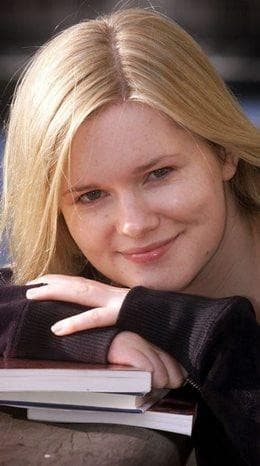
Cecelia Ahern is an Irish author known for her heartwarming and often magical realist fiction. Her debut novel, P.S. I Love You, became an international bestseller and was adapted into a popular film. Ahern's other notable works include "Where Rainbows End" (also adapted for film as "Love, Rosie"), "The Gift," and "The Book of Tomorrow." Her writing frequently explores themes of love, loss, and the power of human connection.
Similar books
- The Midnight Library
Matt Haig
Features a magical library and a protagonist exploring alternate realities and life choices.
- Before I Fall
Lauren Oliver
3.9 (295k) average on GoodreadsFantasyExplores themes of personal growth, changing the future, and understanding past mistakes through a supernatural premise.
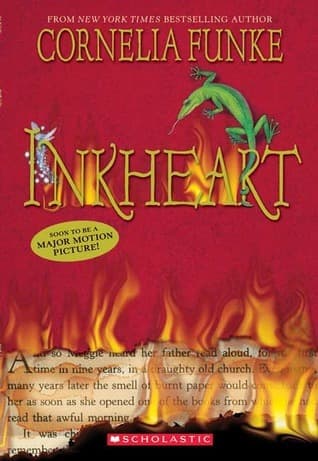
- Inkheart
Cornelia Funke
3.9 (369k) average on GoodreadsFantasyFocuses on the magic of books and their ability to influence reality.
- A Great and Terrible Beauty
Libba Bray
3.8 (208k) average on GoodreadsFantasyBoth novels feature young female protagonists encountering supernatural elements within a historical or gothic setting (Blackhall vs. Spence Academy), unraveling mysteries, and dealing with family secrets. However, Bray's 'A Great and Terrible Beauty' delves into a darker, more intricate magical system rooted in Victorian spiritualism and sisterhood, with a stronger emphasis on social commentary and psychological horror. Ahern's 'The Book of Tomorrow' is gentler, with its mystery and fantasy elements serving more to facilitate personal growth and romance rather than exploring the darker aspects of power or societal constraints.
- Harry Potter and the Sorcerer's Stone
J.K. Rowling
4.5 (7M) average on GoodreadsFantasyRescued from a miserable life under the stairs, an orphaned boy discovers he's a wizard destined for a magical school, where he uncovers a dangerous secret tied to the dark wizard who murdered his parents.
- The Hunger Games
Suzanne Collins
4.3 (6.4M) average on GoodreadsFantasyIn a future where children fight to the death on live television, Katniss Everdeen volunteers for the arena, turning a death sentence into a fight for survival and a spark of rebellion.





Enjoyed the summary?
A summary gives you the shape of the book. The book itself has the detail, the examples and the voice.
Find The Book of Tomorrow on AmazonAs an Amazon Associate, BookBrief earns from qualifying purchases. How we're funded