
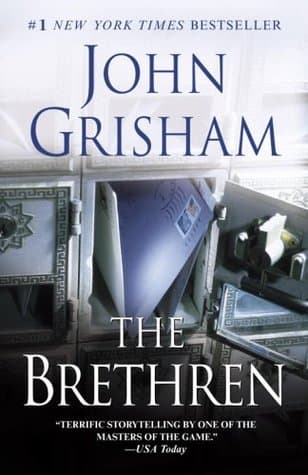
Synopsis
Covers the whole plot, including the ending.
- Difficulty
- Medium
- Pacing
- Moderate
- Mood
- Suspenseful, Intriguing, Darkly Humorous
- Read it if
- You enjoy legal thrillers with a focus on prison life, intricate scams, and political intrigue.
- Skip it if
- You prefer fast-paced action over detailed plot development and character-driven suspense.
The Brethren Plot Summary
Covers the whole plot, including the ending.
Introduction to Trumble and The Brethren
Trumble, a minimum-security federal prison camp, houses a variety of white-collar criminals. Among them are three former federal judges: Hatlee Beech from Texas, Joe Roy Spicer from California, and Finn Yarber from Mississippi. They are known as 'The Brethren' and hold influence within the prison, especially in the law library which they control. They spend their days advising other inmates, drafting legal documents, and running a mail scam. This scam targets wealthy, closeted gay men, using fake letters from a fictional young man named 'Kidd' to extort money. They research their victims, sending increasingly suggestive letters that hint at exposure if money is not sent to a series of anonymous P.O. boxes.
The Mail Scam in Action
The Brethren's mail scam is carefully executed. They identify potential targets through discreet channels, often high-profile individuals with hidden secrets. The letters, written by Finn Yarber, are crafted to be both enticing and subtly threatening, playing on the victims' fears of public exposure regarding their sexuality. Funds are received at various post office boxes opened under false names by their outside confederate, a corrupt guard named Sergeant Gantry, who then launders the money. The operation is profitable, allowing The Brethren to live comfortably within the prison, enjoying privileges other inmates do not, and saving a considerable sum for their post-release lives. They believe their system is foolproof, carefully avoiding direct contact or traceable evidence.
The Unwitting Target: Teddy Maynard
One of The Brethren's targets is Teddy Maynard, a successful businessman and a former director of the CIA. Unbeknownst to The Brethren, Maynard is not just a wealthy, closeted gay man; he is also an influential figure with deep connections to the intelligence community, including the President. Maynard has a history of ruthlessness and operates outside the law to protect his interests. As the letters from 'Kidd' become more persistent and demanding, Maynard grows agitated and determined to uncover the source of the blackmail, setting in motion events more dangerous than The Brethren could have anticipated.
Maynard's Investigation Begins
Infuriated by the blackmail and unwilling to succumb to it, Teddy Maynard activates his network of contacts within the intelligence community. He enlists former CIA operatives and private investigators, providing them with the letters and demanding they trace the source. His investigation quickly uncovers the various P.O. boxes and the names used to rent them, leading him closer to the prison. Maynard's methods are brutal and efficient; he is not concerned with legal rules, only with identifying and neutralizing the threat. The Brethren remain unaware of the danger they have provoked, continuing their operations with their usual confidence, unaware that a formidable adversary is closing in.
The President's Secret
A critical revelation occurs: Teddy Maynard is secretly blackmailing the President. The President, Joshua Itoe, has a dark secret from his past – an affair with a young woman that resulted in an illegitimate child, a fact Maynard discovered and used to control him. This connection explains Maynard's power and his ability to operate with impunity. The President is desperate to keep his secret hidden, especially with an election looming. This intricate web of blackmail means that Maynard's personal vendetta against The Brethren's scam inadvertently puts the President's own vulnerabilities at risk, creating a high-stakes scenario where multiple powerful figures are operating in the shadows.
The Brethren Discover Their Mistake
The Brethren eventually receive an anonymous, ominous message that makes them realize they have targeted someone far more dangerous than their usual victims. The message, delivered through an unusual channel, hints at the identity and power of Teddy Maynard without explicitly naming him. Panic sets in as they connect the dots and understand the gravity of their error. They immediately stop sending letters to Maynard, but the damage is already done. The realization that they have provoked a man with the resources and ruthlessness to uncover their operation and retaliate fills them with dread, disrupting their comfortable prison existence and forcing them to confront a terrifying new reality.
Maynard's Agents Close In
Teddy Maynard's agents, operating discreetly, begin to infiltrate Trumble. They use various pretexts to gain access, observe the inmates, and gather intelligence on The Brethren. Their focus is on identifying which of the three judges is the primary writer of the 'Kidd' letters. They bribe guards, monitor communications, and piece together the scam's details. The Brethren, now paranoid, try to cover their tracks and destroy evidence, but Maynard's network is too extensive and his agents too skilled. The prison, once their sanctuary, now feels like a cage where they are being hunted, and the pressure mounts as the net tightens around them.
The Confrontation and The Deal
Eventually, Maynard's agents make direct contact with The Brethren, not through official channels but through intimidation and veiled threats. They reveal their knowledge of the scam and demand that The Brethren stop all operations and provide details about their network. The Brethren, realizing they are outmatched, attempt to negotiate. They offer to return the money, but Maynard's true aim is not just the money; it is to ensure the complete silence and neutralization of anyone who knows about his vulnerabilities, especially in relation to the President. The stakes are raised, and The Brethren understand that their lives, both inside and outside prison, are now in grave danger if they do not comply.
The President's Intervention
As Maynard's pressure on The Brethren intensifies, the President, Joshua Itoe, learns of the situation. He recognizes the immense risk if the scam and Maynard's connection to it become public, as it could expose his own secret. Desperate to protect his re-election campaign and his legacy, the President authorizes his own team to intervene. He orders Maynard to resolve the situation discreetly and permanently. This adds another layer of complexity and danger, as The Brethren are now caught between two powerful and ruthless forces, both of whom want them silenced, for different reasons. The President's involvement elevates the conflict to the highest levels of government.
The Fatal Resolution
The situation escalates tragically. Maynard, under pressure from the President, decides to eliminate The Brethren permanently to ensure their silence. His agents arrange a 'transfer' for The Brethren, a common tactic for inmates, but it is a ruse. During the transport, a staged accident occurs. Hatlee Beech and Joe Roy Spicer are killed, made to look like unfortunate casualties of a prison transfer gone wrong. Finn Yarber, however, manages to escape the immediate danger, though severely injured. This act of violence sends a clear message about the ruthlessness of their adversaries and demonstrates the lengths to which powerful men will go to protect their secrets.
Finn's Survival and Revenge
Against all odds, Finn Yarber survives the orchestrated 'accident,' though he sustains serious injuries. His survival is a critical turn, as he is now the sole witness to the events. Filled with grief and a desire for justice for his fallen comrades, Finn vows to expose Teddy Maynard and the President. He understands the immense power he is up against but is determined to use his legal knowledge and knowledge of the scam to bring down those responsible. His escape and subsequent quest for revenge set the stage for a dramatic confrontation, transforming him from a scam artist into a reluctant whistleblower.
The President's Re-election Campaign
Meanwhile, President Itoe's re-election campaign continues. He is confident that the problem of The Brethren has been 'handled' by Teddy Maynard, and his secret remains secure. The public and the media are focused on the political race, unaware of the dark dealings occurring behind the scenes. The President believes he has successfully navigated the crisis, and his political future seems bright. However, Finn Yarber's survival and his determination to expose the truth pose an unforeseen threat that could unravel everything the President and Maynard have built and protected.
Finn's Plan to Expose
Finn Yarber, now on the run and operating from the shadows, begins to plan his strategy to expose Teddy Maynard and the President. He understands that direct confrontation is impossible. Instead, he gathers all the evidence he can, using his knowledge of the mail scam, the identities of the victims, and the various P.O. boxes. He seeks out trusted contacts and carefully leaks information, knowing that he must be precise to avoid being silenced permanently. His goal is not just to reveal the scam but to expose the murders of his friends and the President's complicity, using the very secrets they tried to bury against them.
The Media Leak
Finn Yarber successfully leaks crucial information to a trusted journalist, carefully providing enough verifiable details to ignite a major scandal without revealing his own location. The story breaks, exposing the elaborate mail scam, the identities of some of the victims (though not Maynard directly at first), and hinting at powerful figures involved. The media immediately seizes on the story, creating a political firestorm. The President's campaign is thrown into chaos as questions about the 'Brethren' and the mysterious deaths of the two judges begin to surface. Teddy Maynard finds himself under intense scrutiny, and the carefully constructed edifice of lies begins to crumble.
The Fallout and Justice
The media frenzy, fueled by Finn's continued strategic leaks, eventually forces the full truth into the open. The investigation into the deaths of Hatlee Beech and Joe Roy Spicer is reopened, and evidence points directly to Teddy Maynard and his operatives. The President's secret affair and illegitimate child are also exposed, shattering his re-election campaign and leading to his resignation. Maynard is arrested and faces charges for murder and conspiracy. Finn Yarber, though still a wanted man for his involvement in the scam, achieves a form of justice for his friends. The powerful are brought down, and the intricate web of deceit is finally untangled, albeit at a great cost.
The Brethren Characters
Finn Yarber
Protagonist
The youngest and most intelligent of The Brethren, a former federal judge.
Finn Yarber is a highly intelligent and meticulous former federal judge from Mississippi. He is the primary architect and writer of the 'Kidd' letters, demonstrating a keen understanding of human psychology and a talent for prose. While initially driven by greed and the thrill of the scam, he possesses a strong sense of loyalty to his fellow Brethren. His past conviction for judicial corruption led him to Trumble, but his legal mind remains sharp. He is observant and capable of quick thinking, which ultimately saves his life.
Relationships: Hatlee Beech (Fellow Brethren, co-conspirator, friend); Joe Roy Spicer (Fellow Brethren, co-conspirator, friend); Teddy Maynard (Antagonist, target of the scam, orchestrator of his friends' deaths); Joshua Itoe (Antagonist, President, complicit in cover-up)
Hatlee Beech
Supporting
The oldest and most experienced of The Brethren, a former federal judge from Texas.
Hatlee Beech is the de facto leader of The Brethren, a former federal judge known for his shrewdness and practical approach. He handles the financial aspects of the scam, managing the accounts and distribution of funds. He is cynical and pragmatic, always focused on the bottom line. His past corruption stemmed from taking bribes, and he adapts easily to the criminal underworld within Trumble. Despite his criminal past, he cares for his fellow judges and views their scam as a sophisticated game.
Relationships: Finn Yarber (Fellow Brethren, co-conspirator, friend); Joe Roy Spicer (Fellow Brethren, co-conspirator, friend)
Joe Roy Spicer
Supporting
The third member of The Brethren, a former federal judge from California.
Joe Roy Spicer is the third member of The Brethren, a former federal judge from California. He is less involved in the intricate details of the scam than Finn or Hatlee, often acting as a sounding board and contributing to the general strategy. His past conviction was for tax evasion and embezzlement. He is generally more cautious and prone to worry than the other two, often expressing concerns about the risks involved in their operation. He values the camaraderie of The Brethren and their shared intellectual pursuits within the prison.
Relationships: Finn Yarber (Fellow Brethren, co-conspirator, friend); Hatlee Beech (Fellow Brethren, co-conspirator, friend)
Teddy Maynard
Antagonist
A powerful, ruthless former CIA director and businessman.
Teddy Maynard is a formidable and dangerous antagonist. A former director of the CIA, he maintains immense power and influence within the intelligence community and government. He is accustomed to operating outside the law and employs brutal methods to protect his secrets and interests. Maynard is a closeted gay man, making him a perfect target for The Brethren's scam, but his reaction is far more extreme than they anticipate. He is driven by a need for control and the preservation of his image and power, even if it means resorting to murder.
Relationships: Finn Yarber (Victim of his wrath, later his accuser); Joshua Itoe (Blackmailer and political puppet master)
Joshua Itoe
Antagonist
The President of the United States, secretly blackmailed by Teddy Maynard.
Joshua Itoe is the President of the United States, a man desperate to protect his public image and re-election prospects. He is secretly being blackmailed by Teddy Maynard over an old affair and an illegitimate child. This vulnerability makes him beholden to Maynard and complicit in the cover-up of the Brethren's murders. He is a pragmatic politician willing to sacrifice others to protect his own position, demonstrating a moral compromise at the highest level of government. His primary motivation is self-preservation and the maintenance of power.
Relationships: Teddy Maynard (Blackmailer, controller); Finn Yarber (Unwitting threat to his political career)
Sergeant Gantry
Supporting
A corrupt prison guard who assists The Brethren with their scam.
Sergeant Gantry is a corrupt and opportunistic prison guard at Trumble. He is The Brethren's primary outside contact, responsible for opening the P.O. boxes, collecting the money, and laundering it for a cut. He is motivated purely by greed and is willing to risk his job for the substantial income the scam provides. Gantry is a weak link in The Brethren's operation, easily swayed by money and fear, making him a potential liability when Maynard's investigation closes in. He represents the systemic corruption that can exist even in seemingly secure institutions.
Relationships: The Brethren (Criminal accomplice, go-between)
Kidd
Mentioned
The fictional persona used in The Brethren's mail scam.
Kidd is not a real person but the fabricated persona created by Finn Yarber for the mail scam. He is portrayed as a young, attractive, and vulnerable gay man seeking financial assistance from older, wealthier men. The letters written in Kidd's name are carefully crafted to be alluring and subtly threatening, playing on the victims' desires and fears of exposure. Kidd represents the manipulative power of carefully constructed fiction and the psychological leverage it can exert over unsuspecting targets.
The Journalist
Supporting
The reporter to whom Finn Yarber leaks the story.
The journalist is an unnamed but crucial character who receives Finn Yarber's leaked information. They represent the investigative press and its power to expose corruption and bring truth to light. Driven by the pursuit of a major story, they meticulously verify Finn's claims and break the scandal, setting in motion the downfall of Teddy Maynard and President Itoe. This character embodies the role of the fourth estate in holding powerful figures accountable.
Relationships: Finn Yarber (Source of information)
The Brethren Themes
Corruption and Hypocrisy
The novel explores corruption, not just among the criminal inmates but extending to the highest levels of power. The Brethren, former judges, are examples of judicial corruption, using their legal minds for illicit gain. This is mirrored by Teddy Maynard's abuse of power and the President's willingness to engage in blackmail and cover-ups to protect his image. The hypocrisy of those in authority, who preach law and order while operating outside it, is a central focus, showing how easily power can be misused. For instance, the President's secret illegitimate child directly contradicts his public persona as a moral family man.
“It was a simple scam, really. Just a few letters, a few lies, and the greedy hands of men who should have known better. But then, isn't that how most corruption starts?”
The Illusion of Security
The theme of security, both physical and perceived, is challenged. Trumble prison, a 'minimum-security' facility, is ironically the breeding ground for a sophisticated mail scam, showing its vulnerabilities. More significantly, powerful characters like Teddy Maynard and President Itoe believe their secrets are secure and their positions untouchable. However, The Brethren's scam, and later Finn Yarber's vengeful leaks, expose how fragile this security truly is. The elaborate measures taken by Maynard to silence The Brethren ultimately prove futile, as the truth finds a way out, shattering the illusion of impenetrable secrecy.
“In Trumble, they thought they were safe, tucked away from the world's scrutiny. But the world, it turned out, had a way of finding them.”
Justice and Retribution
The concept of justice is complex in the novel. Initially, The Brethren practice their own 'jailhouse justice' while perpetrating a scam. However, the narrative shifts to a quest for retribution after the murder of Hatlee and Joe Roy. Finn Yarber, driven by grief and vengeance, becomes the unlikely instrument of true justice, exposing the crimes of Maynard and the President. This theme questions whether formal legal systems are always sufficient, suggesting that sometimes, justice must be sought through unconventional and dangerous means. Finn's actions, though born from a criminal enterprise, ultimately serve a higher moral purpose.
“They thought they had silenced us. They thought they had buried the truth. But some truths, like some men, refuse to stay buried.”
The Nature of Power
The novel dissects the nature of power, illustrating its various forms and how it corrupts. The Brethren wield a small but significant power within Trumble through their intellect and influence. Outside, Teddy Maynard exemplifies raw, unchecked power – the ability to command resources, manipulate institutions, and even authorize murder. The President's power, though immense, is shown to be fragile and compromised by his personal secrets, making him a puppet to Maynard. The story reveals that power often operates in the shadows, unconstrained by law or morality, and that its abuse can have devastating consequences for those caught in its path.
“Power, in the wrong hands, was not just a weapon; it was a shield, protecting the guilty and silencing the innocent.”
Moral Ambiguity
The characters in 'The Brethren' operate in a morally grey area, blurring the lines between good and evil. The protagonists, The Brethren, are convicted criminals who engage in blackmail, yet they are also intelligent, witty, and loyal to one another. Finn Yarber, a scam artist, becomes the unlikely hero seeking justice. Conversely, figures of authority like the President and Teddy Maynard, who should embody integrity, are revealed to be corrupt and ruthless. This ambiguity forces the reader to question their own definitions of right and wrong, highlighting that motivations can be complex and that even 'bad' people can pursue 'good' outcomes, and vice-versa.
“There were no heroes in this story, only survivors. And some of them had worn robes, once.”
Plot Devices & Literary Techniques
Dramatic Irony
The audience is aware of information that characters are not, heightening tension.
Dramatic irony is heavily employed, particularly regarding Teddy Maynard's true identity and his connection to the President. The reader quickly learns that Maynard is a dangerous former CIA director being blackmailed by the President, while The Brethren remain blissfully ignorant of the power they are challenging. This creates immense tension as the reader anticipates the inevitable clash and the severe consequences for The Brethren, who continue their scam unaware of the hornet's nest they have stirred. This device effectively builds suspense and underscores the perilous nature of their undertaking.
Red Herring
Misleading clues or information designed to distract the reader.
While not a dominant device, the initial focus on the intricate details of The Brethren's mail scam and the internal workings of Trumble prison serves as a red herring to some extent. The reader is led to believe the primary conflict will revolve around the success or failure of the scam within the prison context. However, the true, more dangerous conflict emerges from the identity of one specific victim (Teddy Maynard), diverting the plot from a simple fraud story to a high-stakes political thriller involving murder and presidential secrets. This misdirection enhances the surprise and impact when the true antagonist is revealed.
Foreshadowing
Hints or clues about future events, building suspense.
Foreshadowing is used to build a sense of impending doom for The Brethren. Early on, their discussions often touch upon the risks of their scam and the possibility of encountering a 'wrong' victim, subtly hinting at the danger that Teddy Maynard will represent. The Brethren's growing unease after receiving the anonymous warning further foreshadows the violent resolution. These subtle clues create a pervasive sense of dread and suspense, making the reader anticipate the inevitable consequences of their actions and the escalating danger they face as their powerful adversaries close in.
MacGuffin
An object or plot device that drives the plot forward.
The 'Kidd' letters, and the money generated by the scam, serve as a MacGuffin. While important in initiating the plot and establishing The Brethren's criminal enterprise, their intrinsic value or the specific details of the fraud become less central as the story progresses. The true significance of the letters lies in their ability to ensnare Teddy Maynard and trigger his violent response, which then unearths the larger conspiracy involving the President. The MacGuffin acts as a catalyst, propelling the narrative beyond a simple prison scam into a much grander and more dangerous political thriller.
The Brethren Quotes
“They were three of a kind, these Brethren, and they were up to something.”
“Justice, in this case, was a rather fluid concept.”
“The truth was, they had all been compromised, one way or another.”
“In Washington, secrets were currency, and some secrets were worth more than others.”
“The beauty of a good scam was its simplicity, its elegance.”
“He knew the game, and he knew how to play it better than most.”
“Sometimes, the best way to hide something was in plain sight.”
“The weight of a prison sentence was not just the time, but the loss of everything else.”
“Power, once tasted, was a hard thing to give up.”
“They had built a small empire, right under the noses of the federal government.”
“Every man has a price, and it's usually lower than you'd think.”
“The truth, when it finally emerged, was often far stranger than fiction.”
“He had underestimated them, and that was a mistake he wouldn't make again.”
“In the end, it wasn't about right or wrong, but about who got caught and who didn't.”
Quiz
10 questions on the plot and the characters. Each answer comes with a short explanation.
Question 1
What kind of federal prison is Trumble, the setting for 'The Brethren'?
- Maximum-security penitentiary
- Minimum-security federal prison, or 'camp'
- State correctional facility
- Juvenile detention center
Show answer
B. Minimum-security federal prison, or 'camp' The book explicitly states Trumble is a minimum-security federal prison, referred to as a 'camp,' for relatively harmless criminals.
Question 2
What is the primary activity the three former judges, known as 'The Brethren,' engage in daily at Trumble?
- Organizing inmate sports tournaments
- Working in the prison laundry
- Writing briefs, handling cases for other inmates, and practicing law without a license
- Teaching literacy classes to other prisoners
Show answer
C. Writing briefs, handling cases for other inmates, and practicing law without a license The Brethren spend their time in the law library, writing briefs, handling cases for other inmates, and essentially practicing law without a license.
Question 3
From which states did the three former judges of 'The Brethren' originate?
- New York, Florida, and Georgia
- Texas, California, and Mississippi
- Illinois, Ohio, and Pennsylvania
- Virginia, North Carolina, and Louisiana
Show answer
B. Texas, California, and Mississippi The text explicitly states the three judges are from Texas, California, and Mississippi.
Question 4
What illegal activity are 'The Brethren' involved in that begins to generate significant income?
- Smuggling contraband into the prison
- Operating a mail scam
- Running an illegal gambling ring
- Selling forged documents to other inmates
Show answer
B. Operating a mail scam The Brethren are 'fine-tuning a mail scam, and it's starting to really work. The money is pouring in.'
Question 5
What is the primary consequence that causes 'The Brethren's' scam to go 'awry'?
- Prison guards discover their operation
- They lose all their accumulated money in a bad investment
- It ensnares a powerful man with dangerous friends
- One of the Brethren betrays the others
Show answer
C. It ensnares a powerful man with dangerous friends The description states, 'Then their little scam goes awry. It ensnares the wrong victim, a powerful man on the outside, a man with dangerous friends.'
Question 6
What kind of criminals are typically housed at Trumble prison?
- Violent offenders and serial killers
- Drug dealers, bank robbers, swindlers, embezzlers, and tax evaders
- Terrorists and spies
- Petty thieves and shoplifters
Show answer
B. Drug dealers, bank robbers, swindlers, embezzlers, and tax evaders Trumble is home to 'the usual assortment of relatively harmless criminals--drug dealers, bank robbers, swindlers, embezzlers, tax evaders, two Wall Street crooks, one doctor, at least five lawyers.'
Question 7
Which of the following professionals are NOT explicitly mentioned as being among the inmates at Trumble?
- Doctors
- Lawyers
- Pilots
- Wall Street crooks
Show answer
C. Pilots The text lists 'one doctor, at least five lawyers' and 'two Wall Street crooks' as inmates, but makes no mention of pilots.
Question 8
What is the primary theme explored by the Brethren's mail scam and its consequences?
- The importance of rehabilitation in prison
- The limits of power and influence, even for those supposedly 'behind bars'
- The challenges of maintaining friendships in a prison environment
- The psychological impact of long-term incarceration
Show answer
B. The limits of power and influence, even for those supposedly 'behind bars' Despite being in prison, the Brethren are able to exert significant influence through their scam, highlighting how power can extend beyond physical confinement, until they cross the wrong person.
Question 9
How does the phrase 'dispense jailhouse justice' relate to the Brethren's activities?
- They report inmates who break prison rules to the guards.
- They act as informal arbitrators or judges for disputes among other inmates.
- They organize legal aid workshops for new prisoners.
- They review legal cases for accuracy before inmates file appeals.
Show answer
B. They act as informal arbitrators or judges for disputes among other inmates. Given their background as judges and their practice of law, 'dispense jailhouse justice' implies they use their legal acumen to resolve conflicts or make judgments within the prison community.
Question 10
The description implies a significant shift in the Brethren's lives once their scam targets the 'wrong victim.' What is the most accurate description of this change?
- Their daily routine of legal work is completely undisturbed.
- They become more cautious but continue their scam with minor adjustments.
- Their days of 'quietly marking time' are over, indicating a sudden increase in danger and urgency.
- They decide to confess their scam to the authorities to seek protection.
Show answer
C. Their days of 'quietly marking time' are over, indicating a sudden increase in danger and urgency. The line 'the Brethren's days of quietly marking time are over' directly signifies a dramatic and dangerous turn of events for them.
The Brethren FAQ
What is the primary setting of 'The Brethren' and who are its central figures?
The primary setting is Trumble, a minimum-security federal prison, often referred to as a 'camp.' The central figures are the 'Brethren': three former judges—Joe Roy Spicer from Texas, Finn Yarber from California, and Hatley Brimhall from Mississippi—who reside there.
What kind of activities do the Brethren engage in daily at Trumble?
The Brethren spend their days in the law library, which they consider their territory. They write legal briefs, assist other inmates with their cases, essentially practicing law without a license, and occasionally administer their own form of jailhouse justice.
What is the nature of the Brethren's mail scam and how successful is it initially?
The Brethren operate a sophisticated mail scam where they write letters to elderly, lonely gay men, posing as young, attractive individuals seeking companionship and financial support. Initially, the scam is highly successful, generating a significant flow of money for them.
Who is Teddy Maynard and what is his role in the story's escalation?
Teddy Maynard is a powerful and politically ambitious U.S. Congressman. He becomes the unwitting 'wrong victim' of the Brethren's mail scam, leading to the unraveling of their operation and attracting dangerous attention to them.
How do the Brethren's individual personalities contribute to the group dynamic and the scam's execution?
Joe Roy Spicer is the pragmatic leader, Finn Yarber is the meticulous writer crafting the seductive letters, and Hatley Brimhall is the cautious, often anxious, member. Their combined skills and differing temperaments enable the scam to function but also create internal tension when things go awry.
What is the significance of the 'law library' as the Brethren's domain within Trumble?
The law library symbolizes their continued connection to the legal world they once dominated and their attempt to maintain a semblance of power and purpose even in prison. It's their sanctuary and their office, where they orchestrate their illicit activities and dispense their unique brand of justice.
How does the Brethren's past as judges influence their current behavior and their sense of entitlement?
Their past judicial careers instill in them a deep-seated sense of entitlement and a belief in their own superior intellect and judgment. This past makes them confident in their ability to manipulate systems, whether legal or criminal, and justifies their actions in their own minds.
What specific 'dangerous friends' does Teddy Maynard have, and how do they impact the Brethren?
Teddy Maynard has connections to powerful, shadowy figures within the CIA, specifically operatives like Marcus and the agency's director. These 'friends' are deployed to neutralize the threat the Brethren pose to Maynard's political aspirations, leading to surveillance, intimidation, and ultimately, lethal consequences for the judges.
How does the novel explore themes of justice and corruption, both inside and outside prison walls?
The novel blurs the lines between justice and corruption. The Brethren, former upholders of the law, engage in a criminal enterprise, while the 'justice' meted out by the CIA on behalf of Congressman Maynard is extra-legal and morally reprehensible, highlighting systemic corruption at high levels.
What is the psychological motivation behind the Brethren's scam, beyond mere financial gain?
Beyond money, the scam provides the Brethren with intellectual stimulation, a sense of control, and a way to exert influence from within prison. It's a game that allows them to feel powerful and clever, counteracting the emasculating reality of incarceration.
How does the character of Joe Roy Spicer evolve as the scam unravels?
Joe Roy Spicer, initially the confident leader, becomes increasingly desperate and paranoid as the CIA closes in. He struggles to maintain control and protect his fellow Brethren, ultimately making choices born of fear rather than his usual calculated cunning.
What role does the 'Wall Street crooks' or other inmates play in the Brethren's daily lives or their scam?
While other inmates are mentioned, their primary role is often as clients for the Brethren's 'legal' services or as background color for Trumble. They are generally unaware of the full extent of the mail scam, though some might assist with minor tasks or provide information inadvertently.
Could the Brethren have avoided their ultimate fate, and if so, how?
It is debatable, but perhaps. If they had chosen a less prominent victim than Congressman Maynard, or if they had stopped the scam sooner, they might have avoided detection by such powerful forces. Their greed and overconfidence ultimately sealed their doom.
How does the prison environment of Trumble contribute to the Brethren's ability to operate their scam?
Trumble's minimum-security status and the relative laxity of its oversight create an environment where the Brethren have significant freedom to operate. Access to mail, the law library, and a degree of privacy are crucial enablers for their elaborate scheme.
What is the symbolic significance of the Brethren's choice of victims for their scam?
Their choice of lonely, elderly gay men as victims highlights their cynicism and predatory nature. It symbolizes their exploitation of vulnerability and their willingness to target those on the margins of society, reflecting a complete lack of empathy despite their past professional roles.
What is the ultimate consequence for the Brethren and how is it delivered?
The ultimate consequence for the Brethren is their elimination by the CIA. They are systematically killed off, made to look like accidents or suicides, as the agency cleans up the loose ends to protect Congressman Maynard.
How does Grisham use suspense to build tension around the Brethren's impending doom?
Grisham builds tension through increasing surveillance, anonymous threats, and the gradual isolation of the Brethren. The escalating sense of dread, coupled with the reader's knowledge of Maynard's powerful connections, creates palpable suspense as the net tightens around them.
Does the novel offer any commentary on the American political system or the nature of power?
Yes, the novel heavily critiques the American political system, exposing its underbelly where powerful figures like Congressman Maynard can leverage covert government agencies for personal gain. It suggests that power, once attained, can corrupt absolutely and operate beyond legal accountability.
About the author

John Grisham is an American author known for his legal thrillers. His notable works include A Time to Kill, The Client, The Pelican Brief, The Runaway Jury, The Rainmaker, and The Chamber. Grisham's novels often explore themes of justice and morality within the legal system.
Similar books
- The Pelican Brief
John Grisham
4.0 (374k) average on GoodreadsThrillerFeatures legal professionals uncovering a vast conspiracy with political implications.
- Presumed Innocent
Scott Turow
4.1 (107k) average on GoodreadsThrillerExplores the legal system, crime, and the blurred lines of justice with a focus on character.
- The Firm
John Grisham
4.1 (43k) average on GoodreadsThrillerA young, intelligent protagonist gets caught up in a dangerous, high-stakes scheme.
- Angels & Demons
Dan Brown
3.9 (2.7M) average on GoodreadsThrillerA Harvard symbologist races through Rome's ancient sites, deciphering cryptic clues to unmask the Illuminati and stop a vengeful plot to destroy the Vatican with a stolen antimatter weapon.
- Gone Girl
Gillian Flynn
4.1 (2.3M) average on GoodreadsThrillerA wife's sudden disappearance on her fifth anniversary reveals a web of lies and psychological warfare, exposing the secrets within a seemingly perfect marriage.
- The Girl on the Train
Paula Hawkins
3.9 (2.1M) average on GoodreadsThrillerA woman’s fascination with a seemingly perfect couple she watches from her daily train commute leads her into a dark investigation when she witnesses something that shatters their idyllic image.




Enjoyed the summary?
A summary gives you the shape of the book. The book itself has the detail, the examples and the voice.
Find The Brethren on AmazonAs an Amazon Associate, BookBrief earns from qualifying purchases. How we're funded