
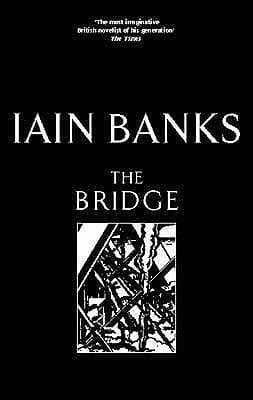
Synopsis
Covers the whole plot, including the ending.
- Difficulty
- Hard
- Pacing
- Variable
- Mood
- Surreal, Philosophical, Dark, Dreamlike, Introspective
- Read it if
- You enjoy experimental fiction that blurs the lines between reality and dream, with philosophical depth and a unique narrative structure.
- Skip it if
- You prefer straightforward plots, conventional character arcs, or are easily frustrated by surrealism and ambiguity.
The Bridge Plot Summary
Covers the whole plot, including the ending.
Awakening on the Bridge
A man, later identified as John Orr, wakes in a medical facility on a vast, endless structure called the Bridge. He has no memory of his past, his name, or how he got there, having been pulled from the water by a fishing boat. The Chief Engineer, Arrol, and his daughter, Abberlaine, a nurse, care for him. Orr struggles with his blank existence, having vivid, disturbing dreams of a brutal, advanced war. His new reality on the Bridge involves constant movement and strange social customs, with people living in various 'sections' and traveling by rail.
The Barbarian and the Psychiatrist
Orr's dreams become more intense, showing him as a fierce barbarian warrior in a primal, bloody conflict. This dream-self contrasts sharply with his passive, amnesiac state on the Bridge. He begins therapy with a mysterious psychiatrist, Dr. Gade, who tries to help him recover his memories through increasingly bizarre exercises. Dr. Gade seems to know more about Orr's past than he reveals, hinting at a traumatic event. Orr also develops a strong, complicated attraction to Abberlaine, who is both a caring figure and a source of deep confusion.
Exploring the Bridge's Society
As Orr slowly adjusts to his new life, he learns about the Bridge's complex society. It is a stratified world with different 'sections' and classes, from working-class engineers to affluent residents. Travel is mainly by rail, and the Bridge seems to be a self-contained ecosystem, with its own weather and even 'wildlife.' Orr observes the social rituals and the peculiar lack of a clear purpose or destination for the Bridge. The inhabitants seem content, but Orr feels a growing unease and a desperate need to understand his origins.
Abberlaine's Disappearance and the Journey
Abberlaine mysteriously disappears, leaving Orr distraught and determined to find her. This event prompts him to leave the relative safety of the medical section and venture further into the Bridge's vastness. He gets a job as a railway worker, allowing him to travel widely. During his journey, he encounters strange characters and sections, each with its own quirks and dangers. His search for Abberlaine intertwines with his deeper search for self and the truth behind his amnesia, all while his barbarian dream-self continues to wage war.
Encounters and Revelations on the Tracks
While working on the trains, Orr experiences the full scale and strangeness of the Bridge. He meets people who have spent their entire lives traveling, and he sees the strange, almost ritualistic nature of their existence. He starts to piece together fragments of information, suggesting that the Bridge might not be a physical structure in the usual sense, or at least not entirely. The lines between his dream world and his waking reality begin to blur more often, with the barbarian's thoughts and actions influencing his own. The lack of a clear 'end' to the Bridge, and the seemingly circular nature of its existence, contribute to his growing existential crisis.
The Barbarian's War Escalates
The barbarian's story within Orr's dreams becomes dramatically more intense. He is now a seasoned warrior, leading his people against a technologically superior enemy in a brutal, no-holds-barred conflict. The descriptions of violence and strategic thinking become more vivid and detailed. This dream-world is a powerful symbol for Orr's own internal battles: his struggle to regain his identity, to understand his past, and to reconcile the different parts of his fragmented mind. The barbarian's ultimate victory or defeat feels increasingly important to Orr's own fate.
Confronting Dr. Gade
Driven by his desperate need for answers, Orr eventually seeks out Dr. Gade again. Their conversations become more intense and confrontational. Orr suspects that Dr. Gade is hiding crucial information about his identity and the Bridge's true nature. Dr. Gade, in turn, pushes Orr to confront his deepest fears and repressed memories. During these sessions, hints appear that the Bridge is a psychological construct, a place of healing or purgatory, rather than a literal physical structure. The idea that Orr's reality might be a metaphor begins to form.
The Revelation of John Orr's Past
Through intense revelations, often triggered by Dr. Gade's unconventional therapy and the culmination of his dream-experiences, John Orr finally uncovers his true past. He was a successful but cynical businessman in the 'real world' named John Orr, involved in a catastrophic car accident on a bridge. The accident left him with severe brain trauma and in a coma. The entire Bridge narrative, along with the barbarian's war, is a complex psychological construct within his comatose mind, a way for his brain to process the trauma and rebuild his shattered identity.
Abberlaine's True Identity
The mystery of Abberlaine's identity is also resolved. She is not a physical person on the Bridge, but a manifestation within Orr's subconscious mind. She represents a woman from his real life, likely a nurse or a loved one present during his accident or recovery. Her presence on the Bridge, and her disappearance, symbolize different aspects of his struggle to cope with his trauma and come to terms with his past relationships. Her role is important in guiding him, unconsciously, towards self-discovery and recovery.
The Barbarian's Victory and Orr's Integration
In the dream world, the barbarian achieves a hard-won victory against his technologically superior foes. This triumph signifies John Orr's successful internal battle against his own trauma, his acceptance of his past, and the integration of his fragmented personality. The barbarian's journey, filled with struggle and ultimate success, mirrors Orr's own psychological healing process. The resolution of this internal conflict indicates that Orr's mind has processed the trauma and is now ready to transition back to consciousness, or at least to a more integrated state of being.
The Bridge Dissolves
As John Orr understands his true state and his mind begins to heal, the vast, intricate world of the Bridge starts to dissolve. The structures become less solid, the inhabitants less distinct, and the entire reality he has known begins to fade. This dissolution is not violent or chaotic, but a gradual unravelling, reflecting the fading of a dream as one approaches wakefulness. It symbolizes the successful completion of his psychological journey within the coma, showing that the construct is no longer needed.
Awakening
John Orr finally wakes from his coma in a hospital bed in the real world. He is no longer the man he was before the accident, nor the amnesiac he was on the Bridge. He carries the memories and experiences of both his past life and his dream-journey. While the physical details of the Bridge are gone, the psychological impact of his time there, and the lessons learned through the barbarian's struggle, have fundamentally reshaped his identity. He is a man reborn, with a new perspective on life and self, forever changed by his impossible journey.
Principal Figures
John Orr
Protagonist
An amnesiac man on the Bridge, a cynical businessman in reality, and a fierce barbarian in his dreams.
John Orr is a complex protagonist whose identity is fractured across three distinct realities. On the Bridge, he is an amnesiac, struggling to piece together his past and understand his strange new world. In his dreams, he is a brutal, pragmatic barbarian warrior leading his people in a desperate war. In his true reality, he was a cynical, successful businessman who suffered a traumatic accident. His core drive is the desperate search for identity, meaning, and connection, which manifests differently in each persona. He is initially passive but grows increasingly determined and self-aware.
Relationships: Abberlaine (Object of affection and psychological guide); Dr. Gade (Therapist and enigmatic mentor); Arrol (Caretaker and Abberlaine's father)
The Barbarian
Aspect of Protagonist/Symbolic Self
A fierce warrior persona within John Orr's dream-world, battling a technologically advanced foe.
The Barbarian is the embodiment of John Orr's primal instincts, aggression, and resilience, existing solely within Orr's vivid dream sequences. He is a leader of his people, driven by survival and the protection of his clan against a superior, technologically advanced enemy. He is cunning, ruthless, and deeply connected to a more primitive, visceral way of life. His war is a symbolic representation of Orr's internal struggle to overcome trauma and reassert control over his fragmented mind. The barbarian's narrative provides a stark contrast to Orr's passive existence on the Bridge.
Relationships: John Orr (Two aspects of the same mind); His Tribe (Leader and protector)
Abberlaine
Supporting/Symbolic Figure
A nurse on the Bridge, the Chief Engineer's daughter, and a manifestation of a real-world figure.
Abberlaine is a mysterious and captivating figure on the Bridge, initially serving as a nurse caring for the amnesiac John Orr. She is the daughter of Chief Engineer Arrol and evokes a strong, confusing attraction in Orr. She possesses both a nurturing quality and an enigmatic elusiveness. Her disappearance from the Bridge acts as a major catalyst for Orr's journey of self-discovery. Ultimately, she is revealed to be a psychological construct within Orr's mind, likely representing a real-world figure (perhaps a nurse or loved one) who played a role in his recovery, symbolizing hope, memory, and connection.
Relationships: John Orr (Object of affection, psychological guide); Arrol (Father/daughter on the Bridge)
Dr. Gade
Supporting/Mentor
The enigmatic psychiatrist on the Bridge who guides Orr through his memory recovery.
Dr. Gade is the psychiatrist on the Bridge who undertakes the task of helping John Orr recover his memories. He is a cryptic and unconventional therapist, often speaking in riddles and employing unusual methods. He seems to possess a deeper understanding of Orr's condition and the true nature of the Bridge than he initially reveals. Dr. Gade acts as a psychological guide, pushing Orr to confront his trauma and integrate his fragmented identity. He represents the subconscious mind's attempt to heal itself, or perhaps a real-world therapist influencing Orr's recovery.
Relationships: John Orr (Therapist/patient, mentor/student)
Arrol
Supporting
Chief Engineer on the Bridge and Abberlaine's father.
Arrol is the Chief Engineer of the section of the Bridge where John Orr first awakens. He is a practical, grounded individual, responsible for the maintenance and operation of his part of the vast structure. He takes Orr in after his rescue and provides a measure of stability during Orr's initial confusion. As Abberlaine's father, he is protective and concerned for her well-being. He represents the everyday, mundane aspects of life on the Bridge, contrasting with the more surreal and psychological elements. He is a figure of authority and care, initially providing Orr with a sense of safety.
Relationships: John Orr (Caretaker/patient); Abberlaine (Father/daughter)
The Other John Orr
Aspect of Protagonist/Past Self
The cynical, successful businessman from John Orr's real-world past.
This persona is the 'original' John Orr, the man who existed before the traumatic accident. He is portrayed as a successful, ambitious, but ultimately cynical and somewhat detached businessman. His life was characterized by career achievement and a certain emotional distance. His personality and past actions are gradually revealed through Orr's recovered memories, providing context for the psychological trauma he experienced. This 'Other John Orr' is the self that the amnesiac Bridge-Orr must reconcile with and integrate into his new, post-trauma identity.
Relationships: John Orr (Bridge) (Past self, source of trauma); Abberlaine (real-world inspiration) (Potential past romantic interest or significant figure)
The Train Conductors/Workers
Supporting/Environmental
The various individuals Orr encounters while working on the Bridge's railways.
These characters represent the broader society and functioning of the Bridge. They are often stoic, pragmatic, and accustomed to the endless journey. Orr joins their ranks during his search for Abberlaine, learning the routines and unwritten rules of their existence. They provide him with a means of travel and exposure to different sections of the Bridge, and their interactions, though often brief, offer insights into the peculiar culture of this world. They highlight the themes of routine, journey, and the human capacity to adapt to even the most bizarre circumstances.
Relationships: John Orr (Fellow workers, transient acquaintances)
Themes & Insights
Identity and Self-Discovery
The main theme is John Orr's desperate search for his identity after amnesia. The novel explores how identity is built through memory, experience, and the stories we tell ourselves. Orr's journey on the Bridge, with his barbarian dreams, symbolizes his mind trying to piece together who he is. The reveal that the Bridge is a psychological construct emphasizes that self-discovery is an internal process, a battle within one's mind to reconcile past trauma and create a new self. The fragmented nature of Orr's personas highlights the fluid and multi-faceted nature of identity.
“I was a blank slate, a tabula rasa, and the thought was both terrifying and exhilarating.”
Trauma and Healing
The entire story of 'The Bridge' is a metaphor for processing severe psychological trauma. John Orr's amnesia results from a catastrophic car accident. The surreal, endless Bridge represents his comatose state, a mental landscape where his brain tries to heal. The barbarian's war symbolizes the internal struggle against trauma, the fight to survive and overcome. Dr. Gade's therapy sessions, and even Abberlaine's existence, are parts of this healing process, guiding Orr towards understanding and integration. The novel suggests that healing from trauma is a complex, often non-linear journey of confronting one's past.
“Perhaps the Bridge was a place where all the broken pieces of a life came to be mended, or at least understood.”
Reality vs. Illusion
A core theme is the constant blurring of what is real and what is perceived or imagined. John Orr's entire experience on the Bridge, including its strange inhabitants and endless architecture, is ultimately an elaborate illusion within his comatose mind. His barbarian dreams add another layer of unreality. The novel challenges the reader to question the nature of reality, suggesting that our perception is often shaped by our internal states and psychological needs. The stark contrast between the Bridge's reality and the 'real world' highlights how subjective and fragile our understanding of existence can be.
“What if the Bridge was just a dream I was having, or a nightmare, and I was just waiting to wake up?”
The Nature of Consciousness
The novel explores human consciousness, especially in extreme states like a coma. It shows how the mind can build elaborate internal worlds, with rules, societies, and narratives, as a way of coping or healing. Orr's three distinct personas—the amnesiac, the barbarian, and the cynical businessman—show the multi-layered and fragmented nature of the mind. The book suggests that consciousness is not a single, fixed entity, but a dynamic process capable of creating and inhabiting multiple realities simultaneously, especially when faced with deep trauma.
“My mind, it seemed, was a grand architect, building worlds where there should have been only darkness.”
Plot Devices & Literary Techniques
Amnesia
The protagonist's complete loss of memory, driving his quest for identity.
Amnesia serves as the primary catalyst for John Orr's journey. By stripping him of his past, it forces him (and the reader) to experience the world of the Bridge as a blank slate, enhancing the mystery and disorientation. It creates a powerful narrative hook, as Orr's central motivation becomes the recovery of his identity. The amnesia is ultimately revealed to be a symptom of his real-world trauma, making it a crucial plot point that connects his internal psychological journey to his external physical condition.
Dream Sequences/Parallel Narrative
The recurring, vivid dreams of a barbarian warrior, running parallel to Orr's Bridge experience.
The barbarian dream sequences function as a parallel narrative, providing a stark contrast to Orr's passive existence on the Bridge. These dreams are more than just plot diversions; they are a symbolic representation of Orr's primal instincts, his internal fight for survival, and his processing of aggression and conflict. The barbarian's war mirrors Orr's psychological battle to integrate his fragmented self. The increasing intensity and eventual resolution of the barbarian's story directly correlate with Orr's progress in understanding and healing his trauma.
The Bridge as a Metaphor
The vast, endless structure that symbolizes John Orr's comatose mind and journey of recovery.
The Bridge itself is the overarching metaphor of the novel. It is not a literal physical structure but rather a complex psychological construct within John Orr's comatose mind. Its endlessness represents the subjective experience of time and space in a coma, and its various sections symbolize different aspects of his fragmented psyche, memories, or stages of healing. The journey across the Bridge is a symbolic representation of his internal quest for self-discovery and the arduous process of recovering from severe trauma. Its eventual dissolution signifies his awakening.
The Enigmatic Therapist (Dr. Gade)
A mysterious figure who guides the protagonist through his psychological journey without fully revealing the truth.
Dr. Gade serves as a classic enigmatic mentor figure. His unconventional therapy and cryptic pronouncements are designed to challenge Orr and force him towards self-discovery, rather than simply providing answers. He embodies the subconscious forces at play in Orr's mind, orchestrating the healing process. His ambiguity keeps the reader (and Orr) guessing about the true nature of his reality, until the final revelations, making him a crucial device for plot progression and thematic exploration of trauma recovery.
The Bridge Quotes
“The bridge, as it always did, seemed to go on for ever. Its vastness was oppressive, its intricate structure a testament to some unimaginable, ancient technology.”
“Memory is a funny thing. It can be a comfort, a curse, or a complete fabrication.”
“There was a certain peace in the routine, a numbing comfort in the endless repetition of the same tasks, the same views, the same thoughts.”
“The feeling of being watched never quite left him, a subtle prickle at the back of his neck that hinted at unseen eyes, unknown intentions.”
“Perhaps the greatest trick of all was convincing ourselves that we were free, when in fact we were merely prisoners of our own perception.”
“He knew, with a sudden, chilling certainty, that the rules were not fixed. They were fluid, mutable, and designed to keep him exactly where he was.”
“The past was a foreign country; they did things differently there. And he was an illegal immigrant, trying to sneak back in.”
“Every journey, no matter how long or strange, eventually leads somewhere. The question is, where?”
“The silence was not empty; it was full of unspoken questions, unacknowledged fears, and the vast, echoing space of the Bridge itself.”
“He was a man without a name, a past, or a future, adrift in a structure that defied logic and reason.”
“The line between madness and clarity was often blurred, especially when dealing with the truly impossible.”
“Sometimes, the only way to find out what something truly is, is to try and break it.”
“The Bridge didn't just exist; it was a living, breathing entity, with its own will and its own secrets.”
Quiz
10 questions on the plot and the characters. Each answer comes with a short explanation.
Question 1
What is the name of the protagonist who is rescued from the sea at the beginning of the novel?
- Arrol
- John Orr
- Gregor
- Alexander
Show answer
B. John Orr The main character, who suffers from amnesia, is known as John Orr after being rescued from the sea.
Question 2
What is the primary setting for the majority of John Orr's amnesiac experience?
- A desolate desert
- A vast, endless Bridge
- A futuristic city
- A remote island
Show answer
B. A vast, endless Bridge John Orr wakes up on the mysterious, world-spanning structure known simply as 'The Bridge'.
Question 3
What is the name of the Chief Engineer's daughter, with whom John Orr develops a desire?
- Arrol
- Abberlaine
- Ailis
- Anya
Show answer
B. Abberlaine Abberlaine is the provocative daughter of the Chief Engineer, a key figure in John Orr's developing relationships on the Bridge.
Question 4
What recurring element from John Orr's past haunts his dreams while on the Bridge?
- Childhood memories of a farm
- Persistent dreams of war
- Visions of a distant galaxy
- Memories of a lost love
Show answer
B. Persistent dreams of war John Orr's dreams are frequently filled with vivid and unsettling images of war, hinting at his true identity as a Scottish engineer named Alexander.
Question 5
Which historical figure does the character of 'The Barbarian' on the Bridge seem to represent or embody?
- A Roman emperor
- A Viking warrior
- A medieval knight
- A samurai
Show answer
B. A Viking warrior The Barbarian, a prominent figure in John Orr's subconscious on the Bridge, embodies the persona of a Viking-like warrior, representing a part of his repressed personality.
Question 6
What is the symbolic significance of the Bridge itself in the context of the novel's themes?
- A symbol of technological advancement
- A metaphor for the human mind and its unconscious
- A representation of societal hierarchy
- A literal bridge connecting different worlds
Show answer
B. A metaphor for the human mind and its unconscious The Bridge is widely interpreted as a complex metaphor for the protagonist's mind, his fractured identity, and the process of self-discovery.
Question 7
What is the real-world identity of John Orr, as revealed through his memories and the narrative shifts?
- A doctor named Robert Smith
- An engineer named Alexander
- A writer named David Jones
- A soldier named Michael Brown
Show answer
B. An engineer named Alexander Through the fragmented narratives, it's revealed that John Orr is actually Alexander, a Scottish engineer who suffered a traumatic brain injury.
Question 8
How does the 'real world' narrative (featuring Alexander) connect to the 'Bridge world' narrative (featuring John Orr)?
- They are completely separate, unrelated stories.
- The Bridge world is a coma-induced fantasy created by Alexander's mind.
- Alexander is reading a book about John Orr.
- John Orr is a historical figure Alexander is researching.
Show answer
B. The Bridge world is a coma-induced fantasy created by Alexander's mind. The novel's central conceit is that the Bridge world is Alexander's unconscious mind processing his trauma and identity while he is in a coma after an accident.
Question 9
What is the ultimate fate or resolution for the character of John Orr within the 'Bridge' narrative?
- He remains on the Bridge, living indefinitely.
- He successfully escapes the Bridge and finds a new world.
- He integrates his personalities and eventually 'dies' as John Orr, awakening as Alexander.
- He becomes the new Chief Engineer of the Bridge.
Show answer
C. He integrates his personalities and eventually 'dies' as John Orr, awakening as Alexander. The resolution sees John Orr's fragmented self on the Bridge coalesce, leading to his symbolic 'death' or dissolution as that persona, allowing Alexander to awaken from his coma.
Question 10
The novel explores themes of identity, memory, and reality. How does the narrative structure, with its shifts between perspectives and realities, contribute to these themes?
- It simplifies the plot for easier understanding.
- It directly mirrors the protagonist's fractured mind and struggle for self-integration.
- It serves purely as a stylistic choice without deeper meaning.
- It provides comic relief from the serious subject matter.
Show answer
B. It directly mirrors the protagonist's fractured mind and struggle for self-integration. The experimental narrative structure, with its distinct yet intertwined perspectives, is crucial to illustrating the protagonist's amnesia, his internal conflicts, and the novel's exploration of what constitutes identity and reality.
The Bridge FAQ
What is the central premise of 'The Bridge'?
'The Bridge' follows John Orr, a man rescued from the sea with amnesia, who awakens on a colossal, enigmatic structure known only as 'The Bridge.' He grapples with fragmented memories, recurrent dreams of being a medieval warrior, and a burgeoning attraction to Abberlaine, the Chief Engineer's daughter, all while trying to understand his identity and the nature of this strange world.
Who is John Orr and what is his initial state?
John Orr is the protagonist who begins the novel with complete amnesia, having no memory of his past or even his own name. He is a 'blank slate,' struggling to adapt to the peculiar society and rules of The Bridge, and is haunted by vivid, violent dreams that seem to belong to another life.
Describe the setting of 'The Bridge.'
The primary setting is The Bridge itself: a gargantuan, seemingly endless artificial structure that spans an unknown distance, upon which an entire society lives. It features various 'districts' and environments, from industrial areas to residential zones, creating a unique and often surreal world that feels both confined and boundless.
Who are some of the key characters John Orr encounters?
John Orr encounters several significant characters, including Chief Engineer Arrol and his daughter Abberlaine, with whom Orr develops a complex relationship. He also interacts with other inhabitants of The Bridge, some of whom offer guidance, while others present challenges or deepen the mystery of his existence.
What role do John Orr's dreams play in the narrative?
John Orr's dreams are crucial, as they present a distinct parallel narrative featuring a medieval warrior named Alexander. These dreams are intensely vivid, filled with battles, love, and political intrigue, and serve as a stark contrast to his life on The Bridge, hinting at a deeper connection to his forgotten past.
How does the 'Bridge' setting relate to John Orr's mental state?
The physical structure of The Bridge, with its infinite, often disorienting nature, mirrors John Orr's fragmented mental state and his journey of self-discovery. Its various sections and the constant movement of its inhabitants can be seen as a metaphor for the different layers of his consciousness and the process of reconstructing his identity.
What is the significance of the 'alien' perspective in the novel?
The novel includes sections from the perspective of an advanced, non-human entity, which offers a detached, often philosophical commentary on Orr's experiences and the nature of reality. This perspective subtly reveals the true nature of The Bridge and Orr's condition, connecting the disparate narrative threads.
Are there clues to John Orr's true identity hidden early in the book?
Yes, subtle clues are woven throughout, particularly in the details of Orr's dreams and his reactions to certain stimuli on The Bridge. His persistent dreams of war and his fascination with specific technologies or historical elements often foreshadow the eventual revelation of his identity as a comatose patient from our world.
How does the novel explore the concept of identity?
The novel deeply explores identity by presenting John Orr as a tabula rasa, forced to construct a new self while simultaneously being haunted by fragments of past lives. It questions whether identity is inherent, constructed, or a composite of experiences, memories, and even dreams, particularly through the interplay of his three personas.
What psychological impact does amnesia have on John Orr?
Amnesia leaves John Orr vulnerable and disoriented, but also provides him with a unique freedom to redefine himself without the baggage of a past. Psychologically, he struggles with existential dread and a profound sense of isolation, yet also experiences moments of intense connection and discovery as he pieces together his fractured psyche.
How do the different narrative voices contribute to the psychological depth?
The multiple narrative voices—Orr's first-person perspective, the third-person accounts of Alexander, and the 'alien' commentary—create a complex psychological landscape. They allow for an examination of consciousness from various angles, showing how internal states, imagined realities, and external observations collectively shape an individual's psychological journey.
Discuss the symbolic meaning of 'The Bridge' itself.
'The Bridge' is highly symbolic, representing the transition between different states of consciousness, life and death, or even different realities. It can be interpreted as a metaphor for the human mind, a journey of self-discovery, or the delicate balance between sanity and madness in Orr's comatose state.
Is the ending of 'The Bridge' ambiguous, and if so, how?
The ending of 'The Bridge' is indeed quite ambiguous, as it leaves the reader to ponder the ultimate reality of John Orr's experiences. While it reveals his true identity as a comatose patient, it doesn't definitively state whether his 'Bridge' reality was merely a dream, a near-death experience, or a complex psychological construct, inviting multiple interpretations.
How does the novel challenge traditional narrative structures?
'The Bridge' challenges traditional narrative structures by employing multiple, seemingly disconnected storylines (John Orr on The Bridge, Alexander the warrior, and the 'alien' perspective) that gradually converge. This experimental approach forces the reader to actively participate in constructing meaning, mirroring Orr's own struggle to piece together his reality.
What is the ultimate message or theme Banks conveys through 'The Bridge'?
Banks conveys themes of identity, memory, the nature of reality, and the human mind's capacity for self-creation and delusion. The ultimate message seems to be that our perception shapes our reality, and that even in extreme circumstances, the human spirit strives to find meaning and connection, even if it's within a constructed world.
How does Abberlaine challenge or support John Orr?
Abberlaine initially challenges John Orr with her enigmatic nature and the complexities of their burgeoning relationship, making him question his desires and place on The Bridge. However, she also provides crucial emotional support and a sense of grounding, becoming a focal point for his emerging identity and desires within his surreal environment.
What is the nature of the 'warrior' dreams and their connection to Orr?
The 'warrior' dreams are incredibly vivid and detailed, following a medieval Scottish mercenary named Alexander. These dreams are more than just fantasies; they are fragments of John Orr's true past, revealing his pre-accident personality and experiences, and providing a stark contrast to the amnesiac he is on The Bridge.
How does the concept of 'reality' shift throughout the novel?
The concept of 'reality' is constantly shifting and challenged in 'The Bridge.' Initially, The Bridge seems to be Orr's sole reality, but as his dreams intensify and the 'alien' perspective emerges, the reader is led to question which, if any, of these realities is definitive, culminating in the revelation of his comatose state.
About the author
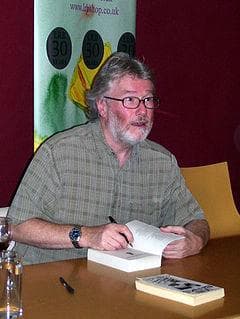
Iain Banks was a Scottish author, writing mainstream fiction as Iain Banks and science fiction as Iain M. Banks, adding the initial of his adopted middle name Menzies. After the success of The Wasp Factory (1984), he began to write full time. His first science fiction book, Consider Phlebas, appeared in 1987, marking the start of the Culture series. His books have been adapted for theatre, radio, and television. In 2008, The Times named Banks in their list of "The 50 greatest British writers since 1945".
Similar books
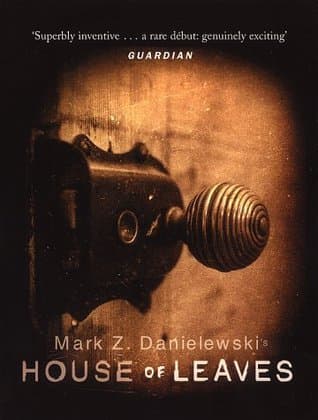
- House of Leaves
Mark Z. Danielewski
4.1 (131k) average on GoodreadsThrillerBoth are experimental and disorienting, playing with narrative structure and the reader's perception of reality.
- The Raw Shark Texts
Steven Hall
3.9 (16k) average on GoodreadsThrillerA protagonist with amnesia navigates a bizarre, metaphorical world to understand his past and identity.
- Neuromancer
William Gibson
3.9 (262k) average on GoodreadsFantasy"The Bridge" explores identity and reality through an internal, metaphorical landscape, contrasting with Gibson's grounding of these themes in a tangible cyberspace. While both feature fractured protagonists, Banks's Orr battles internal demons within a dreamlike construct, whereas Gibson's Case navigates external threats in a cyberpunk future.
- Angels & Demons
Dan Brown
3.9 (2.7M) average on GoodreadsThrillerA Harvard symbologist races through Rome's ancient sites, deciphering cryptic clues to unmask the Illuminati and stop a vengeful plot to destroy the Vatican with a stolen antimatter weapon.
- Gone Girl
Gillian Flynn
4.1 (2.3M) average on GoodreadsThrillerA wife's sudden disappearance on her fifth anniversary reveals a web of lies and psychological warfare, exposing the secrets within a seemingly perfect marriage.
- The Girl on the Train
Paula Hawkins
3.9 (2.1M) average on GoodreadsThrillerA woman’s fascination with a seemingly perfect couple she watches from her daily train commute leads her into a dark investigation when she witnesses something that shatters their idyllic image.




Enjoyed the summary?
A summary gives you the shape of the book. The book itself has the detail, the examples and the voice.
Find The Bridge on AmazonAs an Amazon Associate, BookBrief earns from qualifying purchases. How we're funded