
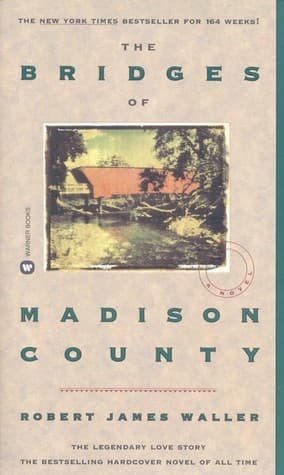
Synopsis
Covers the whole plot, including the ending.
- Difficulty
- Easy
- Pacing
- Moderate
- Mood
- Melancholy, Romantic, Poignant, Reflective
- Read it if
- You enjoy poignant, bittersweet romances about impossible choices and the lasting impact of a brief, intense love affair.
- Skip it if
- You prefer romances with a 'happily ever after' resolution or find infidelity a difficult subject.
The Bridges of Madison County Plot Summary
Covers the whole plot, including the ending.
The Discovery of the Journals
After their mother, Francesca Johnson, dies, her adult children, Michael and Carolyn, return to the family farmhouse in Winterset, Iowa. While sorting through her things, they find a locked cedar chest containing journals, old photographs, and letters. Hesitantly, they open the chest and begin reading their mother's private writings. Francesca's journals reveal a deep, passionate, and previously unknown love affair that happened over four days in August 1965, a secret she kept from her husband, Richard, and their children for decades. This discovery shocks Michael and Carolyn, making them re-evaluate their understanding of their mother and her life.
Robert Kincaid Arrives in Madison County
In August 1965, Francesca Johnson is alone on her Iowa farm for four days while her husband, Richard, and their two teenage children, Michael and Carolyn, are at the Illinois State Fair. One afternoon, a dusty green pickup truck pulls into her driveway. The driver, Robert Kincaid, a photographer for National Geographic, is photographing the historic covered bridges of Madison County. He is lost and asks Francesca for directions to the Roseman Bridge. Francesca, feeling a surprising pull toward the intriguing stranger, offers to show him the way, marking the beginning of their encounter.
A Shared Meal and Growing Connection
Francesca gets into Robert Kincaid's truck and guides him to the Roseman Bridge. As he photographs, they talk easily, finding a shared appreciation for beauty and a deep, unspoken understanding. Robert, a free-spirited wanderer, is captivated by Francesca's quiet strength and intelligence. Francesca is drawn to his artistic soul and adventurous nature, a contrast to her predictable farm life. She invites him back to her farm for dinner, and their conversation deepens, revealing their mutual loneliness and desire for a connection beyond the ordinary. The chemistry between them becomes clear.
The First Night
After dinner, Robert Kincaid stays at Francesca's farmhouse. The evening continues with more conversation, music, and quiet intimacy. Francesca, who has long suppressed her own desires and dreams, finds herself opening up to Robert in a way she never has with anyone else. The emotional intensity between them quickly becomes physical. They make love, and for Francesca, it is an experience of profound liberation and spiritual connection, unlike anything she has ever known. This night is a turning point, changing her life and perspective, even as she knows their time together is brief.
Four Days of Intense Love
Francesca and Robert Kincaid spend four extraordinary days together, exploring the covered bridges of Madison County and, more deeply, each other's souls. They drive to various bridges, Robert photographing while Francesca watches, their shared moments marked by quiet understanding and passionate embraces. Their conversations range from art and photography to life, love, and loneliness. Francesca feels a renewal of her spirit, experiencing a depth of emotional and physical intimacy she had long thought impossible. Robert, too, finds a deep connection, recognizing Francesca as a kindred spirit he has unknowingly searched for his entire life.
The Impending Farewell
As the four days end, the impending return of Richard and the children casts a shadow over Francesca and Robert's intense happiness. They both know their time together is limited, and the thought of parting is agonizing. They discuss the possibility of Robert staying or Francesca leaving with him, but the complexities of their lives and responsibilities weigh heavily. Francesca is torn between the overwhelming love she feels for Robert and her loyalty and duty to her family and the life she has built, however unfulfilling it sometimes feels.
The Difficult Choice
On the morning her family returns, Robert Kincaid asks Francesca to leave with him. He offers her a life of adventure, art, and lasting love. Francesca, at a crossroads, faces the most difficult decision of her life. She drives into town with Robert, and as they sit in his truck at a stoplight, with her husband and children's car just ahead, Robert places a small cross on her truck seat, a silent plea. Despite her profound love for him and the immense longing to be with him, Francesca ultimately chooses to stay with her family, prioritizing her perceived duty over her personal happiness, a decision that will haunt her forever.
Life After Robert
After Robert Kincaid leaves, Francesca Johnson continues her life as a farm wife, raising her children and caring for her husband, Richard. She never speaks of the affair to anyone, keeping the memory of Robert and their four days together a sacred, private treasure. Her love for Robert, though unfulfilled, remains a powerful force within her. While she continues her daily routines, she is forever changed, carrying the bittersweet knowledge of a profound love experienced and a path not taken. Her journals detail her enduring love and the quiet longing that shaped the rest of her life.
Robert's Final Years and Legacy
Francesca's journals also reveal that Robert Kincaid continued to love her until his death. After leaving Madison County, he sent her a package containing a silver cross, a ring, and a photo album with pictures of the bridges, including one of Francesca. His will specified that his ashes be scattered from the Roseman Bridge, a final gesture of his enduring love for her and the place where they met. Francesca, in turn, requested that her own ashes also be scattered from the Roseman Bridge, so that she could finally be with him in death, if not in life.
Michael and Carolyn's Reckoning
As Michael and Carolyn finish reading their mother's journals, they are stunned and deeply moved. The revelations force them to see a completely different image of their mother – not just the dutiful farm wife, but a woman with deep desires, profound love, and a secret life. They both realize that their own lives, particularly their relationships and personal happiness, have parallels to Francesca's choices and unspoken longings. Discovering their mother's secret love affair prompts them to reflect on their own lives, relationships, and the compromises they have made.
A New Understanding and Shared Legacy
After processing the story of their mother's love for Robert Kincaid, Michael and Carolyn gain a new understanding and appreciation for Francesca. They no longer see her as merely a mother but as a complex woman who made an agonizing choice out of duty and love for her family. They respect her decision and the quiet dignity with which she carried her secret. Honoring her final wish, they travel to the Roseman Bridge and scatter Francesca's ashes, symbolically reuniting her with Robert Kincaid and ensuring that their extraordinary love story, though brief, finally finds its peace and recognition.
Principal Figures
Francesca Johnson
Protagonist
An Italian war bride and Iowa farm wife who experiences a life-altering love affair.
Francesca is an Italian immigrant who married an American soldier, Richard, during World War II and moved to rural Iowa. She is a woman of quiet strength, intelligence, and artistic sensibility, though her life on the farm has largely suppressed her personal dreams and desires. She carries a subtle longing for something more, a feeling of being unfulfilled. Her brief affair with Robert Kincaid awakens her dormant passions and reveals a profound capacity for love she never knew she possessed.
Relationships: Robert Kincaid (Intense, passionate, and spiritual love affair); Richard Johnson (Loving, stable, but emotionally unfulfilling marriage); Michael Johnson (Son, initially distant, later understanding); Carolyn Johnson (Daughter, initially distant, later understanding)
Robert Kincaid
Protagonist/Love Interest
A free-spirited, artistic photographer for National Geographic with a deep appreciation for beauty.
Robert Kincaid is a wandering photographer, a solitary man with a profound connection to nature and art. He is described as rugged, charismatic, and deeply soulful, carrying a quiet loneliness despite his adventurous life. He is an observer, a seeker of beauty, and a man who lives by his own rules. His encounter with Francesca is unexpected, and he recognizes in her a kindred spirit, the true love he has unknowingly been searching for his entire life. He represents freedom, passion, and the road less traveled.
Relationships: Francesca Johnson (Intense, passionate, and spiritual love affair)
Michael Johnson
Supporting
Francesca's son, who discovers her hidden journals after her death.
Michael is Francesca's eldest child. He is initially portrayed as a somewhat cynical and practical man, dealing with his own marital problems. His discovery of his mother's journals profoundly impacts him, forcing him to re-evaluate his understanding of her and, by extension, his own life choices. He represents the generation that must grapple with the hidden lives and unfulfilled desires of their parents, ultimately finding a deeper empathy and understanding.
Relationships: Francesca Johnson (Son, initially distant, later understanding); Carolyn Johnson (Brother)
Carolyn Johnson
Supporting
Francesca's daughter, who also reads her mother's journals.
Carolyn is Francesca's daughter. Like Michael, she is initially shocked and somewhat judgmental upon discovering her mother's secret. She is also grappling with her own relationship issues. Reading Francesca's story allows her to see her mother not just as a parental figure but as a woman with her own desires and struggles, leading to a profound shift in her perspective. She represents the search for personal fulfillment and the impact of parental legacies.
Relationships: Francesca Johnson (Daughter, initially distant, later understanding); Michael Johnson (Sister)
Richard Johnson
Supporting
Francesca's kind but conventional husband.
Richard is Francesca's husband and the father of Michael and Carolyn. He is depicted as a good, hardworking, and kind man, devoted to his family and his farm. However, he is also conventional and somewhat oblivious to the deeper emotional and intellectual needs of Francesca. Their marriage is stable and affectionate but lacks the profound passion and spiritual connection that Francesca finds with Robert Kincaid. He represents the comfort of security and routine, contrasting with the wildness of passion.
Relationships: Francesca Johnson (Loving, stable, but emotionally unfulfilling marriage)
Nighthawk
Mentioned
Robert Kincaid's dog.
Nighthawk is Robert Kincaid's loyal and constant companion, a dog who travels everywhere with him. Though a minor character, Nighthawk symbolizes Robert's solitary, wandering lifestyle and his deep connection to the natural world. The dog's presence underscores Robert's self-sufficiency and the simple, uncomplicated nature of his existence, contrasting with Francesca's rooted, complex life.
Relationships: Robert Kincaid (Loyal pet and companion)
Themes & Insights
Love and Sacrifice
The main theme explores the agonizing choice between passionate love and familial duty. Francesca's affair with Robert Kincaid is a deep, once-in-a-lifetime love, but she ultimately chooses to remain with her family, sacrificing her personal happiness for their well-being and the stability of her life. This sacrifice is portrayed not as a weakness, but as a complex aspect of love, responsibility, and the quiet heroism of everyday life. Her choice to stay, despite immense longing, shapes the rest of her existence, leaving her with a bittersweet memory.
“In a universe of ambiguity, this kind of certainty comes only once, and never again, no matter how many lifetimes you live.”
Unfulfilled Dreams and Longing
The novel examines unfulfilled dreams and the common human longing for something more. Francesca, an Italian woman with an artistic soul, lives a conventional life as an Iowa farm wife, her true self largely dormant. Her meeting with Robert Kincaid awakens these suppressed desires and dreams, highlighting the 'what ifs' and 'might have beens' that many people carry. Her children, Michael and Carolyn, also deal with their own unfulfilled aspects of life, recognizing their mother's longing in themselves.
“Perhaps I am a part of a place I have never seen. Perhaps I am a part of a people I have never known.”
The Power of Memory and Legacy
The story is framed by the discovery of Francesca's journals, emphasizing how memory shapes our understanding of the past and influences the future. Francesca carefully documents her affair, preserving its intensity and meaning for herself and, ultimately, for her children. Her decision to leave the journals for Michael and Carolyn creates a powerful legacy, making them confront a hidden truth about their mother and, in turn, prompting them to reflect on their own lives and choices. The journals ensure that her extraordinary love story, though secret, is not forgotten.
“The world is full of people who are waiting for something to happen to them. And a great many of them are waiting for nothing.”
The Nature of True Love
The novel suggests that true love goes beyond conventional boundaries and expectations. The love between Francesca and Robert is a rare, cosmic connection—spiritual, intellectual, and physical—that occurs only once. It is a love that defines and completes them, even though it lasts only four days. This contrasts with Francesca's stable but less passionate marriage, suggesting that true love isn't always tied to societal norms or lifelong partnerships, but rather to an intense, undeniable soul connection that leaves a lasting mark.
“I realized that I was simply a woman who had found the right man at the wrong time.”
Plot Devices & Literary Techniques
Framing Device
The story of Francesca and Robert is told through Francesca's journals, discovered by her children.
The entire narrative is framed by Michael and Carolyn Johnson discovering and reading their deceased mother Francesca's hidden journals. This device allows the reader to experience the intense, passionate love affair through Francesca's own intimate voice, providing deep insight into her thoughts, feelings, and the agonizing choices she made. It also creates a sense of mystery and revelation for the children, mirroring the reader's own journey of discovery. The framing device highlights the theme of legacy and the impact of hidden histories on future generations.
Symbolism of the Covered Bridges
The bridges represent connection, passage, and hidden beauty.
The covered bridges of Madison County serve as powerful symbols throughout the novel. Literally, they are the reason Robert Kincaid comes to the county, bringing him to Francesca. Metaphorically, they represent the connection between two souls, the passage of time, and the hidden, often overlooked beauty that exists in the world. The bridges are sheltered and private, much like Francesca and Robert's secret love affair. Their eventual scattering of ashes at the Roseman Bridge signifies their eternal reunion and the enduring nature of their bond, transcending the physical structures.
First-Person Journal Narrative
Francesca's story is primarily told in her own words through her journals.
The use of Francesca's first-person journal entries as the primary narrative voice for the love affair allows for an incredibly intimate and subjective portrayal of her emotions, desires, and internal conflicts. This narrative choice immerses the reader directly into her experience, making her choices and sacrifices deeply personal and understandable. It authenticates her story and provides a raw, unfiltered perspective on her passion and her subsequent decades of quiet longing, reinforcing the theme of unfulfilled dreams and the power of memory.
Limited Timeframe (Four Days)
The intense love affair unfolds over a concentrated period of just four days.
The brevity of Francesca and Robert's time together—just four days—is a crucial plot device. This limited timeframe amplifies the intensity and urgency of their connection, making their love feel fated and extraordinary. It underscores the idea that profound love doesn't necessarily require years to develop but can blossom instantly and leave an indelible mark. The short duration also heightens the tragic element of their separation and emphasizes the monumental nature of Francesca's choice, as she sacrifices a love that she knows will never be replicated.
The Bridges of Madison County Quotes
“I may have been a pretty good photographer, but I was a far better lover.”
“The old dreams were good dreams; they didn't work out but I'm glad I had them.”
“In a universe of ambiguity, this kind of certainty comes only once, and never again, no matter how many lifetimes you live.”
“If you want to be a professional photographer, you have to be ready to go when the light's good, no matter what.”
“I'm not going to tell you not to love me. I'm just going to tell you that you've got to take care of yourself.”
“He was a man who lived on the edge of the known universe, and he was home.”
“Don't ever think that it's not possible to find love again, because it always is. And sometimes, it's even better the second time around.”
“We are the stuff of which dreams are made, and we are the stuff of which nightmares are made.”
“And there, in the soft light of the summer evening, they found each other.”
“I have loved you in a way that I have loved no other. And I will love you in a way that I will love no other.”
“He knew that the things he loved most about her were the things that made her different.”
“The world is full of magic things, patiently waiting for our senses to grow sharper.”
“She was a woman who had lived a quiet life, but inside, she was a raging storm.”
“There are no mistakes in the universe, only lessons.”
Quiz
10 questions on the plot and the characters. Each answer comes with a short explanation.
Question 1
What is Robert Kincaid's profession when he comes to Madison County?
- Journalist
- Photographer
- Writer
- Painter
Show answer
B. Photographer Robert Kincaid is a photographer for National Geographic, on assignment to photograph the covered bridges of Madison County.
Question 2
Where is Francesca Johnson originally from?
- Italy
- France
- Ireland
- England
Show answer
A. Italy Francesca is an Italian war bride who came to America after World War II.
Question 3
How long do Robert and Francesca spend together during their affair?
- One week
- Four days
- Two weeks
- Three days
Show answer
B. Four days Robert and Francesca share an intense four-day affair while her family is away at the state fair.
Question 4
What prompts Robert Kincaid to stop at Francesca's farmhouse?
- He is lost and needs directions.
- He needs to ask for directions to a specific covered bridge.
- His car breaks down nearby.
- He sees her working in the garden and is immediately drawn to her.
Show answer
B. He needs to ask for directions to a specific covered bridge. Robert stops at Francesca's farm to ask for directions to the Roseman Bridge, initiating their meeting.
Question 5
What is the primary reason Francesca chooses not to leave with Robert?
- She doesn't love him enough.
- She fears leaving her children and husband would destroy them and her sense of duty.
- She is worried about her reputation in the small town.
- Robert does not explicitly ask her to leave with him.
Show answer
B. She fears leaving her children and husband would destroy them and her sense of duty. Francesca's profound sense of duty to her family and the potential devastation her departure would cause ultimately leads her to stay, despite her intense love for Robert.
Question 6
How do Francesca's children, Michael and Carolyn, discover their mother's affair?
- Francesca tells them directly before she dies.
- They find Robert Kincaid's journal and letters among her possessions after her death.
- Their father tells them about it.
- They find old photographs of Robert and Francesca together.
Show answer
B. They find Robert Kincaid's journal and letters among her possessions after her death. The story is framed by Michael and Carolyn discovering their mother's hidden box containing Robert's letters, photographs, and her own journals after her death, revealing the secret.
Question 7
What specific item of Francesca's does Robert Kincaid leave for her at the Roseman Bridge after their last encounter?
- A framed photograph of them together.
- A letter confessing his feelings.
- Her silver bracelet.
- A small, carved wooden bird.
Show answer
C. Her silver bracelet. After their final, heartbreaking interaction where Francesca almost leaves with him, Robert leaves her silver bracelet at the Roseman Bridge, a poignant symbol of their connection.
Question 8
What is the significance of the covered bridges in the narrative beyond being a photographic subject?
- They symbolize the physical barrier between Francesca and the outside world.
- They represent the hidden, private nature of Francesca and Robert's love, shielded from public view.
- They are a metaphor for the strength and durability of Francesca's marriage.
- They symbolize the old, traditional values that Francesca struggles against.
Show answer
B. They represent the hidden, private nature of Francesca and Robert's love, shielded from public view. The covered bridges, often referred to as 'tunnels of love,' serve as a potent metaphor for the secret, intimate world Francesca and Robert create, hidden from the prying eyes of their small community.
Question 9
What specific request does Francesca make in her will regarding her final resting place?
- To be buried next to her husband, Richard.
- To have her ashes scattered at the Roseman Bridge.
- To be buried in her hometown in Italy.
- To have her ashes scattered in the fields of her farm.
Show answer
B. To have her ashes scattered at the Roseman Bridge. Francesca requests that her body be cremated and her ashes scattered from the Roseman Bridge, a final act connecting her to Robert and their shared, secret love.
Question 10
What is the ultimate impact of Francesca's story on her children, Michael and Carolyn?
- They are angered by their mother's infidelity and reject her memory.
- It inspires them to seek more profound love and understanding in their own lives and relationships.
- It causes them to question the stability and validity of their own marriages.
- They become disillusioned with the concept of romantic love.
Show answer
B. It inspires them to seek more profound love and understanding in their own lives and relationships. Discovering their mother's profound, hidden love story leads Michael and Carolyn to reflect on their own lives and relationships, inspiring them to seek deeper connections and understanding.
The Bridges of Madison County FAQ
What is the central premise of 'The Bridges of Madison County'?
The novel centers on the four-day affair between Robert Kincaid, a National Geographic photographer on assignment to document the covered bridges of Madison County, Iowa, and Francesca Johnson, a lonely Italian-American farm wife whose family is away at the state fair. Their intense, unexpected connection forces them to confront their deepest desires and the realities of their lives.
Who are the main characters and what are their initial circumstances?
The main characters are Robert Kincaid, a wandering, free-spirited photographer in his early 50s, and Francesca Johnson, a disillusioned housewife in her mid-40s, living a routine life on a farm with her husband Richard and two children. Robert is searching for the Roseman Bridge, and Francesca is alone, offering him directions.
How do Robert and Francesca initially meet and what draws them together?
They meet when Robert drives up Francesca's driveway, asking for directions to the Roseman Bridge. Francesca, feeling a spark of curiosity and a break from her routine, offers to show him the way. Their initial conversations quickly reveal a shared depth of spirit and a mutual longing for something more profound than their current lives.
What prevents Robert and Francesca from staying together at the end of their affair?
Francesca ultimately chooses not to leave her family, Richard and her children Michael and Carolyn, despite Robert's plea. She fears the scandal, the impact on her children's lives, and the guilt of abandoning her responsibilities, recognizing that her choice would shatter the lives of those dependent on her.
How do Francesca's children, Michael and Carolyn, discover their mother's affair?
Years after Francesca's death, Michael and Carolyn discover the affair through a series of letters and journals she left behind. They find her hidden box containing Robert Kincaid's photography equipment, his letters to her, and her own writings detailing their four days together, which profoundly reshapes their understanding of their mother.
What is the significance of the covered bridges themselves in the story?
The covered bridges symbolize the hidden, intimate spaces where their love unfolds, acting as both a physical destination for Robert's work and a metaphor for the secret, enclosed world of their affair. They represent the beauty, history, and quiet isolation that frames their brief but intense connection, and later, the enduring memory of it.
What details are revealed about Robert Kincaid's life before meeting Francesca?
Robert Kincaid is portrayed as a rootless wanderer, a free spirit who has traveled the world, often alone, dedicating his life to photography and experiencing diverse cultures. He has had other relationships but never one that truly anchored him or fulfilled his deepest emotional needs, leaving him feeling somewhat incomplete.
Are there any subtle indications that Francesca's marriage to Richard was unfulfilling prior to Robert's arrival?
Yes, the narrative subtly suggests Francesca's long-standing emotional isolation and the mundane nature of her marriage. She often reflects on the dreams she abandoned when she came to America as a war bride and the lack of passionate connection with Richard, who, while a good man, is portrayed as practical and unromantic.
What is the role of music, particularly jazz, in their connection?
Music, especially jazz, plays a crucial role in their bond. Robert brings a portable stereo and jazz music, which Francesca had long missed since leaving Italy. It acts as a shared language and a sensuous backdrop to their intimacy, deepening their emotional connection and evoking a sense of sophistication and freedom that was absent from Francesca's life.
How does Francesca's past in Italy influence her character and choices?
Francesca's Italian heritage and her past as a young woman with dreams of art and culture profoundly influence her character. Her initial vibrant spirit was stifled by her farm life, making her susceptible to Robert's worldliness. Her deep-seated Catholic guilt and sense of duty, however, ultimately guide her decision to stay with her family.
Analyze Robert Kincaid's psychological need for connection despite his nomadic lifestyle.
Despite his outward appearance as a self-sufficient loner, Robert Kincaid harbors a deep, unfulfilled psychological need for profound connection and belonging. His nomadic life, while fulfilling creatively, left an emotional void that Francesca uniquely filled. He yearns for a soulmate who understands his unconventional spirit, which he finds in her.
How does the affair impact Francesca's sense of self and identity in the long term?
The affair profoundly transforms Francesca's sense of self, making her realize the depths of her own capacity for passion and love that she had suppressed. Though she doesn't leave, the memory of Robert and their love becomes a secret wellspring of strength and a source of quiet dignity, allowing her to live out her remaining years with a renewed, albeit private, sense of fulfillment.
What psychological conflict does Francesca face when deciding whether to leave with Robert?
Francesca faces an intense psychological conflict between her personal desires for passionate love and freedom with Robert, and her ingrained sense of duty, loyalty, and responsibility to her family. This internal struggle is agonizing, forcing her to weigh her own happiness against the potential devastation and societal judgment her departure would cause her children and husband.
Is Francesca's ultimate decision to stay with her family a sign of weakness or strength?
This is debatable, but many interpret Francesca's decision as a profound act of strength and sacrifice. While it meant foregoing her own happiness with Robert, it demonstrated an unwavering commitment to her familial duties and a willingness to bear the burden of her choice, ensuring stability for her children rather than pursuing personal gratification.
The novel explores the idea of 'true love' versus 'responsible love.' How does it present this dichotomy?
The novel presents 'true love' as the intense, passionate, soul-altering connection Francesca and Robert share, while 'responsible love' is embodied by Francesca's enduring, albeit less passionate, commitment to her family and the stability she provides. It suggests that while true love can be transformative, responsible love often dictates the practical choices made in life.
Does the book romanticize infidelity, or does it offer a more nuanced view?
The book aims for a nuanced view rather than outright romanticization. While it portrays the affair with intense passion and beauty, it also highlights the profound pain, guilt, and sacrifice involved in Francesca's decision. It explores the complexities of human longing and the difficult choices individuals face, without necessarily endorsing the act of infidelity itself.
How does the ending, with Francesca's children discovering the affair, shape the reader's understanding?
The ending, through Michael and Carolyn's discovery, significantly shapes the reader's understanding by providing an external, retrospective validation of Francesca's hidden life. It allows for a deeper appreciation of her character and the profound impact of the affair, transforming their perception of their seemingly ordinary mother into someone capable of extraordinary passion and sacrifice.
What is the significance of the book being framed as a story told by Francesca's children?
Framing the story through her children's discovery lends it a sense of authenticity and a legacy. It emphasizes that Francesca's love story, though secret, was so powerful it transcended her lifetime and continued to shape the lives of those she left behind. It also allows for a reflective, almost elegiac tone, as the children piece together their mother's true self.
About the author

Robert James Waller was an American author known for his work in fiction. He is best recognized for his novel "The Bridges of Madison County," which explores themes of love and longing. Waller's writing often reflects a deep appreciation for the American landscape and human relationships.
Similar books
- A Walk to Remember
Nicholas Sparks
4.2 (673k) average on GoodreadsYoung AdultExplores intense, transformative love and bittersweet themes.
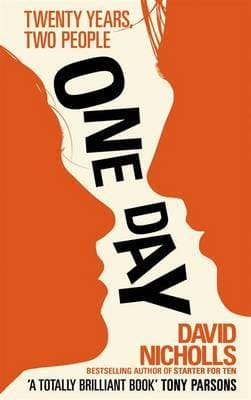
- One Day
David Nicholls
3.8 (287k) average on GoodreadsRomanceFocuses on a decades-long, impactful relationship with a poignant tone.
- Love in the Time of Cholera
Gabriel García Márquez
3.9 (412k) average on GoodreadsLiterary FictionWhile both novels explore enduring love and the passage of time, García Márquez's work offers vastly more complex characters and a richer, more nuanced exploration of love's multifaceted nature, including obsession, fidelity, and societal constraints. Love in the Time of Cholera delves into a lifetime of longing with magical realism and profound psychological depth, whereas The Bridges of Madison County focuses on a singular, brief, idealized encounter with a simpler emotional palette. Márquez's prose is celebrated for its literary artistry, contrasting with Waller's more straightforward, often sentimental style.
- The Hunger Games
Suzanne Collins
4.3 (6.4M) average on GoodreadsFantasyIn a future where children fight to the death on live television, Katniss Everdeen volunteers for the arena, turning a death sentence into a fight for survival and a spark of rebellion.
- The Great Gatsby
F. Scott Fitzgerald
3.9 (3.8M) average on GoodreadsHistorical FictionIn the opulent Roaring Twenties, a mysterious millionaire's lavish parties hide his desperate, tragic pursuit of a lost love, exposing the emptiness within the American Dream.
- The Fault in Our Stars
John Green
4.2 (3.6M) average on GoodreadsYoung AdultA girl with a terminal illness finds her story rewritten when a charming boy with a similar past enters her life at a cancer support group, leading to a star-crossed romance.





Enjoyed the summary?
A summary gives you the shape of the book. The book itself has the detail, the examples and the voice.
Find The Bridges of Madison County on AmazonAs an Amazon Associate, BookBrief earns from qualifying purchases. How we're funded