

Synopsis
Covers the whole plot, including the ending.
- Difficulty
- Medium
- Pacing
- Moderate
- Mood
- Bleak, Melancholy, Thought-provoking, Suspenseful, Existential
- Read it if
- You enjoy thought-provoking, dark science fiction with a focus on ethical dilemmas and the human condition, even in a YA context.
- Skip it if
- You prefer light-hearted or fast-paced stories, or are sensitive to themes of terminal illness and existential dread.
The Bumblebee Flies Anyway Plot Summary
Covers the whole plot, including the ending.
Arrival at the Complex
Barney, a sixteen-year-old, wakes up in the Complex, an experimental clinic, with no memory of his past. He is told he is a 'control subject' in a study, meaning he is not terminally ill like the other young residents. He quickly befriends other patients: Allie Roon, a spirited girl with a heart condition; Billy the Kid, a loud boy; and Mazzo, a quiet, thoughtful boy. They all want to escape the Complex and see the outside world, which is forbidden. Barney feels a strange detachment and a nagging feeling that something is wrong, but he cannot identify it.
The Bumblebee
Barney and his friends find a broken, bright yellow 1948 Plymouth in the Complex's junkyard. They call it 'the Bumblebee.' For them, the car means freedom and their shared dream of escaping the Complex and experiencing life outside, even for a short time. They spend hours in the junkyard, imagining driving away, and the Bumblebee becomes a main focus of their hopes. Barney feels a strong pull toward the car, as if it holds a key to his forgotten past or future.
Dr. Savard's Tests
Dr. Savard, the head of the Complex, conducts a series of unusual and increasingly intense tests on Barney, supposedly to check his memory and thinking. These tests often involve showing Barney objects and images, asking him to recall details, or exploring his emotions. Barney finds these sessions unsettling and intrusive, as they often bring back fragmented, confusing memories he cannot fully grasp. He begins to suspect that Dr. Savard is not honest about his 'control subject' status, which deepens his unease and isolation in the Complex.
The Outside World
Despite strict rules, Barney manages to sneak out of the Complex a few times. During one trip, he meets a girl named Cassie, who lives outside the facility. Their brief meetings offer Barney a glimpse of a normal life he feels he has lost or never had. Cassie's normalcy and easy interaction with the outside world contrast sharply with the confined, sterile life inside the Complex, strengthening Barney's desire for freedom and a life free from illness and experiments. These meetings also fuel his determination to understand his own situation.
Allie's Deterioration
Allie Roon, Barney's close friend and the most lively of the patients, begins to show clear signs that her heart condition is worsening. Her energy fades, and her once-bright spirit dims under the weight of her illness. Her quick decline is a stark reminder of their terminal diseases and the limited time they have left. This decline increases the group's shared longing for escape and their dream of driving the Bumblebee, making their desire for freedom before it is too late even more urgent and sad for Barney.
The Truth Revealed
Through fragmented memories, clues from Dr. Savard's tests, and a growing internal realization, Barney finally uncovers the truth: he is not a 'control subject' in the usual sense. He is a clone, a genetically engineered copy of one of the dying patients, created by Dr. Savard as an experimental memory transfer project. His purpose is to receive the memories of a dying patient, allowing a part of that person to 'live on.' This discovery shatters Barney's sense of self and identity, as he realizes his entire existence is a manufactured experiment, not a real life.
The Original Barney
The final, most devastating piece of the puzzle is that Barney is a clone of another boy, also named Barney, who is one of the terminally ill patients in the Complex, suffering from a severe brain tumor. The original Barney is in a coma, near death, and Dr. Savard's experiments have been an attempt to transfer the original Barney's memories and personality into the clone Barney. This discovery explains the fragmented memories and the strange familiarity he felt toward certain objects and feelings. His 'control' status was a lie, and his existence is defined solely by his purpose as a vessel for another's consciousness.
A Desperate Plan
Devastated by the truth of his identity, but also with a new purpose, Barney decides to fulfill his dying friends' shared dream: to drive the Bumblebee out of the Complex. He realizes that for them, this act is not just about escape, but about experiencing one last moment of freedom and normalcy before their inevitable end. This becomes his personal goal, a way to honor their lives and perhaps, in a small way, to assert his own identity and control despite his manufactured existence. The Bumblebee changes from a symbol into a real goal.
The Escape Attempt
With Allie's health quickly declining, Barney, Billy the Kid, and Mazzo finalize their plan to escape with the Bumblebee. They manage to hotwire the car and, in a desperate, poignant act, drive it toward the Complex's gates. The act is chaotic and exciting, a last burst of defiance against their fate. The other patients, understanding the importance of the moment, gather to watch. The guards are alerted, and the scene becomes a frantic chase, but for the moments they are in the car, speeding toward freedom, they feel truly alive, their dream briefly real.
The Bumblebee Flies Anyway
The escape attempt ends tragically. The Bumblebee crashes into the gates, unable to break through. Billy the Kid and Mazzo are seriously injured, and Allie Roon, already weak, dies shortly after the crash. Her dream is fulfilled in spirit if not in reality. Barney, though physically unharmed, is left with the crushing weight of their loss and the stark reality of his own existence. However, the event strengthens his connection to his friends and their dream. The Bumblebee, though broken, becomes a symbol of their lasting hope and defiance, a testament to their desire to live, even when facing death.
Aftermath and Reflection
After the crash, Barney is left to deal with his unique existence and the deep loss of his friends. He is confined again, but his view has changed forever. He understands the scientific reason behind his creation but rejects the idea that he is merely a vessel. He begins to form his own identity, separate from the original Barney, by embracing the memories and experiences he gained through his interactions with Allie, Billy, and Mazzo. He realizes that true life is not just about biological existence, but about connection, dreams, and the impact one has on others.
A New Purpose
Despite his bleak situation, Barney finds a new purpose. He decides to remember his friends, to carry their dreams and spirits within him. He understands that while the physical Bumblebee crashed, the 'bumblebee' of their collective hope and defiance truly 'flew anyway.' His existence, though artificial in origin, has been filled with real experiences and emotions. He decides that he will live not just as a clone, but as an individual who holds the legacy of Allie, Billy, and Mazzo, ensuring their dreams are not forgotten, and finding meaning in his own unique, if tragic, journey.
The Bumblebee Flies Anyway Characters
Barney
Protagonist
A sixteen-year-old clone struggling with his identity in an experimental clinic.
Barney is a sensitive, introspective, and initially bewildered teenager. He awakens in the Complex with no memory, believing himself to be a 'control subject.' He is observant and empathetic, quickly forming strong bonds with the other terminally ill patients. His core drive is to understand his own existence and to belong. He possesses a deep longing for freedom and a normal life, which is magnified by his interactions with Cassie and his friends' shared dream.
Relationships: Allie Roon (Close friend, object of affection, shared dream of escape); Billy the Kid (Friend, fellow dreamer, co-conspirator in escape attempts); Mazzo (Friend, philosophical companion, fellow dreamer); Dr. Savard (Creator, antagonist, scientific observer); Cassie (Brief romantic interest, symbol of the outside world)
Allie Roon
Supporting
A spirited and determined girl with a heart condition, Barney's closest friend.
Allie is vibrant, defiant, and full of life, despite her terminal heart condition. She is the emotional core of the group of patients, inspiring hope and a longing for freedom. She has a playful, sometimes flirtatious, relationship with Barney and is fiercely determined to experience life outside the Complex. Her deteriorating health serves as a constant, poignant reminder of their limited time and fuels the urgency of their shared dream to escape in the Bumblebee.
Relationships: Barney (Close friend, mutual affection, shared dream); Billy the Kid (Friend, fellow patient); Mazzo (Friend, fellow patient)
Dr. Savard
Antagonist
The cold, brilliant scientist in charge of the Complex and Barney's creator.
Dr. Savard is a brilliant but morally ambiguous scientist driven by the ambition to conquer death and preserve consciousness. He views the patients, especially Barney, as subjects in his grand experiment rather than individuals with rights or feelings. He is manipulative and secretive, deliberately misleading Barney about his true identity and purpose. His cold, detached demeanor underscores the ethical dilemmas of his scientific pursuits, prioritizing his research above the well-being and humanity of his subjects.
Relationships: Barney (Creator/creation, experimenter/subject, antagonist); Patients (Subjects of his medical research)
Billy the Kid
Supporting
A boisterous and rebellious patient who dreams of freedom.
Billy the Kid is a lively and impulsive boy, one of Barney's closest friends in the Complex. He embodies a rebellious spirit and a deep yearning for the freedom of the outside world. He is often the instigator of daring ideas, including the plan to fix the Bumblebee. Despite his bravado, he is also vulnerable due to his terminal illness. He represents the raw, unfiltered desire for life and adventure that the patients share.
Relationships: Barney (Friend, co-conspirator); Allie Roon (Friend, fellow patient); Mazzo (Friend, fellow patient)
Mazzo
Supporting
A quiet, philosophical patient who contemplates life and death.
Mazzo is a more introspective and philosophical member of Barney's group of friends. He is quieter than Billy but possesses a deep understanding of their shared predicament, often offering profound observations about life, death, and dreams. He provides a calm, reflective counterpoint to Billy's impulsiveness and Allie's vivacity. His quiet determination to participate in the Bumblebee escape reflects his desire for one last meaningful experience.
Relationships: Barney (Friend, intellectual companion); Allie Roon (Friend, fellow patient); Billy the Kid (Friend, fellow patient)
Cassie
Supporting
A girl from the outside world who briefly connects with Barney.
Cassie is a normal, healthy girl from outside the Complex whom Barney meets during his clandestine excursions. She represents the ordinary, vibrant life that Barney and the other patients are denied. Her brief interactions with Barney offer him a tantalizing glimpse of romance and normalcy, reinforcing his longing for a life beyond the experimental clinic. She serves as a stark contrast to the confined world of the Complex, highlighting the preciousness of everyday freedom.
Relationships: Barney (Brief romantic interest, symbol of the outside)
The Original Barney
Mentioned
The terminally ill patient whose memories are to be transferred to the protagonist.
The original Barney is a boy in a coma, suffering from a severe brain tumor, who is the source of the clone Barney's existence. He is never an active character but is central to the plot's mystery and the protagonist's identity crisis. He represents the tragic reality of the terminal illnesses within the Complex and the scientific ambition of Dr. Savard to circumvent death through cloning and memory transfer. His impending death drives the urgency of the experiment.
Relationships: Barney (Original/clone, genetic source); Dr. Savard (Patient/subject of experiment)
The Nurses/Guards
Supporting
Staff of the Complex who enforce rules and maintain order.
The nurses and guards represent the institutional control and the boundaries of the Complex. While not overtly malicious, they are figures of authority who prevent the patients from experiencing freedom and maintain the secrecy of Dr. Savard's experiments. They are part of the oppressive system that confines the children, ensuring the rules are followed and that the outside world remains inaccessible.
Relationships: Barney and Patients (Authority figures/detainees)
The Bumblebee Flies Anyway Themes
Identity and Self-Discovery
The novel deeply explores what makes up a person's identity, especially when that identity is created. Barney struggles with the devastating discovery that he is a clone, made to be a vessel for another's memories. His journey is about forming his own self despite his artificial origins, realizing that experiences, relationships, and the will to live define him more than his genetic makeup. This is clear in his determination to fulfill his friends' dream, not just the original Barney's, as a way of showing his own unique existence and purpose. The struggle to connect his past (or lack of it) with his present reality is central to his character's development.
“He was Barney, all right, but not the Barney he had thought he was. Not the control. Not the healthy one. He was the other Barney. The spare. The duplicate.”
The Meaning of Life and Death
The terminally ill patients in the Complex, facing imminent death, force a deep consideration of life's value. They hold onto dreams and experiences, even small ones like the Bumblebee, as a way to affirm their existence. Their desire to 'live' before they die highlights that quality of life, connection, and freedom are most important. Barney, initially detached, learns this lesson through their stories and struggles. The novel suggests that true life is not just how long one lives but the impact one has and the dreams one pursues, even if those dreams are cut short. Allie's death, though tragic, is presented as a fulfillment of her spirit.
“A dream doesn't die. It just goes into hiding and waits for its chance.”
Freedom vs. Confinement
The physical confinement of the Complex sharply contrasts with the patients' desperate desire for freedom. The Bumblebee becomes the ultimate symbol of this desire—a vehicle to escape the sterile, controlled environment and experience the outside world. This theme appears in Barney's secret trips outside, his longing for Cassie, and the shared dream of driving the car. The Complex represents not just physical barriers but also the confinement of their terminal diagnoses and Dr. Savard's ethical limits. The final, tragic escape attempt, though not breaking the physical barrier, represents a spiritual victory of freedom over confinement.
“The Bumblebee was more than a car. It was a promise. A promise of freedom. Of escape. Of life.”
Ethical Implications of Scientific Advancement
Dr. Savard's experiments raise serious ethical questions about the limits of science and treating subjects as less than human in the search for knowledge. His cloning and memory transfer project, while aiming to 'conquer' death, treats human beings as mere parts and data points. The novel criticizes the idea that scientific progress justifies sacrificing individual rights, identity, and emotional well-being. Barney's suffering and the patients' confinement underscore the moral cost of such unchecked ambition, making readers consider the responsibility that comes with advanced scientific capabilities.
“He was a scientist, not a god. But sometimes, in his laboratory, he felt like one.”
Hope and Resilience
Despite their terminal illnesses and confinement, the patients in the Complex, especially Allie, Billy, and Mazzo, show remarkable hope and resilience. Their shared dream of the Bumblebee shows the human spirit's ability to find light even in the darkest situations. Barney also shows this resilience by choosing to embrace his unique identity and honor his friends' memories, rather than giving in to despair after the truth is revealed. The 'bumblebee flies anyway' metaphor captures this theme: even when faced with impossible odds and tragic outcomes, the spirit of hope and the pursuit of dreams can last.
“Even if it couldn't fly, it would still be a bumblebee. And bumblebees fly anyway.”
Plot Devices & Literary Techniques
Amnesia
Barney's initial lack of memory serves as a central mystery and plot driver.
Barney's amnesia at the beginning of the novel creates immediate suspense and a sense of disorientation for both the character and the reader. It allows Cormier to gradually reveal the truth about the Complex and Barney's identity, piece by piece, through fragmented memories and Dr. Savard's tests. This device effectively builds tension and keeps the reader guessing, mirroring Barney's own confusion and his desperate search for self-understanding. It also highlights his vulnerability and dependence on the unreliable information provided by Dr. Savard.
Symbolism of The Bumblebee
A dilapidated car represents freedom, hope, and the patients' collective dream.
The yellow 1948 Plymouth, dubbed 'the Bumblebee,' is the most potent symbol in the novel. It represents the patients' shared dream of freedom, escape from their confinement, and a chance to experience life before death. Its broken state reflects their own fragile conditions, but their determination to make it 'fly' (drive) symbolizes their enduring hope and defiance. The car becomes a tangible goal, a rallying point for their spirits, and ultimately, a vessel for their final, poignant act of rebellion and a metaphor for the human spirit's ability to endure against all odds, even when facing impossible realities.
The 'Control Subject' Lie
Dr. Savard's deception about Barney's status creates dramatic irony and builds to the climax.
The lie that Barney is a 'control subject' is a crucial plot device that establishes the initial premise and drives the narrative forward. It creates dramatic irony, as the reader slowly uncovers clues that contradict this claim, while Barney remains largely unaware. This deception isolates Barney further and fuels his internal conflict, making his eventual discovery of the truth about being a clone all the more shocking and impactful. It highlights Dr. Savard's manipulative nature and the ethical vacuum of his scientific pursuits, setting up the central conflict of identity for Barney.
Flashbacks/Fragmented Memories
Brief, confusing bursts of memory provide clues to Barney's true past.
Throughout the novel, Barney experiences fleeting, often unsettling, flashbacks or fragmented memories. These are not clear recollections but rather sensory impressions, emotions, or partial images that hint at a past he cannot fully access. This device is essential for gradually unraveling the mystery of his identity. It serves as a narrative breadcrumb trail, slowly guiding Barney (and the reader) towards the shocking truth about his cloning and the memory transfer experiment, making his eventual realization more earned and impactful.
The Bumblebee Flies Anyway Quotes
“Do you remember the day you learned about death? The day you realized it wasn’t just something that happened to old people or people in books?”
“The Bumblebee Flies Anyway. That was the name of the project.”
“You don't fight death. You accept it. You prepare for it. You learn how to live with it.”
“What good is memory if you can’t remember the things that matter?”
“He knew, suddenly, that he was important. Not just Barney, the kid with the disease, but Barney, the participant, the one who mattered.”
“Sometimes, the only way to live is to pretend you’re not dying.”
“A lie, like a disease, can spread and infect everything around it.”
“The future was a blank page, and he was holding the pen.”
“We're all just waiting for our turn, aren't we? Some of us just know when it's coming.”
“There was a difference between living and merely existing.”
“It was like being in a dream, knowing it was a dream, but unable to wake up.”
“The truth, sometimes, is the hardest thing to face.”
“How do you say goodbye to someone you've never really known?”
“The experiment wasn't about curing them. It was about something else entirely.”
Quiz
10 questions on the plot and the characters. Each answer comes with a short explanation.
Question 1
What is the primary reason Barney is at the Complex?
- He is undergoing experimental surgery for a rare disease.
- He is a control subject in a drug trial, not receiving the experimental drug.
- He is a volunteer helping the doctors conduct the experiments.
- He is a runaway who was found by the Complex staff.
Show answer
B. He is a control subject in a drug trial, not receiving the experimental drug. Barney is explicitly identified as the 'control' subject, meaning he is part of the experiment but not receiving the active drug, making his situation different from the others.
Question 2
What is the 'Bumblebee' that the subjects dream of making 'fly'?
- A secret escape tunnel from the Complex.
- A model airplane built by the subjects, symbolizing freedom and hope.
- A new experimental drug designed to cure them.
- A nickname for Dr. Varga's new medical device.
Show answer
B. A model airplane built by the subjects, symbolizing freedom and hope. The Bumblebee is a model airplane that the subjects, particularly Mazzo and Barney, work on together. It becomes a powerful symbol of their collective dream for life and freedom outside the Complex.
Question 3
Who is Allie Roon, and what is her significance to Barney?
- She is a nurse at the Complex who secretly helps Barney.
- She is Barney's sister who visits him regularly.
- She is a girl from his past whom he vaguely remembers and longs for.
- She is another subject in the Complex who becomes his closest friend.
Show answer
C. She is a girl from his past whom he vaguely remembers and longs for. Allie Roon is a girl from Barney's fragmented memories before the Complex, representing a connection to his past and a life he can't fully recall, becoming a significant emotional anchor for him.
Question 4
What is the 'terrible secret' Barney uncovers about himself?
- He is actually Dr. Varga's son and the heir to the Complex.
- He is not sick like the other subjects, but was placed there by his parents.
- He is not alive, but an artificially created being or a clone.
- He is already dead, and his body is being preserved for an experiment.
Show answer
D. He is already dead, and his body is being preserved for an experiment. The central twist of the novel is that Barney is a cadaver, being kept 'alive' and functional through advanced technology as the control subject, while the other subjects are dying and their bodies are being used for research after death.
Question 5
Who is Dr. Varga, and what is his role in the Complex?
- He is a compassionate doctor trying to find a cure for the subjects.
- He is the head researcher, conducting unethical experiments on dying young people.
- He is a psychologist helping the subjects cope with their illnesses.
- He is a security guard ensuring no one escapes the Complex.
Show answer
B. He is the head researcher, conducting unethical experiments on dying young people. Dr. Varga is the cold and calculating head of the Complex, driven by scientific ambition rather than ethics, using the dying subjects and Barney's cadaver for his controversial research.
Question 6
What is the primary theme explored through the concept of the 'control subject' in the novel?
- The importance of scientific rigor in medical research.
- The dehumanizing aspects of scientific experimentation and the objectification of individuals.
- The moral dilemma of choosing who receives treatment in a medical crisis.
- The psychological effects of isolation on young patients.
Show answer
B. The dehumanizing aspects of scientific experimentation and the objectification of individuals. Barney being a 'control subject' who is actually deceased highlights the extreme dehumanization and ethical violations within the Complex, reducing individuals to mere data points for scientific gain.
Question 7
How do Barney's memories of Allie Roon change after he learns the truth about himself?
- He realizes Allie Roon was a doctor at the Complex in disguise.
- He understands that Allie Roon was a figment of his imagination.
- He realizes Allie Roon was the girl whose body he is inhabiting.
- He understands that Allie Roon was a real person, but his memories are not his own.
Show answer
D. He understands that Allie Roon was a real person, but his memories are not his own. After uncovering the truth, Barney realizes that his memories, including those of Allie Roon, are actually implanted or extracted from the person whose body he is using, further emphasizing the loss of his own identity.
Question 8
What is the ultimate goal Barney pursues after discovering his true nature?
- To expose Dr. Varga's experiments to the outside world.
- To find a way to truly die and end his existence.
- To escape the Complex and reunite with his family.
- To help the other subjects escape before they die.
Show answer
B. To find a way to truly die and end his existence. Once Barney learns he is a cadaver being kept 'alive,' his ultimate desire shifts from a vague longing for freedom to a desperate need for true death, to finally be at peace and cease to be Dr. Varga's experiment.
Question 9
Which of the following best describes the atmosphere of the Complex?
- Warm, comforting, and nurturing.
- Chaotic, disorganized, and neglectful.
- Sterile, controlled, and emotionally distant.
- Vibrant, stimulating, and intellectually challenging.
Show answer
C. Sterile, controlled, and emotionally distant. The Complex is consistently described as a highly controlled, sterile environment, devoid of genuine warmth or personal connection, reflecting the clinical and unemotional nature of the experiments conducted there.
Question 10
What does the 'flight' of the Bumblebee ultimately symbolize for Barney at the end of the novel?
- His triumphant escape from the Complex.
- The successful culmination of Dr. Varga's experiments.
- His final act of defiance and his longed-for release into true death.
- A new beginning and a chance at a normal life.
Show answer
C. His final act of defiance and his longed-for release into true death. The 'flight' of the Bumblebee, when Barney finally launches it, becomes his last conscious act, symbolizing his ultimate freedom from the Complex and his artificial existence, ushering in the peace of true death he seeks.
The Bumblebee Flies Anyway FAQ
What is the primary setting of 'The Bumblebee Flies Anyway' and what is its purpose?
The primary setting is the Complex, an experimental clinic designed to house terminally ill teenagers. Its purpose is to conduct various medical experiments on these subjects, ostensibly to prolong their lives or find cures, though the true nature of some experiments is more sinister.
Who is Barney, and what makes him unique among the other subjects at the Complex?
Barney is the sixteen-year-old protagonist who believes he is the 'control subject' in the Complex's experiments. He thinks he is healthy and not terminally ill like the others, which gives him a unique perspective and a sense of responsibility towards his fellow subjects.
What is the 'ultimate dream' that Barney and his fellow subjects share, and how does the 'Bumblebee' relate to it?
The ultimate dream is to experience life outside the Complex, to feel the freedom and normalcy that has been denied to them. The 'Bumblebee' is a dilapidated car that becomes a symbol of this dream, representing their collective hope for escape and a brief taste of freedom.
Who is Cassie and what role does she play in Barney's journey?
Cassie is one of the subjects at the Complex, a girl with whom Barney develops a close bond. She represents a genuine connection and a reason for Barney to pursue the 'ultimate dream,' as he wants to give her and the others a moment of joy and normalcy before their inevitable decline.
What is the 'terrible secret' Barney uncovers about himself?
Barney discovers that he is not a healthy 'control subject' but is actually terminally ill, like all the other residents of the Complex. His memories of a life before the Complex were fabricated or suppressed, revealing the true depth of the deception he has lived under.
How does Dr. Varga manipulate Barney and the other subjects?
Dr. Varga manipulates Barney by implanting false memories of a past life and convincing him he is a healthy control. For the other subjects, he offers false hope of cures and uses their desperation to secure their cooperation in his often unethical experiments, including the memory-altering drugs.
What is the significance of the 'memory drugs' administered at the Complex?
The memory drugs are crucial to the Complex's deception, as they are used to erase or alter subjects' past memories, making them more compliant and preventing them from questioning their circumstances. Barney's initial 'amnesia' is a direct result of these drugs.
Are there any clues early in the book that hint at Barney's true condition?
Yes, there are subtle clues, such as Barney's unexplained headaches, occasional disorientation, and the way the staff treats him with a certain pity or watchfulness that doesn't quite align with his 'control subject' status. His lack of concrete memories is also a significant red flag.
What is the symbolic meaning of the 'Bumblebee' car beyond just a means of escape?
The Bumblebee symbolizes the inherent human desire for freedom and the indomitable spirit even in the face of insurmountable odds. It represents the idea that, like a bumblebee, something seemingly incapable of flight can still defy expectations and achieve the impossible, even if only for a moment.
How does Barney's initial belief that he is a 'control subject' affect his psychological state?
This belief gives Barney a sense of purpose and superiority, making him feel responsible for the others. It also creates a psychological distance, allowing him to observe the others' suffering with a degree of detachment, which is shattered when he discovers his true condition.
Discuss the ethical implications of the experiments conducted at the Complex.
The experiments are highly unethical, involving deception, the manipulation of memories, and the use of terminally ill children as subjects without their full informed consent. Dr. Varga prioritizes scientific advancement over the dignity and well-being of his patients, blurring the lines of medical ethics.
How does Barney's identity crisis evolve throughout the novel?
Barney's identity crisis begins with his initial amnesia and his assigned role as a 'control.' It deepens as he questions his memories and surroundings, culminating in a profound shock and re-evaluation of everything he believed after discovering his true illness. This leads him to embrace a new identity as a protector and fulfiller of dreams.
What does the ending of the book suggest about the power of hope and human connection?
The ending, while bittersweet, powerfully suggests that hope and human connection can provide profound meaning and dignity, even in the face of death. The brief, shared experience of freedom in the Bumblebee offers a moment of triumph and genuine living that transcends their terminal conditions, highlighting the importance of shared dreams.
How does the author use the setting of the Complex to enhance the themes of isolation and control?
The Complex's sterile, isolated environment, with its strict routines and lack of outside contact, perfectly embodies themes of isolation and control. The subjects are literally cut off from the world, their lives entirely dictated by the institution, emphasizing their lack of autonomy and the psychological impact of confinement.
Analyze the role of denial in the psychological coping mechanisms of the subjects.
Denial plays a significant role, both imposed and self-generated. The subjects, including Barney for much of the novel, deny the full extent of their conditions or the harsh reality of their future. This denial, sometimes aided by the memory drugs, allows them to maintain a fragile sense of normalcy or hope, however illusory.
What is the ultimate fate of the Bumblebee and what does it symbolize in its final moments?
The Bumblebee, after its brief moment of freedom and joy with Barney and his friends, eventually breaks down and becomes stranded. In its final moments, it symbolizes the fleeting nature of their triumph and the inevitability of their circumstances, but also the enduring power of the memory of that freedom.
How does Barney's relationship with Allie, the younger subject, develop and what does it represent?
Barney develops a protective, almost paternal relationship with Allie, who is younger and more vulnerable. This relationship represents Barney's growing empathy and his desire to shield the innocent from the harsh realities of their situation, driving him to create moments of happiness for them.
What is the significance of the book's title, 'The Bumblebee Flies Anyway'?
The title directly refers to the scientific 'impossibility' of a bumblebee flying due to its body-to-wing ratio, yet it does. This metaphor encapsulates the core theme: despite overwhelming odds and terminal conditions, the characters, particularly Barney, defy their fate to find moments of freedom, hope, and purpose.
About the author
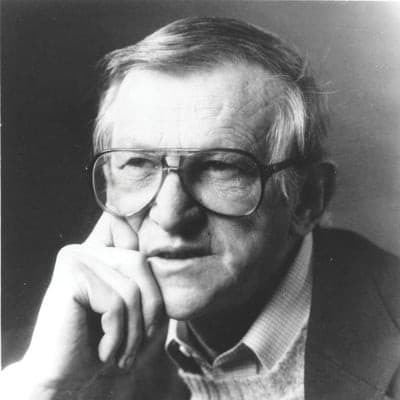
Robert Cormier was an American author known for his young adult fiction that often explores complex themes of morality and the human experience. His notable works include The Chocolate War, After the First Death, Heroes, Tenderness, Beyond the Chocolate War, and We All Fall Down. Cormier's writing is characterized by its realistic portrayal of adolescence and its challenges.
Similar books
- Flowers for Algernon
Daniel Keyes
4.1 (478k) average on GoodreadsPsychologyExplores themes of scientific experimentation, ethics, and the human mind's fragility.
- Never Let Me Go
Kazuo Ishiguro
3.8 (471k) average on GoodreadsLiterary FictionFeatures a group of young people in a secluded institution discovering the dark truth about their existence.
- The Giver
Lois Lowry
4.1 (1.8M) average on GoodreadsFantasyA young protagonist uncovers the sinister truth behind their seemingly perfect world.
- The Chocolate War
Robert Cormier
3.5 (40k) average on GoodreadsYoung AdultBoth novels share Cormier's signature bleak worldview and focus on an individual's struggle against an oppressive system. While The Chocolate War explores institutional power dynamics and mob mentality in a high school setting, The Bumblebee Flies Anyway delves into medical ethics and the manipulation of hope in a more confined, experimental environment. Both challenge the notion of triumph and often end with ambiguous or tragic outcomes for the protagonist, emphasizing Cormier's consistent thematic concerns with powerlessness and moral compromise.
- The Maze Runner
James Dashner
4.0 (1.1M) average on GoodreadsFantasyBoth novels feature young protagonists trapped in a mysterious, controlled environment with amnesia, undergoing a series of tests or challenges, and seeking escape. However, The Maze Runner is a more action-oriented, high-stakes dystopian adventure with a clear external threat and a focus on physical survival and world-building. The Bumblebee Flies Anyway is a more introspective and psychologically driven thriller, where the primary threat is the manipulation of the patients' minds and hopes, and the 'escape' is more about understanding truth than physical flight. Cormier's narrative is less about unraveling a complex future society and more about the immediate, personal horror of human experimentation.
- Angels & Demons
Dan Brown
3.9 (2.7M) average on GoodreadsThrillerA Harvard symbologist races through Rome's ancient sites, deciphering cryptic clues to unmask the Illuminati and stop a vengeful plot to destroy the Vatican with a stolen antimatter weapon.






Enjoyed the summary?
A summary gives you the shape of the book. The book itself has the detail, the examples and the voice.
Find The Bumblebee Flies Anyway on AmazonAs an Amazon Associate, BookBrief earns from qualifying purchases. How we're funded