

Synopsis
Covers the whole plot, including the ending.
- Difficulty
- Medium
- Pacing
- Moderate
- Mood
- Thought-provoking, Melancholy, Poignant, Hopeful (initially), Tragic
- Read it if
- You enjoy poignant character studies, explore themes of intelligence, identity, and humanity, and don't mind a heartbreaking but profoundly thought-provoking story.
- Skip it if
- You prefer lighthearted reads, avoid stories with tragic endings, or find the theme of mental regression too distressing.
Flowers for Algernon Plot Summary
Covers the whole plot, including the ending.
Charlie's Aspiration and the Algernon Experiment
Charlie Gordon, a 32-year-old man with an IQ of 68, works as a janitor at Donner's Bakery and attends night classes for slow adults taught by Miss Alice Kinnian. He is chosen as the first human subject for an experimental brain surgery designed to increase intelligence, pioneered by Dr. Strauss and Professor Nemur. The procedure has already been successful on a laboratory mouse named Algernon, who has become intelligent. Charlie wants to become smart, driven by a desire to be liked and to understand the world around him, which he often misinterprets. His initial 'progress reports' are filled with misspellings and simple language, reflecting his current intellectual state, but also his hope for change.
Post-Surgery Changes and Initial Progress
After the surgery, Charlie is frustrated by his lack of immediate improvement. He continues to race Algernon through mazes, consistently losing. With the encouragement of Miss Kinnian, he persists in his studies. Gradually, his spelling and grammar improve, and he starts to grasp more complex concepts. He beats Algernon in a maze for the first time, a milestone. His ability to recall past memories, previously fragmented and confusing, begins to sharpen, and he starts to understand the nuances of conversations and social interactions that previously eluded him. He notes the increasing clarity of his thoughts and observations in his progress reports.
Awakening to Reality and Social Alienation
Charlie's rapidly increasing intelligence allows him to critically observe the world, leading to painful revelations. He realizes that his co-workers at Donner's Bakery, especially Joe Carp and Frank Reilly, often made fun of him, using him as entertainment. He also understands that his 'friends' never genuinely cared for him. This new awareness brings loneliness and alienation. He falls in love with Miss Kinnian, who struggles to adapt to his rapid intellectual ascent. His relationship with his former 'friends' deteriorates completely when they sign a petition to have him fired from the bakery, a move he now understands as cruel.
Intellectual Zenith and Scientific Contributions
Charlie's IQ soars, eventually surpassing that of Dr. Strauss and Professor Nemur. He learns multiple languages, reads widely, and studies advanced fields like psychology, mathematics, and music. He begins to see flaws in the original experiment and its theoretical framework. He develops a deep intellectual bond with Algernon, recognizing their shared, unique existence. He travels to Chicago with Dr. Strauss and Professor Nemur for a scientific convention, where he presents his own findings, challenging their initial conclusions and demonstrating his superior intellect, causing them discomfort and professional embarrassment.
Algernon's Regression and Charlie's Foreboding
While at the scientific convention, Charlie notices alarming changes in Algernon. The mouse becomes erratic, aggressive, and less coordinated, losing his acquired intelligence. Charlie, with his heightened intellect, immediately recognizes these symptoms as a sign of regression and deduces that the experimental procedure is not stable. He becomes disturbed, realizing that Algernon's fate predicts his own. He dedicates himself to intense research, studying the scientific data and his own progress reports, desperate to find a solution or at least understand the mechanism of their impending decline. He becomes obsessed with the 'Algernon-Gordon Effect.'
The Algernon-Gordon Effect and Inevitable Decline
Charlie works tirelessly, using his genius to analyze the data from the experiment. He discovers and formulates the 'Algernon-Gordon Effect,' a mathematical proof that demonstrates the temporary nature of the intelligence increase and predicts a rapid and severe regression, leading to a mental state even worse than the original. His findings confirm that his own decline is inevitable and irreversible. He continues to document his observations in his progress reports, which now reflect his diminishing cognitive abilities, mirroring the early stages of his original reports. He becomes withdrawn, grappling with the tragedy of his situation.
Charlie's Regression and Loss of Identity
The regression accelerates. Charlie's spelling and grammar deteriorate, his memory falters, and he struggles with basic tasks. He finds it difficult to understand complex ideas and even simple conversations. He tries to cling to his memories of Miss Kinnian, Dr. Strauss, and Professor Nemur, but they become hazy. His emotional state becomes fragile, marked by confusion and despair. He visits his mother, Rose, and his sister, Norma, hoping for connection, but the encounters are painful and highlight his regression. He understands that he is losing the person he became, slowly returning to his former self, but with the added burden of knowing what he has lost.
Return to Familiarity and Final Request
As his intelligence continues to recede, Charlie finds himself drawn back to the familiar. He returns to Donner's Bakery, hoping to resume his janitorial work, though his former co-workers are now uncomfortable around him, recognizing his decline. He briefly forgets his past intellectual peak, only to have flashes of memory that cause him pain. He decides to leave New York, believing it will be easier for Miss Kinnian and his former mentors if he is not around. In his final progress report, filled with misspellings and grammatical errors, he makes a request: to place flowers on Algernon's grave, remembering their shared journey and his enduring empathy.
Principal Figures
Charlie Gordon
Protagonist
A mentally disabled man who undergoes an experimental surgery to increase his intelligence.
Charlie is a 32-year-old man with a low IQ at the beginning of the story, characterized by his earnest desire to be smart, his kindness, and his naive perception of the world. He is eager to please and initially believes his 'friends' at the bakery genuinely like him. As his intelligence grows, he develops a sophisticated understanding of human nature, science, and philosophy, but also experiences profound loneliness, alienation, and ultimately, despair as he regresses. His journey is marked by intellectual awakening, emotional turmoil, and a tragic acceptance of his fate.
Relationships: Algernon (Fellow experimental subject, intellectual companion, and tragic mirror); Alice Kinnian (Teacher, love interest, and emotional support); Dr. Strauss (Neurosurgeon, one of the creators of the experiment); Professor Nemur (Psychologist, co-creator of the experiment, often seen as arrogant); Joe Carp (Co-worker at the bakery, initially a 'friend' who mocks Charlie); Frank Reilly (Co-worker at the bakery, initially a 'friend' who mocks Charlie)
Algernon
Supporting
A white laboratory mouse, the first successful subject of the intelligence-enhancing surgery.
Algernon is a white mouse who undergoes the same experimental surgery as Charlie. He serves as Charlie's precursor and a tragic mirror. Initially, Algernon is remarkably intelligent, able to solve complex mazes and puzzles, but his intelligence is temporary. His eventual regression and death foreshadow Charlie's own inevitable decline, symbolizing the fleeting nature of their enhanced intellect. Charlie develops a deep empathy and connection with Algernon, recognizing their shared, unique fate.
Relationships: Charlie Gordon (Fellow experimental subject, intellectual companion, and tragic mirror)
Alice Kinnian
Supporting
Charlie's kind and dedicated night school teacher, who develops feelings for him.
Alice is Charlie's compassionate night school teacher, who initially recommends him for the experiment due to his eagerness to learn. She genuinely cares for Charlie's well-being and is one of the few people who sees his inherent goodness beyond his intellectual disability. As Charlie's intelligence grows, she struggles to adapt to their changing relationship, feeling increasingly inferior and alienated by his genius, yet she remains a source of emotional support and love for him throughout his journey, even during his regression.
Relationships: Charlie Gordon (Student, love interest, and emotional support); Dr. Strauss (Colleague, discusses Charlie's progress)
Dr. Strauss
Supporting
The neurosurgeon who performs Charlie's operation and is more empathetic than his colleague.
Dr. Strauss is the neurosurgeon who performs the experimental operation on Charlie. He is depicted as the more compassionate and patient of the two doctors, often defending Charlie and taking a genuine interest in his emotional and psychological well-being. He recognizes the ethical complexities of their work and is more sensitive to the human implications of the experiment than Professor Nemur. He is initially proud of Charlie's progress but struggles to accept Charlie's eventual intellectual superiority.
Relationships: Charlie Gordon (Patient, experimental subject); Professor Nemur (Colleague, co-director of the experiment); Alice Kinnian (Colleague, discusses Charlie's progress)
Professor Nemur
Supporting
The psychologist who co-directs the experiment, driven by ambition and ego.
Professor Nemur is the psychologist and the lead theorist behind the intelligence-enhancing experiment. He is portrayed as ambitious, insecure, and often arrogant, primarily concerned with scientific recognition and publishing his findings. He views Charlie more as a subject than a person and struggles to accept Charlie's intellectual superiority when it surpasses his own. His focus on scientific achievement sometimes blinds him to the ethical and human consequences of the experiment, leading to friction with Dr. Strauss and Charlie.
Relationships: Charlie Gordon (Experimental subject); Dr. Strauss (Colleague, co-director of the experiment)
Joe Carp
Supporting
Charlie's co-worker at Donner's Bakery, who initially mocks him.
Joe Carp is one of Charlie's co-workers at Donner's Bakery. Along with Frank Reilly, he is part of the group that frequently makes fun of Charlie, using him as the butt of their jokes. Charlie initially perceives them as friends because he doesn't understand their mockery. As Charlie's intelligence grows, he realizes the cruelty of their actions, leading to a painful confrontation and ultimately, a petition signed by Joe and others to have Charlie fired. Later, after Charlie's regression, Joe shows a flicker of genuine concern.
Relationships: Charlie Gordon (Co-worker, initially a 'friend' who mocks him); Frank Reilly (Co-worker, fellow mocker)
Frank Reilly
Supporting
Charlie's co-worker at Donner's Bakery, who joins in the mockery.
Frank Reilly is another of Charlie's co-workers at Donner's Bakery, similar to Joe Carp in his treatment of Charlie. He participates in the jokes and pranks at Charlie's expense, contributing to Charlie's initial misperception of their friendship. His actions, along with Joe's, highlight the casual cruelty Charlie faced before his intellectual awakening. He also signs the petition to have Charlie fired. His character serves to illustrate the social isolation Charlie experiences as he gains intelligence.
Relationships: Charlie Gordon (Co-worker, initially a 'friend' who mocks him); Joe Carp (Co-worker, fellow mocker)
Mrs. Flynn
Supporting
Charlie's landlady, a kind and concerned figure.
Mrs. Flynn is Charlie's landlady. She is a relatively minor character but serves as a consistent, kind presence in Charlie's life. She expresses genuine concern for Charlie's well-being and his changing behavior, particularly as he undergoes his intellectual transformation and later his regression. Her interactions with Charlie highlight the impact of his changes on everyday people and offer a sense of normalcy and stability amidst the dramatic shifts in Charlie's life.
Relationships: Charlie Gordon (Tenant)
Fay Lilliman
Supporting
Charlie's free-spirited neighbor and brief romantic interest during his intellectual peak.
Fay is a free-spirited, bohemian artist who lives in Charlie's apartment building. She becomes a brief romantic interest for Charlie during his intellectual peak, offering him a distraction from his scientific work and the emotional turmoil of his past. Their relationship is more casual and less emotionally intense than his connection with Alice, representing a period of Charlie's life where he explores different aspects of his newfound freedom and intelligence. She is unburdened by his past or his intellectual complexities.
Relationships: Charlie Gordon (Neighbor, brief romantic interest)
Themes & Insights
Identity and Self-Discovery
The novel explores how intelligence shapes identity. Charlie's sense of self is constantly in flux as his IQ changes. Initially, his identity is defined by his disability and his desire to be 'normal.' As he gains intelligence, he discovers the person he was meant to be, but also confronts the painful truth of his past and the cruelty he endured. His regression then forces him to grapple with losing that evolved identity, highlighting the transient nature of self when tied to intellect. He questions who he truly is without his intelligence, ultimately finding a core self that values kindness and connection.
“I was a person before the operation. But I'm a different person now.”
The Ethics of Scientific Experimentation
Keyes raises questions about the moral boundaries of scientific research, particularly when experimenting on human subjects. Dr. Strauss and Professor Nemur, driven by ambition and the pursuit of knowledge, use Charlie without fully understanding the long-term consequences, or even the ethical implications of reversing a human's mental state. The experiment's failure and Charlie's subsequent decline force a confrontation with the responsibility scientists have to their subjects, highlighting the potential for hubris and the suffering that can result from unchecked scientific ambition. The story critiques the objectification of subjects for scientific gain.
“I was a human being, not a test tube.”
Loneliness and Alienation
Charlie experiences loneliness at every stage of his intellectual journey. As a mentally disabled man, he is often isolated by his inability to understand complex social cues. As he becomes a genius, he is alienated from everyone he once knew, including Alice and the doctors, because his intellect surpasses theirs to such an extent that he can no longer connect on an equal footing. He is too smart for the 'normal' world, and too unique for the scientific community. This isolation is made worse by his realization of how he was mocked, leaving him with no true peers or confidantes until Algernon.
“I am a freak. I am a monster.”
The Nature of Intelligence vs. Emotional Intelligence
The novel distinguishes between raw intellectual capacity (IQ) and emotional intelligence or wisdom. Initially, Charlie lacks both. As his IQ skyrockets, he gains immense knowledge but struggles with the emotional fallout of his past and the complexities of human relationships. He learns that high intelligence does not automatically confer happiness, empathy, or social grace. His genius often makes him more aware of the world's cruelties and his own vulnerabilities, suggesting that emotional understanding and connection are equally, if not more, vital components of a fulfilling human experience.
“I've learned that intelligence and education that hasn't been tempered by human affection isn't worth a damn.”
Prejudice and Discrimination
The story exposes the prejudice and discrimination faced by individuals with intellectual disabilities. Before his operation, Charlie is mocked, exploited, and condescended to by his co-workers and even strangers. His 'friends' at the bakery use him for entertainment, and society often dismisses his worth. As he gains intelligence, he becomes aware of this past mistreatment, highlighting the dehumanizing effects of prejudice. The novel challenges readers to confront their own biases and recognize the inherent dignity and worth of all individuals, regardless of their intellectual capacity.
“They were laughing at me because I was dumb. And I never knew what they were laughing at.”
Plot Devices & Literary Techniques
First-Person Progress Reports
The entire narrative is told through Charlie Gordon's diary entries.
The novel is exclusively narrated through Charlie's 'progress reports,' which are diary entries he is required to write for the scientists. This device allows readers to directly witness Charlie's intellectual transformation and regression through his own words. The evolving spelling, grammar, vocabulary, and complexity of his thoughts directly reflect his changing IQ, providing an immediate and intimate insight into his mental state. It creates a powerful emotional connection, as the reader experiences his confusion, joy, realization, and despair firsthand, making his eventual decline particularly poignant.
Algernon as a Foil and Harbinger
The laboratory mouse's journey parallels and foreshadows Charlie's own.
Algernon, the intelligent laboratory mouse, serves as a crucial foil and harbinger for Charlie. His successful surgery and subsequent intellectual achievements parallel Charlie's early progress. However, Algernon's eventual erratic behavior, aggression, and rapid mental and physical deterioration directly foreshadow Charlie's own inevitable decline. By observing Algernon, Charlie is able to deduce the 'Algernon-Gordon Effect' and predict his own tragic fate, intensifying the suspense and emotional impact of Charlie's journey. Algernon's story acts as a miniature, accelerated version of Charlie's.
Flashbacks and Recovered Memories
Charlie's increasing intelligence unlocks repressed memories of his past.
As Charlie's intelligence grows, he begins to recall repressed memories from his childhood, particularly those involving his mother, Rose, and his sister, Norma. These flashbacks reveal the traumatic experiences of his past, including his mother's harsh treatment and desperate attempts to 'fix' him, and his father's passive role. These recovered memories provide crucial context for Charlie's initial desire to be smart, his emotional vulnerabilities, and the deep-seated psychological scars he carries, enriching his character and adding layers to his present-day struggles as his perception of his past dramatically shifts.
The Algernon-Gordon Effect
A fictional scientific principle that explains the temporary nature of the intelligence increase.
The 'Algernon-Gordon Effect' is a fictional scientific principle formulated by Charlie during his intellectual peak. It represents his groundbreaking discovery that the intelligence-enhancing procedure is not stable and will inevitably lead to a rapid and severe regression, leaving the subject in a worse mental state than before. This 'effect' serves as the scientific justification for the story's tragic outcome, grounding the fantastical premise in a logical (within the story's context) and devastating conclusion. It underscores the ultimate failure of the experiment and Charlie's intellectual prowess even in the face of his own doom.
Flowers for Algernon Quotes
“I don’t know what’s worse, to not know you’re a moron and be happy, or to know you are a moron and be miserable.”
“It was as if I had been looking at a through a dim frosted window and suddenly the window was clean.”
“Please… please let me know what happens to me. Don’t keep me in the dark.”
“A short time ago I took a test. I think I got all the answers right. And I still feel like a dummy.”
“I told them I wasn’t going to be a dummy all my life. I’m going to be smart and be a good person.”
“I am afraid. Not of life or death or nothingness, but of wasting it as if I had never been.”
“I remember that I was in the laboratory with Dr. Nemur and Dr. Strauss and they were arguing.”
“P.S. please tell Miss Kinnian not to be sorry for me. I’m glad I got a second chance to be smart because I learned a lot of things that I never knew about before.”
“How strange it is that people of honest feelings and clean emotions should be able to hurt themselves and each other.”
“He said the only thing that makes it worth while is that I am learning. I am getting smarter and smarter.”
“I told him I want to be smart. I want to be like other people. I want to have friends.”
“I’m like a man who was born blind and then given eyes, and then the eyes were taken away.”
“I just want to be myself, and I don't care about anything else.”
“Even a feeble-minded man wants to be like other men.”
Quiz
10 questions on the plot and the characters. Each answer comes with a short explanation.
Question 1
What is the primary format in which Charlie Gordon's story is told throughout the book?
- Third-person omniscient narration
- Letters to a friend
- Diary entries/Progress Reports
- Interviews with his doctors
Show answer
C. Diary entries/Progress Reports Charlie Gordon's journey is primarily documented through his own 'Progress Reports,' which function as diary entries, allowing the reader to directly witness his intellectual and emotional transformation.
Question 2
What is the name of the lab mouse that undergoes the same experimental procedure as Charlie?
- Barnaby
- Algernon
- Ferdinand
- Mickey
Show answer
B. Algernon Algernon is the name of the white mouse who first undergoes the experimental surgery and becomes a crucial parallel to Charlie's own intellectual journey.
Question 3
Initially, how do Charlie's co-workers at the bakery treat him?
- They are genuinely kind and protective of him.
- They ignore him completely.
- They mock and take advantage of his low intelligence.
- They are jealous of his job.
Show answer
C. They mock and take advantage of his low intelligence. Before his operation, Charlie's co-workers, like Joe Carp and Frank Reilly, often make fun of him and exploit his naivete, which Charlie initially perceives as friendly joking.
Question 4
What is the key reason Charlie volunteers for the experimental surgery?
- He wants to become rich and famous.
- He wants to be smart and understand the world around him.
- His family forced him into it for their own gain.
- He was promised a cure for a physical illness.
Show answer
B. He wants to be smart and understand the world around him. Charlie's deepest desire is to be smart, to learn, and to be 'like other people.' He believes that intelligence will make him normal and allow him to connect with others.
Question 5
What is the significance of the 'Algernon-Gordon Effect' that Charlie eventually discovers?
- It explains how to make the intelligence boost permanent.
- It proves that the surgery is safe for humans.
- It predicts the inevitable and rapid regression of intelligence.
- It outlines the ethical guidelines for similar experiments.
Show answer
C. It predicts the inevitable and rapid regression of intelligence. The 'Algernon-Gordon Effect' is Charlie's own discovery, based on his observations of Algernon and his self-analysis, which mathematically predicts that the artificial intelligence increase is temporary and will be followed by an equally rapid decline.
Question 6
How does Charlie's relationship with Miss Kinnian, his teacher, evolve throughout the story?
- She remains a distant, professional figure throughout.
- She becomes increasingly critical of his intelligence.
- She initially teaches him, then they develop romantic feelings, and finally, she grieves his regression.
- She abandons him once his intelligence surpasses hers.
Show answer
C. She initially teaches him, then they develop romantic feelings, and finally, she grieves his regression. Miss Kinnian is Charlie's compassionate teacher who initially believes in him. As his intelligence grows, they share a brief romantic relationship, but she is ultimately heartbroken as he regresses.
Question 7
What is one of the major ethical dilemmas explored in the novel?
- The ethics of animal testing in general.
- The responsibility of scientists when their experiments have unpredictable and potentially harmful human consequences.
- The fairness of intelligence tests for those with disabilities.
- The right to education for all individuals.
Show answer
B. The responsibility of scientists when their experiments have unpredictable and potentially harmful human consequences. The novel deeply questions the ethics of using human subjects in experimental procedures with unknown long-term effects, especially when the subject is vulnerable. Dr. Strauss and Dr. Nemur grapple with their responsibility for Charlie's fate.
Question 8
As Charlie's intelligence peaks, how does he begin to view Dr. Nemur and Dr. Strauss?
- He continues to see them as infallible geniuses.
- He recognizes their intellectual limitations and ethical shortcomings.
- He becomes fiercely loyal and protective of them.
- He starts to see them as his best friends.
Show answer
B. He recognizes their intellectual limitations and ethical shortcomings. As Charlie's intelligence surpasses theirs, he critically analyzes their research, identifies flaws in their methodology, and recognizes their personal ambitions and ethical blind spots, leading to a strained relationship.
Question 9
What is the ultimate fate of Algernon, which foreshadows Charlie's own decline?
- He escapes the lab and lives freely.
- He dies after a rapid intellectual and physical regression.
- He maintains his heightened intelligence indefinitely.
- He is adopted by Miss Kinnian.
Show answer
B. He dies after a rapid intellectual and physical regression. Algernon experiences a sudden and irreversible decline in intelligence and physical health, eventually dying. This serves as a direct and heartbreaking precursor to Charlie's own inevitable regression.
Question 10
What is the central theme conveyed by Charlie's statement, 'I was happier before I had the operation and knew what I was missing'?
- Ignorance is bliss, and knowledge can bring suffering.
- The pursuit of knowledge is always worth any cost.
- True happiness comes from intellectual superiority.
- He regrets trusting the doctors with his life.
Show answer
A. Ignorance is bliss, and knowledge can bring suffering. This quote highlights the painful realization Charlie has that with his increased intelligence came an awareness of how he was previously treated, the complexities of human relationships, and the eventual loss of his abilities, suggesting that the 'bliss' of his former ignorance was a form of protection.
Flowers for Algernon FAQ
What is Flowers for Algernon about?
Flowers for Algernon tells the story of Charlie Gordon, a mentally disabled man who undergoes an experimental surgical procedure designed to increase his intelligence. Told through his progress reports, Charlie's IQ rapidly rises, allowing him to experience the world, relationships, and his own past with newfound clarity, only to face the inevitable decline as the experiment proves to be temporary.
Why should I read Flowers for Algernon?
You should read Flowers for Algernon for its profound exploration of intelligence, empathy, and the human condition. It offers a unique first-person perspective on what it means to gain and lose intellect, forcing readers to confront societal prejudices against the mentally disabled and the ethical implications of scientific advancement.
What is the background/setting of Flowers for Algernon?
The story is set primarily in New York City during the late 1950s and early 1960s. Charlie Gordon works at a bakery and attends classes for intellectually disabled adults at the Beekman College Center, where he is chosen for the experimental brain surgery conducted by Dr. Strauss and Professor Nemur.
What are the most memorable quotes?
One memorable quote is: 'I dont know what to do with my self. I dont know what is right or what is rong.' This captures Charlie's early confusion. Later, 'I am a human being, a person, with the right to live with dignity,' reflects his growing self-awareness, while 'I was seeing myself as I had been, and I was seeing myself as I was, and I was seeing myself as I would be,' encapsulates his tragic journey.
What writing style does the author use?
Daniel Keyes employs a unique epistolary style, presenting the entire narrative as Charlie Gordon's 'progress reports' or diary entries. This allows readers to directly witness Charlie's intellectual transformation through his evolving grammar, spelling, vocabulary, and complexity of thought, making his journey incredibly personal and impactful.
What minor details add significant meaning?
The recurring motif of Algernon, the lab mouse, serves as a constant and heartbreaking parallel to Charlie's own journey. Also, Charlie's childhood memories, initially repressed and fragmented, slowly surface with his increased intelligence, revealing the deep-seated trauma and abuse he suffered from his mother, Rose, and sister, Norma.
What are some subtle foreshadowing moments?
Algernon's increasingly erratic behavior and eventual decline, which Charlie meticulously documents, is the most significant foreshadowing. Early on, Dr. Nemur's constant anxieties about the experiment's stability and his desire for immediate recognition also subtly hint at the procedure's underlying flaws and the rushed nature of its application.
What unexpected character connections exist?
Charlie develops a complex and initially romantic connection with his former teacher, Alice Kinnian, who championed him for the experiment. Also, his relationship with Fay, a free-spirited neighbor he meets during his peak intelligence, offers a stark contrast to his intellectual pursuits, showing another side of his emotional needs.
What are unspoken character motivations?
Dr. Nemur's unspoken motivation is often his desperate desire for scientific recognition and legacy, pushing the experiment forward despite ethical concerns. Rose Gordon, Charlie's mother, is driven by a complex mix of love, shame, and a desperate need for her son to be 'normal,' leading to her cruel treatment of him.
What psychological complexities do characters exhibit?
Charlie exhibits profound psychological complexities as he navigates his shifting identity. He experiences alienation from both the intellectually disabled community and the 'normal' world, struggles with repressed childhood trauma, and grapples with the existential dread of losing his hard-won intelligence, leading to periods of isolation and anger.
What are the major emotional turning points?
A major emotional turning point is when Charlie realizes his 'friends' at the bakery, particularly Joe Carp and Frank Reilly, were mocking him, not befriending him. Another is his confrontation with his estranged family, particularly his mother and sister, which brings painful closure to his childhood trauma.
How do relationship dynamics evolve?
Charlie's relationship with Alice Kinnian evolves from student-teacher to a complex romantic bond, strained by his rapid intellectual ascent and her inability to keep pace. His relationships with his co-workers shift from naive acceptance to resentment and later, pity, as he gains and then loses his intelligence, highlighting societal discomfort with difference.
Which parts remain ambiguous or open-ended?
The ultimate fate of Charlie Gordon after his final progress report remains somewhat ambiguous. While he chooses to move to the Warren State Home, his exact condition and whether he finds peace or further decline there is not explicitly detailed, leaving his future to the reader's imagination.
What are controversial scenes or decisions?
The decision by Dr. Nemur and Dr. Strauss to proceed with the human experiment on Charlie, knowing the risks and the temporary nature observed in Algernon, is highly controversial. Additionally, Charlie's initial treatment by his 'friends' at the bakery, who exploit his disability for their amusement, sparks debate about human cruelty.
Flowers for Algernon ending explained: how it ends & what it means
The novel ends with Charlie's intelligence rapidly deteriorating, mirroring Algernon's decline. He chooses to leave New York and move to the Warren State Home, a facility for the intellectually disabled, to spare Alice and his other friends the pain of watching his regression. The ending signifies the tragic, temporary nature of the scientific breakthrough and emphasizes the inherent dignity of Charlie, regardless of his intellectual capacity, as he requests flowers be placed on Algernon's grave.
About the author

Daniel Keyes was an American author best known for his fiction and non-fiction works exploring the complexities of the human mind. His novel "Flowers for Algernon" earned him a Hugo Award and became a beloved classic. His non-fiction work, "The Minds of Billy Milligan," detailed the true story of a man with multiple personalities, captivating readers with its psychological depth.
Similar books
- Of Mice and Men
John Steinbeck
3.9 (1.9M) average on GoodreadsHistorical FictionExplores themes of friendship, dreams, and the struggles of marginalized individuals with a tragic undertone.
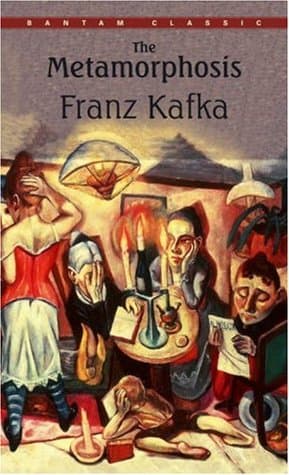
- The Metamorphosis
Franz Kafka
3.8 (643k) average on GoodreadsFantasyDeals with a sudden, inexplicable transformation and its alienating effects on the protagonist and his family.
- Frankenstein: The 1818 Text
Mary Shelley
3.8 (1.2M) average on GoodreadsFantasyShelley's Frankenstein (1818) explores themes of scientific hubris and the creation of an 'other.' However, its focus is primarily on Victor Frankenstein's moral conflict and the monster's external rejection by society. "Flowers for Algernon" delves much deeper into the internal psychological journey of the transformed individual, allowing readers direct access to Charlie's evolving self-perception and emotional landscape, rather than viewing the 'monster' from an external perspective.
- Brave New World
Aldous Huxley
4.0 (1.4M) average on GoodreadsFantasyHuxley's Brave New World (1932) critiques a dystopian society where intelligence is engineered and stratified from birth. While it touches on the implications of cognitive manipulation, its scope is a broad societal critique. "Flowers for Algernon" offers a much more intimate, singular character study, focusing intensely on the personal experience of one individual undergoing radical intellectual change, rather than a wide-ranging examination of social engineering.
- The Perks of Being a Wallflower
Stephen Chbosky
4.2 (1.3M) average on GoodreadsPsychologyThrough letters, a shy high school freshman learns to navigate first love, trauma, and self-discovery, stepping off the sidelines and into life.
- Eleanor Oliphant Is Completely Fine
Gail Honeyman
4.3 (708k) average on GoodreadsLiterary FictionA lonely woman's structured life changes when an IT guy and an elderly man help her learn to open her heart.





Enjoyed the summary?
A summary gives you the shape of the book. The book itself has the detail, the examples and the voice.
Find Flowers for Algernon on AmazonAs an Amazon Associate, BookBrief earns from qualifying purchases. How we're funded